
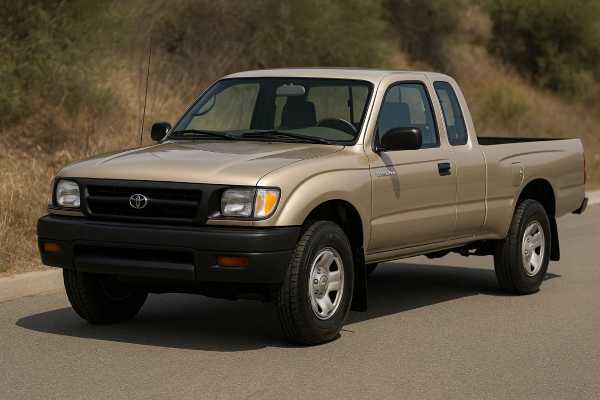
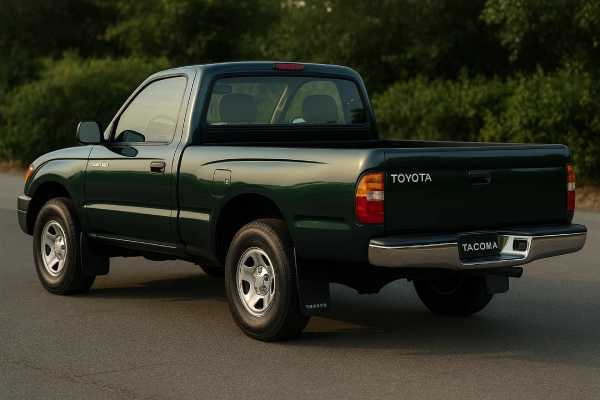
The 1995–2000 Toyota Tacoma RWD with the 3RZ-FE 2.7 litre engine sits in a sweet spot between work-truck toughness and everyday usability. Compared with the smaller 2.4, this four-cylinder adds torque, smoother running thanks to balance shafts, and better towing confidence, while still keeping ownership costs under control. It is a simple body-on-frame pickup with hydraulic steering, leaf springs in the rear, and a naturally aspirated engine that does not depend on turbos or complex electronics.
For many owners, this Tacoma is a long-term partner: it tolerates rough roads, short trips, and weekend hauling if you keep up with fluids and rust prevention. The cabin is basic by modern standards, but durable and easy to clean. Parts support is excellent, and the 3RZ-FE has a strong reputation for running well past 300,000 km when serviced correctly. This article walks through specs, known issues, safety information, and what to look for if you are buying or maintaining one today.
Owner Snapshot
- Strong 3RZ-FE 2.7 engine with good low-end torque and smoother operation than the 2.4 thanks to balance shafts.
- Simple RWD drivetrain, robust manual or automatic gearbox, and good parts availability keep running costs predictable.
- Watch for frame and suspension rust, lower ball joint wear, and aging rubber components on high-mileage trucks.
- Engine oil and filter every 8,000–10,000 km or 6 months (whichever comes first) is a sensible real-world interval.
- Valve clearance checks around every 40,000–50,000 km help keep the 3RZ-FE quiet and efficient over the long term.
Guide contents
- Toyota Tacoma 2.7 RWD profile
- Specifications and technical data
- Trims, options and safety
- Reliability and common issues
- Maintenance and buyer’s guide
- Driving performance and towing
- How this Tacoma compares
Toyota Tacoma 2.7 RWD profile
The first-generation Tacoma (N140/N150) replaced the older Toyota Pickup in 1995 and aimed squarely at buyers who wanted a compact truck with better safety and comfort but still old-school durability. The RWD N140 models with the 3RZ-FE 2.7 litre engine occupy the middle ground in the range: more muscle than the 2.4, less fuel hungry than the 3.4 V6, and with simpler running gear than 4WD or PreRunner variants.
The 3RZ-FE itself is an all-iron, inline-four, 2.7 litre, 16-valve DOHC engine with chain-driven camshafts and balance shafts. It was engineered to deliver a flat torque curve and reduced noise and vibration, especially under load. In Tacoma tune it makes about 150 hp and 177 lb-ft, enough to move the truck confidently when geared correctly. Because it uses electronic fuel injection and a chain instead of a timing belt, there are fewer scheduled “big” jobs, which appeals to long-term owners who maintain their trucks at home.
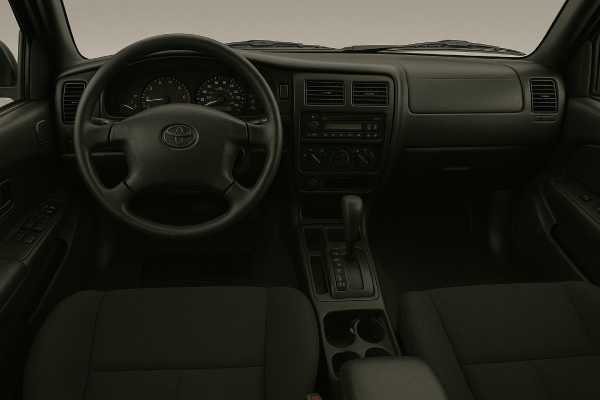
Most RWD 2.7 Tacomas in this era are regular or Xtracab models with a six-foot bed, manual windows, and cloth interiors. Air conditioning, power steering, and basic audio systems are common, but high-end luxuries are rare. Depending on market and trim, you may see split bench or bucket seats, and simple analogue gauges. The dashboard layout is spare and functional, with large rotary knobs and durable plastics.
On the road, the RWD layout and relatively low curb weight make the truck feel lighter than many later mid-size pickups. Steering is hydraulic and fairly slow by modern standards but predictable. A leaf-sprung rear axle carries the load, and while unladen ride quality can be choppy, it improves quickly with a few hundred kilograms in the bed. Many owners use these trucks as mixed-duty vehicles: commuting during the week, carrying tools or materials, and towing light trailers on weekends.
From an ownership perspective, the 2.7 RWD Tacoma is attractive because it balances capability and simplicity. It does not have advanced driver assistance systems or complex electronics; most issues can be diagnosed with basic tools and a scan reader. That simplicity, paired with a strong aftermarket and good availability of OEM parts, is a big reason why the 1995–2000 trucks are still in daily service today.
Toyota Tacoma 2.7 technical specs
This section focuses on the 1995–2000 Tacoma RWD (N140) with the 3RZ-FE 2.7 litre engine and typical North American specification. Exact figures can vary by year, cab style, axle ratio, and market, so treat them as a close guide and verify for your specific VIN.
Engine and performance (3RZ-FE)
| Item | Specification |
|---|---|
| Engine code | 3RZ-FE |
| Type | Inline-4, DOHC, 16 valves, balance shafts |
| Displacement | 2.7 L (2,694–2,694 cc, often rounded to 2,693–2,694) |
| Bore × stroke | 95.0 × 95.0 mm (3.74 × 3.74 in) |
| Valves per cylinder | 4 |
| Induction | Naturally aspirated |
| Fuel system | Multi-point electronic fuel injection (EFI) |
| Compression ratio | ~9.5 : 1 |
| Max power | ~150 hp (112 kW) @ 4,800 rpm |
| Max torque | ~240 Nm (177 lb-ft) @ 4,000 rpm |
| Firing order | 1-3-4-2 |
| Timing drive | Double-row chain, no scheduled replacement |
| Fuel requirement | Unleaded petrol, RON 91+ (approx. AKI 87+) |
| Emissions standard (period) | US EPA / CARB Tier-1 era, varies by state |
Real-world economy for a RWD 3RZ Tacoma typically falls around 11–13 L/100 km (18–21 mpg US, 22–25 mpg UK) mixed driving, with higher consumption when towing or running larger tyres.
Transmission and driveline
| Item | Specification |
|---|---|
| Manual transmission | 5-speed manual, commonly W59 for 2WD 3RZ-FE |
| Manual gear ratios | 1st 3.954, 2nd 2.141, 3rd 1.384, 4th 1.000, 5th 0.810, reverse 4.091 (approx.) |
| Automatic transmission | 4-speed automatic (A43D / A340E depending on year/trim) |
| Drive type | Rear-wheel drive (RWD, 4×2) |
| Rear axle | Solid axle with leaf springs |
| Differential | Open; some markets and trims may have limited-slip or locker options |
| Typical final drive ratios | Commonly around 3.58–4.10 depending on axle code and tyre size |
Chassis, dimensions and weights
Values here reflect a typical RWD Xtracab with six-foot bed; regular cabs may be slightly shorter and lighter.
| Item | Specification |
|---|---|
| Frame | Ladder frame, boxed and C-section mix |
| Front suspension | Double wishbone / coil spring with anti-roll bar |
| Rear suspension | Leaf springs, solid axle |
| Steering | Power-assisted recirculating ball or rack-and-pinion (varies by year), hydraulic |
| Front brakes | Ventilated disc |
| Rear brakes | Drum |
| Wheel size (common) | 14–15 in steel or alloy, depending on trim |
| Typical tyre size | Around 205/75 R14 to 215/70 R15 on 2WD models |
| Length | ~5,055 mm (199.1 in) |
| Width | ~1,690–1,725 mm (66.5–67.9 in) |
| Height | ~1,650–1,670 mm (65.0–65.7 in) |
| Wheelbase | ~3,100 mm (122.0 in) |
| Ground clearance | About 180–190 mm (7.1–7.5 in), higher on some packages |
| Turning circle | Around 11.0–11.5 m (36–38 ft) kerb-to-kerb |
| Curb weight | Roughly 1,430–1,520 kg (3,150–3,350 lb), spec-dependent |
| GVWR | Typically around 2,040–2,270 kg (4,500–5,000 lb) |
| Fuel tank | 57 L (approx. 15.1 US gal); some configurations up to ~68 L |
The cargo bed is roughly six feet long on most RWD models, with width between wheel arches around 1,000–1,050 mm (39–41 in). Usable volume is roughly 1,000–1,100 litres (about 35–39 ft³), depending on bedliner and accessories.
Performance and capability
| Item | Specification |
|---|---|
| 0–100 km/h (0–62 mph) | Roughly 11–13 s for a lightly loaded RWD 3RZ manual |
| Top speed | Around 160–170 km/h (100–105 mph), gearing and limiter dependent |
| Braking (100–0 km/h) | Period-typical stopping distances; performance depends strongly on tyre condition |
| Max towing capacity | Commonly rated up to 1,587 kg (3,500 lb) with proper equipment |
| Typical tongue weight | Around 160 kg (350 lb) maximum |
| Payload | Roughly 770–870 kg (1,700–1,900 lb), configuration dependent |
| Roof load | Limited; roof racks are aftermarket and rating depends on system |
Fluids and service capacities (typical)
Always check the sticker under the hood and the owner’s/service manual for your market.
| System | Capacity and specification (typical for 3RZ-FE Tacoma) |
|---|---|
| Engine oil (with filter) | ~5.4 L (5.7 US qt), API SJ/ILSAC, usually 5W-30 |
| Coolant | ~8.2–8.3 L (8.7–8.8 US qt) with 50:50 mix, long-life ethylene glycol |
| Manual transmission | ~2.5–2.6 L gear oil, GL-4/GL-5 75W-90 |
| Automatic transmission (replenish) | ~1.6–2.0 L ATF Dexron III (full dry fill is higher) |
| Rear differential (2WD) | ~1.35 L hypoid gear oil GL-5 75W-90 |
| Power steering | ATF Dexron II/III, fill as required |
| Brake fluid | DOT 3 or DOT 4, system volume approx. 1.0–1.2 L |
Key torque examples (approximate typical values; verify by manual):
- Engine oil drain plug: around 35–40 Nm (26–30 lb-ft).
- Spark plugs: around 20 Nm (15 lb-ft).
- Wheel lug nuts: commonly in the 100–115 Nm (74–85 lb-ft) range.
Electrical and safety systems summary
- Alternator output is typically around 70–80 A.
- 12 V battery sizes vary; many trucks use 55–65 Ah batteries with mid-range cold-cranking amps.
- Spark plugs are usually nickel-type (e.g., NGK or Denso equivalents) with a gap around 1.0–1.1 mm.
Safety equipment for 1995–2000 is basic: front driver and passenger airbags appear partway through the run and become standard, ABS is optional on many RWD models, and advanced driver assistance (AEB, lane keeping, radar cruise) is not present on this generation.
Tacoma 2.7 grades and safety
In North America, the 1995–2000 Tacoma line-up combined several body styles and trims. The 2.7-litre RWD configuration appeared mainly in work-oriented and mid-grade trims rather than halo performance versions.
Typical trims that could be equipped with the 3RZ-FE in RWD form include:
- Base / DX: steel wheels, vinyl or basic cloth seats, manual windows and locks, often no tachometer. The 2.7 engine was sometimes an option above the 2.4 in these trucks, especially on Xtracab models.
- SR5: more comfort equipment (upgraded cloth, nicer trims, additional gauges, improved audio, fancier wheel options). The 2.7 was common here for buyers who wanted a bit more torque without stepping into the 3.4 V6.
- PreRunner note: some PreRunner models are technically RWD with 3RZ-FE but use a taller 4WD-style suspension and six-lug running gear. They typically carry a different chassis code than the N140 trucks and are outside the strict scope of this article, but many mechanical notes still apply.
Mechanical differences by trim are modest on RWD four-cylinder Tacomas. Gear ratios and axle codes may change with tyre size and tow packages, and SR5 trucks are more likely to have better audio, upgraded seats, and in some markets, power mirrors and locks. Pay attention to the door-jamb build plate and axle/transmission codes when shopping; they tell you more than the trim badge.
Visually, SR5 trucks often show:
- Chrome or styled bumpers rather than plain painted metal.
- Alloy wheels instead of basic steel.
- Two-tone seats or additional fabric patterns inside.
From a safety standpoint, trim level changes often affect equipment more than raw crash performance. For example, some trucks have:
- Driver-only airbag in earlier years, then dual front airbags later in the run.
- Optional anti-lock braking (ABS) and, in some markets, load-sensing proportioning valves for the rear brakes.
- Extra high-mount stop lights and improved headlamp designs on later years.
Crash-test information for this generation shows that a 1998 Tacoma regular-cab 2WD tested in the moderate overlap front impact earned an overall “Acceptable” rating from a major safety body, with particular concerns around lower leg injury risk for the driver. Side-impact and newer small-overlap tests were not applied to these early trucks in the same way they are for modern vehicles.
Child-seat provisions are basic: rear-facing seats in regular cabs are difficult or impossible to mount safely due to airbag and space limitations, and Xtracab jump seats are not designed for child restraints. Owners who regularly transport small children usually prefer a later-generation crew cab or another vehicle.
As for driver assistance, there are effectively none by modern standards. Stability control, traction control, lane assist, and automatic emergency braking had not yet reached this segment. Safety therefore depends heavily on:
- Tyre grip and condition.
- Brake maintenance and correct adjustment of rear drums.
- Healthy suspension bushings, ball joints, and steering components.
- The driver’s skill, awareness, and load management.
For buyers, this means you should inspect the truck with an eye toward chassis and brake condition, and not simply whether an airbag warning light is off.
Reliability and 3RZ-FE issues
The 3RZ-FE and the first-gen Tacoma platform are widely considered durable, but “bulletproof” does not mean “maintenance-free.” Age, corrosion, and deferred servicing can turn a reliable design into a costly project. It helps to think in terms of how common an issue is, how severe it can be, and at what mileage or age it tends to appear.
Engine and ancillaries
Common to occasional issues:
- Oil leaks (low to medium severity): With age, cam cover gaskets, crank seals, and oil pan sealant can seep. Symptoms include oil smell on hot surfaces, dampness around the timing cover, and messy underbodies. The fix is straightforward but labour-intensive if the front cover is involved.
- Accessory drive wear (low severity): Belts, idler pulleys, and tensioners can squeal or rumble after many years. Changing the accessory belt and suspect pulleys restores quiet running and reduces the risk of a roadside failure.
- Vacuum and intake leaks (low severity): Cracked hoses or ageing intake boots can cause unstable idle, lean codes, or mild hesitation. Visual inspection and smoke testing can quickly locate leaks.
Less common but important:
- Timing chain wear/guide noise (medium severity): The 3RZ uses a chain, not a belt, so there is no fixed replacement interval. However, high-mileage engines with poor oil history may develop chain rattle or worn guides. Prolonged noise can eventually affect timing accuracy. Replacement requires front cover disassembly and is a significant job.
- Head gasket issues (rarer): Compared with some other Toyota engines, the 3RZ is not notorious for head gasket failure, but overheating or severe rust in the cooling system can still cause gasket problems. Symptoms include coolant loss, misfire on start-up, and contamination in oil or coolant.
Valve clearances on the 3RZ-FE are adjustable and benefit from periodic checks (for example every 40,000–50,000 km). Tight exhaust valves raise the risk of burnt valves, while excessive clearance creates noise and minor performance loss.
Fuel and ignition
The EFI system is simple and robust, but age can affect:
- Ignition coils and wires: Misfires under load, rough cold starts, or check-engine lights with cylinder-specific misfire codes may indicate coils, plugs, or wires reaching the end of their life.
- Fuel pump and filter: Hard starting after sitting, weak high-rpm performance, or whining from the tank can point to a tired pump or restricted filter. On a nearly 30-year-old truck, preventive replacement is sensible if history is unknown.
- Sensors and wiring: Mass airflow (MAF), coolant temperature, and oxygen sensors age. Many trucks still on the road run original sensors, but replacing obviously tired components can improve economy and idle quality.
Driveline, suspension and frame
This generation of Tacoma is known for several non-engine issues:
- Lower ball joints (medium to high severity): Worn ball joints can cause vague steering, clunks, or alignment problems and, in extreme cases, separation. Several campaigns and bulletins have addressed these parts over time. Replacing ball joints with quality components and torquing correctly is critical.
- Frame and rear leaf-spring mounts (high severity): Rust is the main threat to the chassis. In regions with road salt, frames can perforate, especially around the rear spring hangers and crossmembers. Some trucks have had frames inspected or replaced under special service campaigns where applicable.
- Leaf springs and shackles: Sagging rear ride height, axle-wrap under acceleration, or broken leaves are typical on heavily used trucks. Upgraded leaf packs or OEM replacements restore load capacity and handling.
- Steering components and wheel bearings: Play in tie-rod ends, idler arms, or steering racks shows up as wandering and uneven tyre wear. Noisy front bearings will hum or growl with speed and when cornering.
Recalls, campaigns and software
Although the 3RZ-FE Tacoma uses minimal software compared with modern trucks, there are still important service actions:
- Ball joint and steering-related recalls: Several campaigns have addressed lower ball joint quality and associated hardware, driven by the risk of separation.
- Frame corrosion inspection campaigns: In some regions, Toyota ran limited campaigns to inspect and, where necessary, repair or replace severely rusted frames on older trucks.
- Airbag and safety-system recalls: Some trucks may fall under airbag inflator or related campaigns, depending on market.
Because recall eligibility is highly VIN-specific and can change, the correct step is always to check your truck’s VIN in the official recall lookup for your country and confirm with a dealer. Owner-supplied paperwork or stickers in the engine bay can also show completed campaigns, but should not be the only evidence relied on.
Practical pre-purchase checks
When evaluating a 2.7 RWD Tacoma:
- Inspect frame rails, crossmembers, and spring mounts thoroughly for rust, paying special attention to inside surfaces and welded seams.
- Check for play in front suspension: lower ball joints, tie rods, idler arms, and control arm bushings.
- Look for oil leaks at the front and rear of the engine and at the rear main seal area.
- Assess clutch take-up (on manuals), shift quality, and any transmission whine.
- Confirm even tyre wear and that the truck drives straight under light braking.
- Ask for evidence of regular oil changes, coolant service, and past timing chain or valve clearance work.
A well-maintained 3RZ-FE Tacoma is capable of very high mileage. The main risk factor is neglect, especially rust and overdue suspension work, rather than any inherent design flaw.
Maintenance schedule and buying tips
For a nearly 30-year-old truck, you should combine the original maintenance schedule with age-based preventative work. The intervals below are practical guidelines for mixed use, assuming conventional fluids and typical climates.
Core service intervals (approximate)
- Engine oil and filter: Every 8,000–10,000 km or 6 months. Use quality 5W-30 or another viscosity suited to your climate that meets the specified API/ILSAC standard.
- Engine air filter: Inspect every 15,000 km; replace every 30,000 km or sooner in dusty conditions.
- Cabin filter: Many early Tacomas did not have a formal cabin filter; if yours has a retrofit kit, check annually.
- Spark plugs: Conventional plugs around every 40,000–50,000 km; if upgraded to long-life plugs, follow the manufacturer’s guidance.
- Valve clearance: Check every 40,000–50,000 km; adjust as needed. Tight exhaust valves are more concerning than slightly loose ones.
- Fuel filter (if external): Replace every 80,000–100,000 km, or sooner if fuel contamination is suspected.
Cooling, driveline and brakes
- Coolant: Replace every 3–5 years or 60,000–80,000 km using long-life coolant compatible with Toyota red/pink formulations. Fully flush mixed or unknown coolant types.
- Manual transmission oil: Replace roughly every 80,000–100,000 km with GL-4/GL-5 75W-90 gear oil.
- Automatic transmission fluid: Light-duty drain and refill around every 50,000–60,000 km is a sensible compromise. Use the correct ATF type noted for your year.
- Rear differential oil: Replace every 80,000–100,000 km with GL-5 75W-90 hypoid gear oil.
- Brake fluid: Flush every 2–3 years regardless of mileage to manage moisture content.
- Brake pads/shoes and rotors/drums: Inspect at least annually. Drums on the rear need correct adjustment for good pedal feel and parking brake performance.
Belts, hoses and rubber parts
- Accessory belts: Inspect each oil change; replace every 60,000 km or at the first signs of cracking, glazing, or noise.
- Radiator and heater hoses: Replace any hose that feels soft, swollen, or cracked. Many original hoses are now beyond their intended life.
- Suspension bushings: Check control arm bushings, leaf-spring eye and shackle bushings, and sway-bar links. Replace worn bushings to restore ride and steering precision.
- Engine and gearbox mounts: Look for excessive engine movement, vibration at idle, or cracked rubber.
Timing chain and “big” jobs
Unlike a belt, the 3RZ-FE timing chain is intended to last the life of the engine. However, if you hear sustained rattling from the front of the engine (especially on cold start) or see metal contamination in the oil, it may be time to:
- Inspect the chain, guides, and tensioner.
- Replace worn components with OEM-quality parts.
This is best combined with other front-of-engine work such as oil pump seal replacement or front main seal replacement if leaks are present.
Buyer’s checklist for a 2.7 RWD Tacoma
When shopping:
- Frame and underbody: This is the top-priority check. Hammer-test suspicious areas and look for flaking metal, not just surface rust. Pay special attention to rear frame sections and spring mounts.
- Front suspension: Inspect lower ball joints, tie rods, and control arm bushings. Any play or torn boots means work is needed.
- Steering feel: On a test drive, the truck should track straight, not dart or wander, and should not clunk over bumps.
- Driveline: Listen for whine in all gears (manual) or slipping and harsh shifts (automatic). Engage/disengage the clutch a few times to judge smoothness and engagement point.
- Cooling system: Check for clean coolant, even heating, and no signs of oil in coolant or vice versa. A neglected cooling system can shorten engine life.
- Brakes: Ensure firm, consistent pedal feel and straight stops. A sinking pedal, heavy pull, or strong pulsation points to work ahead.
- Electrical: Verify all lights, wipers, gauges, and warning lamps. Poor grounds and corroded connectors are common in older trucks but usually easy to fix.
Which years and specs to prefer?
For most buyers:
- Later years (1998–2000) may have slightly improved safety equipment and refinements.
- Trucks with documented frame inspections or repairs are preferable in rust-prone regions.
- Manual transmission examples suit owners who tow or want simpler long-term reliability, while automatics can be more convenient in traffic but require extra attention to fluid condition.
A 3RZ-FE Tacoma that has had regular oil changes, periodic valve checks, clean coolant, and timely suspension work can be a very long-lived, low-drama truck. The best candidates often come from dry climates, with conservative use and a thick folder of receipts.
On-road performance and towing
In everyday driving, the Tacoma 2.7 RWD feels honest and mechanical. The 3RZ-FE does not deliver fast acceleration by modern standards, but its torque curve and gearing make it effective in real use.
Powertrain character
At idle and low rpm, the 3RZ-FE is smoother than many older four-cylinder truck engines thanks to its balance shafts. Throttle response is linear, and the engine pulls strongly from around 2,000 rpm. For brisk acceleration, you will typically rev to 4,000–5,000 rpm, where the engine remains relatively composed.
With the 5-speed manual, the gearing is fairly short in first and second, making take-off with a light load easy even on inclines. Third and fourth gears suit typical city and suburban speeds, while fifth is primarily a cruising gear. On hills, especially with cargo or a trailer, you will often downshift to maintain speed; this is normal for a naturally aspirated four-cylinder truck.
Automatic versions trade some control for convenience. The 4-speed auto tends to hold gears longer and may hunt between third and fourth on rolling highways, particularly if you are on larger-than-stock tyres. Using the overdrive lockout or manually selecting a lower gear on climbs can help manage engine temperatures and keep the truck in its torque band.
Ride, handling and NVH
Unladen, the rear leaf springs can feel stiff and bouncy over broken pavement. Adding 150–250 kg of cargo noticeably smooths the ride and helps the rear axle follow the road more faithfully. The steering is slow but predictable, with moderate effort and clear on-center feel when components are in good condition.
Body roll is modest for a truck of this era, but modern drivers used to car-like pickups will notice more lean in corners. Noise levels at highway speeds are dominated by wind and tyre roar, with engine noise present but not overwhelming at a 100–120 km/h cruise. Installing fresh door seals, maintaining correct tyre pressures, and using appropriate tyres can noticeably influence refinement.
Braking performance is adequate but depends heavily on maintenance. Fresh front pads, correctly adjusted rear drums, and good tyres make a significant difference. Do not expect modern ABS-equipped, four-wheel-disc stopping distances; leave more following distance and avoid overloading.
Real-world economy and range
In mixed city/highway use, many owners report:
- Around 11–12 L/100 km (19–21 mpg US) in mixed driving.
- Around 10–11 L/100 km (21–23 mpg US) on steady highway runs at 90–100 km/h.
- Upwards of 13–14 L/100 km (17–18 mpg US) when towing near the rated limit or driving aggressively.
The roughly 57 L fuel tank translates into a real-world range of about 400–500 km between fills, depending on driving style, load, and conditions.
Towing and load behaviour
With a rated towing capacity around 3,500 lb (about 1,600 kg), the 2.7 RWD Tacoma is capable of pulling small trailers, lightweight campers, boats, and utility loads when properly equipped. Its strengths and limitations are:
- Strengths:
- Good low-rpm torque for a four-cylinder, especially with manual transmission.
- Predictable handling when weight distribution is correct.
- Simple cooling and drivetrain systems that are easy to monitor.
- Limitations:
- Steep grades require downshifting and patience, particularly at highway speeds.
- Stopping distances increase notably with heavy trailers; trailer brakes are strongly recommended near the upper weight range.
- Crosswinds and large passing vehicles can move a lightly loaded RWD truck more than heavier modern pickups.
A practical rule of thumb for comfort and longevity is to treat around 2,000–2,500 lb (900–1,150 kg) as a stress-free towing zone for regular use, especially in hot climates or mountainous terrain. Reserve the upper end of the rating for occasional trips, and make sure your cooling system, brakes, and tyres are in top condition.
Load carrying
The Tacoma’s payload capability around 1,700–1,900 lb (770–870 kg) is generous for its size. The truck feels more settled with some weight in the bed, but you still need to:
- Keep heavy cargo low and centered over or slightly ahead of the rear axle.
- Secure loads carefully using tie-downs and, if needed, bed rails.
- Avoid exceeding tyre load ratings, especially if you run non-stock sizes.
With a sensible load and properly maintained suspension, the 2.7 RWD Tacoma remains stable and confident even on rougher roads, provided speeds are kept appropriate to conditions.
How this Tacoma compares
When shopping in the 1990s compact and early-2000s mid-size truck market today, you are likely to cross-shop the 2.7 RWD Tacoma against:
- Other Tacomas (2.4 and 3.4 V6).
- Nissan Frontier/Hardbody of the same era.
- Ford Ranger and Mazda B-Series.
- Chevrolet S-10 and GMC Sonoma.
Versus Tacoma 2.4 (2RZ-FE)
The 2.4-litre Tacoma shares most hardware with the 2.7 but feels a bit lighter on its feet with a small fuel-economy advantage. The 2.7 adds:
- Noticeably stronger torque, especially when loaded or towing.
- Slightly smoother running thanks to balance shafts.
- A modest fuel-consumption penalty in real-world use.
If you rarely tow and do mostly light city driving, the 2.4 can be perfectly adequate. If you haul or tow more often, the 2.7 is generally the better all-rounder.
Versus Tacoma 3.4 V6 (5VZ-FE)
The 3.4 V6 offers significantly more power and a higher tow rating when properly equipped. However, it also brings:
- Higher fuel consumption in nearly all conditions.
- Additional weight over the front axle.
- More crowded engine bays and additional components to service.
The 2.7 is the budget-conscious choice: easier on fuel, with simpler service access, and enough performance for moderate loads. The V6 suits drivers who tow near the top of mid-size truck limits or demand stronger acceleration.
Versus Nissan Frontier / Hardbody
Nissan’s small trucks of this era are also known for strong mechanical reliability and stout frames, but:
- Rust can be an issue on both brands, though patterns differ by region.
- Frontier and Hardbody engines are similarly durable but sometimes more finicky about timing belt and accessory maintenance.
- Interior ergonomics and parts availability tend to favour the Tacoma, especially in North America, due to volume and aftermarket support.
The Tacoma usually commands higher resale values, reflecting both reputation and demand. For buyers, this means paying more up front but likely recovering more value later.
Versus Ford Ranger / Mazda B-Series
Period Rangers and B-Series trucks offer:
- Simple, torquey engines and a broad parts network.
- Often lower purchase prices than comparable Tacomas.
However, they can show:
- More varied build quality depending on year and plant.
- Different corrosion patterns, with some regions seeing significant frame and cab rust.
The Tacoma 2.7 compares favourably in perceived long-term durability and overall refinement, though specific examples matter more than brand stereotypes at this age.
Versus GM S-10 / Sonoma
The S-10/Sonoma twins were widely sold and cheap to buy and run when new, but survivors today often have:
- More cosmetic and interior wear.
- More complex histories of rust repairs or modifications.
A well-kept 3RZ Tacoma will usually outlast and out-resell an equivalent GM compact truck, though the GM may be cheaper to buy initially and easier to modify for certain performance applications.
Overall position
The 1995–2000 Tacoma 2.7 RWD is best viewed as a:
- Long-term, low-drama utility truck for owners who value reliability over gadgets.
- Balanced option between the basic 2.4 and thirstier 3.4 V6.
- Strong candidate for buyers in dry climates seeking a simple, mechanical pickup they can maintain themselves.
If you find a structurally solid truck with a clean service history and no major rust, investing in baseline maintenance can give you a highly dependable daily driver, light hauler, or project platform for many years to come.
References
- ENGINE — 3RZ-FE ENGINE 1990s (Service Manual)
- Toyota 3RZ-FE – Engine Specs 2024 (Technical Data)
- Toyota-Club.Net – Fluids & capacities – Tacoma (1995-2004) 2022 (Maintenance Data)
- Gas Mileage of 1997 Toyota Tacoma 2025 (EPA Fuel Economy)
- 1998 Toyota Tacoma 2025 (Safety Rating)
- Vehicle Detail Search – 1995 TOYOTA TACOMA | NHTSA 2025 (Recall Database)
Disclaimer
This article is for informational purposes only and is not a substitute for professional diagnosis, repair, or safety inspection. Specifications, torque values, fluid capacities, and maintenance intervals can vary by VIN, market, production date, and installed equipment. Always confirm critical data and procedures against the official owner’s manual, service manual, and current manufacturer or regulatory guidance for your specific vehicle.
If you found this guide useful, consider sharing it with other owners or enthusiasts on social platforms like Facebook or X/Twitter. It helps more Tacoma drivers find accurate information and supports the continued development of detailed xcar guides.