
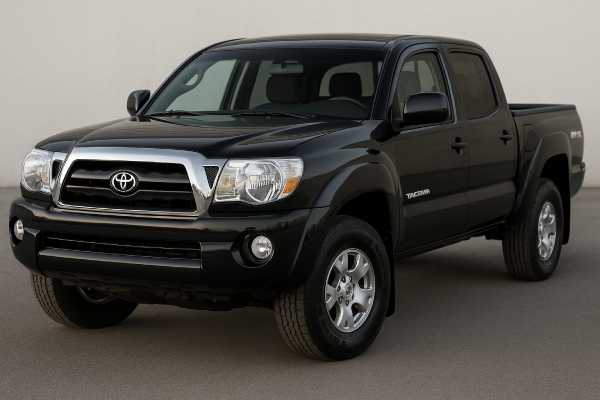
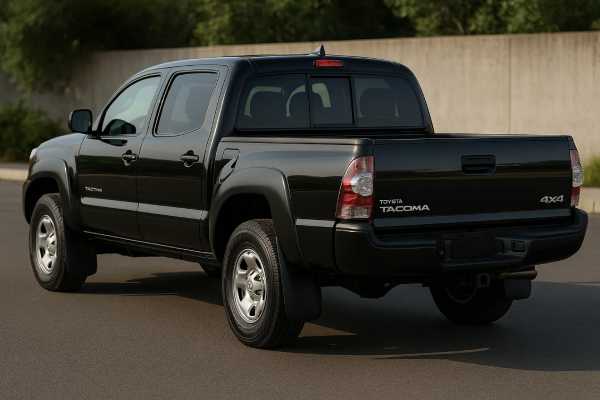
The second-generation Toyota Tacoma 4×4 (N220) with the 2TR-FE 2.7-liter engine is a very specific recipe: compact enough to live with every day, tough enough to work off road, and simple enough to keep for a long time. Compared with the rear-wheel-drive trucks, the 4×4 adds a separate transfer case, a front differential and taller ride height, trading a little fuel economy and acceleration for traction and capability.
The 2TR-FE is a naturally aspirated 2.7-liter inline-four with double overhead cams, four valves per cylinder and a timing chain. In these trucks it makes about 159 hp, but what matters more is the torque and the way it is delivered through low-range gears and appropriate axle ratios.
This guide focuses specifically on the 2005–2011 Tacoma 2.7 4×4: where it fits, the key specifications, how the drivetrain is built, what to look for in terms of reliability, and how to maintain and shop for one with confidence.
Owner Snapshot
- 2TR-FE 2.7 four-cylinder with chain-driven cams, simple port injection and a strong reputation for longevity when serviced on time.
- Part-time 4×4 system with low range and solid rear axle gives good traction and durability for work sites, snow and moderate trails.
- Frame corrosion, leaf spring issues and neglected 4×4 fluid changes are the main ownership risks on older high-mileage trucks.
- A practical baseline for engine oil and filter is every 5,000 miles (8,000 km) or 6 months, with transfer case and differentials checked around 30,000–40,000 miles (48,000–64,000 km) if used off road or for towing.
Explore the sections
- Role of Tacoma 2.7 4×4
- Technical data for 2TR-FE 4×4
- Tacoma 4×4 trims and safety features
- Reliability patterns on 2.7 4×4
- Maintenance planning and buying advice
- Driving behaviour on and off road
- How Tacoma 4×4 stacks up
Role of Tacoma 2.7 4×4
Within the second-generation Tacoma range, the 2.7 4×4 sits below the more powerful V6 trucks but above basic 2WD work models in capability. It is aimed at owners who genuinely need four-wheel drive and ground clearance, yet want to avoid the extra fuel use and purchase price of the V6. That makes it a popular choice in rural areas, snow-belt regions and among outdoor-oriented owners who carry more gear than passengers.
The N220 Tacoma uses a ladder-frame chassis with a separate body, front independent suspension and a solid rear axle on leaf springs. The 4×4 versions add a front differential, constant velocity (CV) shafts and a transfer case offering high and low ranges. The system is part-time: you drive in rear-wheel drive on dry pavement and engage 4H or 4L on loose or slippery surfaces. This simplicity keeps the system robust and easy to understand, especially for owners coming from older trucks.
With the 2TR-FE engine, the 4×4 Tacoma is not a fast vehicle, but it is predictable. The four-cylinder’s strength is steady torque rather than peak power, and the gearing in most 4×4 models reflects that. Shorter axle ratios and low range help the truck crawl over rough ground or pull a small trailer out of a wet launch ramp, even when the engine is working modestly.
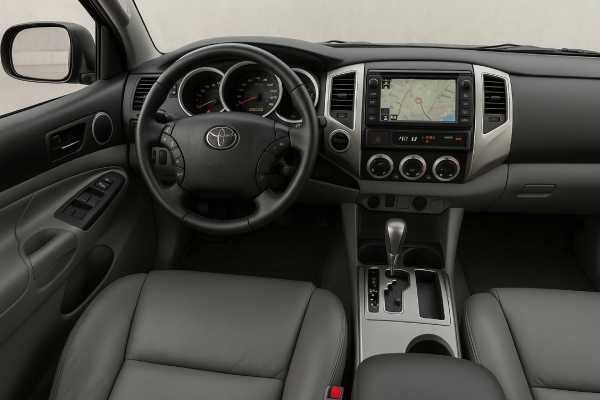
Inside, the Tacoma 4×4 shares the same practical dashboard and controls as other second-generation models. Materials are more about durability than luxury: hard plastics, simple cloth and straightforward switchgear. Double Cab 4x4s can function as a small family vehicle with real rear seats, while Access Cab versions lean more toward gear and tool storage behind the front seats. Regular Cabs with 4×4 are less common but very capable off road thanks to lower weight and compact overhangs.
For an owner today, the Tacoma 2.7 4×4 is best seen as a long-term utility partner: strong enough to do real work, simple enough to maintain, and just modern enough to be comfortable and safe when used sensibly.
Technical data for 2TR-FE 4×4
Engine and performance
The 2TR-FE engine in the Tacoma 4×4 is the same basic unit used in 2WD models, but its personality changes once you add weight and 4×4 gearing.
| Item | Value (Tacoma 2.7 4×4) |
|---|---|
| Engine code | 2TR-FE |
| Displacement | 2.7 L (2,693 cc) |
| Layout | Inline-4, DOHC, 16 valves |
| Bore × stroke | 95.0 mm × 95.0 mm |
| Induction | Naturally aspirated |
| Fuel system | Multi-port fuel injection |
| Compression ratio | Around 9.6:1 |
| Max power | About 159 hp (118 kW) @ ~5,200 rpm |
| Max torque | About 246 Nm (181 lb-ft) @ ~3,800 rpm |
| Variable valve timing | Intake cam (VVT-i) |
| Timing drive | Chain (no fixed replacement interval) |
On the road, 0–100 km/h (0–62 mph) times are typically in the 11–12 second range for a Double Cab 4×4 with automatic transmission, a bit quicker with the manual and lighter cabs. Top speed is electronically limited above highway speeds and is not a meaningful differentiator for this truck.
Transmission, 4×4 system and driveline
Most 2.7 4×4 Tacomas are fitted with:
- 5-speed manual transmission in some early trucks and specific trims.
- 4-speed electronically controlled automatic in many North American models.
The 4×4 system is part-time:
- Transfer case: two-speed, with 2H (rear-wheel drive high), 4H (four-wheel drive high) and 4L (four-wheel drive low range).
- Front differential: open differential with CV driveshafts to each front wheel.
- Rear differential: usually open on 2.7 4×4 models; mechanical or electronic locking differentials are more commonly paired with V6 off-road trims, but regional variations exist.
Typical axle ratios for four-cylinder 4×4 trucks are shorter than those of many 2WD models, improving low-speed torque and off-road control at the expense of higher engine rpm on the highway.
Dimensions, chassis and capability
Dimensions vary slightly with cab and bed, but representative values for a Double Cab 4×4 are:
| Item | Approximate value |
|---|---|
| Wheelbase | Around 3,246 mm (128 in) |
| Overall length | Around 5,260 mm (207 in) |
| Width (without mirrors) | Around 1,895 mm (75 in) |
| Height | Around 1,780 mm (70 in) |
| Curb weight | Roughly 1,700–1,800 kg (3,750–3,970 lb) |
| Fuel tank | Around 80 L (21 US gal) |
Chassis features:
- Front suspension: double wishbone with coil springs and gas shocks.
- Rear suspension: solid axle with leaf springs; some trims use slightly different leaf packs for payload versus ride comfort.
- Steering: hydraulic rack-and-pinion.
- Brakes: front ventilated discs and rear drums, with ABS on most models.
Off-road related figures (vary by trim and tyre size):
- Ground clearance: typically around 230–240 mm (9–9.5 in).
- Approach angle: in the high 20s to low 30s degrees.
- Departure angle: usually in the mid-20s degrees.
Towing and payload
For the 2.7 4×4, typical factory ratings are:
- Maximum braked towing: around 1,588 kg (3,500 lb) when properly equipped with a tow package.
- Unbraked towing: usually much lower, around 680 kg (1,500 lb), depending on local regulations.
- Payload: often between 500 and 700 kg (1,100–1,540 lb), varying with cab, bed and equipment.
As always, the limiting factor is the specific truck’s gross vehicle weight rating (GVWR), which is listed on the door jamb label and must not be exceeded once you add passengers, cargo and trailer tongue weight.
Tacoma 4×4 trims and safety features
Trim levels and mechanical differences
For the 2.7 engine, 4×4 models were commonly available in a subset of trims, with exact names varying by market. Broadly:
- Base / DX-type 4×4
Focused on work use: vinyl or basic cloth seats, minimal power features, simpler audio and steel wheels. Mechanically, these often share the same 4×4 hardware as higher trims, which makes them attractive to owners who care more about function than comfort. - SR5 4×4
Adds power windows and locks, upgraded cloth upholstery, cosmetic enhancements and more storage and convenience features. Many Access Cab and Double Cab 2.7 4x4s fall into this category, offering a good balance between cost and usability. - Off-road-oriented packages
Full TRD Off-Road packages are more widely associated with the V6, but in some regions four-cylinder 4×4 trucks could be ordered with off-road suspension options, skid plates or limited-slip differentials. Even without those, all 4×4 Tacomas include a transfer case and higher ride height than 2WD models.
Important trim-linked mechanical distinctions include:
- Axle ratios and towing packages:
Trucks equipped with factory tow packages may use specific axle ratios and include additional cooling or wiring. Matching the truck to your intended use (frequent towing vs light utility) is important. - Tyre and wheel packages:
Base trims often carry narrower, higher-profile tyres that ride comfortably and perform well in snow. Higher trims may run wider all-terrain tyres that improve grip but add noise and rolling resistance.
Safety equipment and crash performance
All second-generation Tacoma 4x4s share core safety features:
- Dual front airbags.
- Three-point belts at all outboard seating positions.
- Energy-absorbing steering column and crumple zones appropriate to the era.
- Child-seat provisions that vary by cab; Double Cabs tend to offer the most practical rear-seat arrangements for families.
Later in the production run, features such as side airbags and electronic stability control (VSC) became more widely available or standard on certain trims and in certain markets. When shopping used, it is worth confirming whether a specific truck includes:
- Side curtain airbags.
- Stability and traction control.
- Active front head restraints or other seat enhancements.
In crash testing, second-generation Tacomas generally score well in moderate-overlap frontal tests conducted on extended-cab and crew-cab variants. However, small-overlap and newer side-impact tests were developed after these trucks were designed, so they do not benefit from the latest crash-structure strategies or extensive airbag coverage. That is important context if you are cross-shopping with much newer midsize pickups.
Driver assistance and visibility
Advanced driver-assistance systems were not provided on 2005–2011 Tacomas. There is:
- No factory automatic emergency braking.
- No lane-keeping assistance.
- No radar or adaptive cruise control.
- No factory blind-spot monitoring.
Some later trucks may have simple add-ons like backup cameras or parking sensors, especially as dealer-installed accessories, but these are not as integrated or sophisticated as modern systems.
Owners often improve visibility and usability with:
- Aftermarket reverse cameras and upgraded head units.
- Higher-performance headlamp bulbs or auxiliary driving lights (used carefully to avoid glare).
- Better mirrors or mirror add-ons for towing.
Any modifications should respect electrical loads and regulations to avoid unintended consequences or inspection issues.
Reliability patterns on 2.7 4×4
Engine behaviour and common issues
The 2TR-FE engine has a strong reputation for durability in both 2WD and 4×4 Tacomas. Most age-related issues are manageable:
- Valve cover and front crank seal seepage
Over time, gaskets and seals harden and may weep a light film of oil. Many owners live with mild sweating; active drips onto belts or exhaust should be addressed. - Carbon buildup and idle issues
Throttle body fouling and sticky idle air passages can cause unstable idle or stalling, especially on trucks that see many short trips. Cleaning the throttle body and related passages often restores smoothness. - Ignition components
Coil-on-plug units and spark plugs eventually wear out. Misfire codes, rough running and poor economy at high mileage often trace back to ageing ignition components rather than serious internal engine problems.
Severe internal failures, such as bottom-end problems or dropped valves, are rare when oil and coolant changes are done on schedule. The timing chain is designed for engine life, but chain stretch and tensioner wear can appear at very high mileages, especially in engines that have seen long intervals between oil changes. Symptoms include rattling on start-up and cam/crank timing codes.
4×4 system and driveline
The extra hardware on the 4×4 trucks introduces additional maintenance points, but also gives some clear early-warning signs when things need attention:
- Front differential and CV joints
Torn CV boots allow dirt and moisture into the joints, leading to clicking noises on turns or vibration under load. Regular visual inspection of boots and replacing them before joints run dry is cost-effective prevention. - Transfer case and front diff fluids
Hard off-road use, water crossings and towing generate heat and contamination. Changing these fluids more frequently than the bare minimum stated in the manual is good practice for trucks that regularly use 4H or 4L. - Driveshaft U-joints and center support bearings
As with 2WD trucks, worn U-joints or support bearings can cause driveline clunks or vibration. Tight, smooth 4×4 engagement and quiet running under load are signs that these components are healthy. - 4×4 engagement mechanisms
Some Tacomas use electrically actuated front differential engagement. Lack of use can lead to sticky actuators. Periodically shifting into 4H and 4L on suitable surfaces keeps gears and mechanisms lubricated.
Frame, suspension and corrosion hotspots
Frame and suspension condition are critical on any second-generation Tacoma, but 4x4s are more likely to have lived harder lives:
- Frame rails and crossmembers
Areas near the rear leaf-spring mounts, fuel-tank mounts and steering-gear brackets deserve close inspection for flaking rust or perforation. Trucks used in regions with heavy road salt or off-road mud are at higher risk. - Rear leaf springs and hangers
There have been recall campaigns on certain Tacomas for leaf springs that could fracture and in extreme cases damage the fuel tank. Even outside campaigns, old, overloaded springs can crack or sag. - Suspension joints and bushings
Off-road use accelerates wear in lower ball joints, control-arm bushings and sway-bar links. Handled proactively, these are normal service items; neglected, they compromise stability and tyre wear.
Electronics and interior
The electrical architecture on these trucks is relatively simple:
- Power windows and locks, basic audio systems and HVAC controls typically age well.
- Window regulators, blower resistors and individual switches are the most common failure points and are not difficult to replace.
- Aftermarket accessories—off-road lights, winches, radios—can introduce wiring problems if not installed properly. Clean, well-routed wiring with proper fusing is a good sign of careful ownership.
Pre-purchase reliability questions
When evaluating a used Tacoma 2.7 4×4, ask:
- Has the frame been inspected or treated for corrosion, especially if the truck is from a rust-prone region?
- Are there records of differential, transfer case and transmission fluid changes?
- Has the cooling system (radiator, hoses, thermostat) been refreshed at least once in the truck’s life?
- Are suspension and steering components original or have they been replaced as needed?
- Have all recalls been checked and completed based on the VIN?
Positive answers to these questions matter more than chasing the lowest odometer reading.
Maintenance planning and buying advice
Practical maintenance schedule
Always confirm with the exact schedule in your owner’s manual, but the following is a sensible baseline for a 2.7 4×4 Tacoma in mixed use:
- Every 5,000 miles / 8,000 km or 6 months
- Engine oil and filter.
- General check for leaks, damaged boots and hoses.
- Tyre rotation, pressure and tread inspection.
- Brake inspection (pads/shoes, hoses, lines).
- Every 15,000–20,000 miles / 24,000–32,000 km
- Replace engine air filter; inspect more often in dusty conditions.
- Inspect cabin air filter and replace if dirty.
- Inspect drive belts, pulleys and tensioners.
- Inspect steering and suspension joints for play.
- Every 30,000–40,000 miles / 48,000–64,000 km
- Replace brake fluid.
- Change differential oils (front and rear) and transfer case fluid, especially if the truck tows, goes off road or sees water crossings.
- Inspect fuel lines and, where applicable, the fuel filter.
- Every 60,000 miles / 96,000 km
- Coolant replacement (interval varies slightly by coolant type and region).
- Comprehensive check of wheel bearings, hub seals and brake hardware.
- Every 100,000–120,000 miles / 160,000–190,000 km
- Spark plug replacement (long-life plugs may run to the top end of this range).
- Transmission fluid service (manual or automatic), if not already done more frequently.
- Detailed frame and underbody inspection, with rust treatment or repairs as needed.
Because the timing system is chain-driven, there is no fixed belt interval, but chain health should be monitored at high mileages and whenever there are timing-related fault codes or unusual noises.
Fluid types and indicative capacities
Always double-check exact specifications for your year and market, but typical guidance includes:
- Engine oil:
- Viscosity: 5W-30 meeting Toyota specifications.
- Capacity: roughly 5.7–6.0 US quarts with filter.
- Manual transmission:
- Oil: GL-4 or GL-5 75W-90 gear oil, as specified.
- Automatic transmission:
- Fluid: Toyota ATF WS (or specified equivalent).
- Front and rear differentials:
- Oil: GL-5 75W-90 gear oil, quantity depending on axle type and housing.
- Transfer case:
- Oil: gear oil or ATF as specified in the manual for your exact case.
- Cooling system:
- Coolant: Toyota Super Long Life coolant or equivalent.
Basic torque values (verify for your specific truck):
- Wheel lug nuts: around 110–115 Nm (81–85 lb-ft).
- Spark plugs: around 18–22 Nm (13–16 lb-ft).
Using a torque wrench and following proper tightening sequences helps preserve threads and ensure reliable clamping.
Buyer’s inspection checklist
When inspecting a Tacoma 2.7 4×4, walk through the following:
- Underbody and frame
- Inspect frame rails, crossmembers and suspension mounts with a flashlight. Look for heavy flaking, deep pitting or perforation.
- Tap suspect areas gently with a hammer or screwdriver handle; dull, crunchy sounds can indicate internal rust.
- Suspension and steering
- Check for uneven tyre wear and listen for clunks on a test drive.
- Turn the wheel lock-to-lock at low speeds and over small bumps to expose joint wear.
- 4×4 system
- On a suitable loose surface, engage 4H and 4L. Confirm smooth engagement, no grinding and predictable traction.
- Listen for CV joint noises on tight turns.
- Engine and cooling
- Confirm clean idle, smooth revs and no check-engine light.
- Look for coolant staining, oil leaks and brittle hoses.
- Interior and electrics
- Test all windows, locks, HVAC modes, fan speeds and instrument illumination.
- Look under carpets and behind rear seats for signs of leaks or musty smells.
Which trucks to seek out
In practice, the “best” Tacoma 2.7 4×4 is usually:
- A truck with documented service history and a clean, solid frame.
- A vehicle from a drier climate, even if it has higher mileage.
- A mostly stock example or one with tasteful, properly installed upgrades (mild suspension, quality tyres, functional skid plates).
Trucks that demand more caution include:
- Heavily rusted frames, regardless of mileage.
- Examples with extreme lifts, oversized tyres and unclear gearing changes, especially if you value road manners and fuel economy.
- Vehicles with incomplete or unknown recall history.
Patience and a methodical inspection approach pay dividends; good 2.7 4×4 Tacomas are still out there and can deliver many more years of use.
Driving behaviour on and off road
On-road ride and handling
On pavement, the Tacoma 2.7 4×4 feels like a compact body-on-frame truck from the mid-2000s:
- Steering is light but accurate, with some body roll in corners and a generally secure feel at highway speeds.
- The suspension tune is firm enough to handle loads and rough roads, so unladen ride can be a little busy, especially at the rear.
- High-profile tyres and the separate frame contribute to more noise and vibration than a modern unibody SUV, but not to an uncomfortable degree if everything is in good repair.
Proper alignment and good-quality tyres make a noticeable difference. Trucks with worn shocks, tired bushings or aggressive mud-terrain tyres will feel less composed and louder than a well-maintained, lightly modified example.
Powertrain character in 4×4 duty
The 2TR-FE four-cylinder is adequate rather than fast:
- In town, it delivers enough low- and mid-range torque to move the truck without drama, especially with sensible gearing.
- On the highway, you will often use lower gears for passing or long grades. The manual gearbox lets you plan ahead, while the automatic will downshift decisively when you press the throttle.
- With the added weight and rolling resistance of the 4×4 system, the engine spends more time in the mid-to-upper rev range when towing or climbing. It is designed to do this, as long as cooling and lubrication systems are healthy.
Off road and in low range, the combination of engine and gearing works very well for moderate trails, forest roads and snow. The linear throttle response and lack of turbo lag make it easy to place the truck and manage traction.
Efficiency and range
Compared with 2WD models, 4×4 Tacomas typically use more fuel due to added weight, higher ride height and driveline losses. Real-world expectations for a mostly stock truck include:
- City driving: often around 12–14 L/100 km (17–20 mpg US).
- Highway (around 100–110 km/h / 60–70 mph): roughly 10–12 L/100 km (19–24 mpg US), depending on tyres, wind load and terrain.
- Mixed use: many owners see mid-teen mpg US (roughly 11–13 L/100 km).
Lift kits, heavy bumpers, roof racks, larger tyres and high average speeds can push consumption higher. Conservative driving, correct tyre pressures and staying close to stock tyre sizes help preserve range. With the standard tank, sensible range planning means thinking in terms of 350–450 miles (560–720 km) between fills when driving mixed routes.
Off-road and load behaviour
The 2.7 4×4 Tacoma is not a rock crawler out of the box, but it is very capable in real-world conditions:
- Traction and control
- In 4H, it handles snow, loose gravel and muddy tracks with confidence.
- 4L gives precise low-speed control for steep descents, rutted tracks and technical sections.
- An open rear differential means you still need to pick lines carefully; traction aids, tyre choice and driver skill remain important.
- Load and towing dynamics
- With moderate loads in the bed, the truck feels planted and stable, and the rear suspension works more smoothly.
- When towing close to rating, you will feel the weight: braking distances increase, and you spend more time in lower gears on hills. Quality trailer brakes and weight distribution are key for safety.
- Heat and component stress
- Off-road use in hot climates places extra demands on the cooling system, transmission and differentials. Keeping fluids fresh and cooling components in top condition is critical for long-term reliability.
Overall, the driving experience is honest and mechanical. The Tacoma 2.7 4×4 feels like a proper truck, not a crossover with a bed, and that is exactly what many owners appreciate about it.
How Tacoma 4×4 stacks up
Against contemporary midsize rivals
In the 2005–2011 era, key competitors included the Nissan Frontier, Chevrolet Colorado/GMC Canyon, Ford Ranger in some markets, and other regional pickups. Compared with these, the Tacoma 2.7 4×4 typically offers:
Strengths
- A strong long-term reliability reputation for both the engine and basic drivetrain.
- Excellent resale values, which reflect sustained demand and perceived durability.
- A very active owner community and deep aftermarket support for suspension, armour, storage and camping upgrades.
Trade-offs
- A simpler, less upscale interior than some later rivals, especially in lower trims.
- Modest acceleration compared with V6 versions and newer turbocharged competitors.
- Limited safety and driver-assistance technology by modern standards.
If your priority is to buy a truck, maintain it sensibly and keep it for a long time, the Tacoma’s virtues are compelling. If you want modern technology, plush interior finishes or brisk acceleration, you may be better served by a newer or different platform.
Compared with V6 Tacomas and 2WD variants
When you narrow the comparison to other Tacomas:
- Versus V6 4×4
- The V6 4×4 offers more power, better towing performance and often more off-road features (such as locking differentials and advanced traction control).
- The 2.7 4×4 counters with slightly lower fuel use, simpler maintenance, and often a lower entry price on the used market.
- Versus 2.7 RWD
- The RWD truck is lighter, more economical and simpler to maintain (fewer fluids and components in the driveline).
- The 4×4 brings genuine capability in snow, mud and off-road conditions, and better resale in regions where four-wheel drive is valued.
The choice comes down to your environment and use case. In dry, flat regions with mainly paved roads, 4×4 may be overkill. In mountain towns, rural properties or snow-belt areas, it can make the truck much more useful and confidence-inspiring.
Who should choose the 2.7 4×4
The 2005–2011 Toyota Tacoma 2.7 4×4 is a strong fit for:
- Owners who need reliable four-wheel drive for weather, work or recreation but do not tow heavy trailers regularly.
- Drivers who value mechanical simplicity, predictable maintenance and the ability to keep the truck for well over a decade.
- Outdoor enthusiasts who want a capable platform for overlanding, camping or light trail work and are willing to invest in thoughtful upgrades.
It is less ideal for:
- Towing near the maximum rating on a regular basis, especially in hilly or mountainous terrain.
- Drivers who prioritize quietness, luxury features and the latest infotainment and safety technology.
- Owners in severe rust regions who are not prepared to be very selective and proactive about frame condition and underbody protection.
For the right owner, a well-maintained Tacoma 2.7 4×4 remains one of the most sensible long-term trucks in its class: honest, durable and versatile, with straightforward maintenance and a wide network of support.
References
- Owner’s Manual 2005 (Owner’s Manual)
- Toyota Manuals and Warranties | Toyota Owners 2024 (Owner’s Manual Portal)
- Gas Mileage of 2007 Toyota Tacoma 2007 (Fuel Economy Data)
- 2011 Toyota Tacoma Extended cab pickup 2011 (Safety Rating)
- Look up Safety Recalls & Service Campaigns by VIN 2025 (Recall Database)
Disclaimer
This article is for informational purposes only and does not replace professional diagnosis, repair advice or official service procedures. Specifications, torque values, maintenance intervals and repair steps can vary by VIN, model year, market and installed equipment. Always confirm critical information using your vehicle’s official owner’s manual, the appropriate factory service literature and current technical bulletins, and consult a qualified technician when planning or performing inspections, repairs or modifications.
If you found this guide useful, please consider sharing it with other owners and enthusiasts on platforms such as Facebook or X (Twitter). Your support helps xcar continue to produce detailed, independent technical content for drivers and DIY users.