
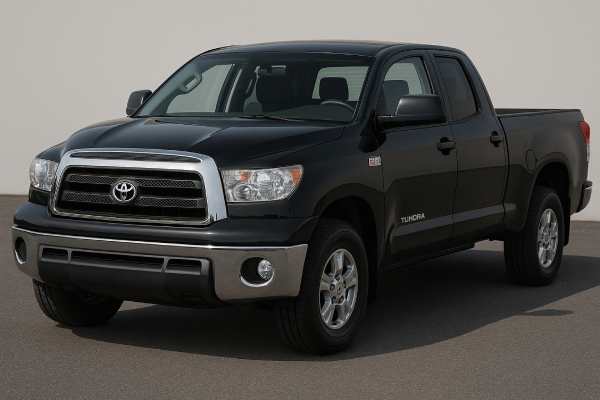
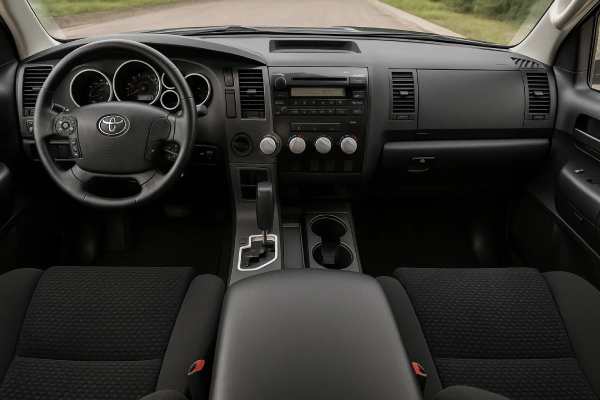
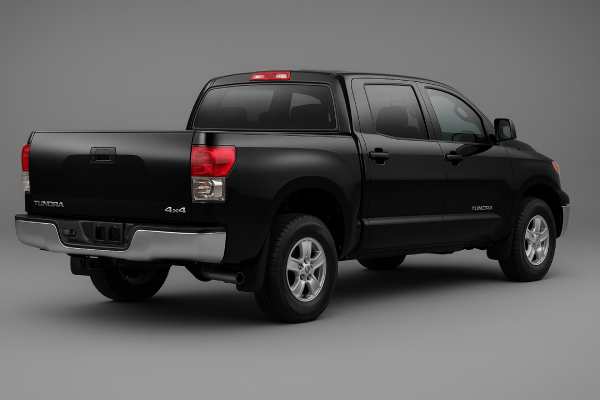
The second-generation Toyota Tundra with the 1GR-FE 4.0-litre V6 in 4×4 form sits in a sweet spot between workhorse utility and sensible running costs. It does not have the headline towing numbers of the 5.7 V8, but it offers simpler packaging, lower purchase prices, and enough power for light-to-medium duty use. For many owners, especially those who combine daily commuting with weekend hauling, this is the Tundra that makes the most practical sense.
Underneath, you get the full XK50 chassis: a strong fully boxed frame in key areas, big brakes, and a proper part-time 4×4 system with low range. The V6 is chain-driven, known for long life when serviced on time, and shares many components with other Toyota trucks and SUVs. This article walks through specifications, real-world performance, reliability patterns, maintenance planning, and how this V6 4×4 Tundra compares to rival half-ton pickups so you can decide whether it fits your needs.
Top Highlights
- Robust 1GR-FE 4.0 V6 with timing chain, known for long service life when maintained.
- Full XK50 Tundra chassis with strong frame, big brakes, and serious 4×4 hardware.
- Typically lower purchase price and slightly better fuel use than equivalent V8 trucks.
- Watch for frame and underbody corrosion on trucks used in heavy road-salt regions.
- Plan engine oil changes every 5,000 miles / 8,000 km or 6 months, whichever comes first.
Navigate this guide
- Toyota Tundra XK50 4×4 profile
- Engine and specs for 1GR Tundra
- Tundra trims and safety package
- Reliability and issues for XK50
- Ownership maintenance guide Tundra
- Driving experience and real economy
- How this Tundra compares
Toyota Tundra XK50 4×4 profile
The 2007–2010 Toyota Tundra 4×4 with the 1GR-FE V6 is part of the first years of the XK50 generation. This was a major step up from the earlier XK40 truck, with a much larger body, stronger frame, and greater payload and tow ratings. Even with the “small” engine in the range, the 4×4 V6 model is a full-size pickup in every sense, sized to compete head-on with the Ford F-150, Chevrolet Silverado, Ram 1500, and Nissan Titan of the same era.
Toyota positioned the V6 4×4 mainly as a work or fleet truck, or for private buyers who needed a capable four-wheel-drive pickup but did not tow heavy trailers every week. It was commonly found in Regular Cab long-bed and Double Cab configurations, with the CrewMax cab more often paired to V8 engines. That means many V6 4×4 trucks are relatively simple inside: durable fabrics, fewer luxury options, and fewer electronic gadgets to age badly.
The 1GR-FE engine itself is a 4.0-litre DOHC V6 with a timing chain, aluminium block and heads, and variable valve timing on the intake side. It had already seen service in the 4Runner, Tacoma, and international Land Cruiser Prado, so by the time it reached the Tundra it was a proven unit. Power output of 236 hp and around 266 lb-ft of torque is modest for a half-ton pickup, but the torque curve is broad and the gearing is chosen to keep the engine in its useful band.
As a 4×4, this Tundra uses a part-time system with a two-speed transfer case. In normal driving you run in 2H (rear-wheel drive), then select 4H or 4L for slippery surfaces and off-road use. An automatic limited-slip function uses the brakes to control wheelspin, and stability control is standard on most trims. Ground clearance is generous, and approach and departure angles are good enough for forestry roads, construction sites, and snowy tracks, especially on the shorter wheelbase versions.
For a buyer today, the 4×4 V6 XK50 Tundra is appealing if you want Toyota truck durability, honest mechanicals, and less thirst than the big V8s, while accepting that you are not chasing maximum tow ratings or quickest acceleration.
Engine and specs for 1GR Tundra
Engine and performance
The 1GR-FE 4.0-litre V6 in this Tundra is a 60-degree engine with aluminium block and heads.
Engine and performance
| Item | Specification (typical for 2007–2010 V6 4×4) |
|---|---|
| Engine code | 1GR-FE |
| Layout and cylinders | 60° V6, DOHC, 24 valves |
| Valvetrain | DOHC, 4 valves per cylinder, VVT-i intake |
| Bore × stroke | ~94.0 mm × 95.0 mm |
| Displacement | 4.0 L (3,956 cc) |
| Induction | Naturally aspirated |
| Fuel system | Sequential multi-port fuel injection |
| Compression ratio | ~10.0 : 1 |
| Max power | 236 hp @ ~5,200 rpm |
| Max torque | ~361 Nm (266 lb-ft) @ ~4,000 rpm |
| Timing drive | Duplex timing chain |
| Recommended fuel | Unleaded regular (87 AKI / 91 RON) |
In real use, this V6 pulls cleanly from low revs and prefers to work in the mid-range. It is not as relaxed when towing heavy loads at highway speeds as the 5.7 V8, but for light trailers, small boats, or utility use it is entirely adequate.
Efficiency and aerodynamics (approximate)
| Item | Typical value (varies by cab/bed) |
|---|---|
| Rated consumption city | ~15–16 mpg US (14.7–15.7 L/100 km) |
| Rated consumption highway | ~19–20 mpg US (11.8–12.4 L/100 km) |
| Rated combined | ~16–17 mpg US (13.8–14.7 L/100 km) |
| Real-world highway @ 120 km/h | 12–13 L/100 km (18–20 mpg US) |
| Drag coefficient (typical pickup) | ~0.38–0.40 |
Exact numbers vary with cab, bed length, axle ratio, and tyre choice, but these figures give a realistic planning range.
Transmission and driveline
For this generation, the V6 Tundra 4×4 is paired with a 5-speed automatic transmission and a part-time transfer case.
| Item | Specification |
|---|---|
| Transmission | 5-speed automatic (A750F family) |
| Gear ratios (approximate) | 1st 3.52; 2nd 2.04; 3rd 1.40; 4th 1.00; 5th 0.72; Rev 3.22 |
| Final drive ratio | ~3.91 (varies slightly by trim/axle package) |
| Drive type | Part-time 4×4, 2H / 4H / 4L |
| Differentials | Open; brake-based traction control “auto LSD” |
| Transfer case | 2-speed, lever or knob-select (model-dependent) |
Chassis, dimensions and capacities
Figures below are typical for common Double Cab 4×4 V6 models; Regular Cab and long-bed versions vary slightly.
| Item | Approximate value |
|---|---|
| Front suspension | Double wishbone, coilover, anti-roll bar |
| Rear suspension | Solid axle, leaf springs, staggered shocks |
| Steering | Rack-and-pinion, power-assisted |
| Front brakes | Ventilated discs, ~340 mm |
| Rear brakes | Solid or ventilated discs, ~320 mm |
| Wheelbase | ~3,700 mm (145.7 in) typical Double Cab |
| Overall length | ~5,800 mm (228–230 in, model-dependent) |
| Overall width | ~2,030 mm (80 in) |
| Overall height | ~1,940 mm (76 in) |
| Ground clearance | ~260 mm (10.2 in) |
| Curb weight | ~2,250–2,450 kg (4,960–5,400 lb) |
| GVWR | ~3,175–3,355 kg (7,000–7,400 lb) |
| Fuel tank capacity | ~100 L (26 US gal) |
Performance and capability (typical ranges)
| Item | Approximate value |
|---|---|
| 0–100 km/h (0–62 mph) | ~8.8–9.5 s (empty truck) |
| Top speed (limited) | ~175 km/h (109 mph) |
| Towing capacity (braked) | ~2,150–2,300 kg (4,750–5,100 lb) with tow package |
| Towing capacity (unbraked) | Typically ~680 kg (1,500 lb) |
| Payload | ~635–730 kg (1,400–1,600 lb) |
| Roof load | ~75–100 kg (165–220 lb), check specific rack rating |
Fluids, service and electrical (typical)
These values vary slightly by year and market; always confirm for your exact VIN.
| System | Specification / capacity (approximate) |
|---|---|
| Engine oil | 5W-30 or 0W-20 meeting API SM/SN; ~5.5 L (5.8 US qt) |
| Engine coolant | Toyota Super Long Life Coolant; ~10–11 L (10.5–11.5 US qt) |
| Automatic transmission | Toyota WS ATF; ~10–11 L for full drain and refill |
| Front differential | 75W-90 GL-5 gear oil; ~1.2–1.5 L |
| Rear differential | 75W-90 GL-5 gear oil; ~2.5–3.0 L |
| Transfer case | ATF or gear oil (varies by year); ~1.5–2.0 L |
| A/C refrigerant | R-134a; charge typically ~650–700 g |
| Alternator output | Roughly 130–150 A |
| 12 V battery | Around 70–80 Ah, Group 27 or similar |
| Spark plugs | Iridium; gap ~1.0–1.1 mm (0.039–0.043 in) |
| Wheel lug nut torque | ~150 Nm (111 lb-ft) |
Tundra trims and safety package
During 2007–2010, the V6 4×4 Tundra was usually offered in the lower and mid-level trims rather than the luxury variants. Names depended on market, but in North America you would commonly see:
- Base/Regular Cab work truck (often with vinyl flooring and minimal options).
- SR5-style mid-grade with cloth seats, more comfort features, and appearance upgrades.
- Occasional regional or value packages pairing the V6 with Double Cab and popular options.
Mechanically, the V6 4×4 shares most of its chassis hardware with the V8 models. Important trim-level differences include axle ratios, tow-package content, and wheel/tyre packages. Trucks with a factory tow package typically receive:
- Upgraded engine and transmission cooling.
- Tow/haul shift programming.
- Trailer wiring and hitch receiver.
- Sometimes a numerically higher axle ratio for better pulling at the expense of fuel use.
Wheel sizes range from basic 17-inch steel rims with all-season tyres to 18-inch alloys with more aggressive tread on off-road-oriented packages. When cross-shopping used trucks, note that larger, heavier wheels and tyres can dull acceleration and worsen fuel economy, but often improve grip in off-road or snow conditions.
Inside, the V6 4×4 usually has hard-wearing materials rather than luxury trim. That is a plus for long-term durability. You may find:
- Manual or simple automatic climate control.
- Basic audio systems with CD/aux input, sometimes Bluetooth on later years.
- Bench or 40/20/40 split front seats in work-truck trims; bucket seats with a centre console on better-equipped models.
- Optional convenience features like power driver’s seat or steering-wheel audio controls on some SR5-type trucks.
Safety equipment and ratings
Even in V6 form, the XK50 Tundra was engineered to compete in modern crash tests. Safety content typically includes:
- Dual front airbags.
- Front seat-mounted side airbags.
- Full-length side curtain airbags for both rows on Double Cab and CrewMax.
- Anti-lock brakes (ABS) with electronic brakeforce distribution.
- Vehicle stability control and traction control.
- Brake assist and brake-based “auto limited slip” function.
- LATCH/ISOFIX child-seat anchors in rear outboard positions on double-cab bodies.
- Tyre pressure monitoring system.
In government and independent tests of the time, the Tundra generally scored well for frontal and side protection, with more mixed results in some later roof-strength and head-restraint evaluations, depending on body style and model year. The important points for a buyer:
- Properly equipped trucks provide strong occupant protection in common crash modes.
- Stability control and side-curtain airbags are key safety features; favour trucks that include both.
- Headlight performance and rollover scores can vary with cab height and tyre choice; test night-time visibility yourself.
Later in the production run, Toyota added or refined features like active front head restraints and updated stability-control tuning. When comparing a 2007 truck to a 2010 example, check whether software updates and safety equipment changes have been applied or were standard from new.
Reliability and issues for XK50
The 1GR-FE V6 and XK50 Tundra platform have an excellent overall reputation for durability, especially when compared with many rivals of the same age. That said, these trucks are now 15+ years old, so condition and maintenance history matter more than odometer alone.
It helps to group potential issues by how likely they are and how painful they can be.
Common and moderate-severity items
- Frame and underbody corrosion (common in road-salt regions)
Symptoms: flaky rust on frame rails, crossmembers, rear bumper supports, and brake lines. Severe cases may show perforation or failing spring hangers.
Root cause: long-term exposure to salt and moisture; trapped debris in boxed frame sections.
Remedy: professional inspection, aggressive rust treatment, and in serious cases, frame repairs or replacement. Some markets had inspection or corrosion-related campaigns, but most trucks now rely on owner maintenance. - Exhaust and heat-shield noise
Symptoms: rattles on cold start or over bumps, often from loose heat shields or corroded clamps.
Remedy: refit or secure heat shields, replace corroded hardware, and treat exposed metal. - Water pump seepage
Typical around mid to high mileage. Look for pink coolant traces near the pump or low-coolant warnings. Replacements are straightforward for an experienced technician and are often combined with a coolant flush. - Front suspension wear
As with any heavy truck used on poor roads, lower ball joints, control arm bushes, and tie-rod ends can wear. Symptoms include vague steering, clunks over bumps, or uneven tyre wear. Replacement parts are widely available, including higher-quality aftermarket options.
Occasional but important issues
- Secondary air injection system faults (where fitted)
Some 1GR-FE applications use a secondary air injection system to reduce cold-start emissions. Failures of the pump or valves can trigger check-engine lights and emissions-related limp modes. On affected trucks, updated parts and shielding, plus careful routing of hoses, are the standard fix. - Steering rack leaks
Over time, seals can weep, leading to low power steering fluid and heavier steering. Early intervention often means a rebuildable core; left too long, a full rack replacement may be needed. - Driveline vibrations or clunks
Felt on take-off or when shifting from drive to reverse. Often related to dry slip yokes or worn universal joints on the propeller shaft. Lubrication or replacement of affected components usually cures the problem.
Rare but high-impact faults
- Severe frame or structural corrosion
In extreme cases, a truck may fail inspection due to frame perforation near spring hangers or steering mounts. Repairing this correctly is labour-intensive and costly; such trucks are often best avoided. - Major automatic transmission failure
The A750F gearbox is generally durable, but abuse, overheating from heavy towing without proper cooling, or very poor service history can lead to harsh shifting or slipping. A used replacement or professional rebuild is expensive, so a smooth, clean-shifting transmission and documented fluid changes are very important buying points.
Recalls, service campaigns and software
Like many vehicles of this era, the XK50 Tundra was covered by several recalls and service campaigns, including:
- Accelerator pedal and floor-mat interference campaigns.
- Propeller shaft and driveline checks on certain trucks.
- Airbag-related recalls on some build ranges.
- Occasional ECU or stability-control software updates.
For any truck you are considering, run the VIN through the official recall checker in your region and ask a Toyota dealer to confirm completion of all applicable campaigns in their system. This is also a good way to verify approximate service history and past dealer visits.
Pre-purchase reliability checklist
When inspecting a used 4×4 V6 Tundra XK50, pay close attention to:
- Full service history with regular oil changes and drivetrain fluid services.
- Evidence of cooling system care (coolant changes, radiator condition, heater performance).
- Frame inspection, including inside boxed sections where accessible.
- Smooth engagement of 4H and 4L, and quiet operation of front differential and transfer case.
- Transmission behaviour: no shudder, harsh downshifts, or delayed engagement.
- Even tyre wear and suspension condition.
- Proper operation of all safety systems (ABS, stability control, airbags warning lights off).
Ownership maintenance guide Tundra
A clear maintenance plan is one of the biggest advantages of owning a Toyota truck. The 1GR-FE V6 uses a timing chain and long-life fluids in several areas, but that does not mean “fill for life.” Following a sensible schedule keeps the truck reliable well into high mileage.
Below is a practical baseline; always adjust based on your usage, climate, and official documentation.
Core service intervals (typical)
- Engine oil and filter – Every 5,000 miles / 8,000 km or 6 months for mixed or heavy use. High-quality synthetic oil meeting Toyota’s specifications is recommended, especially if towing or driving in hot climates.
- Engine air filter – Inspect at 15,000 miles / 24,000 km; replace by 30,000 miles / 48,000 km or sooner in dusty conditions.
- Cabin air filter – Replace around every 20,000–25,000 miles / 32,000–40,000 km, or every 2 years.
- Spark plugs – Iridium plugs typically at 90,000–120,000 miles / 145,000–190,000 km, depending on year and plug type.
- Coolant – First change often around 100,000 miles / 160,000 km or 8–10 years, then shorter intervals (for example, every 50,000 miles / 80,000 km). Many owners choose a conservative 5-year interval.
- Automatic transmission fluid – Drain and fill every 60,000–90,000 miles / 100,000–145,000 km, especially if towing. Include filter and pan cleaning on the first major service.
- Differentials and transfer case – 60,000 miles / 100,000 km is a good baseline, sooner if frequent 4×4 or towing use.
- Brake fluid – Flush every 2–3 years to protect ABS and stability-control components.
- Serpentine belt and hoses – Inspect at every service after 60,000 miles / 100,000 km; replace at first signs of cracking, glazing, or bulging.
- 12 V battery – Test annually after about 4–5 years; many will last 5–7 years in normal use.
- Wheel alignment and tyre rotation – Rotate tyres every 5,000–7,500 miles / 8,000–12,000 km; align whenever tyres are replaced or if uneven wear appears.
The timing chain in the 1GR-FE does not have a fixed replacement interval. Instead, listen for rattles at cold start, watch for timing-correlation fault codes, and check for oil leaks at the chain tensioner area. With good oil and regular changes, chain and guides typically last the life of the engine.
Key torque values and fluid choices
- Wheel lug nuts: roughly 150 Nm (111 lb-ft).
- Engine oil drain plug: typically around 40 Nm (30 lb-ft).
- Spark plugs: usually in the 18–25 Nm (13–18 lb-ft) range, depending on plug design.
Use only coolants and fluids that explicitly meet Toyota’s specifications. Mixing generic “universal” coolant with Toyota Super Long Life can shorten the life of seals and aluminium components.
Buyer’s guide and reconditioning priorities
If you are buying a used Tundra 4×4 V6, plan both your inspection and your first year of catch-up maintenance:
Inspection priorities
- Corrosion – Frame, brake lines, fuel tank straps, spare-wheel carrier, bed crossmembers, cab mounts.
- Leaks – Engine front cover, cam covers, rear main area, transmission pan, differentials.
- Driveline – U-joints, slip yoke lubrication, noises in 4H/4L, clunks on throttle changes.
- Cooling system – Radiator condition, heater performance, any signs of overheating.
- Electrics – All lights, 4×4 indicator logic, ABS and stability-control warning lights, blower speeds.
- Interior wear – Seat bases, steering wheel, pedal rubbers; this also helps judge whether the odometer reading matches the apparent use.
Common first-year reconditioning items
- Full fluid service (engine, transmission, diffs, transfer case, brake fluid, coolant).
- New engine and cabin filters, wiper blades, and often a battery.
- Tyres and brakes if the truck has been sitting or shows uneven wear.
- Rust treatment or underbody protection in harsh climates.
Long-term, a well-maintained V6 XK50 Tundra 4×4 can reasonably go beyond 200,000 miles / 320,000 km without major drivetrain work, making it a strong candidate for owners who value durability more than the last bit of power.
Driving experience and real economy
Behind the wheel, the 4.0-litre V6 Tundra feels different from its V8 siblings, but not in a bad way. The engine is smoother and a bit lighter over the front axle, which subtly helps steering response and ride over sharp bumps. At idle it is quiet and refined; under load you hear a purposeful V6 growl rather than a deep V8 rumble.
Ride, handling and noise
The XK50 chassis is stiff, and even V6 trucks benefit from the same large brakes and robust suspension layout as the V8 models. Unladen, the rear leaf springs can feel firm, especially over broken pavement or expansion joints. With some weight in the bed—tools, camping gear, or bags of gravel—the ride settles noticeably.
Steering is light but accurate for a big truck. Straight-line stability on the highway is good, though very aggressive all-terrain tyres can introduce some wander or noise. Cabin sound levels are competitive for the class: wind noise is controlled, but tyre roar depends heavily on tread pattern and road surface.
Braking performance is strong, with good pedal feel. The truck inspires confidence when descending grades, and the 5-speed automatic’s manual mode (where fitted) allows useful engine braking in 3rd or 2nd gear.
Powertrain character
With 236 hp moving a body-on-frame 4×4 pickup, the Tundra V6 is not fast, but it is adequate. Around town, the engine’s low-end torque and short first gear let it pull away without drama. The automatic shifts smoothly and will kick down promptly when you ask for more power.
On steep grades or when towing within its rated limits, expect frequent downshifts and higher revs than a big V8 would need. This is normal for a multi-valve V6 and not harmful when the cooling system is in good shape. Using the tow/haul mode where available helps hold gears longer and reduces hunting.
Real-world fuel economy
Actual consumption depends heavily on body style, tyre choice, driving style, and how often you use 4×4, but owners commonly report:
- City driving: around 14–16 mpg US (16.8–14.7 L/100 km).
- Mixed use: around 15–17 mpg US (15.7–13.8 L/100 km).
- Steady highway: 18–20 mpg US (13.1–11.8 L/100 km) at typical speeds, with best numbers at moderate 90–105 km/h rather than 120 km/h.
Compared to the 5.7 V8, the V6 4×4 usually saves a couple of mpg in similar use, especially when lightly loaded. Under heavy towing, the gap narrows; both engines will burn fuel quickly when working hard.
Towing a moderate trailer within the 4,750–5,100 lb range, you can expect fuel economy to drop by 25–40 percent depending on terrain and speed. The truck remains stable with a well-set-up load-levelling hitch and good trailer brakes, but as always, careful loading and conservative speeds matter.
How this Tundra compares
When you compare the 2007–2010 Tundra 4×4 1GR-FE to its peers, it helps to think about three axes: capability, reliability, and cost of ownership.
Versus V8 Tundra models
- Pros of the V6 4×4: lower purchase price on the used market, slightly better fuel economy in light use, and a simpler engine with fewer cylinders and a strong reliability record. Insurance and tax can also be lower in some regions.
- Cons: reduced towing headroom and slower acceleration, especially at higher altitudes or with heavy loads. If you regularly tow near the truck’s maximum ratings or carry heavy loads every day, a 4×4 5.7 V8 may be a better fit.
Versus Ford F-150, Silverado/Sierra, Ram 1500, Titan
For the same era:
- Many domestic rivals offer more power from base V8 engines and sometimes higher tow ratings, but their long-term reliability can be more variable, especially for certain transmissions and complex option packages.
- The Tundra’s cabin materials can feel less upscale than some higher-trim Detroit trucks of the time, but they often age better, with fewer rattles and failed electronics.
- The Tundra’s 4×4 system is straightforward and robust; rivals with full-time or auto-4WD modes may offer more flexibility but add complexity.
Who the V6 4×4 Tundra suits best
This particular configuration is ideal if you:
- Want a reliable full-size 4×4 pickup, but do not need maximum tow ratings every week.
- Value a simpler, well-proven engine and are comfortable trading some performance for lower running costs.
- Prefer a truck you can keep for a decade or more with predictable maintenance, focusing on prevention rather than repairs.
If you want the quickest, most luxurious, or most heavily optioned truck of this generation, a V8 in a higher trim—or a competitor’s premium package—might appeal more. If you want a durable, honest tool that can still serve as a comfortable daily driver, the XK50 Tundra 4×4 V6 deserves serious consideration.
References
- 2007 TOYOTA TUNDRA | NHTSA 2024 (Recall Database)
- 2008 Toyota Tundra 4-door truck 2023 (Safety Rating)
- Gas Mileage of 2007 Toyota Tundra 2024 (Fuel Economy Data)
- Toyota Announces Pricing for 2007 Tundra 2006 (Press Release)
- Toyota Tundra 2024 (General Reference)
Disclaimer
This article is for informational purposes only and is not a substitute for professional diagnosis, repair, or official service information. Specifications, torque values, fluid types, capacities, and maintenance intervals can vary by VIN, model year, market, and installed equipment. Always confirm details against the official owner’s manual, factory service manual, and technical bulletins for your specific vehicle, and follow all safety procedures when working on a vehicle.
If you found this guide useful, please consider sharing it with other enthusiasts and owners on social platforms such as Facebook or X/Twitter to support xcar’s work and help more people make informed decisions.