
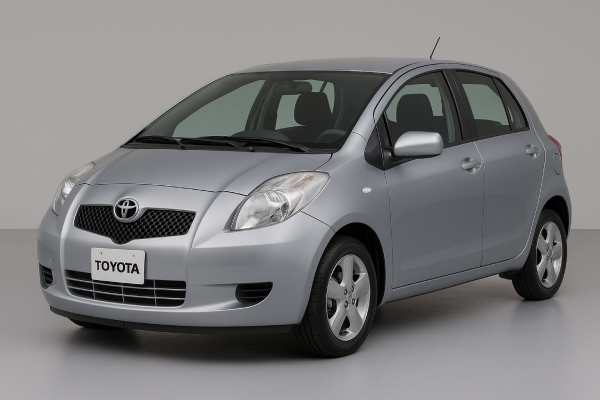
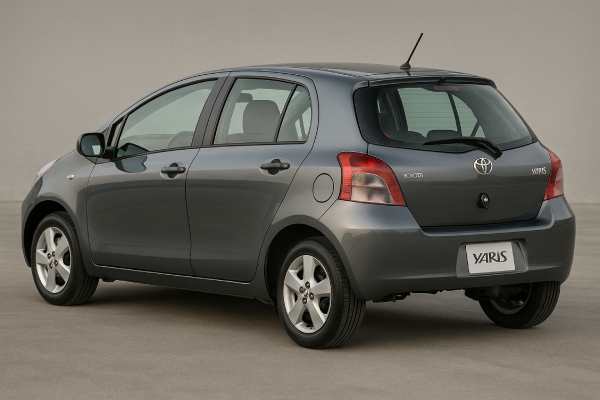
The Toyota Yaris (NCP91) with the 1NZ-FE 1.5 litre engine is the “grown-up” member of the XP90 Yaris family. It keeps the compact size and clever packaging of the smaller engines, but adds real motorway capability and stronger mid-range pull. With around 106 hp, a robust timing chain and Toyota’s VVT-i system, the 1NZ-FE is tuned for long life, modest emissions and good fuel economy rather than drama.
As a used buy today, the 2006–2008 Yaris 1.5 appeals if you want something cheap to run but not underpowered. The car is light, easy to manoeuvre and surprisingly spacious inside, yet it will cruise at motorway speeds without feeling strained. Safety equipment is good for the era, and the platform has a strong reputation for reliability. The main watchpoints are age-related wear, occasional oil leaks or chain noise if servicing has been stretched, and making sure any steering or airbag campaigns have been closed.
Quick Specs and Notes
- 1.5 l 1NZ-FE engine gives roughly 106 hp and noticeably stronger torque than 1.0 and 1.3 variants.
- Compact footprint with a sliding rear bench and deep boot makes it very practical for families and city use.
- Timing chain, port injection and simple emissions hardware help long-term reliability if serviced on time.
- Automatic (4-speed) versions feel more relaxed but can be less efficient and slower than 5-speed manuals.
- Aim for engine oil and filter changes every 10,000–15,000 km or 12 months, whichever comes first.
Guide contents
- Toyota Yaris NCP91 1.5 Profile
- Yaris NCP91 1.5 Specs Breakdown
- NCP91 1.5 Trims Safety and Options
- Reliability Patterns and Fixes NCP91
- Maintenance Strategy and Buyer Guide
- Driving Dynamics and Real Performance
- Yaris NCP91 1.5 versus Rivals
Toyota Yaris NCP91 1.5 Profile
The NCP91 Yaris is the XP90-generation three- and five-door hatch fitted with the 1NZ-FE 1.5 litre petrol engine. In many markets it sits at the top of the regular Yaris range, sometimes wearing “S”, “SR” or “RS” badges depending on region. Compared with the 1.0 and 1.3 versions, this 1.5 brings a much stronger mid-range and a more relaxed motorway gait, while keeping the same small-car agility in town.
Under the bonnet, the 1NZ-FE is a compact inline-four with aluminium block and head, 16 valves and Toyota’s VVT-i system on the intake cam. Power is around 106 hp, with torque in the 140 Nm range. That does not sound huge, but in a hatch that weighs little more than a tonne it gives genuinely brisk city performance and respectable acceleration onto fast roads. Importantly, it is an unstressed, naturally aspirated design with a long track record in various Toyotas, from the Yaris to the Prius hybrid (in modified form).
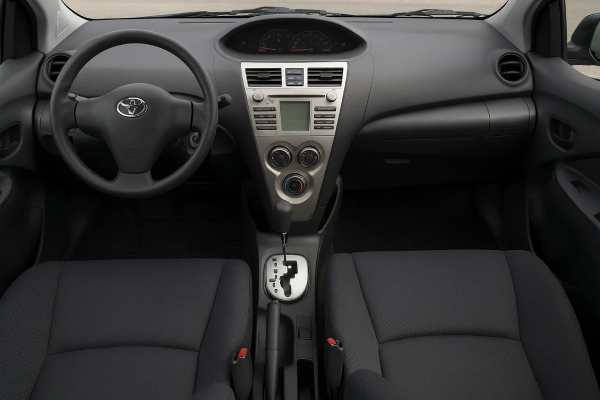
The body and cabin follow the same clever layout as other XP90 Yaris models. A tall roof, wide opening doors and a sliding rear bench make the most of the short wheelbase. The central digital instrument cluster frees up dashboard space, and multiple cubbies and trays make the cabin user-friendly. In the back, the bench can slide to trade legroom for boot volume, and folds flat for bulky loads.
From an ownership perspective, the NCP91 1.5 hits a sweet spot. It is:
- Small and light enough to park anywhere.
- Strong enough for long-distance commuting and hills.
- Simple enough mechanically that independent workshops understand it well.
- Modern enough to offer good crash protection and everyday safety features.
For drivers stepping up from a very small engine or an older city car, the Yaris 1.5 often feels like the smallest car that comfortably does “big car” jobs without breaking the bank.
Yaris NCP91 1.5 Specs Breakdown
This section focuses on the core engineering data and capacities for typical 2006–2008 Yaris (NCP91) hatchbacks with the 1NZ-FE engine. Exact numbers vary slightly by market, trim and transmission, so always check your VIN-specific documentation.
Engine and Performance – 1NZ-FE
| Item | Data |
|---|---|
| Engine code | 1NZ-FE |
| Configuration | Inline-4, aluminium block and head |
| Valvetrain | DOHC, 16 valves, VVT-i on intake |
| Displacement | 1,497 cm³ (1.5 l) |
| Bore × stroke | Approx. 75.0 × 84.7 mm |
| Compression ratio | Around 10.5–10.8 : 1 (market-dependent) |
| Fuel system | Multi-point port fuel injection |
| Induction | Naturally aspirated |
| Max power | ~106 hp (79 kW) @ ~6,000 rpm |
| Max torque | ~140 Nm (103 lb-ft) @ ~4,200 rpm |
| Emissions standard | Typically Euro 4 or equivalent |
| Official combined fuel use | Roughly 6.0–6.4 l/100 km |
| Real-world mixed driving | Often 6.5–7.5 l/100 km, depending on use |
The engine uses a timing chain rather than a belt, with hydraulic tensioner and chain guides. Under normal maintenance the chain is expected to last the life of the engine, though high-mileage cars with neglected oil changes can develop chain noise.
Transmission and Driveline
| Item | Data |
|---|---|
| Drive type | Front-wheel drive (FWD) |
| Manual gearbox | 5-speed manual (C5x series) |
| Automatic gearbox | 4-speed torque-converter automatic in many markets; some CVT in Japan |
| Final drive ratio | Around 4.2–4.3 : 1 (varies by gearbox and region) |
| Differential | Open front differential |
| Turning circle | Roughly 9.4–9.6 m kerb-to-kerb |
Manual transmissions offer lower fuel consumption and better acceleration, while the 4-speed automatic trades some efficiency and speed for ease of use in traffic.
Chassis and Dimensions
| Item | Data |
|---|---|
| Platform | Toyota B platform (XP90) |
| Front suspension | MacPherson struts, coil springs, anti-roll bar |
| Rear suspension | Torsion beam axle with coil springs |
| Steering | Electric power-assisted rack and pinion |
| Front brakes | Ventilated discs (approx. 255–260 mm) |
| Rear brakes | Drums on most trims; rear discs on some sport grades |
| Wheelbase | 2,460 mm (96.9 in) |
| Overall length | Around 3,750–3,785 mm depending on bumper style |
| Width | 1,695 mm (66.7 in) |
| Height | About 1,530 mm (60.2 in) |
| Kerb weight | Roughly 1,020–1,080 kg, depending on trim and transmission |
| Gross vehicle weight | Around 1,480–1,520 kg |
| Fuel tank | 42 l (approx. 11.1 US gal, 9.2 UK gal) |
| Luggage volume | Roughly 272–363 l (seats up, seat position dependent) |
Performance and Capability
| Item | Data (typical ranges) |
|---|---|
| 0–100 km/h (manual) | Around 9.5–10.5 s |
| 0–100 km/h (automatic) | Around 11–12 s |
| Top speed | About 175–185 km/h depending on spec |
| Braking 100–0 km/h | Typically high-30 m on quality tyres |
Towing limits vary strongly by country; in some markets the 1.5 hatch is not homologated for towing at all, while others allow modest braked trailer weights around 900–1,000 kg. Always check local paperwork.
Fluids and Service Capacities (approximate)
| System | Specification | Capacity |
|---|---|---|
| Engine oil | 5W-30 meeting Toyota’s petrol specs | ~3.5 l with filter |
| Coolant | Long-life ethylene glycol, Toyota Super Long Life | ~5.3 l |
| Manual gearbox oil | GL-4 75W-90 | ~1.7–2.0 l |
| Automatic ATF | Toyota Type T-IV or WS (market dependent) | ~6–7 l total; ~3–4 l for drain/refill |
| Brake fluid | DOT 3 or DOT 4 | Fill to MAX mark |
| A/C refrigerant | R134a | ~400–500 g |
Electrical
| Item | Data |
|---|---|
| Alternator output | Typically 80–100 A depending on trim |
| 12 V battery | ~35–45 Ah, small DIN/JIS casing |
| Spark plugs | Long-life iridium plugs, gap around 1.0 mm |
These figures give a working baseline; for exact torque values, capacities and compatibility, your local workshop manual remains the final word.
NCP91 1.5 Trims Safety and Options
Trim naming for the Yaris NCP91 1.5 varies widely by region. In Europe, you might see designations like T2, T3, T Spirit, SR or “TS”-style sport trims; in Japan, “RS” denotes the sportier versions; North American cars often use CE, LE and S. The mechanical base is similar, but equipment and visual details change.
Typical trim structure
- Entry or base grades usually pair the 1.5 with steel wheels, simpler audio systems and cloth seats. Air conditioning may be optional or standard depending on climate.
- Mid-level trims add remote locking, better audio, split-fold sliding rear bench, leather-wrapped steering wheel and more attractive wheel covers or alloys.
- Higher trims and sport grades bring alloy wheels (often 15″ or 16″), fog lamps, side skirts or spoilers, firmer suspension tuning and sometimes rear disc brakes.
Mechanically, torsion-beam rear suspension and front MacPherson struts remain, but sportier variants may receive:
- Slightly stiffer springs and dampers.
- Larger anti-roll bars.
- Different wheel and tyre combinations (e.g. 195/50 R16).
Quick identifiers
When viewing a used car:
- Look at the wheel and tyre size, body kit and rear brake type. Rear discs, 16″ alloys and factory spoilers usually indicate a more driver-focused grade.
- Inside, check for features like steering-wheel controls, central armrests, split/folding sliding rear bench and upgraded audio head units.
- Badging on the tailgate or grille often indicates “S”, “SR”, “RS” or similar trim-level branding.
Safety equipment and ratings
The XP90 Yaris range, including NCP91 1.5 models, scored strongly in crash tests when launched. Well-specified cars typically include:
- Dual front airbags.
- Front side airbags.
- Curtain airbags covering front and rear outboard occupants.
- Driver’s knee airbag in Euro NCAP test-spec models.
- Seatbelt pretensioners and force limiters.
Active safety features usually comprise:
- ABS with Electronic Brake-force Distribution (EBD).
- Brake Assist (emergency brake assist).
- Vehicle Stability Control (VSC) and traction control on many mid-to-high trims or as part of safety packs.
Children’s safety is supported by ISOFIX anchor points on the outer rear seats and, in many markets, top tether points. The rear doors on five-door variants open wide, which helps when installing bulky rear-facing seats.
Driver assistance and electronics
Advanced driver assistance systems like lane-keep assistance, adaptive cruise control or automatic emergency braking were not yet common in this class during 2006–2008, so you should not expect them. The most important “assist” systems on an NCP91 are:
- Well-tuned ABS/EBD and stability control.
- Clear visibility from the tall glasshouse and large mirrors.
- A tidy footprint and light steering that make the car forgiving and easy to place.
When shortlisting cars, it is worth favouring examples that have side/curtain airbags and VSC, especially if the car will do family or winter duty. These features matter more to real-world safety than cosmetic trim differences.
Reliability Patterns and Fixes NCP91
The Yaris NCP91 with the 1NZ-FE engine is generally regarded as one of the more robust small cars of its time. Most issues arise from age, mileage and lack of maintenance rather than fundamental design flaws. Still, certain patterns appear often enough to be worth knowing.
Engine and fuel system
- Oil leaks and consumption: With age, cam cover gaskets and crankshaft seals can seep. Moderate oil consumption is not common but can occur on very high-mileage engines, especially if they have seen long oil change intervals or frequent short trips. Regular level checks are the easiest defence.
- Timing chain noise: The chain itself is normally long-lived, but stretched chains, worn guides or lazy tensioners can cause rattling on cold start or trigger cam/crank correlation codes. A noisy chain that persists warm usually points to a chain kit replacement.
- Ignition coils: Individual coil-on-plug units can fail, leading to misfires and rough running. The fix is to replace the faulty coil (or all four as preventative maintenance on high-milers).
- Throttle body and idle valve contamination: Deposits can build up, particularly on cars used mainly for short trips. Rough idle, stalling when coming off throttle or hesitation off-idle are common symptoms. Cleaning and an ECU idle relearn typically resolve this.
Cooling and exhaust
- Water pump seepage: Slight coolant stains at the pump weep hole are common over time. Ignored leaks risk overheating; preventative replacement during other coolant work is sensible on older cars.
- Radiator and hoses: Original radiators can develop small leaks near plastic end tanks after many heat cycles. Soft or swollen hoses also indicate replacement time.
- Exhaust corrosion: Back boxes and hangers can rust in harsh climates or with many short trips. Rattles over bumps and a louder exhaust note are clues.
Transmission and driveline
- Manual gearboxes are generally strong. Clutches wear in heavy city use or when drivers ride the pedal, leading to slip or judder. Gearbox bearings are rarely an issue if the oil has never run low.
- Automatic transmissions on these cars are conventional 4-speed units. They are durable when the fluid is clean and kept at the right level. Hesitation, shudder or harsh shifting can often be improved by a fluid change (or several gentle drain-and-refills) and checking engine/gearbox mounts.
- Driveshafts and CV joints may eventually click on full lock if the boots split and grease escapes. Catching a torn boot early avoids full joint replacement.
Chassis, steering and brakes
- Front suspension can develop clunks due to worn stabiliser links, top mounts or control arm bushes. None are especially expensive to fix.
- Rear torsion beam and underbody should be inspected for surface corrosion, especially in salt-using regions. While severe structural rust is less common than on some rivals, it is still possible on poorly washed cars.
- Electric power steering has occasionally featured in service bulletins for certain markets, covering issues like intermittent heavy steering or warning lights. In many cases, ECU or column replacement under campaign resolved the problem.
Electrical and safety systems
- Airbag system: Like many vehicles of this era, some Yaris models have been subject to airbag-related recalls. Ensure the car you are looking at has had all relevant campaigns completed.
- Blower motor resistors, window regulators and central locking actuators can fail with age but are relatively straightforward to diagnose and replace.
Overall, the Yaris NCP91’s reliability picture is very positive. Most failures are isolated and age-related rather than systemic. A car with a clean service record, quiet engine, smooth gearbox and solid underbody is usually a safe bet.
Maintenance Strategy and Buyer Guide
A sensible maintenance strategy keeps the NCP91 Yaris 1.5 dependable and pleasant to drive well into high mileages. While official service intervals may be up to 15,000 km or one year, many owners shorten these on older cars for extra margin.
Practical maintenance schedule (typical guidance)
| Item | Interval (distance/time) | Notes |
|---|---|---|
| Engine oil and filter | 10,000–15,000 km or 12 months | Shorter intervals for city/short-trip use |
| Engine air filter | Inspect every 15,000 km; replace ~30,000–45,000 km | Replace sooner in dusty conditions |
| Cabin filter | Every 15,000–30,000 km or 1–2 years | Helps demisting and HVAC performance |
| Spark plugs (iridium) | Every 90,000–100,000 km or 6 years | Use correct torque and avoid over-tightening |
| Coolant | First change around 8–10 years / 150,000 km, then every 5 years / 80–100,000 km | Stick with compatible long-life coolant |
| Manual gearbox oil | Every 90,000–120,000 km | Fresh oil improves shift feel |
| Automatic ATF | Every 60,000–80,000 km (drain and refill) | More frequent changes are cheap insurance |
| Brake fluid | Every 2 years regardless of mileage | Essential for pedal feel and corrosion control |
| Auxiliary belt | Inspect every 30,000 km; replace 90,000–120,000 km | Look for cracks and glazing |
| Wheel alignment and tyre rotation | Check annually, rotate tyres 10,000–15,000 km | Reduces uneven wear and tyre noise |
| 12 V battery | Test annually after 5–6 years | Replace before repeated no-start events |
Because this engine uses a timing chain, there is no scheduled belt replacement, but the chain system should be inspected if there is persistent noise, fault codes or evidence of timing issues.
Fluid specs and key torque values (planning level)
- Engine oil: high-quality 5W-30 (or market-approved alternatives) meeting the relevant API/ACEA specs for petrol Toyotas.
- Coolant: Toyota Super Long Life Coolant or equivalent HOAT, premixed or mixed to the correct ratio.
- Gear oil (manual): GL-4 75W-90 or local equivalent.
- ATF: the exact Toyota ATF type (often Type T-IV or WS); mixing types is not recommended.
Typical torque values (always confirm):
- Wheel nuts: around 100–110 Nm.
- Spark plugs: approximately 18–22 Nm.
- Oil drain plug: roughly 30–40 Nm with a new washer.
Buyer’s checklist
When shopping for a used Yaris NCP91 1.5:
- Paperwork and history
- Look for regular oil changes and evidence of major services (coolant, plugs, brake fluid).
- Check for invoices covering any gearbox fluid changes.
- Confirm that recall work (especially airbag or steering campaigns) has been completed.
- Engine and drivetrain
- Start from cold and listen for rattles from the chain area that do not fade quickly.
- Check for smoke, misfires or rough idle.
- On manuals, feel for clutch slip or judder; on automatics, check for smooth, prompt shifts and no warning lights.
- Chassis and brakes
- Test drive over bumps and listen for clunks.
- Ensure the car tracks straight, brakes evenly and does not pull.
- Inspect tyres for uneven wear patterns that might indicate poor alignment or worn suspension.
- Body and interior
- Inspect under the boot floor, along sills and around the fuel filler for rust.
- Look for signs of accident repairs (overspray, misaligned panels).
- Test all electrics: windows, locks, mirrors, A/C, heater and lights.
Recommended spec
A well-maintained, mid-to-high trim NCP91 1.5 with:
- Side and curtain airbags.
- Stability control.
- 5-speed manual (for maximum efficiency and performance) or a gently used automatic with fluid evidence.
…is usually the sweet spot. Neglected, heavily modified or rust-affected examples are best avoided; there are enough good cars around that you can afford to be choosy.
Driving Dynamics and Real Performance
On the road, the NCP91 Yaris 1.5 feels noticeably more energetic than the 1.0 and 1.3 versions. It still is not a hot hatch, but the extra displacement and torque change the character of the car in everyday use.
Engine character
The 1NZ-FE pulls cleanly from low revs and has a broad usable band between roughly 2,000 and 5,500 rpm. Around town:
- Second and third gears cover most situations.
- The engine responds quickly enough for gaps in traffic without needing full throttle.
On the open road, it will comfortably sit at 120–130 km/h, with revs still moderate. Overtakes at motorway speeds usually require a downshift, but the engine is smooth even close to the redline, so brief bursts to join fast traffic are not stressful.
The 5-speed manual gearbox is light and easy to shift, with a predictable clutch bite point. The 4-speed automatic suits relaxed drivers and urban use; its fewer ratios mean higher revs at motorway speeds and slower kickdown, but it is simple and durable.
Ride and handling
Ride quality is tuned for comfort. The car feels:
- Supple over most urban bumps and broken tarmac.
- Stable on the motorway, provided suspension and tyres are in good condition.
Body roll is present but controlled. The car progressively understeers when pushed, which is exactly what you want in a small, front-drive hatch meant for everyday drivers. The electric power steering is light in town and builds some weight with speed. Feedback is not very detailed, but accuracy is good and the small turning circle makes tight manoeuvres easy.
Sportier trims with larger wheels and firmer springs feel more planted and responsive, but road noise and harshness over poor surfaces increase slightly. Tyre choice has a big influence: quality all-season or touring tyres keep things quiet and secure; very cheap tyres can make the car feel nervous in the wet and lengthen braking distances.
Noise, vibration and harshness
For a light B-segment car launched in the mid-2000s, the Yaris 1.5 is impressively refined:
- At city speeds, the engine is barely audible once warm.
- Wind noise is well contained up to typical motorway speeds.
- Tyre noise becomes the dominant sound on coarser surfaces, especially with wider or older tyres.
Worn door seals, tired engine mounts or budget tyres can significantly degrade NVH, so pay attention to how the car sounds and feels on your test drive.
Efficiency in real use
Fuel consumption depends strongly on driving style:
- City-heavy use: often 8.0–9.0 l/100 km if most trips are short and cold.
- Mixed use: 6.5–7.5 l/100 km is realistic for many owners.
- Steady extra-urban runs at 90–100 km/h: high-5s to low-6s l/100 km.
The 1.5 is therefore not dramatically thirstier than smaller engines but offers more flexibility and reserves, which is why many owners consider it the “best all-rounder” in the range.
Yaris NCP91 1.5 versus Rivals
When new, the Yaris NCP91 1.5 competed with cars like the Honda Jazz/Fit 1.5, Ford Fiesta 1.6, Mazda 2 1.5, VW Polo 1.4/1.6 and various Renault Clio, Peugeot 207 and Opel/Vauxhall Corsa engines in the 1.4–1.6 bracket. As a used option today, it still sits comfortably in this group.
Where the Yaris 1.5 shines
- Reliability and longevity: The 1NZ-FE has a strong track record, and the simple naturally aspirated design avoids some of the complexities of small turbocharged engines found in later rivals. With routine care, high-mile examples are common.
- Running costs: Parts availability is excellent, and servicing is straightforward for independent garages. Insurance and tax are often modest thanks to reasonable power and emissions.
- Everyday usability: The combination of compact size, generous interior space and good visibility makes it very easy to live with in cities and suburbs. The sliding rear bench and multiple storage solutions are still competitive today.
Where rivals may be stronger
- Driving fun: A Fiesta or Mazda 2 generally feels more playful, with sharper steering and more engaging chassis tuning. Enthusiasts who prioritise back-road fun may gravitate to those models.
- Interior ambience: Some rivals (especially higher-spec Polo or Clio models) offer softer materials and more premium interiors. The Yaris focuses on durability rather than a plush look.
- Noise at speed: Heavier rivals sometimes feel more settled on long motorway journeys, particularly in cabins with more sound insulation.
Safety and equipment comparison
The Yaris 1.5’s strong crash performance and availability of multiple airbags and stability control mean it compares well or better than many contemporaries. Some rivals later introduced more advanced stability systems or optional early driver-assistance features, but in the 2006–2008 window the Yaris was among the safer choices in its class.
Who should pick the NCP91 1.5?
The Yaris NCP91 1.5 is a good match if you:
- Want a small car that can comfortably handle long trips and hills.
- Prioritise reliability, predictable costs and easy servicing.
- Need flexible interior space for family duties without jumping to a larger vehicle.
If your priorities lean more towards sharp steering feel, very high motorway refinement or a more premium cabin, then a Fiesta, Polo or similar may be a better fit. But for many owners, the Yaris 1.5 strikes one of the most balanced compromises in this segment: simple, tough, practical and just powerful enough to feel capable everywhere.
References
<a href="https://newsroom.toyota.eu/2005-yaris-dpl/">2005 Yaris DPL</a> 2005 (Press information)<a href="https://toyota-club.net/files/techdata/ttx/yaris_90.htm">Fluids & capacities - Yaris (2005-2011)</a> 2023 (Service data)<a href="https://toyota-club.net/files/faq/04-08-02_faq_nz-engine_en.htm">Toyota NZ series engines</a> 2021 (Technical overview)<a href="https://www.toyota-europe.com/owners/manuals">Owner’s Manuals | Toyota Europe</a> 2024 (Owner’s Manual)<a href="https://www.nhtsa.gov/vehicle/2007/TOYOTA/YARIS">Vehicle Detail Search - 2007 TOYOTA YARIS</a> 2024 (Recall Database)
Disclaimer
This article is for informational purposes only and does not replace professional diagnosis, repair advice or official service information. Specifications, fluid types, torque values, service intervals and equipment can vary by VIN, production date, market and options. Always confirm critical data and procedures with your vehicle’s official owner’s manual, workshop manual and current manufacturer bulletins, and follow local regulations.
If you found this guide helpful, please consider sharing it with other owners or enthusiasts on platforms such as Facebook or X/Twitter. Your support helps make it possible to produce detailed, owner-focused technical content like this.