
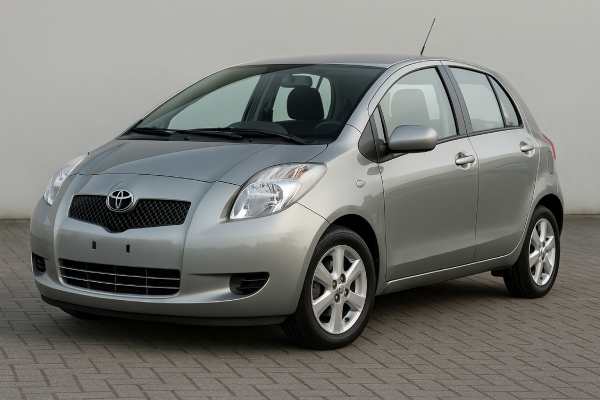
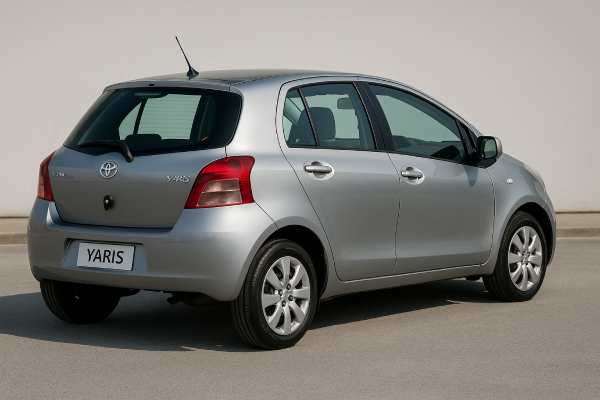
The Toyota Yaris 1.4 D-4D (NLP90, 1ND-TV) is the diesel workhorse of the second-generation Yaris range, built mainly for European buyers who needed low running costs without sacrificing everyday usability. With 90 hp and a healthy 190 Nm of torque from a small common-rail four-cylinder, it feels stronger than the numbers suggest, especially around town and on secondary roads.
Compared with many rivals of its time, the diesel Yaris combines excellent fuel economy, a surprisingly refined long-distance feel, and Toyota’s reputation for durability. The light, compact body, high seating position, and flexible rear bench make it a very practical city car that still copes with motorway journeys. At the same time, owners must be aware of age-related diesel issues such as EGR soot build-up, possible DPF fitment in some markets, and clutch or dual-mass flywheel wear on higher-mileage cars.
This guide walks through specs, reliability patterns, maintenance, and how the diesel Yaris compares in the crowded supermini class.
Fast Facts
- Very low real-world fuel use, often near 4.5 l/100 km combined on relaxed mixed driving.
- Strong low-rpm torque (190 Nm) makes the 1.4 D-4D Yaris feel more relaxed than small petrol versions.
- Cabin space is generous for a B-segment car thanks to the tall body and sliding rear bench on many trims.
- Watch for EGR/DPF clogging on short-trip cars and clutch or dual-mass flywheel wear above 150,000 km.
- Sensible oil and filter changes every 10,000–15,000 km or 12 months greatly improve long-term diesel reliability.
Section overview
- Toyota Yaris 1.4 D-4D Overview
- NLP90 Diesel Specifications and Data
- Yaris 1.4 D-4D Trims and Safety
- Yaris Diesel Reliability and Issues
- Maintenance and Buying Guide Diesel
- Driving Impressions of Yaris Diesel
- Yaris 1.4 D-4D Compared to Rivals
Toyota Yaris 1.4 D-4D Overview
The NLP90 Yaris 1.4 D-4D sits at the practical end of the second-generation Yaris range, which ran in Europe from 2005. Under the bonnet is the 1ND-TV diesel, a 1.4-litre, four-cylinder common-rail unit with 16 valves, turbocharger and intercooler. In this application it develops 90 hp and 190 Nm of torque, available from low revs, which suits urban and commuter use very well.
Compared with the smaller 1.0 and 1.3 petrol models, the diesel Yaris is aimed at drivers who cover higher annual mileages, travel longer distances, or frequently drive with passengers and luggage. The engine’s strong mid-range torque means fewer downshifts on hills and better stability at motorway speeds, even though the car’s absolute performance figures are modest by modern standards.
The body is the familiar P90-series five- or three-door hatchback: tall, short-overhang, and optimised for interior space. A sliding and split-folding rear bench (where fitted) allows you to trade legroom for boot space, and the relatively upright seating position makes it easy for adults to get in and out. Despite its compact external dimensions, the Yaris can genuinely accommodate four adults and their weekend bags.
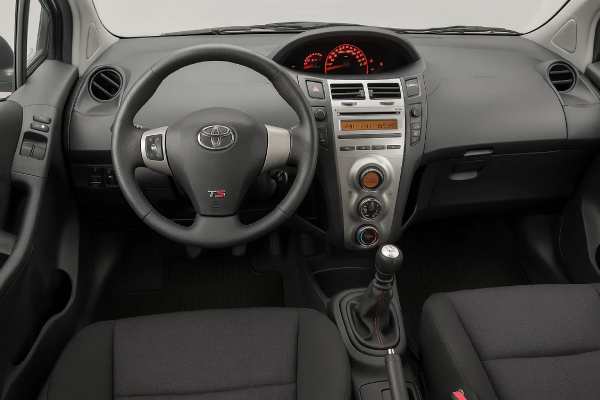
Inside, the central instrument pod and plentiful storage cubbies underline the car’s city-car origins, but the diesel model is well suited to mixed use. Longer gearing, extra sound insulation and the heavier engine give it a more planted feel on the motorway than you might expect from a small hatchback. For many buyers in Europe in 2005–2008, the 1.4 D-4D represented a sweet spot: cheap to run, compact to park, but capable of serious distances.
The flip side is that it inherits the usual diesel-specific maintenance needs: clean fuel, correct low-SAPs oil where a DPF is fitted, and attention to EGR and intake cleanliness over time. For buyers who understand these requirements, the Yaris diesel can deliver very long lifespans with relatively little drama.
NLP90 Diesel Specifications and Data
Below are key technical details for a typical European-market Toyota Yaris II 1.4 D-4D (90 hp) with five-speed manual gearbox. Minor variations by country, trim and year are possible.
Engine and Performance (1ND-TV 1.4 D-4D)
| Parameter | Value |
|---|---|
| Engine code | 1ND-TV |
| Type / layout | Inline 4-cyl, DOHC, 16-valve |
| Induction | Turbocharged with intercooler |
| Displacement | 1.4 l (1,364 cm³) |
| Bore × stroke | 73.0 × 81.5 mm |
| Compression ratio | 17.9:1 |
| Fuel system | Common-rail direct injection (diesel) |
| Max power | 90 hp (66 kW) @ 3,800 rpm |
| Max torque | 190 Nm (140 lb-ft) @ 1,800–3,000 rpm |
| Emissions class (typical EU) | Euro 4 (market-dependent) |
| Timing drive | Chain |
| Typical combined consumption | 4.5 l/100 km (≈52 mpg US / 63 mpg UK) |
| Urban / extra-urban | ~5.4 / 4.0 l/100 km |
Transmission and Driveline
| Parameter | Value |
|---|---|
| Gearbox | 5-speed manual |
| Drive type | Front-wheel drive (FWD) |
| Final drive ratio | Approx. 3.7–3.9 (variant-dependent) |
| Differential | Open front differential |
| Clutch | Single dry plate, often dual-mass flywheel |
Chassis and Dimensions
| Parameter | Value |
|---|---|
| Body style | 3- or 5-door hatchback |
| Overall length | 3,750 mm |
| Width (without mirrors) | 1,695 mm |
| Height | 1,530 mm |
| Wheelbase | 2,460 mm |
| Front / rear track | 1,475 / 1,460 mm |
| Kerb weight | ~980 kg |
| Gross vehicle weight | 1,440 kg |
| Boot volume (seats up) | 272 l (VDA, approx.) |
| Boot volume (seats down) | Up to 1,086 l (VDA, approx.) |
| Fuel tank capacity | 42 l |
| Turning circle | About 9.4 m (kerb-to-kerb) |
| Typical tyre size | 185/60 R15 |
Suspension and brakes:
| Component | Specification |
|---|---|
| Front suspension | MacPherson strut with coil springs |
| Rear suspension | Torsion beam axle |
| Front brakes | Ventilated discs |
| Rear brakes | Drums |
| Steering | Rack and pinion, power-assisted |
Performance and Capability
| Parameter | Value |
|---|---|
| 0–100 km/h (0–62 mph) | ~10.7 s |
| Top speed | ~175 km/h |
| Braking 100–0 km/h | ~38–40 m (tyre-dependent) |
| Max payload | ~460 kg |
| Roof load (typical) | Around 50–75 kg (check manual) |
| Rated towing (braked) | Commonly around 900–1,000 kg (check market) |
Fluids and Service Capacities (Typical)
Values may vary slightly by model year and market; always confirm in the exact service manual.
| System | Specification (example) | Capacity (approx.) |
|---|---|---|
| Engine oil | ACEA B1/B3/B4 or C2, 5W-30 low-ash (DPF cars) | ~4.2–4.3 l with filter |
| Engine coolant | Long-life ethylene glycol (Toyota SLLC type) | ~4.7–5.0 l |
| Manual transmission oil | API GL-4 75W-90 gear oil (C50/C530) | ~2.0–2.4 l |
| Power steering | ATF-type fluid (if hydraulic, market-specific) | ~0.8–1.0 l |
| Brake fluid | DOT 3 or DOT 4 | Fill to reservoir spec |
| A/C refrigerant | R134a | ~400–450 g typical |
Electrical
| Item | Specification (typical) |
|---|---|
| Alternator | ~90–100 A |
| 12 V battery | ~45–60 Ah, DIN form factor |
| Glow plugs | Pencil-type, ceramic or metal (1 per cyl.) |
Safety and Driver Assistance
Equipment varies by trim and market, but for many European NLP90 diesels:
- Front, side and curtain airbags, plus driver’s knee airbag on many versions.
- ABS with EBD and Brake Assist standard.
- Stability control (VSC) optional or standard on higher trims in later years.
- ISOFIX child-seat anchors on outer rear seats.
- No factory AEB, adaptive cruise, lane-keep, or blind-spot systems on 2005–2008 cars.
Yaris 1.4 D-4D Trims and Safety
Across Europe, the 1.4 D-4D engine was offered on several trims, often mirroring petrol grades such as base/“Terra”, mid/“Sol/T3” and better-equipped “T Spirit/T4/T Spirit-style” names, depending on country. Entry-level diesels typically included manual air conditioning, electric front windows, central locking, basic audio and steel wheels. Higher trims added alloy wheels, front fog lamps, leather steering wheel, better audio with steering controls, and sometimes automatic climate control or keyless entry.
Mechanically, the engine output is broadly the same across trims, but there can be differences:
- Wheel and tyre packages (15-inch alloys on higher trims improving grip).
- Standard vs optional stability control (VSC).
- Rear disc brakes on some sporty or high-spec versions in certain markets, though most diesels retained rear drums.
Quick identifiers for a diesel Yaris include “D-4D” badging on the tailgate and sometimes on the front wings, as well as a tachometer redline far below petrol models. VIN decoders and build plates can confirm engine code 1ND-TV and trim level.
From a safety perspective, the second-generation Yaris achieved strong results in European crash testing for its time, helped by a stiff passenger cell, comprehensive airbag coverage and effective seatbelt pretensioners with load limiters. The diesel shares the same basic structure as petrol cars.
Child-seat friendliness is generally good: ISOFIX mounts are available on the outer rear seats, and the high roof helps with loading children into seats. However, the relatively short rear bench and limited legroom mean rear-facing seats can make front space tight, especially in three-door models.
Advanced driver assistance (ADAS) was minimal in this era. Buyers could expect ABS, EBD and Brake Assist as standard, and in many markets, stability control on mid- to high-spec cars or as part of safety packs. There was no lane-keeping assistance, automatic emergency braking or radar cruise, so expectations should be set accordingly.
Overall, if you want maximum passive safety and stability control, it is worth targeting later 2007–2008 cars in higher trims, where VSC and a full airbag set are more commonly fitted as standard or as part of popular option packs.
Yaris Diesel Reliability and Issues
The Yaris 1.4 D-4D has a solid reputation for durability when serviced correctly, but like any small common-rail diesel it has a handful of recurring themes. Thinking about issues in terms of how common they are, how serious they can become, and at what mileage or usage they appear will help you judge a specific car.
Engine and fuel system
- EGR and intake soot (common, low–medium cost): Frequent short trips lead to exhaust gas recirculation (EGR) valve and intake manifold clogging with soot and oily deposits. Symptoms are rough idle, hesitation, or power loss. Cleaning the EGR valve and intake restores performance; using good-quality fuel and allowing occasional longer runs helps prevent recurrence.
- DPF (where fitted) (occasional, medium–high cost): Not all early Yaris diesels had a diesel particulate filter, but where installed, cars that rarely run hot can suffer from incomplete regenerations. Warning lights, limp mode and rising oil level from fuel dilution are signs. Forced regeneration, DPF cleaning or replacement, and strict adherence to low-ash oil are the usual remedies.
- Injector sealing leaks (occasional, medium cost): Copper washers under the injectors can leak over time, causing “chuffing” noises and diesel smell. Left untreated, hot combustion gases can erode the cylinder head. Replacement seals and careful cleaning fix the problem; it is not a design flaw so much as age and mileage.
Timing chain and lubrication
The 1ND-TV uses a chain rather than a belt, so there is no scheduled replacement, but high-mileage engines that have seen long oil-change intervals may develop chain rattle at cold start or timing-correlation fault codes. That is your cue to investigate tensioner, guides and chain condition. Sticking to sensible oil intervals (10,000–15,000 km) is usually enough to avoid trouble.
Driveline and clutch
- Clutch and dual-mass flywheel (DMF) (common on high-mileage cars, medium–high cost): Urban driving, towing or remapping can accelerate wear of the DMF and clutch. Symptoms include vibration at idle, judder when pulling away, and drivetrain shunt when lifting off the throttle. Replacement is straightforward but parts are not cheap; some owners opt for solid flywheel conversions, which can increase vibration.
- Gearbox bearings (rare–occasional, medium–high cost): A minority of cars show input or output shaft bearing noise at high km. Whining that changes with speed but not engine rpm, and that alters when cornering, is the classic sign. Early diagnosis can sometimes allow bearing replacement before collateral damage.
Chassis and body
- Suspension bushings and rear axle (common, low–medium cost): Front lower arm bushes and anti-roll-bar links wear with age and rough roads, causing knocks and vague steering. The rear torsion beam can develop noisy bushes as well. Fortunately, parts are inexpensive and easy to source.
- Corrosion points (occasional, more serious in salty climates): The Yaris generally resists rust well, but check rear axle beam, brake pipes, the lower edges of doors and tailgate, and the front subframe. Surface rust is usually manageable; structural corrosion requires more serious work.
Electrical and recalls
Electrical reliability is generally good. Age-related issues include failed window switches, door-lock actuators and occasional sensor faults (e.g. ABS sensors, EGR or boost pressure sensors). A number of recalls have affected the P90-series Yaris, mostly related to steering components, seat mechanisms and airbags (including Takata inflators on some markets).
For any car you are considering, run a VIN check on your local safety authority’s website and ask a Toyota dealer to confirm that all campaigns and technical service bulletins (TSBs) have been completed. On a car of this age, documentation is just as important as the odometer reading.
Maintenance and Buying Guide Diesel
A clear, realistic maintenance plan is essential for getting the best from a Yaris 1.4 D-4D. The table below outlines a sensible baseline for mixed European conditions; always adjust for your specific climate and usage, and follow official guidance where it differs.
Suggested Maintenance Schedule (Typical Use)
| Item | Interval (distance / time) | Notes |
|---|---|---|
| Engine oil and filter | 10,000–15,000 km or 12 months | Use quality ACEA B4 or C2 low-ash oil (DPF cars). |
| Fuel filter (diesel) | Every 60,000 km or 4 years | Sooner if poor fuel quality suspected. |
| Engine air filter | Every 30,000 km or 2 years | Inspect more often in dusty regions. |
| Cabin (pollen) filter | Every 15,000–20,000 km or 1–2 years | Helps heater performance and window demisting. |
| Coolant | 5 years or 100,000–150,000 km | Replace with Toyota long-life or equivalent. |
| Brake fluid | Every 2 years | Essential for pedal feel and corrosion prevention. |
| Manual transmission oil | Every 90,000–120,000 km | Often labelled “lifetime,” but changes are beneficial. |
| Auxiliary / serpentine belt | Inspect every 30,000 km; replace ~90,000 km / 6 years | Listen for squeal; check pulleys at the same time. |
| Timing chain | No fixed interval; inspect if noisy or fault codes | Investigate rattle at cold start or timing errors. |
| Glow plugs | Check at ~150,000 km or on starting problems | Replace in sets if several are weak. |
| Wheel alignment and tyre rotation | Rotate 10,000–15,000 km; align every 2 years | Important with city potholes and speed bumps. |
| 12 V battery | Test annually after year 5 | Replace proactively at signs of weakness. |
For cars with a DPF, ensure long enough journeys (20–30 minutes at operating temperature) are part of regular use to allow regenerations, and never use non-approved engine oils.
Buyer’s Checklist
When evaluating a used Yaris 1.4 D-4D:
- Service history: Look for stamped records or invoices showing regular oil and filter changes, fuel filter replacement, and coolant changes. Diesel engines are much more sensitive to skipped services.
- Cold start and idle: Start the car from cold. It should fire quickly, settle into a smooth idle, and produce only a brief puff of smoke. Excessive white or blue smoke, chattering injectors or loud chain rattle are red flags.
- Performance and turbo response: On the road, boost should build smoothly from around 1,800 rpm. Hesitation, flat spots or limp-mode behaviour can indicate EGR, boost-control or DPF issues.
- Clutch and gearbox: Check for clutch slip on full-throttle acceleration in higher gears, and listen for rumbling or whining that rises with road speed. A high bite point or judder suggests clutch/DMF wear.
- Suspension and brakes: Drive over rough surfaces and listen for clonks from the front or rear. On a straight, smooth road, the car should track straight with hands lightly on the wheel.
- Rust and body: Inspect door bottoms, wheel arches, rear axle beam, brake pipes along the chassis and the front subframe. Light surface rust is manageable; perforation or deep rust requires more money.
- Electrics and A/C: Check all windows, locks, central locking, radio, instrument backlighting and air conditioning. Weak A/C can mean low gas, but can also mask condenser or compressor issues.
As a long-term prospect, a well-maintained Yaris 1.4 D-4D can easily exceed 250,000–300,000 km without major engine work. The best candidates are cars with full documentation, mostly longer-distance driving, and owners who understood diesel care.
Driving Impressions of Yaris Diesel
On the road, the diesel Yaris feels more mature than its size suggests. The combination of a torquey 1.4-litre engine and relatively light body means it pulls keenly from low revs, especially in second and third gear. In city traffic, you rarely need to rev past 3,000 rpm, and the car keeps up with flow easily.
The steering is light but accurate, with enough feedback to place the car confidently in tight streets. Around town, the short overhangs and generous glass area make parking straightforward, and the turning circle is tight enough for narrow urban junctions. Ride quality is biased towards comfort, soaking up small bumps well, though sharp potholes can still be felt, especially on 15-inch wheels with low-profile tyres.
At motorway speeds, the diesel’s extra torque and longer gearing make a noticeable difference versus the small petrol engines. Cruising at 120–130 km/h is relaxed, with engine speed remaining moderate and noise levels dominated more by wind and tyre roar than by the engine itself. The car feels stable in crosswinds for a supermini, although it can still be affected more than a larger vehicle.
Braking performance is adequate rather than sporty. The front discs and rear drums deliver predictable stopping distances and good modulation if the system is in good condition and fitted with quality pads and tyres. The ABS intervenes progressively on wet or slippery roads.
Real-world fuel economy is one of the Yaris diesel’s strongest points. Many owners see:
- City: around 5.5–6.0 l/100 km with heavy stop-and-go traffic.
- Highway 100–120 km/h: often close to or just under 4.5 l/100 km.
- Mixed driving: around 4.5–5.0 l/100 km depending on traffic, load and driving style.
Driving style and usage pattern have a major effect, especially on cars fitted with a DPF. Gentle warm-up, avoiding unnecessary idling, and giving the engine a chance to reach full operating temperature pay off both in economy and in long-term reliability.
Under full throttle, performance is adequate rather than exciting: the 0–100 km/h time around 11 seconds is enough for safe overtakes when planned, but you still need to use the gearbox and anticipate gaps. The chassis feels secure but tuned for everyday comfort, not aggressive cornering. Grip is decent, and stability control (where fitted) cuts in early to keep the car safe for inexperienced drivers.
Overall, the driving experience is that of a mature, frugal small hatchback: not sporty, but confident, easy to place, and very cheap to fuel.
Yaris 1.4 D-4D Compared to Rivals
When new, the Yaris 1.4 D-4D competed with a long list of small diesel hatchbacks: Ford Fiesta 1.4/1.6 TDCi, Volkswagen Polo 1.4 TDI, Opel/Vauxhall Corsa 1.3 CDTI, Renault Clio 1.5 dCi, Peugeot 207 1.4/1.6 HDi and others. Each has its own strengths, but several themes emerge when you compare them from a used-buyer’s perspective.
Space and practicality
The Yaris punches above its weight in interior packaging. The tall roof, sliding rear bench (on many trims) and clever storage solutions make it one of the most versatile small cars of its era. Some rivals offer slightly larger boots on paper, but they often lack the flexible seating that lets the Yaris adapt between people and cargo.
Refinement and comfort
Compared with older three-cylinder diesels (such as early Polo 1.4 TDI), the four-cylinder 1ND-TV is smoother and quieter. Against later common-rail units like the Clio 1.5 dCi or Fiesta 1.6 TDCi, it is broadly competitive, if not class-leading. The Yaris’s suspension tuning favours comfort and ease of use over sharp handling, which suits its role as a city and commuting car.
Performance and economy
Most competitors with similar power deliver comparable performance; none are truly fast. The Yaris’s real-world fuel consumption is among the best, thanks to its relatively low weight and efficient engine. Some longer-geared rivals may achieve slightly lower revs at motorway speeds, but the differences in consumption are small in everyday driving if the cars are well maintained.
Reliability and ownership risk
This is where the Yaris often has an edge. While no diesel is free from risk, the 1ND-TV engine generally has fewer catastrophic failure patterns than some rival units, such as certain small French or Italian diesels known for injector or turbo failures. The typical issues on the Yaris—EGR clogging, occasional DPF or DMF problems—are shared with most common-rail diesels and are usually manageable if addressed early.
Parts and support
Toyota’s dealer network and parts availability are strong in most markets. Service items and common suspension or brake parts are inexpensive and widely available from both OEM and aftermarket suppliers. Some rivals may offer slightly cheaper consumables, but the gap is small, and the Yaris benefits from a large global fleet and robust parts supply.
In short, if you prioritise low running costs, compact size, and long-term reliability over sporty driving or the very latest cabin design, the Yaris 1.4 D-4D remains a very sensible choice among mid-2000s diesel superminis.
References
- Toyota Yaris II 1.4 D-4D (90 Hp) | Technical specs, data, fuel consumption, Dimensions 2010 (Technical Data)
- 2005 Yaris DPL 2005 (Safety and Model Overview)
- Engine 1ND-TV D-4D general description and defects 2019 (Engine Technical Guide)
- Yaris (P90) 2005-2011 periodic maintenance data 2017 (Maintenance Data)
- 2007 TOYOTA YARIS 4 DR FWD | NHTSA 2019 (Recall and Safety Database)
Disclaimer
This article is for informational purposes only and is not a substitute for professional diagnosis, repair or factory service information. Specifications, torque values, fluid capacities, maintenance intervals and procedures can vary by VIN, production date, market and equipment level. Always confirm critical data and repair steps against the official owner’s manual, workshop manual or technical information system for your specific vehicle.
If you found this guide useful, please consider sharing it on social media (Facebook, X/Twitter, forums or groups for Toyota owners). It helps other owners find accurate information and supports the effort that goes into creating detailed, independent content.