
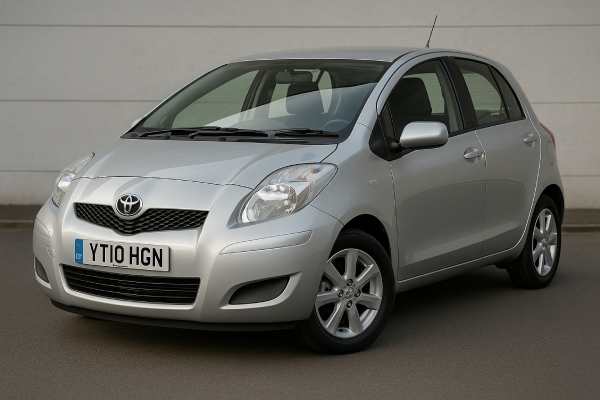
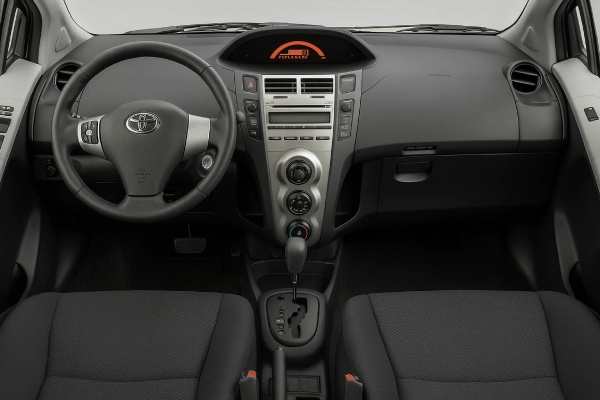
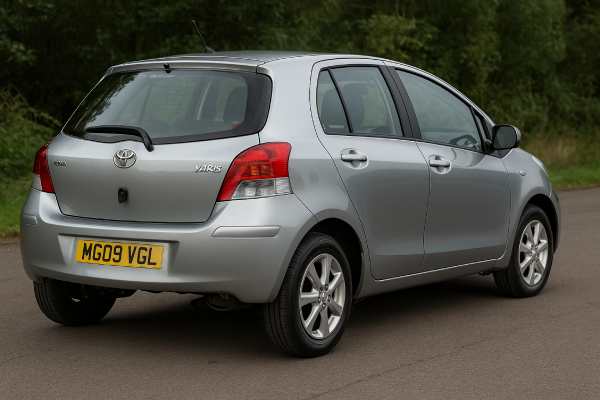
The facelifted Toyota Yaris (KSP90) with the 1KR-FE 1.0-litre engine is one of those cars that quietly does almost everything right. Between 2009 and 2011, this update refined the second-generation Yaris with cleaner styling, small efficiency gains and better equipment, while keeping the clever packaging and low running costs that made the model so popular.
At its core is the 1.0 VVT-i three-cylinder: an all-aluminium, chain-driven petrol engine designed for light weight, low friction and very modest fuel use. Paired with a short-ratio 5-speed manual and a compact, well-damped chassis, the car is tuned for city work but remains stable on the motorway if you respect its power limits.
Inside, the sliding rear bench and tall body make the Yaris feel larger than it looks, and later facelift cars often add side and curtain airbags plus stability control. For buyers who want a simple, durable and cheap-to-run small car rather than outright speed, this facelifted 1.0-litre Yaris is still a very rational choice.
Top Highlights
- Very low fuel consumption for a petrol city car, typically 5.5–6.5 L/100 km mixed use when maintained.
- Proven 1KR-FE chain-driven engine with simple hardware and strong reliability when oil is changed on time.
- Compact footprint but surprisingly spacious cabin thanks to tall roof and sliding rear bench.
- Watch for timing chain rattle on cold start if oil has been neglected; budget for a chain kit at higher mileage.
- Routine engine oil and filter changes every 10,000–15,000 km or 12 months keep the engine and chain healthy.
What’s inside
- KSP90 1.0 Yaris in Detail
- Technical Figures for Yaris 1.0
- Facelift Yaris 1.0 Grades and Safety
- Long-Term Reliability of Yaris 1.0
- Ownership Costs and Buyer Guide
- On-Road Behaviour and Performance
- How Facelift Yaris 1.0 Stacks Up
KSP90 1.0 Yaris in Detail
The KSP90 Yaris is the internal code for the second-generation Yaris with the 1.0-litre 1KR-FE engine and front-wheel drive. The 2009 facelift kept the XP9 platform but updated the front bumper, grille and lamps, refined the interior trim and, in many markets, broadened the standard safety equipment. Under the skin, the formula stayed the same: low weight, compact exterior size and a simple, efficient drivetrain.
The 1KR-FE is an all-aluminium, three-cylinder engine with double overhead cams, 12 valves and VVT-i on the intake side. It was developed to be both light and thermally efficient, using a timing chain instead of a belt, an integrated exhaust manifold and compact combustion chambers. Output is modest at about 68 hp and around 93 Nm of torque, but the Yaris is relatively light, so performance is adequate for everyday use.
One of the key strengths of this generation is packaging. At roughly 3.75 m long with a wheelbase of about 2.46 m, the Yaris offers almost supermini-class interior space in something that still parks like a city car. The tall cabin, upright seating position and wide-opening doors make it easy to get in and out of, and the rear bench typically slides and splits 60:40, letting you choose between more rear legroom or more boot space.
The facelift also improved perceived quality. Materials on high-touch areas were upgraded, sound insulation was tweaked and certain markets gained better audio and connectivity options. While the dash-top central instrument cluster divides opinion, it keeps the steering wheel uncluttered and improves forward visibility.
From an ownership perspective, the 1.0-litre facelift Yaris sits at the affordable end for tax and insurance in most European countries. Emissions are low for its era, and parts support is excellent thanks to the shared 1KR-FE engine across many Toyota and Daihatsu models. For buyers who do mostly urban and suburban driving and are comfortable with measured acceleration, the KSP90 Yaris remains one of the more sensible used choices in this segment.
Technical Figures for Yaris 1.0
This section focuses on the core specifications for a typical European-market facelift Yaris 1.0 VVT-i with the 1KR-FE engine and 5-speed manual gearbox. Minor variations exist by market and trim, but the fundamentals are shared.
Engine and performance
| Item | Value |
|---|---|
| Engine code | 1KR-FE |
| Type | Inline-3, DOHC, 12-valve, VVT-i (intake) |
| Induction | Naturally aspirated |
| Displacement | 998 cc (1.0 l) |
| Bore × stroke | 71.0 mm × 84.0 mm |
| Compression ratio | ~10.5 : 1 |
| Max power | ~68 hp (51 kW) @ 6,000 rpm |
| Max torque | ~93 Nm (≈69 lb-ft) @ ~3,600 rpm |
| Fuel system | Multipoint fuel injection |
| Fuel type | Unleaded petrol, RON 95 recommended |
| Timing drive | Chain (no scheduled replacement interval) |
| Emissions standard | Euro 4, later Euro 5 in some markets |
Fuel economy and aerodynamics
Official figures vary slightly by year and wheel/tyre package, but for a typical 1.0 manual:
| Cycle | Consumption L/100 km | mpg (US) | mpg (UK) |
|---|---|---|---|
| Urban | ~6.7 | ~35 | ~42 |
| Extra-urban | ~4.6 | ~51 | ~61 |
| Combined | ~5.4 | ~43.5 | ~52.3 |
Real-world mixed driving for most owners tends to land around 5.8–6.5 L/100 km (roughly 36–41 mpg US / 43–49 mpg UK) when the car is maintained and driven sensibly.
Aerodynamic data for the XP9 Yaris is typically in the low-0.3 Cd range (around 0.30–0.31 depending on version), with a relatively small frontal area for a tall-roof supermini. This helps the modest engine maintain motorway speeds without excessive fuel use, though wind and tyre noise become more noticeable at higher speeds.
Transmission and driveline
Most facelift KSP90 cars use a 5-speed manual gearbox; in some markets a multi-mode automated manual was offered.
| Item | Value |
|---|---|
| Transmission type | 5-speed manual |
| Drive type | Front-wheel drive (FWD) |
| Clutch | Single-plate dry, cable/ hydraulic actuation depending on market |
Gear ratios for the 1.0-litre are relatively short in the lower gears to help the small engine pull strongly at low speeds, with a taller 5th to keep revs manageable on the motorway. Combined with the light kerb weight, this gives the Yaris an eager feel in city traffic even if outright acceleration times are modest.
Chassis and dimensions
| Item | Value |
|---|---|
| Platform | Toyota XP9 (second-generation Yaris) |
| Front suspension | MacPherson strut with coil springs |
| Rear suspension | Torsion beam with coil springs |
| Steering | Electric power-assisted rack and pinion |
| Turning circle (kerb-to-kerb) | ~9.4 m |
| Front brakes | Ventilated discs |
| Rear brakes | Drums (most 1.0-litre trims) |
| Typical tyre size | 175/65 R14 (alloys or steels by trim) |
Dimensions (3-door/5-door are very similar):
| Item | Value |
|---|---|
| Length | ~3,750 mm |
| Width | ~1,690 mm |
| Height | ~1,520 mm |
| Wheelbase | ~2,460 mm |
| Fuel tank | ~42 l |
| Kerb weight | ~1,020–1,050 kg |
| Luggage volume | ~270–290 l seats up; more with bench slid forward |
Performance and capability
For a 1.0 manual:
| Metric | Value |
|---|---|
| 0–100 km/h (0–62 mph) | ~15–16 seconds |
| Top speed | ~155 km/h (≈96 mph) |
| Braked towing | Often not approved or very low; check local data |
| Roof load | Typically up to ~50 kg with approved bars |
The Yaris 1.0 is not designed as a tow vehicle, and many markets either restrict or prohibit towing with this engine. Always confirm locally.
Fluids, service capacities and key torques
Values vary slightly by market and production year; treat the figures below as approximate and always verify against the exact service manual:
| System | Specification (typical) | Capacity (approx.) |
|---|---|---|
| Engine oil | 0W-20 or 5W-30, API SL/SM or later, ILSAC GF-4 or better | ~3.1–3.2 l |
| Engine coolant | Toyota Super Long Life Coolant (pre-mixed) | ~4–5 l |
| Manual gearbox oil | 75W-90 GL-4/GL-4+ (Toyota genuine or equivalent) | ~1.7–2.0 l |
| Brake fluid | DOT 3 or DOT 4 | Fill-for-life, change interval-based |
| A/C refrigerant | R134a | ~400–450 g |
| A/C compressor oil | ND-OIL 8 or equivalent | ~90–120 ml |
Indicative torque values (always confirm by VIN):
- Wheel nuts: typically around 100–110 Nm.
- Spark plugs: roughly 18–22 Nm on an aluminium head.
- Engine oil drain plug: commonly around 35–40 Nm.
Electrical
For a typical KSP90 1.0:
- Alternator output: around 80 A, sufficient for normal loads and occasional accessories.
- 12 V battery: usually ~45 Ah, cold-cranking current in the 360–400 A range, DIN-standard size common to many small Toyotas.
- Spark plugs: long-life iridium types (for example IFR6 or equivalent), with a gap around 1.0 mm. Plug change intervals are long, but seized plugs in aluminium heads can be an issue if the car has seen poor servicing.
Facelift Yaris 1.0 Grades and Safety
Trim names differ by market (for example T2/T3/TR in the UK, Terra/Luna/Sol in parts of Europe), but the structure is broadly similar: an entry version, a better-equipped mid-grade and a more luxurious top model. Mechanically, the 1.0-litre cars remain almost identical across trims.
On base versions, you typically get:
- 3 or 5 doors, manual mirrors and windows on some early cars, later with electric fronts.
- Basic audio with CD and aux input, 4 speakers.
- Steel wheels, usually 14-inch with hubcaps.
- Dual front airbags and often side airbags; ABS with EBD and brake assist.
Mid-grade trims add features that make used examples more attractive:
- Air conditioning or automatic climate control.
- Remote central locking and power windows.
- Height-adjustable driver’s seat, leather-trimmed steering wheel on some models.
- Body-colour bumpers and mirrors; fog lights on certain markets.
Top-line grades or option packs may include:
- Alloy wheels (14- or 15-inch).
- Enhanced audio with more speakers and steering wheel controls.
- Split-fold and sliding rear bench with adjustable backrest.
- Additional airbags (curtain airbags) and, in many markets, standard stability control (VSC) by the end of the production run.
From a safety-equipment perspective, key questions for a buyer are:
- Does the car have side and curtain airbags, or only front airbags?
- Is stability control (VSC/ESP) fitted, and from which model year?
- Are Isofix mounts for child seats present on the outer rear seats (they usually are on European facelift cars)?
As for crash performance, this generation of Yaris performed very well for its time. The XP9 Yaris achieved the maximum star rating for adult occupant protection under the older Euro NCAP regime, with strong scores for frontal and side impacts thanks to a stiff passenger cell and effective restraint systems. Child protection was rated slightly lower, reflecting the test standards and child-seat systems of the mid-2000s, and pedestrian protection was average but competitive for the class.
The 2009–2011 facelift carries over the same basic body structure, crumple zones and restraint design. Later cars benefit from incremental upgrades in airbags and, importantly, wider availability of stability control. There is no factory-fitted advanced driver-assistance such as autonomous emergency braking, lane-keeping or active cruise control — these technologies simply were not present in this segment at the time.
When assessing a specific car, it is worth checking:
- Airbag warning lamp behaviour on start-up and during a test drive.
- For cars that have had interior repairs, that no airbag modules or seatbelt pre-tensioners have been incorrectly refitted.
- That any safety-related recalls (for example, airbag or seat-track campaigns) have been carried out, by confirming with a dealer using the VIN.
Long-Term Reliability of Yaris 1.0
The facelift Yaris 1.0 enjoys a well-earned reputation for reliability, but the cars are now well over a decade old, so condition and maintenance history matter more than badge reputation alone.
Engine and ancillaries
The 1KR-FE engine is generally robust. It uses a timing chain rather than a belt, so there is no scheduled replacement interval. However, neglecting oil changes can lead to:
- Chain stretch and worn tensioners, often heard as a metallic rattle on cold start or at certain rpm.
- Sludge buildup, which can affect VVT-i operation and oil control rings.
If you hear sustained rattling on start-up or see timing-related fault codes, budget for a timing chain kit and associated guides and tensioner. It is a significant but not catastrophic job; once done properly with good oil thereafter, it should last the rest of the car’s life.
Other engine-related points seen with age:
- Ignition coils and plugs: Misfires under load or at idle often trace back to ageing coil packs, especially if plugs have been left in beyond their intended interval. Coils are not outrageously expensive and the fix is straightforward.
- Water pump and coolant leaks: As mileage climbs, a slight coolant loss or pink staining around the water pump weep hole is common. A preventive pump replacement together with a coolant change is a good investment.
- Thermostat issues: Slow warm-up or overcool running can be caused by a thermostat stuck open, which hurts fuel economy and cabin heating.
Oil consumption can increase on high-mileage engines, but it is usually modest. Regularly checking the dipstick every 1,000–2,000 km is still wise, especially if you are doing extended motorway driving.
Transmission and driveline
The 5-speed manual gearbox in the Yaris is usually very durable. Typical wear-related issues include:
- Clutch wear and occasional release bearing noise on city-driven cars.
- Slight notchiness or reluctance to engage 2nd gear when cold if the oil is old.
A proactive gearbox oil change, even if “filled for life” on paper, can smooth shifts and extend life. The driveshafts and CV joints cope well unless the boots split and are left unattended.
Suspension, steering and body
Suspension and steering issues are generally age-related rather than design flaws:
- Front anti-roll bar drop links and bushes are common wear points and are inexpensive to replace.
- Rear torsion-beam bushes can soften or crack with very high mileage or heavy loading.
- Electric power steering systems on this generation are usually reliable; intermittent assistance faults are rare but when present may require column or ECU attention.
Corrosion resistance on the XP9 Yaris is good by class standards, but not perfect. Inspect:
- Rear axle beam and spring perches.
- Sills and inner arches, especially on cars used in regions with salted winter roads.
- The front subframe and the area where it joins the body.
Recalls, service campaigns and software
Globally, Yaris models from this era have been subject to various recalls, including:
- Seat rail and seat-track recalls to address potential cracking or locking issues.
- Airbag-related campaigns (including the wider Takata inflator recalls in certain markets).
- Occasional steering or brake-related campaigns in specific VIN ranges.
The details vary by country, so the only safe way to confirm status is to run the VIN through the official Toyota recall checker for your region or ask a dealer to print the recall and service-campaign history. A fully up-to-date car is a much better bet than one with outstanding safety campaigns.
Overall, if serviced on time and not abused, the facelift Yaris 1.0 tends to age gracefully: most serious problems stem from neglected oil changes, skipped coolant service, or corrosion on cars that have seen harsh winters.
Ownership Costs and Buyer Guide
The main appeal of the facelift KSP90 Yaris 1.0 is low running cost without complicated technology. A sensible maintenance schedule and a careful purchase inspection are enough to keep that promise.
Practical maintenance schedule (typical European usage)
Intervals can vary by market; treat the values below as a conservative guide:
- Engine oil and filter: Every 10,000–15,000 km or 12 months (whichever comes first). Use quality 0W-20 or 5W-30 that meets Toyota/ILSAC specifications.
- Engine air filter: Inspect every 30,000 km; replace every 30,000–45,000 km or sooner in dusty conditions.
- Cabin (pollen) filter: Replace every 15,000–20,000 km or annually to keep HVAC performance and demisting good.
- Spark plugs (iridium): Replace every 90,000–100,000 km or around 6 years.
- Coolant (Super Long Life): First change often at 8–10 years / 160,000 km, then about every 5 years or 80,000–100,000 km.
- Manual gearbox oil: Refresh around 90,000–120,000 km to preserve shift quality, even if not strictly required.
- Auxiliary/serpentine belt: Inspect from 60,000 km; typically replace around 90,000–120,000 km or if cracked/noisy.
- Brake fluid: Replace every 2–3 years regardless of mileage.
- Brakes (pads/discs): Inspect at least once a year or every 15,000–20,000 km. City cars wear fronts faster.
- Tyres and alignment: Rotate tyres every 10,000–15,000 km; check alignment after pothole impacts or uneven wear.
- 12 V battery: Test annually from year 5; typical lifespan is 6–8 years.
Because the 1KR-FE uses a timing chain, there is no scheduled belt replacement. Instead, the focus is on oil quality and listening for chain noise; if rattle or correlation faults appear, the remedy is a chain kit rather than routine replacement on a timer.
Fluid specifications (high-level)
- Engine oil: 0W-20 or 5W-30 with API SL/SM/SN and ILSAC GF-4/5 or later, or Toyota-branded oil meeting the same.
- Coolant: Toyota Super Long Life Coolant (pink) or exact equivalent; do not mix with generic green coolant.
- Gearbox oil: Toyota genuine manual transmission fluid or a high-quality 75W-90 GL-4 oil.
- Brake fluid: DOT 3 or DOT 4 from a reputable brand.
- Power steering: Electric on this model, so no hydraulic fluid.
- A/C system: R134a refrigerant and the specified ND-OIL compressor oil.
Buyer’s checklist
When viewing a used facelift Yaris 1.0:
- Service history:
- Look for evidence of regular oil changes (at least annually).
- Check invoices for coolant changes, brake fluid and spark plug replacement.
- Cold start behaviour:
- Listen for timing chain rattle that persists for more than a second or two.
- Watch for rough idle, misfires or engine warning lights.
- Road test:
- Ensure the clutch takes up smoothly with no slip or judder.
- Check for gearbox noises or difficulty selecting gears, especially 2nd when cold.
- Listen for suspension knocks or clunks over broken surfaces.
- Brakes and tyres:
- Pedal should feel firm, not spongy.
- Tyres should wear evenly; heavy inner/outer shoulder wear may point to alignment or suspension issues.
- Body and corrosion:
- Inspect sills, rear axle beam, front subframe and wheel arches.
- Look for poor paint matches indicating accident repairs.
- Electrics and interior:
- Test all windows, central locking, mirrors, lights and heater/AC controls.
- Check that the airbag warning lamp illuminates at ignition and goes out correctly.
Recommended years and trims
Within the 2009–2011 facelift run, later cars with:
- 6 or more airbags,
- standard stability control, and
- mid- or high-level trim (for comfort features)
are usually the sweet spot. They cost slightly more but are easier to live with daily and often better looked after. Ultra-basic fleet or rental-spec vehicles can still be fine, but inspect more carefully for hard use and missing equipment.
From a long-term durability standpoint, a well-maintained facelift Yaris 1.0 can comfortably exceed 200,000 km with only routine wear items and occasional suspension refreshes, making it an excellent choice for budget-conscious drivers who value reliability over performance.
On-Road Behaviour and Performance
Behind the wheel, the facelift Yaris 1.0 feels exactly like what it is: a light, honest city car that does its best work at urban and suburban speeds.
Engine character and performance
The 1KR-FE three-cylinder has a distinct thrum at idle and a willing nature when revved. Below about 2,500 rpm it is perfectly usable for gentle acceleration and traffic-flow driving; for steeper hills or motorway slip roads you will need to use the gearbox and let it spin up towards 4,000–6,000 rpm.
Key impressions:
- 0–100 km/h in the mid-teens: Acceleration in the 15–16 second range means it is not quick, but rarely feels dangerously slow if you plan ahead.
- Responsive to throttle at low speeds: Short gearing helps it feel perkier from a standstill and in 2nd/3rd around town.
- High-rev noise: Above about 4,000 rpm the engine becomes quite vocal, although the note is generally smooth rather than harsh.
On motorways, the car can sit at 120–130 km/h, but the engine will be spinning high enough that cabin noise rises. For occasional long trips it is fine; for daily long-distance commuting, a larger-engined variant is more relaxed.
Ride, handling and refinement
The XP9 chassis is well-sorted. The Yaris prioritises stability and predictable responses over outright cornering grip, which suits its role:
- Ride: Compliance is good over typical city bumps and speed humps. Sharp potholes can be heard more than felt, especially on worn suspension, but the basic tuning is comfortable.
- Handling: Turn-in is light and accurate; body roll is present but controlled. Grip levels from the relatively narrow tyres are adequate and break away progressively, giving plenty of warning.
- Steering: Electric power steering keeps effort low at parking speeds and settles on the motorway. Feedback is modest but not completely numb.
Noise, vibration and harshness were slightly improved with the facelift via changes to insulation and sealing. Wind noise around the A-pillars and mirrors becomes noticeable at higher speeds, but day-to-day the car feels well put together and free from major squeaks if interior plastics have not been abused.
Real-world economy and use case
In everyday use, most owners see:
- City-biased driving: Around 6.5–7.5 L/100 km (31–36 mpg US / 37–42 mpg UK) if journeys are short and stop-start.
- Mixed urban/extra-urban: Often 5.8–6.5 L/100 km (36–41 mpg US / 43–49 mpg UK).
- Gentle long runs at 90–100 km/h: Low-5s L/100 km (over 45 mpg US / 55 mpg UK) are possible.
The small fuel tank still delivers a comfortable range for a city car, and the car warms up reasonably quickly, which helps fuel use and cabin comfort in winter.
As a load-carrier, the Yaris 1.0 is perfectly capable of handling four adults for shorter trips and does well with two adults plus children and luggage. With the sliding rear bench pushed forward, luggage space is surprisingly generous for the size. The limiting factor is power rather than chassis strength: fully loaded and heading uphill, you will need patience and frequent downshifts.
Traction control and stability systems, where fitted, do a decent job of managing slippery surfaces. In snow or heavy rain, appropriate tyres make more difference than electronics; on good winter tyres the Yaris is a confident little car.
How Facelift Yaris 1.0 Stacks Up
When you compare the 2009–2011 Yaris 1.0 to its contemporary rivals, its strengths and compromises become clear.
Against other small petrol hatchbacks
- Ford Fiesta (1.25 petrol): The Fiesta is generally more engaging to drive, with sharper steering and a slightly more sophisticated rear suspension. However, long-term reliability and rust resistance can be more variable than the Yaris, and running costs may be higher as the car ages.
- Volkswagen Polo (1.2 petrol): The Polo offers a more “solid” interior feel and good refinement, but some small-capacity VW engines of this era have known timing-chain and sensor issues. Parts and labour can also be more expensive in many markets.
- Opel/Vauxhall Corsa (1.0/1.2 petrol): The Corsa tends to ride softly and can be comfortable on poor surfaces, but is heavier and not as economical in real-world driving. Electrical gremlins and interior wear are more common topics in owner reports.
The Yaris sits in the middle dynamically but usually costs less to keep on the road in the long term, especially if you value minimal unscheduled repairs.
Against practical small cars like Honda Jazz/Fit
The Honda Jazz/Fit of the same era is the main rival for packaging brilliance. Its “magic seats” and even more flexible interior make it the better mini-MPV style choice if you regularly carry tall or bulky items. The Jazz also has a strong reliability record.
However, the Yaris often undercuts the Jazz on purchase price, and for some buyers its simpler, more conventional layout is easier to live with. If you do not need the extra rear-seat tricks of the Honda, a well-specced Yaris can feel like better value.
Diesel and larger-engine Yaris variants
Within the Yaris family:
- The 1.4 D-4D diesel variant offers significantly stronger torque and superb motorway economy, but introduces diesel-specific hardware such as high-pressure injection and, in some markets, particulate filters.
- The 1.3 and 1.33-litre petrols provide noticeably better acceleration and more relaxed cruising, but are more expensive to tax/insure in some regions and can have different long-term issues (for example, some owners report oil-consumption concerns on specific 1.33 engines).
The facelift 1.0 sits at the “simple, cheap and reliable” end of the range. If your driving is mainly city and light suburban work with occasional longer trips, it is often the most sensible choice. If you regularly drive fully loaded on motorways or hilly terrain, a larger-engined Yaris or a different class of car may be more comfortable.
Overall positioning
In summary, the 2009–2011 Toyota Yaris 1.0:
- Excels in reliability, low running costs and ease of use.
- Offers competitive safety for its generation, especially in later trims with more airbags and stability control.
- Trails the very best in its class for performance and high-speed refinement, simply because of its modest power output.
For used-car buyers who prioritise dependability, simple mechanics and low total cost of ownership over excitement, the facelift KSP90 Yaris 1.0 remains one of the most rational, low-risk purchases in the small-car market.
References
- The New Toyota Yaris 2005 (Technical Specifications / Press Information)
- euroncap_toyota_yaris_2011_5stars 2011 (Safety Rating)
- HKS Engine Oil Application Guide 2014 (Oil Specification and Capacity Guide)
Disclaimer
This article is intended for informational purposes only and does not replace professional diagnosis, repair advice or official workshop information. Specifications, torque values, fluid capacities, service intervals and even equipment can vary by VIN, production date, market and trim level. Always confirm critical data against the official Toyota owner’s manual, repair manual or technical service documentation for your specific vehicle, and follow local regulations and safety procedures when working on any car.
If you found this guide useful, feel free to share it with other owners or enthusiasts on platforms such as Facebook or X/Twitter — it helps support the effort that goes into producing detailed, independent technical content like this.