
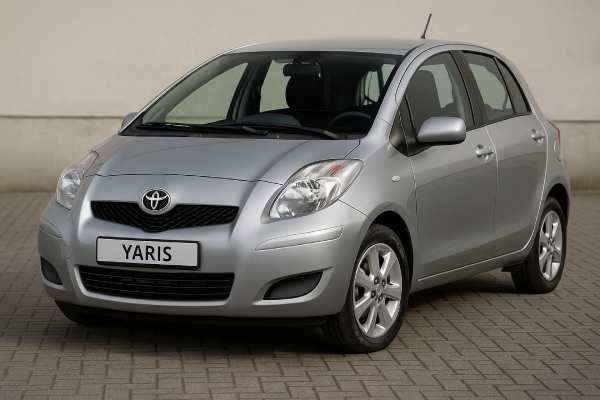
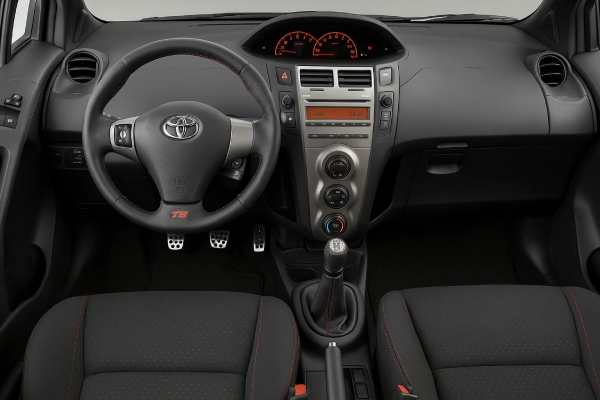
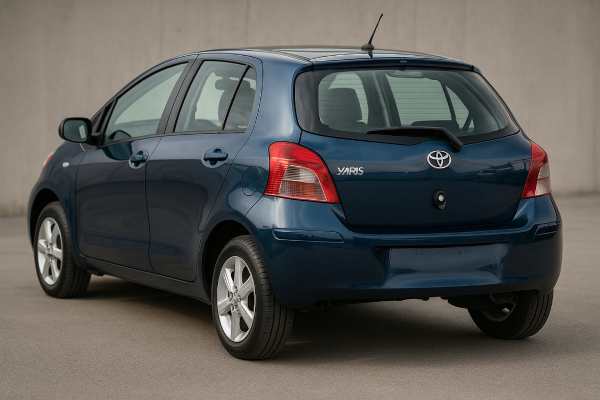
The facelifted Toyota Yaris (NLP90) 1.4 D-4D is one of those small diesels that quietly does everything right. It combines the compact XP90 hatchback shell with Toyota’s 1ND-TV common-rail turbo diesel and a six-speed manual gearbox, aimed squarely at European owners who cover serious motorway and commuter mileage. You get a light, easy-to-park B-segment car that still feels secure at speed, with long-legged gearing and realistic 4.5–5.0 L/100 km mixed consumption when driven sensibly.
The 2009 facelift brought Toyota Optimal Drive updates, improved emissions, revised front and rear styling, and trim changes that made the diesel feel more mature than its size suggests. Beneath that, the engineering is conservative: cast-iron block, timing chain, modest boost, and simple rear torsion-beam suspension. That conservatism is a big part of why these cars are still attractive as used buys today. This guide walks through the specs, performance, safety, reliability patterns, and what to look for if you are considering owning or maintaining a Yaris NLP90 diesel.
Quick Specs and Notes
- Strong torque (around 190–205 Nm) and six-speed gearing make the Yaris 1.4 D-4D relaxed at motorway speeds for a B-segment hatch.
- Real-world mixed fuel consumption typically falls around 4.5–5.0 L/100 km, with a potential range close to 900 km from the 42 L tank.
- Watch for EGR and DPF clogging on short-trip urban cars; regular high-speed runs help keep the system clean.
- Plan on engine oil and filter changes roughly every 15,000 km or 12 months under normal European service schedules, or sooner for heavy city use.
Explore the sections
- Toyota Yaris NLP90 diesel focus
- Yaris 1ND TV specs summary
- Equipment lines and safety kit
- Reliability patterns and known faults
- Service schedule and buying tips
- On-road behaviour and economy
- Diesel Yaris versus competitors
Toyota Yaris NLP90 diesel focus
The NLP90 designation refers to the second-generation Yaris (XP90 platform) fitted with the 1.4 D-4D diesel engine and front-wheel drive. Built mainly for Europe between late 2008 and 2011, the facelifted cars received revised front and rear styling, upgraded trims, and Toyota Optimal Drive powertrains aimed at cutting CO₂ without sacrificing drivability.
At the heart of this version is the 1ND-TV 1.4-litre common-rail diesel, a long-stroke four-cylinder with just eight valves and a single overhead camshaft. On facelift Yaris models it is tuned to around 90 hp and up to about 205 Nm, driving the front wheels through a six-speed manual gearbox or an automated “MultiMode” transmission in some markets. The six-speed transmission stretches the gearing so the engine spins comfortably below 2,500 rpm at motorway speeds, which helps both refinement and fuel use.
Body styles are three- and five-door hatchbacks with a surprisingly tall cabin and a sliding rear bench in many trims. That allows the boot to be traded against rear legroom: with the bench forward, you have a respectable luggage area for such a short car; with it back, adults can sit in the rear without feeling cramped. Combined with large doors and a wide-opening tailgate, this makes the NLP90 diesel flexible as an only car for a single driver or a small family.
The 1.4 D-4D Yaris was marketed at high-mileage private owners and fleet users who wanted city-friendly size without the consumption of a petrol on long runs. It is especially attractive in markets where diesel fuel remains cheaper and where taxation is based on CO₂ emissions. With combined-cycle emissions close to 119 g/km and official consumption figures around the mid-4 L/100 km range, the NLP90 sits among the more efficient small diesels of its time.
Today, the Yaris NLP90 diesel appeals mainly to used buyers chasing very low running costs. Its strengths are straightforward: compact footprint, robust engine if looked after, strong safety score for the era, and Toyota’s reputation for durability. On the other hand, it is an ageing diesel with modern emission equipment, so purchase decisions should weigh local diesel restrictions, prospective DPF issues, and whether your driving pattern suits a small turbo diesel.
Yaris 1ND TV specs summary
For day-to-day ownership, it helps to have the key numbers in one place. Figures below refer to typical European-spec Toyota Yaris (NLP90) 1.4 D-4D facelift models with the 90 hp 1ND-TV engine.
Engine and performance
| Item | Specification |
|---|---|
| Engine code | 1ND-TV, D-4D turbo diesel |
| Layout | Inline-4, SOHC, 8 valves, common-rail injection |
| Displacement | 1,364 cc (1.4 l) |
| Bore × stroke | 73.0 × 81.5 mm |
| Induction | Turbocharger with intercooler (variable-geometry on later calibrations) |
| Compression ratio | Around 16.5:1 |
| Max power | 90 PS / ~89 hp / 66 kW @ 3,800 rpm |
| Max torque | Roughly 190–205 Nm @ 1,800–2,800 rpm (market dependent) |
| Emissions standard | Typically Euro 4 or Euro 5 depending on year/DPF fitment |
| Official combined consumption (NEDC) | About 4.2–4.5 L/100 km |
| CO₂ emissions | Around 119 g/km |
Always confirm exact power and emissions on the registration or data plate, as details vary slightly between markets and years.
Transmission and driveline
| Item | Specification |
|---|---|
| Gearbox | 6-speed manual; 6-speed MultiMode (automated manual) in some markets |
| Drive type | Front-wheel drive (FWD) |
| Final drive | Shorter than petrol variants; ratio depends on gearbox code |
| Differential | Open, with electronic traction and stability aids where fitted |
The six-speed manual is geared so that lower gears use the diesel’s torque to get moving easily, while top gear is overdriven for low revs on the motorway.
Chassis and dimensions
| Item | Value |
|---|---|
| Platform | Toyota XP90 (second-generation Yaris/Vitz) |
| Length × width × height | 3,750 × 1,695 × 1,530 mm (approximate) |
| Wheelbase | 2,460 mm |
| Drag coefficient | About 0.30 |
| Kerb weight | Roughly 1,050–1,080 kg depending on trim and doors |
| Fuel tank | 42 l |
| Boot volume | Around 270 l seats up; over 1,000 l with seats folded/slid |
| Suspension | Front MacPherson strut; rear torsion beam |
| Brakes | Front ventilated discs, rear drums |
| Tyres | Typically 185/60 R15 on 15″ wheels |
Performance and capability
| Metric | Value (typical) |
|---|---|
| 0–100 km/h (0–62 mph) | Around 10.7 s |
| Top speed | About 175 km/h (109 mph) |
| Combined range | Up to roughly 900–950 km on a tank in mixed use |
| Braked towing limit (where approved) | Around 1,000–1,050 kg |
The Yaris NLP90 diesel is not designed for heavy towing, but within its rated limits it can handle a small trailer or lightweight caravan.
Fluids and key capacities (typical)
| System | Specification (always confirm for VIN/market) |
|---|---|
| Engine oil | Low-SAPS ACEA C2 5W-30 or equivalent, about 3.7–3.9 l including filter |
| Coolant | Long-life OAT coolant (often pink Toyota Super Long Life), roughly 5 l capacity |
| Gearbox oil | GL-4/GL-4+ manual transmission fluid, around 2 l |
| Brake fluid | DOT 3 or DOT 4 |
| A/C refrigerant | R134a; exact charge on under-bonnet label |
Electrical and safety basics
The diesel Yaris NLP90 uses a 12 V lead-acid battery typically in the 45–60 Ah range and an alternator sized for glow plugs and winter loads. Safety equipment such as multiple airbags, ABS and optional stability control builds on the XP90 body shell, which achieved a five-star Euro NCAP score for adult occupant protection in period testing.
Equipment lines and safety kit
Trim names differ by country, but the diesel NLP90 tends to appear in mid- and high-level equipment lines rather than the sparsest base models. That usually means you get more than bare essentials even in the cheapest diesel spec.
Typical trim and option patterns
- Entry–mid trims:
- Manual air conditioning
- Remote central locking and immobiliser
- Electric front windows and adjustable steering column
- Height-adjustable driver’s seat
- Basic CD/radio head unit, sometimes with steering-wheel audio controls
- Higher trims:
- Alloy wheels (often 15″)
- Leather-trimmed steering wheel and gear knob
- Sliding and split-folding rear bench seat
- Upgraded audio, sometimes with Bluetooth or navigation
- Automatic climate control in certain markets
- Option packs and visual packs:
- Front fog lamps
- Extra airbags where not standard
- Body-coloured side skirts, spoilers and larger wheels on “Sport” or “Dynamic” packages
Quick identifiers for diesel Yaris NLP90 models include D-4D badging on the tailgate, a rev counter with a diesel-appropriate redline, and a glow-plug warning lamp that illuminates briefly at cold start. VIN and model plates will show NLP90 along with the 1ND engine code.
Safety equipment and ratings
The XP90 Yaris platform on which the NLP90 is based scored five stars for adult occupant protection in Euro NCAP tests of the period. Facelift cars benefit from the same basic structure and restraint systems. Typical safety kit includes:
- Driver and front passenger airbags as standard
- Front side airbags and full-length curtain airbags on most trims or as part of safety packs
- Driver’s knee airbag on many European specifications
- Three-point belts for all five seating positions
- ISOFIX child-seat anchor points on outer rear seats, often with top tether points
Active safety equipment commonly includes:
- ABS with electronic brake-force distribution (EBD)
- Brake Assist
- Stability control (VSC/ESP) and traction control on many mid/high trims or as options
Because stability control was not universal, it is worth verifying its presence on any car you are considering. Look for a dedicated button or icon on the instrument cluster when the ignition is switched on.
Child-seat and practicality considerations
The tall roofline and wide door openings make fitting child seats straightforward. ISOFIX anchors are usually easy to access, and the sliding rear bench can help adjust legroom and child-seat clearance. The boot is not huge with the bench slid fully back, but for a supermini it is competitive, and folding the rear seats creates a flat, usable load space.
Reliability patterns and known faults
The Yaris NLP90 diesel has a good reputation for robustness, but like any ageing small diesel with emissions hardware it has specific issues worth understanding. Here the focus is on prevalence (how often it shows up) and severity (how painful it is to correct).
Engine and emissions
- EGR valve and intake clogging (common, low–medium cost):
Short-trip and city driving causes soot and oil vapour to build up in the EGR valve and intake manifold. Symptoms include rough idle, intermittent hesitation, reduced fuel economy and EGR-related fault codes. Cleaning the EGR valve and intake throat often restores normal operation; badly worn or sticking valves may need replacement. - DPF saturation and regeneration issues (occasional to common, medium cost):
On DPF-equipped cars, frequent short runs can prevent full regeneration. Early signs are frequent cooling-fan operation after shutdown, slightly higher fuel consumption and sometimes a smell of hot exhaust. Later, warning lights and limp mode appear. Preventive measures include periodic 20–30 minute drives at steady higher speeds; cures range from forced regeneration with a diagnostic tool to DPF replacement if ash loading is excessive. - Injector seal leakage (occasional, medium cost):
Over high mileages, copper injector washers can leak, causing “chuffing” noises and tarry carbon deposits around the injectors. Left unchecked, this can erode the cylinder-head sealing surface. The fix is to remove injectors, clean seats and fit new washers, sometimes with specialist tools if injectors are seized. - Turbocharger and boost control (occasional, medium–high cost):
With regular oil changes and gentle warm-up/cool-down, the turbo is durable. Neglected cars can suffer from bearing wear (whining noise, smoke) or sticking variable-geometry vanes (overboost or underboost codes). Mild cases can sometimes be improved with careful cleaning; severe wear usually requires a new or remanufactured turbo.
Timing chain and cooling system
The 1ND-TV uses a timing chain rather than a belt, which removes the need for scheduled belt changes. Chain and guide wear typically only become an issue at high mileages or where oil-change discipline has been poor. Warning signs include:
- Rattle from the timing cover area on cold start that persists when warm
- Cam/crank correlation fault codes
- Metal debris in the oil filter
If confirmed, replacement of the chain, guides and tensioner as a set is the correct repair.
Cooling-system issues are not widespread, but age-related problems can include water pump seepage, thermostat failure (overcooling or slow warm-up) and brittle hoses. Pink staining around joints or dried coolant tracks are clues to minor leaks.
Driveline and chassis
- Dual-mass flywheel (DMF) wear (occasional, medium–high cost):
As with many small diesels, the six-speed manual typically uses a DMF. Symptoms of wear include rattling at idle with the clutch engaged, vibration on take-off and jerkiness on throttle changes. Replacement is usually done together with a new clutch kit. - Clutch wear (common on urban cars, medium cost):
Heavy city use and learning drivers can shorten clutch life. Watch for slipping in higher gears under full torque, a very high bite point or judder when moving off. - Suspension bushes and dampers (occasional, low–medium cost):
Worn front control-arm bushes, drop links and rear beam bushes cause knocking noises and vague steering. Dampers can lose effectiveness with age, leading to floaty or bouncy ride. Refreshed suspension transforms the way these cars drive. - Wheel bearings and steering components (occasional):
Humming that changes with speed and when cornering often points to front wheel bearings. Light knocks in the steering over rough surfaces can be worn joints or column components and should be checked before purchase.
Body, corrosion and electrics
The XP90 shell is generally rust-resistant, but in harsh climates or poorly repaired cars you should inspect:
- Rear wheelarches and lower door edges
- Rear axle beam and mounting points
- Sills and jacking points for deformation or corrosion
Electrically, the most common age issues are:
- Tired batteries causing slow cranking and odd warning lights
- Worn ignition switches or door-lock actuators
- ABS wheel-speed sensor faults from corrosion or wiring damage
Recalls, TSBs and software updates
Yaris NLP90 models have been included in various recalls over the years, covering items such as steering column components, power window switches and airbag systems. Before buying:
- Check the VIN on Toyota’s official recall website for your region.
- Ask a dealer to confirm that all open campaigns and service actions are complete.
For certain driveability and emissions complaints, Toyota has issued technical service bulletins prescribing engine ECU updates. Where such a bulletin applies, a software update is often the first and cheapest step towards resolving DPF or idle issues.
Service schedule and buying tips
A sensible service schedule is critical for the health of a small common-rail diesel. While exact intervals vary by market and year, the following pattern is a good starting point for the Yaris NLP90 1.4 D-4D, provided you always cross-check against the owner’s manual.
Typical maintenance schedule
- Engine oil and filter:
Every 15,000 km or 12 months, whichever comes first. Shorten to 10,000 km if the car mainly sees short trips or frequent DPF regenerations. Use low-SAPS oil meeting the manufacturer’s diesel specifications. - Fuel filter:
Every 30,000–40,000 km. Contaminated or “bad” fuel may demand earlier replacement. - Engine air filter:
Inspect every 15,000 km and replace around 30,000 km, more often in dusty conditions. - Cabin filter:
Replace every 12–24 months to keep ventilation performance and demisting effectiveness. - Coolant:
Replace every 5–6 years or roughly 100,000 km, then check at intervals for strength and condition. - Gearbox oil:
Replace every 80,000–100,000 km in both manual and MultiMode boxes, even if official wording suggests it is “lifetime” fill. - Brake fluid:
Replace every 2 years regardless of mileage. - Brake pads and discs:
Inspect at every service; replace pads before they reach minimum thickness, and discs when below spec or heavily worn. - Drive belt and tensioner:
Inspect annually; replace around 90,000–120,000 km or sooner if cracks, fraying or noise appear. - Timing chain:
No fixed interval; monitor via noise, fault codes and oil condition. Replace chain, guides and tensioner if stretch is confirmed. - Wheel alignment and tyres:
Rotate tyres every 10,000–15,000 km (if pattern allows) and check alignment annually or after suspension work. - 12 V battery:
From five years of age, test annually and replace proactively when capacity drops, to avoid starting and regeneration issues.
For wheel fasteners, a typical torque figure is around 100–110 Nm, but you should always confirm the correct value for your specific vehicle in official documentation. The same applies to engine drain plugs, suspension bolts, and critical steering fasteners.
Buyer’s checklist
When shopping for a used Yaris NLP90 diesel, work through the following:
- Paperwork and history
- Look for stamped service records or invoices showing regular oil, filter, and coolant changes.
- Check for evidence of DPF and EGR servicing or cleaning.
- Confirm that recalls are complete.
- Cold start and idle
- Start the engine from cold if possible. It should fire quickly, with modest diesel clatter that settles within seconds and minimal smoke.
- Listen for timing-chain rattles or injector chuffing.
- On the road
- Ensure smooth, linear acceleration with no flat spots or surging.
- Check that the turbo spools smoothly, with no loud whistling or siren noise.
- Test the clutch for slipping and the gearbox for clean shifts into all gears, especially second and third.
- DPF and warning lights
- Make sure there are no engine, DPF or glow-plug warning lights on the dash.
- After a decent drive, check that the cooling fan is not running constantly and there is no strong diesel smell in the oil.
- Chassis and body
- Listen for suspension knocks over bumps and check for straight tracking on a flat road.
- Inspect wheelarches, sills and the rear axle for rust or poorly repaired damage.
- Verify that all lights, windows, central locking and A/C work as they should.
Durability outlook
With the right kind of use (regular longer drives rather than constant short trips) and consistent maintenance, it is realistic for a Yaris NLP90 diesel to exceed 250,000–300,000 km without major internal engine work. Budget for eventual clutch/DMF replacement, suspension refresh and possible DPF or turbo attention on high-mileage examples; these costs are normal for modern diesels of this age.
On-road behaviour and economy
On the road, the Yaris NLP90 diesel feels stronger than its modest 90 hp figure suggests, thanks to a chunky torque band starting around 1,800 rpm. In everyday driving you rarely need to chase the upper half of the rev counter; instead you ride the mid-range, short-shifting through the six gears. This suits relaxed drivers and keeps noise and consumption down.
Around town, light steering and compact dimensions make the car easy to thread through tight streets and into narrow parking spaces. The clutch is generally light, and first and second gears are short enough to make hill starts straightforward. The diesel’s off-idle torque makes stalling unlikely once you are used to the engagement point.
On the motorway, the sixth gear allows the engine to turn at relatively low revs for a small diesel, reducing buzz and helping comfort on long journeys. Straight-line stability is acceptable for a short-wheelbase car, and crosswind sensitivity is manageable. Wind and tyre noise become more noticeable as speeds climb, but they are in line with other superminis of the time.
The suspension tuning favours comfort over outright sportiness. There is some body roll in faster corners, but the car’s responses are predictable, with safe understeer when pushed. The torsion-beam rear axle is simple but effective; on broken surfaces the ride is generally compliant, though larger potholes can still bang through if the car is heavily loaded.
Fuel economy in the real world
In mixed driving (urban, suburban and motorway) many owners see consumption around 4.5–5.0 L/100 km. Steady-state motorway or A-road cruising at moderate speeds can bring figures closer to 4.0 L/100 km, while dense city commuting may push consumption above 5.5 L/100 km. Short journeys that never fully warm the engine and DPF will also hurt economy.
Cold weather, roof racks, heavy loads and towing all add to fuel use. A full roof box can increase consumption by 10–20% on its own, and towing near the permitted limit will do the same, especially on hilly routes.
Braking and stability
The front-disc/rear-drum brake setup is adequate for the car’s mass and performance. In normal use, pedal feel is progressive and stopping distances are competitive. On repeated hard stops from motorway speeds you may notice some fade, but the braking system recovers quickly once allowed to cool. Stability control, where fitted, steps in early on low-grip surfaces and is useful in wet or icy conditions.
Comfort and refinement
Seats in most trims are shaped more for comfort than aggressive lateral support, which suits the car’s mission. The driving position has a good range of adjustment, and the tall cabin gives plenty of headroom for front occupants. Rear passengers benefit from the sliding bench, although with it all the way back the boot becomes shallow. Cabin materials are functional rather than luxurious, but they wear well and are easy to clean.
Overall, the Yaris NLP90 diesel delivers honest, predictable road manners with emphasis on ease of use and running-cost savings rather than excitement.
Diesel Yaris versus competitors
When it was new, the Yaris 1.4 D-4D faced competition from a wide field of small diesels, including the Ford Fiesta 1.4/1.6 TDCi, Peugeot 207 1.4/1.6 HDi, Renault Clio 1.5 dCi and Volkswagen Polo 1.4 TDI. On the used market, those same cars now vie for buyers looking for economical transport.
Where the Yaris NLP90 diesel shines
- Reliability and simplicity:
The 1ND-TV engine and XP90 platform have a reputation for stability and generally avoid the high-profile systemic failures seen on some rival small diesels. Issues like DPF clogging and EGR fouling do occur but are often manageable with correct use and timely maintenance. - Ownership costs:
Parts availability is good and many components are shared across other Toyota models. Independent specialists are familiar with the platform, and servicing is straightforward compared with more complex later diesels. - Safety and packaging:
A strong crash-test record, multiple airbags and a stable-feeling chassis give the Yaris an edge over some older or cheaper rivals. The sliding rear bench and tall roofline provide a flexible cabin within a small footprint.
Where rivals can be stronger
- Refinement and interior design:
Some later-generation Polo and Fiesta diesels feel slightly quieter and more upmarket inside, with better sound insulation and more sophisticated infotainment. The Yaris’s cabin is robust but relatively simple. - Performance and sportiness:
Certain competitors offered higher-output diesel or turbo petrol options that are quicker in a straight line and sharper to drive. The Yaris NLP90 diesel is tuned for efficiency and durability rather than thrills. - Modern features:
Newer superminis introduced advanced driver-assistance systems (AEB, lane-keeping, adaptive cruise) and full smartphone integration. The XP90-era Yaris predates most of these, so tech-focused buyers may prefer a newer model.
Who the diesel Yaris suits
The NLP90 diesel is a strong fit for:
- Drivers covering regular medium to long distances, including commuting and cross-country trips.
- Owners prioritising low fuel and tax costs over cutting-edge gadgets.
- Buyers who value predictability and simple, well-proven engineering.
It is less ideal for:
- Mainly short, inner-city journeys where a petrol or hybrid Yaris makes more sense and avoids DPF stress.
- Drivers who insist on modern infotainment and ADAS features without retrofitting or compromises.
For the right usage pattern and with a carefully chosen example, the Toyota Yaris NLP90 diesel remains a very rational and dependable small car choice.
References
- Toyota Yaris 2 1.4 D-4D Specs 2005 (Technical Data)
- 2009 Toyota Yaris: Less Is So Much More 2009 (Press Release)
- 2005 Yaris DPL 2005 (Safety and Awards Overview)
- Toyota diesel – 1ND-TV 2020 (Engine Technical Overview)
- Toyota Yaris (2005-2011) Overview 2017 (Model and Practicality Data)
Disclaimer
This article is intended for general informational purposes and does not replace professional diagnosis, repair advice or official manufacturer documentation. Specifications, torque values, service intervals and repair procedures can vary by VIN, production date, market and equipment level. Always confirm critical data against your vehicle’s owner’s manual, factory workshop information or a qualified technician before carrying out maintenance or repairs.
If you found this guide useful, consider sharing it with other owners or enthusiasts on platforms such as Facebook or X/Twitter. It helps support the effort that goes into creating and maintaining detailed, independent technical content.