
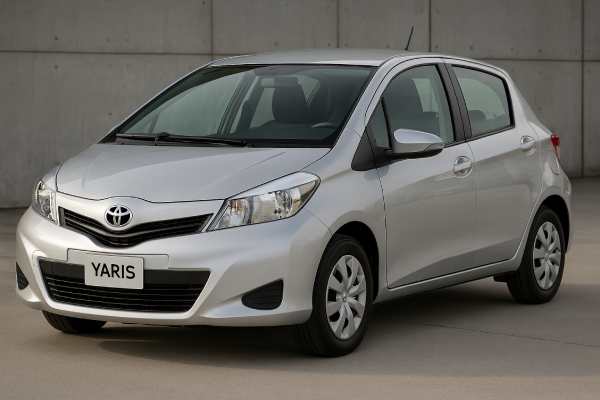
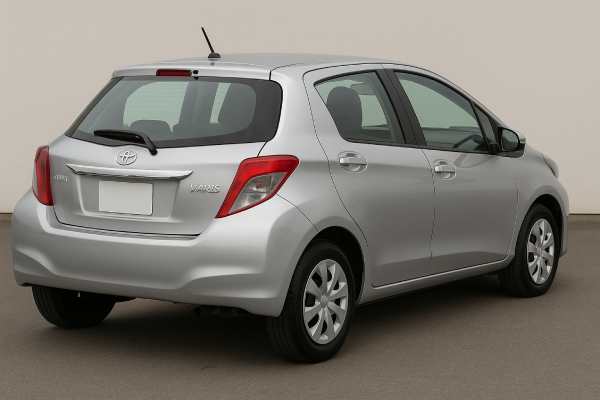
The third-generation Toyota Yaris (NSP130) with the 1NR-FE 1.33-litre petrol engine is the all-rounder of the XP130 range. It sits above the basic 1.0-litre three-cylinder and below the hybrid, offering more power and refinement while keeping running costs sensible. With 98 hp, a relatively light body and compact dimensions, it works well as a city car that can comfortably handle motorway journeys.
Toyota designed this generation with European buyers in mind, so the Yaris feels more grown-up than earlier versions: better sound insulation, a more conventional dashboard and a stronger safety package. At the same time, familiar Toyota strengths remain: simple mechanical layout, good corrosion protection and long service life when maintained correctly.
This guide dives into the key technical data, real-world performance, reliability patterns and maintenance needs of the Yaris NSP130 1.3. It also explains how it compares to rivals, so you can decide whether this is the right small petrol hatchback for you.
Essential Insights
- 1.33-litre 1NR-FE engine offers a useful power step over the 1.0, with similar everyday fuel consumption in mixed driving.
- Chain-driven DOHC engine and straightforward front-wheel-drive layout keep mechanical complexity moderate and long-term ownership predictable.
- Five-star Euro NCAP rating and standard stability control in most markets make the NSP130 a strong safety choice in the B-segment.
- Watch for oil consumption on neglected engines and occasional water-pump or ignition-coil issues as mileage and age increase.
- Plan engine oil and filter changes every 15,000 km or 12 months, shortening to 10,000 km if most use is in stop–start city traffic.
Section overview
- Toyota Yaris NSP130 overview
- Yaris 1NR FE technical specs
- Trim levels equipment and safety
- Reliability faults and service actions
- Maintenance schedule and buying advice
- Driving dynamics and fuel economy
- Yaris 1.3 compared to rivals
Toyota Yaris NSP130 overview
The NSP130 chassis code denotes the third-generation Yaris (XP130 platform) fitted with the 1NR-FE 1.33-litre four-cylinder petrol engine and front-wheel drive. Launched in Europe in 2011, this version replaced the earlier 1.3-litre VVT-i from the XP90 Yaris and became the “sweet spot” of the range for drivers wanting more performance than the 1.0 but without the complexity of a diesel or hybrid.
The 1NR-FE is an all-aluminium engine with dual overhead cams, four valves per cylinder and dual variable valve timing (VVT-i) on both intake and exhaust camshafts. Displacement is 1,329 cc, and in this application it produces around 98 hp (73 kW) and roughly 125 Nm of torque. It is designed to meet Euro 5 emissions standards, pairing relatively high compression with precise fuel and ignition control. In many markets it is coupled to a six-speed manual gearbox, giving better flexibility and lower revs at speed than the five-speed on the 1.0-litre model.
Body styles include three- and five-door hatchbacks, though the five-door is more common. Compared with the previous-generation XP90, the XP130 Yaris grew slightly in length and wheelbase, improving rear legroom and luggage space. At about 3.89 m long and with a wheelbase around 2.51 m, it remains compact enough for dense cities while feeling more planted on the motorway.
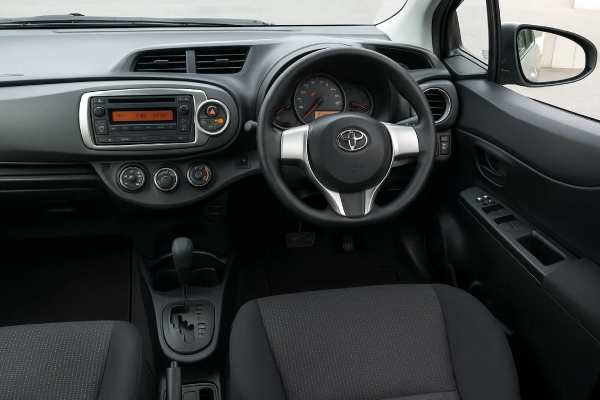
The cabin marks a clear step forward from earlier Yaris models, moving from centre-mounted instruments to a more conventional driver-oriented layout. Materials are still robust rather than luxurious, but the design is clean and functional. Higher trims add a touchscreen multimedia system, steering-wheel controls and extra comfort features.
Safety was a core focus during development. Toyota engineered the structure with extensive high-tensile steel, multiple load paths and energy-absorbing zones. Combined with seven airbags on many models and standard stability control in much of Europe, the Yaris NSP130 achieved strong crash-test results for its time.
In the used market, the 1.3-litre NSP130 suits owners who want a small car capable of regular inter-city journeys, light touring and occasional full loads. It offers enough performance for modern traffic while keeping fuel costs, tax and insurance manageable, especially in markets where engine size and emissions are taxed.
Yaris 1NR FE technical specs
This section summarises key specifications for the 2011–2014 Toyota Yaris (NSP130) with 1NR-FE 1.33-litre petrol engine. Values vary slightly by market, body style and equipment, so always verify against official documentation for your VIN.
Engine and performance
| Item | Specification |
|---|---|
| Engine code | 1NR-FE |
| Type | Inline 4-cylinder, aluminium block and head |
| Valve gear | DOHC, 16 valves, Dual VVT-i (intake and exhaust) |
| Displacement | 1,329 cc (1.3 l) |
| Bore × stroke | Approx. 72.5 × 80.5 mm |
| Compression ratio | Around 11.5:1 |
| Induction | Naturally aspirated |
| Fuel system | Sequential multi-point fuel injection, petrol |
| Emissions standard | Euro 5 in most European markets |
| Max power | ~98 hp (73 kW) @ 6,000 rpm |
| Max torque | ~125 Nm @ 4,000 rpm |
| Timing drive | Chain-driven camshafts |
Official combined fuel consumption values on the NEDC cycle are typically around 5.0–5.5 l/100 km with CO₂ emissions around 118–123 g/km, depending on wheels and equipment.
Transmission and driveline
| Item | Specification |
|---|---|
| Gearbox | 6-speed manual (most markets), some with automated or CVT options |
| Drive type | Front-wheel drive |
| Clutch | Single-plate, dry, hydraulically actuated on most cars |
| Final drive | Fixed ratio, varies slightly with transmission option |
| Differential | Open differential with electronic brake-based traction aids |
The six-speed manual gives relatively short lower gears for city response and taller top gear for motorway economy. Automated or CVT versions focus more on ease of use than driver engagement.
Chassis, dimensions and weights
| Item | Value (typical 5-door) |
|---|---|
| Body style | 3- or 5-door hatchback |
| Platform | Toyota XP130 |
| Length | ~3,885–3,900 mm |
| Width | ~1,695 mm |
| Height | ~1,510 mm |
| Wheelbase | ~2,510 mm |
| Drag coefficient (Cd) | Approx. 0.29–0.30 |
| Kerb weight | Roughly 1,050–1,120 kg depending on trim and gearbox |
| Fuel tank | 42 l |
| Suspension | Front MacPherson strut; rear torsion beam |
| Brakes | Front ventilated discs; rear drums (discs on some higher trims/markets) |
| Typical tyre size | 175/65 R15 or 185/60 R15 |
Performance and capability
| Metric | Value (typical 6-speed manual) |
|---|---|
| 0–100 km/h (0–62 mph) | Around 11.5–11.8 s |
| Top speed | About 175–175+ km/h (approx. 108–110 mph) |
| Official combined fuel use | ~5.0–5.5 l/100 km |
| Estimated real mixed fuel use | ~5.5–6.5 l/100 km |
| Braked towing capacity (where approved) | Approx. 900–1,000 kg |
| Unbraked towing capacity | Typically 450–550 kg |
Always check local homologation data before towing, as limits differ by market and type approval.
Fluids and service capacities (typical values)
| System | Typical data (check per VIN) |
|---|---|
| Engine oil | ~3.7–3.9 l with filter; 0W-20 or 5W-30 to Toyota spec |
| Engine coolant | Around 5–6 l Toyota Super Long Life coolant |
| Manual gearbox oil | Roughly 1.7–2.0 l API GL-4 |
| Brake fluid | DOT 3 or DOT 4 |
| Fuel tank | 42 l |
Electrical and safety essentials
- 12 V battery generally 45–55 Ah with sufficient cold-cranking capacity for European climates.
- Alternator sized to support electric power steering, lighting, demister and multimedia systems.
- Spark plugs: long-life plugs with specific heat range and gap for the 1NR-FE; always follow torque and gap guidance in official documentation.
- Safety systems on most NSP130 1.3 models include ABS with EBD, Brake Assist, stability control and multiple airbags (detailed later in the trims and safety section).
Trim levels equipment and safety
Trim names for the Yaris NSP130 1.3 vary widely between countries (for example, Active, Life, Icon, Trend, Sol or Luna), but the overall logic is similar. The 1.33-litre engine tends to be offered in mid- and higher-level trims, often with more comfort and technology than the 1.0.
Typical trim structure
In a representative European market, you might find:
- Lower mid trim (often “Active” or equivalent)
- 1.33 engine with 6-speed manual as standard
- Manual air conditioning, electric front windows, central locking
- Height-adjustable driver’s seat and steering column
- Basic audio system with CD/radio, AUX and later USB connectivity
- Body-coloured bumpers; steel wheels with hubcaps
- Core mid trim (e.g. “Icon”, “Sol”, “Luna”)
- Remote locking with key fob
- Split-folding rear bench (60:40) and sometimes sliding rear seats
- Leather-trimmed steering wheel with audio and phone controls
- Touchscreen multimedia system (“Toyota Touch”) with Bluetooth
- Alloy wheels (often 15″), fog lamps, more attractive interior trim
- Upper trim (e.g. “Trend”, “Style” or special editions)
- Larger alloys or distinctive wheel designs
- Optional navigation (“Touch & Go”) and upgraded audio
- Automatic climate control in some markets
- Exterior styling details such as chrome inserts or contrasting colour packs
The 1.3 engine sometimes appears in special editions focusing on style or extra equipment rather than performance upgrades. The sporty TS-style variants are more closely associated with larger engines.
Safety ratings and equipment
The XP130 Yaris platform achieved strong crash-test results, including a five-star Euro NCAP rating under the 2011 protocol for the tested configuration. For a supermini of its era, the safety specification is robust.
Typical passive safety equipment includes:
- Seven airbags on many European specs:
- Driver and passenger front airbags
- Front side airbags
- Full-length curtain airbags
- Driver’s knee airbag
- Three-point belts at all seating positions
- ISOFIX child seat anchors on the outer rear seats
- Adjustable head restraints for all seats
Active safety and control systems generally include:
- Anti-lock braking system (ABS)
- Electronic brake-force distribution (EBD)
- Brake Assist
- Vehicle Stability Control (VSC)
- Traction control (TRC)
In later years and in certain markets, Toyota introduced early forms of Toyota Safety Sense on the Yaris, adding features such as:
- Pre-collision warning and braking at urban speeds
- Lane departure warning
- Automatic high-beam assistance
However, many 2011–2014 1.3-litre cars, especially earlier ones, may not have these advanced systems, so it is important to check the specific equipment of the car you are looking at.
Identifying trim and equipment
Useful clues when identifying a specific NSP130 1.3:
- Wheel type and size (steel vs alloy, 15″ vs larger)
- Presence of front fog lamps and colour-coded mirrors
- Touchscreen multimedia unit vs basic mono display
- Steering-wheel controls for audio and phone
- Automatic climate control and cruise control availability
VIN decoding and a dealer build sheet will give the most accurate picture of original equipment, which is useful when verifying whether a used car still has all its original safety and comfort features.
Reliability faults and service actions
The NSP130 Yaris with the 1NR-FE engine is generally a reliable small car, but like any model it has known patterns of wear and a few issues that are worth watching for, especially as the fleet ages.
Engine and fuelling
- Oil consumption (occasional to common on neglected engines, medium severity):
Some 1NR-FE units develop increased oil consumption as mileage climbs, particularly where oil-change intervals have been stretched or the car mainly does short, cold journeys. Symptoms include oil level dropping noticeably between services and blue smoke on overrun or start-up. Regular level checks are essential. If consumption is high, a compression test and inspection for leaks, valve-stem seal wear and piston ring condition are advised. In moderate cases, more frequent oil changes and careful monitoring may be acceptable; severe cases can require engine overhaul or replacement. - Carbon build-up and rough idle (occasional, low–medium severity):
Although this engine uses port injection rather than direct injection, long intervals and poor fuel quality can still lead to deposits on throttle bodies, intake valves and EGR passages. Drivers may notice a slightly unstable idle, hesitation on light throttle and reduced fuel economy. Cleaning the throttle body, intake tract and EGR components, along with updating engine software where required, often restores smoothness. - Ignition coil and spark plug issues (common, low severity):
Coil-on-plug units can fail one at a time, causing misfires, rough running and a check engine light. Spark plugs that have run past the recommended interval can accelerate coil wear. Diagnosis with a scan tool usually identifies the affected cylinder. The fix is replacement of the faulty coil and plugs, plus ensuring correct plug type and torque. - Water pump seepage (occasional, low–medium severity):
As with many small engines, the mechanical water pump can develop minor leaks around the shaft seal over time. Look for pinkish residue or crust around the pump housing and low coolant level. Replacement of the pump and fresh coolant is the standard remedy.
The timing chain itself is designed for the life of the engine, but low oil levels or very infrequent oil changes can lead to chain stretch and tensioner or guide wear. A persistent rattling noise at cold start that does not quickly settle warrants further investigation. In advanced cases, timing-correlation fault codes may appear and chain replacement becomes necessary.
Driveline, gearbox and chassis
- Clutch wear and judder (common in city cars, medium severity):
Frequent stop–start use and inexperienced drivers can wear the clutch friction material and pressure plate. Early symptoms include a high biting point, slipping under heavy load and judder when pulling away. Replacement requires gearbox removal, so labour costs form a significant part of the bill. - Notchy gear selection (occasional, low–medium severity):
Some owners report stiff or obstructive selection of certain gears, especially when cold. Before assuming internal gearbox damage, it is worth changing the transmission oil, verifying linkage condition and checking for worn bushes or engine/gearbox mounts. These simpler issues often explain the symptoms. - Suspension and steering wear (age-related, low–medium severity):
Knocks over bumps are usually due to anti-roll-bar drop links or wishbone bushes. Electric power steering can develop slight free play or column noises, though outright failures are uncommon. Regular inspections catch these issues before they affect safety. - Wheel bearings (occasional, medium severity):
A humming noise that changes with road speed and when cornering is a classic sign of a worn wheel bearing. Replacement is a routine job for most workshops.
Body, electrical and recalls
- Corrosion (generally rare, but check in harsh climates):
The XP130 has good corrosion protection, but cars used on salted roads or with poor accident repairs can show rust on: - Rear axle beam and mounting points
- Underbody seams and jacking points
- Door bottoms and tailgate edge if drains are blocked
- Electrical niggles (low severity):
Tired 12 V batteries cause starting issues and odd warning lights. Window regulators and central-locking actuators may weaken with age, and multimedia units can occasionally glitch, often solved by software updates or resets. - Recalls and service actions:
Depending on market and build date, the Yaris NSP130 may have been included in campaigns over items such as airbags, window switches or steering components. The best practice is to check the VIN with an official Toyota recall lookup and confirm completion with a dealer printout. Some drivability or emissions issues have also been addressed through ECU software updates, which a dealer can check and apply.
Overall, when serviced on time and used within its design envelope, the NSP130 1.3 is capable of high mileages with relatively few serious failures. Most issues arise from deferred maintenance rather than design defects.
Maintenance schedule and buying advice
Good maintenance is the key to keeping the Yaris NSP130 dependable and economical. The following is a practical guideline; always cross-check with the official schedule for your market and VIN.
Practical maintenance schedule (typical conditions)
- Engine oil and filter
- Every 15,000 km or 12 months, whichever comes first.
- Reduce to 10,000 km for mainly short trips, high-load or dusty conditions.
- Use oil meeting Toyota specifications (commonly 0W-20 or 5W-30).
- Air and cabin filters
- Engine air filter: inspect every 15,000 km, replace around 30,000 km or sooner in dusty areas.
- Cabin (pollen) filter: replace every 12–24 months to preserve HVAC performance and demisting.
- Spark plugs
- Long-life plugs typically scheduled around 90,000–100,000 km.
- In high-idle or city use, earlier replacement can maintain smooth running and fuel economy.
- Fuel filter
- Often integrated into the fuel-pump module; follow the manufacturer’s interval or replace when pressure issues appear.
- Coolant
- Toyota Super Long Life Coolant generally has a long first interval (for example, 5–6 years) and shorter subsequent intervals. Use the correct type and concentration.
- Transmission oil (manual)
- Even if labelled “lifetime”, replacing around 80,000–100,000 km helps shift quality and longevity.
- Brake system
- Brake fluid: replace every 2 years, regardless of mileage.
- Pads, discs and rear drums: inspect at each service for thickness, scoring and leakage.
- Belts and hoses
- Inspect the auxiliary belt and coolant hoses annually for cracks, hardening or leaks.
- Replace the belt typically around 90,000–120,000 km or sooner if noisy or cracked.
- Steering, suspension and alignment
- Check joints, bushes and shock absorbers at each inspection.
- Align wheels after any suspension work or if uneven tyre wear appears.
- 12 V battery
- From around 5 years old, test annually and replace before winter if capacity is marginal.
The timing chain is monitored by condition rather than a fixed replacement interval. Abnormal noise, timing error codes or severely contaminated oil are triggers for deeper inspection.
Buyer’s checklist for used NSP130 1.3
When evaluating a used Yaris 1.3:
- Documentation and history
- Look for stamped service book or digital history with regular oil changes.
- Confirm timing of coolant and brake-fluid replacements.
- Obtain proof of recall completion where applicable.
- Cold start and idle
- Start the engine from cold: it should fire quickly and settle to a stable idle, with only a brief increase in revs.
- Listen for persistent chain rattle or metallic noises.
- On-road behaviour
- Check clutch engagement: no slipping in higher gears and no pronounced judder when moving off.
- Gear shifts should be smooth and precise without grinding.
- At speed, the car should track straight, with no vibration from wheels or drivetrain.
- Body and underbody
- Inspect wheel arches, sills, jacking points and rear axle mounts for rust or poorly repaired damage.
- Look for overspray, mismatched panels or irregular gaps that may indicate past accidents.
- Interior and equipment
- Test all windows, locks, mirrors, wipers, lights, air conditioning and multimedia functions.
- Check for damp carpets or misted windows, which can point to seal or heater-core issues.
Which years and trims to target
- For many buyers, a mid-spec 1.3 with six-speed manual, alloy wheels, air conditioning and touchscreen multimedia hits the best balance of comfort, running costs and resale value.
- Very early cars with incomplete service history or neglected fluids are best avoided unless priced accordingly and inspected carefully.
- Well-maintained examples from cautious first owners, ideally with full history and no accident damage, are worth paying a modest premium for, as they tend to need less reconditioning.
In general, a properly serviced Yaris NSP130 1.3 can deliver many years and hundreds of thousands of kilometres of reliable service with only routine repairs and age-related wear items.
Driving dynamics and fuel economy
The Yaris NSP130 1.3 is designed as a practical all-rounder rather than a sports hatch, but it delivers a competent and reassuring driving experience with low running costs.
Powertrain character
The 1NR-FE engine feels noticeably stronger than the 1.0 three-cylinder, especially with a full load or on inclines. With around 98 hp and 125 Nm on tap, it pulls keenly once past roughly 2,500 rpm. The six-speed manual gearbox lets you keep the engine in its sweet spot without constantly revving it to redline.
In town, the engine is smooth and responsive enough to make short gaps in traffic without drama. First and second gears are short, making hill starts easy. On country roads, third and fourth gears give decent flexibility; the engine sounds more purposeful than strained when pushed.
At motorway speeds, the extra gear compared with the 1.0 means lower revs and less noise. The car can cruise comfortably at typical European limits, though overtakes from 80–120 km/h still require planning and a downshift. The naturally aspirated character means throttle response is linear and predictable, without the lag associated with some small turbocharged units.
Ride, handling and refinement
The suspension setup—MacPherson struts at the front and a torsion beam at the rear—is tuned for comfort and stability. Over typical town surfaces and speed bumps, the Yaris rides acceptably well for a small car, though deep potholes will still be felt. The relatively tall body can exhibit some lean in fast corners, but grip is predictable and the chassis remains composed.
Electric power steering is light at parking speeds, helping in tight spaces and multi-storey car parks. On the open road it weights up adequately, although keen drivers may find feedback a little muted compared with the best in class. The small turning circle makes U-turns and manoeuvres easy, which is valuable in urban areas.
Noise levels are reasonable: engine sound is noticeable when accelerating hard but settles down once in top gear. Wind and tyre noise are more apparent on coarse surfaces, yet still broadly in line with rivals. Specifying touring-oriented tyres rather than the noisiest budget options can improve refinement.
Real-world economy
Official NEDC fuel-consumption figures of around 5.0–5.5 l/100 km are achievable in ideal conditions, but most owners see slightly higher values in mixed use. As a rough guide:
- City-heavy use: 6.5–7.5 l/100 km (36–30 mpg US) with lots of stop–start traffic and short trips.
- Mixed driving: 5.5–6.5 l/100 km (43–36 mpg US) with a balance of town and open-road use.
- Steady motorway cruising: 5.5–6.0 l/100 km (43–39 mpg US) at moderate speeds, rising if driven very fast or fully loaded.
Factors that significantly impact economy include speed, payload, roof racks, tyre choice and driving style. Gentle acceleration, early upshifts and anticipatory braking can easily save 0.5–1.0 l/100 km compared with aggressive driving.
Overall, the NSP130 1.3 strikes a good compromise: it is more relaxed and capable at speed than the 1.0 while still returning fuel consumption figures that many owners find very affordable.
Yaris 1.3 compared to rivals
When new, the 2011–2014 Yaris 1.3 VVT-i competed in a crowded B-segment against cars such as the Ford Fiesta 1.25/1.0 EcoBoost, Volkswagen Polo 1.2/1.4, Renault Clio 1.2/0.9 TCe, Peugeot 208 1.2, Hyundai i20 and Kia Rio. On the used market, these remain its natural alternatives.
Strengths of the Yaris NSP130 1.3
- Reliability and durability
Toyota’s small petrol engines have a strong reputation for longevity when serviced correctly. The 1NR-FE uses relatively simple, proven technology compared with some rivals’ small turbocharged or direct-injection units, which can have more complex failure modes. - Low running costs
Fuel consumption is competitive, servicing is straightforward and parts availability is generally good. Independent workshops are familiar with the Yaris, and common wear items are widely stocked. - Safety performance
Five-star crash-test results for the platform and comprehensive passive safety equipment make the Yaris a reassuring choice for families and new drivers. Many rivals match this on paper, but the Toyota delivers strong real-world crash structures and restraint systems. - Ease of use and packaging
The high roofline, compact footprint and good visibility make the Yaris easy to drive and park. The rear seat and boot are practical for a car of this size, and the cabin layout is straightforward.
Where rivals may have the edge
- Driving engagement
The Ford Fiesta of this era is widely praised for steering feel and handling, delivering a more entertaining drive. Some versions of the Mazda 2 and Renault Clio also feel sportier than the Yaris, though they may not match its long-term reliability. - Performance and refinement at speed
Small turbocharged engines in cars like the Polo 1.2 TSI or Clio 0.9 TCe can offer stronger mid-range torque and quieter motorway cruising, especially when lightly loaded. However, they introduce additional components such as turbochargers and more complex emissions systems. - Interior materials and style
Some rivals offer softer plastics, more adventurous designs or a more upmarket feel inside. The Yaris favours durability and functionality, which some buyers may perceive as a little plain.
Who the Yaris 1.3 suits best
The NSP130 1.3 is an excellent choice if you:
- Prefer a simple, naturally aspirated petrol engine with a solid reliability record.
- Need a small car for urban use but regularly drive on faster roads or with passengers, making the 1.0 feel underpowered.
- Value safety, predictable behaviour and easy maintenance more than outright performance or cutting-edge infotainment.
It may be less ideal if you:
- Want the most dynamic handling and steering feel in the class.
- Desire premium materials, advanced driver-assistance features and the latest connectivity that later-generation B-segment cars offer.
For many buyers, the Yaris NSP130 1.3 synthesises Toyota’s long-term reliability with a practical and safe everyday package, making it a strong contender in the used supermini market.
References
- Toyota Yaris Technical Specifications 2011 (Technical Data)
- The New Toyota Yaris 2011 2011 (Model Overview)
- Toyota Yaris 2011 Result 2011 (Safety Rating)
- Toyota Owners Manuals 2014 (Owner’s Manual)
- Fluids & Capacities – Yaris 2011–2020 EU 2019 (Fluids and Capacities)
Disclaimer
This article is intended for general informational purposes only and does not replace professional diagnosis, repair advice or official manufacturer service information. Specifications, torque values, maintenance intervals and repair procedures can vary by VIN, production date, market and equipment level. Always verify critical data using your vehicle’s owner’s manual, official workshop documentation or guidance from a qualified technician before performing maintenance or repairs.
If you found this guide useful, please consider sharing it with other drivers or enthusiasts via platforms such as Facebook or X/Twitter. Your support helps sustain the effort required to produce detailed, independent technical content.