
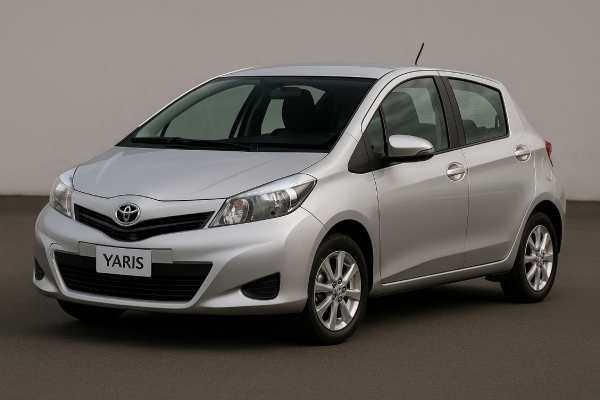
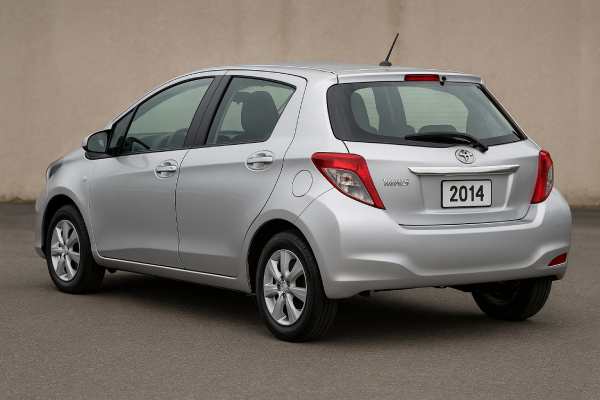
The Toyota Yaris (NLP130) 1.4 D-4D sits in a sweet spot for drivers who want big-car fuel economy and durability in a compact body. Built mainly for European markets between 2011 and 2014, this third-generation Yaris pairs the proven 1ND-TV 1.4-litre common-rail diesel with a six-speed manual gearbox and a light, agile chassis. It became popular with high-mileage commuters, fleet users and taxi operators because it blends low fuel consumption, simple mechanicals and Toyota’s reputation for long life when serviced on time.
Inside, the Yaris is more practical than its footprint suggests, with usable rear legroom and a competitive boot for the class. Safety equipment is strong for the age, and Euro 5 emissions plus DPF variants make it acceptable in many low-emission zones, subject to local rules. For a used buyer, the main questions are whether the timing belt, clutch and DPF have been cared for properly, and how this diesel compares with petrol and hybrid alternatives. This guide walks through detailed specs, real-world behaviour, known issues, maintenance priorities and how the 2011–2014 Yaris 1.4 diesel stacks up against rivals.
Fast Facts
- Real-world fuel use often sits around 4.0–5.0 L/100 km in mixed driving when driven smoothly.
- Strong mid-range torque (about 205 Nm) makes the Yaris relaxed on motorways and confident on hills.
- Robust engine and gearbox if serviced correctly; timing belt and DPF are the key components needing attention.
- Diesel particulate filter can clog on repeated short trips; occasional long hot runs and correct oil are essential.
- Plan on oil and filter every 10,000 miles / 15,000 km or 12 months, whichever comes first.
Guide contents
- Toyota Yaris 1.4 D-4D context
- Yaris NLP130 engine and data
- Diesel Yaris trims and protection
- Durability, faults and service actions
- Maintenance priorities and buying guide
- On-road behaviour and performance
- Yaris 1.4 diesel against rivals
Toyota Yaris 1.4 D-4D context
The NLP130-generation Yaris is the third European Yaris, launched in 2011 on the XP130 platform. In 1.4 D-4D form it uses the long-serving 1ND-TV four-cylinder turbo-diesel, producing about 90 hp and 205 Nm. Power goes through a six-speed manual gearbox to the front wheels. Toyota engineered this combination for long-distance efficiency and durability rather than outright speed. Official combined fuel economy is around 4.0 L/100 km with CO₂ close to 104 g/km, depending on wheels and equipment.
Compared with the petrol Yaris, the diesel offers much stronger mid-range torque and longer gearing. It is most comfortable on A-roads and motorways at 90–120 km/h, where the engine runs at modest revs and noise levels. That character suits drivers who cover 20,000+ km per year, such as sales reps, regional commuters and small businesses. The extra torque also helps if you regularly drive hilly routes or occasionally tow within the car’s rating.
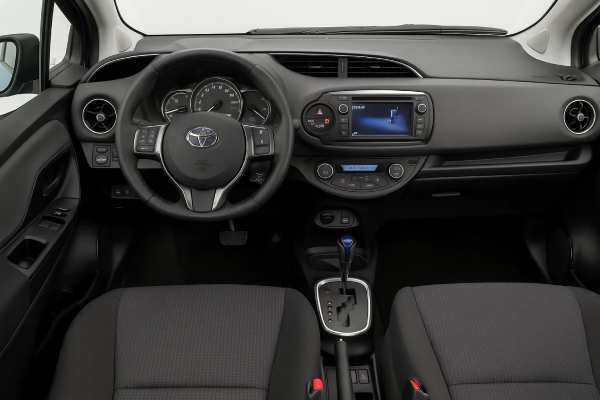
Physically, the Yaris remains firmly in the supermini class: roughly 3,950 mm long and 1,695 mm wide, with a 2,510 mm wheelbase. The cabin layout is straightforward with conventional instrument placement, unlike earlier centre-mounted clusters. Rear seat space is decent for a small car, and the 286-litre boot is competitive. Seat fabrics and plastics are robust rather than plush but stand up well to high mileage and family use.
Safety and emissions were key selling points at launch. Euro 5 compliance, the availability of DPF versions in many markets, multiple airbags and standard stability control made the diesel Yaris a safe fleet choice. Euro NCAP awarded the XP130 Yaris a five-star rating with good adult and child protection scores. That still compares favourably with many similarly priced used alternatives.
On today’s used market, the main attractions are extremely low running costs, strong reliability when maintained and acceptable refinement for a small diesel. Trade-offs include modest power for heavy loads, the need for DPF-friendly driving patterns and potential restrictions for older diesels in some city centres. For the right use case, though, the 1.4 D-4D is still a very rational choice.
Yaris NLP130 engine and data
Engine and performance
| Item | Detail |
|---|---|
| Engine code | 1ND-TV turbo-diesel |
| Layout and cylinders | Inline-4, transverse, SOHC, 8 valves |
| Bore × stroke | 73.0 × 81.5 mm |
| Displacement | 1.4 l (1,364 cc) |
| Induction | Variable-geometry turbocharger with intercooler |
| Fuel system | Common-rail direct injection |
| Compression ratio | Around 16.5:1 |
| Max power | 90 hp (66 kW) @ 3,800 rpm |
| Max torque | 205 Nm (151 lb-ft) @ 1,800–2,800 rpm |
| Emissions standard | Euro 5 (most 2011–2014 EU examples) |
| Official combined economy | ~4.0 L/100 km; roughly 71 mpg UK / 59 mpg US |
| CO₂ rating | Around 104 g/km |
| Aerodynamic drag (Cd) | Around 0.29 with standard body and wheels |
These figures place the Yaris mid-pack for power but near the top for efficiency among small diesels of its era. In the real world, mixed driving usually yields 4.0–5.0 L/100 km if the car is healthy and driven smoothly. Short trips, heavy loads and sustained high-speed cruising can push consumption closer to 5.5–6.0 L/100 km.
Transmission and driveline
| Item | Detail |
|---|---|
| Transmission | 6-speed manual, commonly EC65 |
| Gearbox type | Manual transaxle, cable-operated shift |
| Drive type | Front-wheel drive (FWD) |
| Differential | Open, integrated into transaxle |
| Approximate final drive | Mid-3s:1 (varies slightly by market; check data label) |
In most European markets there was no mainstream factory automatic for the diesel XP130. If you encounter an automatic diesel Yaris, double-check its origin and parts references, as they may differ from standard European specifications.
Chassis and dimensions
| Item | Detail |
|---|---|
| Platform | Toyota B platform (XP130) |
| Front suspension | MacPherson strut with coil springs, anti-roll bar |
| Rear suspension | Torsion beam with coil springs |
| Steering | Electric power-assisted rack-and-pinion |
| Front brakes | Ventilated discs (around 258 mm) |
| Rear brakes | Drums on most trims; some high-spec cars may have discs in certain markets |
| Tyres (typical) | 175/65 R15 on steel or alloy; 195/50 R16 on sportier trims |
| Length | ~3,950 mm (155.5 in) |
| Width | ~1,695 mm (66.7 in) |
| Height | ~1,510 mm (59.4 in) |
| Wheelbase | 2,510 mm (98.8 in) |
| Turning circle | Around 9.4–9.6 m kerb-to-kerb |
| Ground clearance | Roughly 140 mm |
| Kerb weight | About 1,080–1,135 kg (trim-dependent) |
| GVWR | Around 1,545 kg |
| Fuel tank | 41 l diesel |
| Boot volume | 286 l seats up / roughly 768 l seats folded (VDA) |
Performance and capability
| Metric | Value (typical 5-door 1.4 D-4D) |
|---|---|
| 0–100 km/h (0–62 mph) | About 10.8 s |
| Top speed | Around 175 km/h (109 mph) |
| Braking 100–0 km/h | Typically mid-30 m range on good tyres |
| Rated towing capacity* | Often 700–900 kg braked, 400–450 kg unbraked |
| Roof load | Commonly around 50 kg |
*Towing limits vary by market and homologation; always confirm on the VIN plate and in the owner’s manual.
Fluids and service capacities
Values vary slightly by year and market; always confirm with official literature for your VIN.
| System | Specification (typical EU 2011–2014) | Capacity (approx.) |
|---|---|---|
| Engine oil (non-DPF) | ACEA B1/B3/B4, API CF/CF-4 5W-30 or 5W-40 diesel oil | ~3.9 l (with filter) |
| Engine oil (DPF-equipped) | Low-SAPs ACEA C2 5W-30 | ~3.7 l (with filter) |
| Manual gearbox EC65 | GL-4 75W “low-viscosity” manual trans oil | ~2.4 l |
| Engine coolant | Toyota Super Long Life Coolant or equivalent HOAT | ~4.5–4.9 l |
| Fuel system | Ultra-low sulphur diesel | – |
Timing belt replacement is typically scheduled at around 150,000 km or 10 years, whichever comes first, though severe conditions may warrant earlier inspection.
Electrical and safety systems (summary)
The Yaris diesel uses a conventional alternator and a compact 12 V battery, usually 45–55 Ah. Glow plugs aid cold starting; failed plugs or a faulty control relay will show up as long cranking and rough initial running in cold weather.
Safety equipment typically includes front, side, curtain and driver’s knee airbags, ABS with electronic brakeforce distribution, stability control, traction control and ISOFIX child-seat mounts on the outer rear seats with top tether points. Advanced driver-assistance systems such as automatic emergency braking and lane keeping were not standard on 2011–2014 models and only appear on later Yaris generations.
Diesel Yaris trims and protection
Toyota offered the 1.4 D-4D across a range of trims that differ by market, but a typical European line-up includes mid-level and high-spec grades rather than stripped-back base models. Common names include Active, Icon, Trend, Sol and SR, with minor variations between countries.
At the lower end, diesel trims usually include:
- Air conditioning or climate control
- Height-adjustable driver’s seat
- Split-folding rear bench (60:40)
- Remote central locking and electric front windows
- Trip computer and steering-wheel audio controls in many markets
Mid-level trims add:
- 15-inch alloy wheels instead of steel
- Front fog lamps
- Touchscreen infotainment with Bluetooth and USB
- Leather-trimmed steering wheel
- Possibly a reversing camera, depending on package
Higher trims may bring:
- 16-inch alloys with lower-profile tyres
- Dark-tinted rear glass
- Sportier bumpers or side skirts
- Upgraded audio systems
- Additional chrome or gloss interior trims
Mechanically, most diesel trims share the same engine and gearbox. The main functional differences are wheel and tyre packages, which influence ride and noise, and brake hardware; some higher trims may use rear discs, whereas most versions retain drums at the back.
From a safety perspective, all trims share the same core body shell and restraint systems, supporting the Euro NCAP five-star rating. The differences lie in extra convenience and visibility features such as rear cameras or improved head restraints. Basic ADAS features like simple lane departure warning or speed limit display were not widely rolled out on this early XP130 generation, especially not on diesels.
Year-to-year changes are evolutionary rather than dramatic. Early 2011 cars tend to have simpler infotainment and fewer cosmetic options. Later 2013–2014 pre-facelift models see incremental updates to dash materials, audio options and standardisation of stability control in markets where it was initially optional. Some countries also align airbag and ISOFIX fitment across the range over time.
When evaluating trims on the used market, concentrate on equipment that matters to you. For long commuting, cruise control, a centre armrest and a decent audio system can make daily use more pleasant. For urban use, a reversing camera and parking sensors are valuable. Mechanically “bare” trims are not necessarily worse; they can be simpler and cheaper to maintain, as long as your safety essentials (stability control, multiple airbags) are present.
Durability, faults and service actions
The 1ND-TV diesel is generally robust and capable of very high mileage, but like all small modern diesels it depends on clean oil, correct belt changes and DPF-friendly usage patterns where a filter is fitted. Understanding typical issues helps you judge any individual car.
Common issues and patterns
EGR and intake soot build-up (common, low–medium severity)
Short journeys, low engine speeds and extended idling contribute to carbon deposits in the exhaust gas recirculation (EGR) valve and intake manifold. Symptoms can include rough idle, hesitation, reduced performance and fault codes relating to flow or airflow imbalance. The usual remedy is cleaning or replacing the EGR valve, combined with careful cleaning of intake runners where accessible. Preventively, occasional higher-load runs at full temperature help keep the system cleaner.
DPF loading and regeneration problems (common in city-driven cars, medium–high severity)
On DPF-equipped Yaris diesels, repeated short trips that never allow proper regeneration can lead to soot accumulation. Signs include increased fuel use, frequent cooling fan operation after shutdown, warning lights and eventually limp mode. Light cases respond to a long motorway run at sustained speeds; heavily loaded filters may need forced regeneration, off-car cleaning or replacement. Using the correct low-ash oil and avoiding permanent under-speed driving are critical.
Turbo control and boost issues (occasional, medium severity)
Variable-geometry turbo vanes can stick with age and soot, causing overboost or underboost. Drivers may notice flat spots, lack of power or overboost fault codes. Early intervention with cleaning and correct driving habits can sometimes free sticky vanes; more severe cases require turbo overhaul or replacement. Ensuring good-quality oil and warm-up/cool-down practices helps protect the turbo.
Timing belt neglect (potentially severe)
Unlike many Toyota petrol engines of the era, the 1ND-TV uses a timing belt, not a chain. Stretching intervals well beyond time or mileage limits can lead to tooth shear or breakage, with major engine damage. On any used purchase, verify timing belt and tensioner replacement history. If there is doubt or the belt is older than around 10 years, treating it as overdue and replacing the full kit (belt, tensioner, idlers, water pump where appropriate) is wise.
Clutch and dual-mass flywheel wear (common on high-mileage cars)
High-mileage city cars and those used for towing often suffer slipping clutches, judder or rattling at idle, indicating a worn dual-mass flywheel. Replacement is a medium- to high-cost repair because of labour and part prices. A smooth, progressive pedal, quiet idle and no slip in high gears under load are good signs.
Front suspension and steering components (occasional)
Over time, front strut top mounts, anti-roll-bar drop links and lower arm bushes can wear, causing knocks over bumps or vague steering. These parts are not unique to the diesel and are relatively inexpensive, but an alignment check afterwards is essential. Excessive inner or outer tyre wear may indicate worn suspension or incorrect geometry.
Corrosion (climate-dependent)
In regions with heavy road salt use, pay close attention to the rear axle beam, brake pipes, front subframe and sill seams. While the body panels themselves tend to resist rust reasonably well, underbody components and lines can deteriorate after a decade, requiring replacement or localised welding. Regular washing of the underside and timely Waxoyl-type treatments extend life in such climates.
Recalls, campaigns and software updates
Yaris models of this era have been subject to various global recalls, including airbag inflators, power window switches and minor electrical components. Not all campaigns affect every diesel NLP130, but you should always:
- Check the VIN on Toyota’s official recall website for open campaigns.
- Ask the seller for dealer documentation showing completed recall or service actions.
Some software updates improve drivability and emissions management, particularly around DPF regeneration and cold-weather behaviour. Engines with outdated calibrations may show frequent regens, rough idle after cold starts or unstable low-speed running. Dealers can check the current ECU software version and apply updates when needed.
Before purchase, ask specifically about:
- Any DPF replacements or forced regenerations
- Injector replacements or recalibrations
- Glow plug and relay repairs
- Airbag and safety-related recalls
A car with documented fixes and updates is often a safer bet than one with an incomplete story, even if mileage is higher.
Maintenance priorities and buying guide
The key to a long-lived Yaris 1.4 D-4D is disciplined, high-quality maintenance. Below is a practical schedule that balances typical European guidance with the realities of ageing diesel hardware. Always cross-check with your official service booklet.
Practical maintenance schedule
Every 10,000 miles / 15,000 km or 12 months
- Engine oil and filter (correct diesel or low-SAPs oil, depending on DPF fitment).
- Visual checks for leaks (oil, coolant, fuel), damaged hoses and perished rubber.
- Brake inspection (pads, discs, rear shoes/cylinders), steering and suspension quick check.
- Tyre inspection and pressure adjustment.
Every 30,000 km or 2 years
- Replace engine air filter.
- Replace cabin (pollen) filter.
- Replace brake fluid.
- Inspect auxiliary drive belt condition and tension.
Every 60,000 km or 4 years
- Replace fuel filter.
- More detailed underbody inspection, including brake lines and rear axle.
Every 6–8 years or 100,000–160,000 km
- Replace engine coolant (if not already done by time).
Around 150,000 km or 10 years
- Replace timing belt, tensioner, idlers and usually the water pump.
- Consider manual gearbox oil change if not done before.
Ongoing
- Monitor DPF behaviour: if regeneration becomes too frequent or warning lights appear, investigate early.
- Test 12 V battery from around 5 years old, especially before winter.
- Rotate tyres every 10,000–15,000 km and check alignment.
Fluids and torque considerations
When working on the car:
- Use manufacturer-approved or equivalent fluids to protect the DPF and emission system.
- Take torque values from the official workshop manual; small fasteners and alloy sumps are sensitive to overtightening.
- Wheel bolts typically sit in the 100–110 Nm range, but verify for your exact model.
Buyer’s guide checklist
When viewing a used Yaris 1.4 D-4D, work through the following:
- History and paperwork
- Look for stamped service records, itemised invoices and evidence of timing belt replacement.
- Confirm fuel filter changes at reasonable intervals.
- Check for DPF work (regens, cleaning or replacement) and any injector or turbo repairs.
- Cold start and smoke
- Start the car from cold if possible. It should start promptly without long cranking.
- A brief puff of grey smoke can be normal; persistent white or blue smoke is not.
- Listen for uneven idle or misfire when cold, which may indicate injectors, glow plugs or compression issues.
- On-road test
- Check clutch operation for slip, judder or chatter.
- Assess gearshift quality; it should be precise and not obstructive.
- Test acceleration from low revs; the turbo should build torque smoothly from about 1,700 rpm.
- Note any flat spots, surging or limp-mode behaviour that might indicate boost or fuel problems.
- Brakes, steering and suspension
- During braking from moderate speed, feel for vibration (warped discs) or pulling to one side.
- Listen for clunks over bumps, especially at the front.
- Inspect tyres for uneven or cupped wear that could signal worn suspension or poor alignment.
- Body and corrosion
- Check wheel arches, sills, door bottoms and under the boot carpet for rust or poor repairs.
- Look underneath (or have a garage lift the car) to inspect brake lines, fuel lines, rear axle beam and subframes.
- Electrics and interior
- Confirm windows, mirrors, locking, lights and infotainment work correctly.
- Test A/C performance; weak cooling might indicate low gas, a failing compressor or condenser issues.
Long-term outlook
A well-maintained Yaris 1.4 D-4D can realistically reach 250,000–300,000 km or more with its original engine and gearbox. The components most likely to demand investment over that span are the timing belt kit, clutch and dual-mass flywheel, DPF and suspension bushes/dampers. Spread across years of use and low fuel consumption, total ownership cost often compares very favourably with many petrol competitors.
On-road behaviour and performance
On the road, the Yaris 1.4 D-4D feels more grown-up than its size suggests. Initial take-off is calm but once the turbo spins up around 1,700–1,800 rpm the engine pulls strongly for a small displacement. The generous mid-range torque means you can short-shift and stay in higher gears without bogging down, especially on moderate inclines. This reduces noise and consumption compared with a petrol engine that needs more revs.
The six-speed gearbox uses long ratios in the upper gears. At typical motorway speeds, the engine sits at relatively low rpm, which suits both refinement and economy. Gearshift action is usually light and accurate; if it feels rubbery or obstructive, old oil, stretched cables or clutch issues may be involved.
Ride comfort is tuned to balance urban bumps with stability at speed. The car copes well with everyday potholes and speed humps, only becoming busy on very broken surfaces. Body roll in corners is modest, and the chassis feels safe and predictable rather than playful. The front end offers enough grip for enthusiastic use, but this is clearly a comfort- and economy-biased setup, not a hot-hatch chassis.
Noise levels are good for a small diesel. At idle you can hear the characteristic diesel clatter, especially outside the car, but it settles once warm. At 100–120 km/h, engine noise blends into the background and wind and road noise from the mirrors and rear arches become more noticeable. Fitting quality tyres and keeping wheel sizes modest helps cabin refinement.
Performance figures place the Yaris in the “adequate but not quick” category. The 0–100 km/h sprint around 10.8 seconds and a top speed of about 175 km/h are fine for normal use. Overtaking from 80–120 km/h is strongest if you drop to fourth or fifth before pulling out. Braking performance is secure, with ABS and electronic brakeforce distribution helping in emergency stops. Pedal feel is generally firm and reassuring.
Loaded with passengers and luggage, the Yaris still copes well, although steep gradients and motorway overtakes require more planning. When towing within its rated capacity, you will feel the extra load, and fuel economy will rise, but the combination of torque and long gearing remains workable for light trailers or small caravans.
Overall, the driving experience suits buyers who value calm, predictable and efficient progress over sharp handling or performance thrills. For many owners, that is exactly the point.
Yaris 1.4 diesel against rivals
When new, the Yaris 1.4 D-4D competed with a crowded field of small diesels: VW Polo 1.6 TDI, Ford Fiesta 1.4/1.5 TDCi, Renault Clio 1.5 dCi, Peugeot 208 1.4/1.6 HDi, Hyundai i20 1.4 CRDi, Skoda Fabia 1.6 TDI and similar models. On the used market, these cars are often in the same price bracket and target the same buyers.
Strengths versus rivals
Reliability and robustness
The 1ND-TV engine has a strong reputation when maintained correctly. While no modern diesel is completely trouble-free, the Toyota design is relatively conservative, and serious bottom-end or catastrophic failures are less common than on some contemporaries, especially in high-mileage fleet use. With correct timing belt changes and good oil, it can run very high mileages.
Running costs
Service parts such as filters, belts and pads are widely available and reasonably priced. The engine’s modest power output is kind to clutches, gearboxes and tyres, so consumables often last longer than on more powerful rivals. Combined with low fuel consumption, this gives the Yaris an excellent cost-per-kilometre profile.
Fuel economy
In comparable conditions, many owners find that the Yaris diesel matches or beats the real-world consumption of rivals like the Clio dCi or Polo TDI. Long-legged gearing and a light body help, particularly on sustained motorway runs.
Residual value
Toyotas often hold their value well, and the Yaris is no exception. This benefits owners when selling, and also reflects the model’s reputation among used buyers. Compared to some French or Italian competitors, depreciation tends to be gentler, though often not as strong as certain VW-group models.
Where rivals may be stronger
Cabin refinement and feel
A Volkswagen Polo or certain higher-spec Ford Fiestas from the same period can feel more upmarket inside, with softer plastics and slightly better sound insulation. If interior ambiance is a top priority, those cars may appeal more.
Driving enjoyment
Ford’s Fiesta is widely praised for its sharp steering and playful handling. While the Yaris is competent and safe, it prioritises comfort and predictability, so keen drivers might find rivals more engaging on twisty roads.
Equipment density
Some French and Korean rivals offered more standard features at the same price point, such as panoramic roofs, more advanced infotainment or earlier iterations of driver-assistance systems. The Yaris focuses on essentials and tends to be more conservative in equipment bundles.
Emissions-zone acceptance
In some cities, later Euro 6 diesels or small turbo-petrols face fewer restrictions than earlier Euro 5 diesels. Even a well-maintained Yaris may be treated unfavourably in future legislation purely due to its age and emissions category. If you live in or near a strict low-emission zone, a petrol or hybrid might be a safer long-term choice.
Who the Yaris 1.4 D-4D suits best
The 2011–2014 Yaris diesel is ideal for:
- Drivers who cover significant annual mileage, especially on A-roads and motorways.
- Owners who value low running costs, predictable behaviour and reliability over fancy features.
- Buyers comfortable with diesel ownership who can provide the car with regular long runs for DPF health.
It is less suitable for:
- Mostly short, cold urban trips where the DPF never reaches regeneration conditions.
- Drivers wanting the latest connectivity, advanced driver-assistance or an especially plush interior.
- Owners in cities rapidly tightening restrictions on older diesel vehicles.
For its intended use—efficient, durable and simple transport—the Yaris 1.4 D-4D remains a strong contender on the used market.
References
- TOYOTA YARIS TECHNICAL SPECIFICATIONS 2011 (Technical Data Sheet)
- Toyota-Club.Net – Fluids & capacities – Yaris (2011-2020) eu 2018 (Maintenance Data)
- Toyota Yaris service intervals: all models covered 2022 (Service Intervals)
- Official Toyota Yaris safety rating 2017 (Safety Rating)
- Look up Safety Recalls & Service Campaigns by VIN 2024 (Recall Database)
Disclaimer
This article is for informational purposes only and is not a substitute for professional diagnosis, repair advice or official workshop procedures. Specifications, torque values, fluid capacities, service intervals and equipment details can vary by VIN, model year, market and optional equipment. Always confirm critical data against the official owner’s manual, service manual and technical bulletins for your specific vehicle, and follow the instructions of a qualified technician or authorised Toyota service centre.
If you found this guide useful, please consider sharing it with other owners or enthusiasts on platforms such as Facebook or X/Twitter to support the creation of more in-depth, independent technical content.