
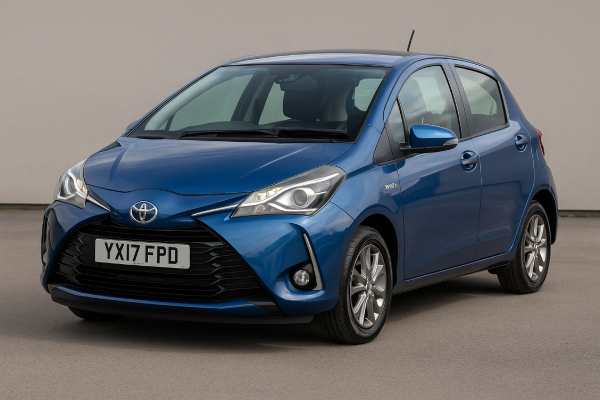
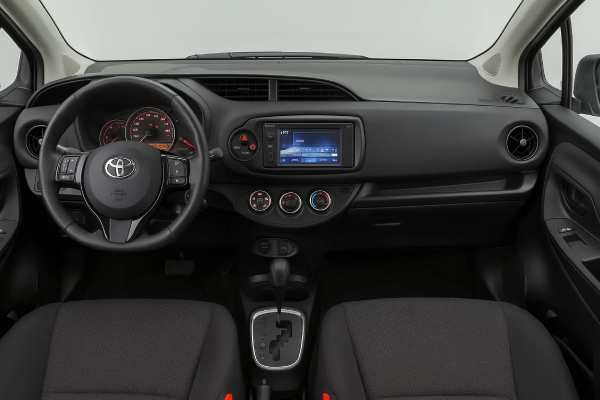
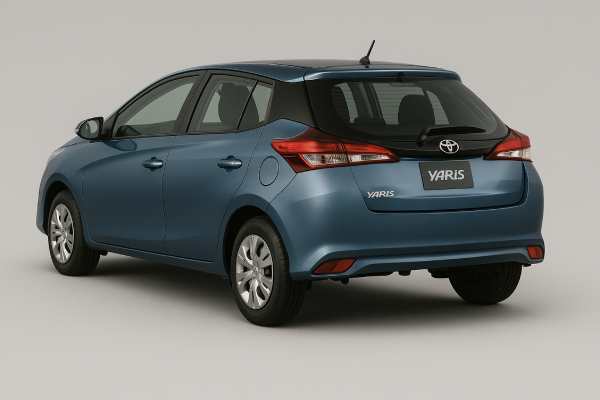
The Toyota Yaris (NSP131) with the 2NR-FKE 1.5-litre engine sits at an interesting point in the Yaris family tree. It arrived with the 2017 facelift and gave the third-generation Yaris a more mature, efficient and refined petrol option than the outgoing 1.33. High compression, Atkinson-leaning valve timing, and low internal friction come straight from Toyota’s hybrid playbook, but without the complexity of a full hybrid system.
For owners, that translates into light weight, willing performance in town, and very competitive fuel use on longer trips if you keep revs sensible. The platform itself is proven, with a reputation for durability and low running costs, and the facelift brought useful gains in refinement, safety and cabin quality.
This guide walks through the NSP131 1.5 from an engineer-meets-owner perspective: how it is built, how it drives, known issues to watch for, and what a realistic maintenance and ownership plan looks like if you are considering one used.
Owner Snapshot
- Strong 1.5 2NR-FKE engine: chain-driven timing, high efficiency and low real-world fuel use.
- Light, compact chassis with stable motorway manners and simple, durable suspension design.
- Toyota Safety Sense available on many cars, adding AEB and lane departure alert to a small, affordable hatch.
- Watch for ageing coolant, noisy front suspension bushes and CVT fluid neglect on high-mileage cars.
- Plan engine oil and filter every 15,000 km or 12 months (whichever comes first) for long-term reliability.
Section overview
- Toyota Yaris NSP131 essentials
- NSP131 specs and technical details
- Model grades, options and safety
- Reliability record and typical faults
- Service schedule and used-car tips
- Real-world performance and comfort
- NSP131 versus key competitors
Toyota Yaris NSP131 essentials
The NSP131 code identifies third-generation Yaris models fitted with the 2NR-FKE 1.5-litre petrol engine in many European and selected global markets from roughly 2017 to 2020. This engine replaced the older 1.33-litre unit and was designed to meet stricter Euro 6 emissions while improving both performance and economy. It uses a high compression ratio, intelligent variable valve timing and an Atkinson-leaning cycle under light loads, a strategy borrowed from Toyota’s hybrids.
In everyday terms, you get 111 hp and about 136 Nm, which in a light B-segment hatchback is enough for confident urban use and respectable motorway speed, especially with the manual gearbox. The key win is that this extra performance does not come with a fuel-use penalty compared with the outgoing 1.33; many owners see real-world averages around 5.5–6.0 L/100 km on mixed driving if they drive smoothly.
The 2017 facelift that introduced this engine also brought revised bumpers, lights and interior trim. More importantly, many markets saw wider availability of Toyota Safety Sense: a package including pre-collision warning with autonomous emergency braking, lane departure alert and automatic high beam on certain trims. That pushes the ageing Yaris platform closer to more modern rivals on active safety.
Underneath, the Yaris keeps a simple recipe: MacPherson struts at the front, torsion beam at the rear, electric power steering and disc front / drum rear brakes on most 1.5 trims. This simplicity makes the NSP131 straightforward to maintain and inexpensive to repair.
For a used-car buyer or fleet operator, the main attractions are low running costs, a strong reliability record when serviced on time, and good parts availability. The main trade-offs are that cabin and boot space are only average for the class, and insulation is not as hushed as the very latest small cars at motorway speeds.
NSP131 specs and technical details
Engine and performance (2NR-FKE 1.5)
| Item | Specification |
|---|---|
| Engine code | 2NR-FKE inline-4, DOHC |
| Displacement | 1.5 L (1496 cc) |
| Bore × stroke | 72.5 × 90.6 mm |
| Valvetrain | DOHC, 4 valves/cyl, Dual VVT-iE |
| Compression ratio | ~13.5 : 1 |
| Induction | Naturally aspirated |
| Fuel system | Multi-point fuel injection (MPI) |
| Max power | ~111 hp (82 kW) @ 6000 rpm |
| Max torque | ~136 Nm (100 lb-ft) @ 4400 rpm |
| Cycle strategy | Conventional Otto under high load, Atkinson-leaning at light load |
| Timing drive | Chain driven |
| Emissions standard | Euro 6 (most EU markets) |
On the road, this translates into 0–100 km/h times of roughly 11.0–11.5 seconds depending on gearbox and market, with a top speed around 175 km/h. Combined test-cycle fuel consumption figures sit around 4.8–5.0 L/100 km, with CO₂ emissions around 109–112 g/km for typical European specs.
Transmission and driveline
| Item | Specification |
|---|---|
| Gearbox options | 6-speed manual; CVT (often branded Multidrive S) |
| Drive type | Front-wheel drive (FWD) |
| Final drive (manual, typical) | ~4.3 : 1 (varies by market) |
| Differential | Open, with brake-based traction control |
Manual cars are simple and robust if serviced; CVT models benefit from periodic fluid changes even where not strictly specified in basic service schedules.
Chassis and dimensions
| Item | Specification (typical EU 5-door hatch) |
|---|---|
| Front suspension | MacPherson strut with coil spring |
| Rear suspension | Torsion beam with coil spring |
| Steering | Electric power steering, rack-and-pinion |
| Front brakes | Ventilated discs |
| Rear brakes | Drums (most 1.5 trims) |
| Wheels/tyres | Common sizes: 185/60 R15 or 195/50 R16 |
| Length | ~3945 mm |
| Width (without mirrors) | ~1695 mm |
| Height | ~1510 mm |
| Wheelbase | 2510 mm |
| Ground clearance | ~135 mm (varies by spec) |
| Turning circle | ~10.2 m kerb-to-kerb |
| Kerb weight | ~1060–1135 kg depending on trim and gearbox |
| Fuel tank | ~42 L |
| Luggage volume | ~286 L seats up (VDA) |
These figures vary slightly between markets and model years, so always verify against the specific car or local brochure.
Performance and capability
| Metric | Value (approximate, EU spec) |
|---|---|
| 0–100 km/h | ~11.0–11.5 s (manual/CVT) |
| Top speed | ~175 km/h |
| Combined consumption | ~4.8–5.0 L/100 km (roughly 49–47 mpg US) |
| Real-world 120 km/h | ~6.0–6.5 L/100 km (about 43–39 mpg US) in calm driving |
Towing ratings are modest or zero depending on market; many 1.5 Yaris models are not approved for significant trailer loads, so check the VIN plate if towing is important.
Fluids, capacities and electrical
Numbers below are typical ranges; always confirm for the exact VIN.
| System | Specification (typical) |
|---|---|
| Engine oil | 0W-20, API SN or higher; ~3.5–3.7 L with filter |
| Coolant | Toyota Super Long Life (pink), premixed; ~5–6 L total |
| Manual gearbox oil | API GL-4 (Toyota gear oil), capacity ~2 L |
| CVT fluid | Toyota CVT FE; capacity ~6–7 L (full refill) |
| Brake fluid | DOT 3 or DOT 4 |
| A/C refrigerant | R134a on most cars; charge and oil as per under-bonnet sticker |
| 12 V battery | Typically ~45 Ah; small JIS form factor |
| Alternator | ~100 A output on most 1.5 models |
Model grades, options and safety
Trims and equipment vary significantly by country, but the Yaris NSP131 1.5 usually sits mid-range in the line-up, above entry-level 1.0 cars and below the full Hybrid in price. Typical European patterns include:
- Base / “Active”-type grades – steel wheels, manual air-conditioning, basic audio, cloth seats and limited cosmetic extras. Often lack alloy wheels and may have simpler infotainment but still get stability control and multiple airbags.
- Mid-range / “Icon/Style/Comfort”-type trims – alloys, leather-trimmed steering wheel, colour touchscreen with Bluetooth, split-fold rear seats, and more steering wheel controls. Many of these cars received Toyota Safety Sense as standard or widely-ticked option boxes.
- Top / “Design/Excel”-type trims – bigger alloys, part-leather upholstery, automatic climate control, upgraded audio, keyless entry and start, plus cosmetic body kit elements on some “Sport” derivatives.
Mechanical differences between trims are modest. Springs and dampers may be tuned slightly firmer on sportier versions, and wheel/tyre combinations differ, but engine and gearboxes are broadly the same where the 1.5 is offered.
Quick identifiers
- Check the VIN plate and registration documents for engine code “2NR-FKE” and power output around 82 kW / 111 hp.
- Many mid- and high-grade cars have a small camera module at the top of the windscreen, behind the rear-view mirror; this indicates the presence of Toyota Safety Sense AEB/lane systems.
- Facelift cars (2017 onward) show reshaped front and rear lights with more complex light graphics compared with earlier third-gen Yaris models.
Safety ratings
The third-generation Yaris achieved strong crash test results when originally assessed, with a five-star Euro NCAP rating in 2011 based on the test protocols of that era. Adult and child occupant protection scores were high for a small car, and structural performance has remained broadly relevant through the 2014 and 2017 facelifts because the basic platform is unchanged.
Be aware, however, that later rivals tested under newer and tougher protocols may match or exceed the Yaris in certain areas like active safety and pedestrian protection, even if both are “five-star” cars on paper.
Airbags, structure and child seats
Most NSP131 Yaris models include:
- Front, side and curtain airbags (exact count varies by market).
- ISOFIX/LATCH anchors on the outer rear seats.
- Seatbelt pretensioners and load limiters for front occupants.
- A bodyshell with extensive high-strength steel use in key load paths and reinforced front/rear crash structures.
Rear doors open wide enough for child-seat loading, although overall cabin width means two bulky seats will be tight.
ADAS and Toyota Safety Sense
Depending on year and grade, you may see:
- Pre-collision system with autonomous emergency braking (vehicle and sometimes pedestrian detection).
- Lane departure alert with visual/audible warning.
- Automatic high beam.
- Speed-limiter and sometimes traffic sign information (market-dependent).
These functions rely on a forward camera (and sometimes radar). Windscreen replacement and front-end accident repairs may require calibration; budget for dealer or specialist time if warning lights appear after such work.
Reliability record and typical faults
The Yaris generally enjoys an excellent reliability reputation, and the NSP131 1.5 continues that trend. Most problems arise from age, mileage, neglect or peripheral components rather than catastrophic core failures.
Engine and cooling
The 2NR-FKE itself is robust when serviced on schedule with the correct low-viscosity oil. Typical issues include:
- Oil seepage at timing chain cover – usually a slow weep that shows as a damp area rather than big drips. Symptom is minor oil smell or residue; remedy is re-sealing the cover, often done in conjunction with timing chain inspections on very high mileage cars.
- Water pump seepage – a known wear item on many Toyota petrol engines. Watch for dried pink coolant traces around the pump or intermittent overheating in traffic. Replacement is straightforward but should be done promptly.
- Carbon build-up/EGR deposits (some cars) – although this engine uses port injection (so less prone to intense intake valve coking than direct-injection units), short-trip city use can still lead to EGR deposits and rough idle. Gentle long runs and quality fuel help; in more severe cases, cleaning is required.
Timing is chain-driven, with no fixed replacement interval. Instead, listen for chain rattle on cold starts, especially on very high-mileage engines or those with poor oil-change history. Persistent noise, cam/crank correlation codes or rough running under load warrant investigation.
Fuel, ignition and emissions
- Ignition coils – occasional failures show up as misfire under load and a check-engine light; replacement of the affected coil and plug usually fixes the issue.
- Oxygen (lambda) sensors – like most modern petrol cars, ageing sensors can cause poor fuel economy and fault codes. Replacing with quality parts restores normal behaviour.
- Evap/charcoal canister issues – rare but possible, especially on cars repeatedly “topped off” at fuel stations. Symptoms can include difficulty refuelling or evap-related codes.
Driveline and chassis
- Manual gearbox – generally strong; some owners note a slightly notchy 1st–2nd shift when cold. Regular fluid changes help, even where “lifetime” fluid is claimed.
- CVT (Multidrive S) – reliable provided the fluid is changed periodically and the car is not abused with repeated full-throttle launches. Symptoms of neglect include flare, judder and metallic whining.
- Front suspension bushes and top mounts – clunks over speed bumps or vague steering feel are often due to worn anti-roll bar links or lower arm bushes. These are not unique to the Yaris and are relatively inexpensive consumables.
- Wheel bearings – age and rough roads can lead to humming at speed; replacement is straightforward.
Body, electronics and corrosion
Rust protection is generally good, but:
- Inspect rear axle, front subframe and sills for surface corrosion, especially in salted-road climates.
- Door bottoms and hatch edges can show minor bubbling on neglected cars.
Electronics are simple by modern standards. Common age-related issues include:
- Fading infotainment touchscreens on early units.
- Occasional window switch or mirror adjustment switch faults.
- Ageing 12 V batteries causing spurious warning lights and start/stop malfunctions.
Recalls and service campaigns
Depending on region, Yaris models of this era have been subject to campaigns for items such as airbag inflators and minor safety-related hardware. Always run the VIN through your local Toyota dealer or official online checker and keep documentation of completed work with the service history.
Service schedule and used-car tips
A sensible maintenance plan is key to getting the best from an NSP131.
Core maintenance intervals (typical European practice)
Always verify against your local service booklet, but as a working guide:
- Engine oil and filter – every 15,000 km or 12 months, whichever comes first. Hard city use or many short trips: consider 10,000 km.
- Engine air filter – inspect every service; replace around 30,000 km or sooner in dusty conditions.
- Cabin (pollen) filter – every 15,000–30,000 km or every 1–2 years.
- Spark plugs – iridium plugs often specified for 90,000–100,000 km; inspect earlier if misfire or poor economy appear.
- Coolant – Toyota Super Long Life typically first change around 8–10 years/160,000 km, then at shorter intervals; many owners choose a 5-year cycle for peace of mind.
- Brake fluid – every 2–3 years regardless of mileage.
- Manual gearbox oil – inspect at 60,000–90,000 km; replacing every 100,000 km is a good preventive step.
- CVT fluid – strongly recommended at 60,000–80,000 km despite some “filled for life” claims.
- Aux/serpentine belt – inspect every service; replace around 90,000–120,000 km or at signs of cracking/noise.
- 12 V battery – test annually from year 4; many need replacement between years 5–8.
Timing chain has no fixed interval but should be monitored via noise symptoms and data if issues arise.
Fluids and critical torque awareness
DIY owners should note:
- Correct torque for wheel bolts is important on small alloys; overtightening can warp discs.
- Spark plugs in alloy heads need both correct torque and anti-seize practices according to Toyota guidance to prevent thread damage.
- Engine undertray and splash-guard fasteners are often over-torqued or cross-threaded; treat them gently to avoid future rattles and water ingress.
Buyer’s checklist
When viewing a used Yaris NSP131 1.5:
- Service history – look for regular oil changes at least annually and evidence of coolant and brake fluid changes.
- Cold start – engine should fire promptly and settle quickly to a smooth idle with no heavy chain rattle.
- Test drive – check for clutch slip (manual), CVT flare/judder, steering pulling and brake vibration.
- Suspension – listen for knocks over rough roads; inspect tyres for uneven wear indicating alignment issues.
- Electrical – verify all windows, mirrors, infotainment, A/C and steering wheel buttons. Pay attention to warning lights at ignition-on and ensure they go out as expected.
- Bodywork – look for mismatched paint, overspray or panel gaps suggesting previous crash repairs. Check the boot floor and inner wings for signs of accident damage.
- Tyres – good-quality matching tyres on all four corners usually indicate a caring owner.
Which years and trims to favour?
- Later facelift years – 2018–2020 cars often benefit from minor running changes and may have more comprehensive Toyota Safety Sense configurations.
- Mid-to-upper trims with Safety Sense – good balance of equipment, comfort and safety without major complexity.
- Avoid – heavily modified cars, vehicles with patchy history, or CVT cars that have clearly never had fluid attention by high mileages.
Done right, an NSP131 can be a low-drama, long-lived small car that stays inexpensive to run deep into six-figure kilometre territory.
Real-world performance and comfort
The 2NR-FKE engine gives the Yaris a more grown-up feel than the smaller 1.0 and older 1.33, without turning it into a hot hatch. Power delivery is linear, and the engine is happiest between 2000 and 4500 rpm in normal driving. Below 2000 rpm it can feel a little flat due to its efficiency-optimised tuning; above 5000 rpm it becomes noisier but still pulls cleanly to the limiter.
With the 6-speed manual, gearing is relatively short in the lower ratios for city response and longer in 6th to keep revs down on the motorway. Around town, second and third gears cover most situations; on an open road, the engine will hold speed comfortably at legal limits with enough in reserve for moderate overtakes if you downshift.
The CVT offers very smooth progress in gentle driving and lets the engine sit efficiently at low revs on flat roads. Under heavy throttle, it will flare revs and can sound strained, as with most CVTs, but for commuting and relaxed driving it suits the engine well.
Ride, handling and NVH
Suspension tuning on the facelifted Yaris favours comfort, but body control is better than earlier versions thanks to revised dampers and bushings. The car deals well with urban bumps and speed humps, though sharp potholes can still be felt due to the short wheelbase. On faster roads, the chassis feels predictable and safe rather than sporty; grip is decent, and the steering is light but accurate.
Noise levels are acceptable for a light B-segment hatch. You will hear some tyre roar on coarse surfaces and wind noise from the mirrors at motorway speeds. Engine noise is modest at steady cruise but rises noticeably if you use all of the available rpm for overtakes.
Efficiency in daily use
Typical real-world fuel consumption patterns for the 1.5 NSP131:
- City / short trips – around 6.0–7.0 L/100 km with mixed traffic and stop-start.
- Mixed driving – many owners report 5.3–6.0 L/100 km with sensible driving.
- Motorway (110–130 km/h) – about 5.8–6.5 L/100 km depending on load, wind and terrain.
Cold weather, short hops and roof racks will push consumption up. Conversely, smooth driving, modest speeds and good tyre pressures can pull numbers down towards the low 5s.
Load-carrying and (where permitted) light towing do not overwhelm the drivetrain as long as weights are kept within rated limits. Expect a noticeable fuel-use penalty and longer stopping distances if regularly carrying three adults and luggage.
NSP131 versus key competitors
When new, the Yaris 1.5 NSP131 competed with cars such as the Ford Fiesta 1.0 EcoBoost, Volkswagen Polo 1.2/1.0 TSI, Renault Clio 0.9/1.2 TCe and Peugeot 208 1.2 PureTech.
Strengths versus rivals
- Simplicity and reliability – naturally aspirated 1.5 with port injection and a conventional exhaust aftertreatment system looks very simple next to small turbo direct-injection engines. There is no turbocharger, no high-pressure fuel pump typical of DI systems, and fewer complex components to age.
- Running costs – servicing is straightforward and parts are widely available. Insurance groupings are typically modest, and fuel use is competitive.
- Resale and longevity – Yaris values are often strong on the used market because of their reputation for durability and low drama.
Where competitors may win
- Performance and torque – turbocharged rivals often feel stronger at low rpm and provide more relaxed overtaking power on the motorway.
- Cabin design and tech – the Yaris interior, while functional and easy to live with, can feel plain compared to the latest superminis, with smaller screens and simpler materials on some trims.
- Refinement – some competitors offer quieter cabins and smoother high-speed ride thanks to newer platforms and more elaborate sound insulation.
For buyers prioritising driving enjoyment and cutting-edge infotainment, a well-specced Fiesta or Polo may feel more rewarding. For those who care most about dependable commuting, low unexpected costs and a trustworthy ownership experience, the Yaris NSP131 1.5 is hard to ignore.
References
- Toyota NR engine 2024 (Technical Overview)
- Toyota Yaris III 1.5 VVT-iE (111 Hp) 2017 Technical Specs, Fuel Consumption, Dimensions 2024 (Specifications Database)
- Toyota Yaris III 1.5 VVT-iE (111 Hp) CVT 2017 Technical Specs, Fuel Consumption, Dimensions 2024 (Specifications Database)
- New Toyota Yaris 2017 2017 (Manufacturer Newsroom)
Disclaimer
This article is intended for general informational purposes and does not replace professional diagnosis, repair procedures or official service literature. Specifications, torque values, service intervals and equipment details can vary by market, model year, trim level and individual VIN. Always confirm critical data against the official owner’s manual, workshop manual and local Toyota documentation for your specific vehicle, and consult a qualified technician before carrying out repairs or modifications.
If you found this guide useful, please consider sharing it with other owners or shoppers on social media platforms such as Facebook or X (Twitter). Your support helps make it worthwhile to produce detailed, independent technical content like this.