
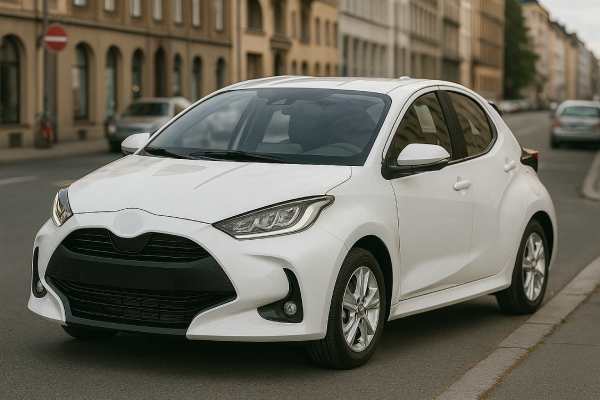
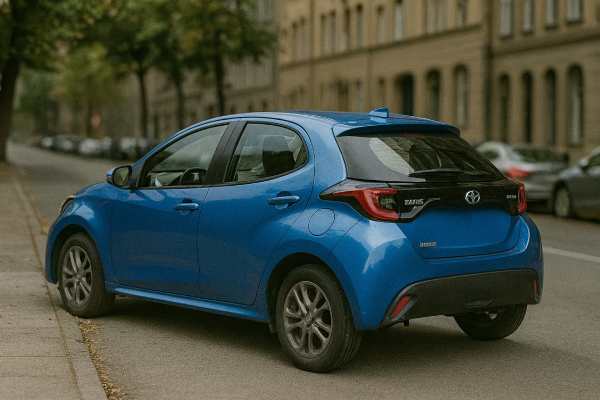
The Toyota Yaris (DL) with the Skyactiv-G 1.5 engine is an unusual mix: Toyota badge, Mazda engineering. Sold in many markets as the Yaris sedan or Yaris iA, it combines a light, rigid Mazda2-derived chassis with a high-compression 1.5-litre petrol engine and either a slick 6-speed manual or a smooth 6-speed automatic.
For owners, this car is about low running costs, straightforward maintenance, and a surprisingly polished drive for a budget sedan. The cabin is simple but well laid out, the driving position is better than in many rivals, and standard safety equipment is strong for its class and age. If you are considering a compact four-door that you can keep for a decade with mostly routine servicing, the DL-generation Yaris 1.5 deserves a close look. This guide walks through specs, reliability, real-world efficiency, and what to check before buying used.
Top Highlights
- High-compression Skyactiv-G 1.5 delivers strong fuel economy around 5.5–6.0 L/100 km combined in typical mixed use.
- Mazda-derived chassis gives the Yaris DL unusually sharp steering and composed ride for a small sedan.
- Simple, chain-driven petrol engine with no turbo means predictable maintenance and very good long-term durability.
- Watch for infotainment glitches and front brake wear; inspect for city-usage cosmetic damage on used cars.
- Engine oil changes are best done every 10,000–15,000 km or 12 months (shorter intervals if mostly city driving).
Contents and shortcuts
- Yaris DL 1.5 ownership context
- Skyactiv-G 1.5 specs and data
- Equipment lines, options and safety tech
- Reliability patterns and known issues
- Maintenance planning and buying advice
- Driving impressions and real-world economy
- How Yaris DL stacks up against rivals
Yaris DL 1.5 ownership context
The DL-code Toyota Yaris sedan is essentially a rebadged Mazda2 sedan, sold under the Toyota name in several markets between 2019 and 2020. That means you get a Toyota dealership network and resale appeal, backed by Mazda’s Skyactiv powertrain and chassis engineering. For buyers who value dependability and low operating costs more than outright power, it is a very appealing combination.
The 1.5-litre Skyactiv-G petrol engine uses high compression and efficient combustion instead of a turbocharger to deliver performance. With around 106 hp and roughly 140 Nm of torque, it is not a fast car, but it feels lively enough in city traffic, especially with the 6-speed manual transmission. The automatic is tuned for smoothness and efficiency rather than aggressive shifts, which suits the car’s character.
Inside, the DL Yaris offers:
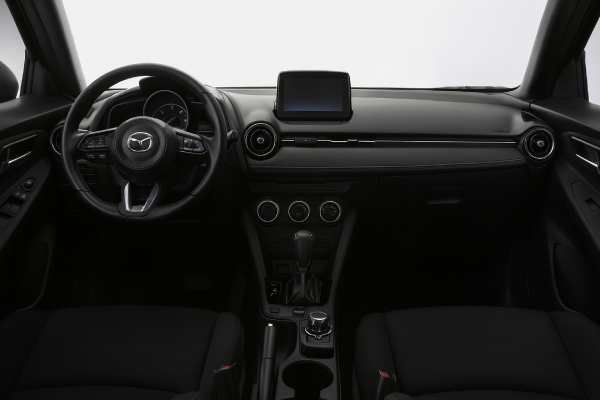
- A clean, Mazda-style dashboard with a tablet-style central display.
- Comfortable front seats with good thigh support for a small car.
- Simple, rotary climate controls that are easy to use while driving.
Rear space is adequate for two adults on shorter trips, but legroom and headroom are still limited compared with larger compact sedans. The boot is generous for the segment, making the car practical for commuting, small families, or ride-hailing work.
Ownership costs are kept low by:
- Modest tyre sizes and relatively inexpensive brake components.
- An engine that runs on regular unleaded in most markets.
- Long life on critical components if serviced on time and driven sensibly.
Because this Yaris is Mazda-based, some parts (particularly engine, transmission, and electronics) follow Mazda part numbering behind the Toyota badge. In practice, this is only relevant if you cross-shop parts from independent suppliers or compare pricing versus a Mazda2. For routine dealer servicing, everything is handled as a normal Toyota.
Skyactiv-G 1.5 specs and data
This section focuses on the 1.5-litre Skyactiv-G petrol engine and the most relevant technical data for the DL-generation Yaris sedan. Figures can vary slightly by market and emissions standard, so treat them as typical ranges.
Engine and performance
| Item | Value / Description |
|---|---|
| Engine code | P5-VPS (Skyactiv-G 1.5) |
| Layout and cylinders | Inline-4, DOHC, 16 valves |
| Valvetrain | Chain-driven DOHC, 4 valves per cylinder |
| Displacement | 1.5 l (1496 cc) |
| Induction | Naturally aspirated |
| Fuel system | Direct injection (Skyactiv-G) |
| Compression ratio | ~12.0:1 (varies by market) |
| Max power | ~106 hp (79 kW) @ ~6000 rpm |
| Max torque | ~140 Nm (103 lb-ft) @ ~4000 rpm |
| Emissions standard | Euro 5/6 or equivalent, depending on market |
| Official combined economy | Approx. 5.3–5.8 L/100 km (40–44 mpg US) |
| Real-world highway @ 120 km/h | Typically 5.5–6.5 L/100 km (36–43 mpg US) |
| Timing drive | Single-row timing chain |
The engine is designed to operate efficiently at part load, with a long stroke and high compression ratio. This gives good mid-range response without resorting to a turbocharger. Direct injection and precise combustion control are sensitive to fuel quality, so using the recommended octane in your region is important for knock control and long-term health.
Transmission and driveline
| Item | Value / Description |
|---|---|
| Gearboxes | 6-speed manual; 6-speed automatic (torque converter) |
| Drive type | Front-wheel drive (FWD) |
| Final drive (typical) | ~3.8–4.1:1 depending on transmission |
| Differential | Open front differential |
| Manual gearbox character | Light, short throw, clearly defined gates |
| Automatic character | Conventional auto with lock-up torque converter and manual mode |
The 6-speed manual is the more engaging option, allowing better use of the engine’s power band. The automatic is tuned for smooth starts and low engine revs at cruise, favouring efficiency. Both gearboxes are generally robust if fluid changes are done on time.
Chassis and dimensions
| Item | Value / Description |
|---|---|
| Platform | Mazda2 (DJ/DL) based |
| Front suspension | MacPherson strut, coil springs |
| Rear suspension | Torsion beam with coil springs |
| Steering | Electric power-assisted rack and pinion |
| Front brakes | Ventilated discs |
| Rear brakes | Drums (most trims) |
| Wheelbase | ~2570 mm (101.2 in) |
| Length | ~4360 mm (171.7 in) |
| Width | ~1695 mm (66.7 in) |
| Height | ~1495 mm (58.9 in) |
| Turning circle (kerb-to-kerb) | ~9.4–9.8 m |
| Kerb (curb) weight | ~1050–1130 kg (2315–2491 lb), trim dependent |
| Fuel tank capacity | ~44–45 l (11.6–11.9 US gal) |
| Boot/trunk volume | Around 380–390 l (13.4–13.8 ft³) |
Performance and capability
| Metric | Typical Value (varies by trim/market) |
|---|---|
| 0–100 km/h (0–62 mph) | ~10.5–11.5 s (manual slightly quicker) |
| Top speed | Around 180–190 km/h (112–118 mph) |
| Braking 100–0 km/h | ~38–41 m on quality tyres |
| Towing (if allowed) | Often not rated, or ~500–800 kg braked; check local approval |
The Yaris DL is not a towing specialist, and some regions officially rate it with zero towing capacity. Always confirm the allowable trailer weight in your specific market documentation.
Fluids, capacities, and key torques (typical)
Use these values as planning guidance only; always confirm for your VIN:
| System | Specification / Notes |
|---|---|
| Engine oil | 0W-20 or 5W-30 API SN/ILSAC GF-5 (check region); capacity roughly 3.5–4.0 l including filter |
| Coolant | Long-life ethylene glycol HOAT/OAT; drain-and-fill typically 5–6 l |
| Manual gearbox | Low-viscosity GL-4 gear oil; capacity ~2 l |
| Automatic | OEM ATF (Mazda/Toyota spec); full fill ~7–8 l, partial drain ~3–4 l |
| Brake fluid | DOT 3 or DOT 4, as marked on cap |
Key torque values to verify in the official manual include wheel nuts, spark plugs, and critical suspension fasteners. Treat any value you see online as a starting point, not a substitute for the correct service data.
Electrical and safety basics
| Item | Description |
|---|---|
| 12 V battery | Small lead-acid or EFB battery, ~35–45 Ah |
| Alternator output | Typically ~90–100 A, enough for standard loads |
| Airbags | Front, side, and curtain airbags on most trims |
| Stability control | ESC/ESP standard on almost all markets |
| Driver-assistance | Depending on trim: AEB, lane departure warning, auto high beam, cruise control |
Equipment lines, options and safety tech
Trims and equipment for the Yaris (DL) 1.5 differ by region, but the underlying structure is similar: a base model with essential safety and comfort, a mid-grade with more convenience features, and a top trim with cosmetic and tech upgrades.
Typical trim structure
In many markets, you will find something like:
- Base / Entry trim
- Steel wheels with hubcaps
- Manual air conditioning
- Cloth seats
- 7-inch infotainment screen with basic audio
- Reverse camera (on later cars)
- Remote central locking
- Mid trim
- Alloy wheels
- Leather-wrapped steering wheel
- Steering-wheel audio controls
- Upgraded audio system or more speakers
- Cruise control (sometimes radar-based)
- Fog lamps or LED running lights
- Top trim
- Larger alloy wheels and better tyres
- Automatic climate control
- Keyless entry and push-button start
- Additional chrome or body-color exterior trim
- More advanced safety package (where available)
Because of its Mazda roots, the infotainment system resembles Mazda’s MZD Connect: a rotary controller on the tunnel, clear menus, and phone integration. Some markets limit touch control while driving, which can surprise new owners but becomes intuitive with use.
Quick identifiers
If you are looking at a used Yaris DL and want to understand what you’re seeing:
- Mazda-style dashboard with round air vents and tablet-like screen confirms the DJ/DL platform.
- Instrument cluster often features a large central analog speedometer with digital screens either side.
- VIN and build plates may reference Mazda’s Hiroshima or other Mazda plants, even under Toyota branding.
For additional confirmation, some service portals or EPC (electronic parts catalogs) show a Mazda engine code (P5-VPS) and DJ/DL platform designation.
Safety ratings and systems
Safety ratings depend on region and test body, but the Mazda2 sedan/Yaris iA underpinnings have performed well in independent tests, with strong crash structures and effective restraint systems for this class.
Standard safety on most DL Yaris 1.5 cars typically includes:
- Front, side, and curtain airbags
- ABS with EBD and brake assist
- Electronic stability control and traction control
- ISOFIX/LATCH child-seat anchor points on the rear bench
- Seatbelt pretensioners and load limiters in front
Higher trims or certain packages can add:
- Low-speed autonomous emergency braking (AEB) for vehicles and sometimes pedestrians
- Lane departure warning
- Automatic high-beam control
- Blind-spot monitoring and rear cross-traffic alert (depending on market)
These driver-assistance features rely on camera and radar sensors mounted behind the windshield or in the grille. After windshield replacement, front-end collision repairs, or suspension changes, camera and radar calibration may be required. This is not optional: a misaligned camera can lead to nuisance warnings or, worse, reduced performance of AEB and lane assistance.
Year-to-year changes
For 2019–2020, changes are generally minor:
- Slight updates to infotainment software and connectivity.
- Detail tweaks to trim levels, wheel designs, and option packages.
- In some regions, additional driver-assistance features became standard in the final model years to meet regulatory or marketing targets.
When shopping used, it is worth decoding the exact trim and market specification from the VIN, as a “mid” trim in one country might be equivalent to a “base” or “top” in another.
Reliability patterns and known issues
Overall, the Yaris (DL) 1.5 with the Skyactiv-G engine is a very reliable small sedan. Failure rates on major components are low when maintenance is kept up, and the design avoids some of the weak points of small turbocharged petrol engines (no turbo, no complex aftertreatment beyond standard catalytic converters in most markets).
Still, every platform has patterns and known trouble spots. Below is a practical overview for owners and buyers.
Engine and fuel system
Common / low-to-medium severity
- Carbon build-up on intake valves (long-term)
- Symptoms: Gradual rougher idle, slight hesitation, small fuel economy drop after high mileage (often 120,000+ km).
- Cause: Direct injection means little fuel washing over intake valves, allowing deposits to accumulate over time.
- Remedy: Intake valve cleaning (walnut blasting) if symptoms and diagnostics justify it; use quality fuel and periodic high-speed runs to help minimise build-up.
- Minor oil seepage
- Symptoms: Dampness around cam cover or front cover, but not heavy drips.
- Cause: Age-related hardening of seals and gaskets.
- Remedy: Monitor oil level; reseal components if seepage worsens or contaminates belts/other parts.
Rare / higher severity
- Detonation-related damage from poor fuel
- Symptoms: Persistent knocking under load, misfire codes, or reduced performance.
- Cause: Using lower octane fuel than recommended, especially in hot climates.
- Remedy: Switch to correct fuel grade, update ECU software if available, and inspect for internal damage if severe knock has been present.
Transmission and driveline
Both the 6-speed manual and 6-speed automatic are robust if serviced:
- Manual gearbox
- Occasionally reports of notchy 2nd–3rd shifts in cold weather when fluid ages. A simple fluid change to the correct spec often restores smoothness.
- Automatic gearbox
- Some owners note mild hesitation or a slight shudder at low speed after many kilometres on old ATF, especially in stop-start traffic. Preventive ATF changes at 60,000–80,000 km help maintain smooth operation.
There are no widespread reports of catastrophic gearbox failures when maintenance schedules are respected.
Chassis, brakes, and suspension
- Front brake wear and noise (common, low severity)
- Front pads can wear faster on city-driven cars, and some owners report squeal when pads are nearly finished. Opting for quality aftermarket pads can improve noise behaviour.
- Suspension bushings and front drop links
- On rough roads, front anti-roll-bar links and some bushings may start to knock after 80,000–120,000 km. These are relatively inexpensive to replace.
- Wheel alignment and tyre wear
- Because the car is light, incorrect alignment quickly shows as inside or outside shoulder wear on the front tyres. A full alignment after any suspension work is advisable.
Electronics and infotainment
- Infotainment glitches (occasional, low severity)
- Frozen screen, Bluetooth drops, or slow response can occasionally occur. Software updates, a hard reset, or in rare cases a replacement module are typical fixes.
- Reverse camera issues
- Intermittent image or moisture behind the lens may show up in wet climates. Cleaning and checking the harness usually solves it; replace the camera if water ingress is confirmed.
Corrosion and body
Corrosion resistance is generally good, but there are still points to watch:
- Lower door edges and boot lid seam, especially in salted-road regions.
- The leading edge of the bonnet and front of the roof for stone chips; unaddressed chips can rust over many winters.
- Exhaust system welds on high-mileage cars, particularly around hangers.
Recalls and service campaigns
Depending on the market, some cars may have recall or service campaigns for:
- Software updates related to AEB or other driver-assist features.
- Infotainment firmware upgrades to improve stability.
- Standard component recalls (e.g., Takata airbags) if applicable to the build year and plant.
Always run the VIN through your local Toyota (or national safety agency) database and ask a dealer to confirm that all recalls and campaigns are completed.
Maintenance planning and buying advice
A disciplined maintenance schedule is the best way to keep a Yaris (DL) 1.5 reliable and inexpensive to own. Below is a practical, real-world schedule that you can adapt to your driving conditions and local guidelines.
Core service intervals (typical)
Always default to the stricter of distance or time:
- Engine oil and filter – every 10,000–15,000 km or 12 months; shorten to 10,000 km/12 months if mostly short trips or hot climate.
- Engine air filter – inspect every 20,000 km, replace every 40,000 km (more often in dusty areas).
- Cabin (pollen) filter – every 15,000–20,000 km or 12–24 months.
- Spark plugs – iridium plugs typically last 90,000–120,000 km; inspect earlier if misfire or poor fuel economy appear.
- Fuel filter – usually integrated with the in-tank pump and not a regular service item; inspect/replace only if diagnosed.
- Coolant – first change around 160,000 km or 8–10 years, then according to local guidance.
- Brake fluid – every 2–3 years regardless of mileage.
- Manual gearbox oil – every 60,000–80,000 km for best feel and longevity.
- Automatic transmission fluid – drain-and-fill every 60,000–80,000 km is a sensible preventive interval, even if described as “lifetime” in some markets.
- Aux/serpentine belt – inspect from 60,000 km; replace around 100,000–120,000 km or if cracked/noisy.
- Valve clearances – generally maintenance-free with hydraulic lash or long intervals; check only if noise or fault codes arise.
- 12 V battery – load-test annually after 4–5 years; many last 5–7 years in mild climates.
The timing chain is designed to last the life of the engine. It should be inspected if you hear prolonged rattling at cold start, see timing correlation error codes, or observe obvious chain stretch during service.
Tyres, alignment, and brakes
- Tyre rotation – every 10,000–15,000 km keeps wear even, especially on FWD cars.
- Wheel alignment – after any suspension work, or when you notice uneven wear or the steering pulling.
- Brake inspection – at least once per year or every 15,000–20,000 km; more often if you do heavy city driving.
Using quality tyres with a slightly better wet-grip rating than the bare minimum transforms the car’s braking and cornering confidence, especially in the rain.
Fluid and torque guidance
For owners who do their own maintenance:
- Use the recommended viscosity and specification for engine oil (typically 0W-20 or 5W-30 full synthetic, API SN or higher).
- Replace crush washers on sump plugs each oil change.
- Always use a calibrated torque wrench for wheel nuts and critical suspension fasteners, following the official service data.
Buyer’s checklist (used Yaris DL 1.5)
When inspecting a used example, focus on:
- Service history – look for regular oil changes and brake fluid replacements; gaps of many years with no servicing are a red flag.
- Accident damage – check panel gaps, overspray, and mismatched paint. Look carefully around the front crash structure and rear quarters.
- Suspension and steering – listen for knocks over bumps and feel for wandering or pulling at highway speed.
- Electronics – test all lights, infotainment, reverse camera, keyless entry, and driver-assist functions if fitted.
- Interior wear – worn seat bolsters, shiny steering wheel, and missing trim pieces can indicate hard use even with low mileage.
- Tyres – uneven wear may signal poor alignment or previous crash damage.
Which years and trims to target
Because the DL sedan was only offered for a short run in many regions, you are mainly choosing between:
- 2019 – often slightly cheaper; check what safety and infotainment features are included in your local spec.
- 2020 – can include the last updates to driver-assistance and connectivity; often the better pick if pricing is similar.
Mid and upper trims usually offer the best value on the used market: you pay only a small premium over the base model yet gain crucial comfort and safety features.
Driving impressions and real-world economy
On the road, the Yaris (DL) feels more like a small Mazda than a traditional Toyota city car. That is good news if you enjoy driving, because the chassis is more polished than most economy sedans in this size class.
Ride, handling, and refinement
- Ride quality – The suspension is firm enough to control body movement yet compliant over most bumps. Sharp potholes can still be felt, especially on the larger wheel options, but the overall tuning is grown-up and settled.
- Steering – Electric power steering is light at parking speeds and weights up naturally on the move. Feedback is better than in many rivals, giving you a clear sense of grip at the front axle.
- Cornering – The car turns in willingly and holds a neutral to mildly understeering line. It feels predictable, with ESC stepping in smoothly if you carry too much speed.
- Noise levels – Engine noise is present at high rpm but has a clean, mechanical tone. Tyre and wind noise are noticeable at motorway speeds, as expected in this segment, but not intrusive for normal conversations.
For city and suburban driving, the compact dimensions and good visibility make manoeuvring easy. The turning circle is tight, and the reverse camera (where fitted) further reduces stress in tight parking lots.
Powertrain character
The Skyactiv-G 1.5 is tuned for linear response rather than brute power:
- Low-rpm torque – Adequate but not abundant; the engine prefers to spin past 2500–3000 rpm for stronger pull, especially on inclines or with a full load.
- Throttle response – Smooth and predictable, with little lag between pedal and engine reaction.
- Manual gearbox – Short, positive shifts encourage you to keep the engine in its sweet spot. Many drivers find this combination surprisingly enjoyable.
- Automatic gearbox – Calibrated to upshift early for efficiency; kickdown is reasonable but not sporty. Using the manual mode on hills or for overtaking gives more precise control.
Once at cruising speed, the tall gearing (especially in 6th) allows the engine to relax at modest rpm, which helps both comfort and fuel economy.
Real-world fuel consumption
Actual consumption depends heavily on driving style and conditions, but owners typically report:
- City driving (dense traffic) – around 7.0–8.0 L/100 km (29–34 mpg US).
- Mixed use (suburban + highway) – roughly 5.5–6.5 L/100 km (36–43 mpg US).
- Highway at 100–120 km/h – around 5.0–6.0 L/100 km (39–47 mpg US), assuming steady speeds and gentle acceleration.
Cold climates, short trips, heavy loads, and frequent hard acceleration will raise these numbers. Conversely, gentle driving and mostly open-road use can deliver better-than-rated consumption.
Load and long-distance behaviour
While not designed as a heavy load hauler:
- A full cabin and boot do not overwhelm the suspension, provided tyre pressures are correctly set.
- On long motorway journeys, the car remains stable and predictable in crosswinds.
- Braking performance remains consistent, but repeated high-speed stops will naturally warm the front brakes; using lower gears for engine braking on long descents is wise.
If your use case includes frequent full loads, consider upgrading to high-quality brake pads and tyres when the originals wear out. This small change can significantly improve confidence with passengers and luggage on board.
How Yaris DL stacks up against rivals
The Yaris (DL) 1.5 competes with other small sedans and hatchbacks such as the Honda City/Jazz/Fit (depending on region), Hyundai Accent/Verna, Kia Rio, and sometimes the Volkswagen Polo/Vento or Škoda Rapid. Each of these has its own strengths; here is how the Mazda-based Yaris tends to compare.
Strengths versus rivals
- Driving dynamics – Thanks to the Mazda chassis and steering calibration, the Yaris DL feels more agile and engaging than many competitors, especially those tuned only for comfort.
- Powertrain simplicity – A naturally aspirated 1.5 with a conventional 6-speed automatic or manual is easier and often cheaper to maintain than some rivals’ small turbocharged engines and dual-clutch gearboxes.
- Fuel economy – Real-world efficiency is competitive or better than most non-hybrid rivals in similar power classes.
- Safety equipment – In many markets, features like stability control, multiple airbags, and low-speed AEB arrived early or were standard across the range, matching or beating rivals of the same era.
Areas where rivals may be stronger
- Cabin space – Some competitors (e.g., Honda City or certain larger B-segment sedans) offer more legroom and rear headroom. If you regularly carry tall adults in the back, they may appreciate the extra space.
- Noise isolation – A few rivals prioritise a quieter cabin, particularly at high speeds. The Yaris DL is good for its class but still fundamentally a light, compact sedan.
- Infotainment polish – Depending on software version, the Mazda-based system feels modern but may lack some of the seamless smartphone integration or large-screen options of newer rivals.
Who the Yaris DL 1.5 suits best
This model is an excellent fit if you:
- Want a compact sedan with the reliability image of Toyota and the driving manners of a Mazda.
- Prioritise fuel efficiency and low running costs over outright acceleration.
- Plan to keep the car for many years and value a simple, durable powertrain.
- Appreciate a car that still feels “mechanical” and connected rather than heavily filtered.
If your priorities are maximum rear-seat space or cutting-edge infotainment, you might lean toward a larger compact sedan or a newer-generation model. But for many owners, the Yaris (DL) 1.5 hits a sweet spot between cost, reliability, and day-to-day driving enjoyment.
References
- Quick Guide 2019 (Owner’s Manual / Quick Guide for Mazda2 Platform)
- IIHS releases list of 2017 TOP SAFETY PICK+ winners 2017 (Safety Rating Overview Including Yaris iA/Mazda2-based Sedans) ([IIHS Crash Testing][1])
- SKYACTIV-G | SKYACTIV TECHNOLOGY 2020 (Engine Technology Overview) ([Edmunds][2])
- Scion iA (P5-VPS engine) technical specifications 2015 (Technical Specifications for Mazda2-based Sedan) ([Toyota Assets][3])
Disclaimer
This article is intended for informational purposes only and does not replace professional diagnosis, repair procedures, or official service documentation. Specifications, torque values, service intervals, and available features can vary by VIN, market, model year, and equipment level.
Always verify critical data against your vehicle’s official owner’s manual, workshop manual, and manufacturer service information, and follow local regulations and safety guidelines when maintaining or modifying your vehicle.
If you found this guide useful, you are welcome to share it on social platforms such as Facebook or X/Twitter to help other owners and support our work.