
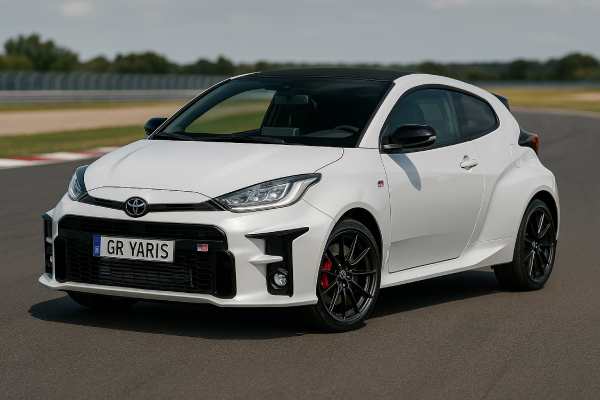
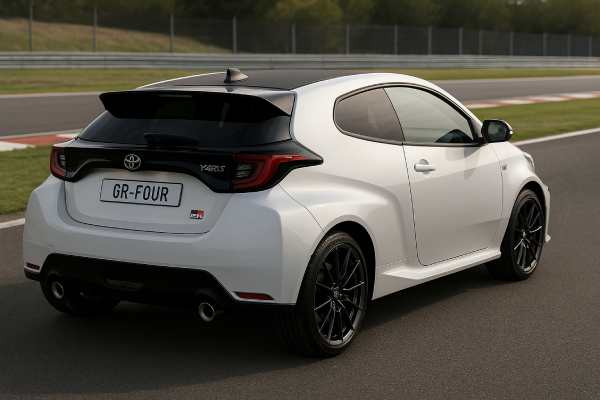
The 2020–2023 Toyota GR Yaris (GXPA16) is a rare thing in today’s market: a true homologation-style hot hatch sold in meaningful numbers. Built on a bespoke mix of the GA-B and GA-C platforms and hand-assembled at Toyota’s Motomachi plant, it packages a 261 hp 1.6-litre G16E-GTS turbo three-cylinder, GR-FOUR all-wheel drive and a 6-speed manual into a compact three-door shell.
This version of the GR Yaris is the original 261 hp pre-facelift car sold mainly in Europe and a few other markets from 2020 to 2023, before the 2024 power and interior update arrived. It’s light (around 1,280–1,310 kg), highly focused, and yet still usable as a daily if you can live with the firm ride, short gearing and modest luggage space.
For owners and shoppers, the key questions are consistent: how does it really perform, what are the running costs, which options matter, and what should you watch for as the cars age? This guide answers those in detail.
Fast Facts
- 261 hp G16E-GTS 1.6l turbo three-cylinder, GR-FOUR AWD and 6-speed manual give 0–100 km/h in about 5.5 s and 230 km/h top speed.
- Lightweight three-door shell (1,280–1,310 kg) with MacPherson front and double-wishbone rear suspension and big 356 mm / 297 mm brakes supports serious track use.
- Toyota Safety Sense with AEB, lane support and adaptive cruise plus a 5-star Euro NCAP rating for the Yaris platform give strong primary and secondary safety.
- Watch for wear from hard use: clutch, transmission, tyres and brakes can age quickly on heavily tuned or frequently tracked cars; budget accordingly.
- Engine oil and filter: aim for every 10,000 km or 12 months in normal use, and as tight as 5,000 km / 6 months for regular track driving, using 0W-20 API SP / ILSAC GF-6A.
Quick navigation
- GR Yaris GXPA16 overview
- GR Yaris specs and tech
- Trims and safety features
- GR Yaris reliability notes
- Maintenance and buying advice
- Driving and real performance
- GR Yaris rivals compared
GR Yaris GXPA16 overview
The GR Yaris GXPA16 exists because Toyota wanted to win rallies, not just sell hot hatches. To homologate its GR Yaris Rally1 car, Toyota created a unique three-door body, wider tracks, a lower roof, and a dedicated GR-FOUR AWD system, then wrapped it in a compact package roughly 4.0 m long and 1.8 m wide.
Under the bonnet sits the G16E-GTS, a 1,618 cc turbocharged inline-three with direct and port injection, 10.5:1 compression and 261 DIN hp at 6,500 rpm plus 360 Nm between 3,000 and 4,600 rpm. At launch it was one of the most power-dense production three-cylinder engines in the world. Power goes through a close-ratio 6-speed manual (EA67F) to an electronically controlled multi-plate clutch AWD system with selectable torque splits (Normal 60:40, Track 50:50, Sport 30:70). Torsen limited-slip differentials at both axles were optional via the Circuit Pack.
The chassis is equally serious. A MacPherson-strut front and double-wishbone rear suspension, 225/40 ZR18 tyres, and huge grooved and ventilated discs (356 mm front, 297 mm rear) deliver grip and stopping power in line with much bigger, heavier cars. The roof is carbon-fibre-reinforced polymer, and the doors, bonnet and tailgate use aluminium to keep weight down and the centre of gravity low.
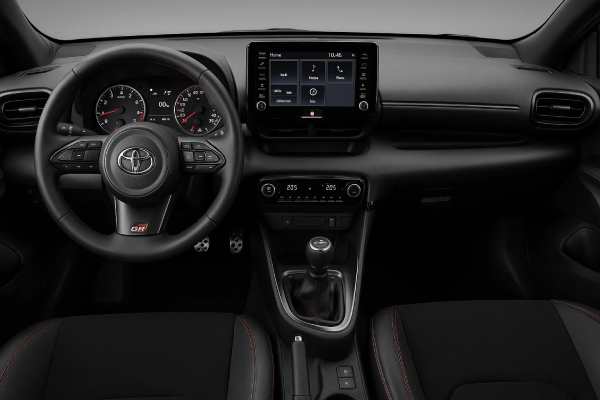
Inside, the GR Yaris mixes regular Yaris ergonomics with motorsport-inspired details: Ultrasuede sports seats, a small-diameter steering wheel and a 4.2-inch TFT display with turbo and AWD mode gauges. It seats four, though rear space and access are tight, and boot space is modest at 174 litres (VDA) with the seats up.
For owners, the appeal is the blend of rally-bred hardware and everyday usability. It will do school runs and commutes, yet it’s also quite happy to run flat-out at a track day. The trade-offs are predictable: road noise, firm ride, short gearing at motorway speeds and running costs that reflect sticky tyres, big brakes and a highly stressed turbo engine.
GR Yaris specs and tech
This section focuses on the 261 hp 2020–2023 GR Yaris GXPA16 with GR-FOUR AWD and 6-speed manual in European-type specification.
Engine and performance
| Item | Value |
|---|---|
| Engine code | G16E-GTS |
| Layout and valvetrain | Inline-3, DOHC, 12 valves, Dual VVT-i |
| Displacement | 1.618 l (1,618 cc) |
| Bore × stroke | 87.5 × 89.7 mm |
| Induction | Single-scroll ball-bearing turbocharger, intercooler |
| Fuel system | D-4ST direct plus port injection |
| Compression ratio | 10.5:1 |
| Max power | 261 hp (192 kW) @ 6,500 rpm |
| Max torque | 360 Nm (266 lb-ft) @ 3,000–4,600 rpm |
| Redline | ~7,000 rpm (indicated) |
| Timing drive | Chain |
| Emissions standard | Euro 6d (EU spec) |
| WLTP combined economy | ~8.2 l/100 km (≈ 28.7 mpg US / 34.3 mpg UK) |
| CO₂ (WLTP combined) | ~186 g/km |
| Aerodynamic drag coefficient | Cd ≈ 0.352 |
Real-world fuel use is very sensitive to driving style. Owners commonly report 8.5–9.5 l/100 km on a steady motorway cruise, mid-teens around town, and substantially more on track days.
Transmission and driveline
| Item | Value |
|---|---|
| Transmission | 6-speed iMT manual (EA67F) |
| Gear ratios | 1st 3.538 · 2nd 2.238 · 3rd 1.535 · 4th 1.162 · 5th 1.081 · 6th 0.902 · R 3.831 |
| Final drive ratios | 3.941 (1st–4th); 3.350 (5th–6th & reverse) |
| Drive type | GR-FOUR permanent AWD, electronically controlled multi-plate clutch |
| AWD modes | Normal 60:40 · Track 50:50 · Sport 30:70 (front:rear torque bias) |
| Differentials | Open front & rear standard; optional Torsen LSDs front and rear with Circuit Pack |
Short gearing means the engine is busy on the motorway but also gives instant response on back roads. With the GR-FOUR system in Track mode, the car feels very neutral, while Sport mode lets the rear rotate more readily on corner exit.
Chassis, brakes and dimensions
| Item | Value |
|---|---|
| Front suspension | MacPherson strut with reinforced lower arm |
| Rear suspension | Trailing double-wishbone |
| Steering | Electric rack-and-pinion, 13.6:1 ratio, 2.36 turns lock-to-lock |
| Front brakes | 356 × 28 mm two-piece ventilated grooved discs, 4-pot aluminium calipers |
| Rear brakes | 297 × 18 mm ventilated grooved discs, 2-pot aluminium calipers |
| Tyres | 225/40 ZR18 92Y; Dunlop SP Sport MAXX050 (standard/Convenience), Michelin Pilot Sport 4S (Circuit Pack) |
| Wheels | 18″ alloys; forged BBS wheels with Circuit Pack (market-dependent) |
| Overall length | 3,995 mm |
| Width | 1,805 mm |
| Height | 1,455 mm |
| Wheelbase | 2,560 mm |
| Ground clearance | 124 mm running |
| Kerb weight | 1,280–1,310 kg (spec- and pack-dependent) |
| GVWR | 1,645 kg |
| Fuel tank | 50 l |
| Boot volume | 174 l (VDA, rear seats up) |
Performance and capability
| Metric | Value |
|---|---|
| 0–100 km/h (0–62 mph) | 5.5 s (manufacturer) |
| Top speed | 230 km/h (143 mph), limited |
| Power-to-weight | ≈ 200.8 bhp/tonne |
| Braking 100–0 km/h | ~35–36 m on quality tyres (independent tests, conditions vary) |
Fluids, service capacities and key specs
| System | Specification | Capacity (approx.) |
|---|---|---|
| Engine oil | 0W-20, API SP / ILSAC GF-6A (Toyota Genuine or equivalent) | 4.3 l with filter |
| Engine coolant | Toyota Super Long Life Coolant (pink HOAT type) | ~5.2 l |
| Manual transmission | Toyota MT Gear Oil LV GL-4 75W | ~2.0–2.1 l |
| Transfer | Toyota Diff Gear Oil LT GL-5 75W-85 | ~0.45 l |
| Brake and clutch fluid | DOT 3/4 (Toyota spec), shared reservoir, flush at least every 2 years; more often for track use | — |
| Spark plugs | DILKAR8U7G iridium, gap set from factory; replacement ~100,000 km | — |
Electrical equipment varies slightly by market, but you can expect a conventional 12 V battery (roughly 45–55 Ah) and an alternator sized to support accessories plus heated equipment. For torque specs beyond the basics, always refer to the official workshop information for your market.
Safety and driver assistance
Standard GR Yaris models in Europe are equipped with Toyota Safety Sense, including:
- Pre-Collision System with pedestrian and cyclist detection
- Emergency Steering Assist
- Lane Departure Alert with steering control and Lane Tracing Assist (LTA)
- Adaptive Cruise Control (spec-dependent in some markets)
- Automatic High Beam
- Road Sign Assist
The GR Yaris itself has not always been tested separately by Euro NCAP, but it shares the GA-B platform, structure and core restraint systems with the 2020 Yaris, which achieved 5 stars (Adult 86 %, Child 81 %, VRU 78 %, Safety Assist 85 %).
Trims and safety features
Trim structures vary by market, but for 2020–2023 Europe the GR Yaris range can be thought of as one core model with option packs that significantly change the hardware.
Core trim structure
Typical European/UK offerings included:
- GR Yaris “standard” / Sport grade
- Open front and rear differentials
- 18″ cast alloys with Dunlop SP Sport MAXX050 tyres
- Standard suspension tune
- Basic audio and infotainment, with smartphone mirroring
- Convenience Pack (market-dependent name)
- Head-Up Display
- Upgraded audio (often JBL) and navigation
- Parking sensors, Blind Spot Monitor, Rear Cross-Traffic Alert on some markets
- Extra comfort/safety convenience features such as rear USB or smart entry
- Circuit Pack / Performance Pack
- Torsen front and rear LSDs
- Revised, stiffer suspension tune
- Lighter forged 18″ wheels with Michelin Pilot Sport 4S tyres
- Red brake calipers, minor cosmetic changes
Some countries offered separate “Circuit” and “Convenience” trims; others allowed both packs together or forced buyers to choose. In all cases, powertrain output remained 261 hp with the same 6-speed manual and GR-FOUR AWD.
Trim differences you can feel
For buyers, the biggest mechanical distinctions are:
- With Circuit/Performance pack:
- Sharper turn-in and better traction exiting corners thanks to LSDs and tyres
- Harsher ride over broken surfaces
- More track-friendly brake feel and consistency
- With Convenience pack:
- Easier long-distance driving (HUD, better audio, more driver aids)
- Slightly more weight but no meaningful performance penalty in daily use
If you plan regular track days or fast road driving, the Circuit-type pack is highly desirable. For mixed city and motorway mileage, a Convenience-equipped car (ideally also with the performance pack if available) strikes a better balance.
Safety equipment and ratings by trim
All trims share the same core passive safety: multi-stage front airbags, side airbags, full-length curtain airbags and a driver’s knee airbag, plus ISOFIX anchor points in the rear. Structural safety is inherited from the Yaris platform and reinforced in the GR with extra welding and structural adhesives.
Toyota Safety Sense is standard in Europe, but some markets made adaptive cruise control, blind-spot monitoring and rear cross-traffic alert part of Convenience or higher trims. Always check whether a car has the exact ADAS features you need; a walkaround of the mirrors (for BSM indicators) and dashboard (for HUD and cruise control buttons) is more reliable than relying on the badge alone.
For crash-test numbers, use the 2020 Yaris Euro NCAP result as a baseline and remember that the GR’s stiffened shell, big brakes and AWD all contribute to crash avoidance, even if they are not fully captured in a standardised lab test.
GR Yaris reliability notes
The GR Yaris has a strong basic reputation so far: the engine and drivetrain were over-engineered for motorsport use, and Toyota’s build quality is evident in the way the cars feel solid even after years of hard use. That said, age, mileage and heavy modification are starting to reveal patterns.
Engine and turbo system
On stock power and with regular high-quality oil changes, the G16E-GTS has not shown widespread catastrophic failures. Its forged-like internals, oil cooling and conservative factory tune give a good safety margin. Most issues reported so far are usage-related:
- Oil contamination and heat on track-driven cars if service intervals are extended. Solution: shorten oil changes to ~5,000 km or after 2–3 hard track days.
- Knock or overboost fault codes on tuned or heavily stressed engines; in some markets ECU software updates have been used to reduce the chance of fail-safe overboost conditions.
Cooling system issues are rare; the factory Super Long Life Coolant is robust if changed on schedule. Overheating tends to appear only under sustained track use with insufficient cooldown laps or blocked radiators.
Transmission, clutch and driveline
The 6-speed manual is generally durable, but there are recurring owner reports of:
- Notchy first–second shift or occasional grind, especially when cold or shifted aggressively. High-quality GL-4 75W oil and careful warm-up help.
- Clutch wear accelerated on tuned cars or repeated hard launches. A worn clutch can show as slippage in higher gears under full boost.
- Diff and transfer fluid neglect: these small housings are sensitive to heat and contamination; fluid changes at 40–60,000 km on hard-used cars are prudent even if not specified that frequently.
The GR-FOUR AWD hardware itself has not shown major systemic failures, but it is complex. Any signs of binding, drivetrain shudder or warning lights after AWD mode changes deserve prompt diagnosis.
Chassis, brakes and body
Common wear points so far include:
- Front brake discs and pads: large but heavily stressed; they can crack or develop judder if overheated repeatedly. Track pads and high-temperature fluid are recommended for serious use.
- Stone-chipping and paint wear, particularly around the rear arches and lower sills, due to the wide stance and sticky tyres throwing debris. Many owners fit mudflaps or PPF.
- Suspension bushings: generally robust, but track cars may show earlier wear in front lower arm bushes and rear locating points.
Corrosion protection is decent for a modern Toyota, but the GR’s underbody aero panels and exposed fasteners can trap moisture. Cars driven in salty climates benefit from regular underbody rinses and periodic rust-proofing.
Electronics, recalls and software updates
Electronics have been mostly trouble-free, but as with any modern car there are occasional issues with multimedia systems, sensors and instrument clusters. In some regions there have been software and instrument cluster update campaigns.
Because recalls vary by VIN and market and can change over time, it is essential to run a VIN-based check through your local Toyota portal or national recall database before buying and periodically during ownership.
Maintenance and buying advice
Practical maintenance schedule (baseline)
Always confirm against your market’s schedule, but for a largely stock GR Yaris used on road with occasional spirited driving, a sensible starting point is:
- Engine oil and filter – Every 10,000 km or 12 months (whichever comes first); cut to 5,000 km / 6 months if tracked or driven very hard.
- Engine air filter – Inspect at 20,000 km, replace 40,000 km or sooner in dusty conditions.
- Cabin filter – Every 20,000–30,000 km or 2 years.
- Spark plugs (iridium) – Around 100,000 km; earlier if tuned or misfire/knock issues appear.
- Coolant (SLLC) – First replacement at 160,000 km, then every 80,000 km.
- Manual gearbox oil – 60,000 km for mixed use; 30,000 km if tracked.
- Transfer and rear diff oils – 60,000 km mixed use; 30,000 km track focus.
- Brake fluid – Every 2 years; annually (or after 2–3 heavy track days) for hard drivers.
- Brake pads and discs – Inspect at every service; track use can consume a set in a few events.
- Tyres – Rotate front–rear (if tyre pattern allows) every 10,000 km; check alignment yearly or after kerb hits.
- Auxiliary belt and hoses – Inspect from 60,000 km; replace at 100,000 km or if cracked.
- 12 V battery – Test yearly from year 4; expect replacement around years 5–7 depending on climate and use.
Timing is chain-driven, so there is no scheduled belt replacement. Instead, listen for chain rattle on cold starts and monitor for timing-correlation faults if the engine has seen neglected oil changes.
Fluid choices and torque essentials
- Engine oil: stick to 0W-20 meeting API SP and ILSAC GF-6A; heavier oils may be used by some track users, but only with careful monitoring and ideally data from oil-temperature and pressure logging.
- Gear oils: use GL-4 75W for the gearbox to preserve synchroniser life; GL-5 75W-85 for transfer and rear diff as specified.
- Coolant: Toyota Super Long Life (pink) or a direct equivalent HOAT coolant with matching spec—never plain water.
Key torque values (always verify for your VIN):
- Wheel nuts: typically around 103 Nm (≈ 76 lb-ft) on comparable Toyota performance models
- Oil drain plug: roughly 30–40 Nm is typical for this size; use a new washer and confirm exact value in the service manual or trusted database
Buyer’s checklist
When inspecting a used GR Yaris:
- Service history
- Look for documented annual or 10,000 km oil changes with correct 0W-20 oil.
- Check gearbox, diff and brake fluid entries, especially if the car has seen track use.
- Evidence of hard use
- Ask directly about track days, autocross or rally stages. Hard use is not a problem if maintained, but you should factor it into price and upcoming maintenance (clutch, brakes, tyres).
- Inspect tyres for uneven wear and heat cycling; look for blueing or cracking.
- Drivetrain behaviour
- Cold start: listen for abnormal knocking, chain rattle or ticking.
- Test drive: check for smooth engagement, no grinding on quick 1–2 shifts, and no clutch slip under full boost in higher gears.
- Chassis and body
- Look for stone chips on the roof, bonnet, sills and rear arches; check for corrosion starting where paint has been sand-blasted.
- Inspect suspension for aftermarket parts; upgraded coilovers and big-brake kits may be fine if high quality, but you will want specialist inspection and alignment.
- Electronics and recalls
- Run the VIN through your national Toyota recall checker and, if applicable, government databases.
- Ensure Toyota Safety Sense features (AEB, lane support, cruise) function correctly and that any software campaigns have been completed.
If you want the most rounded car for both road and occasional track use, a Circuit/Performance pack car with full service history and minimal modifications is the sweet spot. For commuters and daily drivers, a Convenience-equipped car on standard suspension can feel more forgiving without sacrificing much excitement.
Driving and real performance
On the road, the 261 hp GR Yaris feels more serious than its size suggests. The engine has a slight softness right off idle, then wakes up strongly from about 2,500 rpm as the turbo spools. From 3,000 rpm to the 7,000 rpm red zone it pulls with a broad, eager surge, accompanied by a distinctive three-cylinder growl.
The short gearing keeps the engine in its sweet spot. Second and third are ideal for tight B-roads, and fourth still has useful punch for fast overtakes. On the motorway, the price of this gearing is higher rpm—expect roughly 3,000 rpm at typical European cruising speeds—so there is more engine noise than in a long-legged GT, but wind and tyre noise are well controlled for such an aggressive setup.
The GR-FOUR system defines the car’s character. In Normal mode the car feels secure and neutral; in Track, front/rear balance is almost perfectly even, ideal in the wet or on track; in Sport, more torque goes rearwards, giving a playful, rear-biased attitude on corner exit if you are committed and have the space. The optional Torsen LSDs sharpen this further, letting you drive the car off the rear axle in a way that few modern hot hatches can match.
Ride quality is firm, especially on Circuit-pack cars, but body control is excellent. Over broken back roads, the combination of relatively compliant sidewalls and carefully tuned dampers allows the wheels to follow the surface without the body losing composure. In town, speed bumps and sharp edges can feel abrupt; whether that is acceptable will depend on your roads and tolerance.
Brakes are a major strength. Big discs and serious calipers mean strong, repeatable stops if you use the right pads and fluid. Independent tests have shown short 100–0 km/h stopping distances and good resistance to fade, though track work on stock pads can still overheat them. Steering is light but accurate, with a fast ratio and trustworthy front-end bite; feedback is better than many modern electric systems, though still filtered.
Real-world efficiency and range
- City driving: 11–13 l/100 km (21–26 mpg US) is typical if you enjoy the performance.
- Mixed commuting: 8.5–10 l/100 km (24–28 mpg US) with gentle use.
- Motorway at 120 km/h: ~8.5–9.5 l/100 km (25–28 mpg US) depending on wind, gradient and load.
These figures line up reasonably with the WLTP combined claim of about 8.2 l/100 km, bearing in mind that exploiting the turbo quickly pushes consumption into double digits.
Load, towing and long-distance use
The GR Yaris is not homologated for heavy towing in many markets, and where towing is allowed, limits are modest. Think of it as a two-person plus luggage GT for road trips rather than a tow car. With two on board, a couple of soft bags in the boot and careful packing, it can cover long distances comfortably thanks to effective climate control, solid seats and good active safety. For families with regular rear-seat passengers, access and space will be the main compromises.
GR Yaris rivals compared
The GR Yaris lives in a crowded but shrinking field of high-performance hatchbacks. Its closest rivals in spirit and price include the Hyundai i20 N, Hyundai i30 N, Honda Civic Type R, Renault Mégane RS, Volkswagen Golf R and, in some markets, the MINI JCW GP or similar specials.
Key comparisons:
- Hyundai i20 N / i30 N
- Front-wheel drive, strong value and engaging chassis, but no AWD and more conventional body shells. The GR feels more exotic and has better traction out of slow corners, especially in poor weather.
- Honda Civic Type R (FK8/FL5)
- More power and space, but also larger and less rally-car in character. The Civic is brutally effective on circuit; the GR feels more playful and compact on narrow roads.
- Volkswagen Golf R
- AWD and strong straight-line pace with DSG convenience, yet significantly heavier and more grown-up. The GR is rawer and more involving; the Golf R is easier to live with for long motorway hauls and family use.
- Renault Mégane RS
- Excellent steering and front-end grip, especially in Cup/Trophy guise, but front-drive only and now discontinued in many markets. The GR offers a rarer AWD homologation feel and stronger residuals.
Where the GR Yaris stands out is authenticity. Very few rivals can claim a shell and drivetrain developed directly for world-level rallying, and even fewer are hand-built in a low-volume facility. That makes it attractive not only as a driver’s car but also as a potential long-term keeper or future classic, provided maintenance and condition are kept up to scratch.
If you value steering purity and space above all, a Civic Type R or Mégane RS might edge it. If you want all-weather grip, compact size and a deeply mechanical feel in an era of increasingly digital cars, the 261 hp GR Yaris is very hard to beat.
References
<a href="https://media.toyota.co.uk/wp-content/uploads/sites/5/2021/03/1605890857201029MGRYarisTechSpec.pdf">TOYOTA GR YARIS TECHNICAL SPECIFICATIONS</a> 2021 (Technical Data Sheet)<a href="https://www.toyota.com.my/content/dam/malaysia/price-list-maintenance-packages/periodic-maintenance/september-2024/GR-Yaris-September-2024.pdf">GR Yaris - September 2024</a> 2024 (Periodic Maintenance Guide)<a href="https://www.euroncap.com/en/results/toyota/yaris/40747">Official Toyota Yaris 2020 safety rating</a> 2020 (Safety Rating)<a href="https://toyotamanuals.com.au/document/landing_page/gr-yaris-warranty-service-booklet-aug-20-current">GR Yaris Warranty & Service Booklet (Aug 20 - Oct 24)</a> 2020 (Warranty and Service Manual)<a href="https://www.toyota.co.uk/owners/vehicle-information/recalls">Recalls | Owners</a> 2024 (Recall Database and VIN Checker)
Disclaimer
This article is for informational purposes only and is not a substitute for professional diagnosis, repair or purchase advice. Specifications, torque values, service intervals and available equipment can vary by model year, market, trim level and individual vehicle history. Always confirm critical data against the official owner’s manual, workshop/service information and documentation specific to your VIN, and consult a qualified technician before carrying out maintenance or modifications.
If you found this guide useful, you are welcome to share it with other enthusiasts and owners on social media or forums to help support accurate, independent technical information.