
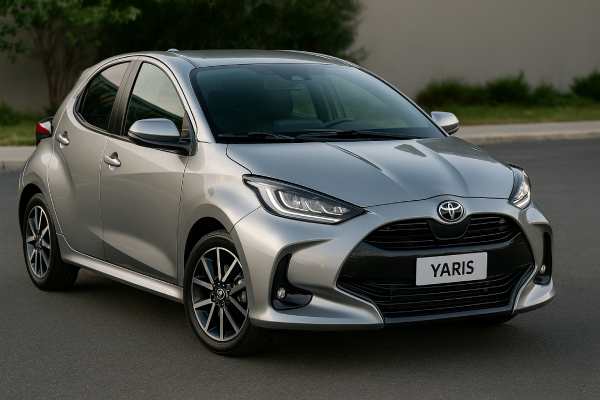
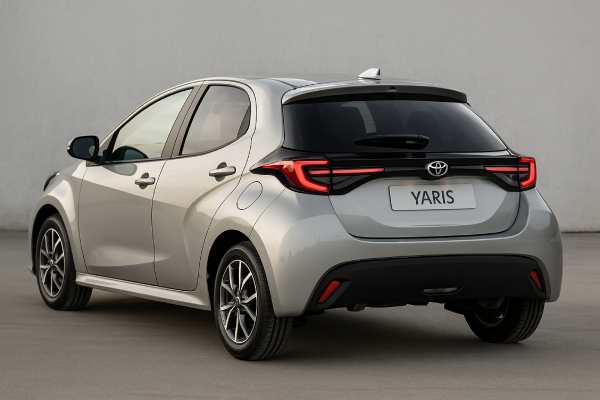
The facelifted Toyota Yaris (KSP211) with the 1.0-litre 1KR-FE engine remains the entry point into the Yaris range for many European markets, even as Toyota pushes its hybrid variants. For the 2024–present facelift, Toyota kept the proven 72 hp three-cylinder powertrain but upgraded the digital interior, connectivity and safety equipment so the smallest Yaris does not feel like a budget afterthought.
If you mostly drive in the city, this version offers low running costs, compact dimensions and straightforward mechanicals that are easy to maintain. It is less about performance and more about being predictable, efficient and durable. With the facelift, you also gain improved Toyota Safety Sense and a much more modern dashboard layout, including larger screens on higher trims. This guide walks through the technical data, reliability patterns, service recommendations and how the 1.0 compares to rivals, so you can decide whether the facelift KSP211 fits your use case and budget.
Top Highlights
- Proven 1KR-FE 1.0 engine with chain drive and typically low real-world fuel consumption of about 5.0–5.5 l/100 km in mixed use.
- 2024 facelift brings larger digital cluster, updated multimedia and expanded Toyota Safety Sense even on non-hybrid trims.
- Simple front-wheel-drive layout and modest kerb weight make tyres, brakes and suspension components last longer than on heavier hatchbacks.
- Watch for age-related auxiliary belt, water-pump seepage and software updates for the safety systems as the car gets older.
- Typical European service interval is every 15,000 km or 12 months for oil, filter and checks—plan budget around that cadence.
Navigate this guide
- Facelifted KSP211 Yaris overview
- KSP211 1.0 engine and specs
- 2024 Yaris trims and safety
- KSP211 reliability and issues
- Yaris 1.0 maintenance guide
- Driving performance of Yaris 1.0
- Yaris 1.0 compared with rivals
Facelifted KSP211 Yaris overview
The 2024–present facelift of the Toyota Yaris (XP210 platform, KSP211 1.0 petrol) is a careful evolution rather than a full mechanical redesign. Fundamentally, the car remains a compact B-segment hatchback designed around urban use: short overall length for easy parking, light steering and modest running costs. The familiar 1KR-FE three-cylinder petrol engine stays under the bonnet with 72 hp and about 93 Nm of torque, paired in most markets with a five-speed manual gearbox and front-wheel drive.
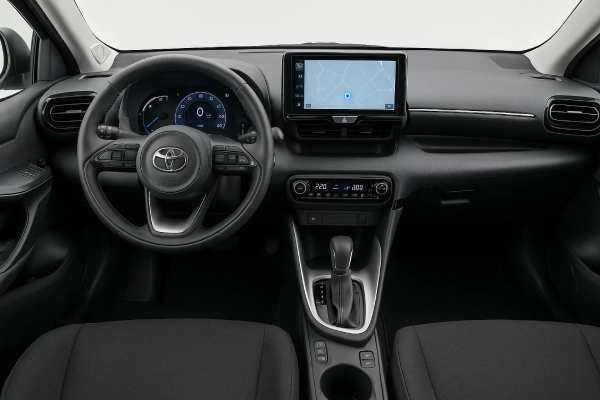
Where the facelift moves the game on is in the cabin and electronics. Toyota introduced a more sophisticated digital driver display and larger central touchscreen, depending on trim. Graphics, responsiveness and connectivity are noticeably improved over early 2020–2022 cars, with better integration for smartphone mirroring and over-the-air style map and software updates in some markets. For many buyers, this is what makes the facelifted 1.0 feel like a new-generation car, despite its carry-over powertrain.
On the safety side, Toyota extended its T-Mate/Toyota Safety Sense package. The Yaris already had a strong Euro NCAP record; the facelift adds refinements such as improved pre-collision detection logic, better lane-keeping support and expanded functionality for adaptive cruise on higher trims. Even on the 1.0, you can now find features such as traffic sign recognition and improved driver attention warnings, depending on specification.
The KSP211 1.0 occupies an important niche in the Yaris line-up. Buyers who do not want or need a hybrid, drive mainly short distances or want the lowest entry price still get a car built on the GA-B platform with the same structure as the more powerful models. For fleet users, learner drivers and city commuters, the combination of a simple naturally aspirated engine, compact footprint and updated safety tech makes the facelifted 1.0 a rational and future-proof choice—provided you accept its limited performance on motorways and when fully loaded.
In short, think of the 2024–present KSP211 as a modernised, better-equipped version of an already efficient city hatch, rather than a new car that happens to reuse an old badge.
KSP211 1.0 engine and specs
Engine and performance
| Item | Specification |
|---|---|
| Engine code | 1KR-FE |
| Type | 1.0 l, inline-3, aluminium block and head |
| Displacement | 996 cc |
| Valvetrain | DOHC, 4 valves per cylinder, VVT-i on intake |
| Induction | Naturally aspirated |
| Fuel system | Multi-point fuel injection |
| Compression ratio | ~11.5–11.8 : 1 (market dependent) |
| Max power | 72 hp (53 kW) @ 6,000 rpm |
| Max torque | 93 Nm (68 lb-ft) @ 4,400 rpm |
| Emissions standard | Euro 6d family (depending on country) |
| Timing drive | Chain (no scheduled replacement) |
In real-world driving, the 1KR-FE’s character is all about smoothness and economy rather than outright thrust. It likes to rev, so best performance comes if you are not afraid to use the upper half of the rev range. With the manual gearbox, 0–100 km/h is typically in the mid-14-second region and top speed around 155–160 km/h. This is adequate for European motorways if you are patient with overtakes, but the Yaris feels most at home in 30–90 km/h traffic.
Typical combined fuel consumption is around 4.8–5.3 l/100 km for careful drivers on mixed cycles, with urban figures a little higher and long, gentle highway runs sometimes dipping below 4.5 l/100 km. Official WLTP values vary by wheel/tyre size and options, but the facelift does not significantly change the basic efficiency of the 1.0-litre car.
Transmission and driveline
| Item | Specification |
|---|---|
| Drive type | Front-wheel drive (FWD) |
| Transmission | 5-speed manual (most markets); CVT in some regions |
| Final drive ratio | Approx. 4.1–4.3 (manual; varies by market) |
| Differential | Open front differential |
The 5-speed manual is simple, light and well matched to the engine’s modest torque. In some countries, a CVT option may be offered with the 1.0, prioritising smoothness but slightly softening response when fully loaded. There is no all-wheel drive option for the KSP211; AWD is reserved for higher-power 1.5-litre variants in certain regions.
Chassis, dimensions and weights
For the facelifted XP210 Yaris, exterior dimensions for the hatchback body are very similar across the range, so the 1.0 shares its footprint with more powerful trims.
| Item | Specification (typical EU spec) |
|---|---|
| Platform | TNGA-B |
| Body style | 5-door hatchback |
| Length | ~3,940 mm (155.1 in) |
| Width (excl. mirrors) | ~1,745 mm (68.7 in) |
| Height | ~1,500 mm (59.1 in) |
| Wheelbase | 2,560 mm (100.8 in) |
| Ground clearance | ~145 mm (5.7 in) |
| Turning circle (kerb-to-kerb) | ~9.6–10.4 m |
| Kerb weight | ~975–1,020 kg, depending on trim |
| GVWR | ~1,400–1,500 kg (market dependent) |
| Fuel tank capacity | ~40 l (10.6 US gal, 8.8 UK gal) |
| Luggage volume | Around 280–290 l seats up (VDA) |
Suspension and brakes are conventional: MacPherson struts at the front, torsion beam at the rear, disc brakes in front and either discs or drums at the rear depending on trim and market. Wheel sizes for the 1.0 usually range from 15-inch steel to simple alloys with relatively tall tyres (for example, 185/65 R15), prioritising comfort and low replacement cost over outright grip.
Fluids, capacities and key torques (guide values)
These values can vary by market; always confirm by VIN in the official service data.
| System | Spec and capacity (approximate) |
|---|---|
| Engine oil | ACEA C2/C3 0W-16 or 0W-20; ~3.1–3.3 l including filter |
| Engine coolant | Toyota Super Long Life Coolant (pink), premix; ~4.5–5.0 l |
| Manual gearbox oil | API GL-4 75W-xx; ~1.7–2.0 l |
| CVT fluid (if fitted) | Toyota CVT FE; capacity by procedure (drain/fill vs overhaul) |
| Brake fluid | DOT 3 or DOT 4; flush interval 2–3 years |
| A/C refrigerant | R134a or R1234yf depending on region; charge quantity on under-bonnet label |
Key torque examples (always verify for your VIN):
- Wheel bolts: typically around 103 Nm (76 lb-ft).
- Spark plugs: roughly 18–22 Nm (13–16 lb-ft).
- Engine oil drain plug: around 35–40 Nm (26–30 lb-ft).
2024 Yaris trims and safety
Trim names differ by country, but the pattern for the facelifted Yaris in Europe is broadly similar: a base equipment line aimed at cost-conscious buyers or fleets, one or two mid-grade trims focused on comfort and tech, and higher trims often paired with hybrid engines. The KSP211 1.0 generally sits in the lower half of this ladder.
A typical structure might look like:
- Entry trim (e.g., Active/Icon): steel wheels, manual air conditioning, small central display, basic audio, fabric seats, manual handbrake, and the core Toyota Safety Sense suite (pre-collision system with pedestrian and cyclist detection, lane departure alert with steering assist, road-sign assist and automatic high beam).
- Mid trim (e.g., Icon Tech/Design): introduction of alloy wheels, larger touchscreen with smartphone integration, rear-view camera, improved interior trims, leather-wrapped steering wheel, extra USB ports and possibly automatic air conditioning.
- Upper trims (Excel/GR Sport/Premiere Edition): usually paired with hybrid engines, but the 1.0 may share some cosmetic items—such as different wheel designs, enhanced interior lighting or extra convenience features—if your market offers a well-equipped non-hybrid variant.
For the 2024 facelift, Toyota placed particular emphasis on the digital cockpit. Higher trims can feature a large configurable digital instrument cluster and a 9–10.5-inch infotainment screen with cloud-connected navigation and more advanced voice control. On the 1.0, you may get the smaller versions of these screens, but the user interface is still significantly improved over pre-facelift cars.
Safety remains a headline strength. The fourth-generation Yaris earned a strong five-star Euro NCAP rating early in its life, helped by a rigid GA-B platform, extensive airbag coverage (including centre airbag between front occupants in many specs) and a wide array of driver assistance systems. The facelift does not fundamentally change the structure, but it refines the sensors and software:
- Enhanced pre-collision system with improved junction support and better detection of vulnerable road users (including motorcycles in more scenarios on some trims).
- Smarter lane-keeping and lane-tracing assistance, able to operate more smoothly on curved roads.
- Improved adaptive cruise control integration on cars so equipped, with smoother gap management and speed adaptation.
- Additional convenience-safety features such as rear seat reminder, parking sensors with auto-braking in some configurations, and expanded blind-spot monitoring or rear cross-traffic alert on higher trims.
Child-seat provision with ISOFIX/LATCH mountings on the outer rear seats is standard across the range, and top-tether anchor points are provided. Rear doors open reasonably wide for a B-segment car, though space behind a tall driver remains modest.
For buyers considering the 1.0, the key point is that you do not sacrifice core safety performance compared with the more expensive hybrid models. The same underlying body, restraint systems and many ADAS features are shared, so even the entry-level Yaris can be a strong family car in terms of passive and active safety.
KSP211 reliability and issues
Toyota’s small cars, and especially those using the 1KR-FE engine, have a strong real-world reputation for durability when serviced correctly. The facelift itself is too new for long-term patterns to be fully established, but much can be inferred from pre-facelift XP210 and earlier 1KR-powered cars.
Engine and ancillaries
- Common: minor oil seepage from cam cover gaskets and timing-chain cover sealant as the engine ages. Symptoms are light oil misting on the front of the engine or a slight smell of burning oil. Typically a medium-cost repair involving resealing.
- Occasional: water pump seepage or bearing noise at higher mileages. On a small three-cylinder that spends a lot of time at higher revs, the pump works hard; replacement is straightforward but should be done before severe leakage or overheating occurs.
- Rare but important: timing-chain noise due to lack of oil changes or using incorrect oil grade. The chain itself is robust, but stretched chains or worn tensioners will present as rattling on cold start and timing correlation codes. If ignored, this can become a high-cost repair.
The 1KR-FE is generally tolerant and economical, but it is not immune to neglect. Regular, high-quality oil changes are critical, especially in urban cars that see short trips and many cold starts.
Fuel, ignition and emissions
Misfires under load, rough idle or poor cold starting can often be traced to ageing ignition coils or spark plugs beyond their service interval. Replacing all three coils together, along with fresh plugs, is often the most effective solution. A blocked engine air filter or contaminated petrol can also contribute to drivability complaints.
Particulate filters and complex exhaust after-treatment are not usually a concern on this simple petrol engine, but lambda sensors and exhaust gas recirculation components may require cleaning or replacement at higher age/mileage.
Driveline and chassis
The manual gearbox on KSP211 is generally robust when filled with the correct oil and not abused. Stiff or notchy shifting can often be improved by renewing the gearbox oil and inspecting the external linkage bushings. Clutches in city-driven cars may wear faster; judder or slipping under load is the cue for replacement.
On the chassis side:
- Front suspension top mounts and drop links can develop knocks over bumps.
- Rear torsion-beam bushes and dampers may soften with age, especially on poor roads.
- Wheel bearings rarely fail early, but persistent humming that varies with speed and steering load should be investigated.
Electronics and infotainment
The facelift significantly upgrades the electronics, but this also means more software. Early production cars may receive firmware updates for the multimedia unit, cluster or Toyota Safety Sense. Symptoms of outdated software can include occasional frozen screens, intermittent Bluetooth pairing issues or ADAS warning messages despite no hardware fault. Dealers can usually update modules as part of routine service.
Recalls and service campaigns
As with any modern vehicle, the Yaris has seen a small number of recalls and technical service bulletins, often around control units, airbag or seat-belt systems, or ADAS sensor calibration. For a prospective buyer, the key actions are:
- Run the VIN through your local Toyota recall checker.
- Ask for dealer print-outs proving any campaigns or field actions have been completed.
- Confirm that any windscreen replacements have been followed by correct camera/radar calibration, as required for Toyota Safety Sense.
Overall, the facelifted KSP211 1.0 should prove a low-risk ownership proposition if serviced on time, with special attention to oil changes, cooling system health and keeping software up to date.
Yaris 1.0 maintenance guide
A clear maintenance plan is essential for getting the best life and reliability from the facelifted Yaris 1.0. Intervals can vary slightly by market, but the following schedule reflects common European guidance and good practice.
Core service schedule (typical)
- Engine oil and filter: every 15,000 km or 12 months, whichever comes first. Use the correct low-viscosity synthetic oil and an OEM or quality equivalent filter. Short-trip urban cars benefit from annual changes even at low mileage.
- Engine air filter: inspect every 30,000 km; replace about every 45,000–60,000 km, sooner in dusty environments.
- Cabin (pollen) filter: replace every 15,000–30,000 km or 1–2 years to keep HVAC performance and window demisting effective.
- Spark plugs: iridium plugs typically last around 90,000–100,000 km; consider earlier replacement in mainly city-driven cars.
- Coolant: long-life coolant often has a 10-year initial interval, then every 5 years, but many owners choose a more conservative 5–7-year change cycle.
- Brake fluid: renew every 2–3 years regardless of mileage to protect ABS components and maintain pedal feel.
- Manual gearbox oil: inspect at major services; replace around 120,000–150,000 km or sooner if shifting quality declines.
- Auxiliary/serpentine belt: inspect at each service for cracks or glazing; replacement around 90,000–120,000 km is common.
There is no timing belt on the 1KR-FE; the timing chain is designed for engine life. The correct approach is to monitor for symptoms (noise, fault codes) and oil quality rather than replace on a fixed interval.
Chassis and tyres
- Rotate tyres every 15,000–20,000 km to even out wear, and check alignment if you notice pulling, uneven wear or after pothole impacts.
- Inspect brake pads and discs at every service; the Yaris is light, so discs and pads can last a long time in gentle use, but urban stop-start driving shortens their life.
- Suspension joints and bushes should be checked periodically, especially in areas with rough roads or heavy speed-bump use.
12-volt battery
The 12 V battery powers starting and many electronics. For urban users, lots of short trips can shorten its life. A sensible approach is:
- Test from year 3 onwards at each service.
- Plan replacement around the 5–7-year mark or sooner if tests show reduced capacity or the car shows slow cranking and random warning lights on cold mornings.
Buyer’s checklist for used facelift Yaris 1.0
When viewing a used KSP211:
- Confirm full service history with evidence of annual oil changes.
- Check for completed recalls and campaigns via VIN.
- Inspect for accident repairs: mismatched paint, panel gaps, overspray or non-OEM windscreens can indicate past damage—ensure ADAS has been recalibrated after glass work.
- Look underneath and around the rear subframe and sills for corrosion, especially in climates where roads are salted.
- Test the multimedia system thoroughly (pair a phone, use navigation, change menus) and check that no persistent warning lights are present for airbags, ABS or safety systems.
- On the test drive, listen for suspension knocks, gearbox whining or clutch slip, and confirm the car tracks straight under braking.
If these points check out, the facelifted Yaris 1.0 can be an excellent long-term city car, with realistic potential for 10–15 years of service given basic care.
Driving performance of Yaris 1.0
Behind the wheel, the KSP211 1.0 is honest and predictable. It will not win any drag races, but it offers a surprisingly secure and refined experience for a small hatchback. The GA-B platform gives it a stiff structure and well-tuned suspension, so the Yaris feels planted at normal highway speeds, even with the smallest engine.
Ride, handling and noise
Ride comfort is tuned towards the compliant side, especially on 15-inch wheels with relatively tall tyres. Potholes and sharp edges are felt but not harsh, and the car deals well with typical urban imperfections. On the open road, body control is tidy; the car leans a little in faster corners, but it remains predictable and easy to place.
Steering is light at parking speeds and gains some weight as speed builds, though true “feedback” is limited—as expected for an electric power steering setup. For most drivers, it makes the car easy to manoeuvre and confidence-inspiring in tight city streets.
Cabin noise is acceptable for the segment. The three-cylinder engine has a characteristic thrum when extended, but Toyota has done a good job of isolating it at a steady cruise. Road and wind noise are noticeable at motorway speeds, yet the facelift’s improved door seals and sound-deadening keep it from becoming fatiguing for typical journeys.
Powertrain character
With only 72 hp moving close to a tonne of mass, the Yaris 1.0 rewards smooth, anticipatory driving. In town, the engine is responsive enough off the line, and short gearing in lower ratios helps it feel livelier than the numbers suggest. Once you reach 80–120 km/h, overtakes require planning and plenty of revs; using third or fourth gear and allowing the engine to climb towards 5,000–6,000 rpm is normal in this car.
The manual gearbox has a light clutch and accurate, if somewhat long, shift action. It suits new drivers and those who value simplicity. If a CVT version of the 1.0 is offered in your market, it will trade some directness for smoother, stepless acceleration; at full throttle the engine may sit at higher revs, which some drivers find noisy.
Real-world efficiency
In practice, owners can expect roughly:
- City: 5.5–6.5 l/100 km (43–36 mpg US; 52–39 mpg UK) depending on traffic and driving style.
- Highway (100–120 km/h): about 4.7–5.3 l/100 km (50–44 mpg US; 60–48 mpg UK) if driven gently.
- Mixed: around 5.0–5.5 l/100 km for typical commuting.
Cold weather, short journeys and heavy use of heating or air conditioning will push consumption higher, while calm summer driving on secondary roads can deliver very low numbers for an ICE car without hybrid assistance.
Load and light towing
The 1.0 Yaris can carry four adults and luggage, but performance suffers noticeably with a full load or on steep gradients. Official towing capacities, where towing is permitted, are modest—typically in the 700–800 kg braked and around 500 kg unbraked range. For occasional light trailers or small utility use, it is adequate, but if you plan regular towing or frequent mountain driving, the 1.5-litre or hybrid variants are better suited.
For the everyday roles of commuting, school runs and urban errands, however, the facelifted 1.0 offers a pleasant balance of agility, comfort and efficiency, and the updated interior helps it feel modern even on long days behind the wheel.
Yaris 1.0 compared with rivals
The facelifted Yaris 1.0 competes in a crowded B-segment against other small hatchbacks and city cars. When comparing, it helps to separate mechanical simplicity, safety, running costs and perceived quality.
Against small turbo-petrol rivals
Many European rivals, such as the Ford Fiesta 1.0 EcoBoost (where still available used) or Volkswagen Polo/Skoda Fabia 1.0 TSI, use small turbocharged three-cylinder engines with higher power and torque figures. They tend to feel stronger on the motorway and more relaxed when overtaking thanks to their torque at lower revs.
- Pros for Yaris 1.0:
- No turbocharger or direct-injection system to maintain, reducing complexity.
- Very good fuel consumption without needing a turbo, especially in city use.
- Strong reputation for long-term reliability and fewer reports of intake valve deposits or turbo-related failures.
- Cons versus turbo rivals:
- Slower acceleration, especially with passengers and luggage.
- More need to downshift and rev the engine at highway speeds.
For many owners who rarely leave urban or peri-urban environments, the Yaris’s simpler engine is an advantage; for frequent motorway users, a turbo rival or Yaris 1.5 may be more satisfying.
Against other naturally aspirated small cars
Compared to budget models that still use simple non-turbo engines (for example, certain versions of the Dacia Sandero or Hyundai i20/Kia Rio with base petrol units), the Yaris 1.0 sits a little higher in perceived quality and safety engineering.
- The GA-B platform and strong crash results give the Yaris an edge in occupant protection.
- Interior materials, seat comfort and general refinement are usually a step above the very cheapest competition.
- However, list prices and used values are typically higher than those budget rivals, meaning you pay more upfront for the Toyota package.
Against Yaris Hybrid and other full hybrids
Within its own family, the KSP211 1.0 is the budget-friendly sibling to the Yaris Hybrid. The hybrid offers more power, far lower urban consumption and the ability to run in EV mode at low speeds, but at a notably higher purchase price and with a more complex powertrain.
- If your mileage is high, particularly in city traffic, a Yaris Hybrid can pay for itself in fuel savings over time.
- If you drive shorter distances, keep cars for many years and want to minimise complexity, the 1.0’s simplicity and lower insurance and tyre costs can be compelling.
Compared with hybrid competitors from other brands, the Yaris 1.0 is not directly equivalent—it targets buyers who want Toyota’s build and safety, but without hybrid pricing.
Resale and long-term outlook
Toyota superminis tend to hold value well, and the facelift’s upgraded interior and safety tech should support that trend. The 1.0 may depreciate a little faster than sought-after hybrid trims in some markets, but it also starts from a lower price. For private buyers who keep cars for 8–10 years, total cost of ownership is likely to be very competitive, especially when considering low failure rates and widely available parts.
In summary, the facelifted Yaris 1.0 is not the fastest or flashiest option in its segment, but it offers a rare combination of robustness, safety and low running costs. For drivers who value those qualities more than acceleration times, it remains one of the strongest propositions among small petrol hatchbacks.
References
- 2024 Toyota Yaris: super update for supermini 2023 (Manufacturer News)
- New Yaris Brings Expanded Hybrid Line-Up, Improved Safety and Enhanced Digital User Experience 2023 (Manufacturer News)
- Official Toyota Yaris 2020 safety rating 2020 (Safety Rating)
- Toyota Yaris (XP210) 2024 (Technical Overview)
Disclaimer
This article is intended for general informational purposes only and does not replace professional diagnosis, workshop procedures or manufacturer instructions. Specifications, torque values, maintenance intervals and equipment details can vary by VIN, model year, market and individual vehicle configuration. Always verify data against the official owner’s manual, service documentation and parts catalogues for your specific car, and consult a qualified technician before carrying out repairs or modifications.
If you found this guide useful, you are welcome to share it on social platforms such as Facebook or X/Twitter to help other Toyota Yaris owners and support our work.