
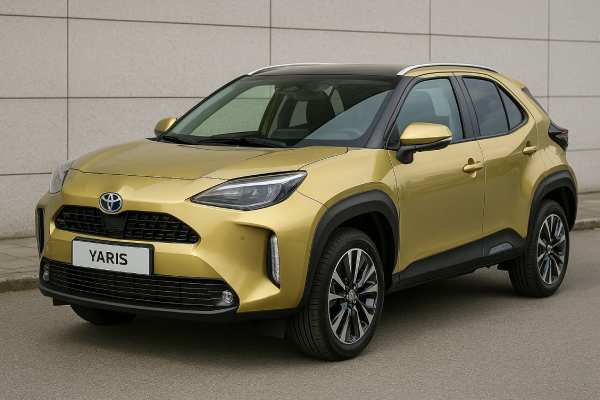
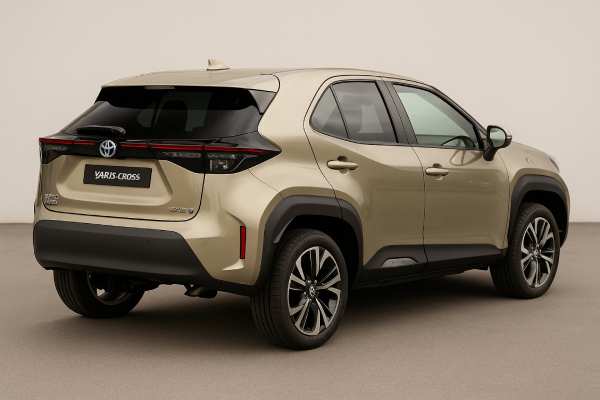
The Toyota Yaris Cross MXPB10 takes the simple formula of a Yaris hatchback and lifts it into a compact SUV package with more ground clearance, a taller driving position, and a versatile cargo area. Built on Toyota’s GA-B platform, it combines the light weight and nimbleness of a small car with the tougher image and practicality of a crossover. The MXPB10 code refers to the non-hybrid 1.5-litre M15A-FKS petrol engine, offered with a CVT or six-speed manual and front-wheel drive from 2021.
Owners are drawn to this car for its strong real-world economy, city-friendly size, and Toyota’s reputation for reliability and resale value. Safety is another major selling point, with top crash-test ratings and a full Toyota Safety Sense suite. This guide focuses on the 2021–2023 petrol Yaris Cross MXPB10 and walks you through specs, ownership costs, reliability patterns, and how it compares to rivals, so you can decide whether it fits your use case and budget.
Fast Facts
- Compact GA-B crossover with 1.5-litre M15A-FKS three-cylinder (around 88 kW / 118–125 hp) and 145 Nm, paired with CVT or 6-speed manual.
- Practical cabin and roughly 397 l boot seats-up (FWD), with about 170 mm ground clearance for light rough roads and winter use.
- Strong active safety with a wide Toyota Safety Sense suite and strong independent crash-test ratings.
- Watch for 12 V battery drain on cars parked for weeks and for minor trim rattles and door noises reported by some owners.
- Typical service interval is every 10,000 miles or 12 months (≈15,000–16,000 km / 1 year), whichever comes first.
Navigate this guide
- Toyota Yaris Cross MXPB10 in detail
- Yaris Cross MXPB10 specs and data
- Yaris Cross trims and safety tech
- Reliability and common issues
- Maintenance schedule and buying tips
- Driving impressions and performance
- How Yaris Cross stacks up
Toyota Yaris Cross MXPB10 in detail
The Yaris Cross was launched as Toyota’s global B-segment SUV, sitting below the C-HR and RAV4. While many European markets focus on the hybrid, the MXPB10 code identifies the pure petrol version with the M15A-FKS “Dynamic Force” engine and front-wheel drive. It targets city drivers who want SUV style and ride height without the complexity or price premium of a hybrid system.
This 1.5-litre triple is part of Toyota’s modern high-efficiency engine family, using a long-stroke design and a high compression ratio to achieve strong thermal efficiency. It is naturally aspirated, with multi-port injection and variable valve timing. In Yaris Cross tune it produces roughly 88 kW (118 hp) and 145 Nm, though different rating standards and markets quote around 118–125 hp.
On the road the MXPB10 behaves like a slightly taller Yaris: compact, light, and easy to place in traffic. At about 4,180 mm long and 1,765 mm wide, it’s only modestly larger than the hatchback, and the 2,560 mm wheelbase helps ride comfort without making parking difficult. A ground clearance of about 170 mm and short overhangs give it more confidence on rough access roads, speed bumps, and snow-covered streets than a typical supermini.
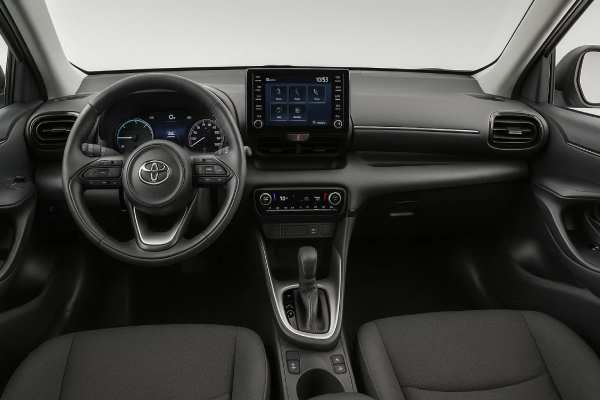
Inside, the GA-B platform allows a relatively low driving position for an SUV, so drivers coming from cars don’t feel perched on top. Toyota aimed for a “small but solid” cabin feel with sturdy switchgear and a high centre console. Rear legroom is adequate for adults over short to medium trips, and the boot offers close to 397 l seats-up in FWD models, rising further when loaded to the roof with the rear seats folded. Flexible deck boards and split-fold rear seats help the Yaris Cross punch above its size class in daily usability.
Safety and driver assistance play a central role in the model’s positioning. Toyota Safety Sense with autonomous emergency braking, lane keeping, traffic sign assist and optional adaptive cruise was part of the launch story and helped the Yaris Cross achieve strong crash ratings in both Europe and Australasia, making it attractive for young families and commuting duty alike.
Yaris Cross MXPB10 specs and data
This section focuses on the 1.5-litre MXPB10 petrol (M15A-FKS) with CVT or six-speed manual. Exact figures can vary slightly by market and equipment; always verify against the VIN-specific data for your car.
Engine and performance
| Item | Specification |
|---|---|
| Engine code | M15A-FKS “Dynamic Force” 3-cyl inline petrol |
| Displacement | 1,490 cc (1.5 l) |
| Bore × stroke | 80.5 × 97.6 mm |
| Valvetrain | DOHC, 12-valve, dual VVT-i |
| Induction / fuel | Naturally aspirated, multi-port injection (PFI) |
| Compression ratio | Around 13–14:1 (market-dependent within M15A family) |
| Max power | Around 88 kW @ 6,600 rpm (≈118 hp; ~120 PS) |
| Max torque | 145 Nm @ 4,800–5,200 rpm |
| Timing drive | Chain-driven camshafts |
| Emissions standard | Euro 6d / equivalent depending on market |
| Official combined fuel use | Approx. 4.9–5.3 l/100 km (about 48–44 mpg US) |
| Fuel tank | About 42 l (≈11.1 US gal) regular unleaded |
Real-world consumption reported by owners tends to sit around 5.5–6.5 l/100 km in mixed driving, creeping towards 7–8 l/100 km for mainly short urban trips or heavy loads, and dropping close to 5.0 l/100 km on steady highway runs at 100–110 km/h if driven gently.
Manufacturers and road tests typically quote 0–100 km/h in roughly the low-to-mid 11-second range and a top speed near 170–180 km/h for comparable Yaris Cross petrol variants. This puts the MXPB10 in the middle of the class: not rapid, but adequate for everyday use.
Transmission and driveline
| Item | Specification |
|---|---|
| Transmissions | 6-speed manual or CVT (often marketed as “Direct Shift” type) |
| Drive | Front-wheel drive (FWD) MXPB10; some markets also offer 4WD as a related code |
| Final drive (typical) | Approx. 4.0–4.2 (varies with gearbox and market) |
| Differential | Open front differential (mechanical LSD not standard) |
Chassis, dimensions and weight
| Item | Specification |
|---|---|
| Platform | TNGA-B / GA-B global small car architecture |
| Front suspension | MacPherson strut with anti-roll bar |
| Rear suspension | Torsion beam (FWD) |
| Steering | Rack-and-pinion with electric power assist; ratio around 13–14:1 |
| Front brakes | Ventilated discs |
| Rear brakes | Solid discs |
| Length | ~4,180 mm |
| Width | ~1,765 mm |
| Height | ~1,590–1,595 mm (trim and roof rails) |
| Wheelbase | 2,560 mm |
| Ground clearance | Around 170 mm |
| Drag coefficient (Cd) | Around 0.35 (FWD) |
| Kerb weight | Roughly 1,110–1,360 kg depending on spec |
| GVW | Roughly 1,415–1,775 kg |
| Turning circle | ≈10.6 m kerb-to-kerb |
Boot and interior measurements (typical values):
| Item | FWD petrol (typical) |
|---|---|
| Boot volume seats-up (to deckboard) | Around 397 l |
| Boot volume seats-folded (to tonneau/roof) | Around mid-400 l range and more to roof |
| Interior length | Around 1,840 mm |
| Interior width | Around 1,430 mm |
| Interior height | Around 1,205 mm |
Fluids, service capacities and key torque
| System | Capacity / spec (M15A-FKS FWD) |
|---|---|
| Engine oil | ~3.4 l with filter; API SN–SP, ILSAC GF-5/6B; 0W-16 commonly specified |
| Engine coolant | ~4.7 l, Toyota Super Long Life Coolant class |
| CVT fluid | ~8.4 l Toyota CVT Fluid FE (full drain) |
| Fuel tank | ~42 l petrol |
| A/C refrigerant | ≈350 g HFO-1234yf |
| Washer fluid | ~1.8–2.3 l depending on climate pack |
Spark plugs are typically iridium, with a 0.7–0.8 mm gap and tightening torque around 20–25 Nm. Wheel-nut torque on contemporary small Toyotas is commonly specified at roughly 100 Nm; always confirm your exact spec in the owner’s manual or dealer technical data.
Safety and driver assistance
Standard or available systems on the Yaris Cross range include:
- Autonomous emergency braking (AEB) with pedestrian and cyclist detection
- Lane departure alert with steering assist and lane trace assist
- Road sign assist
- Adaptive cruise control on many trims
- Blind-spot monitoring and rear cross-traffic alert on higher grades
Independent safety bodies have awarded the Yaris Cross strong overall scores, with especially good ratings for adult and child occupant protection and a solid performance for safety-assist technologies.
Yaris Cross trims and safety tech
Exact trim names differ by region, but the pattern is similar. In Europe, early Yaris Cross models use names such as Icon, Design, Dynamic, Excel and various special editions; other markets for the petrol MXPB10 have comparable “base / mid / high / sporty” structures. The key is understanding which features change mechanically and which are mostly cosmetic or comfort-oriented.
Trim and equipment overview (typical pattern)
- Entry trim (e.g., GX / Icon / X)
- Steel or 16-inch alloy wheels
- Fabric seats, manual air-conditioning or basic climate control
- 8-inch infotainment with smartphone mirroring
- Full Toyota Safety Sense including AEB and lane assist
- Mid trims (e.g., Design / GXL)
- 16–17-inch alloys, body-colour trim
- Dual-zone climate, upgraded upholstery
- Larger driver display, more USB ports
- Option or standard blind-spot monitoring, rear cross-traffic alert
- High trims and “sport” variants (e.g., Urban / Excel / GR Sport)
- 18-inch wheels, LED headlights, additional exterior styling details
- Power driver seat on some markets, part-leather or synthetic leather upholstery
- Head-up display or larger digital cluster, premium audio, ambient lighting on top models
- In some markets, a slightly firmer suspension tune and unique steering wheel or pedals
Mechanically, the MXPB10 petrol keeps the same 1.5 engine across trims. What may differ are:
- Wheel and tyre sizes (16, 17 or 18 inch), which subtly change ride comfort, noise and steering feel.
- Brake details: all use discs all-round, but pad compounds and cooling may vary on higher or sportier grades.
- Availability of all-wheel drive in related variants (with different rear suspension) in some markets, though the MXPB10 itself is FWD.
Safety ratings by trim and equipment
Crash-test programmes generally evaluate a well-equipped, high-volume variant, usually mid-range cars with common option packs. All petrol and hybrid Yaris Cross models fitted with the standard Toyota Safety Sense package share the same basic structural protection. However, some advanced features—like rear cross-traffic AEB or blind-spot monitoring—can be optional depending on grade and region.
Key hardware contributing to the ratings includes:
- A robust passenger cell with effective front and side-impact protection and a centre airbag between the front seats
- Isofix / LATCH anchor points on the outer rear seats and top tether anchors across the rear bench
- Standard electronic stability control, ABS with EBD, brake assist, and tyre-pressure monitoring
ADAS calibration implications
The Yaris Cross uses camera- and radar-based driver-assist systems mounted behind the windscreen and in the front grille. Windscreen replacement, front-end structural repairs or significant wheel-alignment changes may require calibration of these systems using Toyota’s diagnostic equipment. After any major crash repair or suspension modification, owners should confirm that Toyota Safety Sense has been recalibrated and that any ADAS-related fault codes are cleared.
Reliability and common issues
The Yaris Cross is still a relatively new model, and long-term data is limited, but early experience from owners and Toyota’s track record with the M15A engine family are reassuring.
Engine and powertrain
The M15A-FKS is a chain-driven, naturally aspirated engine designed for high thermal efficiency and low friction. It has already seen service in the Yaris and Corolla without widespread pattern failures. That gives some confidence that the Yaris Cross petrol should age well if serviced on schedule.
Commonly reported points so far:
- Cold-start noise or ticking (low–medium severity, occasional)
- Symptom: Brief rattling or ticking for a second or two on cold start.
- Likely causes: Normal VVT phasing, fuel injection noise, or in rare cases chain-tensioner lag.
- Remedy: Typically considered normal; if it persists when warm, a dealer should check timing-chain tensioner function and oil pressure.
- CVT behaviour (low severity, occasional)
- Symptom: Drivetrain whine under load or a “rubber-band” feeling during acceleration.
- Root cause: Normal behaviour of belt CVTs; sometimes exacerbated by infrequent fluid changes or high thermal loads.
- Remedy: Follow fluid-change guidance rather than stretching intervals, avoid prolonged heavy towing, and apply any CVT software updates when available.
- Minor oil seepage (low severity, rare)
- Small seeps from cam-cover or front crank seals can appear with mileage, but are not widespread. Regular inspections during servicing are usually sufficient to catch any issues early.
Electrical and 12 V battery
A recurring talking point among Yaris and Yaris Cross owners is 12 V battery discharge when the car is left unused for long periods, especially in cold climates or with connected-services telematics active.
- Symptom: Car fails to start after sitting for 2–3 weeks, or warning messages about low 12 V voltage.
- Contributors: Relatively small-capacity battery, short trip patterns, and parasitic loads from connectivity modules.
- Mitigation:
- Regular longer drives or use of a smart maintainer if the car is garaged and often left standing.
- Keeping software updates current and, where applicable, fitting an updated or higher-capacity battery as recommended by a dealer.
Body, trim and NVH
Owners of early cars mention a few minor annoyances:
- Door-card or dashboard rattles, particularly on rough surfaces.
- Occasional wind noise from mirrors or roof rails at motorway speeds.
- Squeaks from rear seats or load cover if not properly latched.
These are usually fixable with adjustment, additional felt tape or revised clips under warranty.
Recalls, TSBs and service campaigns
Publicised campaigns affecting Yaris Cross globally over this period have mostly targeted specific equipment (for example, sunroof bonding on particular builds or software updates on the hybrid). The MXPB10 petrol cars are not heavily represented in early recall lists, but every vehicle should be checked by VIN.
Owners should:
- Use their local Toyota recall checker and enter the VIN to see open recalls or customer satisfaction campaigns.
- Ask dealers to print the vehicle’s campaign history and confirm all work has been completed.
- Keep proof of recall completion and software updates in the service file.
Software-focused technical service bulletins (for infotainment glitches, warning-message logic or trip-computer behaviour) have been issued in some markets; dealers can update ECU, transmission control and infotainment software under warranty when a car shows the relevant symptoms.
Pre-purchase checks
For a used Yaris Cross MXPB10, it’s sensible to:
- Confirm full service history (oil and filters annually or every 10,000 miles / ~15,000–16,000 km).
- Check for any outstanding recalls using the official Toyota VIN tool for your region.
- Inspect tyres for uneven wear that might indicate poor alignment, pothole damage or weak dampers.
- Test all electronics, including keyless entry, camera systems and infotainment.
- Listen for CVT whine, clunks on full-lock turns, or suspension knocks over speed bumps.
Overall, the MXPB10 petrol Yaris Cross has no major systemic “red flag” issues so far; most problems are minor, intermittent or usage-related, and fixable with routine dealer support.
Maintenance schedule and buying tips
Toyota’s general guidance for Yaris-family 1.5-litre petrol engines is an annual service or every 10,000 miles (around 15,000–16,000 km), whichever comes first. Severe-duty use (mostly short trips, heavy city traffic, or frequent cold starts) calls for the shorter end of that range.
Indicative maintenance schedule (M15A-FKS, MXPB10)
(Always confirm exact intervals in the local maintenance guide.)
- Every 10,000 miles / 12 months
- Engine oil and filter (0W-16 or locally approved grade).
- Multi-point inspection, including brakes, steering, suspension, lights and fluid levels.
- Tyre rotation and pressure check; inspect for uneven wear.
- Every 20,000–30,000 miles / 2–3 years
- Cabin air filter replacement.
- Engine air filter check and replacement as required.
- Brake fluid change (often specified every 2 years).
- Every 40,000–60,000 miles / 4–6 years
- CVT fluid inspection; many independent specialists recommend replacement in this window even if the official schedule is longer, especially for heavy city or hot-climate use.
- Coolant condition check; replace per Toyota’s Super Long Life Coolant schedule (often a long initial interval, then shorter repeats).
- Full brake inspection; discs and pads may need replacement depending on driving style and environment.
- Spark plugs
- Iridium plugs typically last 60,000–120,000 km; many owners change around 90,000–100,000 km as a preventive measure.
- Timing chain
- No fixed replacement interval; instead, listen for rattle and check for timing-correlation fault codes at high mileage. Chain, guides and tensioner are renewed only when wear or noise warrants it.
- Other checks
- Auxiliary drive belt inspection every few years.
- 12 V battery health test annually after about 4–5 years of age.
Because fluid capacities are modest, staying ahead on maintenance isn’t expensive compared with many rivals. For example, around 3.4 l of engine oil per service and under 5 l of coolant at replacement points keep consumable costs manageable.
Used-buyer checklist
When inspecting a used Yaris Cross MXPB10:
- Exterior and body
- Check for poorly matched paint or panel gaps suggesting accident repair.
- Inspect underbody for rust, particularly around rear suspension mounts, exhaust hangers and subframe attachment points in salt-belt regions.
- Interior
- Test all seat-folding operations and boot floor boards; broken clips or latches are simple but annoying.
- Listen for rattles over a rough test route; check that the luggage cover and rear-seat latches are correctly adjusted.
- Mechanical test drive
- Ensure smooth, linear acceleration from the CVT with no judder when pulling away.
- Check that the steering self-centres properly and the car tracks straight with a loose grip on the wheel.
- Perform a gentle full-lock turn in a car park to listen for CV joints or wheel-bearing noise.
- Paperwork
- Confirm annual services and recall completion.
- Prefer cars with documented brake fluid and, ideally, CVT fluid changes.
- Check that any extended warranty or service plan paperwork is complete and transferable.
Recommended years and trims
For this specific MXPB10 petrol, 2021–2023 cars are broadly similar. Later cars may benefit from incremental software tweaks and minor NVH improvements, but there are no major generational changes in this window. A mid-spec trim often represents the best value: you get essential safety tech, a decent infotainment system and alloy wheels without the cost and harsher ride of 18-inch tyres.
Driving impressions and performance
On the move, the Yaris Cross MXPB10 feels light and predictable rather than overtly sporty. The GA-B platform brings a stiff structure and a relatively low centre of gravity for a tall car, allowing Toyota to tune in reasonably quick steering and controlled body movements without sacrificing comfort.
Ride and handling
- City driving: The short length and tight turning circle make parking and threading through congested streets easy. Speed-bump compliance is good, with the MacPherson-strut front and torsion-beam rear absorbing sharp hits better than many rivals on large wheels.
- Motorway: Straight-line stability is solid. Light crosswinds can be felt, as with most small crossovers, but lane-keeping assist helps on longer trips. Road roar from 18-inch tyres is the main noise source at speed; 16-inch setups are quieter and more forgiving.
- B-roads: Body roll is noticeable but progressive. Grip levels are healthy, and stability control intervenes early and smoothly when pushed beyond normal use.
Powertrain character
The 1.5-litre triple has a distinctive thrum but is well-mannered. It’s smooth at light to medium loads and only grows vocal above about 4,000 rpm. With 145 Nm of torque arriving in the midrange, everyday response is adequate rather than punchy; careful throttle calibration means the car eases off the line cleanly without surging.
- CVT: In normal mode, the gearbox mimics fixed “steps” under hard acceleration to avoid the classic CVT drone. Kickdown for overtakes takes a moment but is predictable. There is no harsh shift shock, and the box is well suited to urban driving and steady cruising.
- Manual: Where offered, the six-speed manual has a light clutch and accurate if not especially fast shift action. Short gearing in the lower ratios helps initial pick-up, while higher gears keep revs sensible at motorway speeds.
Real-world performance metrics
- 0–100 km/h is typically in the 11–12 s range depending on gearbox, load and test conditions.
- 80–120 km/h overtakes take a clear run-up, so planning is important on two-lane roads.
- Braking distances around 100–0 km/h are competitive, thanks to disc brakes on all four wheels and a relatively light kerb weight.
Efficiency and range
Using manufacturer data and owner reports as a guide:
- City: 6.5–7.5 l/100 km (about 36–31 mpg US) depending on traffic and climate.
- Highway (100–120 km/h): 5.0–6.0 l/100 km (roughly 47–39 mpg US).
- Mixed: 5.5–6.5 l/100 km (about 43–36 mpg US).
With a 42 l tank, you can expect roughly 550–700 km between fills in typical mixed use. Cold weather, short journeys, roof boxes and bike racks will reduce these figures, sometimes quite noticeably in winter conditions.
Load and towing
The official braked towing capacity is around 750 kg with an unbraked limit near 550 kg, matching many B-segment crossovers. With this modest rating, the car is comfortable pulling small trailers, light garden loads or a couple of bicycles, but it is not intended for heavy caravans. Expect a noticeable fuel-consumption penalty (20–40% increase) when towing or fully loaded on motorways, and keep speeds conservative to maintain stability and braking confidence.
How Yaris Cross stacks up
In the crowded small-SUV segment, the Yaris Cross MXPB10 competes with models such as the Renault Captur, Peugeot 2008, Nissan Juke, Volkswagen T-Cross, Hyundai Kona and Mazda CX-3. Each has its own character; the Yaris Cross trades outright performance and flashy styling for dependability, safety and sensible running costs.
Strengths compared with rivals
- Safety credentials
Few direct competitors match the combination of 5-star independent crash ratings and a comprehensive suite of driver-assistance systems as standard or widely available. The Yaris Cross also offers features such as a centre airbag and extensive child-seat provisions. - Efficiency and ownership costs
The M15A-FKS petrol engine offers near-hybrid economy if driven smoothly, and modest oil and fluid capacities keep service bills under control. Toyota’s reputation for reliability and residual values also works in your favour when selling later. - Compact yet practical packaging
The footprint is close to the donor Yaris hatch, but the higher seating position and generous boot space make it more versatile than many similarly sized crossovers. It’s especially appealing for city-based households that still need occasional family or holiday capability. - Well-rounded dynamics
While not sporty, the Yaris Cross feels coherent and confidence-inspiring, with predictable steering and secure braking. The ride is more forgiving than some rivals on large wheels, especially if you choose 16- or 17-inch tyres.
Weaknesses or trade-offs
- Performance headroom
Turbocharged rivals (for example, small 1.0–1.3 turbo engines) can feel stronger in mid-range acceleration, particularly at motorway speeds or when fully loaded. Drivers who regularly tackle steep climbs or heavily loaded long journeys may find the naturally aspirated 1.5 modest. - Cabin material perception
The interior is functional and robust but uses utilitarian plastics in places. Some competing models offer more soft-touch surfaces, design flourishes and ambient lighting that can feel more “premium” even if mechanical robustness is similar. - 12 V battery and connectivity quirks
If you leave the car parked for long periods without a maintainer, the small battery and telematics systems can conspire to drain it faster than expected—something not unique to Toyota but worth factoring into ownership habits if you travel frequently or store the car for weeks at a time.
Overall, the 2021–2023 Yaris Cross MXPB10 suits buyers who value safety, reliability, compact external dimensions and good fuel economy more than raw performance or luxury trim. For many urban and suburban owners, that balance makes it a rational, low-stress choice with predictable running costs and strong resale prospects.
References
- Toyota Yaris Cross Technical Specifications 2021 (Technical Data Sheet)
- Toyota Rolls Out All-New Yaris Cross in Japan 2020 (Press Release)
- Toyota Yaris Cross 2021 2021 (Safety Rating)
- Toyota Yaris Cross Safety Rating & Report 2021 (Safety Rating)
- Toyota Yaris Cross | Specifications 2024 (Official Specifications)
Disclaimer
This article is for informational purposes only and does not replace professional diagnosis, repair guidance, or VIN-specific service information. Specifications, torque values, maintenance intervals and procedures can vary by market, model year, trim level and optional equipment. Always confirm details against your vehicle’s official owner’s manual, service manual and local Toyota dealer or authorised repairer before carrying out any work.
If you found this guide useful, you are welcome to share it with other owners or buyers on social media or forums to help support our work.