
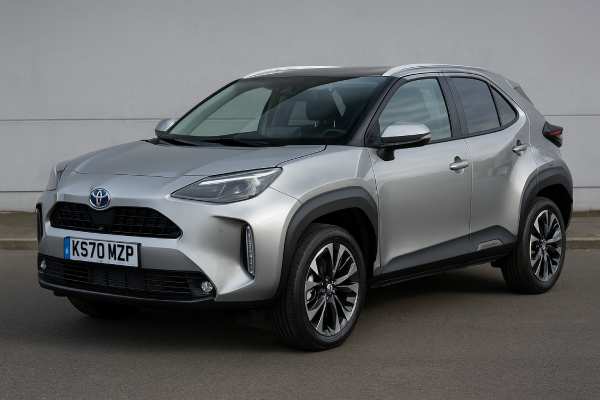
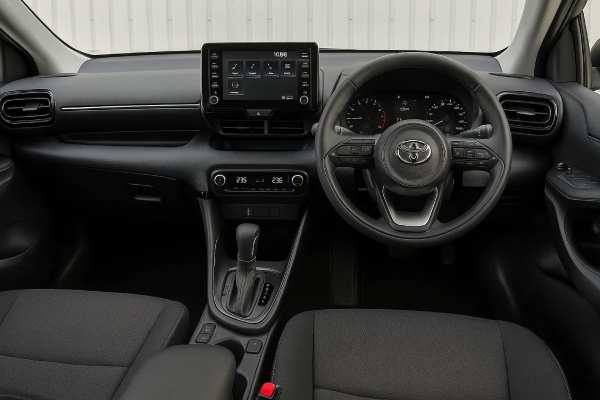
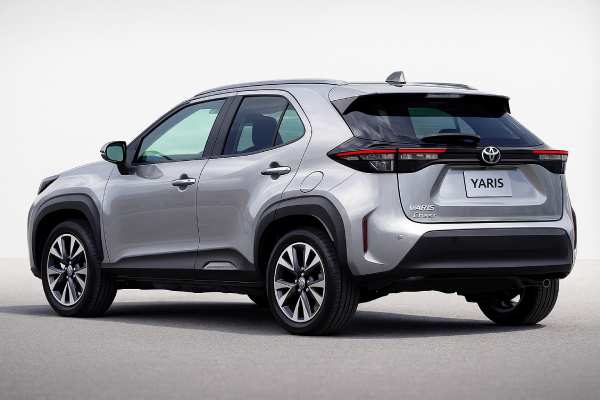
The Toyota Yaris Cross Hybrid (MXPJ10) takes the Yaris hatchback’s efficient drivetrain and wraps it in a small SUV body with extra ride height, a more upright seating position and a larger, more versatile cargo area. Under the bonnet sits the 1.5-litre M15A-FXE three-cylinder Atkinson-cycle engine paired with an electric motor and a compact lithium-ion battery. Together, they deliver 116 hp of system output through an e-CVT, prioritising low fuel consumption and smooth urban performance over outright speed.
For many owners, the appeal lies in the combination of low running costs, easy city manners and Toyota’s strong safety and reliability reputation. Real-world fuel use can sit in the 4–5 l/100 km range when driven sensibly, and the compact footprint makes parking straightforward even in dense urban areas. This guide focuses on the 2021–2023 MXPJ10 front-wheel-drive hybrid and walks through its technical details, reliability patterns, maintenance needs and how it compares to rival crossovers.
Owner Snapshot
- Fourth-generation Toyota hybrid with 1.5-litre Atkinson triple, 85 kW system output and very low real-world fuel use for a small SUV.
- Compact footprint but useful 320–397 l boot and practical cabin, with the option of AWD-i in related MXPJ15 variants for poor-weather traction.
- Strong independent crash-test performance and a comprehensive Toyota Safety Sense driver-assistance package.
- Watch for 12 V battery drain on cars that sit for weeks, and ensure all hybrid and ADAS recalls or software updates have been completed.
- Typical hybrid service interval is annually or every 10,000 miles (around 15,000–16,000 km), whichever comes first.
Guide contents
- Toyota Yaris Cross Hybrid context
- Yaris Cross MXPJ10 hybrid specs
- Hybrid Yaris Cross trims and safety
- Hybrid reliability issues and fixes
- Maintenance planning and buying guide
- Driving experience and hybrid performance
- Yaris Cross hybrid versus rivals
Toyota Yaris Cross Hybrid context
The MXPJ10 Yaris Cross Hybrid is Toyota’s answer to drivers who want SUV stance and flexibility without giving up supermini running costs. It sits on the GA-B platform shared with the Yaris hatch, but the body is taller, with a slightly longer rear overhang and a higher driving position. The result is a car that still feels small in town yet offers a boot that comfortably swallows family luggage or weekly shopping and a cabin that works well for two adults plus children.
At the heart of this version is the M15A-FXE 1.5-litre Atkinson-cycle engine. Unlike the M15A-FKS used in the non-hybrid Yaris Cross, the FXE variant is optimised to work with the electric motor, sacrificing some stand-alone horsepower in favour of thermal efficiency. It runs a high compression ratio and uses intelligent variable valve timing, allowing the engine to spend more of its time in efficient operating zones. The petrol engine is assisted by a permanent magnet electric motor on the front axle and a compact lithium-ion battery located under the rear seats.
System power is rated at 116 hp (85 kW). On paper, that does not sound impressive for an SUV, but the hybrid system can deliver strong low-speed torque and uses the e-CVT to keep the engine in its most effective rev band. In practice, the Yaris Cross Hybrid feels more responsive at city speeds than an equivalent naturally aspirated petrol engine, especially from a standstill or when rolling gently.
Design-wise, the Yaris Cross leans into the “mini RAV4” theme. Squared-off arches, a relatively vertical tailgate and SUV-style cladding give it a tougher look than many soft, rounded rivals. Despite that stance, the car remains an urban tool at heart. The length of roughly 4,180 mm and width of around 1,765 mm mean it fits easily into standard spaces and multi-storey car parks, and the 10.6 m turning circle keeps manoeuvring stress low.
Hybrid technology also shapes the ownership experience. There is no plugging in, no charge cables, and no need to plan routes around charging stations. The car harvests energy through regenerative braking and uses the petrol engine as a generator when needed. In heavy traffic, this means more time in electric mode, lower fuel use and less brake wear. For many buyers making mostly short mixed journeys, the MXPJ10 offers a compelling blend of SUV style and hybrid efficiency without changing daily habits.
Yaris Cross MXPJ10 hybrid specs
This section focuses on the 2021–2023 Yaris Cross Hybrid MXPJ10, the front-wheel-drive model using the M15A-FXE engine, e-CVT and lithium-ion hybrid battery. All values are approximate and can vary slightly by market, trim and test standard.
Powertrain and efficiency
| Item | Specification |
|---|---|
| Engine code | M15A-FXE Hybrid Dynamic Force |
| Engine type | 1.5-litre inline 3-cylinder, Atkinson cycle |
| Displacement | 1,490 cc (1.5 l) |
| Bore × stroke | 80.5 × 97.6 mm |
| Valvetrain | DOHC, 12-valve, VVT-iE (intake), VVT-i (exhaust) |
| Induction / fuel | Naturally aspirated, multi-port injection |
| Compression ratio | 14.0:1 |
| Engine max power | ~67 kW (90–92 hp) @ 5,500 rpm |
| Engine max torque | 120 Nm @ 3,600–4,800 rpm |
| Front motor type | Permanent magnet synchronous (MG2) |
| Front motor output | ~59 kW, 141 Nm |
| Total system output | 85 kW (116 hp) |
| Hybrid battery | Lithium-ion, ~177.6 V, 48 modules |
| Fuel tank | 36 l petrol (95 RON recommended) |
| Emissions standard | Euro 6d / equivalent regional standard |
Official WLTP combined fuel consumption is roughly 4.4–5.0 l/100 km for front-wheel-drive models, depending on wheels and trim. Real-world mixed figures in owner hands commonly fall around 4.5–5.5 l/100 km with gentle driving, rising toward 6.0–6.5 l/100 km for mainly high-speed motorway travel, winter use or frequent short trips.
Green-focused testing has shown overall system efficiency that comfortably beats most non-hybrid small SUVs, with particularly strong city-cycle results where the car can operate in EV mode for a meaningful share of time.
Transmission and driveline
| Item | Specification |
|---|---|
| Transmission | e-CVT (electronically controlled continuously variable transmission) |
| Drive layout | Front-wheel drive (MXPJ10) |
| AWD option | Separate MXPJ15 AWD-i with additional rear electric motor |
| Differential | Conventional open front differential |
| Drive modes | Normal, Eco, Power; EV mode for short low-speed operation |
The e-CVT is essentially a planetary gearset combining engine and motor output, using software to simulate gear steps under heavy acceleration. There is no traditional clutch, torque converter or stepped gear change in normal operation.
Chassis, dimensions and weights
| Item | Specification |
|---|---|
| Platform | TNGA-B (GA-B) small car architecture |
| Front suspension | MacPherson strut with anti-roll bar |
| Rear suspension | Torsion beam (FWD); double wishbone on some AWD-i variants |
| Steering | Electric power-assisted rack and pinion; turning circle ≈10.6 m |
| Brakes | Front ventilated discs, rear solid discs, ABS with EBD and brake assist |
| Length | ≈4,180 mm |
| Width | ≈1,765 mm |
| Height | ≈1,595 mm (depending on roof rails) |
| Wheelbase | 2,560 mm |
| Ground clearance | Around 170 mm |
| Kerb weight | ≈1,170–1,360 kg (trim-dependent) |
| GVW | Around 1,750 kg |
| Drag coefficient (Cd) | ≈0.35 (FWD) |
Boot capacity with five seats up ranges from about 320 l (AWD-i due to rear hardware) to roughly 397 l on some FWD configurations, measured to the load cover. With the rear seats folded, load capacity exceeds 1,000 l when loaded to the roof, and the adjustable boot floor and split-folding rear bench enhance flexibility.
Performance and capability
| Metric | Approximate value (FWD hybrid) |
|---|---|
| 0–100 km/h | ~11.2 seconds |
| Top speed | About 170 km/h |
| Braked towing capacity | Around 750 kg |
| Unbraked towing | Approx. 550 kg |
| Roof load | Typically around 60–75 kg (check local documentation) |
These figures are sufficient for light trailers and bike racks, but the Yaris Cross Hybrid is not a heavy tow vehicle.
Fluids, capacities and key service specs
| System | Typical capacity / spec (MXPJ10) |
|---|---|
| Engine oil | ~3.6 l with filter; 0W-16 (Toyota hybrid spec) |
| Engine coolant | ~4.7 l Toyota Super Long Life Coolant |
| e-CVT transaxle fluid | Toyota WS-type ATF, capacity varies with drain method |
| Brake fluid | DOT 3 or DOT 4, changed on time basis |
| A/C refrigerant | HFO-1234yf, charge quantity around mid-300 g |
| Spark plugs | Iridium, ~0.7–0.8 mm gap, change at long intervals |
Spark plug and coolant intervals are long for hybrids, but they still need to be done based on mileage and age. Because hybrid engines often run colder and with more stop-start events, correct oil grade and timely changes are particularly important for long-term health.
Safety and driver assistance highlights
The Yaris Cross Hybrid scores strongly in independent crash tests, with high percentages for adult and child occupant protection and robust performance for vulnerable road users and safety assist. Key hardware and features include:
- Strong passenger cell with multiple load paths and integrated hybrid protection
- Front, side, curtain and centre airbags in many markets
- ISOFIX / i-Size anchor points on outer rear seats plus top tether points
- Autonomous emergency braking that can recognise vehicles, pedestrians and cyclists
- Lane departure alert with steering assist and lane trace assist on marked roads
- Adaptive cruise control and traffic sign recognition on most trims
- Optional blind-spot monitoring and rear cross-traffic alert, depending on grade
Hybrid Yaris Cross trims and safety
Names and equipment vary regionally, but the Yaris Cross Hybrid line-up usually follows a familiar pattern: a well-equipped base model, comfort-oriented mid trims and more feature-rich or style-focused top trims. The mechanical hybrid package remains consistent across MXPJ10 variants, which simplifies used buying and maintenance decisions.
Typical trim structure (European-style markets)
- Entry or “Icon” type trims
These often include 16-inch wheels (steel or alloy), manual or single-zone climate control, standard Toyota Safety Sense, basic infotainment with smartphone mirroring and a small digital instrument cluster. The hybrid drivetrain, e-CVT and lithium-ion battery are the same as on more expensive grades. - Mid trims (Design, GXL, similar)
These add alloy wheels (16–17 inch), upgraded seat fabrics or partial synthetic leather, dual-zone climate control, a larger infotainment screen and extra convenience features such as keyless entry or rear camera. They frequently introduce optional or standard blind-spot monitoring and rear cross-traffic alert. For many buyers, this level balances features with value. - High trims (Excel, Urban, Z, GR Sport etc.)
High-grade models may move to 18-inch wheels, LED headlights and more aggressive styling. GR Sport variants add cosmetic and subtle suspension tweaks for a slightly firmer, more direct feel. Top trims can include head-up display, full digital instruments, premium audio and more advanced navigation or connected services.
In most markets, both FWD (MXPJ10) and AWD-i (MXPJ15) versions are available, though not all trims offer both. AWD-i models use an additional small electric motor on the rear axle and a double-wishbone rear suspension arrangement, improving traction and ride sophistication but slightly reducing boot space and increasing weight.
Safety ratings by trim and year
Crash testing organisations generally rate a representative model rather than every trim. For Yaris Cross Hybrid, the core bodyshell and safety structure is shared across the range, so all MXPJ10 variants benefit from the main protection measures. What can differ is the presence of certain active systems:
- Some entry-level models may lack rear cross-traffic alert or blind-spot monitoring.
- Higher trims may gain more sophisticated LED headlight units, potentially improving night-time visibility and earning better headlight performance ratings.
- Parking sensors, 360° camera systems or more advanced parking aids may also be limited to mid and upper trims.
When comparing two used cars, it is worth checking equipment lists rather than assuming all “Hybrid” models share the same safety and driver assistance specification.
Safety systems and ADAS details
The Toyota Safety Sense suite on Yaris Cross Hybrid typically includes:
- Pre-collision system (PCS) with pedestrian and cyclist detection
- Lane departure alert with steering assist and lane trace assist
- Adaptive cruise control (often full-range on automatic hybrids)
- Road sign assist that reads speed limit and some warning signs
- Automatic high beam or adaptive high-beam system on some trims
Additional systems may include:
- Blind-spot monitor with warning lights in the mirrors
- Rear cross-traffic alert to help when reversing out of parking spaces
- Emergency steering assist in certain markets
- Emergency call system that contacts services in the event of a serious crash
Because these systems rely on a forward-facing camera (often behind the windscreen) and radar sensor behind the grille, collision repairs or windscreen replacements can require careful calibration. After such work, it is important that the workshop uses the correct Toyota procedures to re-align sensors and verify correct system function with a road test and diagnostic scan.
Hybrid reliability issues and fixes
The Yaris Cross Hybrid is built on Toyota’s fourth-generation hybrid hardware, which benefits from experience gained on earlier Prius, Auris and Yaris hybrids. Overall, the MXPJ10 has a positive early reliability record, though several themes and specific service actions are worth understanding.
Hybrid drivetrain and engine
The M15A-FXE engine and hybrid transaxle use proven concepts: an Atkinson-cycle combustion engine, a robust planetary gearset and an electric motor with few moving parts. As a result, traditional automatic-gearbox problems such as clutch wear or gearshift shock are largely absent.
Common observations and points to monitor:
- Cold start noise (low severity, occasional)
A brief rattle or ticking at cold start is common on modern engines with variable valve timing and can be normal. However, prolonged noise when warm may warrant inspection for timing-chain tensioner issues or abnormal wear. Using the correct low-viscosity oil and respecting warm-up periods helps minimise stress. - Hybrid system warning lights (low–medium severity, occasional)
“Check hybrid system” messages can be triggered by a wide range of sensors, from minor voltage deviations to brake-related faults. Many are solved with software updates or replacement of auxiliary components (such as brake actuators or sensors) rather than core hybrid parts. A proper fault-code scan is essential; guessing or simply clearing codes is not advisable. - Brake-feel concerns (low severity, occasional)
Because the car blends regenerative and friction braking, the pedal feel is different from a conventional car. Some owners report a slightly inconsistent pedal at low speeds, especially over bumps or at very low temperatures. Toyota has released software optimisations on related models to refine this blending; ensuring your car has the latest calibration can help.
High-voltage battery and electrics
The lithium-ion hybrid battery is air-cooled and designed to last the life of the vehicle under normal use. In many markets, hybrid-system warranties cover up to 8–10 years or a significant mileage if annual hybrid health checks are performed.
Issues to be aware of:
- Degradation and health (low severity, rare in early years)
Most Yaris Cross hybrids show minimal range or efficiency loss in the first years. Severe degradation in this period is unusual and may indicate cell imbalance or cooling problems. Hybrid health checks at the dealer can provide a snapshot of battery condition and are valuable documentation for resale. - Hybrid cooling and vents
Blocked cooling vents (for example, from pet hair or debris if the vent is near the rear seats) can increase battery temperatures. Periodic inspection and gentle cleaning of intake grilles helps, especially for cars frequently carrying rear passengers or luggage stacked high. - 12 V battery discharge (low–medium severity, relatively common)
As with many modern connected hybrids, the relatively small 12 V battery can discharge if the car is left parked for weeks or used only for very short trips. Symptoms include non-start or spurious warning messages. Mitigation involves occasional longer drives to fully recharge, the use of a smart maintainer for rarely driven cars, and replacement of the 12 V battery when tests show it marginal.
Body, trim and corrosion
The Yaris Cross uses modern anti-corrosion processes, and serious rust in the first years is rare. However, considering long-term ownership:
- Check underbody and subframes in salt-belt regions, focusing on mounting points and seams.
- Inspect door and hatch seals, as water ingress into the boot can damage wiring or the 12 V battery.
- Interior rattles from door cards, the rear seat or luggage cover are reported by some owners; most are cured with adjustments or additional felt tape under warranty.
Recalls, technical service bulletins and campaigns
Like most new models, the Yaris Cross Hybrid has been subject to targeted recalls and service campaigns, especially early in its life. These have included:
- Hybrid powertrain software updates on early build vehicles to prevent rare shutdown scenarios under specific conditions.
- Updates or checks for the pre-collision system and related radar/camera units to ensure correct operation.
- In some markets, campaigns addressing panoramic roof glass adhesion on cars fitted with a panoramic roof.
The details depend heavily on build date, market and equipment, so the safest approach is to:
- Run the vehicle’s VIN through your region’s official Toyota recall checker.
- Ask a dealer to print the recall and service-campaign history and confirm completion.
- Ensure that any hybrid-system or brake-related campaigns have been done before you buy.
Pre-purchase reliability checks
For a used MXPJ10, sensible pre-purchase steps include:
- Verifying a full main-dealer or specialist service record with annual visits.
- Requesting a recent hybrid health check and, if possible, a printout.
- Confirming that all open recalls or safety campaigns show as completed.
- Inspecting the 12 V battery age and testing it if the car is more than four years old.
- Checking for warning lights or stored fault codes with a compatible scan tool, focusing on hybrid, brake, ADAS and airbag systems.
Overall, the Yaris Cross Hybrid’s early reliability profile is strong, and most problems encountered are software-related or minor ancillary issues rather than major hybrid hardware failures.
Maintenance planning and buying guide
Hybrid or not, the Yaris Cross is still a machine of fluids, filters and wear parts. The good news is that Toyota has kept maintenance straightforward, and the hybrid system reduces wear on some components, such as brakes, compared with an equivalent non-hybrid.
Core maintenance schedule (typical guidance)
Always confirm exact intervals in your market’s service booklet, but for the 1.5 Hybrid (MXPJ10/MXPJ15) a sensible baseline is:
- Every 10,000 miles / 12 months (≈15,000–16,000 km)
- Engine oil and filter change using the specified 0W-16 grade.
- Visual inspection of hybrid components, high-voltage cables and cooling vents.
- Check all fluids, belts, hoses and lights.
- Tyre rotation, pressure check and alignment check if abnormal wear is seen.
- Every 20,000–30,000 miles / 2–3 years
- Replace cabin air filter (more often in dusty or urban environments).
- Inspect and replace engine air filter as needed.
- Change brake fluid (commonly every two years by time).
- Detailed inspection of suspension bushes, ball joints and steering components.
- Every 40,000–60,000 miles / 4–6 years
- Inspect e-CVT and differential fluid; some regions treat the transaxle as “lifetime fill,” but proactive owners often choose a fluid change in this window, particularly for heavy city use.
- Check coolant condition; replace according to Toyota’s long-life coolant schedule (often an extended first interval, then shorter follow-ups).
- Thorough brake inspection; many hybrid owners find pads and discs last longer, but low annual mileage can increase corrosion.
- Longer-term items
- Spark plugs at around 90,000–120,000 km, depending on local guidance.
- Auxiliary drive belt inspection and replacement based on condition.
- 12 V battery testing annually from year 4–5 onward, replacing when capacity drops.
- Hybrid battery checks as part of the annual health check; extended hybrid warranty programmes often require these.
Because there is no conventional alternator or starter motor (these functions are integrated into the hybrid system), there are fewer traditional failure points, but it is still important to use the correct fluids and follow the time-based schedule even at low mileage.
Fluid specs and key torque values for planning
- Engine oil: 0W-16, API SN or later, ILSAC GF-5/6; capacity about 3.6 l with filter.
- Coolant: Toyota Super Long Life Coolant (premixed), around 4.7 l for the engine loop.
- e-CVT transaxle: Toyota WS fluid; workshop capacity depends on drain method.
- Wheel nuts: typically around 100 Nm (always verify for your specification).
- Spark plugs: iridium plugs tightened to about 20–25 Nm.
These figures help when comparing workshop quotes or talking to independent specialists.
Buyer’s guide: what to look for
When shopping for a Yaris Cross Hybrid, use a structured checklist:
- Exterior and body
- Look for consistent paint finish and panel gaps. Overspray or mismatched paint can indicate accident repairs.
- Pay attention to the windscreen and front bumper area; ADAS sensors live here, so poorly repaired damage could affect systems such as AEB and lane assist.
- Check for rust starting on underbody hardware in harsh climates, especially around rear subframes and exhaust mounts.
- Interior and electronics
- Verify that keyless entry, push-button start and all power windows work smoothly.
- Test infotainment, Bluetooth and navigation, as early software versions occasionally had glitches later fixed by updates.
- Confirm that all warning lights illuminate briefly at ignition-on and then go out.
- Hybrid system behaviour
- From cold, listen for abnormal rattles or knocking. A short, light noise is common; persistent clatter is not.
- In EV mode at low speeds, ensure transitions between electric and engine power are smooth and that there are no harsh jolts.
- Check that the energy-flow display shows charging during deceleration and that EV mode engages readily with gentle throttle.
- On-road test
- Note steering feel and straight-line tracking; the car should not pull to one side.
- Under moderate braking, the car should decelerate smoothly without pedal pulsation or grabbing.
- Listen for whines or clunks from the transaxle; some electric motor whirr is normal, but loud, metallic noises are not.
- Paperwork and history
- Prioritise cars with annual services documented at Toyota or reputable specialists.
- Confirm hybrid health checks and any extended warranty coverage for the hybrid system.
- Ask the seller for a recall-completion printout or confirm via the official Toyota recall checker.
Long-term durability outlook
If maintained correctly, the MXPJ10 Yaris Cross Hybrid is likely to be a durable, low-drama car. The hybrid system reduces mechanical wear in city driving, and the Atkinson-cycle engine works relatively gently compared to a non-hybrid engine doing the same work. As with any modern vehicle, electronics and software will become more important as the car ages, but Toyota’s hybrid track record suggests that HV battery and transaxle failures should remain rare outliers rather than a normal cost of ownership.
Driving experience and hybrid performance
On the road, the Yaris Cross Hybrid aims to feel reassuring and easy rather than sporty. Its chassis tuning, seating position and hybrid powertrain are optimised for day-to-day commuting, city errands and light touring.
Ride, handling and refinement
Straight-line stability is good for a small SUV, helped by the GA-B platform’s stiffness and relatively wide track. At motorway speeds, the car tracks true and doesn’t feel nervous, though strong crosswinds can still be felt due to the tall profile. Lane trace assist can reduce fatigue on long journeys provided markings are clear.
Around town, the ride is generally comfortable, especially on 16- or 17-inch wheels. The suspension copes well with speed bumps and potholes, and the torsion-beam rear setup is tuned for predictable, safe behaviour. On some 18-inch wheel/tyre combinations, sharper edges and expansion joints can be felt more clearly, and road noise is more noticeable on coarse surfaces.
In bends, the Yaris Cross rolls a little but remains secure and well controlled. The steering is light at parking speeds and gains modest weight as speed increases, though feedback is more filtered than in sportier hatchbacks. Stability control is calibrated to intervene early but smoothly; most drivers will rarely see the warning light outside extreme conditions.
Cabin noise is acceptable for the segment. At low speeds and in EV mode the car is very quiet; at steady 100–120 km/h cruising, wind and tyre noise become the primary sounds. When the engine revs rise under heavy acceleration, it is clearly audible but not harsh, and Toyota has worked to better match engine speed to vehicle acceleration to reduce the classic “CVT drone” effect.
Hybrid powertrain character
From rest, the electric motor provides instant torque, so the car moves off briskly with very little noise. At light throttle in urban traffic, it will often stay in electric mode up to moderate speeds, only starting the petrol engine when extra power is needed or the battery charge drops.
Throttle mapping is tuned for smoothness rather than snap. In Eco mode, the pedal response is deliberately soft to encourage efficient driving; in Normal, it feels more linear; Power mode sharpens response for better briskness at the expense of economy. The e-CVT responds quickly to demands and tries to simulate stepped changes under strong acceleration so engine speed does not sit at one high note.
The transition between EV and petrol operation is usually subtle. You may feel a faint vibration and see the energy-flow graphic change, but well-maintained cars with correct engine mounts and software updates rarely exhibit harshness at these points.
Real-world efficiency and range
Actual consumption depends heavily on driving style, climate, terrain and wheel size, but realistic ranges are:
- City driving: 3.8–5.0 l/100 km (62–47 mpg US) with careful driving and regular opportunities for regenerative braking.
- Mixed driving: 4.3–5.5 l/100 km (55–43 mpg US) for a mix of urban, suburban and motorway use.
- Motorway (100–120 km/h): 5.0–6.0 l/100 km (47–39 mpg US), especially in winter or with roof-mounted carriers.
With a 36 l fuel tank, many owners see between 650 and 800 km per fill under mixed conditions. Cold weather, frequent short trips where the engine does not fully warm up, and heavy use of heating or air-conditioning can increase consumption noticeably.
AWD-i behaviour (related variant)
Although MXPJ10 is FWD, some buyers cross-shop the closely related AWD-i version (MXPJ15). AWD-i uses a separate rear electric motor that engages when extra traction is needed, such as on snow, gravel or steep wet ramps. The system is proactive rather than purely reactive, helping keep wheelspin in check without the weight and complexity of a mechanical centre differential. For owners in snow-prone regions or rural areas, AWD-i can be worth considering, bearing in mind the slight hit to boot space and fuel economy.
Load carrying and towing
With passengers and luggage on board, the hybrid system still copes well in normal driving, but uphill motorway climbs will see the engine revving higher and staying there longer. Planning overtakes and using Power mode can help in these situations. The modest towing limit (around 750 kg braked) suits small trailers, camping gear or bike carriers rather than full-size caravans. When towing close to the limit, expect a 30–50% increase in fuel use and reduced acceleration, and keep an eye on transmission and brake temperatures during long descents or mountain driving.
Overall, the Yaris Cross Hybrid delivers a calm, efficient and predictable driving experience. It is not designed as a performance SUV, but its precise low-speed control, smooth power delivery and low running costs make it an easy car to live with.
Yaris Cross hybrid versus rivals
The Yaris Cross Hybrid competes in a crowded field of small crossovers, including the Renault Captur, Peugeot 2008, Nissan Juke, Hyundai Kona, Kia Stonic and Volkswagen T-Cross, among others. Many of these use small turbocharged petrol engines, and a few offer mild-hybrid or full-hybrid options. Understanding where the MXPJ10 sits helps clarify whether it fits your priorities.
Where the Yaris Cross Hybrid shines
- Fuel economy and emissions
Few rivals in this size class match the combination of low fuel consumption and simple ownership. Full-hybrid operation means efficient stop-start performance and significant electric running in town without the need for plug-in charging. Drivers doing mostly urban and suburban journeys will see the biggest benefit. - Proven hybrid hardware
Toyota’s long experience with hybrids is still a major selling point. The fourth-generation system in the Yaris Cross builds on lessons from millions of earlier hybrid vehicles, and early field data suggests that the combination of M15A-FXE engine, e-CVT and lithium-ion battery is robust when serviced correctly. - Safety and driver assistance
Standard active safety equipment is generous. Many competitors charge extra for features such as adaptive cruise, lane trace assist or AEB with cyclist and night-time pedestrian detection, whereas Yaris Cross Hybrid often includes them from mid trim upwards and sometimes even at entry level, depending on market. - Compact yet practical packaging
Compared with some swoopier crossovers, the relatively boxy rear and high roofline give more usable boot volume and headroom. For families stepping up from a supermini, the Yaris Cross feels like a meaningful upgrade in usability without becoming cumbersome to park.
Trade-offs versus other options
- Performance headroom
Turbocharged 1.0–1.3-litre rivals can feel livelier in motorway overtakes and steep climbs. If you regularly drive fully loaded at high speed or in mountainous regions, you may prefer the mid-range punch of a turbo engine or a more powerful hybrid. - Interior ambience and infotainment
Some competitors, particularly from European brands, offer more striking interior designs, larger screens and a more “premium” use of soft materials. The Yaris Cross interior prioritises robustness and function over visual drama; whether that feels like a plus or minus depends on taste. - Purchase price in some markets
The hybrid drivetrain and safety kit can make initial purchase prices higher than non-hybrid rivals on paper. Over several years, fuel savings and typically strong residual values often compensate, but it is worth running total-cost-of-ownership comparisons if you are a low-mileage driver.
Who the Yaris Cross Hybrid suits best
- Urban and suburban drivers wanting one car for commuting, school runs and weekend trips.
- Owners who value low fuel bills, high safety and predictable reliability more than outright performance or luxury trim.
- Buyers planning to keep the car for many years, benefiting from the hybrid system’s long-term efficiency and the brand’s residual values.
Drivers seeking a sporty driving experience, high towing capacity or a very plush interior might prefer other options in the segment. For everyone else, especially those focused on cost-effective, low-stress ownership, the 2021–2023 Toyota Yaris Cross Hybrid MXPJ10 makes a compelling case.
References
- TOYOTA YARIS CROSS TECHNICAL SPECIFICATIONS 2021 (Technical Data Sheet)
- All-New Toyota Yaris Cross 2021 (Press Release)
- Toyota Yaris Cross 2021 2021 (Safety Rating)
- Toyota Yaris Cross 1.5 Hybrid – 2022 Green NCAP Datasheet 2022 (Efficiency and Emissions Test)
- Toyota Yaris service intervals: all models covered 2023 (Service Interval Guide)
Disclaimer
This article is for informational purposes only and does not replace professional diagnosis, repair advice or VIN-specific service information. Specifications, torque values, maintenance intervals and procedures can vary by market, model year, equipment level and local regulations. Always confirm details against your vehicle’s official owner’s manual, workshop documentation and the guidance of an authorised Toyota dealer or qualified technician before carrying out any work.
If you found this guide useful, you are welcome to share it with other owners or buyers via social media or forums to help support accurate, evidence-based information for the Toyota community.