
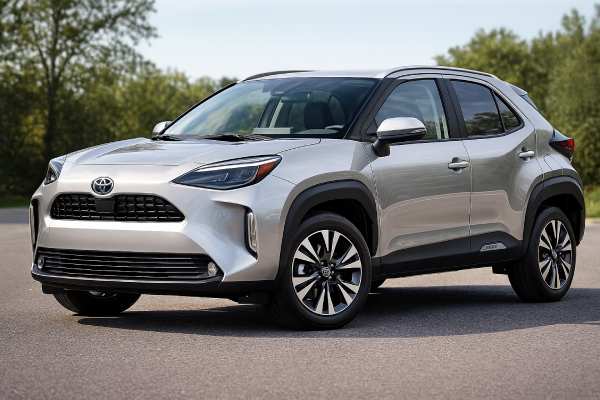
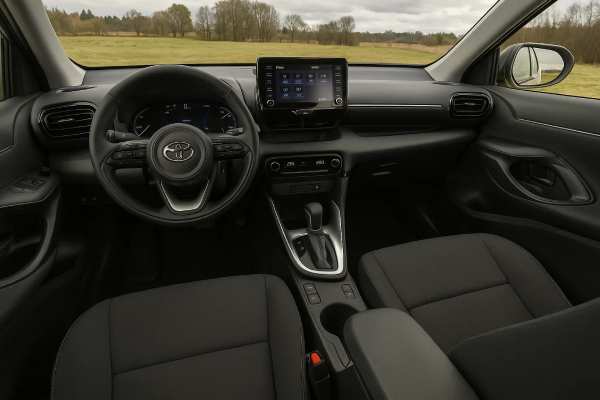
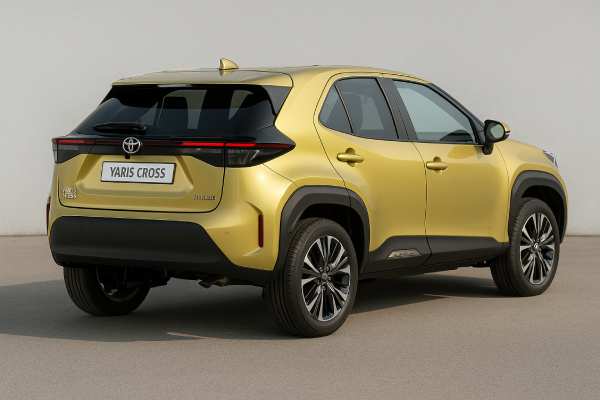
The Toyota Yaris Cross AWD-i (MXPJ15) is the all-weather version of Toyota’s small hybrid SUV. It takes the same 1.5-litre M15A-FXE hybrid powertrain used in the front-wheel-drive Yaris Cross and adds an electric rear axle, giving extra traction on wet, snowy or loose surfaces without the weight and complexity of a traditional mechanical all-wheel-drive system. System power remains at 116 hp, but the rear motor steps in automatically when the front wheels begin to slip or when you accelerate hard from low speeds.
For everyday owners, this means the car behaves like a front-drive hybrid most of the time, then quietly shuffles power rearwards when conditions demand it. The result is a compact SUV that is easy to park, economical in town and noticeably more relaxed to drive in winter or on unpaved access roads. This guide focuses on the 2021–2023 MXPJ15 AWD-i and walks through its specs, reliability patterns, running costs and how it compares with rival small crossovers.
Top Highlights
- Full-hybrid 1.5-litre system with an electric rear axle, providing extra traction with only a small fuel-consumption penalty versus the FWD hybrid.
- Compact TNGA-B platform and around 170 mm ground clearance make it city-friendly yet capable on rough tracks and winter roads.
- Strong crash-test performance and a wide Toyota Safety Sense driver-assistance suite available across the range.
- Slightly smaller boot than FWD versions and a little more road and drivetrain noise on coarse surfaces.
- Typical service interval is every 10,000 miles or 12 months (≈15,000–16,000 km / 1 year), with annual hybrid health checks recommended.
What’s inside
- AWD-i Yaris Cross overview
- MXPJ15 AWD-i specs and data
- AWD-i trims, options and safety
- AWD-i reliability and service actions
- Maintenance and buyer advice
- On-road and winter performance
- AWD-i versus competing crossovers
AWD-i Yaris Cross overview
The MXPJ15 Yaris Cross AWD-i is the traction-focused member of the Yaris Cross family. It shares its GA-B platform and hybrid system with the front-wheel-drive MXPJ10, but adds an independent electric motor at the rear axle. There is no driveshaft linking the front and rear; instead, the electronic control system decides when to energise the rear motor based on wheel slip, throttle position and vehicle speed.
Up front, the M15A-FXE 1.5-litre Atkinson-cycle petrol engine provides around 67 kW (about 90–91 hp) and 120 Nm. It is paired with a primary front electric motor (MG2) that delivers up to roughly 59 kW and 141 Nm. At the back, a compact electric motor adds modest power and torque, sufficient to stabilise the car on slippery surfaces and assist traction at low to medium speeds. Overall system output is 85 kW (116 hp), the same headline figure as the FWD hybrid.
In everyday use, the AWD-i Yaris Cross behaves like a regular hybrid. It can pull away silently in EV mode, start the petrol engine seamlessly when extra power is needed and use the e-CVT to keep the engine in its efficient rev range. The extra rear hardware adds some weight and slightly raises fuel consumption compared with the FWD model, but the difference is small enough that most owners will not notice day to day.
The AWD-i system really comes into its own in poor weather and on marginal surfaces. On wet cobbles, muddy lanes, gravel driveways or fresh snow, the rear motor works with the front axle to reduce wheelspin and help the car pull away evenly. Unlike a traditional 4×4 system with a locked centre differential, it disengages at higher speeds or when grip is plentiful, so there is no constant mechanical drag.
From a packaging perspective, the AWD components slightly reduce boot space and alter the rear suspension design. The AWD-i cars use a double-wishbone rear layout rather than the torsion beam found on FWD versions. Boot volume is lower than the FWD hybrid’s, but the floor remains flat and the split-fold rear bench and adjustable deck still give flexible loading options. In return, the rear suspension offers more sophisticated wheel control on rougher roads.
Overall, the MXPJ15 aims to combine big-car all-weather reassurance with supermini running costs and ease of use, making it an appealing choice for drivers in hilly or rural regions, or anyone who values extra traction without losing hybrid efficiency.
MXPJ15 AWD-i specs and data
This section summarises the key technical data for the 2021–2023 Toyota Yaris Cross Hybrid AWD-i (MXPJ15). Figures vary slightly by market, test cycle and trim, so always confirm against your exact vehicle documentation.
Powertrain and efficiency
| Item | Specification |
|---|---|
| Engine code | M15A-FXE Hybrid Dynamic Force |
| Engine type | 1.5-litre inline 3-cylinder, Atkinson cycle |
| Displacement | 1,490 cc (1.5 l) |
| Bore × stroke | 80.5 × 97.6 mm |
| Valvetrain | DOHC, 12 valves, VVT-iE (intake), VVT-i (exhaust) |
| Fuel system | Multi-port injection |
| Compression ratio | 14.0:1 |
| Engine max power | ≈67 kW @ 5,500 rpm |
| Engine max torque | 120 Nm @ 3,600–4,800 rpm |
| Front motor (MG2) | ≈59 kW, 141 Nm |
| Rear motor (AWD-i) | Approx. 3.9 kW, 52 Nm |
| High-voltage battery | Lithium-ion, ~177.6 V |
| System output | 85 kW (116 hp) |
| Fuel tank | ≈36 l petrol |
| Official combined fuel use | Around 4.7–5.1 l/100 km (WLTP, depending on trim and wheels) |
Real-world owner reports typically show:
- City and suburban use: around 4.5–5.5 l/100 km when driven smoothly.
- Mixed driving: roughly 5.0–5.8 l/100 km.
- Motorway (100–120 km/h): usually 5.5–6.5 l/100 km, particularly in winter or with roof carriers.
Transmission and driveline
| Item | Specification |
|---|---|
| Transmission | e-CVT hybrid transaxle |
| Drive layout | AWD-i (front engine and motor, separate rear motor) |
| Front final drive | Approx. 3.2:1 (hybrid transaxle) |
| Rear reduction gear | High numerical ratio for low-speed torque at the rear axle |
| Drive modes | Eco, Normal, Power; EV mode for short low-speed operation |
The system is front-biased by default. At low speeds and under acceleration or slip, the rear motor is brought in to support the front axle. At steady higher speeds on dry roads, the car can run as FWD to minimise drag.
Chassis, dimensions and weights
| Item | Specification |
|---|---|
| Platform | TNGA-B (GA-B) |
| Front suspension | MacPherson strut with anti-roll bar |
| Rear suspension | Double wishbone with anti-roll bar (AWD-i) |
| Steering | Electric power-assisted rack and pinion |
| Brakes | Front ventilated discs, rear solid discs, electronic parking brake |
| Length | 4,180 mm |
| Width | 1,765 mm |
| Height | Around 1,595 mm |
| Wheelbase | 2,560 mm |
| Ground clearance | Approx. 170 mm |
| Drag coefficient (Cd) | Around 0.36 for AWD-i |
| Kerb weight | Roughly 1,200–1,360 kg (depending on trim) |
| GVW | Around 1,690–1,775 kg |
| Turning circle (kerb to kerb) | About 10.6 m |
Boot and loadspace (AWD-i):
| Item | Value |
|---|---|
| Seats up | Around 320 l (to load cover) |
| Seats folded | Over 1,000 l loaded to roof (approximate, method-dependent) |
Performance and capability
| Metric | AWD-i value |
|---|---|
| 0–100 km/h | Around 11.8 s |
| Top speed | About 170 km/h |
| Braked towing capacity | 750 kg |
| Unbraked towing | 550 kg |
| Roof load | Typically 60–75 kg (check local specification) |
These figures are adequate for small trailers, bikes and camping gear, though the car is not intended for heavy caravan towing.
Fluids, electrical and key service data
| System | Typical spec / capacity |
|---|---|
| Engine oil | ≈3.6 l with filter; 0W-16 hybrid-grade |
| Coolant | ≈4.7 l Toyota Super Long Life Coolant |
| e-CVT fluid | Toyota WS ATF; capacity depends on service method |
| Brake fluid | DOT 3 or DOT 4, changed on time basis |
| A/C refrigerant | HFO-1234yf, mid-300 g charge range |
| 12 V battery | Compact AGM or flooded 12 V; rating varies by market |
| Service interval | 10,000 miles / 1 year (whichever comes first) |
Spark plugs are long-life iridium, with change intervals typically around 90,000–120,000 km depending on local schedules.
AWD-i trims, options and safety
Trim naming varies by market, but the AWD-i system is generally found on mid and high grades rather than entry-level models. This means an MXPJ15 typically comes with more comfort and safety equipment than the cheapest front-drive Yaris Cross.
Typical trim positioning
- Mid trims
On many markets, AWD-i is optional on a mid-level grade that already includes alloy wheels (often 16–17 inch), dual-zone climate control, a larger infotainment screen, reversing camera and full Toyota Safety Sense. This combination often offers the best balance between cost, comfort and equipment. - High trims (Excel, Adventure, Urban, GR Sport or similar)
High-grade versions usually offer AWD-i more broadly. They add features such as 18-inch alloy wheels, LED headlights, upgraded upholstery, heated seats, head-up display, larger digital instrument clusters and additional convenience features. GR Sport or similar editions may bring slightly firmer suspension tuning and unique styling cues inside and out.
Entry trims are frequently FWD-only, focusing on price-sensitive buyers in mild climates. That makes AWD-i a valuable differentiator on better-equipped used cars for buyers in snow-prone or rural regions.
Mechanical and functional differences by trim
Mechanically, the engine and front hybrid transaxle are the same across AWD-i trims. Differences you may notice include:
- Wheel and tyre packages
Smaller wheels with higher-profile tyres tend to ride more comfortably and generate less road noise, while 18-inch wheels sharpen steering feel but transmit more bumps and coarse-surface rumble into the cabin. - Lighting and visibility
Upper trims often gain full LED headlights, sometimes with adaptive high-beam functionality. These can significantly improve night-time visibility and may be reflected in better headlamp performance ratings from safety bodies. - Suspension tuning
Sport-oriented trims can feature slightly firmer springs or dampers and revised steering maps. The basic geometry remains shared, but drivers may notice a more tied-down feel at the expense of a firmer ride.
Safety ratings and structure
The Yaris Cross has achieved strong independent crash-test results, with high scores for adult and child occupant protection and solid ratings for safety-assistance technologies. The body structure is designed around multiple load paths, energy-absorbing front and rear zones and strong passenger-cell integrity. A centre airbag between the front seats, where fitted, reduces head contact between occupants in side impacts.
AWD-i cars share the same core structure and restraint systems as FWD versions, so crash performance is broadly comparable. Differences between specific test cars usually relate to equipment such as headlight type or the presence of certain driver aids, rather than the AWD hardware itself.
Safety systems and ADAS
Toyota Safety Sense on the Yaris Cross AWD-i typically includes:
- Pre-collision system with vehicle, pedestrian and cyclist detection
- Lane departure alert with steering assist
- Lane trace assist on marked roads
- Adaptive cruise control, often full-range in hybrids
- Road sign assist
- Automatic high beam or adaptive high-beam system depending on headlight type
Additional systems often available on higher trims or option packs:
- Blind-spot monitoring
- Rear cross-traffic alert and, in some markets, rear cross-traffic braking
- Parking sensors front and rear
- 360° camera or advanced park assist systems
Because these features depend on cameras behind the windscreen and radar or ultrasonic sensors around the car, collision repairs, windscreen replacement or significant suspension work should be followed by proper calibration and a short test drive to confirm that systems operate and warn as intended.
AWD-i reliability and service actions
The Yaris Cross Hybrid range, including the AWD-i variant, uses Toyota’s fourth-generation hybrid hardware. This builds on large fleets of earlier Prius, Auris, Corolla and Yaris hybrids, and early field experience suggests a strong reliability baseline.
Hybrid system and engine
The M15A-FXE engine is chain-driven and operates in an Atkinson cycle, using late intake valve closing and a high compression ratio to prioritise thermal efficiency over outright power. It runs cooler and at lower loads than an equivalent non-hybrid, which generally supports long-term durability when serviced correctly.
Patterns observed on related models, and applicable here, include:
- Brief, light noise on cold start that disappears quickly, typically linked to variable valve timing and injection characteristics.
- Very low rates of timing-chain issues in the early years when correct oil grade and intervals are followed.
- Minimal reports of serious oil consumption in low- to medium-mileage examples; heavy use, neglected maintenance or extended intervals increase risk as with any engine.
The e-CVT hybrid transaxle is mechanically simple, using a planetary gearset and electric motors instead of multiple clutches and gear pairs. Fluid contamination or overheating is rare in normally maintained cars. Many owners choose to change the transaxle fluid as a preventive measure around midlife, even when not strictly required.
AWD-i adds a compact rear motor and reduction gear. Because this unit only operates under specific conditions, it spends much of its life unloaded, which tends to be kind to bearings and gears. There is more complexity than in a simple FWD car but far less than in a full-time mechanical 4×4.
High-voltage battery and electrics
The lithium-ion battery is sized for hybrid, not EV, duty and operates within a controlled state-of-charge window. When combined with adequate cooling and normal usage patterns, this helps limit capacity loss over time. In many markets, hybrid-system warranty coverage and annual hybrid health checks give additional reassurance.
More commonly, owners encounter issues with the small 12 V battery rather than the high-voltage pack. Long periods of inactivity, short trip patterns and the load from telematics or connected services can lead to discharge. Using a smart trickle charger when storing the vehicle, and having the 12 V battery tested and replaced proactively after several years, reduces inconvenience.
Brakes, suspension and corrosion
Hybrids rely heavily on regenerative braking to slow the car, especially from moderate speeds. That can extend pad and disc life but also means that low-mileage cars may suffer from surface corrosion on discs if they are not occasionally braked firmly to clean the faces. Regular inspections and, when needed, cleaning or replacement of rusty discs prevent more costly issues.
The AWD-i’s double-wishbone rear suspension delivers better wheel control than a torsion beam but adds more bushes and joints. Over high mileage or in poor road conditions, owners should anticipate eventual wear in rear bushings and links, sometimes felt as knocks or looseness.
Modern corrosion protection is good, and serious rust is unusual in the first years. However, cars driven on heavily salted winter roads still benefit from periodic underbody checks, especially at rear subframes, suspension mounts and weld seams.
Recalls, TSBs and software updates
As with most modern vehicles, the Yaris Cross AWD-i has been subject to occasional recalls and technical service bulletins. These have typically addressed:
- Hybrid control software refinements to prevent rare edge-case behaviours.
- Updates to pre-collision system logic and false-positive or false-negative scenarios.
- Component checks or fixes for specific equipment such as panoramic roofs or certain sensors on defined build ranges.
The details depend heavily on VIN, market and production date. Before buying, or at the next service, owners should:
- Use their local Toyota recall checker with the VIN to identify outstanding campaigns.
- Ask a dealer to confirm that all recall and service campaign work has been completed.
- Ensure that any available hybrid health checks and relevant software updates are up to date.
Maintenance and buyer advice
Looking after an MXPJ15 AWD-i is not significantly more complicated than maintaining a conventional small SUV. The hybrid system reduces some wear items and adds a few inspection points, but the core schedule is straightforward and well understood by Toyota dealers and independent specialists.
Practical maintenance schedule (typical guidance)
Always follow the specific schedule in your owner’s manual, but for planning and budgeting, the following outline is useful:
- Every 10,000 miles / 12 months (≈15,000–16,000 km)
- Engine oil and filter replacement with 0W-16 hybrid-approved oil.
- Visual inspection of hybrid components, HV cables and battery vents.
- Brake, steering and suspension check; tyre rotation and pressure adjustment.
- Check and top-up of coolant, washer fluid and other consumables.
- Every 20,000–30,000 miles / 2–3 years
- Cabin air filter replacement.
- Engine air filter inspection and replacement as needed.
- Brake fluid change.
- Detailed inspection of front suspension, rear wishbones and bushings, especially if regularly driven on rough roads.
- Every 40,000–60,000 miles / 4–6 years
- e-CVT fluid change (even where not strictly required, many owners choose this).
- Coolant replacement according to Toyota Super Long Life intervals.
- Full brake service: cleaning or replacing discs and pads as needed, inspecting parking brake mechanisms.
- Inspection around the rear motor and reduction gear for leaks, damage or unusual play.
- Longer-term items
- Spark plug replacement roughly at 90,000–120,000 km, depending on market.
- Auxiliary belt replacement based on age and condition.
- Regular 12 V battery testing from year four or five, with pre-emptive replacement if capacity drops.
- Annual hybrid health checks to support extended hybrid warranty where available.
Fluid specs and key values for planning
- Engine oil: 0W-16, API SN or later, ILSAC GF-5/6, approx. 3.6 l with filter.
- Engine coolant: Toyota Super Long Life Coolant, approx. 4.7 l engine loop.
- e-CVT fluid: Toyota WS; exact drained volume depends on service method.
- Brake fluid: DOT 3 or DOT 4, typically changed every two years.
- Wheel-nut torque: usually around 100 Nm (confirm in your manual).
Understanding these basics helps when talking to workshops, comparing service quotes or planning DIY maintenance.
Buyer’s checklist for used MXPJ15 AWD-i
When evaluating a used Yaris Cross AWD-i:
- Exterior and underbody
- Look for consistent paint, even panel gaps and no signs of structural repairs.
- Check the underside for damage to undertrays, high-voltage cable shields and the rear motor housing.
- Inspect wheel arches and underbody components for early corrosion, especially in salt-belt regions.
- Interior and electronics
- Confirm that keyless entry, push-button start and all electric windows and mirrors work correctly.
- Test the infotainment system, Bluetooth, reversing camera and, if fitted, 360° camera or parking assist.
- Ensure that all warning lights illuminate on start-up and then extinguish normally.
- Hybrid and AWD behaviour
- From a standstill, the car should pull away smoothly, often in EV mode, with no clunks as the rear motor engages.
- On a damp or loose surface, a firm but controlled start should show little wheelspin.
- Listen for unusual whines, grinding or knocking noises from the rear axle at low and moderate speeds.
- Paperwork and history
- Prefer cars with annual service stamps and itemised invoices.
- Ask for copies of hybrid health-check reports if available.
- Check for recall or campaign completion and keep printed confirmation.
Long-term durability outlook
With regular maintenance and timely software updates, the MXPJ15 AWD-i is likely to deliver long, low-drama service. The hybrid system reduces mechanical stress in urban driving, and the electric rear axle avoids the complexity of a full-time mechanical 4×4. The most common costs over time are likely to be shared with other small SUVs: suspension bushes, dampers, brake components and 12 V batteries, rather than major hybrid or AWD failures.
On-road and winter performance
On dry roads, the Yaris Cross AWD-i feels much like the front-drive hybrid but with a subtly more planted rear end. The GA-B platform is stiff, and the suspension tuning aims for security and ease rather than sharp sportiness. Steering is light at low speeds for easy parking and gains some weight as speed rises, though it remains more comfort-oriented than communicative.
Ride, handling and refinement
- City and suburbs – The short length and tight turning circle make manoeuvres simple. The suspension deals well with speed bumps and patched tarmac, particularly on smaller wheels. The double-wishbone rear suspension keeps the back of the car composed over broken surfaces.
- Motorway – Straight-line stability is good for a small SUV, and the car feels secure in lane at typical cruising speeds. Crosswinds are noticeable but manageable. Road and wind noise rise with speed, especially on coarse asphalt and with larger wheels, but remain acceptable for the class.
- Twisty roads – There is some body roll, but it comes on progressively and the car remains predictable. The AWD-i system can subtly help when accelerating out of tighter bends in poor conditions, though on dry tarmac its intervention is limited.
The cabin is quiet at low speeds, particularly when the car is in EV mode. When the petrol engine starts, you will hear it, especially under heavy acceleration, but it is generally well muted and vibration is controlled. Toyota has tuned the e-CVT to mimic stepped changes under strong throttle so that engine revs follow road speed more naturally.
AWD-i behaviour in poor conditions
In snow, heavy rain or on loose gravel, the AWD-i system is the main differentiator from FWD versions. When the front tyres start to lose grip, the control unit brings in the rear motor to share the work. You feel this as cleaner pull-aways, fewer traction-control interventions and a more neutral feel as the car accelerates away from junctions or climbs slippery hills.
The system is designed for low- and medium-speed assistance rather than high-speed off-roading. There is no low-range transfer box or locking differential, but the combination of electric torque at both ends and stability control gives a calm, predictable character in typical winter-road scenarios. Fitting quality winter or all-season tyres is still essential to get the best from AWD-i.
Real-world efficiency and range
Despite the extra hardware, the AWD-i Yaris Cross remains very efficient. In mixed use, many owners find that fuel economy is only slightly worse than the FWD hybrid, particularly if much of their driving is in urban or suburban traffic where the rear motor works intermittently and the hybrid system can spend more time in EV mode.
With a 36 l tank and typical consumption between roughly 5.0 and 6.0 l/100 km for mixed driving, range per tank usually falls between about 550 and 700 km. Cold weather, repeated short journeys and roof-mounted accessories can reduce this noticeably, but it remains strong for an all-wheel-drive petrol SUV.
Load and towing behaviour
With a braked towing capacity of 750 kg, the Yaris Cross AWD-i is suited to small trailers, lightweight camping gear or a small caravan rather than heavy towing. Under load, you will notice the engine revving higher for longer on motorway climbs, and fuel use can rise significantly. The AWD-i hardware helps with stability when pulling away on slopes or in slippery campsites, but sensible loading and speed choice remain important.
Overall, the MXPJ15 offers a calm and confidence-inspiring driving experience. It is not aimed at keen drivers looking for a hot hatch on stilts; instead, it prioritises stability, low effort and all-weather assurance in a compact footprint.
AWD-i versus competing crossovers
The Yaris Cross AWD-i sits in a crowded small-crossover segment, but relatively few rivals combine full-hybrid technology with an electric all-wheel-drive system. Many competitors are front-drive only or offer heavier, more fuel-thirsty mechanical AWD with turbocharged engines.
Key advantages over rivals
- Hybrid efficiency with real traction gains
The Yaris Cross AWD-i offers fuel consumption figures that rival or beat many front-drive turbo-petrol crossovers, while also giving extra traction. For drivers in regions with snow, steep hills or gravel roads, that balance of efficiency and traction is attractive. - Proven technology and strong reliability reputation
Toyota’s hybrid and AWD-i systems have been used in large numbers of vehicles worldwide. This long track record, combined with extensive dealer familiarity, reduces the risk of unpleasant surprises as the car ages. - Safety credentials and equipment
Independent crash tests show strong performance, and the standard Toyota Safety Sense package is generous. Many active safety features that are optional or unavailable on some rivals are fitted on a wide range of Yaris Cross trims. - Practical, compact packaging
The Yaris Cross offers a useful blend of high seating position, acceptable rear space and flexible boot layout, while remaining easy to park. Some rival designs sacrifice rear headroom or load practicality for more dramatic styling.
Trade-offs compared with alternatives
- Performance headroom
With 116 hp moving an all-wheel-drive SUV, acceleration is adequate rather than exciting. Turbocharged 1.0–1.4-litre rivals can feel stronger in overtakes, especially when fully loaded or on steep motorways. - Boot space versus FWD and some rivals
The AWD hardware eats into boot volume. If you rarely encounter low-grip conditions and frequently load bulky items, a front-drive hybrid or a slightly larger crossover might suit you better. - Cabin ambience and infotainment
Toyota focuses on robustness and clear ergonomics. Some other brands emphasise “wow factor” with larger screens, more soft-touch surfaces or more adventurous designs. The choice comes down to whether you prioritise perceived luxury or steady, functional design.
Who the Yaris Cross AWD-i suits best
This model is particularly well suited to:
- Drivers who live in areas with regular snow, heavy rain, steep hills or unmade access roads.
- Households that need one compact car to handle commuting, family duties and weekend trips to the countryside.
- Owners who value low running costs, strong safety credentials and predictable reliability more than outright performance or premium trimmings.
For these buyers, the 2021–2023 Toyota Yaris Cross AWD-i (MXPJ15) is a compelling package: a small SUV that is cheap to run, easy to drive and quietly capable when the weather or road surface turns against you.
References
- TOYOTA YARIS CROSS TECHNICAL SPECIFICATIONS 2022 (Technical Data Sheet)
- All-New Toyota Yaris Cross 2021 (Press Release)
- Toyota Yaris Cross 2021 2021 (Safety Rating)
- Toyota Yaris Cross | Specifications 2024 (Official Specifications)
- Спецификациите на Yaris Cross | Toyota България 2024 (Official Local Specifications)
Disclaimer
This article is for informational purposes only and is not a substitute for professional diagnosis, repair advice or VIN-specific service information. Specifications, torque values, maintenance intervals and procedures can vary by model year, market, trim level and equipment. Always confirm details against your vehicle’s official owner’s manual, workshop documentation and the guidance of an authorised Toyota dealer or qualified technician before carrying out any work.
If you found this guide helpful, you are welcome to share it with other owners or prospective buyers on social media or forums to support accurate, independent information about the Toyota Yaris Cross.