
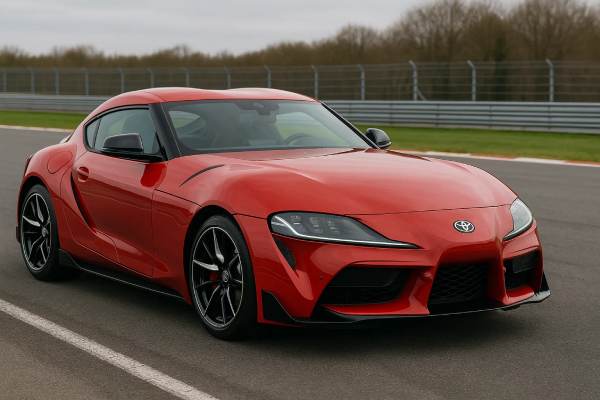
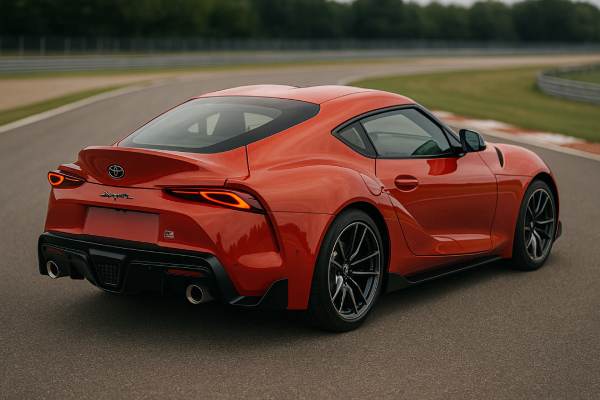
The 258 hp Toyota GR Supra 2.0 is the lighter, more approachable side of the J29 Supra range. It keeps the same compact rear-drive platform and sharp Toyota Gazoo Racing chassis tune as the 3.0-litre car but swaps in BMW’s B48B20 2.0-litre turbo four. With around 258 hp and 400 Nm, it is quick enough to feel special yet easier to exploit on real roads than the six-cylinder flagship.
Owners are often drawn to this version for three reasons: lower weight over the nose, lower purchase and running costs, and a chassis that feels agile and playful rather than overwhelming. Underneath the styling, you are still dealing with a modern premium drivetrain, advanced electronics and tightly packaged hardware, so a clear understanding of specifications, maintenance needs and known issues is essential. This guide looks specifically at the 2.0 258 hp GR Supra from 2019–2024, with a focus on European-style specs but broad relevance for other markets where this tune is offered.
Key Takeaways
- 2.0-litre B48B20 turbo-four with 258 hp and 400 Nm gives strong real-world pace and a lighter front end than the 3.0.
- Rear-wheel drive, ZF 8-speed automatic and optional active differential make it very capable on both road and track.
- Modern safety tech (AEB, lane support, road-sign recognition) is widely available, but the Supra itself has not been independently crash-tested.
- Regular oil and filter changes every 10,000 km or 12 months are wise, especially for cars used on track or driven hard.
Guide contents
- GR Supra 2.0 258 hp overview
- Specifications and technical data
- Trims, options and safety features
- Reliability and common issues
- Maintenance schedule and buyer advice
- Driving experience and performance
- How it compares to rivals
GR Supra 2.0 258 hp overview
When Toyota introduced the 2.0-litre GR Supra, the goal was not simply to offer a cheaper engine. The 258 hp B48B20 unit is roughly 100 kg lighter than the 3.0-litre six, much of it over the front axle, which changes the car’s balance in a meaningful way. The result is a GR Supra that still feels like a serious sports car but adds a layer of agility and friendliness that some drivers prefer.
The 2.0 258 hp tune sits above lower-output 2.0 variants sold in a few markets and below the flagship 3.0. It offers 0–100 km/h in just over 5 seconds, a 250 km/h limited top speed and fuel economy figures that make daily driving realistic. The basic architecture is the same across the range: front-mounted longitudinal engine, rear-wheel drive, eight-speed automatic, double-joint MacPherson struts up front and a five-link rear suspension with extensive use of aluminium to keep weight down.
Toyota’s engineers were heavily involved in final tuning of the steering, dampers and differential behaviour. The idea was to keep some of the playful, throttle-adjustable character of classic Supras while meeting modern expectations for refinement, safety and emissions. Compared with the 3.0, the 2.0 feels less brutal but often more adjustable: you can lean on the front end harder and explore the grip envelope without needing a race track.
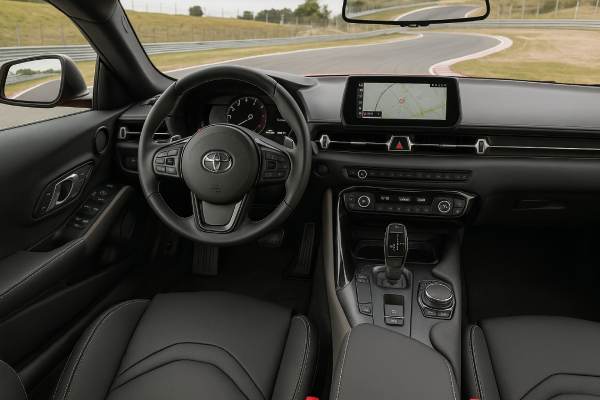
Inside, the cabin feels familiar if you know modern BMWs. The iDrive-style infotainment, switchgear and basic ergonomics are Bavarian in flavour, while the seats, steering wheel and some trim elements are unique to Toyota. Materials are generally good, with soft-touch surfaces where you touch them most and a straightforward layout that avoids gimmicks. The Supra’s two-seat layout and modest boot mean it will never replace a practical hatchback, but for a weekend car or focused daily, it is liveable.
Finally, the 2.0 258 hp variant matters for tuning and ownership because it uses a widely deployed engine family. The B48 appears in many BMW and Mini models, which means a deep pool of parts, tuning solutions and diagnostic knowledge. That breadth is a double-edged sword: there is plenty of expertise available, but also many ways to push the hardware beyond what is sensible for a long-lived road car.
Specifications and technical data
This section summarises the key technical details of the 2019–2024 Toyota GR Supra 2.0 (258 hp) based on typical European specifications.
Engine and performance data
| Item | Specification |
|---|---|
| Engine code | BMW B48B20 (Toyota designation B48L in some documents) |
| Configuration | Inline-4, aluminium block and head, DOHC, 16 valves |
| Induction | Single twin-scroll turbocharger, intercooler |
| Displacement | 1,998–1,999 cc (2.0 l) |
| Bore × stroke | 82.0 mm × 94.6 mm |
| Compression ratio | Approximately 10.2:1 |
| Max power | 258 PS / 190 kW (≈254–258 hp) @ 5,000–6,500 rpm |
| Max torque | 400 Nm (295 lb-ft) @ 1,550–4,400 rpm |
| Fuel system | High-pressure direct injection |
| Recommended fuel | Premium unleaded (typically 95–98 RON) |
| Emissions standard | Euro 6d or regional equivalent, depending on year |
Official performance figures quote 0–100 km/h in about 5.2 seconds and an electronically limited top speed of 250 km/h. Independent tests generally fall very close to those numbers on dry tarmac.
Transmission and driveline
| Item | Specification |
|---|---|
| Transmission | ZF 8HP 8-speed automatic with manual paddle shift |
| Gearbox type | Torque-converter automatic with lock-up, adaptive shift logic |
| Drive type | Rear-wheel drive (FR layout) |
| Final drive ratio | Around 3.4–3.5:1 depending on spec |
| Differential | Open differential as standard; active electronic limited-slip diff available with Sport or Premium packs |
The ZF 8HP is widely used across several manufacturers and is known for smooth shifting and high torque capacity when serviced correctly.
Chassis, dimensions and weights
| Item | Specification (typical 2.0 258 hp coupe) |
|---|---|
| Body style | 2-door, 2-seat coupe |
| Length | ≈4,379–4,380 mm (about 172.4 in) |
| Width | ≈1,854–1,865 mm (about 73 in) |
| Height | ≈1,294–1,299 mm (about 51 in) |
| Wheelbase | 2,470 mm (97.2 in) |
| Front / rear track | ≈1,594 / 1,589 mm |
| Ground clearance | Around 115–120 mm |
| Kerb (curb) weight | Around 1,390–1,470 kg depending on market and options |
| GVWR | About 1,710–1,800 kg |
| Boot volume | ~290 l (10.2 ft³), measured to roof |
| Fuel tank | ~52 l (13.7 US gal; 11.4 UK gal) |
Suspension is by double-joint MacPherson struts at the front and a multi-link arrangement at the rear. Many cars feature adaptive dampers; base cars use fixed-rate dampers with a still-sporty tune.
Performance, consumption and aerodynamics
| Metric | Typical value |
|---|---|
| 0–100 km/h (0–62 mph) | ~5.2 s |
| Top speed | 250 km/h (155 mph), limited |
| Combined fuel consumption | Roughly 6.3–7.5 l/100 km depending on test cycle and wheel size |
| CO₂ emissions | Often in the 140–170 g/km range under WLTP |
| Drag coefficient (Cd) | Around 0.27–0.29, depending on spec |
Real-world highway consumption at 110–120 km/h can fall in the high 6s to low 7s l/100 km if you cruise steadily in eighth gear; spirited driving or track work will push that much higher.
Fluids, capacities and electrical highlights
| System | Approximate data |
|---|---|
| Engine oil | 0W-20 or 5W-30 meeting BMW/Toyota approvals; ~5.0–5.5 l with filter |
| Coolant | Long-life ethylene glycol; total system ~7–8 l |
| ATF | ZF 8HP fluid; around 7–9 l for full service including pan and filter |
| Differential | ~1–1.2 l of 75W-90 gear oil |
| Brake fluid | DOT 4; around 0.8–1.0 l for full flush |
| Battery | 12 V AGM, ~70–80 Ah, mounted at rear |
Electrical systems include multiple ECUs, radar and cameras for ADAS, so maintaining battery health and correct voltage is important to avoid random warning lights and malfunctions.
Trims, options and safety features
Exact trim names differ by market, but the 2.0 258 hp GR Supra generally comes in a few clear flavours, often using terms such as “2.0,” “2.0 Premium,” or “Sport pack” alongside the GR Supra name.
Typical trim structure
- Base 2.0 (258 hp)
- 18-inch wheels
- Cloth or Alcantara upholstery with heated sports seats
- Dual-zone climate control
- Standard infotainment with smartphone integration
- Basic sound system
- Higher trims / Premium / Sport pack
- 19-inch wheels
- Leather or Alcantara/leather combination seats
- Upgraded audio (often 12-speaker JBL)
- Head-up display, wireless phone charging, extra ambient lighting
- Adaptive Variable Suspension (AVS)
- Active electronic rear differential
- Larger Brembo front brakes
Special editions (for example, Fuji Speedway-style models) may add unique paint, stripes, wheels and interior details while carrying over the same underlying drivetrain and performance hardware.
The differences that matter most to keen drivers are the adaptive dampers, active diff and bigger brakes. If you plan to track the car or drive hard on mountain roads, these options are worth seeking out; they help both lap times and consistency.
Interior and comfort options
Even in four-cylinder form, the Supra’s cabin is positioned as premium. Common upgrades beyond the base trim include:
- Electrically adjustable sports seats with memory and lumbar support
- Suede or leather-wrapped steering wheel and additional soft-touch surfaces
- Ambient lighting packages
- Integrated navigation, connected services and improved smartphone integration
These do not change raw performance but improve daily usability and resale appeal.
Safety ratings and equipment
The GR Supra shares much of its underlying safety hardware with the BMW Z4, which has achieved strong crash-test results in independent testing. The Supra itself has not been separately crash-tested by all major agencies, but is built on the same joint platform and benefits from a modern crash structure.
Typical safety and driver-assistance features include:
- Multi-stage front airbags, side and curtain airbags; knee airbags in some markets
- ABS, electronic brake-force distribution and brake assist
- Stability control, traction control and hill-start assist
- Tyre-pressure monitoring
- Pre-collision system with autonomous emergency braking for vehicles and, in many specs, pedestrians and cyclists
- Lane departure warning with steering assist or lane-keeping support
- Road-sign recognition and intelligent speed assistance
- Adaptive cruise control on many medium and high trims
- Optional Blind-Spot Monitoring, Rear Cross-Traffic Alert and parking sensors with reversing camera
After windscreen replacement, front bumper repairs or major suspension work, ADAS re-calibration is important to keep these systems performing correctly.
For child safety, the Supra offers ISOFIX or LATCH points on the passenger seat in some markets, but its two-seat layout and small cabin mean it is best treated as an occasional child-carrying car rather than a family mainstay.
Reliability and common issues
Because the 2.0 258 hp Supra shares its B48 engine and 8HP gearbox with a wide range of BMW models, early reliability trends are easier to spot. Overall, the car has behaved well in service, but there are some themes to be aware of.
Engine and fuel system
- Direct-injection hardware
High-pressure fuel pumps and injectors can occasionally cause cold-start issues, rough idle or misfires as mileage rises. These problems are more likely on cars with extended service intervals or poor-quality fuel. A proper diagnostic scan will reveal misfire counts and fuel-trim behaviour before you commit to a purchase. - Oil quality and consumption
The B48 is sensitive to oil quality. Long factory intervals may be acceptable for gentle use, but cars that see frequent short trips or track days benefit from shorter intervals. Some engines show light oil consumption as they age; it is usually manageable but worth monitoring. - Cooling system stress
Repeated high-load use, especially on hot track days, stresses coolant hoses, plastic fittings and the turbo’s cooling circuit. Proactive inspection and replacement of suspect hoses and expansion tanks is cheap insurance.
Timing chain, valves and turbo
The B48 uses a timing chain rather than a belt. It is designed for the life of the engine, but chain stretch and guide wear can occur if oil quality or change intervals are poor. Warning signs include persistent chain noise at warm idle or timing correlation codes on diagnostic scans.
The turbocharger itself is robust at stock power but can suffer from oil coking and bearing wear if shut-down procedures are abused (for example, repeatedly shutting the engine off immediately after hard runs without any cooldown).
Gearbox and driveline
The ZF 8HP gearbox is widely respected for durability, but it benefits from fresh fluid despite “lifetime fill” marketing. As mileage passes 80,000–100,000 km, fluid and filter replacement helps preserve shift quality and avoid wear. Symptoms of trouble include delayed engagement when selecting drive or reverse, flares under acceleration and harsh, inconsistent shifts.
The rear differential and driveshafts are usually trouble-free at stock torque, though track use on grippy tyres adds stress. Listen for whining or clunks on overrun as signs of bearing or mount wear.
Chassis, suspension and brakes
Normal wear items on a 258 hp Supra include:
- Front lower arm and tension arm bushes
- Rear toe links and control arm bushes
- Anti-roll bar drop links
- Dampers on high-mileage or heavily tracked cars
As these components age, you will feel their deterioration quickly as noises, vibration and vague steering. Brake hardware is generally robust, but a car that has seen frequent track days may need more frequent disc and pad replacement.
Electronics and trim
Common complaints are minor but worth noting:
- Infotainment glitches that respond to software updates
- Warning lights from driver-assistance systems after windscreen or bumper repairs if sensors are not correctly re-calibrated
- Occasional condensation in rear light units in harsh climates
Serious electrical failures are uncommon, but diagnosis can be time-consuming due to the integration between Toyota and BMW systems.
Recalls and service campaigns
Supra models, including 2.0 variants, have been included in several recall and service actions related to shared BMW components, covering issues such as fuel tank weld quality, seat-belt anchor integrity and potential electrical faults that pose a fire risk. These campaigns are handled at no cost to the owner but require a VIN check through Toyota’s official recall lookup or national safety databases.
As with any modern sports car, the cleanest ownership experience comes from examples that have been maintained on or ahead of schedule, with recall and software updates fully up to date.
Maintenance schedule and buyer advice
The official service schedule for the GR Supra varies by market, but an enthusiast-friendly plan for the 2.0 258 hp looks like this.
Practical maintenance schedule
- Engine oil and filter: every 10,000 km or 12 months, whichever comes first. Hard use or frequent short trips justify 7,500 km intervals.
- Engine air filter: inspect at 20,000 km, replace around 40,000 km; more often in dusty conditions.
- Cabin filter: every 20,000–30,000 km or 2 years.
- Spark plugs: every 60,000–80,000 km; sooner on heavily tracked cars.
- Coolant: first change around year 8–10 from new, then every 5 years, following long-life coolant guidance.
- ATF (ZF 8HP): fluid and pan/filter service around 80,000–100,000 km, then at similar intervals.
- Differential oil: every 60,000–80,000 km, more often for track-focused cars.
- Brake fluid: every 2 years; annually with high-temperature DOT 4 for regular track use.
- Brake pads and rotors: inspect at every service; high-performance pads can wear quickly on the front axle.
- Suspension and steering: alignment and suspension inspection at least every 30,000 km or after any major impact.
- Auxiliary belts and coolant hoses: detailed inspection at each service from year 5 onward; replacement from 100,000–120,000 km or at first sign of cracks or bulges.
- 12 V battery: test annually from year 4; replace at early signs of weakness to avoid electronic issues.
Because this is a chain-driven engine, there is no scheduled timing-belt service. Instead, pay attention to oil quality, cold-start noise and diagnostic reports.
Key fluid and torque considerations
- Use engine oils that meet the correct BMW/Toyota long-life standards; generic oils without those approvals are not ideal.
- Stick to the specified coolant type; mixing incompatible coolants can cause internal deposits and corrosion.
- For wheel fasteners, typical torque values are around 120–140 Nm; always confirm for your specific car.
- Critical fasteners like suspension arms, hub nuts and brake calipers should be tightened to workshop-manual specs.
Buyer’s checklist
When shopping for a used GR Supra 2.0 258 hp:
- Service records
- Look for annual oil changes and documented brake-fluid replacements.
- Check whether ATF and diff oil have been changed if mileage is over ~80,000 km.
- Recall status
- Run the VIN through official Toyota recall tools and ask for dealer printouts showing completed work.
- Signs of tuning
- Inspect for non-standard downpipes, intakes, ECUs or piggyback tuning hardware. Mild, well-documented tuning may be acceptable, but factory calibration is generally safest for long-term reliability.
- Track use indicators
- Blue or heavily cracked front discs, repeated heat-cycling on tyres, and stone-chipped rear arches can signal frequent track days. A well-maintained track car can still be fine, but budget extra for consumables.
- Chassis and body
- Check for uneven panel gaps, overspray and underbody damage.
- Inspect suspension components for corrosion and play; listen for clunks on the test drive.
- Interior and electronics
- Confirm that all driver-assistance systems behave correctly and that no permanent warning lights are present.
- Test infotainment, Bluetooth and navigation for glitches or lag.
As a long-term proposition, the 2.0 258 hp Supra is attractive if you accept that it is a premium sports car, not a low-budget commuter. Costs are reasonable compared with many European rivals, but consumables and specialist labour still add up.
Driving experience and performance
The GR Supra 2.0 258 hp delivers a slightly different personality from its six-cylinder sibling, and many drivers find it more engaging on typical roads.
Engine character and gearbox
The B48B20 in this tune feels lively rather than ferocious. With 400 Nm available from low revs, the Supra surges forward cleanly in everyday driving without needing to chase the red line. In Sport mode, throttle response is sharper and the exhaust note gains some crackle and bass, though it remains more subdued than the 3.0-litre car.
The ZF 8HP gearbox is a highlight. In its default mode, upshifts are smooth and unobtrusive, keeping revs down and fuel consumption reasonable. Switch to Sport and the mapping becomes more eager, holding gears through corners, downshifting promptly and responding crisply to paddle commands. Manual mode works well on twisty roads: you can keep the engine sitting between 3,000 and 6,000 rpm where it feels strongest, without the gearbox second-guessing you.
Handling and ride
Losing weight over the front axle noticeably alters the Supra’s balance. Turn-in is quick; the nose responds eagerly to steering inputs, and the car rotates predictably when you trail-brake or lift slightly mid-corner. Compared with the 3.0, the 2.0 feels less nose-heavy and easier to place on a tight road.
Adaptive dampers, where fitted, help the car cope with a range of surfaces. Normal mode suits patchy urban roads and long journeys, while Sport firms things up to keep body movements in check when you press on. Even with fixed dampers, the ride is firm but not extreme; tyre choice has a big influence, with track-biased rubber adding harshness and noise.
Braking, grip and stability
The standard brakes are strong for road use, and the uprated Brembo package with larger front rotors offers more headroom for repeated hard stops. Pedal feel is progressive, and the ABS calibration on dry tarmac is unobtrusive. On track, the usual limitations apply: repeated high-speed laps will demand proper pads, fluid and cooling, but the core hardware is capable.
Traction is good for a rear-drive car with this power level, especially with modern stability-control tuning. In Sport mode, the system allows meaningful slip before intervening, so you can feel the chassis moving around without losing the safety net entirely. Track mode further relaxes the electronic guardrails for experienced drivers.
Noise, comfort and economy
At a cruise, the cabin is calm for a short-wheelbase coupe. Engine noise fades into the background in higher gears, and wind noise is controlled. Road noise varies with surface and tyres but is generally acceptable for a sports car.
Real-world economy depends heavily on use:
- City driving often sees 9–11 l/100 km.
- Steady highway cruising can drop into the high 6s or low 7s l/100 km.
- Mixed driving typically falls around 7.5–9.0 l/100 km for a stock car.
This gives a useful range in the 550–700 km window from the 52-litre tank if you are not driving flat-out. As with most turbocharged petrols, enthusiastic use of boost quickly increases consumption.
How it compares to rivals
The 2.0 258 hp GR Supra lives in a competitive corner of the sports-car market where coupes and roadsters from several brands compete for similar buyers.
Within the Supra family
Compared with the lower-output 2.0 (around 197 hp) offered in some regions, the 258 hp tune feels substantially stronger and better matched to the chassis. Against the 3.0-litre six, the 2.0 loses some outright pace and soundtrack drama but gains agility and slightly lower running costs. If you value maximum acceleration and long-legged performance, the 3.0 is still the flagship; if you care more about balance and mid-speed fun, the 2.0 258 hp can be the sweet spot.
Against BMW Z4 20i/30i
The Z4 shares the same platform and engine family but presents itself as an open two-seat roadster rather than a fixed-roof coupe. In equivalent 2.0-litre tunes, performance is similar, but the Z4 prioritises roof-down comfort and long-distance cruising. The Supra feels more focused and visually distinctive, with suspension and steering tuned to deliver a more serious sports-car impression. Buyers who want an everyday premium car that can also entertain might swing toward the Z4; those who want a coupe that feels more purposeful will favour the Supra.
Against Porsche 718 Cayman
The 718 Cayman in base and T trims is a natural benchmark for driving purity. Its mid-engine layout gives exceptional balance, and its steering feel is often considered best-in-class. The trade-offs are cost and practicality: options can inflate prices rapidly, and servicing tends to be more expensive. The Supra 2.0 counters with a strong value proposition, generous standard equipment and easier ownership when it comes to routine maintenance and parts availability.
Against Alpine A110 and other lightweight rivals
Where available, the Alpine A110 offers a more delicate, lightweight experience, with a kerb weight significantly below the Supra’s. It feels more like a classic rally-bred sports car, but scarcity, a smaller dealer network and a more fragile image hold it back as a daily driver. The Supra is heavier and less ethereal in feel but more robust and better supported globally.
Against turbo four-cylinder muscle coupes
Turbo four-cylinder versions of cars like the Ford Mustang provide similar or greater straight-line performance, plus extra seats and luggage capacity. However, they are larger, heavier and less compact in traffic or city parking. The Supra trades rear-seat practicality for a smaller footprint, sharper response and a more premium-feeling interior.
For many buyers, the GR Supra 2.0 258 hp occupies an appealing middle ground: fast enough to be exciting, compact enough for everyday use, and sophisticated without becoming fragile or excessively expensive to maintain.
References
- 2020 Toyota GR Supra 2.0L 2020 (Technical and Equipment Data)
- Toyota GR Supra Technical Specifications 2021 (Technical Specifications)
- GR Supra Specs 2022 (Official Specifications Overview)
- BMW Z4 Euro NCAP Rating 2019 (Safety Rating)
- Look Up Safety Recalls and Service Campaigns by VIN 2025 (Recall Database)
Disclaimer
This article is intended for informational purposes only and does not replace professional diagnosis, repair advice or official service literature. Specifications, torque values, maintenance intervals and repair procedures can vary by VIN, model year, market and equipment level, and may change over time as manufacturers issue updates. Always cross-check critical data against your vehicle’s official owner’s manual, workshop manual and technical service bulletins. If you are unsure about any procedure or lack the tools and experience to perform it safely, consult a qualified technician familiar with the Toyota GR Supra and its BMW-based powertrain.
If you found this guide useful, feel free to share it with other enthusiasts and potential buyers on platforms such as Facebook or X (Twitter) to help support accurate, in-depth automotive content.