
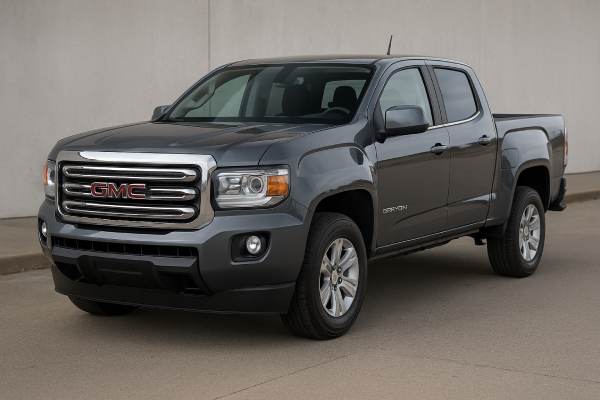
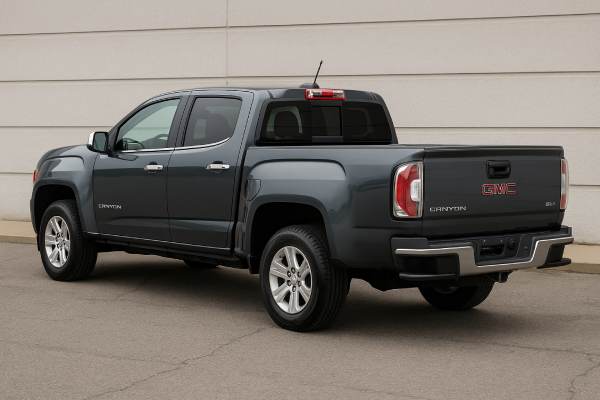
The 2015–2020 GMC Canyon with the 2.5 litre LCV four cylinder and rear wheel drive is the “quiet workhorse” of the lineup. It does not grab headlines like the V6 or diesel, but it offers a simpler powertrain, lighter front axle, and lower running costs that make sense for many owners and fleets. With about 200 hp, a well matched 6 speed automatic or manual transmission (depending on year and market), and a long production window, it is a practical choice if you value efficiency and usable bed space more than outright speed.
This guide focuses on the RWD 2.5 l configuration on the GMT31XX platform across the 2015–2020 model years. You will find technical data, real world fuel economy, common reliability patterns, and a maintenance plan that works in the real world, not just on paper. The aim is to help you understand what this engine and chassis combination can do, what to watch for as mileage builds, and how it compares to rival mid size trucks when you start shopping the used market.
Essential Insights
- 2.5 l LCV four cylinder with around 200 hp suits light to medium duty work and urban driving with lower fuel use than the V6.
- RWD layout keeps weight, complexity and front end service costs down while still allowing solid payload capacity.
- Simpler powertrain means one less differential, fewer 4×4 components and generally lower long term driveline risk.
- Pay attention to oil change quality and timing chain condition on higher mileage engines to avoid expensive repairs.
- Plan engine oil and filter changes every 8,000–10,000 km (5,000–6,000 miles) or 12 months to keep the LCV engine healthy.
Navigate this guide
- Canyon 2.5 RWD in focus
- LCV 2.5 specs and figures
- Safety equipment and trim choices
- Dependability, issues and fixes
- Maintenance plan and buyer guide
- Driving feel and real world economy
- How the Canyon 2.5 compares
Canyon 2.5 RWD in focus
The GMC Canyon 2.5 RWD targets a slightly different driver than the headline grabbing V6 4×4 versions. It is built for people who mainly drive on paved roads, carry moderate loads, and want a mid size truck that behaves a bit more like a car in everyday use. With rear wheel drive only, there is no transfer case, no front differential and fewer components to service or repair later.
The LCV engine is a 2.5 litre four cylinder with direct injection and dual overhead camshafts. It produces about 200 hp and just under 200 lb ft of torque, which is more than enough for an empty truck and still acceptable with light towing. While it will not match the V6 when climbing steep grades with a heavy trailer, it feels adequate for commuting, small business use and occasional weekend hauling.
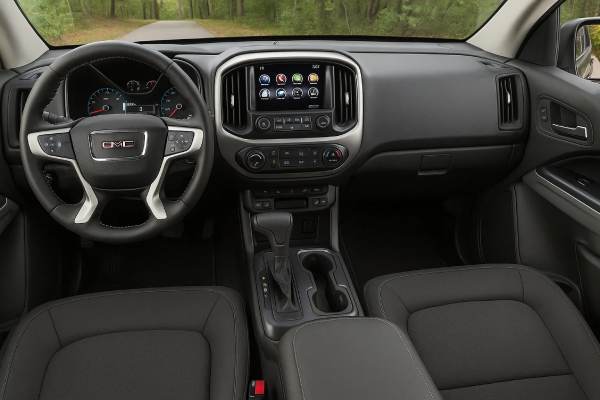
On the GMT31XX chassis the Canyon moved the mid size GMC truck into a more modern space. Compared with older compact pickups, it offers a stronger, stiffer frame, better crash performance, and an interior that feels close to a contemporary SUV. Even in lower trims with the 2.5, you typically get air conditioning, power windows, a clear instrument cluster and a touch screen infotainment system in most later model years.
Body styles for the 2.5 RWD often concentrate on extended cab and some crew cab configurations, especially in fleet and value oriented trims. The lighter engine further reduces front axle load, which helps steering feel and tyre wear. For much of its life cycle from 2015 to 2020, this version of the Canyon is positioned as the cost effective entry point into GMC truck ownership.
Owners who choose the 2.5 RWD usually value:
- Lower purchase price compared with V6 and diesel models.
- Better fuel economy in city and mixed driving.
- Easier access to engine bay components and generally simpler drivetrain layout.
It is an honest, straightforward truck: less glamorous than the fully optioned 4×4, but often the best match for urban tradespeople, delivery work, or drivers who rarely leave sealed roads.
LCV 2.5 specs and figures
This section summarises the key technical data for the 2015–2020 Canyon 2.5 RWD, focusing on the most common configurations. Minor variations exist by year, cab style and market.
Engine and performance (LCV 2.5)
| Item | Specification |
|---|---|
| Engine code | LCV |
| Type | Inline 4 cylinder, aluminium block and head |
| Valvetrain | DOHC, 4 valves per cylinder, variable valve timing |
| Displacement | 2.5 l (2,457–2,488 cc range depending on source rounding) |
| Bore × stroke | Approx. 92 mm × 86 mm (3.62 in × 3.39 in) |
| Induction | Naturally aspirated |
| Fuel system | Direct injection, unleaded petrol |
| Compression ratio | Around 11.3 : 1 (varies slightly) |
| Maximum power | About 200 hp (~149 kW) @ ~6,300 rpm |
| Maximum torque | Around 191 lb ft (~259 Nm) @ ~4,400 rpm |
| Recommended fuel | Regular unleaded (consult local manual) |
| Emissions standard | U.S. Tier 2 / LEV-equivalent for 2015–2020 |
Typical official fuel economy for a 2.5 RWD automatic lies roughly in:
| Driving cycle | L/100 km (approx) | mpg US (approx) |
|---|---|---|
| City | 11.2–12.4 | 19–21 |
| Highway | 8.4–9.0 | 26–28 |
| Combined | 9.8–10.7 | 22–24 |
Real world results vary with tyre choice, load and driving style; the numbers here serve as reasonable expectations.
Transmission and driveline
| Item | Specification |
|---|---|
| Transmission | 6 speed automatic (6L50) common; 6 speed manual on some early base models |
| Gear ratios (auto, typical) | 1st 4.06, 2nd 2.37, 3rd 1.55, 4th 1.16, 5th 0.85, 6th 0.67, Rev 3.20 |
| Final drive ratio | Frequently 4.10:1 on 2.5 RWD (check RPO by VIN) |
| Drive type | Rear wheel drive |
| Differential | Rear axle with open or available locking differential on some trims/packages |
With RWD, the front suspension is simpler and there is no transfer case. This can reduce long term service costs compared with 4×4 models, especially if you never need low range.
Chassis and dimensions (typical)
Figures here focus on a crew cab short box RWD; extended cab and long box vary slightly.
| Item | Specification (approximate) |
|---|---|
| Platform | GMT31XX body on frame mid size pickup |
| Front suspension | Independent, coil over shock, control arms |
| Rear suspension | Leaf springs with solid axle |
| Steering | Electric power assisted rack and pinion |
| Front brakes | Ventilated discs |
| Rear brakes | Discs (on most configurations for these years) |
| Overall length | ~5,400 mm (around 212.5 in) |
| Width (without mirrors) | ~1,880–1,890 mm (74–75 in) |
| Height | ~1,780 mm (70 in), small variation by tyres/suspension |
| Wheelbase | ~3,260 mm (128.5 in) crew cab short box |
| Ground clearance | Around 213 mm (8.4 in) for many RWD models |
| Turning circle | About 12.5 m (41 ft) kerb to kerb |
| Curb weight | Roughly 1,800–1,950 kg (4,000–4,300 lb) depending on cab and equipment |
| GVWR | Typically 2,540–2,720 kg (5,600–6,000 lb) |
Performance and capability
| Item | Typical value |
|---|---|
| 0–100 km/h (0–62 mph) | Roughly 9.5–10.5 s (unladen, automatic) |
| Top speed | Similar to V6 models, often electronically limited around 175–180 km/h (108–112 mph) |
| Maximum towing capacity | Around 1,590–1,810 kg (3,500–4,000 lb) when properly equipped, depending on model year and configuration |
| Payload | Frequently in the 650–750 kg (1,430–1,650 lb) range |
Always check the specific truck’s door jamb label for actual tow and payload ratings; these override generic figures.
Fluids and service capacities (approximate)
| System | Specification | Capacity (approx.) |
|---|---|---|
| Engine oil | Dexos1-approved 5W-30 | ~4.7–5.0 l (5.0–5.3 US qt) including filter |
| Engine coolant | Long life OAT coolant (Dex-Cool type), 50:50 | ~10–11 l total system |
| Automatic transmission | Dexron VI ATF | ~8–9 l for full refill; less for drain and fill |
| Rear axle | Synthetic gear oil 75W-90 | ~1.5–2.0 l |
| Power steering | Electric assist (no fluid reservoir) | |
| A/C refrigerant | R-134a, charge varies by cab style | ~600–700 g (21–25 oz) typical |
Key torque examples (always verify against current service data):
- Wheel nuts: about 190 Nm (140 lb ft)
- Engine oil drain plug: roughly 25–30 Nm (18–22 lb ft)
- Spark plugs: around 20–25 Nm (15–18 lb ft)
Electrical and safety systems
| Item | Specification (typical) |
|---|---|
| Alternator | Around 150 A |
| 12 V battery | ~70 Ah, 600–700 CCA, common group sizes used by GM trucks |
| Spark plugs | Long life iridium, change interval near 160,000 km (100,000 miles) |
| Headlights | Halogen units on most trims, with projector style on higher grades |
| Electronic safety | ABS, traction control, stability control standard |
Safety equipment and trim choices
The 2.5 RWD Canyon is often sold in value oriented trims, but it shares the same basic crash structure and most safety systems as more expensive versions. That means you get a modern safety cage, multiple airbags and standard electronic stability aids across the board.
Trims and options for the 2.5 RWD
Exact trim names and availability vary by market and year, but you will commonly encounter:
- Base / “Canyon” trim
- 2.5 l engine as standard.
- Rear wheel drive, extended cab more common than crew cab.
- Cloth seats, manual or simple automatic climate control.
- Basic audio at launch, with later years adding more capable infotainment even on lower trims.
- Steel wheels or smaller alloys.
- SLE (with 2.5 in some markets)
- Upgraded infotainment with touch screen and smartphone integration.
- Alloy wheels, body coloured exterior trim, chrome accents.
- Enhanced interior materials and additional convenience features.
- Towing package available with hitch receiver, wiring harness and sometimes extra cooling.
The four cylinder RWD configuration is rare in top SLT trims in many regions, where the V6 dominates. Fleet models may have unique codes reflecting decontented equipment but still use the same basic mechanical package.
Important mechanical differences to note by trim and option package include:
- Axle ratio and whether the truck has a locking rear differential.
- Towing and cooling packages, which affect tow ratings and trans durability.
- Wheel and tyre packages, which influence ride, noise and braking feel.
Checking the RPO (Regular Production Option) code sticker in the glove box or driver’s door area is the easiest way to confirm mechanical spec, especially for fleet trucks.
Safety ratings
Crew cab Canyons in this generation generally perform well in standard crash tests, with strong ratings in moderate overlap and side impact tests. Some small overlap tests and headlight evaluations are less impressive, but overall crashworthiness is competitive for a mid size pickup of this era.
Extended cab models may have slightly different results than crew cabs, particularly for rear occupant protection. If you plan to regularly carry passengers in the rear, focus your search on crew cab trucks with better rated rear seat protection and easier access.
Airbags and occupant protection
The Canyon typically includes:
- Front airbags for driver and passenger.
- Side airbags integrated into the front seats.
- Side curtain airbags running along the roofline covering both rows in crew cabs.
- Three point belts for all outboard seating positions.
Child seats fit more easily in the rear bench of crew cab models thanks to LATCH anchors and clearer top tether points. Extended cab jump seats are more suited to occasional use and may not be ideal for child seats.
Driver assistance and electronic aids
For 2015–2020, the Canyon’s driver assistance suite remains relatively modest compared with newer trucks:
- Standard:
- Electronic stability control, traction control, ABS.
- Rear view camera (phased in and then mandated in some markets).
- Hill start assist.
- Optional (often as part of a Driver Alert package):
- Forward collision alert (warning only).
- Lane departure warning (audible or visual alerts, no steering intervention).
Automatic emergency braking and adaptive cruise control are not widely available on these years, so if those functions are critical to you, you might need to look at newer trucks.
Calibration matters after windscreen replacement, front end collision repairs or suspension modifications. Make sure any truck with such work has documentation showing sensor and camera calibration where required.
Dependability, issues and fixes
The 2.5 l LCV engine and RWD driveline are relatively simple compared to the V6 4×4 variants, which tends to help reliability. However, there are still patterns worth knowing before you buy or as your truck ages.
Engine and fuel system
1. Timing chain wear (occasional but serious on neglected engines)
- Symptoms: Rattle on cold start, check engine light, camshaft correlation codes, rough idle.
- Causes: Extended oil change intervals, low oil level, poor quality oil leading to accelerated tensioner and chain wear.
- Remedy: Replace timing chain set (chain, tensioners, guides) and inspect associated components. After repair, stick to conservative oil change intervals using correct Dexos1 oil.
2. Intake valve deposits (long term issue in many direct injection engines)
- Symptoms: Gradual loss of low rpm torque, hesitation under light throttle, misfires, uneven idle.
- Causes: Oil vapour and blow by depositing on intake valves (there is no fuel washing over them as in port injection systems).
- Remedy: Media blasting or equivalent valve cleaning, checking PCV system function, and possibly using catch cans where appropriate and legal. High quality fuel and oil help but do not eliminate the issue over very long mileages.
3. Throttle body and intake contamination (low to medium cost)
- Symptoms: Unstable idle, sometimes stalling when coming to a stop, throttle response inconsistency.
- Remedy: Proper cleaning of throttle body and, where recommended, a throttle relearn procedure using a scan tool.
Transmission and driveline
The 6 speed automatic paired with the 2.5 is not heavily stressed in this configuration but still benefits from regular fluid changes.
- Shift flare or shudder (occasional).
- May present as a soft flare between gears or a shudder under light throttle at certain speeds.
- Often improves after a complete fluid exchange with correct Dexron VI and a reset of adaptive learning.
- Persistent cases might need valve body work or, more rarely, torque converter replacement.
- Driveline vibration (intermittent).
- Can result from worn universal joints, out of balance propshaft or misaligned tailshaft angles after suspension modifications.
- Proper diagnosis includes inspecting joints, mounts and measuring driveline angles rather than replacing parts blindly.
Rear wheel drive eliminates the extra complexity of a transfer case and front axle, which means fewer potential points of failure compared with 4×4 models.
Chassis, suspension and brakes
Front suspension wear appears as trucks age or if they have been used on rough roads:
- Lower control arm bushings, ball joints and sway bar links are the usual wear items.
- Symptoms include clunks over bumps, vague steering or uneven tyre wear.
- Remedies range from replacing individual components to more comprehensive front end refreshes on high mileage trucks.
Steering system issues can include intermittent warnings or changes in steering feel on some trucks. Root causes range from electronics to hardware, so reading diagnostic codes and following manufacturer procedures is important.
Brakes are generally robust:
- Factory pads and rotors are adequate for everyday use.
- Trucks used for regular towing or in hilly regions sometimes benefit from upgraded pads with higher temperature capability.
- Rust on rear brake components can become an issue in salt heavy climates; periodic inspection and cleaning help.
Body, electronics and corrosion
- Water leaks: Seals around the third brake light or window areas can age, leading to damp headliners or carpets. Prompt resealing avoids long term odour and corrosion issues inside the cab.
- Infotainment glitches: Occasional freezing or Bluetooth issues generally respond well to software updates or, in rare cases, head unit replacement.
- Corrosion: The GMT31XX frame holds up better than some older GM designs, but you should still inspect:
- Frame rails near suspension mounts.
- Bed crossmembers and seams.
- Cab mounts and underbody pinch welds.
Recalls and service campaigns
Across 2015–2020, the Canyon line has seen various recalls and service bulletins, often related to:
- Airbags and occupant detection.
- Steering assist concerns on certain builds.
- Software updates for engine, transmission or safety modules.
For any truck, use the VIN to check official recall databases and confirm completion with dealer paperwork. Extended warranty programmes and customer satisfaction actions may cover some known issues beyond the basic warranty period.
Maintenance plan and buyer guide
A straightforward maintenance plan is one of the biggest advantages of a simple RWD, naturally aspirated mid size truck. The goal is to prevent expensive failures by staying ahead of wear and fluid breakdown.
Practical maintenance schedule (approximate)
This schedule assumes mixed driving with some city use and occasional towing or hauling.
- Engine oil and filter: Every 8,000–10,000 km (5,000–6,000 miles) or 12 months, whichever comes first. Use Dexos1 5W-30 or equivalent.
- Engine air filter: Inspect each 20,000 km (12,000 miles); replace at 40,000–50,000 km (25,000–30,000 miles), sooner if dusty conditions.
- Cabin air filter: Replace every 30,000–40,000 km (18,000–25,000 miles) or 2 years.
- Spark plugs: Around 160,000 km (100,000 miles), sooner if misfires or rough running occur.
- Coolant: Replace at about 5 years or 160,000 km (100,000 miles), then inspect more frequently on older vehicles.
- Automatic transmission fluid: Change every 60,000–80,000 km (37,000–50,000 miles) if you tow, idle extensively, or drive in hot climates; can be stretched a bit longer for light duty use but should not be ignored.
- Rear differential oil: Replace every 60,000–80,000 km under heavy use or every 80,000–100,000 km (50,000–62,000 miles) under light use.
- Brake fluid: Flush every 2–3 years regardless of mileage.
- Brake pads and rotors: Inspect at least annually; sooner if you tow or drive in mountainous areas.
- Serpentine belt and coolant hoses: Inspect every year; expect replacement somewhere in the 100,000–150,000 km (62,000–93,000 miles) band.
- Alignment and tyre rotation: Rotate tyres every 10,000–12,000 km (6,000–7,500 miles). Check alignment if you notice uneven wear or steering pull.
- 12 V battery: Have it load tested yearly after 4–5 years; plan for replacement somewhere in the 5–7 year range depending on climate.
Using the fluid capacities in the specs section helps you estimate DIY costs and decide when a shop quote is reasonable.
Buyer’s inspection checklist
When assessing a used 2015–2020 Canyon 2.5 RWD:
- Service history
- Look for regular oil changes documented by invoices.
- Check for evidence of transmission and diff fluid changes on higher mileage trucks.
- Confirm recall work and any major repairs via dealer records.
- Engine and driveline
- Cold start the engine and listen for timing chain rattle or unusual top end noise.
- Let it warm up and watch for stable idle and smooth throttle response.
- Drive at varied speeds; note any shift flare, shudder or driveline vibration.
- Chassis and suspension
- Test drive over speed bumps and rough surfaces; listen for knocks or rattles from the front end.
- Check steering response and straight line tracking on a flat road.
- Inspect tyres for consistent wear patterns; cupping or one sided wear can signal suspension or alignment issues.
- Brakes
- Perform several moderate to hard stops in a safe area.
- Feel for vibrations, pulling to one side, or a soft pedal.
- Check rotor surfaces for excessive rust or deep grooves.
- Body, interior and electronics
- Inspect door gaps and paint for signs of collision repair.
- Check for damp carpets or water stains, especially behind front seats and in the rear footwells.
- Verify that all electrical systems work: windows, locks, mirrors, lights, infotainment, backup camera and any driver alerts.
Which trucks to prioritise
- Single owner trucks with complete maintenance records, even with higher mileage, often prove better long term buys than very low mileage trucks with unknown history.
- Fleet maintained trucks can be excellent if they come from organisations with strong service discipline; check for generic white paint and fleet markings.
- If you plan to tow regularly, consider models with the factory tow package and possibly the locking rear differential for improved traction when launching boats or trailers on slick surfaces.
In terms of durability outlook, the 2.5 RWD Canyon is promising if fluids are kept fresh and issues such as timing chain noise are addressed promptly. The simpler driveline and lower front axle load compared with 4×4 V6 models remove several potential high cost failure points.
Driving feel and real world economy
The Canyon 2.5 RWD drives differently from its heavier 4×4 siblings. The front end is lighter, and the absence of front driveline components makes the steering and ride feel closer to a crossover in some conditions.
Powertrain character
The LCV engine is tuned more for efficiency and smoothness than for brute torque. In everyday use:
- It feels lively enough around town, especially when unladen.
- You will need to use more throttle and revs than in the V6, particularly on on ramps and steep hills.
- The 6 speed automatic manages this reasonably well, downshifting quickly when you ask for more power.
In manual equipped trucks (where available), the 2.5 feels more engaging and allows you to keep the engine in its sweet spot around the mid to upper rev range. Most buyers, however, will encounter the automatic, which is well suited to commuting and light hauling.
Ride, handling and noise
The GMT31XX chassis gives the Canyon a reasonably composed ride for a leaf sprung pickup:
- Unladen, the rear axle can still hop over sharp bumps, but less so than many older compact trucks.
- With some weight in the bed, the ride settles nicely and becomes more controlled.
- RWD models can feel slightly more agile in corners because of the lighter nose compared with 4×4 trucks.
Cabin noise is acceptable:
- The four cylinder is slightly more noticeable at higher revs than the V6, but at cruise it quiets down.
- Wind and tyre noise levels are competitive for this class, again heavily influenced by tyre choice.
Straight line stability at motorway speeds is generally good; proper wheel alignment and healthy suspension components are key to keeping it that way.
Fuel economy in the real world
Realistic owners’ experience tends to land near:
- City driving: 11.5–13.0 l/100 km (18–20 mpg US) depending on traffic and driving style.
- Highway (100–120 km/h / 60–75 mph): 8.5–9.5 l/100 km (25–28 mpg US).
- Mixed use: 9.5–11.0 l/100 km (21–24 mpg US).
RWD saves some weight and mechanical losses compared with 4×4, which helps these numbers. Heavier wheel and tyre combinations, lift kits, roof racks and aggressive driving can easily add 1–2 l/100 km to consumption.
Load and towing behaviour
With lighter front end weight and a moderate tow rating, the Canyon 2.5 RWD behaves predictably under load within its design limits:
- It tows small trailers, utility loads and lightweight campers comfortably when set up correctly with proper tongue weight.
- Steep grades will require downshifts and higher revs, which is normal for a smaller engine; using manual mode or tow/haul mode (if equipped) helps manage this.
- Because there is no 4×4, traction on wet or loose surfaces when towing can be more limited than in a 4WD truck. Good tyres and sensible throttle use are essential.
If your use involves frequently towing near the upper limit, you may prefer the V6 or diesel. For occasional light to moderate towing, the 2.5 RWD is usually adequate and delivers better solo fuel economy.
Urban usability
Where the Canyon 2.5 RWD shines is in town:
- Slightly quicker steering response and lighter nose help with parking and tight turns.
- Visibility is truck like but manageable, and the standard rear view camera makes backing into spaces much easier.
- The absence of a front differential reduces future costs if you curb a wheel or need front suspension service.
For many owners in mild climates who rarely leave paved roads, the RWD layout simply makes more sense than paying for 4×4 hardware they will seldom use.
How the Canyon 2.5 compares
The 2015–2020 GMC Canyon 2.5 RWD competes in a crowded mid size pickup field. Its closest matches include the Chevrolet Colorado with the same engine, as well as four cylinder versions of the Toyota Tacoma, Nissan Frontier and, in some markets, base Honda Ridgeline trims.
Within the GMC–Chevrolet family
The Chevrolet Colorado shares platform, engines and most components:
- The Canyon is tuned and styled to feel slightly more upmarket, with different grille, lighting signatures and interior trim choices.
- Pricing and equipment levels are similar when you compare equivalent trims; choice often comes down to dealer support, styling preference and used availability.
- From a mechanical and ownership perspective, the 2.5 RWD Colorado and Canyon are effectively twins.
Versus Toyota Tacoma four cylinder
The Tacoma’s four cylinder variants of this era:
- Offer strong reputations for longevity but feel less powerful and sometimes rougher than the LCV 2.5.
- Often trail the Canyon in fuel economy, especially at highway speeds.
- Have simpler interiors and fewer comfort features in base trims, though this is partly offset by excellent resale value.
If you plan to keep your truck for a very long time in harsh conditions, the Tacoma’s track record is attractive. If you want a more modern cabin and better power for a similar size engine, the Canyon 2.5 is compelling.
Versus Nissan Frontier four cylinder
The Frontier’s four cylinder models are older in design:
- Generally cheaper on the used market, but with more dated cabins and safety tech.
- Engines are durable but less refined, and ride quality is more primitive.
- Fuel economy is comparable or slightly worse than the Canyon depending on configuration.
Drivers who test both usually notice that the Canyon feels more “current,” especially in interior ergonomics and infotainment.
Versus Honda Ridgeline (base trims)
The first generation Ridgeline takes a different approach:
- Unibody construction and independent suspension make it drive more like a crossover than a traditional truck.
- Bed length and payload capability differ, and the Ridgeline rarely offers a simple RWD configuration.
- For owners who prefer car like manners and on road comfort above all, the Ridgeline is attractive, but the Canyon 2.5 RWD remains closer to the classic pickup formula.
Who should choose the Canyon 2.5 RWD
This configuration fits best if:
- You mostly drive on paved roads in a moderate climate.
- You tow light to moderate loads only a few times a month.
- You value lower purchase and running costs over maximum power or off road prowess.
- You prefer a modern, comfortable cabin but do not need luxury trims or heavy off road packages.
For these buyers, the 2015–2020 GMC Canyon 2.5 RWD is a sensible, economical and easy to live with mid size truck, provided that you verify timing chain health and keep up with sensible fluid maintenance.
References
- Manuals and Guides | Vehicle Support | GMC 2024 (Owner’s Manual)
- Fuel Economy of the 2015 GMC Canyon 2015 (Fuel Economy Data)
- Safety Issues & Recalls 2024 (Recall Database)
- GMC Canyon crashworthiness 2020 (Safety Rating)
Disclaimer
This article is intended for general informational purposes only and does not replace professional diagnosis, repair advice or safety inspection. Specifications, fluid types and capacities, torque values, service intervals and procedures can vary by VIN, production date, market and equipment level. Always confirm details using the official owner’s manual, factory service information and technical bulletins for your specific vehicle, and follow applicable safety and legal requirements when performing any work.
If this guide helped you better understand the GMC Canyon 2.5 RWD, please consider sharing it with other owners or shoppers on social media or enthusiast forums. Your support helps more drivers make informed, safe and cost effective decisions about their trucks.