
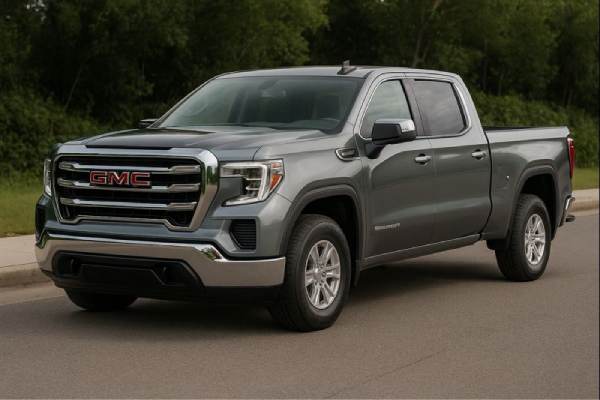
The rear-wheel-drive GMC Sierra 1500 with the L87 6.2 litre V8 is the hot-rod of the T1XX generation. It uses the same basic EcoTec3 small-block architecture as the 5.3, but with more displacement, higher compression, and a bolder tune that delivers 420 hp and 460 lb-ft. In real use, that means effortless acceleration, strong passing power, and towing performance that rivals some heavy-duty gas trucks when correctly equipped.
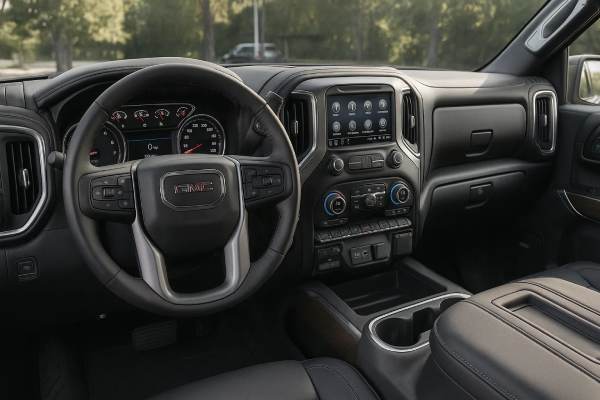
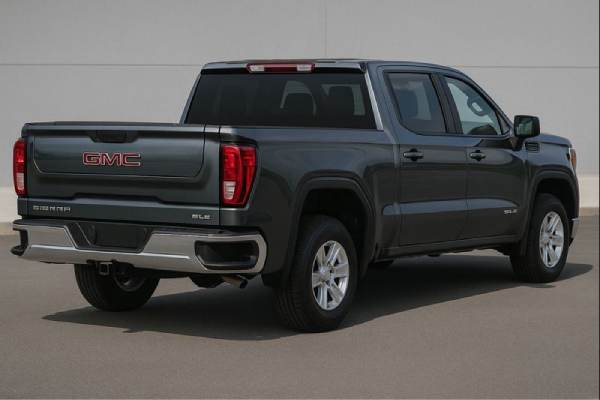
Because this engine was usually reserved for upper trims and specific packages, most 6.2 RWD Sierras come with higher equipment levels, refined interiors, and useful towing features. At the same time, the 2WD layout reduces weight and complexity compared with 4×4 models, helping fuel economy and payload. This guide walks through the key details: how the L87 is built, real-world performance, known reliability concerns, maintenance strategies, and how a 6.2 RWD Sierra 1500 stacks up against other full-size trucks if you want maximum V8 power without stepping up to a three-quarter-ton.
Quick Specs and Notes
- 6.2 L L87 EcoTec3 V8 makes about 420 hp and 460 lb-ft, giving strong 0–60 mph times in the mid-5 to low-6 second range in 2WD form.
- Often paired with the 10-speed automatic and higher trims, combining quick shifts with relaxed highway cruising and competitive towing ratings.
- Fuel use is meaningfully higher than 5.3-litre trucks; lifter/DFM issues and transmission shudder are key ownership watchpoints.
- Typical engine oil and filter interval is around 7,500 miles or 12 months, with shorter intervals recommended for towing or hot-climate use.
Navigate this guide
- GMC Sierra 6.2 RWD profile
- Technical breakdown of L87 6.2
- Trims, options and safety gear
- Reliability patterns and known faults
- Service schedule and buying checklist
- Performance, handling and efficiency
- Sierra 6.2 RWD against rivals
GMC Sierra 6.2 RWD profile
The L87 6.2 litre V8 sits at the top of the EcoTec3 gasoline range in the 2019–2021 Sierra 1500. On the T1XX platform, this engine was most commonly found in better-equipped trims and appearance packages, marketed as the enthusiast and premium towing choice. In rear-wheel-drive form, it pairs big displacement with relatively low mass, which is why so many tests describe 6.2 Sierras as surprisingly quick for full-size pickups.
Compared with the 5.3, the 6.2 gains extra bore, a slightly higher compression ratio, and a more aggressive calibration. It keeps the same core engineering: aluminium block and heads, direct injection, variable valve timing, and cylinder deactivation. That continuity means similar maintenance patterns and many shared wear points, but the 6.2 tends to be driven harder and more often used for towing, which magnifies any weaknesses in service history.
RWD versions are less common than 4WD 6.2 trucks, but they appeal to a specific owner profile:
- Drivers in warmer or drier climates who do not need 4×4 but want maximum V8 performance.
- Towing and hauling on paved surfaces where traction is predictable and 4×4 is rarely required.
- Enthusiasts who value quicker acceleration and slightly better fuel economy than a 6.2 4×4.
The T1XX chassis itself brought a stiffer, lighter frame and more aluminium body panels than the previous generation, helping ride and handling and freeing up weight for payload and towing. A typical 6.2 RWD crew-cab Sierra 1500 has a curb weight in the mid-4,500 to low-4,700 lb range, depending on trim and options, with GVWR commonly around 7,000 lb and payload roughly 1,700–2,000 lb.
On the road, this configuration feels distinctly more responsive than mid-level V8 or turbo-four trucks. The 6.2 V8 pulls strongly from low revs and keeps building power to the redline, while the multi-speed automatics keep it on the boil under load. At the same time, you are still dealing with a half-ton pickup: long wheelbase, tall profile, and a chassis tuned to balance comfort with the ability to carry real weight.
If you are deciding between 5.3 and 6.2, the L87 RWD combination is best justified if you regularly tow near the high end of half-ton ratings, want the most effortless acceleration, or simply enjoy the security of having more power in reserve when merging, passing, or climbing grades.
Technical breakdown of L87 6.2
This section focuses on the core engineering of the L87 6.2 V8, the transmission and driveline options used with it in RWD Sierras, and key chassis dimensions and capacities.
Engine and performance (L87 6.2L EcoTec3)
| Item | Specification |
|---|---|
| Engine code | L87 EcoTec3 V8 |
| Layout | 90° V8, OHV (pushrod), 2 valves per cylinder |
| Displacement | 6.2 L (6,162 cc) |
| Bore × stroke | 103.25 × 92.0 mm (4.06 × 3.62 in) |
| Compression ratio | About 11.5:1 |
| Induction | Naturally aspirated |
| Fuel system | Direct injection with high-pressure pump |
| Cylinder deactivation | Dynamic Fuel Management (multiple cylinder patterns) |
| Maximum power | 420 hp @ ~5,600 rpm |
| Maximum torque | 460 lb-ft (~624 Nm) @ ~4,100 rpm |
| Recommended fuel | Regular unleaded acceptable; premium may improve performance in some conditions |
| Recommended oil | SAE 0W-20 meeting GM dexos1 |
| Oil capacity | About 7.6–8.0 L (around 8.0 US qt) with filter |
Rated fuel economy for 6.2 RWD Sierras typically falls a little below 5.3-litre trucks:
- City driving: roughly 15–16 mpg US (around 15–16 L/100 km).
- Highway driving: around 20–21 mpg US (about 11–12 L/100 km) when cruising at legal speeds.
- Combined: often rated around 17 mpg US (about 13.8 L/100 km), depending on cab, axle ratio, and wheel/tire package.
In steady highway driving at 65–70 mph, owners often report high-teens to low-20s mpg when the truck is lightly loaded and driven smoothly, thanks to cylinder deactivation and tall top gears in the automatic.
Transmission and driveline
Most L87 RWD trucks pair the engine with a multi-speed automatic:
| Item | Specification |
|---|---|
| Transmission | Primarily 10-speed automatic (10L80/10L90 family); some early or specific trims may use 8-speed automatics |
| Drive type | Rear-wheel drive (2WD) |
| Typical axle ratios | 3.23:1 or 3.42:1, with higher tow ratings usually paired with 3.42 |
| Rear axle | Heavy-duty axle assemblies, often with available automatic locking differential |
The 10-speed gearbox is particularly well matched to the 6.2, offering close ratio steps for brisk acceleration and a tall overdrive for relaxed cruising. In tow/haul mode it holds gears longer, downshifts earlier on grades, and increases engine braking to protect the service brakes.
Chassis, dimensions and capacities (representative RWD crew cab)
Exact numbers vary by cab style and bed length, but typical figures for a 6.2 RWD crew-cab short-bed Sierra 1500 include:
| Item | Approximate value |
|---|---|
| Wheelbase | Around 3,745 mm (~147.5 in) |
| Overall length | About 5,885–5,900 mm (~231.7–232.3 in) |
| Width (without mirrors) | Roughly 2,060 mm (~81.1 in) |
| Height | Around 1,890–1,930 mm (~74.5–76 in), depending on suspension and tyres |
| Curb weight | Mid-4,500 to low-4,700 lb |
| GVWR | Approximately 7,000 lb (varies by trim and package) |
| Typical payload | Roughly 1,700–2,000 lb for RWD crew cabs |
| Fuel tank capacity | Often around 24–26 US gal (about 90–98 L) |
Performance and capability
Because most 6.2 RWD Sierras come well equipped and sometimes with larger wheels, real-world performance varies, but typical figures are:
| Metric | Typical range |
|---|---|
| 0–60 mph | Around 5.5–6.0 seconds |
| 0–100 km/h | Roughly 6.0–6.5 seconds |
| 60–0 mph braking | About 38–40 m (125–131 ft) depending on tyres |
| Maximum towing (proper package, 6.2 RWD) | Up to roughly 12,000 lb in specific configurations |
| Typical towing range | Commonly 9,000–12,000 lb depending on axle ratio, cab, and tow package |
Fluids and electrical highlights
| System | Typical specification |
|---|---|
| Engine oil | SAE 0W-20, dexos1; around 8 qt with filter |
| Coolant | Dex-Cool-type long-life coolant; capacity in the mid-teens of litres |
| Transmission fluid | GM-specified low-viscosity ATF for 8- or 10-speed units |
| Rear axle fluid | GL-5 gear oil; viscosity depends on climate and axle type |
| Alternator | Often 170–220 A depending on tow and electrical packages |
| 12 V battery | Typically 70–80 Ah, with cold cranking ratings in the mid-700 A range |
Always cross-check fluid types, capacities, and torque values against the owner’s manual or service information for your exact VIN.
Trims, options and safety gear
The 6.2L L87 was not available on every Sierra 1500 trim; it usually came as an upgrade on higher-spec 2WD and 4WD trucks. For RWD, that typically means you are shopping among relatively well-equipped models with more comfort and technology features.
Trims offering the 6.2 RWD
Availability varies by model year and market, but the L87 6.2 RWD most commonly appears in:
- SLT
Often the entry point for the 6.2. Expect leather seating, advanced infotainment, dual-zone climate control, and a wider range of driver-assistance options. RWD SLT trucks with the 6.2 are popular in warm-weather regions where 4×4 is optional rather than essential. - Denali
The luxury flagship, where the 6.2 is a signature option. Denali trims add higher-grade materials, premium audio, unique exterior styling, and typically the full suite of available driver aids. Many Denalis are 4WD, but RWD examples exist in some markets. - Special packages and appearance variants
In some cases, sport- or premium-oriented packages based on SLT or similar trims pair 6.2 power with RWD, larger wheels, and different suspension tuning.
Key mechanical or equipment differences when the 6.2 is specified include:
- Heavier-duty cooling packages and alternators, especially with trailering options.
- Higher-capacity rear axles and specific axle ratios for towing.
- Standard or optional integrated trailer brake controller and advanced camera views in tow packages.
Quick identifiers for a 6.2 truck include badging on the tailgate or fender (where fitted), specific exhaust note, and build codes in the glovebox or door label.
Safety ratings context
Safety ratings for the Sierra 1500 apply by cab style and often by model group rather than by engine or driven wheels. A 6.2 RWD crew-cab Sierra shares its basic crash structure with other crew-cab Sierras of the same generation.
In independent testing, crew-cab trucks from this platform generally:
- Score well in moderate-overlap front and side impact tests, with strong structure and low injury measures.
- Perform adequately to well in driver-side small-overlap tests, with some variations in passenger-side results depending on test year and configuration.
- Receive mixed headlight ratings; trims with simple reflector headlamps often score lower than models with more advanced lighting systems.
Government crash ratings typically fall in the four-to-five-star range overall for crew-cab pickups of this generation, but exact results depend on cab style, weight, and specific configuration.
Safety systems and driver assistance
Because the 6.2 is tied to higher trims, most RWD L87 trucks come with an expanded safety and ADAS feature set compared with basic work trucks. Depending on year and package, you may find:
- Front, side, and curtain airbags with rollover sensing.
- Electronic stability control, traction control, and trailer sway control.
- Tyre pressure monitoring with individual tyre readouts on the cluster.
Available or standard driver-assistance technologies include:
- Forward collision alert and automatic emergency braking.
- Lane keep assist with lane departure warning.
- Adaptive cruise control on certain package and trim combinations.
- Blind-spot monitoring with rear cross-traffic alert, particularly on Denali.
- Parking sensors and multi-view camera systems, useful for tight manoeuvres and trailer hookups.
Calibration and alignment of these systems is crucial after windshield replacement, bumper repairs, or suspension modifications. If you are buying used, confirm that any collision damage has been professionally repaired and that all ADAS features work as expected on a test drive.
For child-seat use, Double Cab and Crew Cab models provide LATCH/ISOFIX anchors on rear outboard positions, plus top tether anchors. As always, check that your specific child seats fit well and that the anchor access suits your chosen configuration.
Reliability patterns and known faults
The L87 6.2 and its associated driveline components share many strengths and weak points with the 5.3-litre L84. In general, the platform delivers solid long-term durability when serviced properly, but the combination of high output and heavy towing can amplify certain issues.
Engine and fuel system
Lifter and Dynamic Fuel Management concerns (occasional to common, high cost when severe)
Some owners of late-model GM V8s report valvetrain tick, misfire, or loss of power traced to failed or sticking lifters in cylinder-deactivation systems. The 6.2 is not immune. Symptoms include ticking that persists when warm, misfire codes, or rough running under light load. Repairs usually involve replacing lifters and related components on one or more banks, which can be expensive outside warranty.
Carbon deposits and fuel quality (occasional)
Direct-injection gasoline engines can develop carbon accumulation on intake valves over high mileage, especially with lots of short trips. The 6.2 is less prone to severe issues than some smaller DI engines, but a combination of good oil, regular high-speed runs, and quality fuel helps. In rare cases, intensive cleaning may be recommended.
Transmission and driveline
8-speed shudder (occasional)
Where fitted, the 8-speed automatic in earlier trucks can exhibit a light-throttle shudder that feels like driving over rumble strips. Updated fluids and calibration often improve it; long-neglected units sometimes need torque converter or transmission repair. The 10-speed generally performs better in this respect but still benefits from timely fluid changes, especially with towing.
Driveshaft and differential noise (occasional, usually low to medium severity)
Clunks on take-up or light differential whine at highway speeds are not unusual in half-ton pickups. When mild and stable, they can be considered characteristic. Progressively louder or vibration-associated noises, particularly under load, may indicate worn U-joints, centre support bearings, or differential bearings that require repair.
Cooling and braking
The extra power of the 6.2 means more heat under heavy load. Trucks with appropriate towing packages handle this well, but neglected cooling systems or blocked radiators can cause elevated temperatures on long grades. Regular coolant changes and radiator cleaning (especially if you drive through bugs or dust frequently) are important.
Brakes are adequate for the truck’s rated capacities, but frequent towing near maximum weight can accelerate pad and rotor wear. Soft or long brake pedals, or any warning lights, should be addressed promptly; occasional campaigns have addressed specific brake-system issues on some trucks.
Corrosion and structural issues
Frame and underbody corrosion is similar to other Sierra 1500s of this generation. In salty climates, peeling frame coating and surface rust can appear surprisingly early if the underbody is not washed regularly. Left untreated, this can spread to brake and fuel lines, crossmembers, and suspension mounts. Rust prevention and periodic inspections are especially important if the truck tows in winter or is stored outdoors.
Recalls, TSBs and campaign actions
Recent years have seen a number of recalls and technical bulletins affecting GM full-size trucks, including some Sierra 1500s from the 2021 model year onward for engine-component issues and other safety-related concerns. Not every 6.2 RWD truck is affected, but it is vital to check:
- Use the official VIN-based recall lookup to confirm whether your truck has any open safety recalls.
- Request a printed warranty and campaign history from a dealer, showing completed recalls and any special-coverage programs.
- Pay close attention to campaigns involving engine internal components, brake systems, or steering and suspension hardware.
Because the L87 is a high-output engine, you should treat any unusual noises, warning lights, or performance changes seriously and seek diagnosis sooner rather than later. Early intervention is usually cheaper than driving on until a marginal component fails completely.
Service schedule and buying checklist
A 6.2 RWD Sierra can cover high mileages reliably if its fluids are kept fresh and small problems are fixed early. The following schedule and checks are a practical baseline; always confirm details for your market and VIN in the official documentation.
Practical maintenance schedule (L87 6.2 RWD)
Every 7,500 miles or 12 months (or per Oil Life Monitor):
- Replace engine oil and filter with 0W-20 dexos1-approved oil.
- Rotate tyres and check pressures; inspect for uneven wear that might indicate alignment issues.
- Inspect brakes, steering joints, suspension bushings, and shocks.
- Check all fluids including coolant, brake fluid, washer fluid, and differential level.
Every 15,000–22,500 miles (~24,000–36,000 km):
- Replace cabin air filter.
- Inspect engine air filter; replace if dirty or at the longer end of this range.
- Inspect drive belt, hoses, and visible coolant lines for cracks or leaks.
Every 45,000 miles (~72,000 km):
- Replace engine air filter if not already done.
- Inspect automatic transmission fluid; consider a drain and fill, especially if towing or driving in mountainous or hot conditions.
- Inspect brake fluid and consider flushing if dark or contaminated.
Every 90,000 miles (~145,000 km):
- Replace spark plugs.
- Perform a more complete transmission service (fluid and filter if applicable).
- Replace rear differential fluid.
- Change any other axle or limited-slip fluids per manual.
- Flush brake fluid.
Around 150,000 miles (~240,000 km):
- Replace engine coolant with fresh Dex-Cool-type coolant.
- Inspect serpentine belt and tensioner; replace if any noise, cracks, or glazing is evident.
Additional recurring tasks:
- Wheel alignment checks when installing new tyres, after heavy impacts, or if the truck pulls to one side.
- 12 V battery load-testing every few years and replacement around 5–7 years depending on climate and use.
- For trucks that tow heavy loads regularly, earlier and more frequent ATF, differential, and brake-fluid changes than the minimum schedule above.
Fluid specs and key torque values (decision-level overview)
- Engine oil: 0W-20 synthetic meeting GM dexos1; capacity around 8 qt with filter.
- Coolant: Dex-Cool-type long-life coolant, typically mixed 50/50 with distilled water unless otherwise specified.
- Transmission fluid: GM low-viscosity ATF for the specific 8- or 10-speed model; do not mix types.
- Differential oil: GL-5 gear oil, viscosity per manual; some units may specify 75W-90 or similar.
- Wheel lug nuts: commonly around 190 Nm (140 ft-lb); always confirm on the sticker or manual.
Buyer’s checklist for a used 6.2 RWD Sierra 1500
When evaluating a used 2019–2021 Sierra 1500 RWD with the L87:
- Service records
Look for consistent oil changes (no gaps of 10,000+ miles without explanation) and evidence of transmission and differential services by 60–90k miles. High-performance engines are more sensitive to neglect. - Engine health
From cold, listen for any loud or persistent knocking or ticking that continues after warm-up. On a test drive, feel for smooth power delivery, no misfires, and stable idle. - Transmission behaviour
Drive at various speeds and throttle inputs. Shifts should be decisive but smooth, without shudder or slipping. Engage manual mode if available to ensure the box responds correctly. - Underbody and frame
Inspect frame rails, crossmembers, brake and fuel lines, and rear spring mounts for rust. Light surface rust is common; heavy flaking or perforation is a serious concern. - Tyres, wheels and brakes
Check for even tyre wear and sufficient tread, particularly on powerful RWD trucks that may have been driven hard. During braking from highway speed, the truck should remain straight without vibration or pulling. - Electronics and driver aids
Test features such as adaptive cruise control, parking sensors, and cameras if equipped. Check for warning lights on the cluster and verify that any past collision repairs did not leave ADAS systems out of calibration. - Options and trim choice
Decide whether you prioritise luxury (Denali), balance (SLT), or a more basic yet still powerful configuration. Higher trims bring more comfort and tech but can be more expensive to repair if interior electronics fail.
A well-kept 6.2 RWD Sierra with documented maintenance, minimal corrosion, and no driveline issues can deliver a long, enjoyable service life, combining strong performance with the utility of a modern full-size pickup.
Performance, handling and efficiency
Powertrain character
The defining trait of the L87 Sierra is effortless, linear power. Throttle response is quick, and the engine delivers a deep, smooth wave of torque from just above idle. In everyday driving, the truck rarely needs more than a light press of the pedal to keep up with traffic. Press deeper and it pulls strongly all the way to its power peak, with a distinctive V8 sound that remains refined inside the cabin.
Cylinder deactivation operates mostly in the background. At steady speeds on level ground, the truck may run on fewer cylinders to save fuel; when you ask for more power, it seamlessly returns to full eight-cylinder operation. You might notice a subtle change in exhaust tone or vibration on particularly smooth roads, but most owners report that the system becomes invisible after a short time behind the wheel.
The 10-speed automatic spreads ratios tightly in the lower gears for strong acceleration and uses tall upper gears for relaxed highway cruising. Tow/haul mode sharpens responses, reducing gear hunting and improving control when descending grades. Overall, the combination feels more responsive and less busy than older 6-speed trucks.
Ride, handling and NVH
On the T1XX platform, the Sierra 1500 rides firmly but controllably. RWD versions generally sit lower and weigh slightly less than their 4×4 counterparts, which can make them feel a bit more agile on the road. Body control is good, with limited wallow or float, and steering feels light at parking speeds but gains reassuring weight as speed rises.
Noise levels are competitive for the class: wind and road noise are well managed, particularly on highway-terrain tyres. Aggressive all-terrain or mud tyres will add hum and vibration, but most 6.2 RWD trucks are delivered with more street-oriented rubber.
Braking performance is solid; stopping distances are appropriate for the size and weight of the truck. Under very hard use, such as repeated stops with a heavy trailer, you will appreciate the role of engine braking and downshifting in tow/haul mode.
Real-world efficiency and towing behaviour
Compared with the 5.3, the 6.2 uses more fuel, but not dramatically more when driven gently. Expect approximately:
- City: 14–16 mpg US (15–17 L/100 km)
- Highway: 18–21 mpg US (11–13 L/100 km)
- Mixed driving: 16–18 mpg US (13–15 L/100 km)
Towing has a larger impact. With a trailer in the 7,000–10,000 lb range, many owners report figures around 9–13 mpg US (18–26 L/100 km), depending on terrain, speed, and trailer aerodynamics. The 6.2’s abundant torque makes it feel less strained than smaller engines, particularly at altitude or on steep grades, but the laws of physics still apply: more weight and drag always mean higher fuel consumption.
When properly equipped, a 6.2 RWD Sierra 1500 can tow close to 12,000 lb. In this regime, stability is good as long as tongue weight is correctly set and the trailer brake controller is calibrated. The long wheelbase of crew cabs helps straight-line stability, while integrated trailer-sway control adds an extra layer of security.
Load carrying and traction
As a RWD truck, traction depends strongly on tyre choice and bed load. With an empty bed and very powerful engine, it is possible to spin the rear tyres on wet or loose surfaces if you are not careful with the throttle. Traction and stability control systems work well to keep things in check, but adding some weight in the bed in winter or when towing can improve grip and comfort.
For owners who regularly drive on snow, ice, or unpaved hills, a 4×4 version may be more suitable, but for paved-road use in mild climates, the 6.2 RWD strikes many as the most energetic and efficient configuration.
Sierra 6.2 RWD against rivals
The 6.2 RWD Sierra 1500 occupies a specific niche in the full-size segment: it blends high-output naturally aspirated V8 power with a premium-leaning cabin and rear-wheel-drive simplicity. How does it compare with alternatives?
Versus 5.3-litre Sierra and Silverado
Within GM’s own lineup, the main question is whether to choose the 5.3 or 6.2:
- Performance: The 6.2 is decisively quicker and more effortless when towing or passing.
- Fuel economy: The 5.3 is more frugal, especially in city driving, and may be a better fit if you rarely use full power.
- Cost: The 6.2 usually comes with higher trim levels and option content, which increases purchase price but also adds comfort and features.
If you value brisk acceleration, heavy towing, or simply enjoy a stronger V8, the 6.2 is the more satisfying choice. If operating costs and purchase price are priorities, the 5.3 remains compelling.
Versus Ford F-150 and Ram 1500 gas V8s
Ford F-150 offers a 5.0 V8 and various EcoBoost V6s. Turbo V6 models often pull ahead in torque at low rpm and can match or exceed the Sierra 6.2 in straight-line performance, particularly when tuned for higher output. However, turbo engines introduce additional complexity and may consume more fuel under heavy load. The Sierra’s 6.2 appeals to buyers who prefer the simplicity, sound, and feel of a large naturally aspirated V8.
Ram 1500 with the 5.7 HEMI is another strong competitor. Ram’s coil or air-spring rear suspension can deliver a more car-like ride, and many interior designs are especially polished. Against this, the Sierra’s ladder frame and leaf-spring rear end are traditional but proven, and they handle payload and towing with confidence.
Versus turbocharged six-cylinder rivals
More and more full-size trucks are turning to smaller turbocharged engines for efficiency and torque. Against these, the Sierra 6.2 RWD stands out for:
- Predictable linear throttle response with no turbo lag.
- Familiar maintenance routines without additional turbo plumbing.
- A strong emotional appeal for buyers who want a “proper big V8”.
The trade-offs are higher fuel consumption when driven hard and, in some cases, higher upfront cost if the 6.2 is only available on premium trims.
Who should choose a 6.2 RWD Sierra 1500?
This configuration makes the most sense if you:
- Tow mid- to high-range loads regularly but stay mostly on paved roads.
- Live in a climate where 4×4 is helpful but not essential, and you prefer lower weight and complexity.
- Value strong acceleration, a refined V8 soundtrack, and higher trim content.
For buyers who mostly commute light, rarely tow, or drive in harsh winter conditions, a smaller engine, 4×4 drivetrain, or both may be a better match. For those who want a powerful, comfortable, rear-drive full-size truck with a long-service small-block V8, a well-kept 2019–2021 Sierra 1500 L87 RWD remains a compelling choice.
References
<a href="https://poweredsolutions.gm.com/products/engines/l87-engine">6.2L V-8 L87 Small-Block Engine - GM Powered Solutions</a> 2023 (Technical Overview)<a href="https://poweredsolutions.gm.com/products">GM Engine and Transmission Products | GM Powered Solutions</a> 2024 (Technical Overview)<a href="https://www.gmc.com/support/vehicle/manuals-guides">Manuals and Guides | Vehicle Support</a> 2024 (Owner’s Documentation Portal)<a href="https://www.iihs.org/ratings/vehicle/gmc/sierra-1500-crew-cab-pickup/2019">2019 GMC Sierra 1500 Crew cab pickup</a> 2019 (Safety Rating)<a href="https://www.nhtsa.gov/recalls">Check for Recalls: Vehicle, Car Seat, Tire, Equipment</a> 2025 (Recall Database)
Disclaimer
This article is for informational purposes only and is not a substitute for professional diagnosis, repair, or official service procedures. Specifications, fluid types and capacities, torque values, safety ratings, and maintenance intervals can vary by VIN, production date, market, and installed equipment. Always confirm details with your vehicle’s owner’s manual, official workshop literature, and current manufacturer or regulatory information before performing any work or making purchase decisions.
If you found this guide useful, please consider sharing it with other owners or shoppers on platforms such as Facebook or X (Twitter). Your support helps more readers access accurate, practical information when choosing and maintaining their vehicles.