
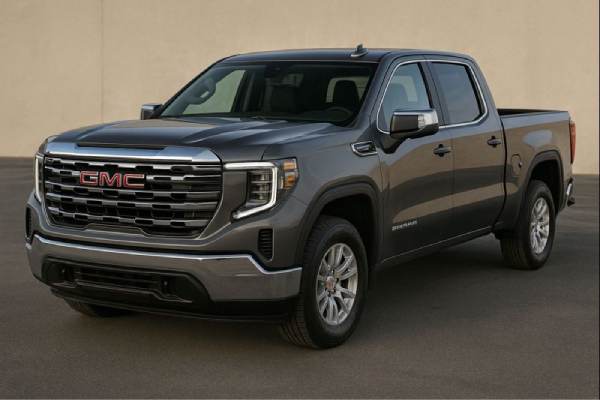
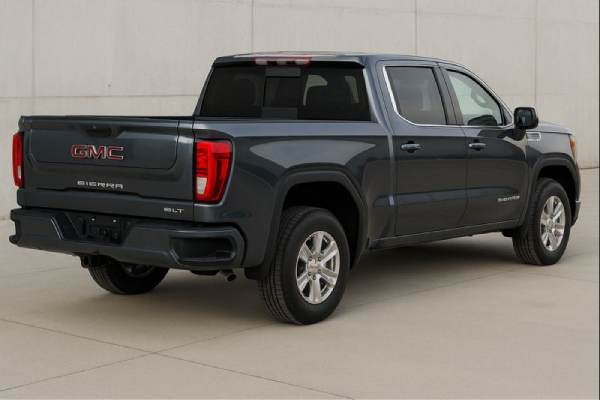
The 2022–2023 GMC Sierra 1500 RWD with the LM2 3.0-litre Duramax diesel is aimed at drivers who want full-size truck capability without full-size fuel bills. This facelift generation rides on the T1XX platform and pairs an efficient inline-six turbo-diesel with a smooth 10-speed automatic, rear-wheel drive, and a much more modern interior than the pre-facelift trucks.
In practice, this configuration suits highway commuters, fleets, and owners who tow moderate loads but do not need four-wheel drive. You get long range from a single tank, strong low-rpm torque, and a calmer, more refined drive than many older diesels. At the same time, LM2 engines and 10L80 transmissions have their own maintenance needs and a few important service bulletins you should know about before buying.
This guide walks through specs, dimensions, capabilities, known issues, maintenance planning, and how this Sierra compares to rivals so you can decide if the 3.0 Duramax RWD fits your use case.
Key Takeaways
- Strong 3.0 Duramax inline-six diesel delivers 277 hp and 460 lb-ft for relaxed towing and highway cruising.
- Excellent efficiency for a full-size pickup, with EPA ratings up to 23 mpg city / 30 mpg highway / 26 mpg combined for 2WD models.
- Known LM2 issues include possible oil-consumption faults and transmission valve-body wear; many are addressed by GM technical bulletins or recalls.
- Diesel oil and filter changes are typically recommended about every 7,500 miles (12,000 km) for normal use, sooner with heavy towing.
Navigate this guide
- Sierra 1500 3.0 Diesel Overview
- GMC Sierra 3.0 Diesel Specs
- Trims, Options and Safety Tech
- Reliability, Issues and Service Actions
- Maintenance Schedule and Buying Guide
- Driving Impressions and Efficiency
- Sierra 3.0 Diesel versus Rivals
Sierra 1500 3.0 Diesel Overview
The facelifted 2022–2023 GMC Sierra 1500 brought a major interior redesign, updated front and rear styling, and more standard active-safety tech. Under the skin, the LM2 3.0-litre Duramax turbo-diesel inline-six remained the key efficiency play in the lineup, especially in rear-wheel-drive (2WD) configurations.
The LM2 is an all-aluminium DOHC inline-six with a variable-geometry turbocharger, common-rail direct injection and a high 15:1-class compression ratio. Power is rated at 277 hp around 3,750 rpm, but the real story is torque: 460 lb-ft from just 1,500 rpm, giving the truck strong pull off the line and easy highway passing without big downshifts.
This engine is paired exclusively with the 10-speed Hydra-Matic 10L80 automatic transmission and, in this article, we focus on rear-wheel-drive models—typically Crew Cab Short Box 2WD or Extended Cab 2WD trucks. GMC positions this combination for customers who drive longer distances on paved roads, want to tow a camper or boat occasionally, and value range and refinement over off-road traction. GM’s own brochure highlights that all V-8s and the 3.0 Duramax share this 10-speed to keep the engine in its efficient band more of the time.
On the efficiency side, EPA data for 2022 2WD diesel Sierras shows 23 mpg city, 30 mpg highway, and 26 mpg combined—excellent numbers for a full-size pickup. For many owners, that translates into 600–700 miles on a single tank in mixed driving.
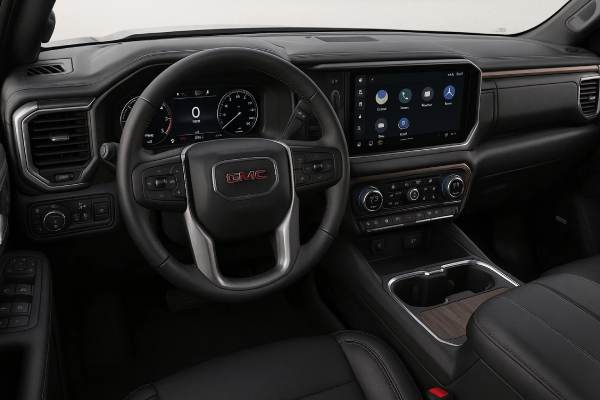
Inside, the facelift trucks gain a fully redesigned dash with a 13.4-inch central touchscreen, 12.3-inch configurable instrument cluster on most trims, and better material choices compared with pre-facelift models. Higher trims add features like massaging seats, premium audio, and advanced driver-assistance options such as GM’s Super Cruise on specific configurations (mostly 4WD Denali/Denali Ultimate).
If you do not need 4WD for snow or off-road work, the RWD 3.0 diesel Sierra offers a more economical and slightly lighter front end, which can improve ride and steering feel. It is a sensible choice for warmer climates, highway fleets, and owners who prioritise running costs and range over ultimate off-road traction.
GMC Sierra 3.0 Diesel Specs
This section focuses on typical 2022–2023 Sierra 1500 RWD Crew Cab Short Box models with the LM2 3.0 Duramax and 10-speed automatic. Exact figures vary by trim and equipment, so always confirm against the door-jamb label and owner’s manual for your truck.
Engine and Performance (LM2 3.0-litre Duramax)
| Parameter | Value |
|---|---|
| Engine code | LM2 Duramax turbo-diesel |
| Layout and cylinders | Inline-6, DOHC, 4 valves per cylinder |
| Displacement | 3.0 L (2,993 cc) |
| Bore × stroke | 84.0 × 90.0 mm (3.30 × 3.54 in) |
| Induction | Single variable-geometry turbocharger with intercooler |
| Fuel system | High-pressure common-rail direct injection |
| Compression ratio | ~15.0:1 (LM2 generation) |
| Max power | 277 hp (≈207 kW) @ 3,750 rpm |
| Max torque | 623 Nm (460 lb-ft) @ 1,500 rpm |
| Timing drive | Rear-mounted chains (cams and HP pump) plus wet belt driving oil pump |
| Emissions standard | U.S. Tier 3 / LEV III diesel |
| Rated fuel economy (2WD) | 26 mpg combined; 23 city / 30 highway (≈9.0 L/100 km combined) |
| Real-world highway @ 120 km/h | Commonly 8–8.5 L/100 km (28–30 mpg US) reported in light-load cruising (conditions-dependent) |
Transmission and Driveline
| Parameter | Value |
|---|---|
| Transmission | Hydra-Matic 10L80 10-speed automatic |
| Gear ratios (1st→10th) | 4.70 / 2.99 / 2.16 / 1.78 / 1.53 / 1.28 / 1.00 / 0.85 / 0.69 / 0.64 |
| Reverse | 4.87 |
| Final drive ratios (diesel) | 3.23 or 3.73 (varies by trim/tow package) |
| Drive type | Rear-wheel drive (2WD) |
| Differential | Open rear differential; automatic locking (G80) available/standard on many trims |
Chassis and Dimensions (Typical Crew Cab Short Box 2WD)
Figures below are typical values for 2022–2023 Crew Cab Short Box RWD trucks.
| Parameter | Value |
|---|---|
| Platform | T1XX light-duty truck |
| Front suspension | Independent coil-over shock, aluminium control arms |
| Rear suspension | Solid axle with semi-elliptic leaf springs |
| Steering | Electric power-assisted rack-and-pinion |
| Front / rear brakes | Ventilated disc / disc with ABS |
| Wheels / tyres | Commonly 255/70 R17 to 275/60 R20 (trim-dependent) |
| Length | ≈5,886 mm (231.9 in) crew-cab short-box |
| Width (without mirrors) | ≈2,063 mm (81.2 in) |
| Height | ≈1,917 mm (75.5 in) |
| Wheelbase | ≈3,745 mm (147.4 in) |
| Ground clearance | Around 203–223 mm (8.0–8.8 in), varies by package |
| Curb weight | ≈2,230 kg (4,900–4,950 lb) depending on trim |
| GVWR | Typically around 3,220 kg (≈7,100 lb) |
| Fuel tank | About 91 L (24 US gal) |
| Bed length (short box) | ≈1,775 mm (69.9 in) |
Performance and Capability
| Parameter | Value |
|---|---|
| 0–100 km/h (0–62 mph) | Roughly 7.0–7.5 s in independent testing for similar 3.0 diesel crew-cab trucks (varies with load and trim) |
| Top speed (governed) | Around 180 km/h (≈112 mph), application-dependent |
| Max towing (Sierra 1500 line with 3.0) | Up to about 5,987 kg (13,200 lb) when properly configured; typical RWD crew-cab short-box setups are closer to ~4,200 kg (≈9,200 lb) |
| Typical payload | Around 900–1,000 kg (≈2,000–2,200 lb), configuration-dependent |
Fluids and Service Capacities (Typical LM2/10L80 RWD)
Always confirm exact specs for your VIN and market.
| System | Specification and capacity |
|---|---|
| Engine oil | DexosD-approved full-synthetic 0W-20; approx. 6.6 L (7.0 US qt) with filter |
| Coolant | Organic acid technology (OAT) long-life coolant; capacity ≈20–21 L (≈21–22 qt) for engine and cooling system (varies) |
| Transmission (10L80) | Dexron ULV ATF; ≈12.8 qt for full system refill |
| Rear axle | Synthetic gear oil (typically 75W-90); capacity depends on axle (≈2–3 L) |
| A/C refrigerant | R-1234yf; charge and oil quantity vary by cab/option pack |
Electrical and Safety/ADAS Highlights
- Alternator output typically ~220 A on diesel models, depending on equipment.
- 12 V battery: high-capacity AGM in many trims, sized for diesel glow-plug loads.
- IIHS rates the 2022 Sierra 1500 crew cab “Good” in many crashworthiness categories, with “Acceptable” in the updated side test.
- NHTSA ratings for 2022 PU/CC 2WD trucks show solid overall performance with strong side-impact scores.
- Available ADAS (standard or optional by trim): automatic emergency braking with pedestrian detection, forward collision alert, lane keep assist with lane departure warning, blind-spot monitoring, rear cross-traffic alert, following-distance indicator, IntelliBeam auto high-beams, and available adaptive cruise and Super Cruise on select high trims.
Trims, Options and Safety Tech
For 2022–2023, the 3.0 Duramax LM2 could be ordered on multiple trims, though exact availability differs slightly by year and market. In rear-wheel-drive form, you most commonly find it on:
- Pro and SLE work-oriented or fleet trucks
- Elevation and SLT mid-range consumer models
- Some Denali/Denali Ultimate trucks (RWD in certain markets, more often 4WD)
Mechanically, the diesel RWD trucks share the same basic powertrain but differ in axle ratios, towing packages, suspension tuning and wheel/tyre combinations. For example, Max Trailering packages may pair the diesel with a 3.73 rear axle, heavier-duty cooling, trailer brake controller and upgraded hitch hardware, raising tow ratings significantly over a base 3.23-axle truck.
Wheel and tyre packages range from 17-inch steel wheels on base Pro models to 20-inch alloys with all-season or all-terrain tyres on Elevation and SLT. Larger wheels can sharpen steering response but tend to hurt ride quality and fuel economy compared with smaller, taller-sidewall tyres. Buyers planning long-distance towing often prefer 18-inch wheels as a good compromise.
Interior and technology options are another major differentiator. Lower-spec trucks may have cloth seats and a simpler gauge cluster, while SLT and Denali add leather upholstery, power and memory seats, larger screens, premium Bose audio, head-up display and more advanced towing-assist cameras. Coming from the pre-facelift Sierra, the upgraded infotainment system and digital cluster alone can make the 2022–2023 trucks feel like a generation newer.
On safety ratings, there is no separate crash score for diesel vs gasoline, RWD vs 4WD; the agencies test representative configurations. IIHS testing of the 2022 Sierra 1500 crew cab (and its Chevrolet twin) shows strong occupant protection, with especially good structure and safety-cage performance but an “Acceptable” result in the updated side test due to rear-seat torso metrics. NHTSA’s data for 2022 PU/CC 2WD models show high side-impact star ratings and competitive overall scores for a large pickup.
Advanced driver-assistance features are increasingly common:
- Forward collision warning and automatic emergency braking are standard or widely available.
- Lane keep assist, lane departure warning and following-distance indicator appear on most mid-level trims and up.
- Blind-spot monitoring and rear cross-traffic alert are common in higher trims or packages.
- Surround-view and bed-view camera systems, plus hitch-guidance overlays, greatly ease towing and tight-space manoeuvres.
When shopping used, pay close attention to build dates and options. Some early 2022 trucks are “Limited” carry-overs on the old interior; later 2022+ trucks are the full mid-cycle refresh with the upgraded cabin and technology suite.
Reliability, Issues and Service Actions
Overall, the LM2 diesel Sierra 1500 has a reputation for strong real-world fuel economy and smooth operation, but it is not free of issues. Understanding the main problem areas helps you judge a particular truck’s history and future maintenance costs.
Engine and lubrication
A key LM2-specific bulletin covers “LM2 Diesel With Possible Oil Consumption – DTC P06DD Set.” In affected 2020–2022 trucks, owners may see increased oil use and a diagnostic trouble code related to oil pressure control. The bulletin outlines inspection steps and corrective actions; in some cases, repairs may involve updated components or calibration changes.
The engine’s rear-mounted timing chains and wet belt-driven oil pump also matter for long-term ownership. The arrangement is compact and quiet but makes deep internal service expensive because the transmission must be removed for access. While widespread failures are not reported, neglecting oil changes or operating with low oil can accelerate wear on these components.
Fuel and emissions system
As a modern diesel, the 3.0 Duramax relies on high-pressure fuel injection, a diesel particulate filter (DPF), selective catalytic reduction (AdBlue/DEF), and multiple sensors. Short-trip use, extended idling, or repeated interrupted regens can increase soot loading, risking DPF issues over time. Owners who consistently take the truck on longer highway runs tend to see fewer problems.
Fuel quality is important. Contaminated diesel or water in fuel can damage injectors and high-pressure pumps. Regular fuel-filter changes at sensible intervals are cheap insurance.
Transmission and driveline
The 10L80 itself is generally well-regarded when serviced correctly, but there is a significant recall related to the transmission control valve body on certain diesel trucks, including Sierra 1500. In some cases, valve-body wear can cause loss of line pressure and, in rare situations, a brief rear-wheel lockup. Recall campaigns address this with inspection and software and/or hardware updates.
Symptoms to watch for include harsh or erratic shifts, shudder under load, or unexplained ABS/traction-control warnings. Any truck you are considering should show recall completion in the official VIN history.
Body, electronics and safety systems
A separate safety recall targets 2022 Sierra 1500 trucks with chrome grille deflectors fitted after the mid-cycle enhancement. The deflector could detach and pose a road-hazard risk; the fix involves inspection and repair or replacement.
Other service updates and bulletins include:
- Front camera module inoperative on certain 2022 vehicles, resolved by a service update.
- Spare wheel heat-shield concerns on some exhaust configurations.
- Accessory exhaust-system customer satisfaction programs for a small number of trucks.
These are not diesel-specific failures, but they matter for overall reliability and ownership experience.
Prevalence and cost tiers
- Common, low–medium cost: DEF system faults (sensors, heater), NOx sensors, battery replacements, brake and suspension wear, camera alignment after windshield or body repairs.
- Occasional, medium–high cost: Oil-consumption-related engine work, EGR/DPF component replacement, 10L80 valve-body repairs.
- Rare, high cost: Internal engine failures, severe transmission damage from continued driving with known issues, structural corrosion on neglected trucks in harsh climates.
Always run a recall and service campaign check by VIN through official channels and ask for printed dealer history where possible.
Maintenance Schedule and Buying Guide
Because the LM2 diesel and 10L80 transmission are more complex than older half-ton powertrains, a disciplined maintenance approach is essential.
Practical maintenance schedule (typical guidance)
This is a general outline; always follow the maintenance schedule and oil-life system in your owner’s manual.
- Engine oil and filter: DexosD-approved 0W-20 every 7,500 miles (12,000 km) or annually for normal use; every 3,000–5,000 miles (5,000–8,000 km) if you tow frequently or idle a lot.
- Fuel filter: About every 22,500–30,000 miles (36,000–50,000 km) or as specified; sooner if poor fuel quality is suspected.
- Engine air filter: Inspect at 15,000 miles (24,000 km); replace 30,000–45,000 miles depending on dust conditions.
- Cabin air filter: Every 20,000–30,000 miles or 2 years.
- Coolant: Long-life OAT coolant often specified to 150,000 miles (240,000 km) or 5 years initially, then shorter intervals; confirm in the manual.
- Transmission (10L80) fluid and filter: Many owners and independent specialists recommend service around 60,000–75,000 miles (96,000–120,000 km) when towing or working the truck; some severe-service schedules will be earlier.
- Rear axle fluid: Typically every 45,000–60,000 miles if towing, otherwise at longer intervals.
- Brake fluid: Replace every 3 years regardless of mileage.
- Serpentine/aux belts and hoses: Inspect annually from 60,000 miles; replace as cracks, glazing or noise appear.
- Tyre rotation and alignment: Rotate every 5,000–7,500 miles; check alignment annually or after impacts.
- 12 V battery: Load-test yearly after 4–5 years; plan replacement before it fails, especially in cold climates.
Because the timing chains and oil-pump belt sit at the rear of the engine, there is no simple scheduled replacement interval like a traditional timing belt. Instead, pay attention to:
- Abnormal rattles at start-up or idle
- Oil-pressure warnings or related fault codes
- Metal in oil samples
Any of these warrant prompt professional inspection.
Buyer’s checklist for a used LM2 RWD Sierra
When inspecting or ordering a used 2022–2023 Sierra 1500 RWD diesel:
- Confirm it is a facelift truck, not a “Limited” carry-over, unless you intentionally prefer the earlier interior. Look for the updated dashboard with wide central screen.
- Run an official recall and campaign check by VIN. Ensure transmission-related diesel recalls and grille-deflector campaigns are complete.
- Request full service records, including oil changes at sensible intervals, fuel-filter replacement and any transmission or driveline services.
- Inspect for corrosion, especially on frame, bed supports, brake lines and around wheel arches in rust-belt regions.
- Check towing history. Look for evidence of heavy trailers (brake-controller wiring, hitch wear). A truck that towed within its limits but was serviced on time can be fine; one that towed heavy with no fluid changes is riskier.
- Road-test thoroughly:
- Cold start, listening for abnormal rattles or diesel knock.
- Gentle and hard acceleration to check for smooth shifts.
- Highway cruise for vibration, steering pull and wind noise.
- Verify ADAS systems (AEB alerts, lane-keep assist, parking and 360 cameras) operate without warnings; mis-calibration after collision or windshield replacement is common if not corrected.
Which years/trims to favour?
- Best all-rounder: 2022–2023 facelift Crew Cab Short Box 2WD in SLE, Elevation or SLT trims with 3.23 or 3.73 axle depending on your towing needs.
- For maximum comfort: Denali/Denali Ultimate with diesel (often 4WD, but some markets get RWD); these are more complex and expensive to repair but offer the most features.
- Avoid or scrutinise: High-mileage early LM2 trucks with poor or unknown service history, or those with unresolved diesel/transmission recalls.
If you keep up with fluids, watch for early signs of issues and verify recall completion, the LM2 RWD Sierra can deliver long service life with unusually low fuel consumption for a full-size truck.
Driving Impressions and Efficiency
On the road, the 3.0 Duramax RWD Sierra feels quite different from a gasoline V8 truck. The inline-six starts quietly for a diesel, settles into a smooth idle, and produces its best work just above idle. With 460 lb-ft of torque available from around 1,500 rpm, you rarely need to spin it hard; the truck surges forward on a wave of torque rather than a dramatic rush of revs.
The 10L80 transmission complements this character. With ten ratios and a relatively tall top gear (0.64:1) paired with 3.23–3.73 final drives, it keeps revs low at highway speed, often near or below 1,600 rpm at 70 mph (113 km/h). Shifts are generally smooth and unobtrusive, especially in normal drive mode. Under heavy throttle, it will drop multiple gears quickly for brisk passing but still feels more relaxed than a gas engine hitting 5,000+ rpm.
Ride quality in RWD models benefits slightly from the lighter front end compared with 4WD trucks. Unladen, you still feel the typical body-on-frame truck motions over sharp bumps, but the Sierra’s suspension tuning and longer wheelbase give it good straight-line stability and a settled highway ride. Noise levels are competitive, with most diesel clatter well-contained once warm. Wind noise primarily comes from the mirrors at higher speeds; tyre roar depends strongly on wheel and tyre choice.
Steering is light but predictable, with modest feedback—typical for this class. RWD trucks normally exhibit a tighter turning circle than some 4WD counterparts, making parking lots a bit easier. Under heavy throttle on wet roads, the stability-control and traction systems quickly intervene to keep the rear tyres in line; a decent set of all-season or all-weather tyres is important if you run RWD in mixed weather.
In real-world fuel use, owners commonly report:
- City: Around 11–12 L/100 km (19–21 mpg US) in mixed suburban traffic.
- Highway (100–120 km/h / 60–75 mph): Often 7.5–8.5 L/100 km (28–31 mpg US) with light loads, matching or slightly beating the EPA highway figure in gentle driving.
- Mixed commuting: 9–10 L/100 km (23–26 mpg US) depending on terrain and driving style.
Towing a moderate camper or boat in the 3,000–3,500 kg (6,600–7,700 lb) range typically increases consumption by roughly 30–40%, putting many owners in the 13–16 L/100 km (15–18 mpg US) band on the highway, assuming sensible speeds.
Braking performance is solid for a light-duty full-size truck. The diesel’s engine-braking effect is modest compared with heavy-duty diesels, but the 10-speed is willing to downshift on grades when tow/haul mode is selected, helping manage speed without over-using the brakes.
The overall impression is of a refined, torquey truck that feels at its best cruising long distances or towing within its rated envelope. If you prefer a revvier, more aggressive feel, one of the gasoline V8s may suit you better—but you will pay more at the pump.
Sierra 3.0 Diesel versus Rivals
In the 2022–2023 full-size half-ton market, the Sierra 1500 3.0 Duramax RWD competes mainly with:
- Chevrolet Silverado 1500 3.0 Duramax (mechanical twin)
- Ford F-150 Power Stroke 3.0 diesel (phased out after earlier years) or EcoBoost V6s
- Ram 1500 EcoDiesel (also discontinued after 2023)
- Gasoline V8 and turbo-four versions of the Sierra/Silverado, F-150 and Ram 1500
Efficiency and range
Among traditional internal-combustion half-tons, the 3.0 Duramax is one of the most efficient options. EPA ratings of 23/30/26 mpg (city/highway/combined) for 2WD trucks are at or near the top of the class for this era, especially paired with a full-size crew cab. When combined with a roughly 24-gallon tank, it offers longer highway range than most comparable gas V8 or turbo V6 trucks.
Power and towing
In headline numbers, 277 hp might look modest next to 400+ hp gasoline V8s or some turbo V6s. However, 460 lb-ft at low rpm makes the Duramax feel stronger than the power figure suggests, particularly when towing. Maximum tow ratings around 13,000 lb in specific configurations keep it competitive with gas V8 tow packages, though heavy-duty three-quarter-ton pickups still dominate for serious, frequent heavy towing.
Against the Ram EcoDiesel, the 3.0 Duramax offers similar or better efficiency with a smoother inline-six layout and, in many tests, quicker acceleration. Compared with Ford’s diesel F-150 (where available), the GM engine typically delivers stronger towing performance and slightly better highway economy, though those F-150 diesels are now relatively rare on the used market.
Ride, refinement and interior
The 2022–2023 facelift gives the Sierra a cabin that finally competes head-on with Ram and Ford in design and technology. Ram’s coil-spring rear suspension still tends to win pure ride-quality comparisons, but the Sierra feels more modern and upscale than many pre-2022 rivals, especially in SLT and Denali trims.
Reliability and ownership
All modern light-duty diesels carry more complexity than gas engines. The LM2’s oil-pump belt and rear timing arrangement are unique long-term considerations, while transmission valve-body recalls for 2020–2022 diesel trucks add another item to check on any candidate vehicle.
On the plus side, when serviced correctly, owners often report very high mileages with stable fuel economy, and the diesel’s efficiency can offset its higher initial cost and slightly higher maintenance expenses—especially for drivers covering many highway miles per year.
Who the Sierra 3.0 RWD suits best
- Drivers who prioritise fuel economy and range but still need a true full-size pickup.
- Owners in mild climates who rarely need 4WD and mostly tow on paved roads.
- Fleet buyers who can keep up with scheduled maintenance and want lower fuel bills over high annual mileage.
If you mainly do short trips, rarely tow, or live where diesel fuel is substantially more expensive than gasoline, a 2.7-litre turbo-four or 5.3-litre V8 gas Sierra may be simpler and cheaper overall. But for the right usage pattern, the 3.0 Duramax RWD Sierra 1500 is one of the most efficient and refined ways to get full-size truck utility.
References
- 2022 FEATURES, SPECS AND OPTIONS 2022 (Brochure and Specifications)
- Gas Mileage of 2022 GMC Sierra 2022 (Fuel Economy Data)
- 2022 GMC Sierra 1500 crew cab pickup 2022 (Safety Rating)
- Vehicle Detail Search – 2022 GMC SIERRA 1500 PU/CC 2WD | NHTSA 2022 (Crash and Recall Database)
- Part 573 Safety Recall Report 24V-797 2024 (Transmission Recall – Diesel Models)
Disclaimer
This article is for informational purposes only and is not a substitute for professional diagnosis, repair, or official service information. Specifications, torque values, service intervals, and procedures can vary by VIN, model year, market, trim level, and installed options. Always confirm details against your vehicle’s owner’s manual, official workshop manual, and current technical bulletins from the manufacturer or authorised dealer.
If you found this guide helpful, you are welcome to share it on social platforms such as Facebook or X (Twitter) to help other owners and support our work.