
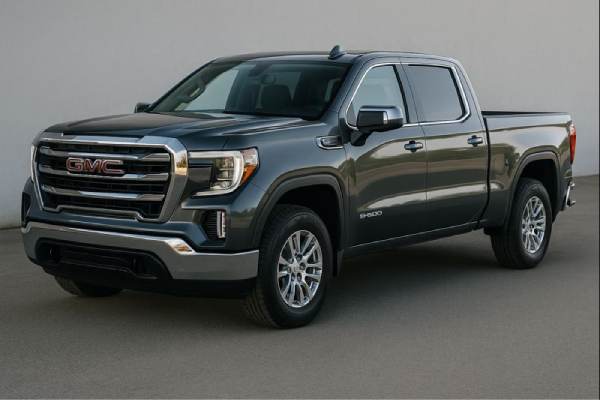
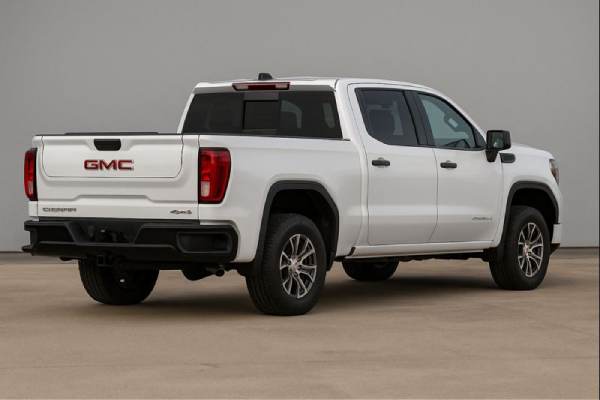
The 2022–2023 GMC Sierra 1500 4WD with the LM2 3.0-litre Duramax turbo-diesel is aimed at owners who need real four-wheel-drive capability but still care deeply about fuel economy and refinement. Built on the T1XX platform and updated with the 2022 facelift, this Sierra combines a modern, digital cabin with a smooth inline-six diesel and a sophisticated 10-speed automatic.
In 4WD form, it suits drivers who tow, travel on unpaved roads, or see regular winter conditions, but do not want the thirst of a big V8. The LM2’s 277 hp and 460 lb-ft provide relaxed power delivery, while the two-speed transfer case, off-road packages, and advanced driver-assistance systems broaden its capabilities.
This guide walks through specs, real-world performance, known issues, maintenance planning, and how the 3.0 Duramax 4WD Sierra compares with rival trucks so you can decide if this configuration fits your work, towing, and family needs.
Fast Facts
- 3.0-litre LM2 Duramax inline-six produces 277 hp and 460 lb-ft, paired with a 10-speed automatic and 4WD with a two-speed transfer case.
- Well-equipped 4WD trims can tow up to about 13,000 lb when properly configured with the Max Trailering Package.
- Typical 4WD diesel fuel economy lands around low-20s mpg combined, with better numbers on steady highway runs.
- Extra complexity comes from modern diesel emissions hardware and the 4WD driveline, making fluid changes and recall checks especially important.
- A sensible interval for engine oil and filter on these diesels is around 7,500 miles (12,000 km) or 12 months under mixed use.
What’s inside
- GMC Sierra 3.0 Diesel 4WD Overview
- Sierra 1500 4WD Diesel Specifications
- Trims, Options and 4WD Safety
- Duramax LM2 Reliability Profile
- Service Schedule and Buying Tips
- On-Road and Off-Road Performance
- Sierra LM2 Against Competitors
GMC Sierra 3.0 Diesel 4WD Overview
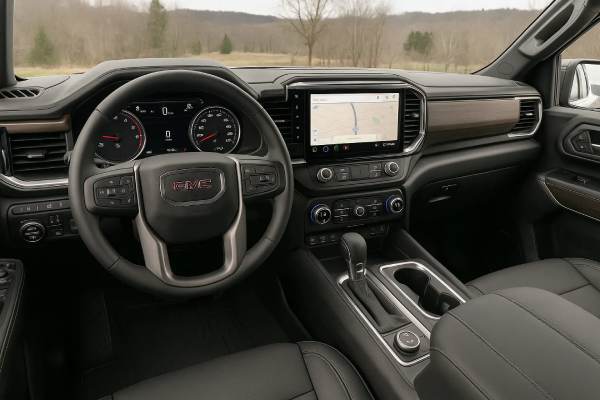
The facelifted 2022–2023 GMC Sierra 1500 marks a major step up over earlier T1 trucks, and the LM2 3.0 Duramax 4WD configuration is one of the most balanced ways to spec it. The facelift brings a redesigned dashboard with a wide 13.4-inch central touchscreen on most trims, a modern 12.3-inch digital cluster, cleaner exterior styling, and expanded active safety across the range.
Under the hood, the LM2 3.0-litre Duramax remains a key engine option. It is an all-aluminium, dual-overhead-cam inline-six with a variable-geometry turbocharger, high-pressure common-rail injection, and a roughly 15:1 compression ratio. Output is 277 hp at 3,750 rpm and 460 lb-ft of torque from just 1,500 rpm. This torque arrives early and stays available across a broad rev range, which is exactly what you want for towing, off-roading, or driving in hilly terrain.
Every LM2 half-ton Sierra is paired with the 10-speed Hydra-Matic automatic and an electronically controlled two-speed transfer case when ordered as a 4WD. Many trims offer multiple 4WD modes, including automatic all-wheel-drive (which can distribute torque to the front axle as needed), traditional 2HI, 4HI, and 4LO for serious off-road and low-speed control. Off-road-oriented versions like AT4 and AT4X add lifted suspension, off-road shocks, under-body skid plates, all-terrain tyres, and locking rear or front/rear differentials depending on trim and package.
Compared with the rear-wheel-drive diesel Sierra, 4WD versions carry extra mass and driveline drag, but the penalty in efficiency is modest and more than offset by confident traction in snow, mud, and on construction sites. For many buyers in northern climates or rural areas, 4WD is non-negotiable, and the 3.0 diesel lets you get that capability without completely sacrificing fuel economy.
Inside, the facelift trucks feel closer to a contemporary SUV than a traditional work truck. Even mid-level trims offer quality materials, good seat comfort, and quiet cabins. Higher trims—Denali, Denali Ultimate, and AT4X—add upgraded leather, sophisticated audio, and in some cases GM’s Super Cruise hands-free driving on compatible roads, though Super Cruise availability is limited and dependent on build configuration.
Overall, the 3.0 Duramax 4WD Sierra targets owners who split their time between towing, long-distance travel, and off-pavement use, and who prefer a refined diesel driving experience to a high-revving gasoline engine.
Sierra 1500 4WD Diesel Specifications
The figures below describe typical 2022–2023 Sierra 1500 4WD Crew Cab configurations with the LM2 3.0 Duramax. Exact specifications vary by cab, bed length, trim, axle ratio, and options, so always confirm against the owner’s manual and door-jamb labels for your specific truck.
Engine and Performance – LM2 3.0-litre Duramax
| Parameter | Value |
|---|---|
| Engine code | LM2 Duramax turbo-diesel |
| Layout and cylinders | Inline-6, DOHC, 4 valves per cylinder |
| Displacement | 3.0 L (≈2,993–3,000 cc) |
| Bore × stroke | ≈84.0 × 90.0 mm (3.30 × 3.54 in) |
| Induction | Variable-geometry turbocharger with intercooler |
| Fuel system | High-pressure common-rail direct injection |
| Compression ratio | About 15.0:1 |
| Max power | 277 hp (≈207 kW) @ 3,750 rpm |
| Max torque | 460 lb-ft (623 Nm) @ 1,500 rpm |
| Timing drive | Rear-mounted chains (cams and high-pressure pump) with a wet belt driving oil pump |
| Emissions standard | Tier 3 / LEV III with DPF and SCR aftertreatment |
| Rated fuel economy (typical 4WD trims) | Often around low-20s mpg combined, with slightly higher highway figures |
| Real-world highway @ 120 km/h | Commonly 8.5–9.5 L/100 km (25–28 mpg US) depending on load and tyres |
Transmission and 4WD Driveline
| Parameter | Value |
|---|---|
| Transmission | Hydra-Matic 10L80 10-speed automatic |
| Gear ratios (1st→10th) | 4.70 / 2.99 / 2.16 / 1.78 / 1.53 / 1.28 / 1.00 / 0.85 / 0.69 / 0.64 |
| Reverse | 4.87 |
| Transfer case | Electronic two-speed, with 2HI, 4HI, 4LO and Auto modes (trim-dependent) |
| Final drive ratios | Commonly 3.23, 3.42, or 3.73 (varies by package; Max Trailering uses shorter gears) |
| Drive type | Part-time or automatic 4WD with rear bias |
| Differentials | Open or automatic locking rear; selectable/e-locking on certain AT4X-style off-road trims |
Chassis, Dimensions and Capacities (Typical 4WD Crew Cab Short Box)
| Parameter | Value |
|---|---|
| Platform | T1XX light-duty 1/2-ton truck |
| Front suspension | Independent coil-over strut with aluminium control arms |
| Rear suspension | Solid axle, leaf springs |
| Steering | Electric power-assisted rack-and-pinion |
| Brakes | Four-wheel discs with ABS; front ventilated |
| Wheels / tyres | Typically 18–20 in alloys with highway or all-terrain tyres |
| Length | ≈5,886–5,918 mm (231.9–233 in) depending on bumper and trim |
| Width (without mirrors) | Around 2,063 mm (81.2 in) |
| Height | ≈1,920–1,990 mm (75.5–78.3 in), higher for off-road suspensions |
| Wheelbase | ≈3,745 mm (147.4 in) crew cab short box |
| Ground clearance | Roughly 213–275 mm (8.4–10.8 in), trim- and tyre-dependent |
| Curb weight | Typically 2,300–2,500 kg (5,100–5,500 lb) for 4WD diesel crew cabs |
| GVWR | Around 3,220–3,290 kg (7,100–7,250 lb) |
| Fuel tank | About 91 L (24 US gal) on light-duty 1500 models |
Performance and Towing
| Parameter | Value |
|---|---|
| 0–100 km/h (0–62 mph) | Roughly 7.5–8.0 s in independent testing, depending on trim and tyres |
| Top speed (governed) | Around 180 km/h (≈112 mph), application-dependent |
| Maximum towing (properly equipped 4WD, Max Trailering) | Up to about 5,897–5,897+ kg (≈13,000 lb) |
| Typical 4WD towing ranges | Many real-world trucks are rated around 3,600–4,500 kg (8,000–10,000 lb) |
| Payload | Frequently in the 800–1,000 kg (1,800–2,200 lb) range, trim-dependent |
Fluids and Service Capacities (Typical Guidance)
Approximate numbers; always confirm by VIN.
| System | Specification and capacity |
|---|---|
| Engine oil | DexosD-approved 0W-20 synthetic; roughly 6.6 L (7.0 US qt) with filter |
| Engine coolant | Long-life OAT coolant; around 20 L (≈21 US qt) total system capacity |
| Transmission (10L80) | Dexron ULV ATF; on the order of 12–13 qt for full refill |
| Transfer case | Specific GM transfer-case fluid; capacity typically around 1.5–2.0 L |
| Front / rear axles | Synthetic gear oil (e.g., 75W-90); capacity varies by axle size |
| A/C refrigerant | R-1234yf; charge depends on cab configuration and climate system |
Electrical and Safety/ADAS Highlights
- High-output alternator (approximately 220 A) on many diesel/Max Trailering configurations.
- High-capacity AGM 12 V battery selected to handle diesel starting and accessory load.
- Multiple airbags, including front, side-impact, and head-curtain coverage for both rows.
- Available GMC Pro Safety suites with automatic emergency braking, lane keeping, blind-spot monitoring, rear cross-traffic alert, and more, depending on trim and package.
Trims, Options and 4WD Safety
The LM2 3.0-litre Duramax 4WD powertrain can be found across much of the Sierra 1500 line-up, though availability varies by year, cab, and market. For 2022–2023 facelift trucks, common 4WD diesel trims include:
- SLE and Elevation: Versatile mid-level trims; popular for mixed work and family use.
- SLT: More upscale, with leather seating and additional technology.
- AT4 and AT4X: Off-road focused, combining 4WD with factory lift, off-road shocks, skid plates, and all-terrain tyres.
- Denali and Denali Ultimate: Luxury-focused with extensive comfort and technology, often paired with 4WD.
Mechanically, the differences are not just cosmetic. Off-road trims often include:
- Specific suspension tuning and increased ground clearance.
- All-terrain tyres and sometimes unique wheel sizes.
- Additional skid plates protecting the transfer case, fuel tank, and underbody.
- Available locking differentials (rear or front and rear on AT4X-style models).
With the Max Trailering Package, many 4WD diesel Sierras gain a shorter axle ratio, heavy-duty cooling, upgraded tow hardware, and integrated trailer-brake controls. This can significantly raise tow ratings compared with a standard 3.23-axle truck on highway tyres.
The 2022 facelift also reshapes the trim walk. Some early 2022 “Limited” models carry over the pre-facelift cabin with different feature layouts, while full 2022+ facelift trucks gain the new interior and larger screens. When shopping used, it is important to confirm whether a 2022 truck is a Limited (old cabin) or full refresh (new cabin).
From a safety perspective, there is no separate crash-test result just for the diesel or 4WD version. Ratings from major bodies apply to representative Sierra 1500 crew-cab configurations. Those tests generally show strong occupant protection with modern crumple-zone design and robust occupant cages. Headlight and advanced-safety ratings vary by trim and headlamp type, so Denali and other high trims with better lamps and additional ADAS hardware tend to score higher than base models.
Key 4WD-related safety and driver-assistance features (standard or available, depending on trim) include:
- Hill descent control and off-road drive modes on AT4-type trucks to maintain speed on steep, loose surfaces.
- Trailer sway control, tow/haul mode and integrated trailer-brake controller for safer towing.
- Surround-view camera systems and bed-view cameras that make hitching trailers and manoeuvring off-road easier and safer.
- Blind-spot monitoring with trailer coverage on some configurations, extending the system’s watch zone when towing.
When comparing trims, focus on the functional differences: axle ratio, tow-rating changes, recovery points, underbody protection, tyre type and size, and whether your truck has the more advanced camera and safety packages you want for towing and winter driving.
Duramax LM2 Reliability Profile
The LM2 3.0 Duramax and its 4WD driveline have generally positive feedback for smoothness and fuel economy, but like any modern diesel truck, there are known problem areas. Understanding them helps you separate a well-cared-for truck from a risky one.
Engine-related issues
A widely discussed topic is oil consumption combined with diagnostic trouble codes around oil pressure control, especially on earlier LM2 applications. Certain technical service bulletins explain how technicians should diagnose and repair cases where the engine control module logs codes related to the variable oil pump or oil-pressure regulation while owners report higher-than-expected oil use. In practice, that means:
- Checking oil level regularly between services.
- Investigating any oil-pressure warnings or fault codes promptly rather than continuing to drive.
The LM2’s rear-mounted timing drive and wet belt for the oil pump also affect long-term serviceability. They are designed for long life and quiet operation, but accessing them requires substantial labour, as the transmission must be removed. This makes preventing accelerated wear by using the correct oil, avoiding extended oil-change intervals, and never running low on oil especially important.
As with most modern diesels, the fuel system relies on clean, high-quality fuel. Water contamination or poor fuel can damage injectors and the high-pressure fuel pump. Sticking to a sensible fuel-filter replacement schedule and using reputable filling stations is a simple defence against expensive fuel-system repairs.
Emissions and aftertreatment
The LM2 uses a diesel particulate filter (DPF), selective catalytic reduction (with diesel exhaust fluid/DEF), and exhaust-gas recirculation (EGR). Common concerns include:
- DPF loading on trucks used mainly for short, cold trips, where regeneration opportunities are limited.
- Sensor failures (NOx sensors, differential-pressure sensors) that can trigger warning lights and reduced-power modes.
- DEF system issues such as heater, pump or tank sensor faults, particularly in cold climates.
Owners who routinely drive longer highway stretches tend to have fewer DPF-related problems, as the exhaust stays hot enough for complete regenerations.
Transmission and 4WD
The 10L80 transmission has a generally good record when serviced with the correct low-viscosity fluid, but there have been recall campaigns and service bulletins addressing valve-body and control issues, including rare reports of momentary wheel lockup in certain failure modes. For a 4WD diesel Sierra, confirm via VIN that all relevant transmission-related recalls and updates have been completed.
In the 4WD system, neglecting transfer-case and axle fluid changes can lead to noises, binding, or premature wear. Electronic shift actuators and position sensors can also cause issues if they fail or become contaminated, leading to difficulty engaging or disengaging 4WD modes.
Chassis, electronics and corrosion
Common truck-wide concerns include:
- Suspension and steering wear on high-mileage or heavily loaded trucks, such as ball joints, tie rods, and control-arm bushings.
- Electrical and infotainment glitches, sometimes addressed by software updates or module replacements.
- Corrosion on frames, brake lines, and body seams in regions that use road salt, especially if the truck was never regularly underbody-washed.
Prevalence and cost bands
- Common and low–medium cost: DEF and NOx sensor replacements, battery replacement, minor suspension components, camera recalibration after repairs.
- Occasional and medium–high cost: DPF replacements, EGR components, 10L80 valve-body work, transfer-case or differential repairs if fluids are neglected.
- Rare and high cost: Internal engine damage from lubrication problems, severe fuel-system contamination, or catastrophic transmission failure.
Buying a truck with complete service records, documented recall completion, and clean diagnostic scans greatly reduces the risk of seeing these expensive failures.
Service Schedule and Buying Tips
Modern 4WD diesel half-tons reward owners who treat maintenance as an investment rather than a cost. The LM2 Sierra is no exception.
Practical maintenance schedule (typical guidance)
Always tailor maintenance to your driving profile and the official schedule, but the following intervals are sensible starting points:
- Engine oil and filter: DexosD 0W-20 every 7,500 miles (12,000 km) or 12 months in mixed use; shorten to 5,000 miles (8,000 km) if you tow often or do heavy city driving.
- Fuel filter: Around every 22,500–30,000 miles (36,000–50,000 km); more frequently if you suspect poor fuel quality.
- Engine air filter: Inspect at 15,000 miles (24,000 km); replace 30,000–45,000 miles depending on dust and off-road use.
- Cabin air filter: Every 20,000–30,000 miles or 2 years.
- Coolant: Long-life OAT coolant often first replaced around 150,000 miles (240,000 km) or 5 years; follow the severe-service guidance if you tow frequently or operate in extreme temperatures.
- Transmission fluid (10L80): Many owners and independent specialists favour a 60,000–75,000-mile (96,000–120,000 km) service interval for trucks that tow or see hard use, even if the factory interval is longer.
- Transfer case and axle fluids: Approximately every 45,000–60,000 miles under towing/off-road use; less severe duty may allow longer intervals.
- Brake fluid: Every 3 years regardless of mileage.
- Brakes and tyres: Inspect at each service; rotate tyres every 5,000–7,500 miles and perform an alignment check annually or after impacts.
- Serpentine belt and hoses: Begin detailed inspections around 60,000 miles; replace for cracks, glazing or noise.
- 12 V battery: Load-test annually from year 4 onward; pre-emptive replacement before failure is wise in cold regions.
The timing chains and oil-pump belt do not have a simple mileage-based replacement interval, but any signs of abnormal timing noise, oil-pressure concerns, or metal in oil samples warrant immediate investigation.
Buyer’s guide: what to check on a used 3.0 4WD Sierra
When evaluating a used 2022–2023 LM2 4WD Sierra:
- Verify facelift vs Limited: Only the facelift trucks receive the thoroughly updated interior. Confirm visually and by VIN description.
- Run an official recall check: Use the VIN to confirm that all powertrain, transmission, and safety recalls have been completed. Ask for printed dealer recall-completion records if possible.
- Request full service history: Look for evidence of timely oil changes, fuel-filter replacements, and any transmission or transfer-case services. A diesel truck that has gone 15,000–20,000 miles between oil changes repeatedly is less attractive.
- Inspect for corrosion: Pay special attention to the frame rails, suspension mounting points, brake lines, bed supports, and body seams under the doors and around the rear wheel arches.
- Assess towing and off-road use: Check for heavy hitch wear, aftermarket brake controls, or oversized tyres that may suggest heavy towing or off-roading. These are not automatic deal-breakers if maintenance is documented and the truck drives well.
- Road test thoroughly:
- Confirm smooth 2HI/4HI/4LO engagement and disengagement on suitable surfaces.
- Check for driveline clunks, vibrations, or binding during tight turns in 4WD.
- Listen for wind noise, suspension rattles, or harsh shifts that could hint at alignment or transmission issues.
- Verify driver-assistance functionality: Ensure lane-keep assist, adaptive cruise (if equipped), cameras, and parking sensors operate normally with no warning lights. Mis-calibration or damaged sensors after repairs can be costly to correct.
Recommended configurations
- Balanced choice: 2022–2023 SLE, Elevation, or SLT 4WD Crew Cab with the 3.0 Duramax and axle ratio matched to your towing needs.
- Off-road and towing: AT4 or AT4X with diesel and Max Trailering, for owners who routinely drive unpaved roads and tow moderate to heavy trailers.
- Luxury long-distance hauler: Denali or Denali Ultimate 4WD diesel, acknowledging higher purchase and potential repair costs but outstanding comfort and features.
Avoid trucks with unclear service history, ongoing check-engine or emissions warnings, or incomplete recall status unless they are priced to reflect the additional risk and required remedial work.
On-Road and Off-Road Performance
The LM2 3.0 Duramax gives the 4WD Sierra a distinct driving character compared with gasoline-powered V8 trucks.
Ride, handling and refinement
On pavement, the Sierra 1500 4WD diesel feels composed and relaxed. The inline-six architecture helps it run smoothly, with less vibration than many older V6 diesels. The 10-speed gearbox keeps revs low, often near 1,500–1,700 rpm at typical highway speeds, which reduces noise and helps fuel economy.
Ride quality depends heavily on trim and tyres. Standard 4WD models with sensible wheel sizes and non-aggressive tyres ride comfortably and track straight at motorway speeds. AT4 and AT4X trucks sit taller and use off-road-focused suspensions and tyres; they feel firmer and more purposeful but can be slightly noisier and less settled on broken pavement.
Steering is light but precise enough for a large pickup. Straight-line stability at highway speeds is good, and the longer wheelbase of crew cabs helps with confidence when towing. Turn-in is predictable, though body roll reminds you that you are driving a tall, body-on-frame truck rather than a low crossover.
Powertrain character
The 3.0 Duramax’s strong low-end torque defines the driving experience. From a stop, the truck pulls away with minimal throttle, and the 10-speed quickly shifts up to keep the engine in its sweet spot. There is little sensation of turbo lag in everyday driving; the turbocharger is well matched to the engine’s displacement and compression ratio.
Passing performance is solid rather than explosive. The transmission drops multiple gears when you demand full throttle, and the engine pulls strongly through the mid-range without needing to rev to high rpm. For many owners, especially those towing or climbing grades, the smoothness and torque of the diesel feel more reassuring than the sharper but higher-revving character of a V8.
Real-world efficiency and range
Real-world fuel economy for 4WD diesel Sierras is naturally lower than 2WD versions but still impressive for a full-size pickup:
- City or mixed urban use: Often in the 11–13 L/100 km range (18–21 mpg US) depending on traffic and driving style.
- Highway at 100–120 km/h (60–75 mph): Frequently 8.5–9.5 L/100 km (25–28 mpg US) in calm conditions with moderate loads.
- Mixed commuting: Many owners see low-20s mpg US (around 10–11 L/100 km) in typical mixed driving.
With a roughly 24-gallon tank, practical highway range can exceed 900 km (550+ miles) between fills in favourable conditions.
Towing a medium travel trailer or boat in the 3,000–3,500 kg (6,600–7,700 lb) range typically reduces economy by 30–40%, landing many drivers in the 13–17 L/100 km (14–18 mpg US) band at sensible highway speeds.
Off-road and winter traction
The 4WD system, two-speed transfer case and available terrain modes give the LM2 Sierra real off-road and winter capability:
- 4HI is suitable for slippery roads, light off-roading and gravel.
- 4LO provides the low gearing needed for steep climbs, slow technical trails, or recovering stuck trailers.
- Off-road modes in AT4/AT4X adjust throttle, transmission and traction-control behaviour for loose surfaces.
All-terrain tyres and factory skid plates on off-road trims provide extra confidence over rocks, ruts, and deep snow. Locking differentials greatly improve traction in cross-axle situations where one wheel is unloaded.
In winter, a good set of winter-rated tyres is still crucial, but the combination of 4WD, diesel torque, and helpful electronic aids makes these trucks well-suited to snowbelt duty.
Overall, the 4WD LM2 Sierra delivers a blend of long-legged comfort, strong low-speed traction and respectable efficiency that is difficult to match with gasoline powertrains in the same segment.
Sierra LM2 Against Competitors
In the 2022–2023 market, the GMC Sierra 1500 4WD 3.0 Duramax sits in a shrinking but highly capable niche: light-duty full-size pickups with modern diesel engines.
Versus gasoline Sierras and Silverados
Compared with the 5.3-litre and 6.2-litre V8 gasoline Sierras:
- Fuel economy and range: The 3.0 diesel usually offers significantly better highway and combined mpg, giving notably longer range on the same tank size.
- Torque delivery: The diesel delivers its torque at much lower rpm, making it feel stronger at normal everyday speeds and under moderate towing loads.
- Refinement: Subjectively, many owners find the LM2 quieter and smoother at cruise than a big V8 spinning higher revs, though diesel clatter is more noticeable at idle.
- Complexity and maintenance: The diesel brings more complex emissions hardware and higher parts costs, especially around the fuel and aftertreatment systems. Gasoline V8s are simpler but thirstier.
If you do many short trips and little towing, a gasoline engine may be more cost-effective overall. If you regularly tow, rack up highway miles, or value range and low-rpm character, the diesel makes a strong case.
Versus Ram 1500 EcoDiesel and Ford F-150 diesel (where available)
Ram and Ford’s half-ton diesels have either been discontinued or made rare, which affects long-term support and parts familiarity. Against these rivals, the LM2 Sierra generally offers:
- Competitive or better fuel economy.
- Smooth inline-six refinement.
- A robust 10-speed automatic and strong towing figures when properly equipped.
Ram’s coil-spring or air-spring rear suspension can deliver a more supple empty ride, and Ford’s F-150 lineup has broad engine choices, but the Sierra 3.0 diesel holds its own as a well-rounded option in terms of efficiency, capability, and cabin quality (especially post-facelift).
Versus emerging electrified pickups
Newer electric pickups offer instant torque and strong acceleration, but their towing range can drop sharply with heavy loads. Fast-charging infrastructure, charging time under tow, and initial purchase price remain important considerations.
The LM2 diesel Sierra offers:
- Predictable towing range with quick refuelling at existing diesel stations.
- An established servicing ecosystem familiar with diesel pickups.
- A bridge for buyers not ready to commit to EV infrastructure but who still want to cut fuel bills relative to gas V8s.
Who the LM2 4WD Sierra suits
This truck is a strong match if:
- You tow moderate to heavy loads regularly and want lower fuel consumption than a gas V8.
- You live in a region with real winter or frequent unpaved-road driving and need 4WD and increased ground clearance.
- You value an upscale, modern cabin, especially in SLT, AT4, Denali, or Denali Ultimate trims.
It may not be ideal if you mostly drive very short trips, rarely leave the city, or dislike dealing with DEF and diesel-specific maintenance. In those cases, a gas engine or, in the future, an electrified truck might better fit your usage.
For many buyers, however, the 2022–2023 GMC Sierra 1500 4WD with the LM2 3.0 Duramax strikes a compelling balance: real off-road and towing capability, a comfortable and tech-rich cabin, and fuel economy that can genuinely ease the cost of running a full-size truck.
References
- 2022 FEATURES, SPECS AND OPTIONS 2022 (Brochure and Specifications)
- Gas Mileage of 2022 GMC Sierra 2022 (Fuel Economy Data)
- 2022 GMC Sierra 1500 Crew cab pickup 2022 (Safety Rating)
- 5-Star Safety Ratings 2022 (Crash and Recall Database)
- GM Duramax 3.0L LM2 I-6 Diesel Engine Info, Specs, Wiki 2023 (Engine Technical Overview)
Disclaimer
This article is intended for informational purposes only and does not replace professional diagnosis, repair, or official service information. Specifications, torque values, service intervals, and procedures can vary by VIN, model year, market, trim level, and installed options. Always verify details against your vehicle’s owner’s manual, official workshop documentation, current technical bulletins, and guidance from a qualified technician or authorised dealer.
If you found this guide useful, you are welcome to share it on platforms such as Facebook or X (Twitter) to help other owners and support our work.