
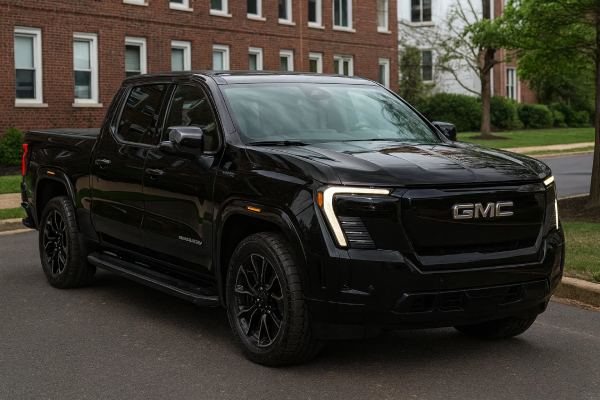
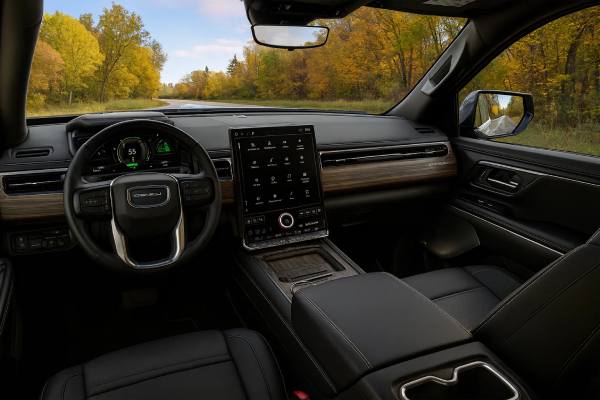
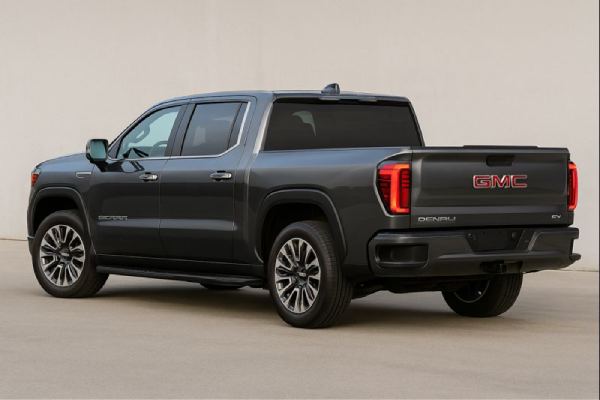
The 2024 GMC Sierra EV Denali Edition 1 is a high-output, luxury-focused electric pickup built on GM’s BT1 truck EV platform. Its standout traits are simple: huge battery capacity, strong real-world passing power, and a chassis packed with hardware (like rear-wheel steering) that helps it feel more manageable than its size suggests. Edition 1 is also a “systems” vehicle—charging behavior, thermal control, driver assistance, and even towing confidence depend heavily on software calibration and updates, not just mechanical parts.
For owners, the big advantages are quiet long-distance comfort and effortless torque delivery. The trade-offs are mass and complexity: tires, brakes, suspension components, and software health matter more than on a lighter EV. If you treat it like a high-end EV plus a heavy-duty tool—and maintain it like both—it rewards you with a uniquely capable, premium electric truck experience.
Quick Specs and Notes
- Very strong straight-line performance for a full-size pickup; effortless highway passing even when loaded.
- Large battery supports long-distance trips, but speed, cold weather, and towing can cut range sharply.
- Expect higher tire and brake wear costs than smaller EVs due to weight and torque.
- Rotate tires about every 12,000 km (7,500 mi) to protect range and tread life.
- Use DC fast charging strategically (mainly 10–80%) to reduce time spent in taper.
Navigate this guide
- Denali Edition 1 in context
- BT1CG specs and technical data
- Equipment, packages, and driver assist
- Reliability issues and recalls
- Maintenance plan and buying checks
- Driving, range, and charging reality
- Rivals worth cross-shopping
Denali Edition 1 in context
Denali Edition 1 is the “showcase” version of the Sierra EV for the 2024 model year. Think of it less as a base trim and more as a fully loaded launch specification: maximum power, maximum hardware content, and a luxury cabin that aims at premium ICE trucks and high-end EV rivals at the same time. Underneath, it shares the core BT1 architecture with GM’s other full-size electric trucks, which matters because it shapes how the Sierra EV drives and how it uses energy.
The engineering story starts with two realities: the Sierra EV is very heavy, and it produces instant torque. That combination places extra demand on tires, bushings, dampers, and brake hardware, and it also makes calibration (traction control, stability control, blended braking, and torque ramp) a major part of the “feel.” A well-tuned dual-motor AWD system can make a heavy truck feel stable and secure; a poorly tuned one can feel abrupt. Denali Edition 1’s mission is to feel premium first—quiet, smooth, predictable—and fast second.
This truck is also built to be more than a commuter. It’s designed to tow meaningful weight and to do long trips without feeling like an experiment. That means aggressive DC fast-charge capability, route and thermal strategies to protect charging speed, and enough battery capacity to buffer real-world conditions. In practice, the ownership experience is shaped by how you charge and how you drive: a heavy EV pickup can be incredibly efficient at moderate speeds, then noticeably less efficient at high highway speeds or in cold weather with cabin heat.
Finally, Denali Edition 1 sets expectations for reliability and maintenance. EVs reduce engine-related service, but they don’t eliminate wear. Weight and torque accelerate tire wear, alignment sensitivity, and suspension wear—especially if you drive it hard or tow. Add the fact that many fixes and refinements arrive via software updates, and you get a vehicle where “maintenance” includes keeping modules updated and addressing recalls promptly, not just rotating tires.
BT1CG specs and technical data
Below are the key published specifications for the 2024 Sierra EV Denali Edition 1 (BT1CG) plus a few clearly labeled real-world benchmarks. Where GM does not publish a value, it is marked accordingly to avoid guesswork.
Powertrain, Battery, and Efficiency
| Item | Specification |
|---|---|
| Code | BT1CG |
| Motor | Dual-motor e4WD (front + rear); motor type not formally published |
| System voltage | 800 V class architecture |
| Battery chemistry | Not published (verify by service documentation) |
| Traction battery | 205.0 kWh (published pack figure; usable not published) |
| Pack layout | Floor-mounted truck pack (BT1) |
| Max power | 754 hp (562 kW) |
| Max torque | 785 lb-ft (1,064 Nm) |
| Thermal management | Liquid thermal management (battery and power electronics) |
| Efficiency / test standard | EPA metrics and GM estimates (final label varies by VIN/equipment) |
| Rated efficiency | 62 MPGe combined (approx. 33.8 kWh/100 km; 544 Wh/mi) |
| Rated range | 440 mi (708 km) estimate for Denali Edition 1 configuration |
| Real-world highway @ 120 km/h (75 mph) | ~32–36 kWh/100 km (510–580 Wh/mi); ~580–640 km (360–400 mi), conditions-dependent |
| Aerodynamics | Cd / frontal area not published |
Driveline and Charging
| Item | Specification |
|---|---|
| Transmission / drive unit | Single-speed reduction drive units (codes not published) |
| Gear/reduction ratios | Not published |
| Drive type | Dual-motor AWD (e4WD) |
| Differential / torque distribution | Electronically controlled torque split (hardware details not published) |
| Charging connector (AC) | J1772 (North America) |
| Charging connector (DC) | CCS1 (North America) |
| Charging port location | Body-side port (location varies by build; confirm on vehicle) |
| Onboard charger (AC) | Not published as a single universal value (check window sticker/Monroney for kW) |
| DC fast-charge peak | Up to 350 kW (charger and conditions permitting) |
| Typical DC charging curve | Not fully published; expect taper above mid-to-high SOC as normal |
| Replenishment time | DC 10–80%: varies by conditions; plan for a typical long-stop window rather than a single fixed minute value |
| Battery preconditioning | Supported (strategy depends on route planning, SOC, and temperature) |
| Bidirectional capability | Available features vary by package/market; verify export kW and outlet format for your truck |
Performance and Capability
| Item | Specification |
|---|---|
| Acceleration | 0–60 mph: 4.5 s (GM-est.); instrumented tests report low-4s depending on surface and SOC |
| 0–100 km/h (0–62 mph) | Not universally published as a single certified value; expect slightly slower than 0–60 mph time |
| Top speed | 112 mph (180 km/h) (reported limited top speed) |
| Braking distance | 62–0 mph (100–0 km/h) is rarely published for this truck; a reasonable estimate from 70–0 mph testing is ~156 ft (47.6 m) (estimate) |
| Towing capacity | Up to 10,000 lb (4,536 kg) (configuration-dependent) |
| Payload | Not consistently published as one figure for Edition 1; check door jamb label |
| Roof load | Not published |
Chassis and Dimensions
| Item | Specification |
|---|---|
| Suspension (front/rear) | Independent layouts (exact geometry varies by package; not fully published) |
| Steering | Electric power steering; rear-wheel steering equipped on Denali Edition 1 |
| Brakes | F: 14.5 in (368 mm) discs; R: 13.6 in (345 mm) discs |
| Wheels/tires | 24 in wheels; LT275/50R24 tires (common Edition 1 fitment) |
| Ground clearance | Not published as a single official value |
| Length / width / height | 233.4 in (5,928 mm) / 83.8 in (2,129 mm) / 78.7 in (1,999 mm) |
| Wheelbase | 145.7 in (3,701 mm) |
| Turning circle | Not published (rear-steer reduces maneuvering effort noticeably) |
| Curb weight | ~8,800 lb (3,992 kg) (published figure; varies with equipment) |
| GVWR | Not published in a single universal spec (see certification label) |
| Cargo volume | Bed and storage volumes vary with configuration; verify official measurement method |
| Additional storage | Front trunk (“frunk”) and underfloor storage availability depends on configuration |
Safety and Driver Assistance
| Item | Specification |
|---|---|
| Crash ratings | Sierra EV-specific public ratings may be limited; verify by VIN on official rating portals |
| ADAS suite | AEB, lane support, blind-spot monitoring, and available hands-free highway driving features depending on package/market |
Electrical
| Item | Specification |
|---|---|
| Traction battery | 205.0 kWh published figure; usable not published |
| High-voltage architecture | 800 V class (BT1) |
| DC–DC converter | Not published |
| 12 V battery | Not published (type/location vary by build) |
| OTA updates | Supported; frequency and module coverage vary by region and subscription features |
Fluids and Service Capacities
Many EV-specific capacities and torque values are not consistently published in public-facing specs. Use official service information for your VIN when doing any fluid or torque-critical work.
| Item | Specification |
|---|---|
| Brake fluid | Verify cap/owner documentation (commonly DOT 3/4 class fluids on modern trucks) |
| Coolant loops | Multiple coolant circuits typical on high-power EV trucks; spec/capacity by VIN |
| A/C refrigerant | Type and charge by under-hood label |
| Key torque specs | Use service manual for wheel nuts, suspension, and any HV service points |
Equipment, packages, and driver assist
For 2024, Denali Edition 1 is effectively its own trim strategy: GMC aimed to launch with a single, highly optioned configuration rather than a wide menu. That simplifies shopping but makes it more important to verify what your specific truck includes—especially for charging hardware, off-board power, and hands-free driver assistance features that may be tied to packages, subscriptions, or region.
Trims and options (what actually changes)
Even in an “Edition 1” world, there are still meaningful differences that can affect ownership:
- Wheels and tires: The large 24-inch wheel setup looks great but can raise replacement cost and increase the penalty from potholes. Tire choice also changes road noise and cold-weather grip.
- Trailering equipment: If you plan to tow, confirm you have the full trailering camera and controller setup you expect. EV torque makes towing easy; visibility and thermal strategy make it safe and repeatable.
- Off-board power and export features: Some trucks are configured to run tools, camping loads, or home backup interfaces. Confirm maximum export kW and outlet types on your specific build.
- Rear-wheel steering and special drive modes: These features dramatically change low-speed maneuvering feel and can be a deciding factor if you park in tight spaces or use the truck in cities.
Safety ratings (how to interpret what’s available)
Full-size EV pickups don’t always have the same public crash-test coverage as high-volume SUVs. If you don’t see a Sierra EV rating posted, it does not mean “unsafe”—it often means “not published yet” or “not tested in that specific program.” Your best approach is:
- Check by VIN on official rating portals for the most accurate match to your build.
- Look for equipment-level safety that you will use daily: AEB performance, lane-keeping behavior, lighting quality, and blind-spot coverage (especially with trailers).
- Confirm whether any software updates affect ADAS behavior. Some updates refine false alerts, lane centering smoothness, or camera performance.
Safety systems and ADAS (what to verify before you rely on it)
Modern EV trucks can include a long list of safety tech, but three areas matter most in real driving:
- Automatic emergency braking (AEB): Confirm it’s enabled, calibrated, and not blocked by bumper damage or sensor contamination.
- Lane support: Lane-keeping assist (LKA) and lane-centering systems vary in strength and “hands-on” requirements. Test it on roads you actually use.
- Trailer-aware features: Blind-spot monitoring and rear cross-traffic alerts behave differently with a trailer. Make sure the system is configured correctly and that cameras are clean and aligned.
A practical owner tip: if the truck has been in any front-end repair (even cosmetic), insist on documentation that the ADAS calibration was completed correctly afterward. On vehicles like this, calibration quality is safety.
Reliability issues and recalls
Because the 2024 Sierra EV Denali Edition 1 is an early production, high-content EV truck, reliability is less about one “common failure” and more about patterns: software maturity, charging hardware consistency, and heavy-vehicle wear. Below is a practical way to think about it—organized by prevalence and cost tier—without assuming every owner will experience every issue.
Common (usually low to medium cost)
- Tire wear and alignment sensitivity (common, medium cost)
Symptoms: inside-edge wear, steering correction on highway, vibration after curb strikes.
Likely cause: heavy curb weight + high torque + large wheels; alignment slightly off.
Remedy: rotate on schedule, align early, and inspect after pothole hits. - Brake feel variation (common, low to medium cost)
Symptoms: inconsistent pedal feel at low speeds, mild noise after long regen-heavy driving.
Likely cause: blended braking calibration and light use of friction brakes.
Remedy: periodic controlled friction-brake use, hardware inspection, cleaning/lube per service guidance. - Software hiccups (common, low cost if update fixes it)
Symptoms: infotainment glitches, camera dropouts, charging session quirks, phantom warnings.
Likely cause: early software versions; module communication timing.
Remedy: ensure all modules are updated; document issues clearly for the dealer.
Occasional (medium to high cost depending on root cause)
- Charge-port latch or seal issues (occasional, medium cost)
Symptoms: trouble initiating DC fast charge, latch errors, water/dirt sensitivity.
Likely cause: mechanical wear, contamination, or misalignment.
Remedy: inspection, cleaning, replacement of latch/seal components if needed. - 12 V system weakness (occasional, medium cost)
Symptoms: intermittent warning lights, modules failing to wake, odd startup behavior.
Likely cause: 12 V battery health or DC–DC converter management events.
Remedy: battery test, software checks, and replacement if marginal.
Rare but serious (high cost)
- Drive-unit or high-voltage component faults (rare, high cost)
Symptoms: reduced propulsion, fault messages, limp mode, loud mechanical noise.
Likely cause: component-level failure or a known manufacturing defect addressed by a recall/campaign.
Remedy: dealer diagnostics, potential module/drive-unit replacement, software updates as required.
Recalls, service actions, and how to verify completion
For EV trucks, recalls can be software-only or hardware replacements. Treat them as part of ownership, not as an anomaly—especially early in a model’s life.
- If you’re shopping used, request proof of recall completion and ask the seller for dealer documentation.
- Verify completion using official VIN-based recall tools and compare that to dealer records.
- If a recall involves propulsion or charging, don’t delay—these systems are deeply integrated, and unresolved issues can cascade into repeat faults.
EV-specific ownership note: DC fast charging and long-term health
Frequent DC fast charging is not inherently “bad,” but it can accelerate heat exposure over time. The practical strategy is simple: use DC fast charging for travel, keep daily charging mostly on AC, and avoid leaving the battery at very high SOC for long periods unless you need it for a trip. That approach reduces thermal and calendar stress without forcing you to baby the truck.
Maintenance plan and buying checks
A Sierra EV Denali Edition 1 doesn’t need oil changes, but it still needs a disciplined maintenance rhythm. The goal is to protect range, prevent expensive wear, and keep safety systems working correctly.
Practical maintenance schedule (normal use)
| Item | Interval (distance/time) | Notes |
|---|---|---|
| Tire rotation | Every 12,000 km (7,500 mi) or 12 months | Shorten interval if you drive hard or see uneven wear |
| Alignment check | Every 24,000 km (15,000 mi) or 24 months | Also after pothole/curb impacts |
| Brake inspection | Every 24,000 km (15,000 mi) or 24 months | Include pad/rotor condition and corrosion check |
| Brake fluid test/replace | Every 3 years (typical) | Replace sooner in humid climates or heavy towing use |
| Cabin air filter | Every 24,000–32,000 km (15,000–20,000 mi) or 12–24 months | More often in dusty areas |
| Wiper blades/washer fluid | Inspect every 12 months | Range and visibility are safety items |
| Suspension/steering inspection | Every 24,000 km (15,000 mi) or 24 months | Heavy vehicle: bushings and joints matter |
| HV cooling system inspection | Per official schedule | Use only specified coolant and procedure |
| 12 V battery test | Annually after year 2 | Replace proactively if tests marginal |
Severe-use adjustments (do this if you tow, fast-charge often, or see extreme weather)
- Rotate tires closer to 8,000–10,000 km (5,000–6,000 mi).
- Inspect brakes more often (heavy regen use can hide corrosion until it becomes noise or vibration).
- Pay attention to cooling performance in hot weather; blocked radiators or debris can reduce charging and towing repeatability.
Buyer’s guide (used EV pickup checklist)
If you’re buying used, prioritize evidence over promises:
- Battery health and usable range
- Ask for an observed range estimate at a known SOC (for example, 80%) and the driving conditions used.
- During a test drive, check for stable power delivery and absence of repeated propulsion warnings.
- Charging behavior
- Inspect the charge port for damage, seal condition, and latch feel.
- If possible, perform a DC fast-charge session and confirm it ramps up cleanly (no repeated handshake failures).
- Cooling and thermal management
- Listen for fans and pumps operating normally during charging.
- Check for warning messages related to battery conditioning or reduced charge rate.
- Chassis, tires, and underbody
- Look for uneven tire wear (alignment or suspension clues).
- Inspect underbody panels and fasteners; heavy EV trucks can pick up damage from road debris.
- Electronics and ADAS
- Confirm cameras, parking sensors, and driver assistance features function correctly.
- Ask whether the vehicle has a consistent OTA update history or dealer update records.
Long-term durability outlook (what to expect)
With normal use and consistent tire/alignment care, the Sierra EV’s “big costs” are more likely to come from wear items and occasional electronics than from the battery itself. Battery longevity is usually best when you avoid heat abuse and high SOC storage for long periods. The owner who treats charging and tires as part of the routine typically has the most trouble-free experience.
Driving, range, and charging reality
The Sierra EV Denali Edition 1’s driving personality is defined by two things you can’t hide: mass and torque. The good news is that the chassis tech and calibration can make it feel calmer than you’d expect.
Ride, handling, and NVH (noise and comfort)
At city speeds, the truck feels smooth and quiet, with the EV powertrain removing most of the vibration you associate with a big pickup. On the highway, wind and tire noise become the dominant sounds—especially on large, wide tires. Rear-wheel steering is a meaningful quality-of-life feature: it reduces the “big vehicle” sensation in parking lots and tight turns, and it can make lane changes feel more controlled.
Power delivery and regen behavior
Dual-motor AWD gives instant response. The best way to describe it is “effortless”: you rarely need to plan passes, and merging is easy even with passengers or cargo. Regen (regenerative braking) feel depends on drive mode and calibration. If you’re new to one-pedal driving, take time to learn the transition from regen to friction brakes, because heavy EVs can feel different at the last few km/h as the system blends braking sources.
Real-world efficiency and range (what owners actually experience)
A large battery makes the Sierra EV less sensitive to small inefficiencies, but physics still shows up:
- City and low-speed mixed driving: often the best-case scenario for a truck EV. Stop-and-go allows regen to recover energy, and aero drag is lower at modest speeds.
- Highway at 120 km/h (75 mph): aero drag dominates. A realistic expectation is roughly 32–36 kWh/100 km (510–580 Wh/mi) depending on temperature, wind, tires, and HVAC use.
- Cold weather: cabin heat and battery conditioning can cut range significantly. Plan extra margin for winter trips, and expect the first part of a drive to be less efficient while systems warm up.
A useful rule: if you increase highway speed, your consumption rises quickly. If you need maximum range, reducing speed by even 10–15 km/h can save a meaningful amount of energy over a long trip.
Charging performance (how to waste less time)
Peak DC fast-charge power looks great on paper, but your travel time is usually determined by the average charging power from about 10% to 80% SOC.
Practical strategy:
- Arrive at fast chargers with a low starting SOC when possible (that’s where charging is fastest).
- Use navigation that supports battery preconditioning, because a cold pack charges slower.
- On road trips, charge to just what you need to reach the next stop with margin. Charging above ~80% is typically slower.
At home, AC charging is where ownership feels easiest. Overnight charging, a consistent routine, and not chasing 100% every day (unless needed) tends to produce the smoothest long-term experience.
Load and towing reality
The Sierra EV can tow meaningful weight, and it will feel strong doing it. The main planning difference is energy use: towing can reduce range dramatically, especially at highway speeds or in cold weather. If towing is central to your use case, build a charging plan around conservative legs and confirm your trailer setup works well with the truck’s cameras and monitoring features.
Rivals worth cross-shopping
The Sierra EV Denali Edition 1 sits at the premium end of electric pickups, so it’s worth comparing based on how you’ll use it, not just spec-sheet numbers.
Chevrolet Silverado EV (BT1 sibling)
This is the closest alternative. The underlying platform philosophy is similar: big battery, high DC fast-charge capability, and strong towing intent. Choose between them based on interior design, feature packaging, and which styling and dealer support you prefer. If you’re chasing maximum range and charging performance, the sibling comparison matters less than the specific battery configuration and wheel/tire setup you end up with.
Ford F-150 Lightning
The Lightning is often the “daily-driver” favorite: familiar ergonomics, strong usability, and a large service footprint. Depending on trim, it may not match Denali Edition 1’s raw battery size or peak charging story, but it can be easier to live with and cheaper to maintain (especially tire cost) depending on configuration.
Rivian R1T
Rivian’s advantage is agility and trail-ready engineering: it tends to feel smaller and more athletic than full-size pickups. If you want a premium EV truck that prioritizes handling and adventure features, it’s compelling. The Sierra EV counters with full-size comfort, luxury presence, and a different approach to long-range cruising.
Tesla Cybertruck
Cybertruck is its own category: distinctive design, strong acceleration, and a different charging ecosystem strategy depending on region and adapter support. The Sierra EV’s strengths are conventional premium-truck comfort, familiar pickup usability, and a more traditional luxury experience.
Who should pick the Sierra EV Denali Edition 1?
Pick it if you want a luxury-first full-size electric pickup with serious torque, long-trip intent, and high-end features—and you’re willing to maintain it like a heavy, premium vehicle. If cost of tires, urban parking ease, or the lightest-feeling EV truck matters most, one of the smaller or less wheel-heavy rivals may suit you better.
References
- 2024 GMC Sierra EV Denali Edition 1 hits the streets 2024 (Manufacturer Publication)
- Tested: 2024 GMC Sierra EV Denali Edition 1 Piles On the Posh 2024 (Instrumented Test Data)
- IMPORTANT SAFETY RECALL 2024 (Recall Notice)
- Part 573 Safety Recall Report 24V-755 2024 (Recall Database)
- Manuals and Guides | Vehicle Support | GMC 2025 (Owner Information Portal)
Disclaimer
This article is for informational purposes only and is not a substitute for professional diagnosis, repair, or safety advice. Specifications, torque values, service intervals, procedures, and feature availability can vary by VIN, market, production date, and installed equipment. Always verify details using your official owner information, service documentation, and recall status tools before performing maintenance or making purchase decisions.
If this guide helped you, please consider sharing it on Facebook, X (Twitter), or your favorite forum to support our work.