
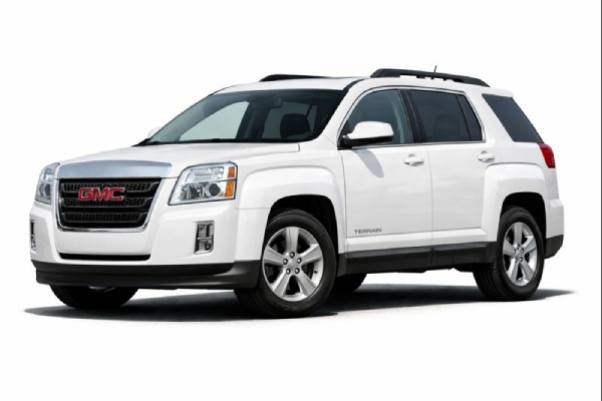
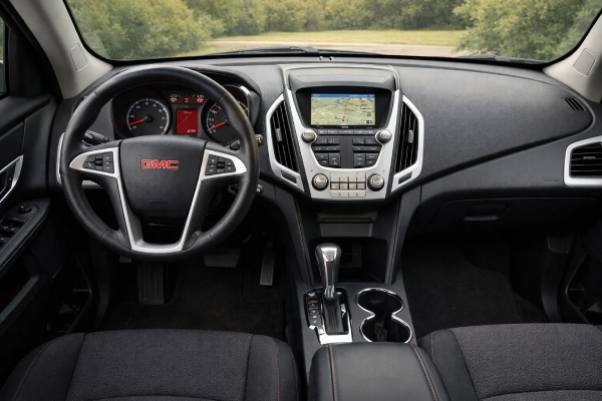
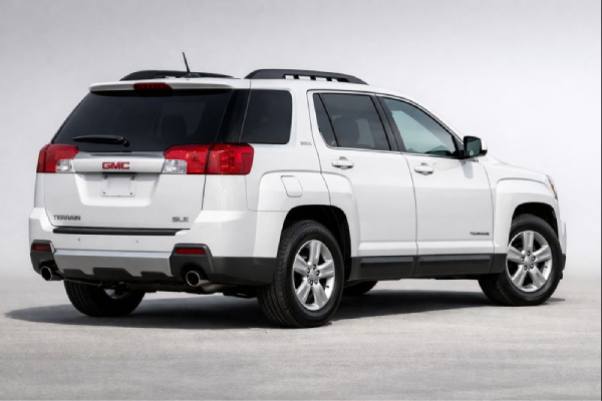
The 2012–2015 GMC Terrain FWD with the LEA 2.4-liter engine is a practical crossover built around two priorities: everyday comfort and predictable operating costs. In this period, the 2.4L “Ecotec” is direct-injected and tuned for steady low-to-midrange response rather than quick sprints, which fits the Terrain’s relaxed chassis and family duty. The tradeoff is that the vehicle is heavy for its power output, so maintenance discipline matters—especially oil level monitoring, because the timing chain and variable valve timing hardware depend on clean, adequate oil.
If you’re shopping used, this Terrain rewards buyers who verify service history, confirm recalls, and test all electronics. When it’s been cared for, it’s an easy vehicle to live with: good visibility, a calm ride, and straightforward FWD behavior in most climates.
What to Know
- Comfortable ride and a quiet, steady highway demeanor for a compact crossover
- Useful cargo shape and everyday-friendly cabin layout, especially for commuting and family errands
- Direct-injection 2.4L runs well when maintained, but oil level checks matter between changes
- Plan on checking oil at least every 1,000 mi (1,600 km) if the vehicle has any consumption history
- Rotate tires about every 7,500 mi (12,000 km) to keep wear even and preserve braking stability
Jump to sections
- Terrain LEA 2012–2015 profile
- LEA 2.4 specs and capacities
- Equipment lines and crash protection
- Known issues and bulletins
- Maintenance plan and buying tips
- Real driving and economy
- Terrain LEA vs competitors
Terrain LEA 2012–2015 profile
This front-wheel-drive Terrain pairs GM’s LEA 2.4-liter inline-four with a 6-speed automatic in a body that prioritizes comfort, visibility, and a solid “road-trip” feel. For 2012–2015, the big story is the engine’s direct injection (DI). DI helps cold starts, emissions control, and part-throttle efficiency, but it also raises the importance of good oil and clean intake airflow. Unlike port injection, DI doesn’t wash fuel across the intake valves, so long-term city driving can contribute to intake valve deposits on some engines—usually more of a drivability concern than an immediate failure.
In FWD form, the Terrain is predictable: fewer drivetrain components than AWD means fewer fluid services and fewer rotating parts that can develop noise or seepage over time. It’s also typically lighter than AWD versions, which helps tires, brakes, and fuel economy. The flip side is traction: you’re relying on tire choice and stability control rather than an extra driven axle. With good all-season tires (or proper winter tires in cold regions), the Terrain’s FWD setup is manageable in most conditions.
Ownership satisfaction usually comes down to three things:
- Maintenance history (especially oil change cadence and oil level checks).
- Electrical condition (battery health and clean grounds reduce “ghost” faults).
- Cooling and sealing health (small leaks become big headaches when ignored).
Buyers should understand the Terrain’s personality: it’s not a sporty compact SUV. It’s a calm, slightly heavy crossover that’s happiest when driven smoothly, loaded reasonably, and maintained on schedule. Treat it like an appliance and it can serve like one; neglect it and it becomes the kind of vehicle that “always needs something small.”
LEA 2.4 specs and capacities
Below are practical specifications for the 2012–2015 GMC Terrain FWD with the LEA 2.4L (182 hp). Real-world specs can vary by VIN, wheels/tires, and market equipment, so use these as a strong baseline and verify against your service information.
Engine and performance
| Item | Specification |
|---|---|
| Code | LEA |
| Engine layout and cylinders | Inline-4, DOHC, 4 cylinders, 4 valves/cyl |
| Displacement | 2.4 L (2,384 cc) |
| Bore × stroke | 88.0 × 98.0 mm (3.46 × 3.86 in) |
| Induction | Naturally aspirated |
| Fuel system | Direct injection (DI) |
| Compression ratio | ~11:1 (varies by calibration/market) |
| Max power | 182 hp (136 kW) @ ~6,700 rpm |
| Max torque | ~232 Nm (172 lb-ft) @ ~4,900 rpm |
| Timing drive | Chain |
| Emissions/efficiency standard | EPA (US-market reference) |
| Rated efficiency (example) | See FuelEconomy.gov reference by model year |
Transmission and driveline
| Item | Specification |
|---|---|
| Transmission | 6-speed automatic (6T-family, application-dependent) |
| Drive type | FWD |
| Differential | Open (traction managed by brake-based stability control) |
Chassis and dimensions (typical)
| Item | Specification (typical) |
|---|---|
| Suspension (front/rear) | MacPherson strut / independent rear (multi-link layout) |
| Brakes | 4-wheel disc (diameter varies by trim) |
| Wheels/tires | 17–18 in common; size varies by trim |
| Ground clearance | ~175 mm (~6.9 in) |
| Length / width / height | ~4,707 / 1,850 / 1,684 mm (~185.3 / 72.8 / 66.3 in) |
| Wheelbase | ~2,858 mm (~112.5 in) |
| Fuel tank | ~71 L (18.8 US gal / 15.6 UK gal) |
| Cargo volume | ~895 L (31.6 ft³) seats up / ~1,810 L (63.9 ft³) seats down (method varies) |
Performance and capability (realistic expectations)
| Item | Typical expectation |
|---|---|
| 0–100 km/h (0–62 mph) | ~10–11 s (depends on load/conditions) |
| Towing capacity | Often 680 kg (1,500 lb) when properly equipped (verify by VIN/label) |
Fluids and service capacities (decision-useful baseline)
| System | Common spec and notes |
|---|---|
| Engine oil | Dexos-spec oil; viscosity per climate (often 5W-30); capacity typically ~4.7 L (5.0 US qt) with filter |
| Coolant | Dex-Cool type; capacity varies by cooling package |
| Automatic transmission | Dexron VI; capacity depends on service method (drain/fill vs overhaul) |
| A/C refrigerant | Varies by year and label (check under-hood decal) |
The most important takeaway: the LEA is oil-sensitive. Even if you follow the oil-life monitor, checking the level between services is what protects the chain drive, cam phasers, and top-end lubrication.
Equipment lines and crash protection
Trim structure varies by market, but for 2012–2015 you’ll usually see SLE and SLT grades, plus special editions. For the LEA FWD specifically, the mechanical core (engine/transmission) stays broadly consistent, while the daily experience changes with wheels/tires, seat materials, audio/infotainment, and convenience packages.
Trims and options that matter in real ownership
- Wheel and tire packages: Larger wheels can look better but often ride firmer and cost more per tire. On a heavy-ish compact crossover, smaller wheels with taller sidewalls can improve comfort and reduce rim damage risk.
- Convenience and visibility: Remote start, heated seats, and a backup camera are high-value used-car options. Make sure the camera image is clear and the tailgate switch works consistently.
- Audio and infotainment tiers: Test Bluetooth pairing, steering wheel controls, and any touchscreen response. Infotainment gremlins are common “annoyance failures” on older crossovers.
Safety structure and airbags
This generation typically includes front airbags, side-impact airbags, and side curtain airbags, plus ABS and stability control. Child-seat hardware is typically LATCH/ISOFIX-compatible in the rear outboard positions. In a used purchase, confirm that airbag and seatbelt warning lights illuminate at key-on and go out after startup—bulb checks matter.
Crash-test ratings and what changed in these years
For the 2012–2015 window, the key point is that crash-test protocols evolved. The Insurance Institute for Highway Safety (IIHS) introduced the small overlap frontal test (a tougher real-world style impact), and for this vehicle line the small overlap results apply to later model years within the generation rather than the earliest builds. In other words: a “2015 rating page” can include notes that certain tests apply only to 2014–2017 versions of the same body style. Use the rating page details to avoid assuming your exact year has every score.
Driver assistance and calibration reality
True modern ADAS (automatic emergency braking, radar cruise, lane centering) is generally limited or unavailable in this era. You may find warning-based systems such as lane departure warning or forward collision alert depending on trim and market, but not the full intervention suite common today. Practical implication: after windshield replacement or front-end repairs, there’s usually less sensor calibration complexity than newer vehicles—but you should still verify that stability control, ABS, and steering angle sensors show no warnings after alignment.
A smart used-buy approach is to prioritize: good tires, strong brakes, and working stability control. Those three do more for real safety in this generation than chasing rare tech packages.
Known issues and bulletins
No used vehicle is perfect, and the LEA Terrain has a few patterns worth knowing. The best way to think about problems is by prevalence and cost tier, so you can plan time and budget.
Common and usually manageable (low to medium cost)
- Oil consumption tendencies
Symptoms: oil level dropping between changes, ticking at cold start, oil smell, or occasional low-oil warnings.
Likely root causes: ring/cylinder wear patterns, PCV system behavior, extended oil intervals, or past overheating.
Remedy: document consumption rate, shorten oil intervals, verify PCV operation, and keep oil at the full mark. Severe cases may require internal engine work—avoid any car that’s repeatedly been run low on oil. - Intake and throttle cleanliness (DI-related drivability)
Symptoms: rough idle, hesitation, reduced fuel economy, intermittent misfire codes.
Likely root causes: intake valve deposits over time (DI characteristic), dirty throttle body, weak ignition components.
Remedy: proper diagnosis first; cleaning and updated tune/maintenance can restore smoothness. - Cooling system seepage or thermostat housing leaks
Symptoms: coolant smell, low coolant bottle level, dampness around housings/hoses.
Remedy: pressure test, replace the leaking component, and refill with the correct coolant type.
Occasional but important (medium to high cost)
- Timing chain stretch or cam phaser noise (often oil-related)
Symptoms: rattle at startup, correlation codes (cam/crank), poor power, check-engine light.
Root cause: low oil, poor oil quality, extended intervals, or wear in chain guides/tensioner.
Remedy: measure and confirm with scan data and mechanical inspection; replace chain set and related components as required. Preventive habit: keep oil level correct. - Transmission shift quality complaints
Symptoms: harsh 2–3 shifts, flare, delayed engagement, or shudder.
Root cause: aging fluid, adaptation issues, or wear depending on use.
Remedy: verify fluid condition and level, check for updates, and diagnose before replacing parts. A clean, well-driven test car should shift consistently when warm.
Recalls, TSBs, and service actions
For this model family, there have been recalls and service actions across the years for various systems (not always powertrain-specific). The only responsible way to handle this is to run the vehicle through the official recall database and confirm the remedy has been performed. Ask for paperwork, and also confirm through a dealer record check. If a seller can’t prove recall completion, treat it as a bargaining point—or a reason to walk away.
Pre-purchase checks that catch most expensive surprises
- Cold start test: listen for chain rattle and top-end noise.
- Oil level and condition: check the dipstick before the test drive and after.
- Cooling system: verify the reservoir level and look for dried coolant traces.
- Scan for codes: even “pending” misfire or timing correlation matters.
- Road test: steady cruise, gentle acceleration, and firm braking to check vibration and shift logic.
A clean example feels boring—in a good way. The ones to avoid are the “runs great today” vehicles with no maintenance proof and inconsistent oil history.
Maintenance plan and buying tips
A good maintenance plan for the LEA Terrain isn’t complicated, but it must be consistent. Your goal is to protect oil-dependent components, keep the cooling system stable, and prevent “small leaks” from turning into big repairs.
Practical maintenance schedule (distance/time)
- Engine oil and filter: follow the oil-life monitor as the outer limit, but many owners choose 8,000–10,000 km (5,000–6,000 mi) for mixed driving, especially as the vehicle ages. If the car has any oil consumption history, shorten intervals and check level monthly.
- Engine air filter: inspect every 12,000–16,000 km (7,500–10,000 mi); replace when dirty. Dusty climates shorten this.
- Cabin air filter: replace about every 15,000–25,000 km (10,000–15,000 mi) for HVAC performance.
- Spark plugs: typically long-life iridium; plan inspection and replacement around 160,000 km (100,000 mi) unless misfire symptoms appear earlier.
- Coolant: commonly a long-life interval (often 5 years as a baseline), but verify the exact schedule by year and label.
- Automatic transmission fluid: if the vehicle sees heavy city use or heat, a preventive drain/fill interval such as 72,000–97,000 km (45,000–60,000 mi) can improve long-term shift quality. Use the correct spec fluid.
- Brake fluid: about every 2–3 years is a good safety interval regardless of mileage.
- Tires: rotate about every 12,000 km (7,500 mi); align annually or when wear looks uneven.
- 12V battery: test annually after year 3–4; replace proactively if starting slows or voltage is unstable.
Fluids and torque specs: what’s useful at decision time
- Oil spec: use the GM-required oil standard (Dexos family) in the correct viscosity for your climate.
- Wheel lug torque (typical GM): often around 140 Nm (100 lb-ft), but confirm for the wheel type and year.
- Spark plug gap and torque: verify with the correct plug listing for your exact VIN; incorrect gap harms DI drivability.
Buyer’s guide: what to seek and what to avoid
Seek:
- Documented oil changes and evidence the owner checked oil between intervals
- Smooth cold start (no rattle), stable idle, and consistent transmission shifts when warm
- Clean coolant history (no repeated “top-offs” with mystery fluids)
- Tires with even wear (suggests alignment and suspension health)
Avoid or negotiate hard:
- Any history of repeated low-oil warnings
- Timing correlation or persistent misfire codes
- Overheating history or coolant/oil mixing signs
- Electrical issues blamed on “just needs a battery” with no proof
Long-term durability outlook
A well-maintained LEA Terrain can be a durable commuter and family runabout, but it does not tolerate neglect as gracefully as some older port-injected engines. Treat oil level as a routine check, keep cooling system leaks small and early, and the vehicle’s comfort and utility can outweigh its modest performance.
Real driving and economy
On the road, the LEA 2.4 FWD Terrain feels like a comfort-first crossover. Steering is typically light-to-moderate, the suspension is tuned to absorb rough pavement, and highway stability is one of its better traits. It’s the kind of vehicle that makes long drives easy, even if it doesn’t encourage aggressive driving.
Powertrain character
The 2.4L is smooth when healthy, but the Terrain’s weight means you’ll notice the engine working under full load. Around town, it responds best to steady throttle rather than sudden stabs. The 6-speed automatic generally tries to keep revs low for economy, and under hills it may downshift more than you’d expect—normal behavior given the power-to-weight ratio. If you feel repeated “hunting” between gears on gentle grades, that’s a cue to check for software updates, fluid condition, and basic engine health (misfires and airflow issues can mimic transmission problems).
Ride, handling, and NVH
- Ride: absorbs broken pavement well; larger wheels can make it feel firmer and noisier.
- Handling: safe and predictable, with noticeable body roll when pushed.
- Braking feel: typically stable; warped rotors or uneven tire wear will show up quickly as steering vibration under braking.
- Cabin noise: generally calm at cruising speeds for its era; roof racks and worn door seals can raise wind noise.
Real-world efficiency
EPA-style ratings vary slightly by year, but the overall pattern is consistent: the FWD 2.4L can be efficient on gentle highway cruising and merely average in heavy city traffic.
Typical owner-observed ranges (driving style and condition matter):
- City: ~10.0–11.8 L/100 km (20–24 mpg US)
- Highway (100–120 km/h / 60–75 mph): ~7.8–9.5 L/100 km (25–30 mpg US)
- Mixed: ~9.0–10.7 L/100 km (22–26 mpg US)
At 120 km/h (75 mph) specifically, many vehicles will land closer to the higher end of the highway range because aerodynamic drag rises sharply with speed. Tires, alignment, and roof cargo also make a noticeable difference.
Traction and control
FWD Terrain traction depends heavily on tires. Stability control and brake-based traction control help in light snow, but for frequent winter driving, true winter tires provide a bigger safety gain than any option package. For wet conditions, even wear and good tread depth matter more than raw horsepower.
Towing and load reality
If your vehicle is rated for towing, keep expectations realistic: the 2.4L will tow light loads, but grades and heat are the enemy. Use the correct hitch hardware, keep transmission temps in mind, and plan for reduced economy—often a 20–35% consumption penalty with meaningful load.
Terrain LEA vs competitors
The 2012–2015 Terrain FWD with the LEA 2.4L competes in a crowded compact crossover field, and your best choice depends on whether you value comfort, simplicity, or driving feel.
Versus Honda CR-V (2.4L era)
- CR-V advantages: typically stronger resale, efficient packaging, and a reputation for easy ownership.
- Terrain advantages: often feels heavier and more planted on the highway, with a more “truck-brand” ride character.
- Decision point: if you prioritize minimal powertrain drama and resale, many buyers lean CR-V. If you prefer a calmer, heavier feel and find a well-maintained Terrain at a better price, the GMC can make sense.
Versus Toyota RAV4 (early 2010s)
- RAV4 advantages: reliability reputation and strong parts ecosystem.
- Terrain advantages: comfortable ride and often a quieter cabin feel on certain road surfaces.
- Decision point: RAV4 tends to be the safer “default,” but purchase price can be higher. Terrain value improves when you can verify oil discipline and service records.
Versus Ford Escape (same era)
- Escape advantages: depending on engine, can feel more energetic and lighter on its feet.
- Terrain advantages: more settled highway demeanor and a more relaxed ride.
- Decision point: choose Escape for nimble feel, Terrain for comfort-first cruising.
Versus Mazda CX-5 (early years)
- CX-5 advantages: sharper steering and better body control, often better driving enjoyment.
- Terrain advantages: softer ride and a more “set-and-forget” cruising personality.
- Decision point: if you care about handling, Mazda usually wins. If you care about comfort and a steady feel, the GMC holds its own.
The honest takeaway
The LEA Terrain isn’t the class performance leader, and it shouldn’t be judged like one. It competes best on:
- Comfort per dollar in the used market
- FWD simplicity versus AWD complexity
- Practical ownership when maintenance is documented
If you find one with proven oil care, clean shifting, and verified recalls, it can be a sensible alternative to higher-priced rivals—especially for commuting, family errands, and highway travel.
References
- 2015 GMC Terrain Owner Manual 2015 (Owner’s Manual)
- Gas Mileage of 2015 GMC Terrain 2015 (Official Fuel Economy Data)
- 2015 GMC Terrain 4-door SUV 2015 (Safety Rating)
- Vehicle Detail Search – 2015 GMC TERRAIN SUV FWD | NHTSA 2015 (Recall Database)
Disclaimer
This article is for informational purposes only and is not a substitute for professional inspection, diagnosis, or repair. Specifications, torque values, fluid capacities, and maintenance intervals can vary by VIN, market, and installed equipment. Always verify details using the official owner’s manual and service documentation for your exact vehicle.
If this guide helped you, please consider sharing it on Facebook or X/Twitter to support our work.