
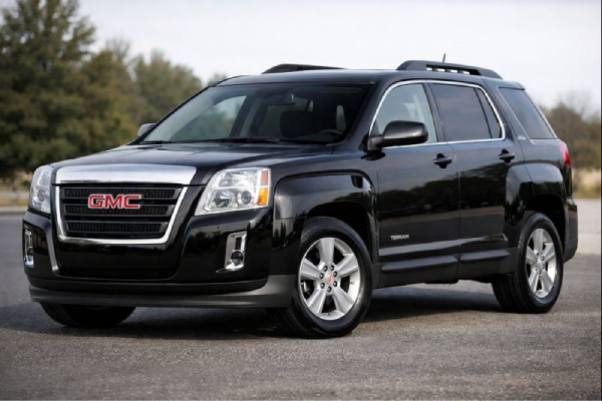
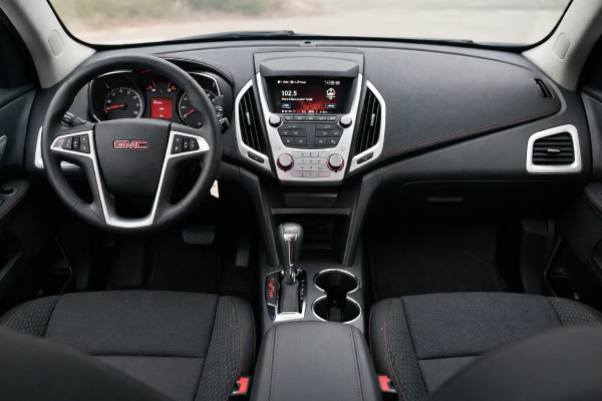
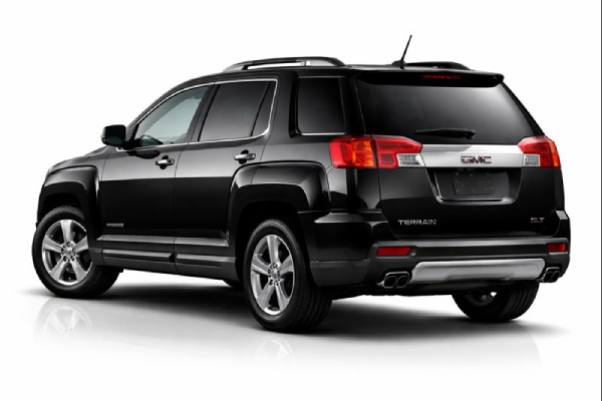
The 2013–2015 GMC Terrain FWD with the LFX 3.6L V6 is the “big-engine” version of GM’s first-generation Terrain: smooth, naturally aspirated power, a conventional 6-speed automatic, and enough torque to make highway merges and two-lane passes feel relaxed. In this configuration, the Terrain leans more toward stable, long-legged cruising than sporty response—especially with its tall sidewalls and comfort-focused suspension tuning.
Ownership-wise, the LFX’s direct injection (DI) and timing-chain layout reward consistent oil service and careful attention to cooling-system health. The upside is a strong, refined drivetrain that doesn’t rely on turbo boost or complex hybrid hardware. If you want a compact/midsize crossover feel with V6 performance, hydraulic steering (on V6-equipped models), and a straightforward maintenance rhythm, this Terrain variant is one of the most complete packages in the lineup.
Quick Overview
- Strong, naturally aspirated V6 pull for passing and highway merging without turbo lag
- Comfortable ride and stable high-speed manners, especially on long trips
- Useful towing headroom versus the 4-cylinder (when properly equipped)
- Plan for DI upkeep: use correct oil spec and avoid extended oil-change intervals
- Change engine oil about every 8,000–10,000 km (5,000–6,000 mi) or 6 months for mixed driving
Navigate this guide
- GMC Terrain 3.6 FWD essentials
- LFX specs and dimensions
- Trims, packages, and safety tech
- Reliability hot spots and recalls
- Maintenance plan and buying tips
- Real-world driving and economy
- Rival check in 2013–2015 class
GMC Terrain 3.6 FWD essentials
This Terrain is easiest to understand as a comfort-first crossover with a genuinely strong engine option. The LFX 3.6L V6 (301 hp) gives the 2013–2015 FWD Terrain the kind of effortless acceleration you normally associate with larger SUVs—without the weight, fuel cost, and parking footprint of a three-row vehicle. The power delivery is linear and predictable: you get meaningful thrust as rpm rises, and the engine stays smooth even when worked hard on grades.
In day-to-day use, the main advantage is how little planning it takes to drive briskly. Short freeway on-ramps, uphill passes, and full loads of passengers feel less stressful than in the 4-cylinder versions. The 6-speed automatic is tuned for calm shifts rather than quick reactions, so it tends to upshift early in gentle driving and downshift decisively when you ask for power.
Chassis-wise, expect a stable, slightly heavy feel. The suspension prioritizes compliance over sharp turn-in, and the tires and wheel sizes commonly fitted to these trims support comfort and low noise. V6 Terrains also stand out because they use hydraulic power steering, which many drivers describe as more natural than early electric-assist systems—especially on-center at highway speeds.
Where this variant asks more of the owner is routine discipline. The LFX uses direct injection, so it benefits from correct oil (and on-time oil changes) to keep timing components, cam phasers, and chain tensioners happy. It also pays to treat the cooling system as a “must-maintain” system, not a “forget it for years” system. None of this is exotic, but it’s the difference between a V6 Terrain that feels tight at 200,000 km and one that becomes a string of small drivetrain and heat-management repairs.
If your priorities are relaxed performance, long-trip comfort, and simple mechanicals (no turbocharger, no hybrid battery), the 2013–2015 Terrain FWD V6 is one of the most satisfying ways to buy into this platform.
LFX specs and dimensions
Below are practical specs for the 2013–2015 Terrain FWD with the LFX 3.6L V6. Equipment and exact ratings can vary by market, VIN, and option packages, so treat the tables as a strong baseline and verify against your vehicle’s documentation.
Engine and performance
| Item | Specification |
|---|---|
| Code | LFX |
| Engine layout and cylinders | V6 (60°), DOHC, 24 valves (4 valves/cyl) |
| Displacement | 3.6 L (3,564 cc) |
| Induction | Naturally aspirated |
| Fuel system | Direct injection (DI) |
| Max power | 301 hp (224 kW) @ ~6,500 rpm |
| Max torque | 369 Nm (272 lb-ft) @ ~4,800 rpm |
| Timing drive | Chain |
| Emissions and efficiency standard | EPA (US) / NRCan (Canada), market dependent |
| Rated efficiency (US, 2015 FWD 3.6) | 12.4 L/100 km (19 mpg US) combined; 13.8 (17) city; 9.8 (24) highway |
| Rated efficiency (Canada, V6 FWD example) | 12.4 / 8.1 L/100 km city/highway (label method varies by year) |
| Real-world highway @ 120 km/h | Typically ~10.0–11.5 L/100 km (20–24 mpg US) depending on tires, wind, load |
Transmission and driveline
| Item | Specification |
|---|---|
| Transmission | 6-speed automatic (Hydra-Matic family) |
| Drive type | FWD |
| Differential | Open |
| Gear ratios | Vary by transmission build; typical 6-speed set spans ~4.48 (1st) to ~0.74 (6th) |
| Final drive | Varies by calibration; verify by RPO codes or service data |
Chassis and dimensions
| Item | Specification |
|---|---|
| Suspension (front/rear) | MacPherson strut / independent multi-link |
| Steering | Hydraulic power steering (V6-equipped models) |
| Brakes | 4-wheel disc; ABS standard |
| Wheels and tyres | Commonly 17–19 in wheels depending on trim and package |
| Ground clearance | ~175 mm (≈6.9 in), varies slightly by tires and load |
| Length / width / height | ~4,707 / 1,849 / 1,661 mm (≈185.3 / 72.8 / 65.4 in) |
| Wheelbase | ~2,858 mm (≈112.5 in) |
| Turning circle | ~11.8–12.0 m (≈38.7–39.4 ft), depends on tires |
| Curb weight | Typically ~1,750–1,850 kg (3,850–4,080 lb), depends on trim and equipment |
| Fuel tank | 79.1 L (20.9 US gal / 17.4 UK gal) |
| Cargo volume | ~895 L (31.6 ft³) seats up / ~1,810 L (63.9 ft³) seats down (method varies by market) |
Performance and capability
| Item | Typical figure (varies by test, tires, and conditions) |
|---|---|
| 0–100 km/h (0–62 mph) | ~6.7–7.6 s |
| Highway passing (80–120 km/h) | Strong for class; depends on downshift timing |
| Top speed | ~175–185 km/h (≈109–115 mph), often limited |
| Towing capacity | Up to ~1,588 kg (3,500 lb) when properly equipped (market/package dependent) |
| Payload | Varies widely by trim; check door-jamb label |
Fluids and service capacities
| Item | Specification |
|---|---|
| Engine oil | dexos1-approved 5W-30; capacity 5.7 L (6.0 US qt) with filter |
| Coolant | Dex-Cool 50/50 mix; capacity 10.2 L (10.8 US qt) |
| Fuel tank | 79.1 L (20.9 US gal) |
| Wheel nut torque | 190 Nm (140 lb-ft) |
Electrical
| Item | Specification |
|---|---|
| Spark plug gap | 1.1 mm (0.043 in) |
| 12 V battery | Varies by trim and cold-cranking spec; verify label on battery |
| Alternator output | Varies by equipment load; verify by RPO/service data |
Safety and driver assistance
| Item | Notes |
|---|---|
| Crash ratings | IIHS “Good” ratings apply broadly; small-overlap improvements noted for 2014+ designs |
| Front crash prevention | Optional Forward Collision Alert (warning only; no autobrake on these years) |
| Stability systems | ABS, traction control, and electronic stability control standard |
| Common driver aids | Rear camera (availability varies by year/trim), rear park assist, blind spot monitoring, rear cross traffic alert, lane departure warning (package dependent) |
Trims, packages, and safety tech
For 2013–2015, the Terrain lineup is typically organized around SLE and SLT trims, with Denali as the luxury-focused flagship. While exact packaging varies by year and region, the practical approach is to identify (1) whether the vehicle has the V6, (2) which wheel/tire and suspension combination it uses, and (3) whether it carries the safety technology bundle you actually want.
Trims and what changes mechanically
- SLE-1 / SLE (base-oriented): Often the value play, but many are 4-cylinder and lightly optioned. V6 availability depends on year/region. Expect smaller wheels and fewer convenience features unless packages were added.
- SLE-2: Common “sweet spot” for used buyers because it frequently adds convenience tech (audio, remote start, power liftgate in some packages) while keeping costs reasonable. V6 availability is more common here than on base trims.
- SLT-1 / SLT-2: More standard comfort and appearance upgrades (interior trim, wheels, sometimes heated seats). SLT-2 in particular is where you more often see higher-end options bundled.
- Denali: The most consistent “fully loaded” configuration. If you want the highest chance of advanced safety options, upscale interior touches, and larger wheels, Denali vehicles are usually the shortest search—though tires and brakes can cost more.
Option packages that matter for owners
- Tow package (where fitted): This is the difference between “rated to tow” and “comfortable towing.” Look for the hitch hardware, correct wiring, and evidence of proper cooling and maintenance. If towing is a goal, avoid guessing—verify the exact rating on your VIN’s equipment listing.
- Safety package / Driver alert package (names vary): Often bundles Forward Collision Alert, Lane Departure Warning, and parking aids. On these years, the forward system is generally warning-only rather than automatic emergency braking.
- Wheel and tire packages: The Terrain’s ride quality and noise level change noticeably with wheel size. Larger wheels can sharpen response but often increase impact harshness and tire replacement cost.
Quick identifiers when shopping used
- Under-hood and badging: Look for V6 badging and confirm the engine family via service records or VIN decode. Don’t rely on seller descriptions alone.
- Interior “tells”: Denali and higher SLT trims often have distinct interior trim pieces and upgraded infotainment/audio options. Seat material and stitching cues can help confirm trim authenticity.
- RPO codes and build sheet: If available, the glovebox/trunk label (or dealer printout) is the best way to confirm option content—especially safety tech.
Safety ratings and how to interpret them
IIHS ratings for the Terrain improved with structural changes noted for 2014+ models in small-overlap performance, and the vehicle earns strong marks in the core crashworthiness categories in the relevant tests. The key detail for owners is that safety performance and safety equipment are not the same thing: a Terrain can test well structurally while still lacking modern automatic braking.
If advanced warning systems are important, shop by verified option content (package listings, original window sticker, or build sheet), not by trim name alone.
Reliability hot spots and recalls
A well-kept 2013–2015 Terrain V6 can be a durable daily driver, but reliability is strongly shaped by two factors: maintenance consistency and how the vehicle was used (short trips, towing, hot climates, heavy city driving). Below are the most useful patterns to watch, grouped by how often they show up and how expensive they tend to become.
Common: medium cost if ignored
- Oil life management and DI realities: The LFX is direct-injected, which makes oil quality and interval discipline more important than on older port-injected engines. Symptoms of neglect can include rough idle, sluggish response, and timing-related fault codes over time. Remedy is prevention: correct oil spec, realistic intervals, and prompt leak repairs.
- Cooling system wear (age-driven): Hoses, clamps, thermostat housings, and plastic fittings can become brittle with age. Early symptoms are coolant smell, slow coolant loss, or intermittent overheating in traffic. Fixing small leaks early is far cheaper than heat-related engine damage.
- Automatic transmission behavior: Some 6-speed units develop shift flare, harsh engagements, or torque-converter shudder as mileage accumulates—especially if fluid service was skipped. A fluid exchange (correct spec) can help when caught early; persistent shudder may point to converter wear.
Occasional: varies by climate and mileage
- DI intake valve deposits: Because DI doesn’t wash fuel over the intake valves, deposit buildup can develop over time. You may notice cold-start stumble or reduced smoothness at idle. A professional intake cleaning (when symptoms justify it) is the typical remedy.
- Accessory drive and engine mounts: Expect normal wear: belt noise, vibration at idle, or clunks on throttle transitions. These repairs are usually straightforward and age/mileage related.
- A/C performance and blend-door issues: Weak cooling, inconsistent cabin temperature, or clicking behind the dash can indicate actuator problems. Repair cost depends on access and whether multiple actuators are failing.
Rare but higher cost: worth screening for
- Timing-chain stretch or phaser control problems: The LFX is generally improved versus older GM 3.6 variants, but any chain-driven engine can become sensitive to poor oil quality or extended intervals. Rattle on cold start, correlation codes, or persistent rough running after other causes are eliminated should trigger a professional timing evaluation.
- Electrical module quirks: Intermittent infotainment resets, camera dropouts, or sensor-related warnings can be as simple as battery/ground issues or as complex as module faults. Start diagnosis with battery health and clean grounds before replacing parts.
Software updates and calibrations
For drivability complaints—especially transmission shift logic—an updated calibration can be the official fix. When shopping used, ask whether the vehicle has had dealer-level updates for driveability, warning lights, or infotainment stability. After any sensor replacement or ADAS-related service (where equipped), confirm correct calibration and no stored fault codes.
Recalls, service bulletins, and how to verify completion
Rather than relying on memory or generic lists, verify recalls by VIN using official sources and dealer service history. For used vehicles, request:
- A VIN-based recall status report
- Proof of completion (dealer invoice or warranty history printout)
- Evidence of regular oil and coolant service
This step prevents you from paying twice—once in purchase price and again in deferred safety work.
Maintenance plan and buying tips
A simple maintenance routine is the best “mod” for keeping the LFX Terrain smooth and reliable. The schedule below is intentionally practical for mixed driving and aging vehicles; it’s designed to reduce the most common long-term risks (oil-related timing wear, cooling issues, transmission shudder, and DI deposit side effects).
Practical maintenance schedule
| Item | Interval (distance/time) | Notes |
|---|---|---|
| Engine oil and filter | 8,000–10,000 km (5,000–6,000 mi) or 6 months | Use dexos1-approved 5W-30; shorten for short trips and cold climates |
| Engine air filter | 30,000 km (18,000 mi) or yearly inspect | Replace sooner in dusty areas |
| Cabin air filter | 20,000–30,000 km (12,000–18,000 mi) | Helps HVAC performance and reduces blower strain |
| Coolant | Inspect yearly; replace per official interval | Use Dex-Cool 50/50; fix leaks early |
| Spark plugs | ~160,000 km (100,000 mi) typical | Gap and plug type should match service documentation |
| Automatic transmission fluid | 80,000–100,000 km (50,000–60,000 mi) prudent interval | Especially important if towing or heavy city driving |
| Brake fluid | Every 2 years | Moisture contamination affects pedal feel and ABS components |
| Tires: rotate and inspect | Every 8,000–10,000 km | Also check alignment yearly or after tire wear appears |
| Serpentine belt | Inspect yearly; replace around 100,000–160,000 km | Replace sooner if cracking/noise appears |
| Battery test | Yearly after year 4 | Voltage instability can mimic “electrical problems” |
Key fluid specifications and capacities
- Engine oil: dexos1-approved 5W-30; 5.7 L (6.0 US qt) with filter
- Coolant: Dex-Cool 50/50; 10.2 L (10.8 US qt)
- Wheel nuts: 190 Nm (140 lb-ft)
For transmission and A/C service, use VIN-correct service data because fill procedures and quantities vary by transmission build and service method (drain-and-fill vs. dry fill).
Buyer’s guide: what to check before purchase
- Cold start behavior: Listen for unusual rattles, prolonged cranking, or a rough first 30 seconds. A clean start is a good sign of healthy oil control and fueling.
- Transmission feel: On a test drive, check for shudder during light throttle between ~60–100 km/h (35–60 mph), delayed engagement when shifting into Drive, and harsh 2–3 or 3–4 shifts.
- Cooling system: Look for crusted coolant around hose connections, smell of coolant after the drive, and a stable temperature gauge in traffic.
- Oil leaks and consumption clues: Check under the engine, around the oil cap, and for fresh residue near gaskets. Review service history for frequent top-offs.
- Tires and suspension: Uneven tire wear suggests alignment or bushing wear. Clunks over bumps can indicate worn links or control-arm bushings.
- Tech and safety options: Confirm camera operation, parking sensors, and any warning systems during a drive. If equipped with Forward Collision Alert or Lane Departure Warning, verify the system initializes without errors.
Best “ownership value” configuration
For many buyers, the ideal used example is a V6 Terrain with documented oil service, modest wheel size (often 17–18 in for comfort and tire cost), and a verified safety/driver alert package if you value warning systems. Denali trims can be excellent, but budget for higher tire costs and prioritize condition over badges.
Real-world driving and economy
The LFX V6 changes the Terrain’s personality more than any other single option. Around town, the vehicle feels relaxed because it doesn’t need high rpm to keep up with traffic. The throttle mapping is generally smooth rather than aggressive, so quick launches are available, but the Terrain’s mission is comfort and stability, not hot-hatch response.
Ride, handling, and NVH
Expect a composed ride with a mild “heavy” feel over sharp impacts. The suspension is tuned to reduce harshness on broken pavement, and the cabin is typically quiet enough for easy conversation at highway speed. Larger wheels can add impact noise and sharper bumps, so if you’re sensitive to ride quality, prioritize smaller wheels and fresher tires.
In corners, the Terrain is predictable. It won’t hide its height and weight, but it tracks steadily and doesn’t feel nervous. Steering effort is typically natural for a crossover, and V6 models’ hydraulic assist often feels consistent on-center—helpful on long highway drives.
Powertrain character and shifting
The V6’s best trait is passing power. At 80–120 km/h (50–75 mph), a firm throttle input usually triggers a decisive downshift and strong pull. The 6-speed automatic prioritizes smoothness; it may “think” for a moment before a kickdown, but it generally avoids constant hunting once cruising.
If you tow or carry heavy loads, the transmission benefits from proactive driving: use manual selection (if available) on grades to prevent repeated downshifts and keep temperatures stable.
Real-world fuel economy
EPA ratings for the 2015 FWD 3.6 example are 17 city / 24 highway / 19 combined mpg (US), which translates to roughly 13.8 / 9.8 / 12.4 L/100 km. In real use, many owners see:
- City-heavy: ~13–15 L/100 km (16–18 mpg US)
- Highway at 100–110 km/h: ~10–11 L/100 km (21–24 mpg US)
- Highway at 120 km/h: ~10.5–11.5 L/100 km (20–22 mpg US)
Cold weather, short trips, and winter tires can raise consumption noticeably, and towing can add a large penalty depending on trailer size and speed.
Braking feel and stability under load
Braking is typically consistent, with a stable pedal and predictable ABS intervention. If a used Terrain feels grabby or pulsing, it may simply need brake service, but also check for uneven tire wear and suspension looseness—those can masquerade as braking issues. Under moderate towing (properly equipped), stability is generally good, but crosswinds and high speeds still demand conservative loading and careful trailer balance.
Rival check in 2013–2015 class
The 2013–2015 Terrain V6 sits in an interesting spot among compact/midsize crossovers of its time. Many rivals leaned toward 4-cylinder efficiency, while the Terrain offered a traditional “bigger engine” answer. Here’s how it stacks up in real buyer terms.
Against 4-cylinder leaders (CR-V, RAV4, CX-5)
If your top priority is fuel economy and low running costs, the Honda CR-V and Toyota RAV4 (typically 4-cylinder) often win on simplicity and efficiency. The Mazda CX-5 adds a more athletic steering and chassis feel. The Terrain’s counterpoint is power-on-demand: the V6 makes highway driving and loaded trips easier, even if it drinks more fuel in city use.
Pick the Terrain V6 if you value:
- Strong passing power without turbo complexity
- A calmer, heavier highway feel
- Higher towing confidence (when properly equipped)
Pick the 4-cylinder rivals if you value:
- Better city fuel economy and often lower tire costs
- Lighter, more responsive “around-town” feel
- A broader supply of basic trims with fewer costly options
Against turbo rivals (Escape 2.0T, Sportage/Sorento turbos in some markets)
Turbo competitors can feel punchy at low rpm and may post similar real-world acceleration with better highway economy in some cases. But they add heat and boost-related complexity, and long-term reliability depends heavily on oil quality and cooling discipline. The Terrain’s naturally aspirated V6 is mechanically straightforward: no turbocharger, no intercooler plumbing, and generally predictable power delivery.
If you prefer:
- Linear throttle response
- Fewer boost-related parts
- Familiar V6 sound and feel
…the Terrain has an advantage.
Against V6 crossovers (e.g., Jeep Cherokee V6)
Some rivals offered V6 power too, but not always with the same comfort-first tuning. Depending on trim, competitors might offer stronger off-pavement features or newer infotainment, while the Terrain’s appeal is a stable, comfortable daily-driving base with a strong engine option.
The Terrain V6 verdict
The best reason to choose this Terrain is not that it is the newest or most efficient. It’s that it delivers a “grown-up,” naturally aspirated driving experience—smooth, confident passing power, solid crashworthiness results in core tests, and a maintenance routine that is demanding only in the sense that it must be consistent.
If you buy one with good records, keep oil and coolant service tight, and verify safety option content up front, it can be an excellent long-term value in the used market.
References
- 2015 GMC Terrain/Terrain Denali Owner Manual M 2015 (Owner’s Manual). ([GMC][1])
- 14 GMC Terrain Quick Facts Tri-Fold.indd 2014 (Brochure). ([media.gm.ca][2])
- Gas Mileage of 2015 GMC Terrain 2015 (Official Fuel Economy Data). ([Fuel Economy][3])
- 2015 GMC Terrain 4-door SUV 2015 (Safety Rating). ([IIHS Crash Testing][4])
- Check for Recalls: Vehicle, Car Seat, Tire, Equipment 2025 (Recall Database). ([NHTSA][5])
Disclaimer
This article is for informational purposes only and is not a substitute for professional inspection, diagnosis, or repair. Specifications, torque values, service intervals, and procedures can vary by VIN, market, and installed equipment—always verify details using official owner/service documentation for your exact vehicle.
If this guide helped, please consider sharing it on Facebook, X (Twitter), or your favorite forum to support our work.