
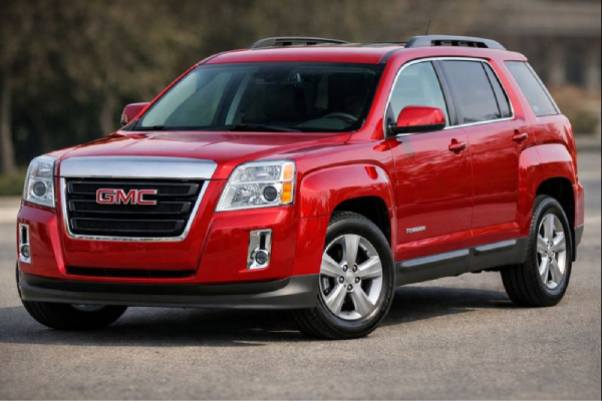
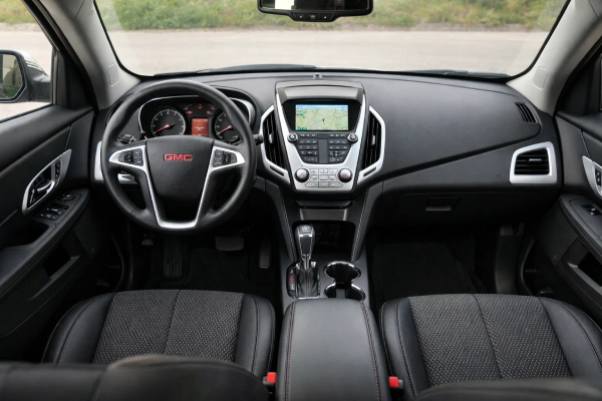
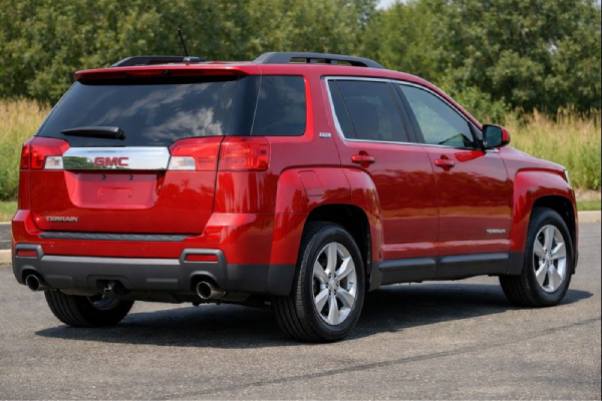
The 2013–2015 GMC Terrain AWD with the 3.6L LFX V6 is the “big engine” version of GM’s compact-to-midsize crossover formula: a smooth, naturally aspirated V6, a conventional 6-speed automatic, and an on-demand all-wheel-drive system meant for real weather rather than rock crawling. In daily use, the appeal is easy power for merging and passing, a calmer feel at highway speeds than the 4-cylinder trims, and a higher tow rating when properly equipped. The tradeoffs are predictable: fuel use rises sharply in city driving, and the AWD hardware adds service points that many owners forget until a leak or bearing noise shows up. If you want a Terrain that feels less strained with passengers, hills, or a small trailer, this is the configuration to target—provided you buy one with strong maintenance history and completed recall work.
Top Highlights
- Strong, smooth V6 power delivery that suits highway driving and full loads.
- AWD adds traction in rain and snow without the constant drag of full-time systems.
- Best suited to owners who tow occasionally (up to 1,588 kg / 3,500 lb when equipped).
- Watch for deferred maintenance on AWD fluids and cooling system upkeep as mileage climbs.
- Plan engine-oil service around 8,000–12,000 km (5,000–7,500 mi) depending on driving mix and oil-life readings.
Quick navigation
- AWD Terrain V6 ownership feel
- LFX AWD specifications
- Trims, options, and safety
- Common problems and recalls
- Maintenance and buying checklist
- Driving dynamics and fuel use
- Rivals and value verdict
AWD Terrain V6 ownership feel
The AWD, V6 Terrain sits at the top of the “regular” Terrain range for these years (below only how you define Denali trim). The LFX 3.6L V6 is the key differentiator: it gives the Terrain a relaxed, confident character that the 2.4L trims often lack when loaded or driven at altitude. Power arrives without turbo lag, and the engine is at its best on long grades and highway merges where a broader torque curve matters more than peak horsepower.
The AWD system in this generation is primarily on-demand. In normal cruising it behaves like a front-driver to reduce drag, then sends torque rearward when the front tires slip or when the control system predicts slip (based on throttle input, wheel speed, and stability-control logic). The practical advantage is traction on wet on-ramps, slushy city streets, and gravel driveways—without the binding or tire-scrub you can feel in older full-time systems. The limitation is heat: if you ask for repeated hard launches on low-grip surfaces, or you tow up a long grade in high ambient temperatures, the rear coupling and transfer unit can run hot. This is not a defect so much as a design constraint for compact crossovers with clutch-based AWD.
From an ownership standpoint, the V6 and AWD combination is best for three groups:
- Drivers who do lots of highway travel and want quieter, lower-effort passing.
- Families who regularly carry adults in the rear seat and cargo in the back.
- Light-tow users who want the higher tow rating and better grade performance.
Where buyers get burned is neglect. A Terrain that has seen short-trip duty, irregular oil changes, or skipped coolant service can become expensive quickly. And on AWD models, small leaks at seals or a noisy driveshaft support bearing can go unnoticed until they become a bigger job. If you shop carefully and service it like a “loaded” powertrain, this variant can be a solid long-term daily driver.
LFX AWD specifications
Below are the key specifications that matter for the 2013–2015 Terrain AWD with the 3.6L LFX V6. Values can vary slightly by trim, wheel package, and market, so treat this as a configuration-focused guide and verify against your VIN and RPO codes.
Engine and performance
| Item | Specification |
|---|---|
| Code | LFX |
| Layout and valvetrain | V6, DOHC, 4 valves/cyl (24-valve) |
| Displacement | 3.6 L (3,564 cc) |
| Induction | Naturally aspirated |
| Fuel system | Direct injection |
| Timing drive | Chain |
| Max power | 301 hp (224 kW) @ rpm (varies by calibration) |
| Max torque | ~369 Nm (272 lb-ft) @ rpm (varies by calibration) |
| Emissions and efficiency standard | EPA (US-market rating reference) |
| Rated efficiency (AWD V6, example) | 12.4 L/100 km combined (19 mpg US) |
| Real-world highway @ 120 km/h (75 mph) | Often ~10.5–12.0 L/100 km (19–22 mpg US), climate and tires dependent |
Transmission and driveline
| Item | Specification |
|---|---|
| Transmission | 6-speed automatic (family used with this powertrain) |
| Drive type | AWD (on-demand) |
| Differential type | Open front, rear coupling and rear drive module (clutch-based torque transfer) |
| Gear ratios | Vary by transmission code and calibration; verify by RPO and service data |
Chassis and dimensions
| Item | Specification |
|---|---|
| Platform | GM Theta (Terrain/Electinox family) |
| Suspension (front / rear) | MacPherson strut / independent multi-link |
| Steering | Electric power steering |
| Brakes | 4-wheel discs; ABS, stability control |
| Wheels and tires | Commonly 17–19 in packages depending on trim |
| Length / width / height (approx.) | ~4,707 mm / ~1,849 mm / ~1,684 mm |
| Wheelbase (approx.) | ~2,858 mm |
| Turning circle (approx.) | ~11.8 m (varies by wheel and tire) |
| Kerb weight (AWD example) | ~1,860 kg (4,100 lb) class depending on equipment |
| Fuel tank | 79 L (20.9 US gal / 17.4 UK gal) |
Performance and capability
| Item | Specification |
|---|---|
| 0–100 km/h (0–62 mph) | Typically mid-to-high 6-second range depending on conditions |
| Towing capacity (equipped) | 1,588 kg (3,500 lb) for V6 AWD when properly equipped |
| Roof load | Market-dependent; check owner documentation and roof system rating |
Fluids and service capacities
| Item | Specification |
|---|---|
| Engine oil | GM dexos1; SAE 5W-30; capacity 5.7 L (6.0 US qt) |
| Coolant | DEX-COOL 50/50; capacity 8.8 L (9.3 US qt) |
| Transfer case fluid (AWD) | Capacity 0.8 L (0.8 US qt); use specified GM fluid per owner information |
| A/C refrigerant | R-134a; charge 0.60 kg (1.32 lb) |
| Spark plug gap | 1.1 mm (0.043 in) |
Electrical
| Item | Specification |
|---|---|
| 12V system | Conventional 12V battery and alternator (output varies by equipment) |
| Battery | Size and CCA vary by market and option load; confirm by label |
Safety and driver assistance
| Item | Specification |
|---|---|
| Core systems | ABS, stability control, traction control, multiple airbags |
| Crash ratings (high-level) | IIHS ratings and available crash-avoidance features vary by year and equipment level |
| ADAS availability | Forward collision alert, lane departure warning, and blind spot monitoring were typically optional rather than standard |
Trims, options, and safety
For 2013–2015, the Terrain line generally runs from SLE to SLT, with Denali as the top appearance and content package. The 3.6L V6 is not typically the “base” engine, so you will most often find it paired with mid-to-upper trims and option packages. That matters because many of the comfort and safety features people expect today—camera systems, driver alerts, upgraded lighting—were not always standard across the board.
Trim walk and quick identifiers
- SLE (often SLE-1 and SLE-2): Cloth interiors are common; infotainment varies by year. V6 availability depends on market and package, so do not assume every SLE is a 4-cylinder.
- SLT (often SLT-1 and SLT-2): More common place to find V6 and AWD together, plus upgraded interior materials and convenience features.
- Denali: More premium appearance cues (unique grille, wheels, interior trim) and a higher chance of having the full suite of options.
Practical tip: do not shop only by badge. Use the VIN build sheet or the RPO codes in the vehicle information label to confirm LFX engine, AWD system, and tow prep equipment.
Option packages that change daily use
Look for packages that add:
- Tow package equipment (to reach the higher tow rating): hitch hardware, cooling provisions, and the correct wiring.
- Driver alert and visibility features: blind spot monitoring and rear cross-traffic alert (where fitted), plus upgraded mirrors.
- Front collision alert: in these years it is typically an alert-only system, not an automatic braking system.
Crash ratings and what they mean here
On the safety side, the big story for this generation is that ratings depend on test type and equipment. IIHS results for the Terrain family show strong crashworthiness scores in multiple categories, and they also highlight that the most meaningful crash-avoidance technology in this era (front crash prevention) was optional and generally “warning-focused” rather than full automatic emergency braking.
In practical terms, you should shop for a Terrain with:
- Properly functioning stability control and ABS (no warning lights).
- Fresh tires with even wear (traction control can only work with grip).
- A clean windshield and correctly calibrated sensors if the vehicle has collision alert or lane warning. After a windshield replacement or front-end repair, calibration quality matters.
If you are buying for family duty, confirm child-seat hardware and rear-seat usability. Even when LATCH anchors exist, ease-of-use varies. Bring your actual child seat to the test drive and confirm a secure installation without fighting the cushions or anchor access.
Common problems and recalls
A well-kept LFX Terrain can age gracefully, but this is still a 10+ year-old crossover, and patterns repeat. The most useful way to think about reliability is by prevalence and cost tier, then match that to the vehicle’s mileage and climate history.
Common, lower-cost issues
- HVAC blend door or mode door actuator faults: Clicking behind the dash, inconsistent vent temperature, or air stuck on one outlet. Remedy is typically actuator replacement and calibration.
- Wheel bearing noise: Humming that rises with speed and changes when loading the suspension in gentle turns. Repair is hub assembly replacement.
- Suspension wear: Clunks over small bumps (links or bushings), especially on rough urban roads.
Occasional, medium-cost issues
- AWD driveline vibrations or noises: A worn driveshaft support bearing or joint can cause a vibration under load. Symptoms often appear around mid-to-high mileage, especially with lots of winter grime. Remedy is driveshaft service or replacement.
- Transfer case or seal seepage: Small leaks can become chronic if ignored. Remedy ranges from seal replacement to fluid service, depending on how long it ran low.
- Automatic transmission behavior: Harsh 2–3 shifts, shudder on light throttle, or delayed engagement. Causes can include aging fluid, adaptation issues, or internal wear. A proper diagnosis includes scan data and test drive under controlled conditions.
Less common, higher-impact issues
- Cooling system weakness and overheating risk: Any crossover that tows or sees hot summers depends heavily on cooling health. Watch for coolant smell, low level, or repeated fan high-speed operation. Remedy can be as simple as correcting a leak, or as involved as radiator or water-pump service.
- Direct-injection carbon buildup: Over time, intake valve deposits can cause rough idle or misfires. Remedy is a proper intake valve cleaning service (not just a fuel additive).
Recalls and service actions to verify
Even if the vehicle drives fine, recall completion is non-negotiable. For this model family, recall records can include items like windshield wiper module corrosion risk, headlight glare compliance, and specific airbag module campaigns on certain vehicles. Ask the seller for proof of completion, then verify using official recall lookup tools and dealer history.
Pre-purchase essentials:
- Scan for codes (including stored and pending).
- Inspect for transfer case and rear drive leaks.
- Confirm AWD operation on a low-grip surface without warning messages.
- Review service history for consistent oil changes and coolant maintenance.
Maintenance and buying checklist
This section is designed to be used as a practical plan. Always prioritize the basics (fluids, filters, brakes, tires) before chasing upgrades.
Core maintenance schedule
Use the oil-life monitor as the baseline, then tighten intervals for hard use (short trips, cold winters, towing, heavy traffic).
- Engine oil and filter: dexos1 5W-30; typically 8,000–12,000 km (5,000–7,500 mi) depending on use and oil-life readings.
- Engine air filter: inspect every 24,000 km (15,000 mi); replace as needed (dusty regions shorten this).
- Cabin air filter: every 24,000–32,000 km (15,000–20,000 mi), sooner in urban pollution or pollen-heavy areas.
- Coolant: maintain correct level and 50/50 mix; replace on schedule per owner guidance (time-based intervals matter even if mileage is low).
- Spark plugs: follow the long-life interval specified for the V6; replace earlier if misfires or poor fuel quality history show up.
- Brake fluid: every 2 years is a sensible rule for consistent pedal feel and corrosion control.
- AWD transfer case fluid: verify correct fluid and service if history is unknown; leaks or discoloration are a reason to change it sooner.
- Tires: rotate every 8,000–12,000 km (5,000–7,500 mi). Keep all four tires closely matched in tread depth on AWD to reduce clutch and driveline stress.
Service capacities and specs for decision-making
- Engine oil capacity: 5.7 L (6.0 US qt)
- Coolant capacity: 8.8 L (9.3 US qt)
- Transfer case fluid capacity (AWD): 0.8 L (0.8 US qt)
- Fuel tank: 79 L (20.9 US gal / 17.4 UK gal)
Buyer inspection checklist
- Cold start: listen for timing-chain rattle, belt squeal, or lifter noise.
- Cooling system: inspect reservoir level and look for crusted residue around hoses and fittings.
- AWD hardware: check for dampness at seals, torn boots, and driveline vibration under steady throttle.
- Transmission behavior: verify smooth engagement, clean shifts, and no shudder during light acceleration.
- Electronics: confirm HVAC mode changes, window operation, and camera or alert features if equipped.
- Undercarriage corrosion: pay attention to subframes, brake lines, and fasteners in salt-belt vehicles.
Long-term durability outlook
A V6 AWD Terrain rewards owners who treat it like a “premium drivetrain” crossover: consistent fluids, matched tires, and quick attention to leaks. Bought right and serviced proactively, it can be a dependable all-weather family vehicle. Bought cheaply with missing history, it can become a project.
Driving dynamics and fuel use
The V6 transforms how the Terrain carries speed. Throttle response is more immediate than the 4-cylinder trims, and the engine’s smoothness suits long trips. In everyday driving, you can hold a taller gear on mild grades and pass with less downshifting. The 6-speed automatic is generally unobtrusive when healthy, though it can feel busy if the vehicle is on mismatched tires or has old fluid and worn mounts.
Ride, handling, and NVH
This Terrain generation prioritizes comfort over sharp handling. The suspension absorbs broken pavement well, but body roll is noticeable if you push into corners. Steering is light and tuned for easy parking rather than feedback. Highway stability is good for the class, and the V6’s lower effort at speed can make the cabin feel calmer even when road noise is similar.
AWD traction behavior
In rain and snow, the on-demand AWD system is most valuable during launch and mid-corner stability on slick surfaces. You will feel it most when pulling away from a wet stop or climbing a slushy incline. It is not designed for deep mud or sustained off-road use, but it is very effective for “real life” winter driving on decent tires.
Real-world efficiency expectations
Fuel economy is the cost of entry. For the AWD V6 configuration, the EPA-style rating commonly lands around:
- City: 14.7 L/100 km (16 mpg US)
- Highway: 10.2 L/100 km (23 mpg US)
- Combined: 12.4 L/100 km (19 mpg US)
In practice, short-trip winter driving can exceed those numbers (higher L/100 km), while steady-speed highway travel can beat them if you keep speeds moderate and tires properly inflated.
Performance metrics that matter
You buy the V6 for passing confidence, not drag-strip bragging. Still, performance is strong for the era:
- 0–60 mph (0–97 km/h) is commonly in the high-6-second range in good conditions.
- Passing from 80–120 km/h (50–75 mph) feels quick because the engine does not need a long spool-up phase like a turbo.
If you tow, remember that speed is only part of the story. Use tow equipment properly, keep coolant and oil service current, and watch for transmission heat on long grades.
Rivals and value verdict
In the 2013–2015 market, the Terrain V6 AWD plays a slightly different game than the most common rivals. Many competitors focused on 4-cylinder efficiency and interior packaging, while this Terrain leans into torque, towing, and a heavier, more substantial feel.
How it stacks up
- Versus Honda CR-V and Toyota RAV4 (4-cylinder focus): Those models tend to win on fuel use and often on long-term simplicity. The Terrain V6 answers with stronger passing power and, when equipped, a higher tow rating. If you drive mostly in the city and rarely carry heavy loads, the rivals can be the smarter cost play.
- Versus Ford Escape (turbo options): Turbo competitors can feel quick at low rpm and may beat the Terrain on midrange punch, but they add turbo-specific aging risks. The Terrain’s naturally aspirated V6 is straightforward in character and tends to feel consistent across seasons.
- Versus Jeep Cherokee (V6 available): Cherokee offers a more off-road-capable image and different drivetrain logic depending on trim. The Terrain is more comfort-first, and AWD is tuned for road traction rather than trail durability.
Who should buy this Terrain
Choose the 3.6 AWD Terrain if you:
- Drive long highway distances and want low-effort passing.
- Live in a true winter climate and want extra traction with the right tires.
- Tow occasionally and want the V6’s grade performance and higher tow rating.
Skip it if you:
- Prioritize city fuel economy above all else.
- Want modern driver assistance systems as standard equipment.
- Do not plan to maintain AWD components proactively.
Verdict
The 2013–2015 GMC Terrain AWD with the LFX V6 is a sensible “all-weather plus power” package when bought with documentation. Its strongest advantage is how complete it feels with passengers, hills, and highway speeds. Its biggest risk is neglected maintenance—especially cooling and AWD service—because small issues can compound quickly. Find one with clean history, completed recall work, and matched tires, and it can be a durable, comfortable daily driver with real towing usefulness.
References
- Owner’s Manual 2015 (Owner’s Manual)
- Fuel Economy of 2015 GMC Terrain AWD 2015 (Fuel Economy)
- 2015 GMC Terrain 2015 (Safety Rating)
- Check for Recalls: Vehicle, Car Seat, Tire, Equipment 2025 (Recall Database)
- 2015 GMC Terrain Recalls 2025 (Recall Summary)
Disclaimer
This article is for informational purposes only and is not a substitute for professional diagnosis, inspection, or repair. Specifications, torque values, fluid types, service intervals, and procedures can vary by VIN, market, model year, and installed equipment. Always verify details using the official owner’s manual, service information for your exact vehicle, and qualified technicians when needed.
If this guide helped, please consider sharing it on Facebook, X (Twitter), or your favorite forum to support our work.