
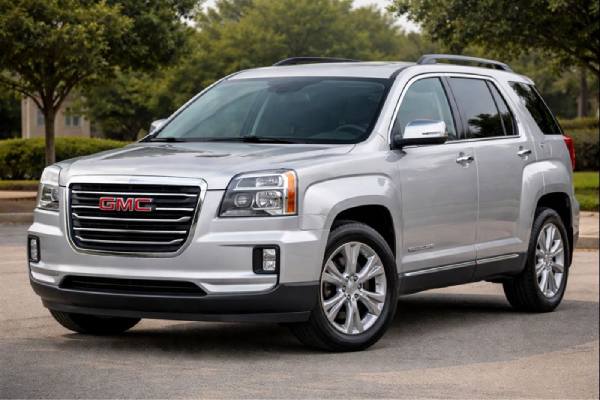
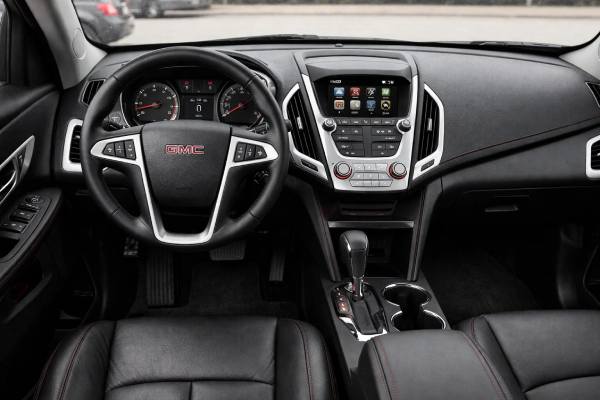
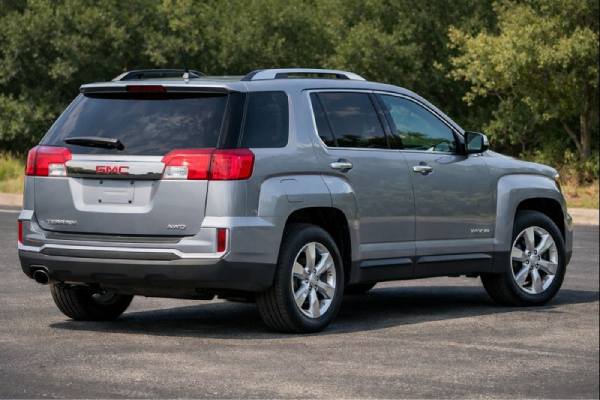
The 2016–2017 GMC Terrain FWD with the LEA 2.4L inline-four is the “steady commuter” version of the facelifted first-generation Terrain. It trades the V6’s punch for lower running costs, simpler cooling and driveline loads, and an easier-to-live-with front-drive layout. The engineering story is mostly about balance: a direct-injected, variable-valve-timed 2.4L paired to a 6-speed automatic, wrapped in a body that prioritizes visibility, seat comfort, and a quiet highway demeanor over sharp handling.
For buyers today, the real decision points are condition and maintenance history. These engines are sensitive to oil level and service habits, and the transmission rewards regular fluid care if the vehicle lived a hard life. Get the basics right, and this Terrain can be a practical, comfortable compact SUV that ages better than its reputation suggests.
What to Know
- Comfortable seats and calm highway ride make it an easy daily driver for long commutes.
- Practical cargo shape and a tall seating position help with real-world usability.
- FWD keeps drivetrain complexity (and some repair risk) lower than AWD versions.
- Watch oil level and consumption closely; neglected oil service is the fastest path to expensive timing wear.
- Change engine oil when the oil-life monitor calls for it (or at least every 12 months), whichever comes first.
Section overview
- Facelift Terrain 2.4 basics
- LEA 2.4 technical tables
- 2016 to 2017 trims and safety gear
- Known faults and service actions
- Maintenance schedule and buyer checks
- Real-world driving and efficiency
- Rivals and smart alternatives
Facelift Terrain 2.4 basics
The facelifted 2016–2017 Terrain (GMT177) sits in a sweet spot for buyers who want a traditional, durable compact SUV layout without jumping into the complexity of newer turbo and dual-clutch powertrains. In FWD LEA form, it is built around a straightforward front-engine, front-drive package: a 2.4L inline-four, a conventional torque-converter 6-speed automatic, and a suspension tune aimed at ride comfort.
The biggest “advantage” of this configuration is that it reduces the number of things that can go wrong compared with AWD variants. There’s no rear drive module, no prop shaft, and no AWD coupler to service. For many owners, that translates into fewer driveline vibrations, fewer fluid services, and fewer expensive surprises as the vehicle ages. It also tends to be slightly lighter than AWD, which helps acceleration feel and braking consistency.
The facelift years matter because they reflect incremental improvements rather than a full redesign. You get the same core chassis and cabin layout, with updates to appearance, feature packaging, and (depending on trim) available driver-assist tech. The Terrain’s tall seating position and large glass area are still key ownership benefits: it’s easy to place in traffic and parking lots, and many owners find it less fatiguing than sleeker rivals.
Where the 2.4L LEA demands respect is maintenance discipline. Like many direct-injected four-cylinders of this era, it is not forgiving of long oil intervals, low oil level, or repeated short-trip use without occasional fully warmed highway runs. If oil level drops and stays low, timing chain and cam phaser wear can accelerate, and that is where “cheap commuter” turns into “expensive project.”
Who is it best for? Drivers who value a comfortable seat, a calm ride, and easy daily usability more than quick steering response. If you plan to tow often, run heavy loads in mountains, or want strong passing power at highway speeds, the 2.4L will feel strained. But for normal commuting, errands, and family hauling with light cargo, a well-kept LEA Terrain can be an honest, practical choice—especially if you shop by condition, not just by mileage.
LEA 2.4 technical tables
The tables below focus on the 2016–2017 Terrain FWD with the LEA 2.4L and 6-speed automatic. Some figures vary by trim, wheels/tires, and market, so treat them as a planning baseline and confirm specifics by VIN and RPO codes.
Engine and performance
| Item | Specification |
|---|---|
| Code | LEA |
| Engine layout and cylinders | Inline-4, DOHC, 4 cylinders, 4 valves/cyl |
| Bore × stroke | 88.0 × 98.0 mm (3.46 × 3.86 in) |
| Displacement | 2.4 L (2,384 cc) |
| Induction | Naturally aspirated |
| Fuel system | Direct injection (DI) |
| Compression ratio | ~11:1 (varies by calibration) |
| Max power | 182 hp (136 kW) @ ~6,700 rpm |
| Max torque | 233 Nm (172 lb-ft) @ ~4,900 rpm |
| Timing drive | Chain |
| Rated efficiency (EPA, typical) | ~10.7 L/100 km (22 mpg US / 26 mpg UK) combined |
| Real-world highway @ 120 km/h (75 mph) | ~8.5–10.0 L/100 km (28–24 mpg US / 34–29 mpg UK) |
Transmission and driveline
| Item | Specification |
|---|---|
| Transmission | 6-speed automatic (torque-converter) |
| Drive type | FWD |
| Differential | Open (front) |
Chassis and dimensions
| Item | Specification |
|---|---|
| Suspension (front/rear) | MacPherson strut / independent multi-link |
| Steering | Electric power steering (EPS) |
| Brakes | 4-wheel disc with ABS, stability control |
| Wheels/tires (common) | 225/65 R17 or 235/55 R18 (by trim) |
| Ground clearance | ~175 mm (6.9 in) |
| Length / width / height | ~4,707 / 1,849 / 1,684 mm (185.3 / 72.8 / 66.3 in) |
| Wheelbase | ~2,858 mm (112.5 in) |
| Turning circle (kerb-to-kerb) | ~11.5 m (37.7 ft) |
| Curb weight | ~1,680–1,760 kg (3,700–3,880 lb), varies by trim |
| Fuel tank | ~71 L (18.8 US gal / 15.6 UK gal) |
| Cargo volume (SAE) | ~895 L (31.6 ft³) seats up / ~1,810 L (63.9 ft³) seats down |
Performance and capability
| Item | Specification |
|---|---|
| Acceleration (0–100 km/h) | ~9.5–10.5 s (traction and trim dependent) |
| Top speed | ~175–185 km/h (109–115 mph), trim dependent |
| Towing capacity | Up to ~680 kg (1,500 lb) when properly equipped (check rating label) |
Fluids, service capacities, and key torques
| Item | Typical specification |
|---|---|
| Engine oil | dexos1-approved 5W-30; ~4.7 L (5.0 US qt) with filter |
| Coolant | Dex-Cool (50/50 mix typical); capacity varies (verify by VIN) |
| Transmission/ATF | Dexron VI; drain/fill and total capacity vary (verify by service procedure) |
| Brake fluid | DOT 3 (or GM-approved equivalent) |
| A/C refrigerant | R-134a (charge varies by build; verify underhood label) |
| Wheel lug torque | ~140 Nm (103 lb-ft) (verify for wheel type) |
Electrical and ignition
| Item | Typical specification |
|---|---|
| 12V battery | Group size varies; ~600–700 CCA common |
| Spark plugs | Iridium type; gap typically ~1.1 mm (0.043 in) |
Safety and driver assistance
| Item | Notes (typical by trim) |
|---|---|
| Core systems | ABS, stability control, traction control, multiple airbags |
| Camera | Rear vision camera (commonly standard by this era) |
| Available driver aids | Blind spot monitoring, rear cross-traffic alert, lane departure warning, forward collision alert (package dependent) |
2016 to 2017 trims and safety gear
Trim strategy on the 2016–2017 Terrain is simple: most models share the same core mechanicals, while comfort, infotainment, wheels, and safety options scale up as you move from entry trims to Denali. That means you can often buy “the drivetrain you want” first (2.4 FWD here) and then choose the cabin and safety content that matches your priorities.
Common trims and quick identifiers
You’ll typically encounter SL, SLE (often split into SLE-1 and SLE-2), SLT, and Denali. In the used market, quick identifiers help:
- Denali usually stands out with signature grille treatment, more chrome accents, upgraded wheels, and a more premium interior finish.
- SLT often carries leather seating and comfort upgrades without the full Denali exterior look.
- SLE/SL focus on value, with simpler upholstery and fewer luxury features, but they can still be the best buys if they were owned gently and serviced on time.
Because equipment changed with packages, don’t rely only on the badge. Look for interior “tells” like heated seat buttons, dual-zone climate controls, premium audio branding, and the presence of factory camera/sensors on the bumpers.
Options that matter for ownership
Some options impact long-term satisfaction more than others:
- Convenience packages (power liftgate, remote start, better seating) can materially improve daily usability, especially in winter climates.
- Wheel and tire packages change ride quality. Bigger wheels can look great but usually add road noise and increase tire replacement cost.
- Infotainment upgrades are nice, but condition matters more: confirm that the touchscreen, Bluetooth, USB ports, and steering-wheel controls behave consistently.
Safety ratings and what they really mean
On paper, this generation performed well in key structural crash tests for its era, and the facelift years benefited from updates intended to improve small-overlap performance. That said, “safety rating” is not one number. It depends on the testing body, the exact test version, and whether the vehicle had specific optional crash-avoidance systems fitted.
A practical approach is to treat crashworthiness (structure and restraints) and crash avoidance (driver-assist tech) as separate questions. The Terrain’s structure can score well even when its available driver-assist tech is limited compared with newer rivals.
Driver assistance and calibration realities
Most 2016–2017 Terrains rely on classic safety fundamentals: stability control, ABS, airbags, and good seating geometry. If the vehicle has blind-spot monitoring, rear cross-traffic alert, or forward collision alert, remember that these systems depend on sensors and calibration. After bumper repairs, windshield replacement (for camera-based systems), or alignment work, confirm that warnings and alerts behave normally—no intermittent faults, no disabled features, and no persistent dash messages. For a used buyer, the best sign is a clean scan for stored codes and a test drive that includes parking maneuvers and highway cruising.
Known faults and service actions
Reliability on the 2016–2017 2.4L Terrain is less about one catastrophic weak point and more about patterns: oil management, drivability sensors, and age-related wear in chassis and electrical systems. The good news is that many issues start with clear symptoms, and early action often prevents high-dollar outcomes.
Common issues (high prevalence)
- Oil consumption or low oil level (cost tier: medium to high if ignored).
Symptoms: oil light flickers, rough running on cold start, burning smell, frequent top-offs.
Likely causes: ring/cylinder wear patterns, PCV system behavior, long intervals, repeated short trips.
Remedy: monitor level every fuel fill for a few weeks after purchase; keep oil changes consistent; address PCV issues and leaks early. If consumption is heavy, a proper diagnosis matters before throwing parts at it. - Timing chain wear due to oil neglect (cost tier: high).
Symptoms: rattling on cold start, correlation codes, loss of power, poor idle.
Likely causes: extended low-oil operation or sludging.
Remedy: do not keep driving with chain noise; verify oil pressure and history; repair before it jumps timing. - Direct-injection carbon buildup (cost tier: medium).
Symptoms: rough idle, hesitation, misfires, reduced fuel economy.
Likely causes: DI fuel does not wash intake valves, so deposits can accumulate with short trips.
Remedy: targeted intake cleaning when symptoms appear; prioritize regular highway heat cycles and quality oil.
Occasional issues (moderate prevalence)
- 6-speed automatic shift quality complaints (cost tier: medium).
Symptoms: flare on upshifts, harsh engagement, shudder under light throttle.
Likely causes: aged fluid, adaptive learning needing reset after repairs, occasional torque converter complaints.
Remedy: confirm fluid condition and level; if history is unknown, a careful service strategy is better than neglect. A road test should include gentle rolling starts and light-throttle cruising. - Cooling system seepage and thermostat housing leaks (cost tier: low to medium).
Symptoms: sweet smell, low coolant warnings, crusty residue around housings.
Remedy: fix early; overheating is what turns a small leak into a major repair.
Rare but expensive items (low prevalence, high severity)
- Major engine wear after prolonged low-oil driving.
Symptoms: persistent knocks, low compression, heavy smoke.
Remedy: at that point, you’re evaluating rebuild vs replacement; this is why oil level habits matter.
Recalls, bulletins, and how to verify
Because recall coverage is VIN-specific and can change over time, don’t rely on a generic list in a used ad. Use an official VIN lookup to confirm open recalls and confirm completion through dealer records. When you shop, ask for: (1) proof of recall completion, (2) service history showing oil changes, and (3) any documentation of software updates that addressed drivability complaints. If the vehicle has any driver-assist options, insist that warning lights are off and that the system performs its self-checks without errors.
Maintenance schedule and buyer checks
A good maintenance plan for the 2016–2017 2.4L Terrain is not complicated, but it needs consistency. The theme is prevention: keep fluids fresh, keep filters clean, and avoid the “run it until it complains” approach that leads to timing and drivability issues.
Practical maintenance schedule (distance or time)
Use this as a real-world baseline, then align it with the official documentation for your VIN and driving conditions:
- Engine oil and filter: follow the oil-life monitor; as a minimum safety net, change at least every 12 months. If you do frequent short trips, treat 8,000–10,000 km (5,000–6,000 mi) as a sensible planning interval.
- Engine air filter: inspect every 15,000 km (10,000 mi); replace around 30,000–45,000 km (20,000–30,000 mi) depending on dust.
- Cabin air filter: every 15,000–30,000 km (10,000–20,000 mi), or yearly in urban/pollen-heavy areas.
- Coolant (Dex-Cool): typically a long-life interval, but age matters; plan inspection yearly and replacement when due by time or condition.
- Spark plugs (iridium): plan around 150,000–160,000 km (95,000–100,000 mi) unless misfire data suggests earlier.
- Transmission fluid (Dexron VI): if history is unknown, consider a conservative service plan. For severe use (hot climate, heavy city, hills), plan a shorter interval than “lifetime.”
- Brake fluid: every 2 years is a smart moisture-control interval.
- Brake pads/rotors: inspect every tire rotation; caliper slide service can prevent uneven wear.
- Tires: rotate every 8,000–10,000 km (5,000–6,000 mi); align if you see shoulder wear or steering pull.
- 12V battery: test annually after year 4; replacement is common around 5–6 years depending on climate.
- Timing chain: no routine replacement interval, but do not ignore noise, correlation codes, or chronic low-oil history.
Buyer’s inspection checklist
Bring this list to a pre-purchase inspection:
- Cold start behavior: listen for timing rattle, watch idle stability, and confirm no warning lights.
- Oil level and oil condition: check dipstick level and look for neglect signs (sludge, burnt smell).
- Transmission behavior: smooth takeoff, consistent shifts, no shudder at light throttle.
- Cooling system: check for leaks, sweet smell, and stable operating temperature during the drive.
- Suspension and steering: clunks over bumps suggest worn links/bushings; confirm straight tracking and even tire wear.
- Electronics: test windows, locks, HVAC modes, infotainment, camera, and parking sensors if equipped.
- Underbody and corrosion points: focus on brake lines, subframes, and seam areas in road-salt regions.
Long-term durability outlook
A well-maintained LEA Terrain can be a solid long-term value, but “well maintained” is not optional. The best examples usually come from owners who changed oil on time, corrected leaks early, and avoided long periods of low oil. If you find one with clean records, it can be a comfortable, cost-manageable compact SUV for many years.
Real-world driving and efficiency
In daily driving, the 2.4L FWD Terrain feels tuned for smoothness rather than urgency. Throttle response is predictable, but the engine does its best work once it’s spinning. Around town, it’s fine for normal traffic, yet it won’t feel “quick” if you drive it back-to-back with newer turbo crossovers that deliver more low-rpm torque. The payoff is linear power delivery and a traditional automatic that behaves consistently when it’s healthy.
Ride, handling, and NVH
Ride comfort is one of the Terrain’s standout traits. The suspension generally soaks up broken pavement well, and the cabin has a calm, slightly “heavier” feel than some lighter rivals. Steering is light to moderate and prioritizes ease of use over feedback. In corners, it’s safe and stable, but not sporty—expect noticeable body roll if you push hard. On the highway, straight-line stability is good, which is why many owners like it for commuting.
Noise levels depend heavily on tire choice. Larger wheels and lower-profile tires tend to add road roar. If you value quiet, prioritize trims with more conservative tire setups and buy quality replacement tires when the time comes.
Powertrain character and transmission logic
The 6-speed automatic generally aims to keep revs low for economy, then downshifts decisively when you ask for passing power. On hills, it may “hunt” between gears more than an 8-speed, but it’s usually smooth if fluid condition is good and mounts are healthy. If you feel repeated shuddering at steady cruise, treat it as a sign to investigate rather than “normal behavior.”
Fuel economy in the real world
Officially, this configuration typically lands around the low-20s mpg combined in U.S. terms. In practice:
- City-heavy use: expect roughly 11.5–13.0 L/100 km (20–18 mpg US / 24–22 mpg UK), especially with short trips and winter warmups.
- Highway at 100–120 km/h: roughly 8.5–10.0 L/100 km (28–24 mpg US / 34–29 mpg UK), depending on wind, tires, and cargo.
- Mixed commuting: roughly 10.5–12.0 L/100 km (22–20 mpg US / 26–24 mpg UK).
Cold weather can hurt economy more than many drivers expect because the engine spends more time warming up and running richer mixtures. For best results, keep tires properly inflated, replace clogged filters, and avoid carrying unnecessary cargo weight.
Load and towing reality
If you tow occasionally within the vehicle’s rating, expect a noticeable economy penalty and more frequent downshifts on grades. This drivetrain can handle light towing, but it isn’t the “effortless tow” version of the Terrain lineup. If towing is a key use case, you’ll be happier shopping specifically for the correct factory equipment and a proven service history.
Rivals and smart alternatives
The 2016–2017 Terrain 2.4 FWD competes with the heart of the compact crossover market, and each rival has its own logic. Choosing well depends on whether you prioritize comfort, efficiency, interior space, or long-term powertrain simplicity.
Where the Terrain still wins
- Seat comfort and ride composure: It’s a strong long-distance commuter. Some rivals feel busier over rough pavement.
- Everyday usability: Upright seating, good outward visibility, and a practical cargo opening make it easy to live with.
- Traditional drivetrain feel: A conventional automatic can be a plus if you dislike the behavior of some CVTs or early small turbos.
Where rivals can be stronger
- Toyota RAV4 (2.5L, similar era): often a safer bet for long-term ownership simplicity and resale, with fewer “oil level vigilance” worries.
- Honda CR-V (2.4L, similar era): usually delivers excellent packaging and efficiency; check for its own known maintenance needs, but it’s often easier on fuel in mixed driving.
- Mazda CX-5: better steering feel and body control; if you value driving dynamics, it’s a clear alternative.
- Ford Escape: more powertrain variety, including turbo options; however, complexity and maintenance history become even more important.
Best-fit recommendations
Choose the Terrain 2.4 FWD if you want a comfortable, traditional compact SUV and you’re willing to be disciplined about oil level and routine service. Choose a key rival if you value:
- Lowest risk and highest resale: often the RAV4 route.
- Best space efficiency and everyday economy: CR-V is a common answer.
- Most engaging driving feel: CX-5 tends to satisfy.
The honest verdict: a well-kept Terrain 2.4 can be a smart value because it is often priced attractively, but it is not a “buy it and ignore it” vehicle. The best examples are owned by people who maintained them like a long-term appliance. If you shop the same way—service history first, features second—you can end up with a comfortable, dependable compact SUV that makes sense in today’s used market.
References
- Gas Mileage of 2016 GMC Terrain 2016 (Fuel Economy Database)
- 2016 GMC Terrain 4-door SUV 2016 (Safety Rating)
- Owner’s Manuals & Guides | GMC Canada 2025 (Owner’s Manual Portal)
- Check for Recalls: Vehicle, Car Seat, Tire, Equipment | NHTSA 2025 (Recall Database)
Disclaimer
This article is for informational purposes only and is not a substitute for professional inspection, diagnosis, or repair. Specifications, torque values, fluid capacities, service intervals, and procedures can vary by VIN, market, model year, and installed equipment. Always verify details using official owner and service documentation for your specific vehicle and follow qualified technician guidance where appropriate.
If you found this guide useful, please consider sharing it on Facebook, X (Twitter), or your favorite forum to help others maintain and buy smarter.