
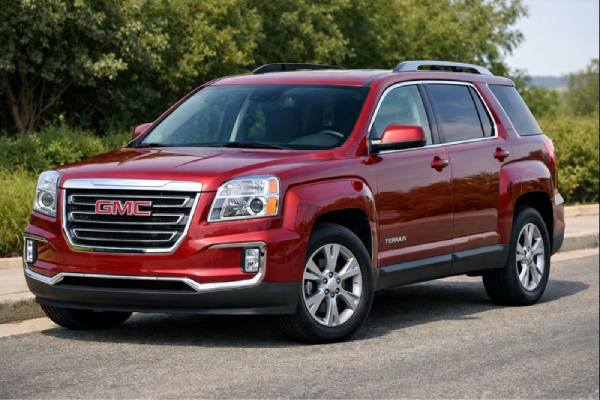
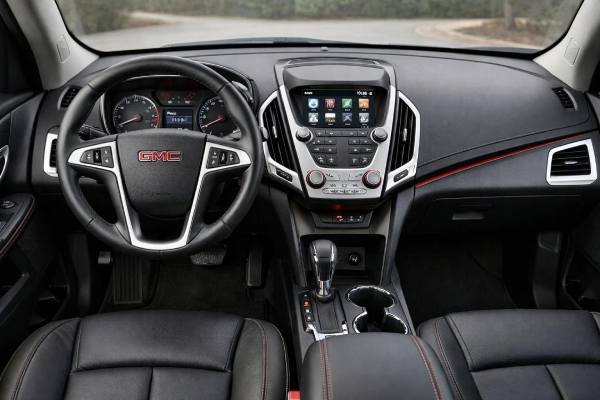
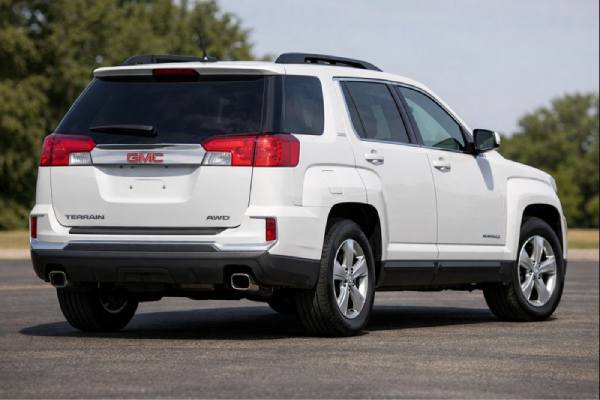
The 2016–2017 GMC Terrain AWD with the 3.6L LFX V6 is the “torque-first” version of the first-generation Terrain. It pairs a direct-injected V6 with a conventional 6-speed automatic and an on-demand AWD system that adds real all-weather confidence without the complexity of a true 4×4. The facelift years also brought a more modern interior layout, upgraded infotainment in many trims, and a lineup that leaned heavily on comfort and highway stability.
Ownership is mostly about staying ahead of fluids and heat: the V6 is strong when oil quality stays high, and the AWD hardware lasts longest when its gear oils are serviced before they smell burnt or go dark. If you want a compact crossover that feels relaxed at speed, pulls harder than most rivals, and still fits daily family duty, this is the Terrain variant that makes the most mechanical sense.
Owner Snapshot
- Strong passing power and confident merging thanks to the 301 hp V6 and quick kickdown
- AWD adds traction in rain and snow without the heavy fuel penalty of full-time systems
- Expect higher running costs than the 2.4L: more plugs, more heat, and more fluid volume
- Change engine oil at 8,000–12,000 km (5,000–7,500 mi) depending on driving style and trip length
- Service AWD and transmission fluids around 70,000–100,000 km (45,000–60,000 mi) for long-term durability
Guide contents
- Terrain AWD V6 facelift profile
- LFX AWD specs and capacities
- 2016–2017 trims and safety gear
- Known problems recalls and fixes
- Maintenance plan and buying tips
- How it drives in real life
- Rivals: what to cross-shop
Terrain AWD V6 facelift profile
Think of the 2016–2017 Terrain AWD 3.6 as a comfortable, slightly “over-engined” compact crossover from an era when manufacturers still offered real displacement in this class. The LFX V6 is the highlight: it’s smooth, naturally aspirated (no turbo lag), and delivers its best work in the midrange where you actually pass and climb grades. In AWD form, the Terrain also feels more planted when roads get slick or uneven, especially if you run quality all-season or winter tires.
The AWD system is designed for normal driving, not rock crawling. Most of the time it behaves like a front-wheel-drive vehicle for efficiency. When the system detects wheel slip (or predicts it based on throttle and stability-control data), it sends torque to the rear through a power take-off unit and rear drive module. The benefit is traction you can feel in the first half-second of a slippery launch or when you accelerate through wet corners. The tradeoff is added maintenance: you now have extra gear oil and seals in the drivetrain that can age out.
The facelift years focused on livability. Cabin controls are more intuitive than earlier years, and many trims offered upgraded infotainment and convenience equipment. Practicality remains a Terrain strength: seating is upright, visibility is good, and the cargo area is easy to load. Where it shows its age is weight and efficiency. The V6 AWD combination is quick, but it drinks more fuel than newer turbo fours or modern hybrids.
Who is it for? Drivers who prioritize easy power, confident bad-weather traction, and a relaxed highway character over cutting-edge economy. If you buy one with complete service records and you treat fluid changes as “preventive,” it can be a satisfying long-term daily.
LFX AWD specs and capacities
Below are core specifications for the 2016–2017 Terrain AWD with the LFX 3.6L (301 hp). Values can vary slightly by trim, wheel package, and production updates, so use your VIN build data for exact confirmation.
Engine and performance
| Item | Spec |
|---|---|
| Code | LFX |
| Layout | V6, aluminum block and heads |
| Valvetrain | DOHC, 4 valves/cyl (24V) |
| Displacement | 3.6 L (3564 cc) |
| Induction | Naturally aspirated |
| Fuel system | Direct injection (DI) |
| Bore × stroke | 94.0 × 85.6 mm (3.70 × 3.37 in) |
| Compression ratio | ~11.5:1 (typical for LFX applications) |
| Max power | 301 hp (224 kW) @ ~6500 rpm |
| Max torque | ~369 Nm (272 lb-ft) @ ~4800 rpm |
| Timing drive | Chain |
| Emissions/efficiency standard | EPA (U.S. rating basis) |
| Rated efficiency (AWD V6) | about 13.1 / 10.2 / 11.8 L/100 km (18 / 23 / 20 mpg US) city/hwy/comb (typical EPA listing) |
| Real-world highway @ 120 km/h (75 mph) | ~11.5–13.0 L/100 km (18–20 mpg US), tire and wind dependent |
Transmission and driveline
| Item | Spec |
|---|---|
| Transmission | 6-speed automatic (commonly 6T70 family) |
| Drive type | On-demand AWD (front-biased) |
| Gear ratios (typical 6T70) | 1st 4.48 / 2nd 2.87 / 3rd 1.84 / 4th 1.41 / 5th 1.00 / 6th 0.74 / Rev 2.88 |
| Final drive | Varies by build; commonly in the low-3s |
| Differential | Open front; rear drive module with electronically controlled coupling |
Chassis and dimensions (GMT177)
| Item | Spec |
|---|---|
| Front suspension | MacPherson strut |
| Rear suspension | Independent multi-link |
| Steering | Electric power steering (EPS) |
| Brakes | 4-wheel discs with ABS and stability control |
| Wheels/tires (common) | 17–19 in depending on trim |
| Length | ~4707 mm (185.3 in) |
| Width | ~1849 mm (72.8 in) |
| Height | ~1684 mm (66.3 in) |
| Wheelbase | ~2858 mm (112.5 in) |
| Ground clearance | ~175 mm (6.9 in) |
| Turning circle | ~11.8 m (38.7 ft) |
| Curb weight | ~1800–1900 kg (3970–4190 lb), trim dependent |
| Fuel tank | ~70 L (18.5 US gal / 15.4 UK gal) |
| Cargo volume | ~892 L (31.5 ft³) seats up / ~1763 L (62.1 ft³) seats down (method varies by market) |
Performance and capability
| Item | Spec |
|---|---|
| 0–100 km/h (0–62 mph) | ~7.0 s (typical testing range) |
| Passing feel | Strong 80–120 km/h due to V6 midrange |
| Towing capacity | Up to ~1588 kg (3500 lb) when properly equipped (cooling and hitch requirements apply) |
Fluids and service capacities (decision-useful)
These are practical starting points; always verify by VIN and service information for your exact drivetrain.
| System | Fluid and spec | Capacity (approx.) |
|---|---|---|
| Engine oil | dexos1 Gen 2/3 5W-30 (common recommendation) | ~5.7 L (6.0 US qt) with filter |
| Coolant | Dex-Cool type, 50/50 mix | ~10–11 L (10.6–11.6 US qt) |
| Automatic transmission | DEXRON-VI ATF | service fill often ~4–5 L; total higher |
| AWD units | GM-approved gear oil (check RPO and service info) | small-volume units; typically <1.5 L each |
Electrical (typical)
| Item | Spec |
|---|---|
| 12V battery | Group size varies; use CCA appropriate for climate |
| Spark plugs | Iridium-type plugs (long-life), gap per spec |
Safety and driver assistance (headline)
| Item | Notes |
|---|---|
| Stability systems | ABS, traction control, ESC standard |
| ADAS | Front crash prevention may be optional; features vary by trim and year |
2016–2017 trims and safety gear
For the 2016–2017 facelift Terrain, most buyers will encounter SLE, SLT, and Denali trims. The mechanical core (LFX V6 + 6-speed automatic) is the same story, but equipment, wheel sizing, and available safety tech vary enough to matter for comfort, reliability, and resale.
Trims and options: what changes in practice
- SLE (value-focused): Often the easiest to maintain because it can have smaller wheels (more tire sidewall, better ride, lower wheel damage risk). Many SLEs still have the key fundamentals—heated seats may be optional, and infotainment may be simpler depending on package.
- SLT (sweet spot): Typically adds more comfort features (leather, upgraded audio, remote start in many builds). If you want the V6 and AWD but don’t need every luxury item, SLT is commonly the best balance.
- Denali (top trim): Adds appearance upgrades, more standard equipment, and often larger wheels. The big upside is features; the downside is cost of tires, brakes, and cosmetic parts. Denali also tends to attract owners who maintained well, but you still need proof.
Option packages to look for (names vary) include:
- Convenience items: power liftgate, upgraded seating and memory functions
- Tow prep: hitch provisions and cooling-related equipment matter if you actually tow
- Driver alert / forward collision features: these can change safety outcomes and insurance positioning
Quick identifiers when shopping:
- Badging and wheels: Denali cues are obvious; SLT vs SLE is often interior materials and wheel design.
- Build codes (RPO): If the seller has the glovebox/label data or service printouts, it can confirm towing equipment and safety packages.
- Headlights and visibility: Even with the same housing, bulb type and aim quality can differ. Check performance at night, not just during the day.
Safety ratings: what the tests say
On the 2017 Terrain ratings page, IIHS lists Good crashworthiness results across the core tests (small overlap driver-side, moderate overlap, side, roof strength, and head restraints). The important caveat is lighting: IIHS lists the headlights rating as Poor, which matters if you drive often at night on unlit roads. IIHS also notes that front crash prevention (vehicle-to-vehicle) is tied to an optional system and is rated at the Basic level when equipped, rather than being a high-performing standard system.
Practical takeaway: even if the structure is strong, you should treat headlight performance as a safety item you can improve (aim, lenses, quality bulbs within legal limits) and treat front crash prevention as “check the build,” not a given.
Safety systems and ADAS to understand before service
- Airbags and restraints: Expect the standard modern set for the era, plus LATCH/ISOFIX child-seat anchors.
- Braking and stability control: These are always working with the AWD system. If you see warning lights for ABS/ESC, don’t ignore them—AWD traction logic depends on clean wheel-speed data.
- ADAS calibration: If your vehicle has forward-collision features, windshield replacement, bumper repair, or front-end alignment may require calibration checks. A “no warning lights” dashboard is good, but a scan for stored codes is better.
Known problems recalls and fixes
A well-kept Terrain AWD V6 can be durable, but it rewards preventive maintenance and punishes neglect—especially around oil quality, cooling health, and drivetrain fluids. Below is a practical issue map by prevalence and cost tier.
Common: frequent complaints you should expect to manage
- Direct injection carbon buildup (medium cost):
Symptoms: rough idle, misfires under load, reduced fuel economy.
Likely cause: intake valve deposits over time (DI doesn’t wash valves with fuel).
Remedy: intake cleaning (walnut blasting or chemical service), then shorten oil intervals and use quality fuel. Highway driving helps. - Oil quality sensitivity (low to medium cost, high stakes):
Symptoms: noisy timing at cold start, cam correlation codes in worst cases.
Likely cause: extended oil intervals or low oil level accelerating chain and tensioner wear.
Remedy: keep the oil level correct and shorten change intervals if you do short trips or lots of idling. - HVAC blend door actuators and cabin electronics (low to medium):
Symptoms: clicking behind dash, wrong vent temperature, intermittent infotainment behavior.
Cause: small electric actuators or aging connectors.
Remedy: targeted actuator replacement; don’t shotgun parts.
Occasional: shows up more with mileage, heat, or poor service history
- Cooling system leaks (medium):
Symptoms: coolant smell, slow loss, overheating in traffic.
Likely cause: aging hoses, water pump seep, or radiator end tank issues.
Remedy: pressure test and fix early; overheating is what turns a manageable repair into a major one. - 6-speed automatic shift quality issues (medium to high):
Symptoms: shudder, flare, harsh 2–3 or 3–4 shifts, delayed engagement.
Cause: old ATF, torque converter wear, or valve-body issues.
Remedy: start with correct fluid service and scan data; if symptoms persist, plan for deeper diagnosis. - AWD driveline seepage or noise (medium):
Symptoms: gear-oil smell, damp housings, humming/whine, vibration on acceleration.
Cause: seals, worn bearings, or neglected fluid in the rear drive module or front power take-off unit.
Remedy: fix leaks immediately and service fluids on schedule; small units run hot and don’t forgive low fluid.
Rare but expensive: not common, but worth screening for
- Internal engine mechanical wear (high):
Symptoms: persistent misfire, heavy consumption, low compression.
Cause: severe neglect, overheating history, or long-term low oil.
Remedy: compression/leak-down testing before purchase if the vehicle feels “tired.”
Recalls, TSBs, and software updates: how to verify without guessing
Instead of relying on lists that may not match your exact VIN and market, use two checks:
- Official VIN recall lookup (and dealer service history when possible).
- Module scan for calibration and fault history: engine, transmission, ABS/ESC, and any ADAS modules.
When a seller says “it’s all done,” ask for the repair invoice or dealer printout. For this generation, a clean record matters as much as mileage.
Maintenance plan and buying tips
The Terrain AWD V6 is easiest to own when you treat fluids, filters, and heat management as your core strategy. Here’s a practical schedule that fits real driving, not just best-case conditions.
Practical maintenance schedule (distance or time, whichever comes first)
- Engine oil and filter: every 8,000–12,000 km (5,000–7,500 mi) or 12 months.
If you do short trips, cold weather idling, or lots of city driving, stay near 8,000 km / 5,000 mi. - Engine air filter: inspect every oil change; replace about 24,000–48,000 km (15,000–30,000 mi) depending on dust.
- Cabin air filter: replace every 12 months or 24,000 km (15,000 mi) if you want consistent HVAC performance.
- Spark plugs (V6): typically around 160,000 km (100,000 mi).
Consider earlier replacement if you feel misfire, roughness, or you run it hard. - Coolant (Dex-Cool type): commonly 5 years / 240,000 km (150,000 mi) initial in many GM applications, but for older vehicles a conservative 5-year interval is smart. Fix leaks immediately.
- Automatic transmission fluid (DEXRON-VI): around 70,000–100,000 km (45,000–60,000 mi) for long life, especially if you drive in heat, mountains, or tow.
- AWD fluids (front take-off and rear drive module): around 70,000–100,000 km (45,000–60,000 mi). This is one of the best “prevention” services you can do.
- Brake fluid: every 2 years, regardless of mileage.
- Brake pads and rotors: inspect every tire rotation. Heavier V6 AWD models can wear fronts faster, especially with larger wheels.
- Tire rotation and alignment: rotate every 8,000–12,000 km (5,000–7,500 mi); align if you see uneven wear or steering pull. AWD vehicles are more sensitive to mismatched tire diameters.
- 12V battery test: yearly after the 3–4 year mark; replace proactively around 4–6 years depending on climate.
Fluid specs and a few torque numbers (quick decisions)
- Engine oil: dexos-approved 5W-30 is the common safe choice for most climates.
- ATF: DEXRON-VI only (mixing fluids often causes shift issues).
- Wheel lug nuts: commonly around 140 Nm (103 lb-ft) for many GM crossovers (verify for your wheel type).
- Spark plugs: torque and gap should match the plug and service spec; overtightening is a real risk in aluminum heads.
Buyer’s checklist: what to inspect before you commit
- Service history quality: oil change intervals and proof of correct fluids matter more than “dealer-only” stamps.
- AWD behavior: do tight, slow turns on a dry surface (listen for binding), then a moderate wet launch (feel for stability). No clunks, no shudder.
- Transmission feel: cold start to warm: it should shift consistently without delayed engagement or repeated flare.
- Cooling system health: check for dried coolant residue, sweet smell, and stable temperature under load.
- Suspension and wheel bearings: listen for humming that changes with road speed; check for uneven tire wear.
- Interior electronics: confirm HVAC modes, blower speeds, and all windows/locks. Small electrical problems add up fast.
Long-term outlook: the LFX V6 can be a dependable engine when oil level and cooling health are protected. The drivetrain is robust for normal use, but the AWD system is not “fit-and-forget”—it’s “service-and-forget.”
How it drives in real life
With the 3.6L V6, the Terrain drives like a heavier, more relaxed crossover than newer turbo competitors. That’s not a criticism—many owners specifically like the calm character. The engine feels smooth and strong, and because it’s naturally aspirated, throttle response is predictable. You don’t wait for boost; you just get acceleration proportional to your right foot.
Ride, handling, and NVH
- Ride comfort: The suspension tuning leans toward comfort. On 17–18 inch wheels, it absorbs broken pavement well. On larger wheels, you’ll feel sharper impacts and may notice more road noise.
- Highway stability: This is a strong point. It tracks straight and feels settled at 110–130 km/h, especially with good tires and fresh dampers.
- Steering feel: EPS steering is light and consistent, but not especially chatty. It’s easy in parking lots, less informative on back roads.
- Braking feel: Generally predictable, though heavier V6 AWD models can feel like they work the front brakes harder. Fresh fluid helps keep the pedal firm.
Powertrain character and transmission logic
The V6 is at its best from roughly 2,500 rpm upward, where passing becomes effortless. The 6-speed automatic usually holds gears under moderate throttle and drops 1–2 gears quickly for passing. If you feel hunting between 5th and 6th on gentle grades, that can be normal, but excessive hunting often improves after a correct ATF service and updated calibrations where applicable.
Real-world efficiency expectations (AWD V6)
EPA-style ratings are useful for comparison, but your results will be shaped by speed and climate:
- City-heavy driving: expect about 13–15 L/100 km (16–18 mpg US), especially in winter.
- Highway at 100–110 km/h: roughly 10.5–12.0 L/100 km (19–22 mpg US).
- Highway at 120–130 km/h: roughly 11.5–13.0 L/100 km (18–20 mpg US).
Cold weather usually hits consumption harder than people expect because the engine warms slowly on short trips and the AWD system and tires add rolling resistance.
AWD traction and control
In rain and snow, the AWD system’s biggest advantage is removing the “one wheel spin” drama from low-speed starts and slick corners. It’s not a performance AWD system, but it improves confidence and stability. The most important real-world tip is tire matching: keep all four tires close in wear and size. Large diameter differences can stress the coupling and confuse stability control.
Towing and load
If your Terrain is correctly equipped for towing, it can handle small trailers and light campers. The V6 has enough power for hills, but watch heat: use correct coolant condition, ensure the transmission shifts cleanly, and don’t ignore rising temperatures on long grades. Expect a meaningful fuel penalty when towing—often +20–40% depending on speed, wind, and trailer shape.
Rivals: what to cross-shop
The 2016–2017 Terrain AWD V6 sits in a unique niche: it offers strong, naturally aspirated power in a segment that was rapidly shifting to smaller turbo engines. When you cross-shop, focus on what you actually want—power, efficiency, space, or long-term simplicity—because the “best” rival depends on your priorities.
If you want similar power (or stronger) without going bigger
- Jeep Cherokee V6 AWD: Comparable V6 grunt and available AWD capability, but drivability and long-term transmission behavior depend heavily on maintenance and specific drivetrain choices.
- Ford Escape 2.0 turbo AWD (period-correct): Often feels quicker at low speeds thanks to turbo torque, but it trades the Terrain’s linear response for more heat and boost complexity.
- Hyundai Santa Fe Sport (2.0T or V6 in some markets): More modern feel in some trims, but packaging and maintenance costs vary.
If you want better fuel economy and lower running costs
- Honda CR-V AWD (4-cyl): Usually wins on efficiency and overall ownership simplicity, but it won’t feel as effortless at highway passing as the Terrain V6.
- Toyota RAV4 AWD (4-cyl in those years): Strong reputation and good resale; power is adequate, not exciting.
- Mazda CX-5 AWD: Often the driver’s choice for steering and chassis feel, with decent economy. Still, it won’t match the Terrain’s V6 passing ease.
If you prioritize winter traction and predictable AWD feel
- Subaru Forester: A strong winter pick with a well-regarded AWD approach, though power delivery is more modest and the driving character is different.
Where the Terrain V6 AWD still makes sense
Choose the Terrain if you:
- value easy passing power without turbo behavior,
- want a comfortable, stable highway ride,
- and are willing to do preventive fluid service on the AWD and transmission.
Skip it if you:
- need best-in-class fuel economy,
- drive mostly short city trips (DI + short trips can be deposit-friendly),
- or want modern ADAS and lighting performance as standard equipment rather than “check the build.”
References
- Gas Mileage of 2017 GMC Terrain 2017 (Official Fuel Economy Data) ([fueleconomy.gov][1])
- Gas Mileage of 2016 GMC Terrain 2016 (Official Fuel Economy Data) ([fueleconomy.gov][2])
- 2017 GMC Terrain 2017 (Safety Rating) ([IIHS Crash Testing][3])
- Vehicle Detail Search – 2017 GMC TERRAIN SUV AWD | NHTSA 2017 (Recall Database) ([NHTSA][4])
- Manuals and Guides | Vehicle Support | GMC 2025 (Owner Information) ([GMC][5])
Disclaimer
This article is for informational purposes only and is not a substitute for professional inspection, diagnosis, or repair. Specifications, torque values, fluid types, service intervals, and procedures can vary by VIN, market, trim, and installed equipment. Always verify details using official service information and documentation for your exact vehicle.
If this guide helped, please consider sharing it on Facebook, X (Twitter), or your favorite forum to support our work.