
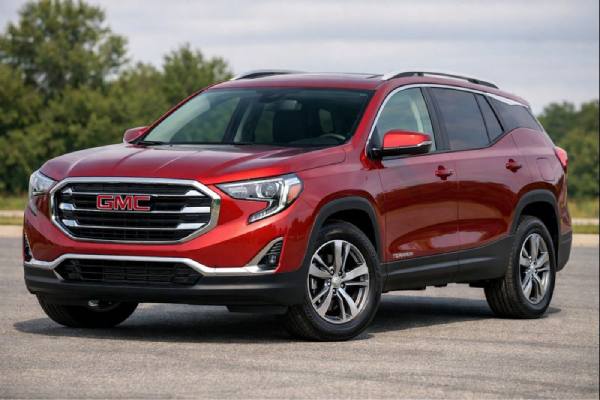
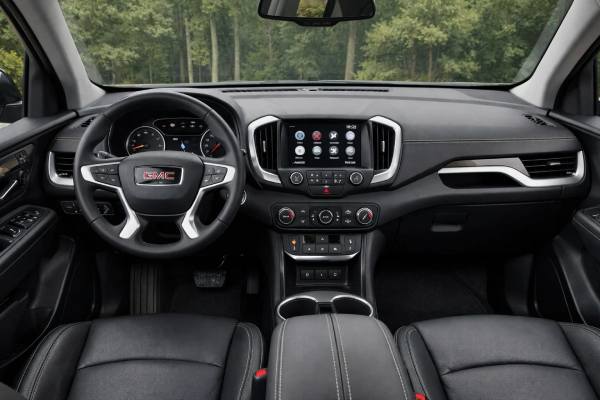
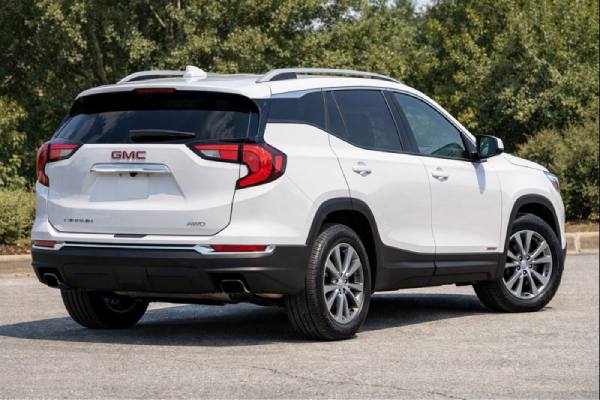
The 2018–2019 GMC Terrain FWD with the 1.6L LH7 turbo-diesel is a niche configuration built for drivers who value highway range, low fuel consumption, and relaxed torque more than quick acceleration. Compared with the gasoline engines, the diesel’s character is defined by low-rpm pull, fewer downshifts on steady grades, and efficiency that often looks best on longer trips. It also brings modern diesel realities: emissions aftertreatment (DPF and SCR/DEF), tighter requirements for correct oil and fuel quality, and a stronger preference for regular highway heat cycles.
If you’re shopping used, the big question is less “Is it a good engine?” and more “Was it used the right way, and serviced with the right fluids?” Get that part right, and the LH7 Terrain can be a comfortable, long-legged compact SUV that makes sense for commuters who rack up kilometers.
Owner Snapshot
- Strong highway economy and long cruising range for frequent motorway trips.
- Diesel torque makes light towing and loaded driving feel easier than the power figure suggests.
- Emissions hardware (DPF and DEF/SCR) dislikes repeated short trips without full warm-up.
- Plan oil changes around 10,000–15,000 km (6,000–9,000 mi) or 12 months (sooner in severe use).
- Use only the correct low-ash diesel-rated oil specification to protect the DPF.
Guide contents
- Terrain diesel fit and design
- LH7 diesel specs and capacities
- Terrain trims, options, and safety
- Diesel reliability and known problems
- Maintenance plan and smart buying
- Real driving and fuel economy
- How it stacks up to rivals
Terrain diesel fit and design
This Terrain sits on GM’s D2XX architecture, shared across related compact crossovers, with a front-wheel-drive layout in this specific configuration. In practical terms, that means a roomy front cabin, easy entry, and predictable handling, with fewer AWD components to service over time. The diesel option is the twist: the LH7 1.6L turbo-diesel prioritizes low-rpm torque and fuel economy instead of peak horsepower.
The diesel Terrain makes the most sense for three kinds of owners:
- Highway commuters who drive steady speeds for long stretches.
- Long-distance travelers who care about range and fewer fuel stops.
- Moderate-load drivers (family gear, frequent passengers, light towing where allowed) who want torque without revs.
It is a weaker match for short-hop city use. Modern diesels run best when the exhaust and aftertreatment reach full temperature. The diesel Terrain’s DPF (diesel particulate filter) periodically regenerates—burning soot off the filter—most reliably during longer, warmer operating cycles. If the previous owner mostly did short trips, expect more warning lights, more forced regens, and a higher chance of EGR/DPF/NOx-sensor headaches.
From an ownership feel standpoint, the LH7’s torque delivery is the real advantage. It tends to pull cleanly from low rpm with less throttle, and on gentle grades it often holds gear without hunting. The payoff is a calm, unhurried driving style that matches the Terrain’s comfort-first chassis tuning.
What you give up is quick passing power. The diesel can feel strong up to moderate speeds, then runs out of breath compared with the stronger gasoline engines. That’s normal for a small-displacement diesel calibrated for economy. If your driving includes frequent short passing windows on two-lane roads, you’ll want to be realistic about acceleration.
As a used buy, this model’s value depends heavily on service discipline. The best examples usually have:
- Documented oil services with the correct low-ash specification
- Evidence the vehicle regularly saw highway use
- Clean intake and stable idle (no persistent roughness or smoke)
- No recurring emissions warnings, and no “just cleared the code” stories
Treat it like a long-distance tool rather than a city runabout, and its strengths show up quickly.
LH7 diesel specs and capacities
Below are practical, buyer-focused specifications for the 2018–2019 GMC Terrain FWD diesel with the LH7 1.6L turbo-diesel. Some values can vary by market, wheels/tyres, and calibration, so use these as a decision guide and confirm by VIN when ordering parts or fluids.
Engine and performance
| Item | Specification |
|---|---|
| Engine code | LH7 |
| Layout | Inline-4 (I-4), DOHC, 4 valves/cyl (16-valve) |
| Displacement | 1.6 L (≈ 1,598 cc) |
| Induction | Turbocharged |
| Fuel system | Common-rail direct injection (diesel) |
| Max power | 137 hp (≈ 102 kW) @ rpm (varies by calibration) |
| Max torque | ~325 Nm (~240 lb-ft) @ low rpm (varies by calibration) |
| Timing drive | Belt (application dependent) |
| Emissions hardware | DPF + SCR (DEF/AdBlue) in most markets |
Transmission and driveline
| Item | Specification |
|---|---|
| Drive type | FWD |
| Transmission | 6-speed automatic (diesel-specific calibration) |
| Differential | Open (front) |
Dimensions and weights
| Item | Metric | Imperial |
|---|---|---|
| Length | ~4,625 mm | ~182.1 in |
| Width (excluding mirrors) | ~1,839 mm | ~72.4 in |
| Height | ~1,661 mm | ~65.4 in |
| Wheelbase | ~2,725 mm | ~107.3 in |
| Ground clearance | ~175 mm | ~6.9 in |
| Turning circle (kerb-to-kerb) | ~11.4 m | ~37.4 ft |
| Curb weight (approx., diesel FWD) | ~1,650–1,720 kg | ~3,640–3,790 lb |
Cargo and utility
| Item | Metric | Imperial |
|---|---|---|
| Cargo volume (seats up, approx.) | ~840 L | ~29.6 ft³ |
| Cargo volume (seats down, approx.) | ~1,790 L | ~63.3 ft³ |
Efficiency (EPA figures where applicable)
| Model year | City | Highway | Combined |
|---|---|---|---|
| 2018 Terrain Diesel (FWD) | ~28 mpg | ~39 mpg | ~32 mpg |
| 2019 Terrain Diesel (FWD) | ~28 mpg | ~39 mpg | ~32 mpg |
(Convert roughly to L/100 km: 32 mpg US ≈ 7.4 L/100 km; 39 mpg US ≈ 6.0 L/100 km.)
Fluids and service capacities (practical guide)
| System | What matters most |
|---|---|
| Engine oil | Use a diesel-approved low-ash spec suitable for DPF systems (common choices are dexos2-class oils, market dependent). |
| Coolant | Use the specified long-life coolant type for your market; mixing types is a common reliability trap. |
| DEF (AdBlue) | Keep DEF fresh and uncontaminated; avoid topping up from questionable containers. |
| Brake fluid | Replace on a time basis (commonly 2 years), especially in humid climates. |
Key torque specs (common service points)
| Fastener | Typical spec |
|---|---|
| Wheel lug nuts | ~140 Nm (~103 lb-ft) |
If you want one takeaway from the tables: the diesel Terrain’s story is efficiency plus torque, with ownership outcomes strongly tied to correct fluids, correct intervals, and “diesel-friendly” usage patterns.
Terrain trims, options, and safety
For 2018–2019, the Terrain lineup typically spans trims such as SLE, SLT, and Denali (availability varies by market). The diesel powertrain was not always offered across every trim in every region, so a used buyer should focus less on the badge and more on verifying the engine (LH7), drivetrain (FWD), and the equipment that affects daily life and resale.
Trims and option packages that matter with the diesel
Comfort and long-trip equipment tends to be the best match for this engine. Look for:
- Heated seats and heated steering wheel (cold weather is harder on diesel warm-up)
- Remote start (where legal/available) to bring cabin temperature up more comfortably
- Driver seat with lumbar support for commuting
- Larger infotainment screen and upgraded audio if you spend hours on the highway
Functional/mechanical differences are usually modest across trims in FWD form—this is not a performance variant—but wheel and tyre packages can change ride comfort and noise. The diesel’s advantage shows up most with quieter tyres and moderate wheel sizes, where the vehicle feels calmer at speed.
Quick identifiers when shopping
- Confirm “Diesel” labeling in the fuel door area and under-hood stickers where present.
- Ask for the build sheet or codes that list LH7 (or dealer VIN decode confirming the diesel engine).
- On a test drive, a healthy diesel should idle steadily once warm, without persistent surging, and should not throw repeated emissions warnings after a few drive cycles.
Safety ratings and crash performance
For these model years, the Terrain’s safety reputation is largely shaped by IIHS testing in the U.S. The vehicle’s crashworthiness results can be strong overall, but one detail matters: headlight performance and some advanced safety features can vary by trim and package, which can affect rating outcomes.
Safety systems and driver assistance
Common safety and stability features include:
- Multi-airbag setup (front, side, and curtain airbags)
- ABS and electronic stability control (ESC)
- Traction control and brake assist
Driver-assistance availability typically depends on trim and packages. Features you may find (standard or optional depending on build) include:
- Forward collision alert and automatic emergency braking (AEB)
- Lane departure warning and lane keep assist
- Blind-spot monitoring and rear cross-traffic alert
- Rear parking sensors and camera (commonly standard by this era)
A practical ownership note: if the vehicle has camera/radar-based assistance, make sure the windshield and front sensors are correct and properly aligned after any glass replacement or front-end repair. Misalignment can cause warnings and inconsistent behavior, and some systems require calibration.
Diesel reliability and known problems
The LH7 diesel Terrain can be reliable when used as intended, but it has a different failure map than the gasoline models. Below is a buyer-oriented breakdown by prevalence and cost tier, with symptoms → likely cause → typical remedy.
Common (watch closely)
- DPF regeneration issues (medium to high cost if ignored)
Symptoms: frequent “service emissions” messages, reduced power, rising fuel use, strong hot smell after shutdown.
Likely cause: repeated short trips prevent full regen; soot load accumulates.
Remedy: restore highway operating cycles, perform service regeneration when needed, and address root causes (sticking EGR, failed sensors) if it keeps returning. - DEF/SCR system warnings (medium cost)
Symptoms: countdown warnings, check engine light, “incorrect DEF” messages, sometimes speed limitation threats if not corrected.
Likely cause: contaminated DEF, crystallization at injector, NOx sensor faults, heater issues in cold climates.
Remedy: verify DEF quality, inspect heater/injector operation, replace failed sensors, and update software where applicable. - EGR and intake soot buildup (medium cost)
Symptoms: hesitation, uneven idle, reduced boost response, increased smoke under load.
Likely cause: EGR flow plus short-trip use increases soot accumulation.
Remedy: diagnosis first (do not “parts cannon” sensors), then clean/repair EGR components and intake path as needed.
Occasional (depends on use and mileage)
- Turbo plumbing leaks or boost control issues (medium cost)
Symptoms: underboost codes, whistling, oily residue near charge pipes, weaker acceleration.
Likely cause: hose clamps, seals, or control solenoids; sometimes intercooler leaks.
Remedy: pressure test the intake tract, repair leaks, then confirm boost targets. - Cooling system weak points (medium cost)
Symptoms: coolant odor, slow coolant loss, temperature fluctuations under load.
Likely cause: hose junctions, thermostat housing seepage, or radiator/intercooler stack damage from debris.
Remedy: locate the leak precisely; correct coolant type and proper bleeding matter.
Rare (but expensive)
- High-pressure fuel system contamination (high cost)
Symptoms: hard starting, rail pressure codes, metal debris in fuel, repeated injector faults.
Likely cause: water contamination, misfueling, or internal pump failure.
Remedy: professional diagnosis; may require pump/injectors/lines cleaning or replacement. - Transmission issues from neglected fluid (high cost)
Symptoms: shudder, delayed engagement, harsh shifts.
Likely cause: aging ATF, overheating from heavy use, or software/calibration mismatch after repairs.
Remedy: correct fluid service strategy, scan for adaptation issues, update calibrations if applicable.
Recalls, TSBs, and software actions
Because campaigns vary by VIN and region, the most accurate method is always a VIN-based recall check plus dealer records. Ask for proof of completion, not just verbal confirmation. For software-related driveability or emissions faults, a dealer reflash can be the official remedy—especially if the vehicle has had repeated warning lights but no mechanical smoking gun.
Pre-purchase checks to request
- Full service history showing oil type/specification consistency
- Evidence of regular longer drives (or at least stable emissions health)
- A scan for stored and pending codes (not only “current” codes)
- Inspection for exhaust leaks, DEF crystallization, and charge-air leaks
- Test drive long enough to reach full temperature and observe behavior under steady cruise
Maintenance plan and smart buying
A diesel Terrain rewards routine. The goal is simple: keep the oil correct and clean, keep the emissions system healthy, and prevent small leaks or sensor faults from turning into expensive limp modes.
Practical maintenance schedule (distance/time)
Use the official schedule for your VIN as the final authority, but this framework works well for most owners:
- Engine oil and filter: every 10,000–15,000 km (6,000–9,000 mi) or 12 months, whichever comes first. Short trips, cold climates, and frequent idling justify the shorter end.
- Air filter (engine): inspect every 15,000 km (9,000 mi); replace around 30,000–45,000 km (18,000–28,000 mi) depending on dust.
- Cabin air filter: every 15,000–30,000 km (9,000–18,000 mi) or yearly if allergies/dust are high.
- Fuel filter (diesel): follow the official interval; many diesel systems benefit from proactive replacement around 30,000–60,000 km (18,000–37,000 mi) depending on fuel quality.
- Coolant: typically long-life; replace on a 5-year or mileage basis per official guidance.
- Brake fluid: every 2 years, regardless of mileage.
- Transmission fluid: conservative owners service around 60,000–100,000 km (37,000–62,000 mi), especially if the vehicle sees heat, hills, or towing.
- Tyre rotation and alignment check: rotate every 8,000–12,000 km (5,000–7,500 mi); check alignment if wear is uneven.
- 12V battery testing: annually after year 3; replace preventively around 4–6 years in harsh climates.
- DPF health: ensure the vehicle regularly sees sustained warm operation; plan periodic longer drives if usage is mostly urban.
Fluids: what to insist on
- Oil: diesel-approved, low-ash formulation suitable for DPF systems. Using the wrong oil is one of the fastest ways to shorten DPF life.
- DEF: use fresh DEF that meets the required standard; contamination is a common cause of repeated warnings.
- Coolant: correct type and mixture; topping up with the wrong coolant creates long-term problems.
Essential torque values (decision-making)
- Wheel lug nuts: ~140 Nm (~103 lb-ft).
If you do your own seasonal wheels, use a torque wrench and recheck after 80–160 km (50–100 mi).
Buyer’s guide: what to seek or avoid
Seek:
- Evidence of consistent oil services with the right spec
- Highway-driven history (or at least stable emissions health)
- No recurring emissions codes
- Clean underbody and intact undertrays (important for aerodynamics and protection)
Be cautious with:
- Vehicles that lived on short trips only
- Repeated “emissions system” warnings with vague repair invoices
- Missing service records for oil and fuel filter
- Aftermarket tuning (can disrupt emissions logic and shorten component life)
Reconditioning budget planning: even a good diesel may need baseline work when purchased used: fresh filters, fluids, brake service, and tyres. Budgeting for that up front usually costs less than reacting to warning lights later.
Real driving and fuel economy
Ride, handling, and NVH
The Terrain’s chassis is tuned for comfort and stability, not sharp cornering. In FWD diesel form, it tends to feel composed at highway speeds, with predictable steering and a suspension that favors compliance over aggressive body control. Expect mild body roll in quick transitions, but also a more relaxed ride on broken pavement compared with sport-tuned rivals.
Noise, vibration, and harshness (NVH) depends heavily on tyres and operating temperature. When cold, a small diesel can sound more “mechanical” than a gasoline engine. Once warm, the cabin experience usually settles down, and at steady cruise the diesel’s lower rpm behavior can make it feel calm and efficient.
Powertrain character: where it feels strong
The LH7’s torque is the headline feature. Around town, it often needs less throttle to move with traffic, and it can feel pleasantly effortless at moderate speeds. The 6-speed automatic typically aims to keep rpm low, which supports economy but can make the vehicle feel less eager during sudden acceleration requests.
Passing performance is adequate rather than quick. The most satisfying way to drive it is to plan passes early and use the torque wave rather than expecting a high-rev surge.
Real-world efficiency
EPA figures for the diesel Terrain FWD are commonly listed around 28 mpg city / 39 mpg highway / 32 mpg combined. In real use:
- Highway at 100–120 km/h (60–75 mph): many drivers see economy close to the highway rating when wind, tyres, and traffic cooperate.
- Mixed driving: often lands near the combined figure if the vehicle reaches full temperature regularly.
- Short-trip city use: can drop notably, especially in winter, because warm-up losses and interrupted regen events stack up.
Cold weather adds two penalties: longer warm-up and more frequent emissions-system management. If your usage is mostly short trips, the diesel’s “paper advantage” can shrink while maintenance risk increases.
Traction and control (FWD-specific)
On dry roads, the FWD diesel Terrain behaves predictably. In rain or light snow, traction control manages slip, but tyre choice matters more than drivetrain layout. If you live in a winter climate, a dedicated winter tyre set often improves confidence more than drivetrain changes.
Load and towing notes
Towing capacity depends on equipment, cooling, and market rules. The diesel’s torque helps it feel stable with moderate loads, but heat management is the real limiter. If towing matters, confirm the vehicle’s tow rating by VIN/build, make sure cooling components are healthy, and plan more frequent fluid service.
How it stacks up to rivals
The diesel Terrain occupies a narrow lane in the compact SUV class. Most rivals in this era leaned gasoline, hybrids, or (later) plug-ins. That makes the comparison less about “best overall” and more about “best for a specific driving pattern.”
Where the diesel Terrain wins
- Highway economy and range: If your routine is long commutes or frequent trips, the diesel can deliver strong real-world cruising efficiency and fewer fuel stops than many gasoline rivals.
- Low-rpm torque feel: Even with modest horsepower, the diesel’s torque makes it feel less strained when loaded with passengers and cargo.
- FWD simplicity: Compared with AWD variants, fewer driveline components can mean fewer long-term service items.
Where common rivals can be the better buy
- City-heavy driving: Gasoline turbo fours and especially hybrids often handle stop-and-go better, with fewer emissions-system concerns and quicker warm-up.
- Lower risk ownership: Many gasoline rivals (and non-diesel trims) avoid the added complexity of DPF/SCR/DEF, reducing the number of systems that can trigger warning lights.
- Performance needs: If you care about passing power or brisk acceleration, stronger gasoline engines generally feel more responsive.
The best way to decide
Choose the diesel Terrain if your driving pattern matches diesel strengths: long runs, consistent warm-up, steady cruising, and owners who maintain by the book. Choose a gasoline or hybrid rival if you primarily do short trips, live in heavy congestion, or want lower complexity.
A practical buyer strategy is to treat the diesel Terrain like a “specialist tool.” When the use case fits, it can be a satisfying and economical long-distance compact SUV. When the use case does not fit, the same vehicle can feel like it is constantly asking for attention.
References
- Fuel Economy of the 2018 GMC Terrain 2018 (EPA Fuel Economy Data)
- Fuel Economy of the 2019 GMC Terrain 2019 (EPA Fuel Economy Data)
- 2018 GMC Terrain 4-door SUV 2018 (Safety Rating)
- Check for Recalls: Vehicle, Car Seat, Tire, Equipment | NHTSA 2025 (Recall Database)
Disclaimer
This article is for informational purposes only and is not a substitute for professional inspection, diagnosis, or repair. Specifications, torque values, fluid types, service intervals, and procedures can vary by VIN, market, and installed equipment; always verify details using official owner and service documentation for your exact vehicle. If you found this guide helpful, please consider sharing it on Facebook, X (Twitter), or your favorite forum to support our work.