
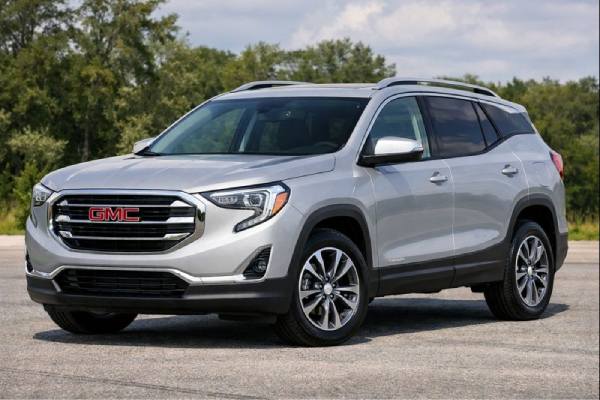
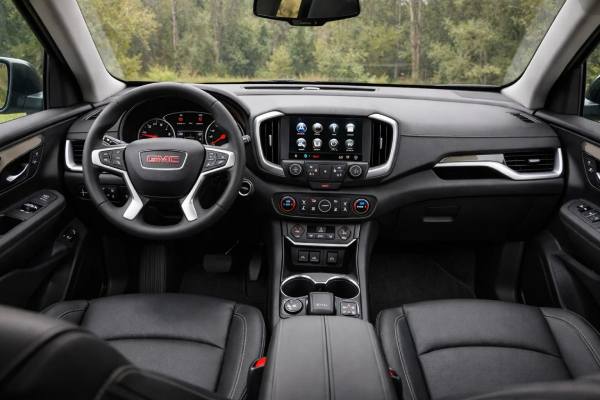
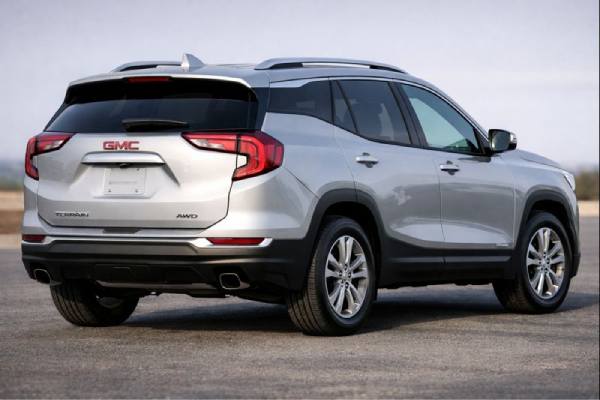
The 2018–2020 GMC Terrain FWD with the 2.0L turbo (LTG) is the “fast” version of the second-generation Terrain. On the D2XX platform, it pairs a strong 252 hp turbo-four with a 9-speed automatic, giving it confident passing power and a relaxed highway feel compared with the more common 1.5T models. For owners, the appeal is simple: you get near-entry-lux torque without stepping into a larger SUV, and you keep the lighter, simpler front-wheel-drive layout.
That said, this powertrain rewards correct maintenance. Turbo heat, direct injection, and modern transmission calibration mean fluid quality and software updates matter more than they did in older crossovers. If you shop carefully and service it proactively, the 2.0T Terrain can be a satisfying daily driver with real towing capability and a surprisingly refined ride for its class.
Owner Snapshot
- Strong mid-range pull and easy highway passing for a compact SUV
- 9-speed keeps rpm low at cruise, helping quietness and comfort
- Good towing capability when properly equipped, especially versus many rivals
- Budget for premium fuel in many markets and stay strict on oil quality
- Change engine oil and filter at least every 12 months or sooner if you do short trips
Navigate this guide
- Terrain 2.0T FWD explained
- 2018–2020 Terrain LTG specs
- Terrain trims, safety, and ADAS
- Reliability and known trouble spots
- Maintenance plan and buying tips
- How it drives in practice
- Terrain 2.0T vs compact rivals
Terrain 2.0T FWD explained
This specific Terrain sits in a sweet spot: it’s compact enough to be easy in traffic and parking, but the LTG 2.0L turbo gives it the kind of effortless acceleration many compact SUVs lack. In real ownership terms, that changes how the vehicle feels day to day. You do not have to plan merges as carefully, two-lane passing takes less time, and the drivetrain feels less strained when the cabin is full.
The D2XX generation (2018+) also brought a more modern structure and packaging compared with the previous Terrain. The cabin layout is upright, visibility is generally good, and the control layout is closer to mainstream GM—easy for most drivers to adapt to. With FWD, you also avoid the added mass and complexity of a rear drive module and transfer hardware. That can help long-term running costs, and it typically improves steering feel slightly because there is less driveline “wind-up” under power.
Where this model differs from the base engine is not just horsepower. The 2.0T typically comes with stronger cooling capacity requirements, higher load on oil quality, and more reliance on the transmission’s calibration to keep torque delivery smooth. That’s why software updates and correct fluid specifications matter. The 9-speed is tuned to keep the turbo engine in its torque band, but it can also “busy shift” in rolling stop-and-go traffic if the vehicle is not fully warmed up or if a calibration update is overdue.
Ownership also depends on how you drive. If you mainly do short trips, the engine may not fully heat-soak, moisture can accumulate in the crankcase, and oil life drops faster than the dashboard estimate suggests. If you tow or drive hard in hot weather, the engine oil and cooling system become the protective layer between you and expensive turbo-related repairs. The good news is that the platform is widely supported: brakes, tires, and common suspension parts are straightforward for shops, and diagnostic coverage is strong.
Bottom line: the Terrain 2.0T FWD is best viewed as a “compact SUV with midsize punch.” Treat it like a turbo vehicle—warm it up gently, service fluids on time, and keep software current—and it can deliver an unusually complete mix of speed, comfort, and practicality in this size class.
2018–2020 Terrain LTG specs
Below are practical, ownership-focused specifications for the 2018–2020 Terrain FWD equipped with the LTG 2.0L turbo and 9-speed automatic. Some figures vary slightly by build, tire size, market, and option package, so use these as a working reference and confirm by VIN when you need exact service data.
Engine and performance (LTG 2.0T)
| Item | Specification |
|---|---|
| Code | LTG |
| Layout and cylinders | Inline-4, DOHC, 4 valves/cyl |
| Displacement | 2.0 L (1,998 cc) |
| Bore × stroke | 86.0 × 86.0 mm (3.39 × 3.39 in) |
| Induction | Turbocharged |
| Fuel system | Direct injection (SIDI) |
| Compression ratio | 9.5:1 (typical LTG) |
| Max power | 252 hp (188 kW) @ ~5,500 rpm |
| Max torque | 353 Nm (260 lb-ft) @ ~2,500–4,500 rpm |
| Timing drive | Chain |
| Emissions and efficiency standard | EPA (US) |
| Rated efficiency (FWD) | 9.8 L/100 km (24 mpg US / ~29 mpg UK) combined |
| Real-world highway @ 120 km/h (75 mph) | Often ~8.4–9.4 L/100 km (25–28 mpg US) depending on tires, wind, and temperature |
Transmission and driveline
| Item | Specification |
|---|---|
| Transmission | 9-speed automatic (GM 9T50 family) |
| Drive type | Front-wheel drive (FWD) |
| Gear ratios (typical 9T50 set) | 1st 4.69 / 2nd 3.31 / 3rd 3.01 / 4th 2.44 / 5th 1.92 / 6th 1.44–1.45 / 7th 1.00 / 8th 0.75 / 9th 0.62 |
| Reverse | ~2.96 (typical) |
Chassis and dimensions
| Item | Specification |
|---|---|
| Suspension (front/rear) | MacPherson strut / multi-link |
| Steering | Electric power steering |
| Brakes | 4-wheel discs (vented front) |
| Wheels and tires (common) | 225/65R17 or 235/50R19 depending on trim |
| Ground clearance | ~175 mm (~6.9 in) typical |
| Length / width / height | ~4,634 mm (182.4 in) / ~1,839 mm (72.4 in) / ~1,661 mm (65.4 in) |
| Wheelbase | ~2,725 mm (107.3 in) |
| Turning circle (kerb-to-kerb) | ~11.4 m (~37.4 ft) typical |
| Curb weight | ~1,600–1,720 kg (3,530–3,790 lb) depending on equipment |
| Fuel tank (FWD) | 56.0 L (14.8 gal) |
| Cargo volume (typical) | ~840 L (29.6 ft³) seats up / ~1,790 L (63.3 ft³) seats down (method varies) |
Performance and capability
| Item | Specification |
|---|---|
| 0–60 mph (0–97 km/h) | ~6.5–7.2 s typical for FWD 2.0T |
| Top speed | ~200–210 km/h (124–131 mph) typical limiter range |
| Towing capacity | Up to 1,588 kg (3,500 lb) when properly equipped |
| Payload | Commonly ~450–550 kg (990–1,210 lb), varies by trim and tires |
Fluids, service capacities, and key specs
| Item | Specification |
|---|---|
| Engine oil spec | dexos1-approved; SAE 5W-30 for LTG |
| Engine oil capacity (FWD 2.0) | 4.7 L (5.0 qt) with filter |
| Cooling system capacity (2.0) | 7.8 L (8.2 qt) |
| A/C refrigerant | Type and charge listed on under-hood label |
| Wheel nut torque | 140 Nm (100 lb-ft) |
| Spark plug gap (2.0) | 0.75–0.90 mm (0.030–0.035 in) |
Terrain trims, safety, and ADAS
Trims and how to spot the 2.0T setup. In many markets, the 2.0L turbo was positioned above the base engine, commonly appearing in higher trims (SLT and Denali in some model years), with occasional availability by package on other grades. A quick real-world identifier is the way the vehicle accelerates and how the transmission behaves under medium throttle—2.0T models typically deliver a stronger surge from 30–60 mph than the 1.5T. Under the hood, the emissions label and engine cover markings are the reliable confirmation method. If you are inspecting a used vehicle, cross-check the engine code on the service parts label and confirm the 9-speed behavior in a test drive (smooth, consistent upshifts, no harsh clunks on a warm drivetrain).
Option packages that change ownership. Prioritize packages that add functional safety or comfort over appearance-only upgrades. The biggest “value” options on the Terrain tend to be:
- Driver-assistance groups (forward collision systems, blind-spot monitoring, lane support)
- Better lighting packages (important because headlight performance can vary widely by trim)
- Trailering package (if you actually tow; it can affect cooling, hitch hardware, and programming)
If you plan to tow, verify the vehicle is equipped as rated. “It has a hitch” is not the same as being equipped for max tow. Confirm the trailering package content, check for correct hitch integration, and validate that trailer lighting and stability functions work as intended.
Safety ratings and what they mean in practice. Safety scores can look “simple” on paper, but details matter. NHTSA star ratings are a snapshot of a specific configuration and test protocol. IIHS ratings are broken into crashworthiness (structure and restraint performance) and crash avoidance (confirming how well headlights and AEB systems perform). For the 2018 Terrain, IIHS crashworthiness results include many “Good” ratings, but headlight performance can be rated poorly depending on the exact lamp and trim, and updated side testing can be less favorable than the original side test. This is why trim selection matters for safety, not just comfort.
Driver assistance systems (ADAS) and service implications. ADAS can reduce risk, but it adds calibration sensitivity. Key systems you may encounter include:
- Automatic emergency braking and forward collision alert (often bundled)
- Lane keep assist with lane departure warning
- Blind spot monitoring and rear cross-traffic alert
- Adaptive cruise control on higher trims or packages
After windshield replacement, front camera service, alignment changes, or collision repairs, some systems may require calibration. When shopping used, look for a clean windshield area around the camera housing, consistent lane-keeping behavior on a straight road, and no persistent warning messages. If the vehicle has been in a front-end repair, ask for proof that camera/radar alignment was completed. This is a practical ownership difference: ADAS is helpful, but only when it is correctly calibrated.
Reliability and known trouble spots
The LTG 2.0T Terrain can be dependable, but it is not forgiving of neglect. Think of it like a light-duty turbo drivetrain: it lives a long time on clean oil, correct coolant, and good software, and it becomes expensive when overheated or run with degraded fluids.
Common issues (most likely to be encountered)
- Transmission shift quality (medium cost, medium severity)
Symptoms: hesitation at low speed, busy shifting, occasional harsh 2–3 or 3–4, or a “bump” when coming to a stop.
Likely causes: calibration strategy, adaptive learning out of range, or fluid quality after hard use.
Remedy: confirm software is current, reset/adapt as directed by service procedure, and consider earlier fluid service if the vehicle sees heat (mountain driving, towing, heavy city use). - Turbo and PCV system sensitivity (medium to high cost, varies)
Symptoms: oil consumption, whistling, smoke under load, or oily charge pipes.
Likely causes: PCV flow imbalance, seals aging from heat cycles, or extended oil intervals.
Remedy: shorten oil intervals, inspect PCV routing and oil separator behavior, and address leaks early before they contaminate sensors or intercooler plumbing. - Direct-injection carbon buildup (medium cost, occasional)
Symptoms: rough idle, cold-start stumble, reduced efficiency, or misfires under load as mileage climbs.
Likely causes: intake valve deposits (direct injection does not “wash” valves with fuel).
Remedy: use quality fuel, avoid constant short trips, and consider intake cleaning methods when symptoms appear rather than chasing coils and plugs repeatedly.
Occasional issues (depends on use and climate)
- Cooling system seepage (medium cost, medium severity)
Symptoms: slow coolant loss with no obvious puddle, sweet smell after shutdown, or dried residue near hoses/housings.
Likely causes: gasket shrinkage, hose junctions, or plastic housing aging.
Remedy: pressure test, repair proactively, and do not top off endlessly—turbo engines dislike chronic low coolant. - Start-stop and battery-related odd behavior (low to medium cost)
Symptoms: start-stop disabled messages, slow cranking, random electrical warnings.
Likely causes: aging 12V battery, poor charging state, or battery sensor issues.
Remedy: battery test (CCA and reserve capacity), clean grounds, and confirm charging performance before blaming modules.
Rare but expensive (worth screening before purchase)
- Persistent misfire under load (high cost if ignored)
Symptoms: flashing check engine light under boost, limp mode, or repeated plug fouling.
Likely causes: injector imbalance, high-pressure fuel delivery issues, or boost leaks that drive incorrect fueling.
Remedy: diagnose with scan data (fuel trims, misfire counters, rail pressure) and fix root cause early—turbo heat plus lean misfire is a recipe for catalyst damage.
Recalls, service bulletins, and how to verify
Across 2018–2020, GM issued multiple campaigns on many models and suppliers—some are minor, some matter. The safest workflow is:
- Run the VIN through the official recall database.
- Ask the seller for dealer-completed repair records.
- During a pre-purchase inspection, scan for stored history codes and confirm software levels if the shop can access that information.
Even a well-maintained Terrain can feel “off” if it missed a calibration update. If your test drive includes odd shift timing, inconsistent start-stop behavior, or persistent driver-assistance warnings, treat it as a service-history question first—not immediately a mechanical failure.
Maintenance plan and buying tips
A strong maintenance plan for the LTG Terrain is simple: protect the turbo and keep the drivetrain’s control systems happy. The official oil-life monitor is useful, but for long-term durability, many owners do better with a more conservative schedule—especially with short trips, winter driving, or towing.
Practical maintenance schedule (distance or time, whichever comes first)
- Engine oil and filter: every 8,000–10,000 km (5,000–6,000 mi) or 6 months for short-trip use; at minimum once every 12 months
- Cabin air filter: every 20,000–30,000 km (12,000–18,000 mi) or yearly if you drive in dust/pollen
- Engine air filter: inspect every 20,000 km (12,000 mi), replace as needed (often 40,000–60,000 km / 25,000–37,000 mi)
- Spark plugs: around 96,000 km (60,000 mi) as a planning interval; sooner if you tow often or see misfire symptoms
- Brake fluid: every 2–3 years regardless of mileage (moisture control matters for ABS performance)
- Coolant: follow the long-life schedule, but treat 5 years as a practical planning point in mixed climates
- Transmission fluid: “lifetime” in light duty is not the same as “forever”; consider 72,000–96,000 km (45,000–60,000 mi) if you tow, drive mountains, or run hot summers
- Tires: rotate every 8,000–12,000 km (5,000–7,500 mi) and align when you see uneven wear
- 12V battery test: yearly after year 3; many modern vehicles need a strong battery for stable electronics
Fluids, capacities, and decision-useful details
- Use the specified dexos1-approved oil in SAE 5W-30 for the LTG, and keep the level correct (overfilling is also harmful).
- Engine oil capacity for 2.0L FWD is 4.7 L (5.0 qt) with filter, and cooling system capacity is 7.8 L (8.2 qt).
- Wheel nut torque is 140 Nm (100 lb-ft). These are the kinds of numbers that help you evaluate shop quality quickly (a shop that cannot torque wheels correctly is not one you want servicing a turbo drivetrain).
Buyer’s guide: what to check before you commit
Service history and usage
- Look for consistent oil-change documentation (time matters as much as miles).
- Ask whether it towed regularly; towing is fine if serviced correctly, but it raises heat exposure.
Inspection checklist (high value items)
- Cold start: listen for unusual rattles, check for stable idle within the first minute.
- Warm test drive: ensure shifts are consistent and predictable; no repeated clunks after the drivetrain is fully warm.
- Check for coolant smell after a drive and inspect for dried coolant residue near hose junctions.
- Verify all driver-assistance features behave normally and no warning lights remain on.
- Tire wear: uneven wear can indicate alignment or suspension bushing issues.
Best configuration advice
- If safety is a priority, prioritize trims and packages with stronger headlight performance and active safety features.
- If you want the 2.0T for performance, commit to maintaining it like a performance engine—shorter oil intervals and proactive fluid service are the trade.
Long-term durability outlook: with clean oil, stable cooling, and current software, the LTG Terrain tends to age like a modern turbo crossover—good when cared for, quickly expensive when neglected. Buy the best-maintained example, not the lowest-mile one.
How it drives in practice
Ride, handling, and NVH (noise, vibration, and harshness). The D2XX Terrain’s road manners are tuned for daily comfort. The ride is generally composed on typical broken pavement, with enough suspension travel to take sharp edges out of potholes without feeling floaty. Steering is light at parking speeds and firms up slightly on the move. It is not “sporty” steering, but it is predictable, and that predictability is what most owners value. Road noise depends heavily on tire choice—bigger wheels with lower-profile tires can add impact harshness and more tread roar on rough asphalt.
Powertrain character. The LTG 2.0T is the reason to choose this model. At low rpm it behaves calmly, then builds torque quickly once the turbo is in its efficient range. Throttle response is strong enough that you may notice traction limits on FWD in wet conditions if you apply full throttle from a stop. The 9-speed is designed to keep the engine in the torque band, so it may shift more often than older 6-speeds. When everything is healthy and updated, it feels smooth and well-matched; when calibration is outdated or the drivetrain is cold, it may feel indecisive in low-speed rolling traffic.
Real-world efficiency. Official ratings for the FWD 2.0T are typically in the mid-20s mpg combined, and you can translate your real results based on use:
- City-heavy driving: often ~10.5–12.0 L/100 km (19–22 mpg US), especially in winter
- Highway at 100–120 km/h (60–75 mph): often ~8.4–9.4 L/100 km (25–28 mpg US)
- Mixed commuting: commonly ~9.5–11.0 L/100 km (21–25 mpg US)
Premium fuel requirements vary by market labeling, but many owners treat premium as part of the ownership package for consistent performance and knock resistance under boost. If you routinely use regular fuel and drive hard, you may feel less crisp response as the engine protects itself by reducing timing.
Key metrics that matter. The numbers that change the ownership verdict are passing performance and towing stability. With the 2.0T, 50–80 mph passing is typically confident for the class, and the vehicle feels less “out of breath” on grades than many 1.5T rivals. If equipped for towing, it can manage moderate trailers well, but you should expect a noticeable fuel economy penalty. A reasonable planning number is 15–30% more fuel use under moderate towing, with higher penalties in hills, heat, or headwinds.
Traction and control in FWD form. FWD is simpler and lighter, but it is not magic in snow. With good all-season tires, it behaves predictably; with proper winter tires, it can be surprisingly capable. The main limitation is stop-and-go traction on steep, slick grades, where AWD rivals will pull away more easily. If your driving includes frequent unplowed hills or gravel launches, AWD may be the better match. If your driving is mostly pavement with occasional winter weather, FWD plus the right tires is often the more rational, lower-maintenance setup.
Terrain 2.0T vs compact rivals
The Terrain 2.0T FWD competes in a crowded compact SUV class, but its personality is clearer than most: it prioritizes torque and a quiet highway feel, especially in upper trims. Here’s how it generally stacks up.
Where the Terrain 2.0T stands out
- Passing power and relaxed cruising: Many rivals use smaller turbo engines tuned for economy. The Terrain’s 2.0T feels closer to an “entry premium” drivetrain in everyday throttle response.
- Towing capability: When properly equipped, it can tow more than many mainstream compact crossovers that top out around 1,500 lb (680 kg) or require specific trims to tow at all.
- Comfort-first road manners: It’s tuned to be easy to live with—stable on the highway, not tiring over long distances.
Where rivals can be stronger
- Fuel economy leaders: Models like the Honda CR-V 1.5T and Toyota RAV4 (non-turbo) often return better real-world economy with less sensitivity to fuel grade and turbo heat management.
- Sportier handling: A Mazda CX-5 (especially with the turbo) can feel more precise in steering and body control, though it may trade some cargo packaging for driving feel.
- Long-run simplicity: Naturally aspirated engines (and some hybrid options) can reduce turbo-related maintenance risk, depending on the exact competitor and year.
Quick matchup guide (ownership intent)
| If you want… | Terrain 2.0T FWD | Best rival type |
|---|---|---|
| Strong acceleration without going bigger | Strong choice | Turbo CX-5, 2.0T Escape (year dependent) |
| Lowest fuel cost and low fuss | Not the best | CR-V 1.5T, RAV4 (gas or hybrid) |
| Frequent snow-hill traction | Better with AWD | AWD versions of most rivals |
| Comfortable highway commuter | Strong choice | CR-V, RAV4, Tiguan (depending on trim) |
| Maximum reliability margin with simple powertrain | Depends on maintenance | Non-turbo or hybrid competitors |
The practical verdict
Pick the Terrain 2.0T if you value torque, highway composure, and towing capability—and you’re willing to maintain it like a turbo vehicle. Choose a rival if your top goal is fuel economy, the simplest possible drivetrain, or you want a sportier feel at the limit. In the used market especially, condition and service history matter more than the badge: a well-maintained 2.0T Terrain will usually be the better buy than a neglected “more reliable” alternative.
References
- Owner’s Manual 2018 (Owner’s Manual)
- 2020 GMC Terrain 2020 (Catalog)
- 2018 GMC Terrain FWD 2018 (EPA Fuel Economy)
- 2018 GMC Terrain 2018 (Safety Rating)
- Vehicle Detail Search – 2018 GMC TERRAIN SUV FWD | NHTSA 2018 (Recall Database)
Disclaimer
This article is for informational purposes only and is not a substitute for professional inspection, diagnosis, or repair. Specifications, torque values, service intervals, and procedures can vary by VIN, market, build date, and installed equipment. Always verify details using your official owner’s manual, factory service information, and the labeling on your specific vehicle.
If this guide helped, please consider sharing it on Facebook, X (Twitter), or your favorite forum to support our work.