
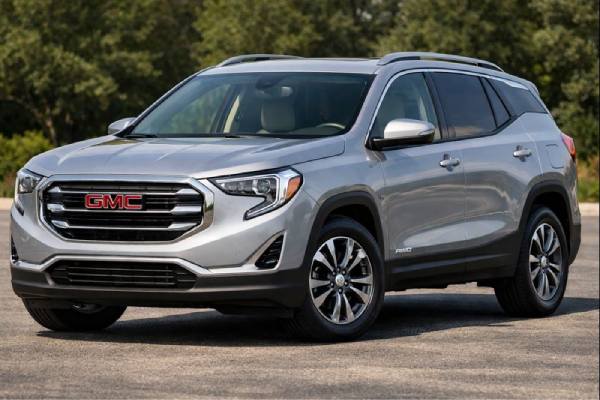
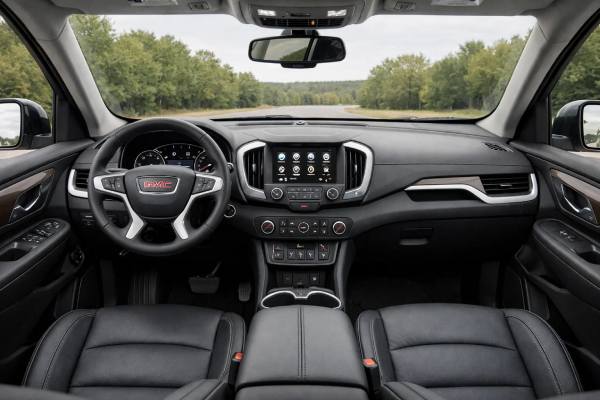
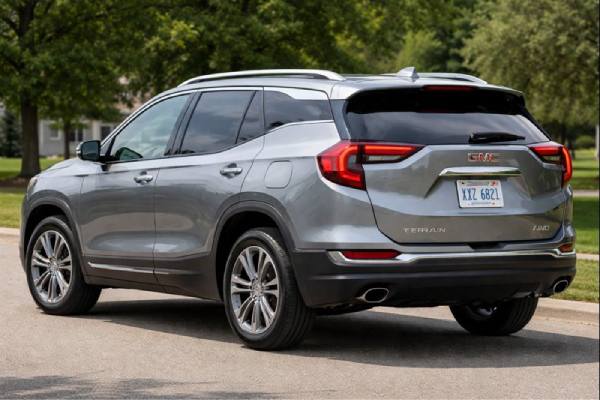
The 2018–2020 GMC Terrain AWD with the LTG 2.0L turbo is the “do-it-all” version of this generation: strong torque, confident highway passing, and an on-demand all-wheel-drive system that adds traction without turning the vehicle into a heavy-duty truck. Compared with the more common 1.5T trims, the 2.0T feels calmer under load, especially with passengers, winter gear, or a small trailer.
AWD changes ownership in two ways. First, it improves grip in rain, slush, and on steep driveways, particularly when paired with proper tires. Second, it adds driveline hardware—rear drive module, power transfer unit, extra seals and fluids—that benefits from proactive service rather than “lifetime” assumptions. If you want compact-SUV practicality with near-entry-lux power and real four-season usability, this specific Terrain configuration can deliver, as long as you maintain it like the turbo AWD vehicle it is.
Essential Insights
- Strong mid-range torque makes passing and merging easier than most base-engine rivals
- On-demand AWD adds real wet and snow traction without constant drag in steady cruising
- Up to 1,588 kg (3,500 lb) towing when properly equipped and configured
- AWD driveline fluids and matched tire tread depth matter for long-term reliability
- Rotate tires every 8,000–12,000 km (5,000–7,500 mi) to keep wear even
What’s inside
- What the AWD 2.0T Terrain is
- Specs and measurements AWD 2.0T
- Trim, equipment, and safety systems
- Common issues plus recalls and TSBs
- Maintenance plan for AWD LTG
- Real driving, performance, and economy
- How it stacks up against rivals
What the AWD 2.0T Terrain is
This Terrain sits on GM’s D2XX architecture and pairs the LTG 2.0L turbo-four with a 9-speed automatic and an active, on-demand AWD system. In everyday terms, it is a compact SUV that behaves like it has a larger engine. You do not need wide-open throttle to get useful acceleration, and the drivetrain feels less stressed on grades than smaller turbo alternatives.
The AWD system is designed to be efficient. In steady cruising it can reduce driveline load, then send torque rearward when front traction is limited or when the control system predicts a need (for example, wet launch, aggressive throttle input, or certain stability-control events). That’s a meaningful advantage over older “always engaged” systems that can add constant drag. The payoff is better launch control in slippery conditions and more stable acceleration on wet highways, while still keeping the vehicle easy to maneuver in parking lots.
Where this configuration shines is mixed use: commuting, weekend trips, winter weather, and occasional towing. The LTG’s torque band is wide enough that the 9-speed can keep revs low at cruise, which helps cabin quietness. At the same time, it can downshift quickly for passing. That balance—quiet when you want it, strong when you need it—is a big part of why owners seek the 2.0T.
The trade-offs are also straightforward. AWD adds hardware: a power transfer unit up front, a prop shaft, a rear drive module (often clutch-based), and extra seals and bearings. None of that is scary, but it changes the maintenance mindset. Tire matching becomes more important, because uneven tread depth can force the driveline to work harder than intended. And while many schedules describe driveline fluids as long-life, real-world heat, short trips, and towing can justify earlier service.
If you shop used, your goal is a vehicle that feels “together” from cold start through full warm-up: smooth shifting, no driveline shudder on tight turns, no persistent AWD warnings, and a service history that suggests the previous owner understood turbo ownership. Get those fundamentals right and this Terrain can be a genuinely capable four-season compact SUV with above-average performance for its class.
Specs and measurements AWD 2.0T
The tables below focus on the 2018–2020 GMC Terrain AWD equipped with the LTG 2.0L turbo and 9-speed automatic. Some values vary by market, wheel package, and build code, so treat these as a practical baseline and confirm by VIN for service-critical work.
Engine and efficiency
| Item | Specification |
|---|---|
| Code | LTG |
| Engine layout and cylinders | Inline-4, DOHC, 4 valves/cyl |
| Displacement | 2.0 L (1,998 cc) |
| Bore × stroke | 86.0 × 86.0 mm (3.39 × 3.39 in) |
| Induction | Turbocharged |
| Fuel system | Direct injection (SIDI) |
| Compression ratio | 9.5:1 (typical LTG) |
| Max power | 252 hp (188 kW) @ ~5,500 rpm |
| Max torque | 353 Nm (260 lb-ft) @ ~2,500–4,500 rpm |
| Timing drive | Chain |
| Emissions and efficiency standard | EPA (US) |
| Rated efficiency (typical AWD 2.0T) | ~10.7 L/100 km (22 mpg US / ~26 mpg UK) combined |
| Real-world highway @ 120 km/h (75 mph) | Often ~9.0–10.0 L/100 km (23–26 mpg US), wheel and weather dependent |
Transmission and driveline
| Item | Specification |
|---|---|
| Transmission | 9-speed automatic (GM 9T50 family) |
| Drive type | AWD (active, on-demand) |
| Gear ratios (typical set) | 1st 4.69 / 2nd 3.31 / 3rd 3.01 / 4th 2.44 / 5th 1.92 / 6th ~1.45 / 7th 1.00 / 8th 0.75 / 9th 0.62 |
| Final drive ratio (2.0T towing configuration) | 3.17 |
| Differential type | Front open differential; rear clutch-based coupling (varies by build) |
Chassis and dimensions
| Item | Specification |
|---|---|
| Suspension (front/rear) | MacPherson strut / multi-link |
| Steering | Electric power steering |
| Brakes | 4-wheel discs (vented front) |
| Wheels and tires (common) | 225/65R17, 225/60R18, or 235/50R19 |
| Ground clearance | ~175 mm (~6.9 in) typical |
| Length / width / height | ~4,634 mm (182.4 in) / ~1,839 mm (72.4 in) / ~1,661 mm (65.4 in) |
| Wheelbase | ~2,725 mm (107.3 in) |
| Turning circle (kerb-to-kerb) | ~11.4 m (~37.4 ft) typical |
| Curb weight (AWD) | Commonly ~1,680–1,800 kg (3,700–3,970 lb), equipment dependent |
| Fuel tank | 56.0 L (14.8 gal) |
| Cargo volume (typical) | ~840 L (29.6 ft³) seats up / ~1,790 L (63.3 ft³) seats down (method varies) |
Performance and capability
| Item | Specification |
|---|---|
| 0–60 mph (0–97 km/h) | ~6.7–7.4 s typical |
| Top speed | ~200–210 km/h (124–131 mph) typical limiter range |
| Braking distance | Tire-dependent; prioritize quality tires for consistent braking |
| Towing capacity (when equipped) | Up to 1,588 kg (3,500 lb) |
| Roof load | Market dependent; confirm in owner documentation |
Fluids and service capacities (decision-useful)
| Item | Specification |
|---|---|
| Engine oil | dexos1-approved; SAE 5W-30 |
| Engine oil capacity | 4.7 L (5.0 qt) with filter |
| Coolant capacity | 7.8 L (8.2 qt) |
| AWD driveline fluids | PTU and rear module fluids vary by build; verify by VIN/service info |
| A/C refrigerant | Type and charge listed on under-hood label |
| Wheel nut torque | 140 Nm (100 lb-ft) |
Safety and driver assistance (high level)
| Item | Specification |
|---|---|
| Crash rating bodies | NHTSA (stars), IIHS (test categories) |
| Common ADAS availability | AEB, front pedestrian braking (package dependent), blind-spot monitoring, rear cross-traffic alert, lane assist (varies) |
| Headlight performance | Can vary significantly by trim and lighting package |
Trim, equipment, and safety systems
Where the 2.0T AWD typically appears. In the 2018–2020 window, the LTG 2.0T is most often found in higher trims (commonly SLT and Denali) and sometimes tied to option group decisions. That matters because the “right” Terrain is usually the one where performance, lighting, and safety packages align. A Denali with the right driver-assistance package can feel like a different vehicle than a lower trim with fewer features—even if the engine is the same.
Options that meaningfully change function. For ownership value, the big-impact options tend to fall into four buckets:
- Towing equipment: A factory trailering package is more than a hitch. It can include the correct harnessing, programming, and cooling assumptions that back up the rating. If you plan to tow, verify the vehicle is configured for it, not just “hitch-equipped.”
- Lighting: Headlight performance can vary by trim and package. Better lamps are a safety upgrade you feel every winter commute.
- Driver assistance: Forward collision and pedestrian braking features may be tied to specific packages. The benefit is real, but only if the system is present and functioning correctly.
- Wheel and tire size: Larger wheels can sharpen response but may increase road noise and replacement tire cost. For rough roads and winter use, mid-size wheels often ride better and protect rims.
How to identify packages quickly when shopping used. Do not rely only on badges. Use practical checks:
- Confirm the engine by under-hood labeling and service records.
- In the infotainment menus, look for driver-assistance settings that match the claimed equipment (lane features, alerts, etc.).
- Check for steering wheel buttons that indicate adaptive cruise control where applicable.
- Verify the presence of blind-spot indicators in the mirrors if equipped.
Safety ratings and what to pay attention to. Safety results are not just about the structure; they are also about avoidance and visibility. IIHS evaluations break down crashworthiness and crash avoidance, and the latter often depends on optional equipment (for example, front crash prevention performance tied to a specific package). In real life, that means two Terrains from the same year can offer different real-world safety outcomes, depending on headlights and ADAS content.
ADAS servicing and calibration implications. Modern driver assistance is sensitive to changes. Windshield replacement, alignment, front-end repairs, and even certain suspension work can require camera or radar calibration. When you test drive, watch for:
- Consistent lane tracking (no sudden “drops out” on clear lane markings)
- No persistent warning messages after a few minutes of driving
- Clean windshield area around the camera housing (no bubbling tint film, cracks, or heavy pitting)
If the seller can provide documentation of calibration after a repair, that is a strong positive signal. If they cannot, budget for a professional scan and calibration check, especially on a vehicle that shows signs of front-end work.
Common issues plus recalls and TSBs
The LTG 2.0T and the AWD system can be reliable, but they have patterns. The best way to think about them is by likelihood and by cost if ignored.
Common and usually manageable
- Low-speed shift busy-ness (common, medium cost, low to medium severity)
Symptoms: frequent gear changes in rolling traffic, occasional hesitation, or a clunk when coming to a stop.
Likely root cause: calibration strategy, adaptive learning, or fluid heat exposure.
Remedy: ensure powertrain software is current, confirm no stored transmission codes, and consider earlier fluid service if the vehicle has lived in heat, hills, or towing duty. - Tire wear sensitivity on AWD (common, low cost, medium severity if neglected)
Symptoms: driveline bind in tight turns, vibration, or inconsistent traction behavior.
Likely root cause: mismatched tire circumferences from uneven wear or mixing brands/models.
Remedy: keep tires matched as a set, rotate regularly, and replace in pairs only if the remaining tires are very close in tread depth. - Direct-injection deposit behavior (occasional, medium cost)
Symptoms: rough cold start, intermittent misfire, or reduced efficiency at higher mileage.
Likely root cause: intake valve deposits (a known DI characteristic).
Remedy: use quality fuel, avoid constant short trips when possible, and treat persistent symptoms with targeted diagnosis rather than repeated random part swaps.
Occasional, but worth screening on a used example
- Cooling system seepage (occasional, medium cost, medium severity)
Symptoms: slow coolant loss, dried residue near fittings, or sweet smell after shutdown.
Remedy: pressure test and repair early. Turbo engines are less tolerant of “small leaks” than older naturally aspirated designs. - AWD module or coupling complaints (occasional, medium to high cost)
Symptoms: AWD warning messages, reduced traction performance, or unusual noises from the rear under load.
Likely root cause: sensor faults, fluid degradation, or coupling wear depending on use.
Remedy: scan for stored codes, verify correct fluid type and level where serviceable, and confirm the system engages smoothly without harshness.
Rare, expensive if ignored
- Persistent misfire under boost (rare, high cost)
Symptoms: flashing check-engine light under load, limp mode, or repeated misfire codes that return after plugs and coils.
Likely root cause: injector or fuel-pressure issues, boost leaks, or control problems that cause lean operation under heat.
Remedy: diagnose with scan data (fuel trims, rail pressure behavior, misfire counters) and fix the cause early to avoid catalyst damage.
Recalls, service bulletins, and how to verify completion
Because campaigns can change over time and vary by VIN, treat recall verification as a standard step:
- Run the VIN through the official recall lookup.
- Ask for dealer repair records showing completion dates.
- During a pre-purchase inspection, request a full scan for history codes and check for any open campaigns.
A practical ownership tip: many “it drives weird” complaints in modern vehicles trace back to missed software updates or weak 12V battery health. Before assuming a major mechanical fault, confirm the basics—battery testing, clean grounds, and up-to-date calibrations.
Maintenance plan for AWD LTG
A good AWD LTG maintenance plan focuses on three priorities: oil quality for the turbo engine, temperature management (coolant and airflow), and driveline health (tires and AWD fluids). The factory oil-life monitor is helpful, but it does not always reflect short-trip moisture buildup or towing heat, so a conservative schedule often pays off.
Practical schedule (distance or time, whichever comes first)
- Engine oil and filter: every 8,000–10,000 km (5,000–6,000 mi) or 6 months for short trips; at minimum once every 12 months
- Engine air filter: inspect every 20,000 km (12,000 mi); replace commonly by 40,000–60,000 km (25,000–37,000 mi) depending on dust
- Cabin air filter: every 20,000–30,000 km (12,000–18,000 mi) or annually
- Spark plugs: plan around 96,000 km (60,000 mi); earlier if you tow, idle heavily, or see repeated misfire counters
- Brake fluid: every 2–3 years regardless of mileage
- Coolant: follow long-life guidance, but use 5 years as a sensible planning point in mixed climates
- Transmission fluid: consider 72,000–96,000 km (45,000–60,000 mi) if the vehicle sees hills, heat, or towing, even if the official schedule is longer
- AWD driveline fluids: verify serviceability and intervals by VIN; if you tow or see harsh winters, plan earlier fluid service than “lifetime” assumptions
- Tires: rotate every 8,000–12,000 km (5,000–7,500 mi) and keep pressures correct for load
- 12V battery testing: yearly after year 3; replace proactively if reserve capacity is weak (modern electronics want stable voltage)
Fluids and specs that matter most
- Engine oil: use the specified dexos1-approved oil in SAE 5W-30, keep level correct, and do not stretch intervals when driving short trips. Turbo bearings live on oil quality.
- Engine oil capacity: 4.7 L (5.0 qt) with filter is a helpful check for shop quality and DIY planning.
- Coolant capacity: 7.8 L (8.2 qt) helps you estimate refill needs after service.
- Wheel nut torque: 140 Nm (100 lb-ft) is worth verifying—over-torqued wheels can warp rotors and complicate roadside tire work.
AWD-specific buyer and owner checklist
Tire matching
- Keep all four tires the same model and similar wear level.
- Avoid mixing new tires with heavily worn tires unless tread depth is extremely close.
Driveline behavior
- In a tight parking-lot turn, the vehicle should not feel like it is “hopping” or binding.
- Under moderate throttle from low speed, you should not feel a repeated shudder.
Tow setup verification
- If you want the full tow rating, confirm the correct package content and configuration, not just hitch presence.
- Inspect wiring and connector condition; poor trailer wiring can create electrical gremlins that look like larger problems.
Long-term durability outlook
An AWD 2.0T Terrain tends to age well when maintained proactively. The engine’s biggest friend is frequent oil service with the correct spec. The AWD system’s biggest friend is matched tires and sensible fluid service. If you follow those basics, the vehicle can remain smooth and capable well past the point where neglected examples begin stacking expensive driveline and turbo-related repairs.
Real driving, performance, and economy
Ride and cabin comfort. This Terrain generation is tuned for everyday comfort. The suspension filters sharp impacts reasonably well, and the cabin is generally quiet at highway speed for the class—especially when the tires are not overly aggressive. The biggest variables are wheel size and tire type. Larger wheels can look great, but they often increase impact harshness over broken pavement and can add tread noise as tires age.
Powertrain feel and AWD traction. The LTG 2.0T delivers its best value in mid-range torque. Around town, it feels strong without needing high rpm. On the highway, it accelerates briskly from 60–110 km/h (roughly 40–70 mph), which is where many compact SUVs feel strained. The AWD system’s best “seat of the pants” benefit is confident launches on wet surfaces and fewer traction-control interventions when you accelerate out of a slick intersection.
There is also a subtle stability benefit: with torque available at the rear when needed, the vehicle can feel more composed when accelerating on uneven or wet pavement. It is not a sports SUV, but it is easier to drive smoothly in poor conditions than a high-torque FWD-only setup.
Shift behavior in real traffic. The 9-speed is designed to keep rpm low and efficiency reasonable, but it can feel active in rolling congestion, especially when cold. A good example will settle down once warm and behave predictably. If you notice repeated harsh downshifts or clunks after full warm-up, treat that as a “needs diagnosis” signal rather than normal character.
Real-world fuel use. AWD and the 2.0T’s power come with a fuel cost. Typical results owners see:
- City-heavy driving: often ~11.0–12.5 L/100 km (19–21 mpg US), higher in winter short trips
- Highway at 100–120 km/h (60–75 mph): often ~9.0–10.0 L/100 km (23–26 mpg US)
- Mixed driving: commonly around ~10.0–11.5 L/100 km (20–23 mpg US)
Fuel grade recommendations vary by market labeling and calibration, but turbo engines generally respond best to high-quality fuel, especially when driven hard or loaded. If you regularly run low-grade fuel under heavy boost, the engine may protect itself by reducing timing, which can feel like muted response.
Towing and load effects. When properly equipped, this Terrain can tow up to 1,588 kg (3,500 lb). Plan for a meaningful fuel penalty:
- Moderate towing commonly adds 15–30% fuel use
- Steep grades, heat, and headwinds can push the penalty higher
For stability, the key is setup: correct tongue weight, correct tire pressures, and a trailer that is not too tall for the vehicle’s wheelbase. Treat towing as a system—engine, cooling, brakes, and tires—and the Terrain can be a confident light-duty tow vehicle.
How it stacks up against rivals
The compact SUV field is crowded, but the Terrain 2.0T AWD has a clear personality: torque-forward performance with a comfort bias, plus an AWD system aimed at daily traction rather than off-road extremes. That puts it in a different place than economy-focused or hybrid-heavy competitors.
Where the Terrain 2.0T AWD tends to win
- Effortless passing and merging: Many rivals prioritize efficiency with smaller engines. The LTG’s torque makes the vehicle feel stronger in real traffic, especially with passengers or cargo.
- Four-season drivability: On-demand AWD gives more confident launches and fewer “front wheel spin” moments in wet and snowy conditions.
- Towing capability: When correctly equipped, the 3,500 lb rating is a strong number in this class and can be a deciding factor for small campers or utility trailers.
Where key rivals can be a better fit
- Fuel economy and simplicity: Models built around naturally aspirated engines or hybrids often deliver lower fuel cost and can reduce turbo heat-management concerns.
- Sportier handling: Some rivals tune steering and body control more aggressively, which can feel sharper on curvy roads (at the cost of ride softness).
- Long-run maintenance margin: Less power and simpler drivetrains can be more forgiving of imperfect maintenance history—important in the used market.
Practical comparison by buyer intent
| Your priority | Terrain 2.0T AWD fit | Rival style that may fit better |
|---|---|---|
| Strong power without upsizing | Very strong | Turbocharged performance trims in class |
| Lowest fuel spend | Average | Hybrid or efficient non-turbo competitors |
| Snow traction on steep hills | Strong | AWD competitors with strong winter packages |
| Comfortable highway commuter | Strong | Comfort-focused mainstream rivals |
| Lowest mechanical complexity | Moderate | FWD or simpler drivetrains |
The used-market verdict
If you find a well-documented 2.0T AWD Terrain—consistent oil changes, even tire wear, no driveline bind, and clean software behavior—it can be one of the most satisfying “daily plus winter plus towing” choices in the compact class. If the history is unclear, tires are mismatched, or the drivetrain feels inconsistent when warm, prioritize a better-kept example (or consider a simpler rival). With modern turbo AWD vehicles, condition beats reputation.
References
- Owner’s Manual 2018 (Owner’s Manual) ([gmccanada.ca][1])
- 2019 GMC Towing and Trailering Guide 2019 (Trailering Guide) ([gmc.com][2])
- Gas Mileage of 2020 GMC Terrain 2020 (EPA Fuel Economy) ([Fuel Economy][3])
- 2019 GMC Terrain 2019 (Safety Rating) ([IIHS][4])
- Check for Recalls: Vehicle, Car Seat, Tire, Equipment | NHTSA 2025 (Recall Database) ([NHTSA][5])
Disclaimer
This article is for informational purposes only and is not a substitute for professional inspection, diagnosis, or repair. Specifications, torque values, service intervals, and procedures can vary by VIN, market, build date, and installed equipment. Always verify details using official owner documentation and factory service information for your specific vehicle.
If you found this guide useful, please consider sharing it on Facebook, X (Twitter), or your preferred community to support our work.