
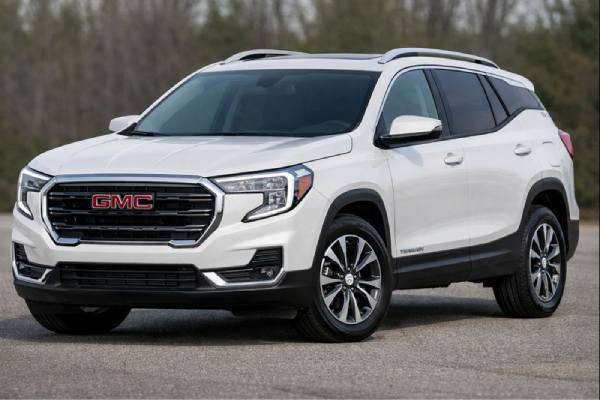
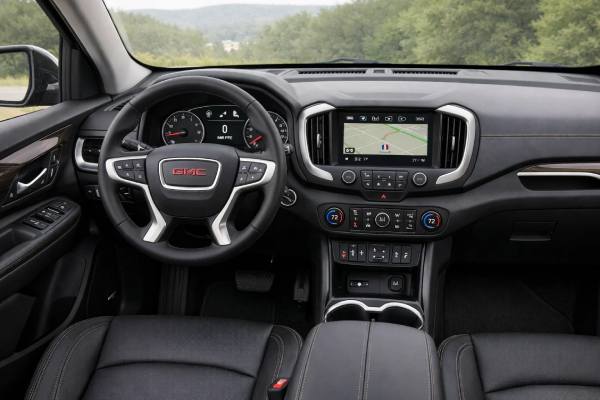
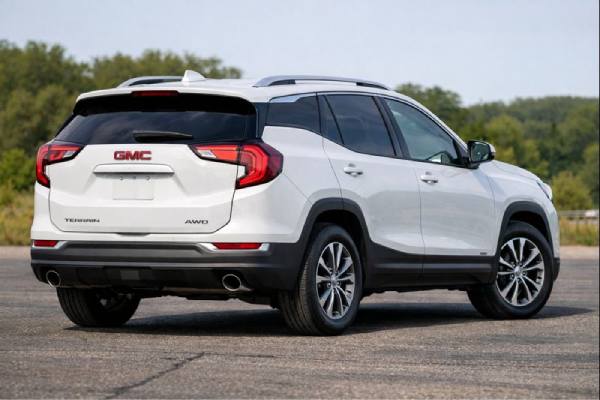
The 2022 GMC Terrain facelift in FWD form targets buyers who want a compact SUV that feels solid on the road, is easy to live with, and comes with modern safety tech across most trims. The heart of this version is the LYX 1.5-liter turbo four-cylinder paired with a 9-speed automatic—an efficient, torque-forward setup designed for daily commuting and relaxed highway cruising rather than outright speed. The facelift brought a sharper front-end look and a more upscale lighting signature, while the underlying D2XX platform keeps the Terrain’s strengths intact: stable tracking, comfortable ride tuning, and a practical cabin with a useful cargo hold.
Ownership satisfaction tends to hinge on maintenance discipline. Keep up with oil quality, cooling system health, and software updates, and the drivetrain can be a dependable long-term partner. Ignore small warnings, and minor leaks or sensor faults can snowball into downtime.
What to Know
- Comfortable, planted road manners with easy highway stability for a compact SUV.
- Strong everyday torque feel from the 1.5T plus a wide-ratio 9-speed automatic.
- Useful cargo packaging: 838 L (29.6 ft³) behind the second row and 1,792 L (63.3 ft³) max.
- Watch for small turbo-era issues (PCV/air-oil management, sensors, coolant seepage) as mileage climbs.
- Plan oil and filter service at least every 12 months (or earlier if your usage is short-trip heavy).
Navigate this guide
- Facelift Terrain FWD deep dive
- LYX 1.5T specs and measurements
- Trims, packages, and safety tech
- Reliability trouble spots and fixes
- Maintenance plan and buying checklist
- Driving character and real efficiency
- Terrain FWD versus compact SUV rivals
Facelift Terrain FWD deep dive
The 2022 facelift Terrain is best understood as a “refinement” model year rather than a mechanical re-think. GMC updated styling details (most noticeably the front fascia and lighting look), expanded trim identity, and leaned into standard driver-assistance availability. Underneath, this FWD configuration stays faithful to the D2XX compact-SUV formula: a transverse engine layout, front-drive architecture, and a suspension tune aimed at calm, predictable responses.
For most owners, the defining feature of the LYX 1.5-liter turbo is how it delivers usable torque without needing high rpm. It’s not a performance engine, but it is responsive enough in normal traffic because the turbocharger and calibration focus on midrange pull. The 9-speed automatic helps by keeping revs low at steady speeds and giving the powertrain multiple ratio choices for gentle passing or hills. In practice, that means the Terrain often feels quieter than you’d expect at highway pace, provided tires are in good shape and alignment is correct.
The FWD variant also tends to be the simplest ownership path. You skip the added AWD hardware (and its service needs), which reduces drivetrain complexity and can help long-term running costs. For buyers in moderate climates or primarily paved-road use, that’s a legitimate advantage. The trade-off is traction on steep, slick grades and deep snow—something tires can mitigate, but not fully replace.
In the cabin, the Terrain’s “daily usability” wins are easy to quantify: adult-friendly leg room, a sensible driving position, and cargo space that works for strollers, airport luggage, or home-improvement runs. If your goal is a compact SUV that feels stable, looks premium enough, and doesn’t punish you with complicated upkeep, the 2022 Terrain FWD 1.5T is aimed squarely at that brief.
LYX 1.5T specs and measurements
Below are the key technical details for the 2022 facelift Terrain FWD with the LYX 1.5-liter turbo and 9-speed automatic. Some figures vary by wheel/tire package and trim weight, so treat these as the decision-grade specs that matter most.
Engine and performance
| Item | Spec |
|---|---|
| Engine code | LYX |
| Layout | Inline-4, turbocharged |
| Displacement | 1.5 L |
| Induction | Turbo |
| Fuel system | Direct injection (DI) |
| Max power | 170 hp (127 kW) |
| Max torque | 275 Nm (203 lb-ft) |
| Timing drive | Chain (inspection-driven, not interval-based) |
| Start/stop | Equipped (strategy varies by conditions) |
Transmission and driveline
| Item | Spec |
|---|---|
| Transmission | 9-speed automatic (9T45 family) |
| Drive type | FWD |
| Gear ratios (1st–9th) | 4.69 / 3.31 / 3.01 / 2.44 / 1.92 / 1.44 / 1.00 / 0.75 / 0.62 |
| Reverse | 2.96 |
| Final drive ratio | 3.47 |
Dimensions and capacities
| Item | Spec |
|---|---|
| Wheelbase | 2,725 mm (107.3 in) |
| Length | 4,630 mm (182.3 in) |
| Width | 1,839 mm (72.4 in) |
| Height (without roof rails) | 1,661 mm (65.4 in) |
| Cargo volume (behind 2nd row) | 838 L (29.6 ft³) |
| Max cargo volume | 1,792 L (63.3 ft³) |
| Fuel tank capacity (FWD) | 56.4 L (14.9 US gal) |
| Max towing (1.5T) | 680 kg (1,500 lb) |
Performance and capability (real-world expectations)
| Metric | Typical range (trim and conditions dependent) |
|---|---|
| 0–100 km/h (0–62 mph) | ~9.5–11.0 s |
| Passing (80–120 km/h) | Adequate; strongest in midrange |
| Braking feel | Consistent, confidence-focused tuning |
| Towing behavior | Best kept light; plan for heat and speed management on grades |
Fluids and service capacities (decision-grade)
Where official fill volumes vary by equipment and service method, prioritize specification and verification.
| System | Spec | Capacity notes |
|---|---|---|
| Engine oil | dexos1 Gen 3, typically 0W-20 | 4.0 L (4.2 qt) |
| Transmission fluid | Dexron VI | Service fill varies by drain method; verify by procedure |
| Coolant | Dex-Cool type | Verify by service procedure and reservoir marking |
| Brake fluid | DOT 3 (GM-approved) | Replace by interval; capacity varies |
| A/C refrigerant | Typically R-1234yf | Charge amount is listed on the under-hood label |
Electrical and ignition
| Item | Spec |
|---|---|
| Battery | 12 V (AGM on many start/stop applications) |
| Charging | Alternator output varies by equipment |
| Spark plugs | Long-life type; replace by schedule and condition |
Safety and driver assistance (high-level)
| Category | Notes |
|---|---|
| Core active safety | Automatic Emergency Braking, Forward Collision Alert, Lane Keep Assist with Lane Departure Warning, Front Pedestrian Braking, IntelliBeam auto high beams |
| Available upgrades | Adaptive Cruise Control, HD Surround Vision, front park assist (availability varies by trim/package) |
Trims, packages, and safety tech
For 2022, GMC simplified the “what do I get?” conversation by making key safety content widely available and then letting trims focus more on comfort, appearance, and feature depth. The main trims you’ll commonly see are SLE, SLT, AT4, and Denali. Even if you’re shopping used, it helps to decode what each trim implies mechanically and functionally.
SLE is typically the value play: it often carries the essentials—usable infotainment, the core safety suite, and practical seating materials—without loading the price with premium finishes. SLT usually adds comfort and convenience upgrades that matter day-to-day: more power adjustability, upgraded audio options, and available package bundles. AT4 leans toward a rugged appearance theme (and may include features like hill-descent control and skid-plate styling cues depending on equipment). Denali is the luxury expression: richer interior materials, more available tech, and comfort features like ventilation on many builds.
Quick identifiers (useful on a lot or in listings)
- Denali is usually easiest to spot by its premium interior cues, signature badging, and higher-end lighting/wheel designs.
- AT4 often has darker exterior accents and an “adventure” visual theme.
- SLT vs SLE can come down to interior trim, seat material, and bundled convenience features.
Packages that change the experience
Look for packages that upgrade driver assistance and parking tech, especially if the vehicle will be shared by multiple drivers:
- Expanded ADAS packages often add Adaptive Cruise Control, parking sensors, or camera upgrades. These make the Terrain feel like a newer vehicle even years later.
- Infotainment/navigation bundles matter if you prefer in-dash mapping and upgraded audio.
Safety ratings: what they mean for 2022
Crash-test results are not uniform across every test update. For the 2022 Terrain, IIHS crashworthiness ratings show strong results in several legacy categories (for example, Good results in small overlap front and the original side test), while the updated side test is rated Marginal. That detail matters because it reflects a tougher modern test configuration, not just a “grade change.” If safety ratings are a top priority for you, confirm the exact test type and date, not just the overall impression.
Practical takeaway: the Terrain can be a safe-feeling daily driver with a solid active-safety baseline, but you should still shop smart—prioritize intact airbags and sensors, avoid poorly repaired collision history, and ensure ADAS calibrations are correct after windshield replacement or front-end repairs.
Reliability trouble spots and fixes
The 2022 Terrain 1.5T can be dependable, but turbocharged direct-injection engines reward owners who stay proactive. Below is a prevalence-and-cost map you can use when evaluating a used example or planning long-term ownership. Mileage bands are approximate; driving style and climate shift the timeline.
Common (low to medium cost)
- Oil quality sensitivity (short-trip use)
Symptoms: early oil-life warnings, rougher idle, increased noise on cold start.
Likely cause: moisture and fuel dilution from repeated cold starts and short commutes.
Remedy: shorten oil intervals (time-based), use the correct specification oil, and verify the oil-life system is being reset properly. - PCV and crankcase ventilation quirks
Symptoms: minor oil seepage, whistling, idle irregularities, occasional check-engine codes.
Likely cause: PCV circuit and pressure control behavior typical of modern boosted engines.
Remedy: diagnose leaks correctly (don’t guess); replace the affected PCV/cover components if confirmed. - Start/stop battery wear and “electrical gremlins”
Symptoms: start/stop unavailable messages, slow cranking, infotainment resets.
Likely cause: battery aging, low charge from short trips, or an underserviced charging system.
Remedy: proper battery testing (state of health, not just voltage), and replacement with the correct type (often AGM).
Occasional (medium cost)
- Cooling system seepage (hoses, thermostat housing, water pump area)
Symptoms: low coolant warnings, sweet smell after shutdown, residue around joints.
Likely cause: gasket aging or joint movement over heat cycles.
Remedy: pressure test and dye test; replace the correct component rather than topping off repeatedly. - Turbo system control issues
Symptoms: inconsistent boost feel, underboost codes, wastegate rattle complaints.
Likely cause: actuator/wastegate control wear, vacuum/pressure leaks, or software calibration needs.
Remedy: smoke test the charge system; confirm updates; repair leaks before replacing major parts.
Rare but higher cost
- Transmission drivability complaints
Symptoms: shift flare, harsh engagement, hunting between ratios under light throttle.
Likely cause: adaptive learning out of range, fluid condition, or calibration needs.
Remedy: verify fluid level/spec, check for updates, and use a structured diagnostic approach before any hardware decisions.
Service actions, recalls, and software
The smartest approach is procedural:
- Run a recall lookup by VIN and confirm completion with dealer records.
- Ask for proof of software updates if drivability or camera/ADAS faults were present.
- On a test drive, confirm all cameras, radar-related features, and lane functions behave consistently—ADAS recalibration after glass or bumper work is a real-world need, not a theory.
If you keep the engine clean inside (oil discipline), keep coolant stable, and treat warning lights as a “diagnose now” prompt, the Terrain’s reliability story is often far better than its worst online anecdotes suggest.
Maintenance plan and buying checklist
A practical maintenance plan for the 2022 Terrain 1.5T should be built around how you actually drive. Short trips, cold weather, and heavy city use are harder on oil, batteries, and turbo plumbing than steady highway miles. The outline below is designed to be conservative and ownership-friendly; always verify against the exact VIN’s official documentation.
Maintenance schedule (distance and time)
Every 10,000–12,000 km (6,000–7,500 mi) or 12 months (whichever comes first):
- Engine oil and filter (correct specification is non-negotiable on modern turbo engines)
- Tire rotation and brake inspection
- Check coolant level/condition and look for early seepage
- Battery health test (especially if start/stop operation is frequent)
Every 30,000–45,000 km (20,000–30,000 mi):
- Engine air filter inspection; replace if restricted (dusty climates shorten this)
- Cabin air filter replacement (keeps HVAC performance stable)
- Alignment check if tire wear shows edge wear or feathering
Every 60,000–80,000 km (40,000–50,000 mi):
- Transmission fluid service strategy (severity-based): if you tow, idle heavily, or drive mountains, treat this as a real interval, not a lifetime fill claim
- Full cooling system inspection (hoses, thermostat housing area, clamps, and cap function)
Around 150,000–160,000 km (90,000–100,000 mi) or by condition:
- Spark plugs (performance and misfire prevention on DI turbo engines)
- Accessory belt inspection/replacement by condition
- Consider intake system cleaning only if drivability data supports it (avoid “preventive” upsells without evidence)
Fluids, capacities, and key torque values (use as a decision aid)
- Engine oil: dexos1 Gen 3; commonly 0W-20; 4.0 L (4.2 qt).
- Oil drain plug torque: follow the official service spec for your exact pan/plug design; over-tightening is a common DIY error.
- Transmission: use the correct fluid specification; service fill volumes vary by method and must be verified by procedure.
If you want “one rule” that pays off: never let small leaks become normal. A small coolant seep today is a tow bill later.
Buyer’s checklist (what to verify before purchase)
- Service history: oil intervals by time, not just mileage; ask for receipts.
- Recalls and service actions: confirm by VIN, then confirm completion.
- Cold start behavior: listen for timing chain noise, belt squeal, or rough idle.
- Cooling system evidence: dried residue, frequent top-offs, or low reservoir level is a red flag.
- Transmission behavior: consistent, smooth shifts; no repeated hunting on gentle throttle.
- Electronics and cameras: test every camera view and parking sensor; intermittent faults often mean past repairs or moisture intrusion.
- Tire wear: uneven wear can signal alignment issues or prior suspension impact.
Long-term outlook: the 2022 Terrain FWD 1.5T is best for owners who value comfort and safety tech and are willing to maintain it like a modern turbo vehicle—not like a “change oil whenever” appliance.
Driving character and real efficiency
In daily driving, the 2022 Terrain 1.5T FWD prioritizes composure over sport. The steering is typically tuned for easy control rather than sharp feedback, which many owners prefer in a family SUV. On-center stability is a strong point: the Terrain tracks calmly on highways and feels settled in crosswinds, especially when tire pressures are correct and the suspension isn’t carrying worn bushings.
Powertrain character
The LYX 1.5T’s strength is usable midrange torque. From a stop, you’ll feel a brief moment where the turbo system and transmission decide how much torque to deliver, then it settles into a smooth pull. The 9-speed automatic’s wide ratio spread helps keep the engine in a comfortable band, but it can “shuffle” gears on rolling terrain if the throttle input is indecisive. A simple technique improves the experience: use steadier pedal inputs and let the transmission hold a ratio rather than constantly prompting it to optimize.
Start/stop operation is part of the efficiency strategy. Some drivers barely notice it; others find it intrusive, especially with frequent stop-and-go. Battery condition plays a huge role here—weak batteries often make the system behave inconsistently.
Ride, handling, and NVH
Ride quality is generally comfortable and controlled, leaning toward a premium feel for the segment. Road noise depends heavily on tire choice; aggressive tread patterns can make the cabin sound louder than expected. Braking feel is usually predictable, with a pedal tuned for smoothness rather than bite.
Real-world efficiency
Real consumption varies dramatically with climate and commute style:
- City-heavy short trips: expect a noticeable penalty; the engine runs richer when cold and the turbo system works harder in stop-start traffic.
- Highway cruising (100–120 km/h / 60–75 mph): the 9-speed helps keep revs down, improving steady-state fuel use.
- Winter driving: plan for increased fuel use due to warm-up time and HVAC load.
If maximizing efficiency is your goal, prioritize:
- Correct tire pressures and alignment
- Smooth throttle inputs
- Time-based oil service (short trips degrade oil faster)
- Keeping the cooling system and thermostat operation healthy (efficient warm-up matters)
For light towing (up to its rating), the Terrain can manage, but it’s happiest when you treat towing as occasional rather than routine—especially in hot weather or mountainous areas.
Terrain FWD versus compact SUV rivals
The 2022 Terrain FWD 1.5T competes in one of the toughest segments in the market. Most rivals do the basics well, so choosing the Terrain comes down to how you value comfort, tech packaging, and the way the vehicle feels on the road.
Versus Honda CR-V 1.5T
The CR-V often wins on cabin practicality and efficiency reputation. The Terrain tends to feel more “substantial” in highway tracking and can offer a more premium design vibe in higher trims. If you prioritize a relaxed, planted drive and like GMC’s styling and feature packaging, the Terrain is compelling. If you prioritize maximum cargo cleverness and a long-standing powertrain reputation, the CR-V is hard to ignore.
Versus Toyota RAV4 (2.5L NA)
The RAV4’s naturally aspirated setup appeals to buyers who want simpler intake and turbo hardware, and Toyota’s reliability image remains a strong draw. The Terrain counters with a torque-rich turbo feel at everyday speeds and often generous driver-assistance availability. If you’re strict about maintenance and want a smoother, quieter highway experience, the Terrain can be a satisfying choice. If you want fewer turbo-era variables long-term, the RAV4’s formula may suit you better.
Versus Mazda CX-5
The CX-5 is frequently praised for steering feel and interior finish, and it can feel more “driver focused.” The Terrain’s advantage is a calmer, more comfort-first ride and a straightforward daily-driving personality. Choose Mazda if you want engagement; choose GMC if you want stable comfort and a feature set that supports commuting.
Versus Ford Escape and similar turbo competitors
Many rivals now use small turbo engines too, which makes the playing field more level. In that context, the Terrain’s differentiators become:
- A solid, confidence-focused chassis feel
- Practical cargo and seating measurements
- A broad safety-tech offering (trim/package dependent)
Bottom line: the Terrain FWD 1.5T is a strong fit for buyers who want a compact SUV that feels composed, looks upscale after the facelift, and rewards proactive maintenance. If you want the simplest mechanical story or the most athletic handling, a different rival may align better.
References
- 2022 FEATURES, SPECS AND OPTIONS 2022 (Manufacturer specifications)
- 2022 GMC Trailering Guide 2022 (Trailering and gear ratios)
- Engine Oil Capacities 2022 (Service guide)
- Transmission Capacities 2025 (Service guide)
- 2022 GMC Terrain 2022 (Safety rating)
Disclaimer
This article is for informational purposes only and is not a substitute for professional diagnosis, inspection, or repair. Specifications, torque values, service intervals, and procedures can vary by VIN, market, build date, and installed equipment—always verify using the official documentation for the exact vehicle you are servicing or purchasing.
If this guide helped, please consider sharing it on Facebook, X (Twitter), or your favorite forum to support our work.