
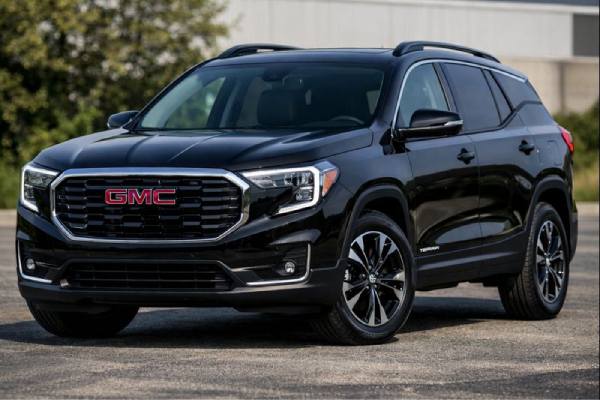
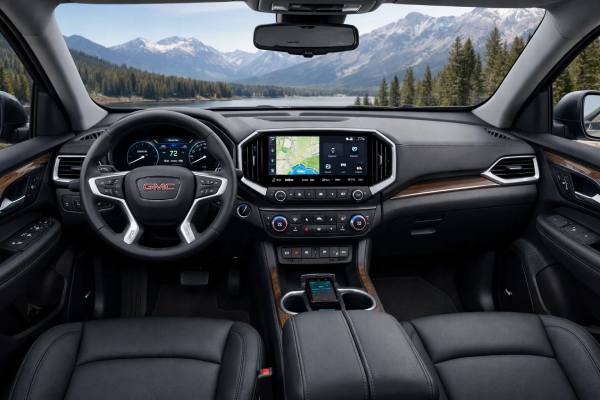

The 2023–2024 facelift GMC Terrain AWD with the 1.5L turbo “LSD” engine is built for everyday traction and confidence, not off-road bravado. In this configuration, you get a modest power bump (175 hp) paired with a 9-speed automatic and an on-demand AWD system that can send torque rearward when conditions call for it. The upside is simple: better wet, gravel, and winter grip than FWD without moving to a heavier, more complex performance powertrain. The trade-off is that AWD adds fluid services, tire-matching requirements, and a few extra components that can complain if they are neglected. This guide focuses on the details that shape ownership—what the AWD hardware actually does, where reliability patterns show up, how to maintain it sensibly, and which trims and safety packages are worth prioritizing.
Quick Specs and Notes
- On-demand AWD improves traction in rain and snow, especially during launches and hill starts.
- The 1.5L turbo is tuned for low-to-mid rpm torque, so it feels responsive in normal traffic.
- AWD adds service items (rear drive and transfer case fluids) and makes tire matching more critical.
- Avoid mixing tire brands or uneven tread depths across axles; it can stress the AWD coupling.
- Plan oil and filter at least every 12 months (or sooner for short-trip, cold-climate use).
Guide contents
- AWD Terrain LSD basics
- Technical specs and capacities
- Trims, options, and ADAS
- Issues, recalls, and updates
- Maintenance schedule and buying
- On-road feel and traction
- AWD rivals and verdict
AWD Terrain LSD basics
This facelift-era Terrain AWD is a traction-focused version of a compact family SUV, not a mechanical “4×4” with locking differentials. Think of it as a smart helper: it runs primarily as a front-driven vehicle for efficiency, then adds rear torque when wheel slip is detected or when the system predicts it will be useful. That approach fits the Terrain’s mission—stable, quiet commuting and confident all-weather driving—while keeping fuel consumption and driveline drag under control.
First, a quick clarification that matters when you search parts or service info: LSD is an engine code for the turbocharged 1.5L inline-4 used in 2023–2024 facelift models. It is easy to misread as “limited-slip differential,” but the Terrain AWD typically uses open differentials and relies on brake-based traction control plus an electronically controlled AWD coupling to manage slip. When one wheel spins, the stability system can brake that wheel and encourage torque to flow to the wheel with grip. It’s effective for snow-covered intersections and wet roundabouts, but it won’t behave like a true mechanical LSD when you’re pushing hard.
The AWD system’s biggest real-world advantage shows up in three places:
- Launch traction: less front tire scrabble from a stop in the rain or on packed snow.
- Hill starts and slushy climbs: steadier progress with fewer stability-control “cuts.”
- Corner exit grip in poor conditions: the vehicle stays composed when you add throttle mid-turn.
The compromises are mostly ownership-related. AWD adds a rear drive unit, a transfer case or power take-off section, additional seals, and additional fluids. That means you must treat tires as part of the AWD system. If the front tires have significantly more tread than the rears (or vice versa), the system can interpret the different rotational speeds as slip, which increases heat and wear in the coupling. For long-term peace, rotate tires on schedule and replace them as a full set when the tread difference gets large.
In short: this Terrain AWD is at its best as a calm, capable all-weather daily driver. If you maintain the drivetrain and keep tires matched, it delivers the “less drama” experience most AWD buyers actually want.
Technical specs and capacities
The tables below focus on the 2023–2024 facelift Terrain AWD with the 1.5L turbo LSD engine (175 hp). Exact numbers can vary by VIN, market, wheel/tire package, emissions certification, and tow equipment. Use this as a practical reference, then confirm details in the official manual or service information for your specific vehicle.
Engine and efficiency
| Item | Spec (typical for this configuration) |
|---|---|
| Code | LSD |
| Engine layout and cylinders | Inline-4 (I-4), DOHC, 4 cylinders |
| Valvetrain | 4 valves per cylinder (typical) |
| Displacement | 1.5 L (≈ 1,490 cc) |
| Bore × stroke | 74.0 × 86.6 mm (2.91 × 3.41 in) |
| Induction | Turbocharged |
| Fuel system | Direct injection (DI) |
| Compression ratio | 10.0:1 |
| Max power | 175 hp (≈ 130 kW) @ 5,600 rpm |
| Max torque | 275 Nm (203 lb-ft) @ 2,000 rpm |
| Timing drive | Chain |
| Emissions / efficiency standard | EPA (US-market reference) |
| Rated efficiency (city / highway / combined) | ≈ 10.2 / 8.7 / 9.4 L/100 km (23 / 27 / 25 mpg US) |
| Real-world highway @ 120 km/h (75 mph) | Often ~9.0–10.0 L/100 km (24–26 mpg US), weather and tires matter |
Transmission and driveline
| Item | Spec |
|---|---|
| Transmission | 9-speed automatic |
| Transmission code | 9T45 (application varies by VIN) |
| Drive type | On-demand AWD |
| Differential type | Open (front and rear), traction control assists |
| AWD behavior | Front-biased with automatic rear engagement under slip/load |
| Final drive ratio | Varies by market; commonly in the mid-3s |
Chassis, dimensions, and weights
| Item | Spec (typical) |
|---|---|
| Suspension (front / rear) | Independent (front strut-type / rear independent) |
| Steering | Electric power steering |
| Brakes | 4-wheel disc (sizes vary by trim) |
| Ground clearance | ~200 mm (≈ 7.9 in), trim/tire dependent |
| Length | ~4,630 mm (182.3 in) |
| Width | ~1,839 mm (72.4 in) |
| Height | ~1,661 mm (65.4 in) |
| Wheelbase | ~2,725 mm (107.3 in) |
| Turning circle (kerb-to-kerb) | ~11.8 m (38.7 ft) |
| Curb weight | ~1,650–1,730 kg (3,640–3,815 lb), equipment dependent |
| GVWR | ~2,200–2,300 kg (4,850–5,070 lb), equipment dependent |
| Fuel tank | 56.4 L (14.9 US gal / 12.4 UK gal) |
| Cargo volume | ~838 L (29.6 ft³) seats up / ~1,810 L (63.9 ft³) seats down (SAE) |
Performance and capability
| Item | Typical expectation |
|---|---|
| 0–100 km/h (0–62 mph) | ~9.8–10.8 s (AWD adds weight; conditions vary) |
| 0–60 mph | ~9.3–10.3 s |
| Braking distance | Highly tire-dependent; expect “class typical” results |
| Towing capacity | Commonly 680 kg (1,500 lb) where equipped/allowed |
| Payload | Varies; estimate ~360–500 kg (790–1,100 lb) by trim |
Fluids and service capacities
| Item | Spec (reference) |
|---|---|
| Engine oil | GM dexos1; 0W-20; ~5.0 L (5.28 US qt) with filter |
| Coolant | Dex-Cool type; 50/50 mix; capacity varies by market |
| Transmission fluid | Specification by service info; capacity varies by procedure |
| Transfer case / AWD unit fluid | Specification varies; service interval matters more than “lifetime” claims |
| Rear drive unit fluid | Specification varies; inspect for leaks at service |
| A/C refrigerant | R-1234yf (typical), charge varies by label |
Electrical and ignition
| Item | Spec (typical) |
|---|---|
| 12V battery | ~70 Ah, CCA varies by market/climate package |
| Spark plugs | 4 total; gap typically ~0.7 mm (0.028 in) |
These values are “decision-grade” rather than “shop manual grade.” For repairs, always use the under-hood labels and VIN-specific service data to confirm capacities, fluid part numbers, and torque specs.
Trims, options, and ADAS
The 2023–2024 facelift Terrain’s trim strategy matters more than many buyers expect, because it changes not only appearance and comfort, but also safety equipment availability and the wheel/tire packages that shape ride comfort, road noise, and tire replacement cost. With AWD, trim choice also affects what the vehicle feels like in winter—mainly because some packages bundle different tires, headlights, and driver-assistance sensors.
Trims (typical lineup) and what changes
- SLE: The practical baseline. Often the best match for buyers who prioritize comfort and running costs because it commonly avoids the largest wheels. If your goal is an AWD daily driver on a sensible budget, an AWD SLE with the right safety package can be the sweet spot.
- SLT: Adds comfort and appearance upgrades. It frequently improves seat materials and convenience features, and it can be easier to option with desirable safety tech.
- AT4: More rugged styling cues. It looks “trail-ready,” but remember the AWD system is still on-demand and traction-control-based. AT4 can be a great winter commuter trim if it includes the driver-assistance features you want and doesn’t force an expensive tire size.
- Denali: The premium trim. It tends to add the features that make the Terrain feel more upscale day to day, but it is also where larger wheels and more expensive tires are more common. It can be the most satisfying long-term if you value comfort features and keep up with maintenance.
Options and packages that matter for ownership
- Safety and driver-assistance bundles: Prioritize blind-spot monitoring and rear cross-traffic alert if you do urban driving or tight parking often. Adaptive cruise control (when available) is a quality-of-life upgrade for highway commuters.
- Headlights: Headlight performance is one of the biggest safety differences between trims and packages. If you frequently drive in rain or winter darkness, better headlights are a bigger upgrade than most infotainment changes.
- Wheel and tire sizes: AWD does not automatically mean “more capable” if the tires are wrong. Many “sporty” tire packages trade winter traction and ride comfort for looks. If you live in a snow belt, budget for a true winter tire set or pick a trim that keeps a taller tire sidewall.
Safety ratings and what to check
Crash-test ratings can vary by model year and test protocol updates. When shopping, verify the exact year, body style, and headlight configuration used in the published tests. Also confirm whether your trim’s headlights and safety packages match the tested configuration. A vehicle can have strong structural ratings but weaker headlight performance, and that difference shows up in real-world night driving.
ADAS service and calibration reality
If your Terrain has camera- and radar-based features (AEB, lane support, adaptive cruise where fitted), be prepared for calibration after:
- Windshield replacement
- Front bumper repairs
- Certain alignment or suspension work
A shop that can document calibrations properly is a genuine ownership advantage. It reduces false warnings, keeps features working as intended, and protects resale value by preventing a “mystery light” history.
Issues, recalls, and updates
The facelift Terrain AWD with the 1.5T LSD engine is usually a “small issues first” vehicle. Most problems start as minor warnings—coolant level drifting, a rough cold start, an occasional sensor alert—before becoming expensive. The best strategy is to treat early symptoms as diagnostic clues instead of waiting for a breakdown.
Common issues (most likely to affect owners)
- Cooling system seepage or slow coolant loss
Symptoms: Low coolant message, sweet smell after shutdown, reservoir level dropping over weeks.
Likely causes: Hose junctions, thermostat housing area, water pump seepage, or small radiator leaks.
Recommended fix: Pressure test, repair the leak source, and refill with the correct mix. Repeated top-ups without fixing the leak can lead to overheating risk later. - Rough idle or cold-start stumble
Symptoms: Shaky start, brief misfire feel, check engine light that comes and goes.
Likely causes: Spark plug wear, coil issues, injector deposits, PCV/evap faults, or air leaks.
Recommended fix: Scan for misfire counters and fuel trim behavior, then address root causes. A “parts cannon” approach gets expensive fast. - Turbo system and boost-leak complaints (occasional but important)
Symptoms: Inconsistent power, whoosh/whistle changes, boost-related codes.
Likely causes: Hose clamp leaks, charge pipe issues, sensor plausibility faults, or wastegate control problems.
Recommended fix: Smoke test and confirm sensor readings before replacing major hardware.
AWD-specific wear patterns (where this configuration differs)
- Tire mismatch stress on AWD coupling
Symptoms: Shudder in tight turns, unusual driveline feel, intermittent AWD warnings (varies by system).
Likely cause: Different rolling diameters between axles from uneven wear or mixed tires.
Recommended fix: Rotate tires consistently, replace as a matched set when needed, and keep pressures correct. - Rear drive unit or transfer case seepage (usually slow)
Symptoms: Dampness around seals, faint burnt-fluid smell after long drives, occasional drips.
Likely causes: Seals aging, vent issues, or impact damage from road debris.
Recommended fix: Clean and recheck, then reseal and refill to spec. Low fluid can lead to expensive bearing noise. - Driveline noise over time (rare but costly)
Symptoms: Whine or hum that changes with speed, not engine rpm.
Likely causes: Bearings in the rear drive unit, prop shaft support, or transfer case wear.
Recommended fix: Diagnose early; noise usually gets worse, not better.
Recalls, TSBs, and software actions
Because coverage depends on build date and market, use a consistent process:
- Run an official VIN recall check and save the results.
- Ask for dealer service history or proof of completion for any campaigns.
- Request updates for drivetrain and safety modules if you notice shift quality complaints, intermittent warning lights, or driver-assistance faults.
For modern vehicles, software is part of reliability. When a reflash is the official remedy, it’s often the difference between an occasional nuisance and a persistent ownership headache.
Maintenance schedule and buying
With the 1.5T LSD engine and AWD hardware, the Terrain rewards “boring discipline.” The goal is to keep oil clean, keep the cooling system tight, and keep the AWD system’s fluids and tires in healthy condition. Below is a practical schedule that works well for real-world driving.
Practical maintenance schedule (distance or time, whichever comes first)
- Engine oil and filter: Use the oil life monitor, but a conservative baseline is 8,000–12,000 km (5,000–7,500 mi) or 12 months. If you do many short trips, cold starts, or stop-and-go driving, shorten the interval.
- Tire rotation: Every 10,000–12,000 km (6,000–7,500 mi). AWD makes this more important because it keeps rolling diameters aligned.
- Tire pressure check: Monthly and before long trips. Unequal pressures can mimic tread mismatch and change AWD behavior.
- Cabin air filter: Every 20,000–30,000 km (12,000–18,000 mi) or yearly in dusty/pollen-heavy areas.
- Engine air filter: Inspect at oil services; replace around 30,000–45,000 km (20,000–30,000 mi) depending on conditions.
- Brake fluid: Every 2–3 years for corrosion resistance and consistent pedal feel.
- Spark plugs: Plan ~80,000–120,000 km (50,000–75,000 mi) depending on use and misfire history. Turbo engines often appreciate earlier plug service than older naturally aspirated designs.
- Transmission fluid: If you keep the vehicle long-term, consider service around 70,000–100,000 km (45,000–60,000 mi), especially with heavy city driving.
- AWD fluids (transfer case and rear drive unit): Many owners treat these as 60,000–100,000 km (40,000–60,000 mi) items depending on climate and usage. Earlier service is sensible if you tow, drive mountains, or see frequent winter slip events.
Tire rules that protect the AWD system
- Replace tires as a matched set if the tread depth difference between axles becomes significant.
- Avoid mixing tire models with different actual diameters, even if the sidewall size looks identical.
- Keep alignment in check; feathered tires wear unevenly and create rolling diameter differences faster.
Buyer’s guide checklist (AWD-focused)
- Cold start: Listen for rattles or rough idle and confirm smooth stabilization within seconds.
- Cooling system: Check for low coolant history and any dried residue around junctions.
- AWD function: On a low-traction surface (wet grass, gravel, snow), verify the vehicle pulls cleanly without harsh shuddering.
- Tight-turn behavior: In a parking lot, listen for clunks or binding. Mild tire scrub is normal; persistent shudder is not.
- Underbody inspection: Look for fluid dampness around the rear drive unit and transfer case area.
- Service proof: Confirm oil change frequency and ask whether AWD fluids have ever been serviced.
Durability outlook: If the service history is consistent and tires have been managed properly, this powertrain can be a steady long-term companion. Neglect tends to appear as stacked issues—coolant seepage plus worn plugs plus overdue driveline fluids—so the best used examples are the ones with boring, regular receipts.
On-road feel and traction
In daily driving, the Terrain AWD feels like a comfort-first compact SUV with a traction safety net. Most of the time it behaves like a front-driven vehicle: easy steering, relaxed responses, and a calm cruise. When grip drops—heavy rain, slush, loose gravel—the AWD system’s contribution is subtle but meaningful. You usually notice it as less wheelspin and fewer stability-control interruptions, not as a dramatic “push” from the rear.
Ride, handling, and NVH (noise, vibration, and harshness)
- Ride quality: Typically compliant over broken pavement, with a suspension tune that prioritizes passenger comfort. Larger wheel packages can add sharpness over potholes and increase road noise.
- Straight-line stability: One of the Terrain’s strengths. It tends to track well at highway speed, especially on quality tires.
- Steering feel: Light and predictable rather than sporty. It’s easy in parking lots and steady on the highway, but it won’t give much road texture back through the wheel.
- Cabin noise: Generally reasonable for the class. Tire choice is the biggest lever; a quieter touring tire can make the Terrain feel more premium than a flashy, noisy all-season.
Powertrain character: what 175 hp feels like
The 1.5T’s advantage is torque delivery in normal rpm ranges. You don’t need to rev it hard for everyday merges. The turbo can still introduce a brief delay if you demand sudden acceleration from very low rpm, but the 9-speed transmission helps by downshifting quickly. If you prefer smoothness, a steady throttle input often feels better than quick pedal stabs, because it lets the turbo build boost and the transmission settle into the right gear.
Real-world efficiency (AWD reality check)
AWD usually costs some fuel compared with FWD, mainly due to extra weight and driveline losses. In practice:
- City: stop-and-go and cold starts can push consumption upward more than people expect.
- Highway (100–120 km/h / 60–75 mph): steady speeds reward the 9-speed’s low cruise rpm, but headwinds, roof racks, and winter tires add noticeable drag.
- Winter: expect a meaningful penalty from warm-up fueling, cold air density, and higher rolling resistance.
Traction and control in poor conditions
AWD improves the “first 30 meters” of driving in slippery conditions—getting moving cleanly and staying composed. It does not replace proper tires. If you drive in real winter, the single biggest upgrade remains a winter tire set. With good tires, the Terrain’s AWD plus stability control becomes a confidence multiplier: less drama, fewer traction surprises, and more predictable corner exits.
Light towing and loaded driving
If equipped and rated in your market, the 1.5T AWD Terrain’s towing capacity is modest. For small utility trailers or light loads, it can be competent if you keep speeds reasonable and stay current on fluids. The more important factor is heat management: turbo engines and multi-gear automatics dislike sustained overload. If you plan frequent towing, a larger powertrain (or a different vehicle class) is often the smarter long-term move.
AWD rivals and verdict
The Terrain AWD sits in a crowded field where most competitors offer a similar promise: compact size, family practicality, and better all-weather confidence. The deciding factors usually come down to drivetrain philosophy (on-demand vs full-time AWD), efficiency, cabin comfort, and how much you value hybrid options.
Versus Toyota RAV4 AWD (gas and hybrid)
- Terrain advantage: A relaxed, comfort-biased ride and a torque-forward feel at normal rpm.
- RAV4 advantage: Hybrid AWD options often dominate for fuel cost and resale. If your priority is maximum efficiency with AWD, Toyota’s hybrid approach is hard to ignore.
Versus Honda CR-V AWD
- Terrain advantage: A calm highway demeanor and trim packaging that can be appealing if you find the right option set.
- CR-V advantage: Strong all-around refinement and packaging, and (in many years) hybrid availability that improves real-world economy.
Versus Mazda CX-5 AWD
- Terrain advantage: Softer comfort tuning and an “easy commuter” personality.
- CX-5 advantage: More engaging steering and handling. If you want an AWD crossover that feels sporty on dry roads, Mazda tends to win.
Versus Subaru Forester (full-time AWD)
- Terrain advantage: On-demand AWD can be more efficient in some usage patterns and usually feels lighter in everyday driving.
- Forester advantage: A full-time AWD system and a strong reputation for predictable traction. If you live in deep-snow regions and value AWD as a core identity, Subaru’s approach may feel more purposeful.
Verdict: who should buy this Terrain AWD
Choose the 2023–2024 Terrain AWD 1.5T if you want:
- A comfortable compact SUV with traction confidence in bad weather
- A powertrain that feels strong enough in normal driving without chasing performance
- A vehicle that stays reliable when you follow oil, coolant, tire, and AWD fluid discipline
Skip it (or shop carefully) if you need:
- Hybrid-level fuel savings as your top priority
- Frequent towing near the vehicle’s limits
- A rugged, mechanical off-road AWD system rather than an on-demand traction design
The best version of this Terrain is the one with a clean service history, matched tires, and the safety equipment you’ll actually use. Done right, it’s an AWD daily driver that keeps life simple.
References
- Manuals and Guides | Vehicle Support | GMC 2024 (Owner’s Manual Portal)
- Gas Mileage of 2024 GMC Terrain 2024 (Fuel Economy Database)
- 2024 GMC Terrain 4-door SUV 2024 (Safety Rating)
- Vehicle Detail Search – 2024 GMC TERRAIN SUV AWD | NHTSA 2024 (Recall Database)
- 2024 Terrain SLE, SLT, AT4 and Denali brochure 2024 (Brochure)
Disclaimer
This article is for informational purposes only and is not a substitute for professional diagnosis, inspection, or repair. Specifications, torque values, service intervals, and procedures vary by VIN, market, model year, and installed equipment, so always verify details using the official service documentation and labels for your exact vehicle.
If you found this guide useful, please consider sharing it on Facebook, X (Twitter), or your preferred community to support our work.