
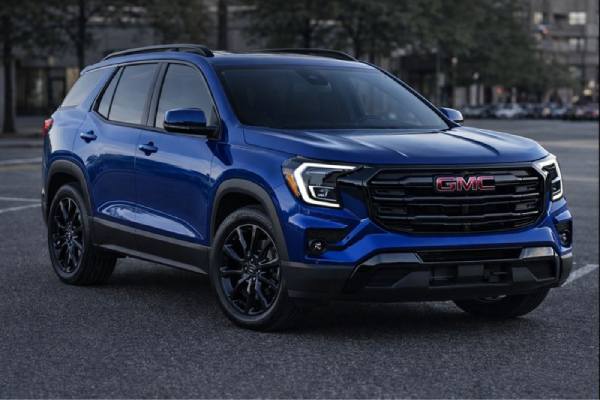
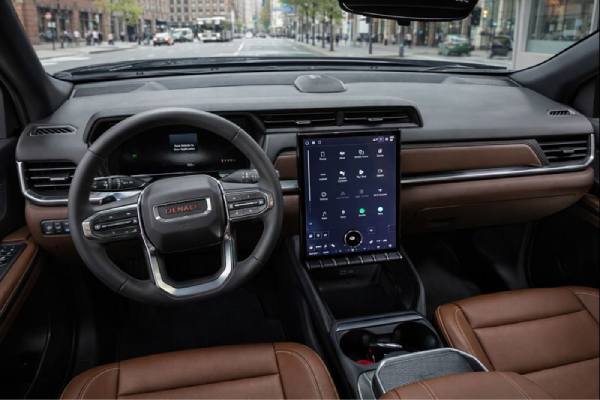
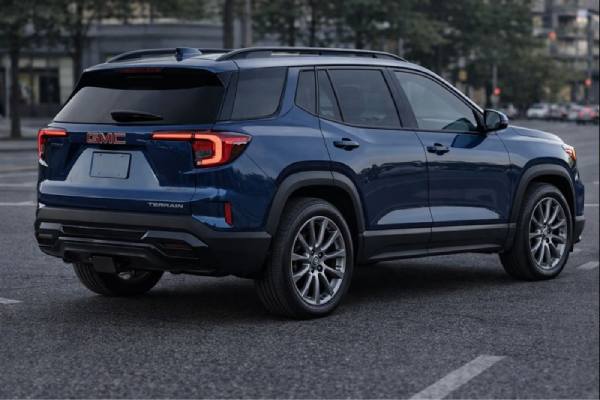
The 2025–present GMC Terrain AWD with the 1.5-liter turbo (engine code LSD) targets a very specific buyer: someone who wants compact-SUV practicality with confident all-weather traction, without the weight, fuel use, and complexity of a larger powertrain. One quick clarification: “LSD” here is GM’s engine code, not a limited-slip differential. In this generation, the headline engineering story is packaging and usability—an efficient turbo four, a mainstream AWD system meant for traction rather than rock crawling, and a cabin designed to feel modern without the learning curve of a luxury brand.
Ownership satisfaction tends to depend on two things: keeping up with fluids and filters on time (especially if you drive in heavy traffic or cold weather), and choosing the trim and options that match your daily use (winter commuting, family hauling, or highway miles). Done right, it’s a calm, sensible compact SUV with few surprises.
Owner Snapshot
- Strong winter traction and stable highway manners with the AWD setup.
- Turbo engine delivers useful low-to-mid-range pull for city and merging.
- Cabin tech and safety options can be genuinely “set-and-forget” once configured.
- Avoid stretched oil intervals if you do short trips or lots of idling.
- Plan on engine oil and filter service about every 12 months (or sooner under severe use).
Quick navigation
- What this 2025+ AWD Terrain is
- Numbers that matter: spec tables
- Trims, packages, and driver aids
- Issues, recalls, and fix strategy
- Maintenance plan and buyer checklist
- How it drives and uses fuel
- Terrain AWD versus main rivals
What this 2025+ AWD Terrain is
Think of the 2025–present Terrain AWD (1.5T LSD, 175 hp) as a “daily-driver first” compact SUV. It is not built around extreme towing, off-road articulation, or a high-output engine. Instead, its fundamentals aim at consistent traction, predictable braking and stability control, and the kind of drivability that feels effortless in mixed traffic.
The turbocharged 1.5-liter four-cylinder is tuned for usable torque in normal driving. You feel that most in stop-and-go traffic and when merging onto a motorway: it is less about a dramatic top-end rush and more about giving the vehicle enough shove to avoid constant wide-open throttle. In practical terms, the powertrain encourages smooth throttle use—small pedal inputs get you moving without the “nothing… then everything” sensation older small turbos sometimes had.
The AWD system is typically a part-time, electronically controlled arrangement: it operates as a front-biased system under light load, then sends torque rearward when wheel slip is predicted or detected. That matters for owners because it keeps fuel use reasonable while still improving confidence on wet pavement, slush, and packed snow. It is also a reminder that tyres still do most of the work. If you live in a true winter climate, the single biggest traction upgrade is often a dedicated winter tyre set, even with AWD.
Where the Terrain tends to shine is its “useful space” design: a ride height that makes entry and exit easy, a cargo area meant for real errands, and driver-assistance options that reduce fatigue on long trips. The vehicle is also modern enough that software and calibration updates can meaningfully affect ownership—sometimes improving shift behavior, warning messages, or sensor performance. That’s not a red flag; it’s simply the reality of 2025+ vehicles.
The best way to think about this model is as a compact SUV that rewards sensible maintenance and sensible expectations. If your priority is quiet comfort, good visibility, and traction confidence rather than maximum towing or sporty steering feel, this Terrain setup fits its mission well.
Numbers that matter: spec tables
Below are the most decision-relevant specifications for the Terrain AWD with the 1.5-liter turbo (LSD) rated at 175 hp. Some measurements and capacities can vary by market, trim, wheels/tyres, and regulatory test method. When a value is not consistently published across regions, it is marked accordingly.
Powertrain and efficiency (AWD)
| Item | Specification |
|---|---|
| Engine code | LSD |
| Engine type | Inline-4, turbocharged (gasoline) |
| Displacement | 1.5 l |
| Fuel system | Direct injection (typical for this class; confirm by VIN/service data) |
| Induction | Turbo |
| Rated output | 175 hp (market dependent labeling) |
| Drive type | AWD |
| Transmission | Automatic (AWD application; exact unit varies by market/year) |
| Rated fuel economy | Varies by test cycle and market; check official label for your VIN |
Transmission and driveline notes (what owners should know)
| Topic | Practical meaning |
|---|---|
| AWD coupling behavior | Expect front-biased operation with rear engagement when needed |
| Tyre matching | Keep all four tyres closely matched in tread depth to avoid AWD stress |
| Spare/temporary tyre | Follow the owner’s instructions carefully; mismatched rolling radius can trigger warnings |
| Towing | Often modest in this class; verify rating by trim and cooling package |
Chassis and dimensions (ownership-relevant)
| Item | What to look for |
|---|---|
| Suspension layout | Independent front and rear (typical for compact crossovers) |
| Wheels and tyres | Multiple sizes by trim; larger wheels can reduce ride comfort |
| Ground clearance | Varies by tyre size and underbody shields; confirm if you use steep driveways |
| Cargo volume | Depends on seat position and measurement method; check the official spec sheet for your market |
| Turning circle | Compact-SUV typical; affected by wheel size |
Performance and capability (real-world expectations)
| Metric | Typical owner takeaway |
|---|---|
| Acceleration | Adequate for commuting and merging; not tuned as a “sport” model |
| Braking feel | Should be stable and consistent; tyres matter as much as pads/rotors |
| Towing stability | Best with conservative tongue weight and properly inflated tyres |
| Payload | Verify door-jamb label; options and AWD hardware reduce available payload |
Fluids and service capacities (high-level guidance)
| System | What matters most |
|---|---|
| Engine oil | Use the exact GM-approved spec for your VIN; don’t chase viscosity “trends” |
| Coolant | Use the approved long-life coolant type and correct mix ratio |
| Automatic transmission | Use OEM-specified fluid only; incorrect ATF can cause shift issues |
| Rear drive unit | AWD hardware may have its own fluid service needs in severe use |
| Brake fluid | Replace on time; moisture lowers boiling point and can corrode internals |
Safety and driver assistance (check by trim)
| Feature area | Notes |
|---|---|
| Airbags | Full set includes front, side, and curtain airbags (confirm by market) |
| AEB | Often standard or widely available; calibration matters after windshield work |
| Lane support | Typically camera-based; lane markings and weather affect performance |
| Blind spot monitoring | Useful in dense traffic; sensors can be affected by bumper damage |
| Adaptive cruise | Usually optional; most valuable for long highway commutes |
If you want the most accurate spec sheet for a specific vehicle, use the door-jamb label, the VIN build data, and the official market brochure/spec page. For service specs, rely on the factory service information rather than forum charts.
Trims, packages, and driver aids
Trims and packages can change the day-to-day experience of this Terrain more than many buyers expect. The powertrain headline is the same—1.5 turbo, 175 hp, AWD—but wheel size, driver-assistance content, and interior equipment can move the vehicle from “basic transport” to “easy long-distance tool.”
How to identify what you’re looking at
A quick way to avoid confusion on the lot is to separate three things:
- Drivetrain: confirm it is truly AWD (not just badging). The VIN build data, dealer printout, or a vehicle info screen in the infotainment often lists drivetrain.
- Wheel and tyre package: larger wheels look good but can bring more road noise and harsher impacts over potholes. If you drive rough roads, a smaller wheel with a taller tyre sidewall is often the comfort choice.
- ADAS level: look for steering-wheel buttons and camera/sensor presence (front camera area behind the windshield, radar module behind the grille on some builds).
Options that matter most in real ownership
- Heated seats and heated steering wheel: not just comfort—less windshield fogging and fewer “blast the heat” cycles can help winter efficiency and visibility.
- Adaptive cruise control: if you do frequent highway trips, this is one of the most meaningful fatigue reducers.
- Upgraded headlights: headlight performance is a real safety feature, especially in rural areas. If your market offers an upgraded headlight package, it is often worth prioritizing.
- Parking sensors and rear cross-traffic alert: in tight urban parking, these reduce low-speed bumper incidents.
Safety ratings: what to check and why
Safety ratings are useful, but they are also easy to misunderstand. Ratings can differ by:
- Model year (even within the same generation)
- Test version (protocols evolve)
- Headlight configuration (a common point of variation in real-world safety performance)
- Trim-specific equipment (some safety tech is optional)
If you are buying used, check whether the vehicle has the full ADAS suite or only the basics. A Terrain with AEB and lane keeping is not the same as one with adaptive cruise and more advanced lane centering (if offered). And if the windshield has ever been replaced, ask for proof that the camera-based systems were calibrated afterward. Poor calibration can cause nuisance warnings or degraded performance.
Practical note on child seats
If you routinely carry children, confirm:
- Easy access to LATCH/ISOFIX anchors
- Sufficient space for a rear-facing seat without forcing the front seat uncomfortably forward
- A rear door opening angle that works in tight parking spaces
In a compact SUV, these details can matter more than a few extra horsepower.
Issues, recalls, and fix strategy
For a 2025–present vehicle, reliability is best approached as risk management rather than a list of scary failures. The most common “issues” early in a new run are often software-related (warnings, sensor behavior, infotainment resets) or quality-of-life items (trim rattles, weather sealing, minor electrical quirks). Mechanical failures do happen, but they are usually the exception, not the rule—especially if the vehicle is maintained and not operated in severe conditions without shortened service intervals.
Common vs occasional vs rare (a practical framework)
Common (low to medium cost)
- Infotainment glitches: freezing, slow boot, phone pairing drops
- Symptoms: screen rebooting, lag, audio dropouts
- Likely root: software bugs, corrupted settings, phone OS mismatch
- Remedy: update software, reset settings, ensure phone OS and apps are current
- ADAS false alerts in heavy rain/snow
- Symptoms: temporary “service” messages, reduced lane support
- Likely root: camera obstruction, radar blockage, dirty sensors
- Remedy: clean sensor areas, verify aiming/calibration after repairs
Occasional (medium cost)
- Battery/charging sensitivity (12 V)
- Symptoms: random warnings, slow start, repeated infotainment resets
- Likely root: weak 12 V battery, frequent short trips, heavy accessory use
- Remedy: battery test and replacement if marginal; check charging system health
- Turbo system hoses or clamps (as vehicles age)
- Symptoms: hiss under boost, reduced power, engine light
- Likely root: boost leak
- Remedy: smoke test, repair leaks, verify clamp integrity
Rare (higher cost)
- Transmission drivability complaints that persist after updates
- Symptoms: harsh shifts, hesitation, flare under certain loads
- Likely root: calibration, adaptive learning issues, or mechanical fault
- Remedy: official diagnostic path first; avoid “universal” fluid swaps
Recalls, TSBs, and service actions: how to handle them
The most important habit is simple: check recalls by VIN at least twice a year, and always before a long trip. If a dealer performs a recall or service action, keep the paperwork. It helps resale value and prevents duplicate diagnostics later.
A second habit: if you see repeated warnings tied to sensors or ADAS, do not ignore them. A camera alignment issue after a windshield replacement is easy to fix when addressed early. Left alone, it can cause erratic lane warnings or disable features you paid for.
Pre-purchase checks (used or lightly used)
Even for a nearly-new Terrain, ask for:
- Full service history (at least oil services and any warranty visits)
- Confirmation that all recalls and software updates are current
- Evidence of correct tyre matching on AWD (tread depth matters)
- A scan report if possible (dealer or qualified shop) to look for stored codes
The goal is not perfection. The goal is to avoid buying someone else’s unresolved “mystery warning” or a vehicle with mismatched tyres stressing the AWD system.
Maintenance plan and buyer checklist
A modern turbo compact SUV lives or dies by oil quality, cooling health, and clean intake air. The Terrain AWD 1.5T is not unusually demanding, but it does punish neglect—especially if your driving is mostly short trips, winter warmups, or heavy congestion.
Practical maintenance schedule (distance and time)
Use your vehicle’s maintenance monitor and official schedule as the top authority. The plan below is a conservative, real-world approach that fits most owners.
- Engine oil and filter: follow the oil-life monitor, or change at least every 12 months; shorten the interval if you do frequent short trips, towing, or extended idling.
- Tyre rotation: every 8,000–12,000 km (5,000–7,500 mi); keep tread depth balanced across all four tyres for AWD health.
- Cabin air filter: about every 12 months, sooner in dusty or urban environments.
- Engine air filter: inspect every service; replace based on condition (dusty regions often need more frequent changes).
- Brake fluid: typically every 2–3 years, depending on climate and driving; moisture accumulation is the enemy.
- Coolant: long-life coolants can run several years, but inspect annually for level and condition; replace at the official interval.
- Automatic transmission fluid: many modern units are “normal-service long,” but severe use (mountains, towing, city heat) benefits from earlier service. Use only the OEM-specified fluid.
- AWD service (rear drive unit / couplings): if your usage includes hills, snow, or towing, ask the dealer about a severe-service schedule.
- Spark plugs: usually longer-life on modern turbo engines; replace at the manufacturer interval to protect the ignition system and catalytic converter.
- 12 V battery: test yearly after year 3; frequent short trips shorten life.
Fluids and specifications (what to do, not what to guess)
- Use the exact oil specification listed for your VIN (GM approvals matter more than brand).
- Use the correct coolant type and mixture ratio; mixing coolant types is a common and avoidable problem.
- For transmission and AWD fluids, avoid generic “compatible” fluids unless the product explicitly meets the exact required specification.
A buyer’s inspection checklist (fast but effective)
Bring a flashlight and take 15 minutes:
- Tyres: even wear, matching brand/model, similar tread depth across all four.
- Underbody: look for impacts, missing undertrays, and fluid seepage.
- Test drive: listen for wheel-bearing hum, clunks over bumps, and driveline shudder at low speed.
- Braking: confirm straight, smooth braking with no pulsation.
- ADAS check: verify the camera area is clear and features activate without warnings.
- Service records: confirm oil services happened on time, not “whenever.”
Long-term durability outlook
With normal maintenance, the drivetrain should be a solid long-term companion. The biggest threats are usually neglect (long oil intervals on a turbo engine), mismatched tyres stressing AWD hardware, and ignored warnings that could have been solved with a calibration update or sensor repair.
How it drives and uses fuel
The Terrain AWD with the 1.5T is tuned to feel easy rather than exciting. That is a positive in daily life: smooth acceleration, predictable braking, and a steering setup that does not demand constant attention.
Ride, handling, and NVH (noise, vibration, harshness)
On typical compact-SUV tyres, ride quality is generally composed, with the biggest variable being wheel size. Larger wheels tend to sharpen impacts over potholes and expansion joints. If your roads are rough, prioritize the wheel and tyre setup that gives you more sidewall.
Cabin noise depends heavily on tyres and road surface. Many owners who chase “better looks” with aggressive tread patterns later discover the tradeoff in motorway drone. If you value quiet, choose touring-oriented tyres when replacement time comes.
Powertrain character in real traffic
The 1.5 turbo’s best work happens between low and mid rpm. In city traffic it feels responsive enough, and on the highway it merges without drama as long as you plan a half-second ahead. Turbo lag, when present, is usually mild and most noticeable if you try to accelerate hard from very low rpm.
Transmission behavior is typically tuned for economy and smoothness. You may notice:
- A preference for low rpm cruising
- Occasional downshift hesitation when you request a sudden burst of speed
- Different feel in “sport” or “tow” modes (if equipped)
None of this is unusual. The vehicle is calibrated for the broad middle of drivers, not for aggressive throttle habits.
Real-world efficiency: what to expect
Your actual fuel use will mainly reflect:
- Speed (highway speed increases drag sharply)
- Temperature (winter fuel blends and cabin heating reduce efficiency)
- Tyres (winter tyres and low pressures can raise consumption)
- Trip length (short trips are the hardest on efficiency)
As a rule of thumb, steady motorway cruising at 110–120 km/h (68–75 mph) usually delivers noticeably worse efficiency than official “highway” labels that assume gentler test conditions. In winter, it is normal to see a further drop, especially on short commutes.
Traction and control: what AWD does well
This AWD setup is most valuable for:
- Starting from a stop on slick surfaces
- Pulling out of snowy side streets
- Maintaining stability on wet roads when one axle loses grip
It is not a substitute for tyres, and it is not designed for deep mud or rock crawling. If you regularly drive on unpaved roads, consider adding underbody protection habits: rinse winter salt off the undercarriage, keep wheel wells clean, and inspect undertrays after rough-road impacts.
Light towing and load behavior
If you tow within the rated limit, the Terrain can handle small trailers, but keep expectations realistic:
- Use conservative speeds
- Keep tongue weight correct
- Inflate tyres properly
- Expect a meaningful fuel economy penalty under tow
The vehicle is happiest as a commuter and family hauler first.
Terrain AWD versus main rivals
In the compact-SUV segment, the Terrain’s competition is intense. Your best rival depends on what you value most.
Toyota RAV4 AWD
Why pick it instead: reputation for long-term durability, strong resale, available hybrids in many markets.
Why pick the Terrain instead: if you prefer GMC styling, interface layout, or a specific feature mix, and you are not chasing hybrid efficiency.
Honda CR-V AWD
Why pick it instead: very refined packaging, strong practicality, often excellent ride comfort.
Why pick the Terrain instead: if the Terrain’s trim and tech options match your priorities better, or if pricing and availability favor GMC.
Mazda CX-5 or CX-50 AWD
Why pick it instead: more engaging steering feel, premium-leaning interior experience.
Why pick the Terrain instead: if you want a calmer, more “appliance-like” daily driver or prefer the GMC’s tech and seating position.
Nissan Rogue AWD
Why pick it instead: comfortable seats, strong feature value in many trims.
Why pick the Terrain instead: if you prefer GMC’s overall calibration and want to avoid the feel of some CVT-style power delivery (market dependent).
Hyundai Tucson and Kia Sportage AWD
Why pick them instead: strong feature-per-dollar, bold design, often long warranties.
Why pick the Terrain instead: if dealership support, interface preferences, or driving feel align better with GMC.
The simplest decision rule
- Choose the Terrain AWD if you want a straightforward turbo compact SUV with modern tech, predictable traction behavior, and you plan to maintain it properly.
- Choose a hybrid rival if fuel cost dominates your ownership math.
- Choose a Mazda if steering and driving feel matter more than maximizing cabin tech for the money.
In a segment this competitive, the “best” pick is often the one that fits your routine—commute length, winter severity, parking environment, and how long you keep vehicles—rather than the one with the flashiest brochure numbers.
References
- Vehicle Detail Search – 2025 GMC TERRAIN SUV AWD | NHTSA 2025 (Recall and Safety Database)
- Recalls | NHTSA 2025 (Recall Database)
- GMC: SUVs, Trucks, and Crossovers 2025 (Manufacturer Information)
- GM Canada: Chevrolet, Buick, GMC, and Cadillac 2025 (Manufacturer Information)
Disclaimer
This article is for informational purposes only and is not a substitute for professional diagnosis, repair, or safety inspection. Specifications, torque values, service intervals, and procedures can vary by VIN, market, model year, and equipment. Always verify details using the official owner’s manual and factory service information for your specific vehicle.
If you found this guide helpful, please consider sharing it on Facebook, X (Twitter), or your favorite forum to support our work.