
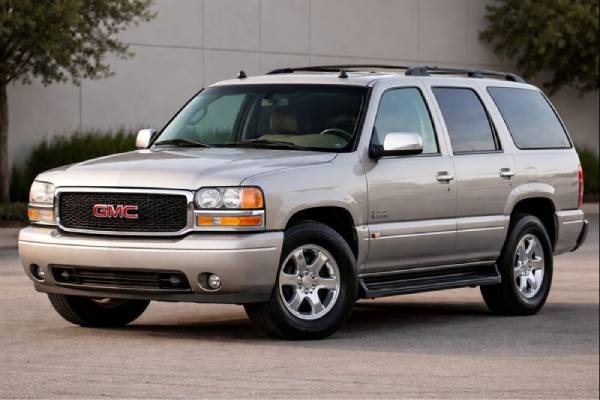
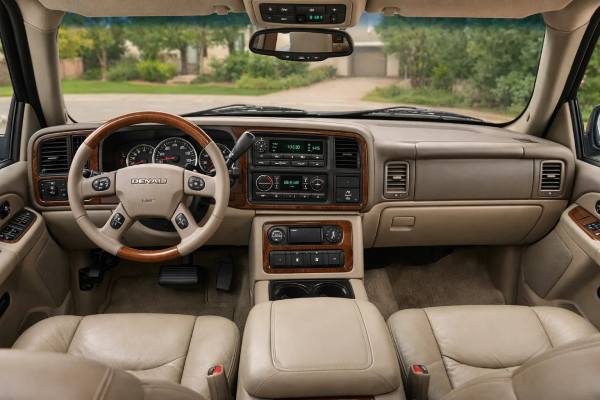
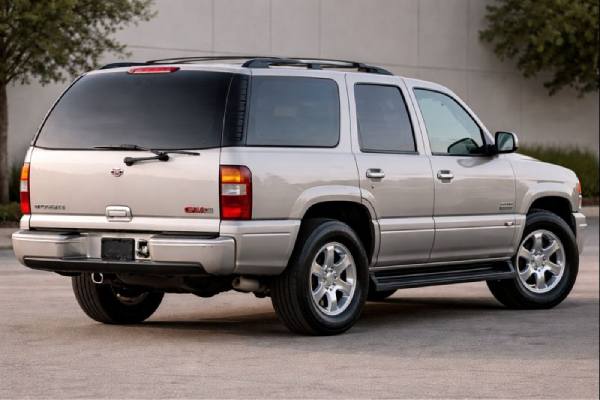
The 2001–2006 GMC Yukon Denali AWD (GMT800) is essentially GM’s “do-it-all” full-size SUV from the early 2000s: a strong 6.0-liter V8 (LQ4), a heavy-duty-feeling chassis, and a full-time AWD system tuned more for confident all-weather traction than rock crawling. In Denali form, the Yukon also adds comfort hardware—often including premium seats, upgraded audio, larger wheels, and (on many trucks) Autoride self-leveling dampers—so it drives more like a highway cruiser than a work-spec SUV.
Ownership success comes down to understanding two realities: it’s built around proven truck parts, but it’s still a 2.5+ ton vehicle with drivetrain loads that expose weak links if maintenance is delayed. Keep fluids fresh, address steering and suspension wear early, and this generation can age gracefully.
Owner Snapshot
- Strong low-end torque and relaxed cruising, especially when loaded or towing
- Full-time AWD gives predictable grip on wet and snowy roads without driver input
- Parts availability is excellent, and most repairs are straightforward for truck shops
- Autoride (if equipped) and 20-inch tires can raise long-term operating costs
- Plan engine oil changes by the oil-life system or at least every 12 months
Section overview
- Denali AWD big-picture
- LQ4 6.0 specs tables
- Denali equipment and safety
- Known faults and recalls
- Service schedule and buyer tips
- Road feel and real mpg
- Denali vs full-size rivals
Denali AWD big-picture
Think of the GMT800 Yukon Denali as a half-luxury, half-workhorse SUV built from GM’s truck playbook. Underneath the leather and chrome is a body-on-frame chassis shared with the era’s Silverado/Sierra and Tahoe/Yukon lineup. That matters because it explains both the upside (durable core components, broad parts support) and the downside (truck-like steering feel, higher fuel use, and wear items that don’t love potholes).
The headline feature is the LQ4 6.0-liter V8. In Denali tune, it prioritizes smooth torque delivery and steady pulling power, not high-rev excitement. It’s well matched to the Yukon’s real mission: carrying people and gear, climbing grades without drama, and towing within reason. The 4-speed automatic isn’t modern by today’s standards, but when it’s healthy and the fluid is kept clean, it’s generally predictable and easy to live with.
Denali’s AWD system is also a defining trait. Unlike a part-time 4WD setup that you engage for slippery conditions, Denali’s full-time system is designed to be “always on” for mixed weather, rain-slick highways, and patchy snow. That improves stability and confidence, especially for drivers who don’t want to think about mode selection. The tradeoff is complexity, driveline wear sensitivity, and slightly higher fuel consumption compared with 2WD.
Where the Denali really differentiates itself is how it feels day to day. Many were equipped to be quieter and more composed than lower trims, and the seating comfort holds up well if the interior has been cared for. But luxury options add cost. Autoride self-leveling shocks (common on Denali) can be expensive when worn, and the factory 20-inch wheel packages increase tire cost while making suspension wear more noticeable.
Bottom line: this is a capable, comfortable full-size SUV with a strong engine and a sensible AWD approach for pavement-focused use. Buy the best-maintained one you can, because “cheap” examples often become expensive as deferred maintenance shows up all at once.
LQ4 6.0 specs tables
Below are practical, owner-focused specs for the GMT800 Yukon Denali AWD with the LQ4 6.0 V8 and 4-speed automatic. Exact figures can vary by model year, axle ratio, and option codes, so treat these as a baseline and verify your SPID/RPO label for the final details.
Engine and Performance (ICE)
| Item | Spec |
|---|---|
| Code | LQ4 |
| Engine layout and cylinders | V8, OHV (pushrod), 2 valves/cyl |
| Bore × stroke | 101.6 × 92.0 mm (4.00 × 3.62 in) |
| Displacement | 6.0 L (5967 cc) |
| Induction | Naturally aspirated |
| Fuel system | Sequential MPFI |
| Compression ratio | ~9.4:1 |
| Max power | 320 hp (239 kW) @ ~5200 rpm |
| Max torque | ~488 Nm (360 lb-ft) @ ~4000 rpm |
| Timing drive | Chain |
| Emissions/efficiency standard | EPA (US) |
| Rated efficiency | 18.1 L/100 km (13 mpg US / 15.6 mpg UK) combined |
| Real-world highway @ 120 km/h (75 mph) | Commonly ~14–17 L/100 km (14–17 mpg US / 16.8–20.4 mpg UK), depending on tires, wind, and load |
Transmission and Driveline
| Item | Spec |
|---|---|
| Transmission | 4-speed automatic (commonly 4L65-E family) |
| Gear ratios | 1st 3.06 / 2nd 1.62 / 3rd 1.00 / 4th 0.70 / Rev 2.29 |
| Drive type | Full-time AWD |
| Transfer case | Single-speed AWD unit (Denali-specific application) |
| Differential | Typically open front/rear (traction control behavior varies by year) |
Chassis and Dimensions (typical GMT800 Denali)
| Item | Spec |
|---|---|
| Suspension (front/rear) | Independent front (torsion bar) / solid rear axle with coil springs and links |
| Steering | Recirculating ball (truck-type) |
| Brakes | 4-wheel disc with ABS (rotor size varies by year/parts package) |
| Wheels/tires | Commonly 20-inch wheels on Denali packages (sizes vary) |
| Ground clearance | ~200 mm (~7.9 in), varies by tires/suspension |
| Length / width / height | ~5050–5085 mm / ~2005 mm / ~1900–1950 mm (varies) |
| Wheelbase | ~2946 mm (116.0 in) |
| Turning circle | ~12.5–13.0 m (41–43 ft), varies |
| Curb weight | Often ~2450–2650 kg (5400–5850 lb), depends on equipment |
| Fuel tank | 117 L (31 US gal / 25.8 UK gal) |
Performance and Capability (realistic ranges)
| Item | Spec |
|---|---|
| 0–100 km/h (0–62 mph) | ~8–9 s (condition-dependent) |
| Top speed | Typically electronically limited (~160–175 km/h / 100–109 mph) |
| Towing capacity | Often ~3400–3600 kg (7500–8000 lb) when properly equipped |
| Payload | Commonly ~600–750 kg (1320–1650 lb), varies by GVWR |
Fluids and Service Capacities (owner-relevant)
| Item | Spec |
|---|---|
| Engine oil | 5W-30; capacity 5.7 L (6.0 US qt) |
| Coolant | Dex-Cool type; capacity ~21.0 L (22.2 US qt) |
| Transfer case | AutoTrak II fluid; capacity ~2.3 L (2.4 US qt) |
| Wheel nuts torque | 190 Nm (140 lb-ft) |
| Spark plug gap | 1.52 mm (0.060 in) |
Electrical and Basics
| Item | Spec |
|---|---|
| 12V system | Conventional 12V |
| Battery | Group size and CCA vary; many trucks are ~600–750 CCA |
| Alternator output | Varies by build; commonly 145A-class |
Safety and Driver Assistance (era-appropriate)
| Item | Spec |
|---|---|
| Airbags | Front airbags standard; side/curtain availability varies by year |
| ABS | Standard |
| Stability/traction control | Typically traction control; stability control availability varies by year |
| ADAS | No modern AEB/ACC/lane support on this generation |
Denali equipment and safety
Denali trim on the GMT800 Yukon is less about a different body shape and more about a different ownership experience. Mechanically, the key identifiers are the 6.0 LQ4 V8 and the full-time AWD layout, but most buyers notice the Denali’s comfort and appearance hardware first: distinct badging, upgraded interior materials, and a feature list that often includes premium audio, heated seats, and larger wheels.
Trims and options that change the vehicle
Even within “Denali,” option content can vary meaningfully by year and original buyer spec. The differences worth caring about fall into four buckets:
- Suspension package: Many Denalis were equipped with Autoride/self-leveling dampers. When fresh, they help control body motion and maintain ride height with passengers or tongue weight. When worn, they can feel floaty or harsh and can be expensive to replace if you insist on like-for-like parts.
- Wheel and tire package: 20-inch wheels look right on a Denali, but they increase tire replacement cost and can make worn steering parts more noticeable. If you prioritize ride and low running cost, a smaller wheel setup with quality tires can be a smart “invisible” upgrade.
- Towing equipment: Denali can be an excellent moderate tow vehicle, but only if it has the right factory gear—receiver hitch, wiring, transmission cooling, and the correct axle ratio. Verify equipment rather than assuming it’s present.
- Interior electronics: Navigation units, rear entertainment, and Bose systems can be great when working, but age-related failures (screens, backlighting, speakers, HVAC actuators) are common enough that condition matters more than the option list.
Safety ratings: how to interpret them
For early-2000s full-size SUVs, safety scoring depends heavily on the rating body, the test version, and the exact configuration. Some years and variants have complete star ratings, others are partial. The practical way to handle this as an owner is:
- Check ratings by exact year and configuration, not just “Yukon” in general.
- Treat rollover risk seriously: tall, heavy SUVs can be stable in normal driving yet still carry higher rollover risk than lower vehicles in emergency maneuvers.
- Look at tire condition and brake performance as “real safety.” A well-maintained braking system and quality tires often do more for crash avoidance than any single brochure feature.
Safety systems and what you actually get
This generation predates modern camera/radar driver assistance. The safety toolkit is mostly structural, restraint, and braking related:
- Airbags: Front airbags are standard; side-impact and head-curtain airbags depend on year and equipment.
- Child-seat mounting: Look for proper LATCH/ISOFIX anchors and verify that the seat positions you plan to use have accessible anchors and intact seatbelt hardware.
- ABS and traction control: Generally standard and genuinely useful in rain and snow, especially with AWD.
- Service considerations: After steering, suspension, or hub work, insist on a proper alignment and confirm the ABS system has no warning lights. On older trucks, wiring and wheel-speed sensors can become failure points after corrosion or bearing wear.
Known faults and recalls
A GMT800 Denali can be very dependable, but it has a predictable set of age- and mileage-driven issues. The most helpful way to think about them is by prevalence and cost tier, so you can prioritize what to inspect and what to budget for.
Common (expect to see) — low to medium cost
- Steering and front-end wear (medium): Loose steering feel, wandering, clunks over bumps, and uneven tire wear often trace to pitman/idler arms, outer tie rods, front wheel bearings/hubs, or tired shocks. Remedy is straightforward parts replacement plus alignment.
- Instrument cluster and switchgear glitches (low to medium): Dim backlighting, inaccurate gauges, or intermittent warning lights are common on early-2000s GM trucks. Rebuild services exist; avoid “cheap fix” clusters with questionable calibration.
- HVAC blend-door and mode actuator failures (low to medium): Clicking behind the dash, stuck temperature, or air coming from the wrong vents. Parts are not usually expensive; labor varies.
- Fuel pump aging (medium): Hard starts, loss of power at load, or intermittent stalling can be fuel delivery related. Pressure testing under load is more useful than guessing.
Occasional — medium to high cost
- 4-speed automatic wear (high if neglected): Slipping on 2–3 shift, harsh shifts, delayed engagement, or shuddering can appear after hard towing or long fluid-neglect intervals. Early diagnosis matters: sometimes a fluid/filter service helps; sometimes it’s already internal wear.
- AWD transfer case wear (medium to high): Binding, whining, or unusual driveline noises can come from fluid breakdown, chain wear, or internal rub/wear patterns. Using the correct transfer case fluid and changing it on schedule is cheap insurance.
- Autoride/self-leveling shocks (medium to high): If equipped, worn dampers can be expensive to replace with OE-style parts. Some owners convert to conventional shocks, but ride and warning messages depend on how the conversion is done.
Rare — high cost, but worth screening
- Engine internal damage (high): The LQ4 is generally strong. Serious issues are more likely from overheating, severe oil neglect, or ingestion problems. Watch for persistent misfires, low oil pressure at hot idle, coolant loss, or metal in oil.
Age bands and conditions that accelerate problems
- 100,000–160,000 miles (160,000–260,000 km): suspension wear, hubs, steering parts, HVAC actuators, and electronics are common.
- Towing, short trips, city heat cycles: accelerate transmission and cooling system wear.
- Rust-belt environments: brake lines, fuel lines, and frame corrosion become inspection priorities.
Recalls, TSBs, and how to verify completion
Because recall coverage depends on VIN and completion history, the only reliable approach is a VIN-based recall check plus evidence from dealer records. Ask the seller for documentation, then verify using the official recall database. If a truck has been sitting for long periods, also scan for stored codes—older SUVs can “look fine” while hiding drivability faults that only appear under sustained load.
Service schedule and buyer tips
A Yukon Denali AWD lasts longest when you treat it like a heavy truck that happens to have a luxury badge. The maintenance plan below focuses on what prevents expensive driveline surprises and what keeps ride quality from degrading.
Practical maintenance schedule (distance or time)
Use whichever comes first (km/mi or months/years). For severe use—short trips, extreme heat/cold, frequent towing—choose the shorter interval.
- Engine oil and filter: Follow the oil-life monitor; if uncertain, change every 8,000–10,000 km (5,000–6,000 mi) or 12 months. Use the correct viscosity (commonly 5W-30) and a quality filter.
- Engine air filter: Inspect every 15,000 km (10,000 mi); replace around 45,000–60,000 km (30,000–40,000 mi) depending on dust.
- Cabin air filter (if equipped): Inspect yearly; replace when airflow drops or odors persist.
- Coolant (Dex-Cool type): Many GM systems of this era use extended-life coolant, but age matters. A safe owner interval is 5 years (then every 4–5 years), with attention to hose condition and radiator end tanks.
- Spark plugs: Often around 160,000 km (100,000 mi) under normal use; replace sooner if misfires or poor fuel economy appear. Confirm plug type and gap.
- Automatic transmission fluid: For mixed use, many owners choose 60,000–80,000 km (40,000–50,000 mi). If towing regularly, shorten it. Include the filter where applicable.
- Transfer case fluid (AWD): Change around 80,000 km (50,000 mi); sooner if towing or if the fluid looks dark or smells burnt.
- Front and rear differential fluids: Inspect for leaks yearly; many owners service at 80,000–100,000 km (50,000–60,000 mi).
- Brake fluid: Every 2 years, regardless of mileage.
- Brake pads/rotors: Inspect every tire rotation; older calipers and slide pins benefit from cleaning and lubrication.
- Tires: Rotate every 10,000–12,000 km (6,000–7,500 mi); align annually or after any steering/suspension work.
- Serpentine belt and hoses: Inspect at every oil service; replace proactively if cracking, glazing, or swelling appears.
- 12V battery: Test annually after year 4; replacement often falls in the 4–6 year window depending on climate.
Fluid specs, capacities, and “decision-grade” torque
These are the kinds of numbers that matter when you’re planning service rather than performing a full workshop procedure:
- Engine oil: 5.7 L (6.0 US qt) capacity; common viscosity 5W-30
- Coolant: ~21.0 L (22.2 US qt) capacity; Dex-Cool type
- Transfer case: ~2.3 L (2.4 US qt) capacity; AutoTrak II fluid
- Wheel nuts: 190 Nm (140 lb-ft)
Buyer’s guide: what to check before money changes hands
Bring a flashlight, a scan tool if possible, and enough time for a cold start and a full drive cycle.
- Cold start behavior: Listen for excessive ticking, belt squeal, long crank, or rough idle.
- Transmission shifting: Pay attention to 1–2 and 2–3 shifts under light and moderate throttle; watch for flare, slam, or hesitation.
- AWD driveline noises: In tight turns and low-speed parking maneuvers, listen for binding, groaning, or repeated clunks.
- Steering tightness: Excess play at the wheel, wandering, or knocking suggests front-end wear.
- Rust and lines: Inspect frame rails, brake lines, fuel lines, and the rear axle area for corrosion.
- Autoride check (if equipped): Confirm ride height, damping control, and warning lights.
- Service history: Prioritize documented fluid services over cosmetic upgrades.
If you want the longest-lived Denali, buy the one with the cleanest maintenance trail and the calmest test drive—those two signals usually predict the lowest “catch-up” cost.
Road feel and real mpg
On the road, a GMT800 Yukon Denali feels like what it is: a large, body-on-frame SUV tuned for stability and comfort, not agility. The steering is typically light and slower than modern crossovers, with a relaxed on-center feel. In a healthy truck with tight front-end parts, it tracks straight on the highway and handles long-distance cruising surprisingly well. When components are worn, the same chassis can feel vague and tiring, so steering and suspension condition has an outsized impact on perceived quality.
Powertrain character
The 6.0 LQ4 V8 is the reason many people seek the Denali specifically. It produces usable torque at everyday rpm, so the Yukon doesn’t feel strained in normal acceleration or on hills. Throttle response is generally smooth rather than sharp, and the engine’s sound is more “truck V8” than sportsy. The 4-speed automatic is the limiting factor: it doesn’t have many ratios to keep the engine in an ideal band, so you’ll feel bigger rpm drops between gears and more frequent downshifts on grades compared with modern 6–10 speed trucks. The upside is simplicity—when serviced, it’s easy for most transmission shops to diagnose and support.
Ride, handling, and NVH
Ride quality depends heavily on tire choice and (if equipped) the Autoride system’s health. With quality tires and good dampers, the Denali does a good job isolating highway expansion joints and feels planted at speed. With stiff sidewall tires, mismatched tire brands, or worn shocks, it can develop a choppy “busy” ride. Wind and road noise are present—this is not a modern aero-optimized SUV—but many owners find it acceptable, especially if door seals and interior trim are in good shape.
Real-world fuel use
Official fuel economy for the 2006 Denali AWD is 12 mpg city / 16 mpg highway / 13 mpg combined (US). In metric terms, that’s roughly 19.6 / 14.7 / 18.1 L/100 km. Real-world numbers commonly swing with speed and load:
- City-heavy driving: often ~18–24 L/100 km (10–13 mpg US)
- Highway at 100–110 km/h (60–70 mph): often ~14–17 L/100 km (14–17 mpg US)
- Cold weather: expect a noticeable penalty due to warm-up time and winter fuel blends.
Traction and towing impressions
The full-time AWD system is a real advantage in rain, slush, and mixed-grip conditions because it works without driver input. For towing, stability is generally solid when the suspension is healthy and the trailer is properly set up (good tires, correct tongue weight, working trailer brakes). Fuel consumption climbs quickly under load; a 20–40% increase is a reasonable expectation depending on trailer size, speed, and terrain.
Denali vs full-size rivals
The GMT800 Yukon Denali sits in a specific niche: more refined than a base work SUV, less complicated than many modern luxury SUVs, and still very much a truck underneath. When you compare it to rivals, it helps to separate three questions: comfort, durability/cost, and “what the vehicle is best at.”
Versus Chevrolet Tahoe (same era)
A Tahoe of similar years shares much of the same platform DNA, which means many mechanical parts and wear patterns overlap. The Denali’s advantage is typically the 6.0 V8’s stronger pull and the full-time AWD character. The Tahoe can be cheaper to buy and may be available in simpler, easier-to-maintain configurations, especially if you want 2WD or part-time 4WD rather than a constant AWD setup. If you value “quiet and effortless,” Denali usually feels more upscale; if you want the simplest long-term drivetrain, the Tahoe in a non-AWD configuration can be easier to own.
Versus Ford Expedition (early/mid-2000s)
The Expedition is a strong alternative if you prefer Ford’s packaging and ride tuning. In many markets, parts support is also good. The decision often comes down to local condition and maintenance history rather than brand loyalty. Compare steering tightness, transmission shift quality, and rust condition carefully—those tend to be the deciding factors more than brochure specs.
Versus Toyota Sequoia (1st gen) and Land Cruiser (100-series)
Toyota’s full-size SUVs of that era often win on long-term durability perception and can feel tighter at high mileage when cared for. The downside is acquisition cost and, depending on region, higher part prices for certain components. The Denali tends to be cheaper to purchase and easier to repair at general truck shops, with broad parts availability. If you want the best “buy it once, keep it forever” reputation and don’t mind paying more up front, Toyota is compelling. If you want strong capability and comfort with lower entry cost and easier parts sourcing, the Denali makes sense.
Versus Nissan Armada (early years)
Armada can offer strong V8 power and roomy packaging, but condition variability is wide. In practice, you’re comparing individual vehicles more than nameplates: a well-maintained Denali will usually feel more cohesive than a neglected rival regardless of brand.
The Denali’s best use case today
This Yukon Denali is at its best as a family hauler, road-trip SUV, and moderate tow vehicle in regions where weather traction matters. It’s less ideal if fuel economy is a priority, or if you want modern crash-avoidance tech. Choose it when you value a strong V8, real truck structure, and straightforward serviceability—and when you’re willing to keep up with aging wear items before they become breakdowns.
References
- Manuals and Guides | Vehicle Support 2025 (Owner’s Manual Portal)
- Check for Recalls: Vehicle, Car Seat, Tire, Equipment 2025 (Recall Database)
- Car Safety Ratings | Vehicles, Car Seats, Tires 2025 (Safety Rating Portal)
- Gas Mileage of 2006 GMC Yukon 2025 (Fuel Economy)
- NHTSA Datasets and APIs 2025 (Official Data Access)
Disclaimer
This article is for informational purposes only and is not a substitute for professional diagnosis, inspection, or repair. Specifications, torque values, fluid types and capacities, service intervals, and procedures can vary by VIN, market, production date, and installed equipment. Always verify details using your vehicle’s official service information and labels, and consult a qualified technician when needed.
If you found this guide useful, please consider sharing it on Facebook, X (Twitter), or your favorite forum to help others maintain and buy these vehicles wisely.