
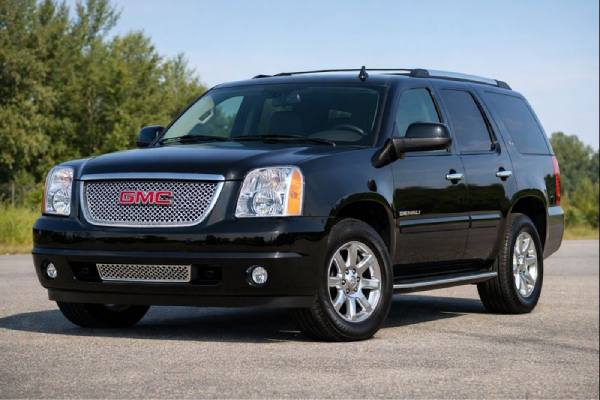
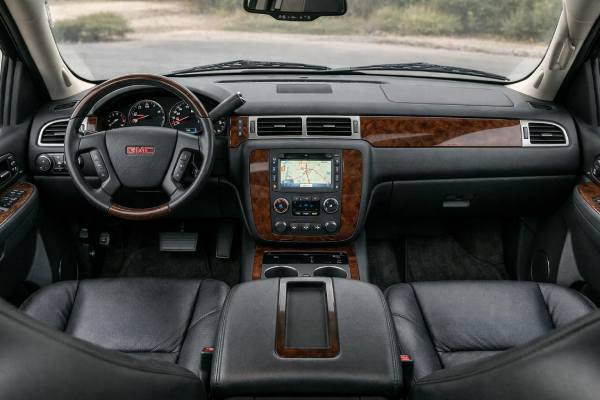
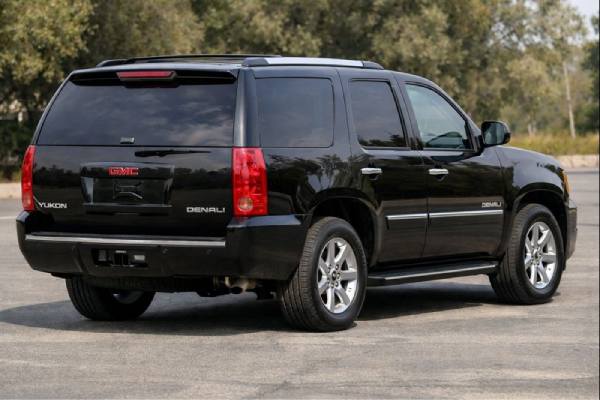
The 2007–2008 GMC Yukon Denali AWD sits in a sweet spot for full-size SUV buyers who want modern road manners without giving up classic GM truck durability. Under the hood is the L92 6.2L V8, a high-output LS-family engine that delivers strong passing power, confident towing response, and a relaxed cruising character. The GMT900 platform also brought a stiffer structure and a more controlled ride than the GMT800 trucks, which matters on long highway days and when the cabin is loaded with people and gear.
This Denali trim is as much about refinement as capability: standard AWD traction for year-round grip, a quiet interior for its era, and feature content that still feels usable today. Ownership success is mostly about staying ahead of fluids, keeping the cooling and ignition systems healthy, and being realistic about fuel costs when you use all 380 horsepower.
Owner Snapshot
- Strong low- and mid-range pull makes merging, passing, and towing feel easy for a full-size SUV.
- AWD traction and stable highway tracking suit winter climates and long-distance travel.
- Cabin comfort and seating flexibility remain a practical advantage versus many newer crossovers.
- Budget for fuel and premium-grade gasoline use in many markets, especially with heavy city driving.
- Change engine oil about every 8,000–10,000 km (5,000–6,000 mi) or 12 months, depending on duty cycle.
Guide contents
- Denali AWD ownership profile
- L92 specs and measurements
- Denali features and safety kit
- Common faults and fixes
- Maintenance schedule and buying
- Road manners and towing
- Rivals and value verdict
Denali AWD ownership profile
Think of the 2007–2008 Yukon Denali AWD as a traditional body-on-frame SUV that was tuned to feel more “premium” without losing its truck-grade backbone. The GMT900 chassis is still a full-size SUV platform with a solid rear axle, real towing hardware, and the kind of curb weight that helps it feel planted at speed. But compared with earlier generations, steering response, braking confidence, and overall body control are noticeably improved—especially on long highway runs where the Denali’s calm tracking is one of its biggest strengths.
The star of the show is the L92 6.2L V8. It’s an aluminum-block LS-family engine with variable valve timing (VVT) that gives it a broader powerband than the older 6.0L setups. Around town, it doesn’t need to rev to move the Yukon smartly; on the highway, it has enough reserve to pass without drama. That “effortless” feel is a key ownership advantage, especially when you’re carrying a full cabin, climbing grades, or towing.
AWD is the other defining trait. On these Denalis, AWD is designed for everyday traction rather than slow-speed rock crawling. In practice, that means confident launches on wet pavement, less wheelspin on snowy streets (with the right tires), and reduced driver workload in changing conditions. The trade-off is extra drivetrain complexity compared with a simple 2WD setup, plus additional fluid services (and additional potential leak points) as the truck ages.
Ownership costs are mostly predictable if you go in with eyes open. Fuel consumption is the big one—this is a large vehicle with a powerful V8 and AWD. Tires, brakes, and suspension parts also cost more than they do on midsize SUVs, partly due to size and load rating. The upside is that parts availability is strong, most repairs are straightforward for experienced shops, and the platform has a long service history in GM’s truck lineup.
Who does it fit best? Drivers who want full-size interior space and towing confidence, travel in mixed weather, and prefer a stable, heavy SUV feel over a lighter crossover’s efficiency.
L92 specs and measurements
Below are practical, ownership-relevant specifications for the 2007–2008 Yukon Denali AWD (GMT900) with the L92 6.2L V8. Real-world equipment can vary by market, axle ratio, and tow package, so treat these as a strong baseline and confirm with your RPO codes, VIN build sheet, or service information.
Engine and Performance
| Item | Spec |
|---|---|
| Code | L92 |
| Engine layout and cylinders | V8, OHV (pushrod), 2 valves/cyl (16 valves total) |
| Bore × stroke | 103.25 × 92.0 mm (4.07 × 3.62 in) |
| Displacement | 6.2 L (6162 cc) |
| Induction | Naturally aspirated |
| Fuel system | Sequential port fuel injection (PFI) |
| Compression ratio | ~10.5:1 |
| Max power | 380 hp (283 kW) @ ~5600 rpm |
| Max torque | ~565 Nm (417 lb-ft) @ ~4200 rpm |
| Timing drive | Chain |
| Emissions / efficiency standard | EPA (varies by market and certification family) |
| Rated efficiency (example) | ~16.8 L/100 km (14 mpg US) combined; ~19.6 L/100 km (12 mpg US) city; ~13.1 L/100 km (18 mpg US) highway |
Transmission and Driveline
| Item | Spec |
|---|---|
| Transmission | 6-speed automatic (6L80 family) |
| Gear ratios | 1st 4.03 / 2nd 2.36 / 3rd 1.53 / 4th 1.15 / 5th 0.85 / 6th 0.67 / Rev ~3.06 |
| Final drive ratio | Commonly ~3.42:1 (some packages differ) |
| Drive type | AWD |
| Differential | Typically open front; rear may be open or automatic locking depending on build |
Chassis and Dimensions
| Item | Spec |
|---|---|
| Suspension (front / rear) | Independent front / solid rear axle with coil springs |
| Brakes | 4-wheel disc (sizes vary by package) |
| Wheels/Tires | Commonly 20 in wheels on Denali; tire size varies by market |
| Ground clearance | ~229 mm (9.0 in) |
| Length / width / height | ~5130 / 2007 / 1950 mm (~202.0 / 79.0 / 76.8 in) |
| Wheelbase | ~2946 mm (~116.0 in) |
| Turning circle | ~12.6 m (~41 ft), typical |
| Curb weight | ~2500–2650 kg (~5510–5840 lb), equipment dependent |
| GVWR | ~3200–3350 kg (~7050–7390 lb), equipment dependent |
| Fuel tank | ~98 L (26 US gal / 22 UK gal) |
| Cargo volume (approx.) | ~480 L (16.9 ft³) behind 3rd row; ~3080 L (108.9 ft³) max (varies by measurement method) |
Performance and Capability
| Item | Spec |
|---|---|
| 0–100 km/h (0–62 mph) | ~6.8–7.5 s (conditions and tires matter) |
| Top speed | Governed (varies by market and tires) |
| Towing capacity | Often ~3600–3900 kg (~7900–8600 lb), configuration dependent |
| Payload | Commonly ~600–800 kg (~1320–1760 lb), configuration dependent |
Fluids and Service Capacities
| Item | Spec |
|---|---|
| Engine oil | Dexos-compatible synthetic; common grades 5W-30 or 0W-30 (market dependent); ~6.6 L (~7.0 US qt) with filter |
| Coolant | Dex-Cool type OAT coolant, 50/50 mix; capacity varies (~15 L / ~16 US qt typical) |
| Transmission/ATF | Dexron VI; total fill varies (~11–12 L / ~12–13 US qt typical) |
| Transfer case | Fluid depends on transfer case model; verify before service |
| Differentials | Synthetic gear oil (often 75W-90); verify for locking-diff additive needs |
Electrical and Ignition
| Item | Spec |
|---|---|
| Alternator output | Commonly 145–160 A depending on equipment |
| 12V battery | Group size and CCA vary by market; test annually after ~4 years |
| Spark plug | Long-life plugs (iridium type common); gap ~1.0 mm (~0.040 in) |
Safety and Driver Assistance
| Item | Spec |
|---|---|
| Core systems | ABS, stability control, traction control (availability can vary by market and year) |
| Airbags | Front airbags; side and curtain coverage depends on configuration and market |
| ADAS | Limited by era; parking assist and backup assist features may be present depending on options |
Denali features and safety kit
Denali is not just an appearance package on the GMT900 Yukon—it’s a specific mix of drivetrain, comfort, and convenience equipment that changes how the SUV lives day to day. For 2007–2008, the Denali’s big mechanical identifier is the L92 6.2L V8 paired with a 6-speed automatic and an AWD system designed for on-road traction. If you’re shopping used, those core pieces matter more than the badge, because they determine both driving character and service needs.
Trims and options that change the vehicle
Most shoppers will encounter a relatively consistent Denali specification, but a few option groups can meaningfully affect ownership:
- Tow equipment and axle ratio choices: Tow-rated hardware and cooling upgrades can raise the practical towing ceiling and reduce heat stress on long grades. Different axle ratios also change how eager the Denali feels off the line versus how quietly it cruises.
- Suspension tuning: Some builds emphasize comfort, while others feel firmer and more controlled. The difference is most obvious on broken pavement and highway expansion joints.
- Wheel and tire packages: Denali commonly runs large-diameter wheels. They look right, but they also increase tire replacement cost and can reduce ride compliance on rough roads. If comfort is a priority, tire selection matters as much as suspension.
Quick identification tips when you don’t have the build sheet:
- The 6.2L Denali typically has unique badging and exhaust notes, and it often comes with 20-inch wheels.
- Under the hood, look for 6.2L labeling and the overall engine bay layout typical of LS-family V8 trucks.
- Inside, Denali trim usually includes higher-grade upholstery, more standard power features, and a more “loaded” dash layout than LS/LT-style trims.
Safety ratings and what they mean here
Safety ratings for older vehicles can be confusing because results may vary by test year, body style, and equipment (and not every configuration is always represented). For a Yukon Denali AWD buyer, the most helpful approach is to treat ratings as a starting point, then evaluate the specific truck’s condition:
- Structure and restraint systems: A well-maintained truck with intact airbags, functioning seatbelt pretensioners, and no hidden crash repairs is far safer than a neglected example with warning lights or substandard bodywork.
- Tires and brakes: On a heavy SUV, tire quality and brake condition strongly influence real-world stopping distances and emergency control.
- Electronic stability control: If equipped and functioning, stability control can be a meaningful advantage in sudden maneuvers, especially with an AWD drivetrain that encourages confident throttle use on slippery pavement.
Driver assistance and daily-use safety
This era predates modern camera-and-radar ADAS suites, so “safety tech” often means practicality features:
- Parking assist sensors can reduce low-speed parking damage (and stress).
- Brake assist and ABS help maintain steerability under hard braking.
- Stability and traction control reduce the chance that a throttle mistake becomes a full loss of control.
If any stability/ABS lights are on during a test drive, treat it as a priority repair—not a minor annoyance—because those systems are integrated into how the Yukon manages emergency braking and skids.
Common faults and fixes
A well-kept 2007–2008 Yukon Denali AWD can age gracefully, but most examples are now old enough that condition matters more than mileage. The best approach is to separate issues by how often they happen and how expensive they become if ignored.
Common and usually affordable
- Exhaust manifold bolt leaks (low to medium cost):
Symptoms: Ticking noise on cold start that quiets as it warms.
Likely cause: Heat cycles and bolt fatigue.
Remedy: Replace broken hardware and reseal; address early to avoid warped sealing surfaces. - Cooling system wear (medium cost if delayed):
Symptoms: Slow coolant loss, higher-than-normal temps in traffic, heater output changes.
Likely cause: Aging hoses, thermostat wear, water pump seepage, or radiator end-tank leaks.
Remedy: Pressure test, renew weak components, and keep the correct coolant chemistry (avoid mixing types). - Ignition and sensor aging (low to medium cost):
Symptoms: Rough idle, random misfires, reduced fuel economy, check engine light.
Likely cause: Coils, plugs at end of life, oxygen sensors, or intake air leaks.
Remedy: Diagnose with scan data, fix root cause rather than “parts cannon” replacement.
Occasional but can get expensive
- 6-speed automatic shift quality issues (medium to high cost):
Symptoms: Shudder under light throttle, harsh shifts, delayed engagement, or hunting between gears.
Likely cause: Fluid degradation, torque converter wear, valve body issues, or calibration sensitivity.
Remedy: Verify fluid condition and level, consider a fluid service if appropriate, and confirm any factory calibration updates where available. If shudder persists, budget for torque converter-related work. - AWD/transfer case and driveline vibration (medium cost):
Symptoms: Binding, chatter, or vibration during turns; clunks on takeoff.
Likely cause: Incorrect or old transfer case fluid, worn mounts, or driveline joints.
Remedy: Use the correct transfer case fluid, service on schedule, and inspect mounts and U-joints/CV joints. - Front end wear (medium cost):
Symptoms: Wandering steering, uneven tire wear, clunks over bumps.
Likely cause: Ball joints, control arm bushings, tie rods, wheel bearings.
Remedy: Fix wear items as a system, then align. Delaying this turns tires into consumables.
Rare, but high impact
- Oil pressure or top-end noise concerns (high cost if real):
Symptoms: Persistent ticking, low oil pressure readings, metal in oil.
Likely cause: Can be anything from a sensor fault to internal wear.
Remedy: Confirm with mechanical oil pressure testing and proper diagnosis before committing to major work.
Recalls, service bulletins, and verification
Because these trucks may have had multiple owners, your best protection is documentation:
- Run an official VIN check for recalls and completion status.
- Ask for proof of major services (transmission, transfer case, differential fluids).
- Treat warning lights as “active problems,” even if the seller claims they’re minor.
Maintenance schedule and buying
If you want a Yukon Denali AWD that feels tight and dependable, maintenance has to be proactive. The platform is durable, but it rewards routine fluid service and early diagnosis. Below is a practical schedule that suits mixed use (city, highway, occasional towing). Short trips, heavy towing, extreme heat, or deep winter use should tighten intervals.
Core maintenance schedule
- Engine oil and filter: every 8,000–10,000 km (5,000–6,000 mi) or 12 months. If you tow often or idle heavily, lean toward the shorter side. Use the correct oil spec and verify level regularly.
- Engine air filter: inspect every 15,000 km (10,000 mi); replace around 30,000–45,000 km (20,000–30,000 mi) depending on dust.
- Cabin air filter: every 20,000–30,000 km (12,000–18,000 mi) or annually in dusty cities.
- Coolant: replace by time as much as mileage—commonly every 5 years is a sensible baseline. Keep the correct coolant type and mixture.
- Spark plugs: typically 150,000–160,000 km (90,000–100,000 mi) in many long-life GM V8 applications, but inspect earlier if misfires appear.
- Serpentine belt and hoses: inspect at every oil service; replace when cracking, glazing, or seepage appears.
- Transmission fluid: service around 80,000–100,000 km (50,000–60,000 mi) for normal use; earlier if towing or if shift quality degrades.
- Transfer case and differentials: service around 50,000–80,000 km (30,000–50,000 mi) depending on use; always use the correct fluid type for the unit.
- Brake fluid: every 2 years, regardless of mileage.
- Brake pads/rotors: inspect every tire rotation; heavy SUVs can hide wear until performance drops.
- Tire rotation and alignment: rotate every 10,000–12,000 km (6,000–7,500 mi); align annually or after front-end work.
Fluids and key torque values to know
These are common decision-making numbers (always confirm for your exact build):
- Engine oil fill: ~6.6 L (~7.0 qt) with filter.
- Lug nuts: typically ~190 Nm (~140 lb-ft).
- Spark plugs: commonly ~25 Nm (~18 lb-ft).
Buyer’s guide: what to inspect
- Cold start behavior: Listen for exhaust manifold tick, belt squeal, or abnormal valvetrain noise.
- Transmission feel: Check for shudder under light throttle and smooth engagement in reverse and drive.
- AWD operation: On a slow, tight turn in a parking lot, watch for binding or chatter (could signal fluid issues or driveline wear).
- Cooling system: Look for dried coolant residue at the radiator, water pump, and hose junctions.
- Front suspension and tires: Uneven wear suggests alignment or worn parts; test for clunks over bumps.
- Electronics: Verify HVAC operation, seat functions, parking assist, and that warning lights illuminate at key-on and go out after start.
Best long-term durability outlook comes from trucks with documented fluid services, original-like drivability, and clean underbody condition (especially in rust-prone regions).
Road manners and towing
On the road, the 2007–2008 Yukon Denali AWD feels exactly like what it is: a heavy, stable full-size SUV tuned for comfort and confidence rather than sporty agility. The steering is typically light-to-moderate in effort, with a deliberate response that suits highway cruising. You do not “place” it like a smaller crossover, but it rewards smooth inputs and feels secure at speed—one of the best real-world advantages of the Denali’s mass and chassis tuning.
Ride, handling, and NVH
Ride quality is generally compliant for the class, especially on long undulating highways where the Denali settles into a calm rhythm. Sharp-edged potholes can still send a firm impact through the cabin, and this is where wheel and tire choice matters: low-profile tires on large wheels may look right but can make broken pavement feel harsher than you expect. Cabin noise is typically low for its era, but wind noise and tire roar can creep up with worn door seals, roof rack turbulence, or aggressive all-terrain tires.
Braking feel is solid but workload is high. This Yukon carries substantial mass, so brake condition matters more than on a smaller SUV. Good pads, healthy rotors, and quality tires can noticeably improve emergency braking confidence.
Powertrain character
The L92 6.2L is the highlight in daily driving. Throttle response is strong for a naturally aspirated engine, and mid-range torque makes passing easy without needing a downshift every time. The 6-speed automatic usually keeps the engine in a relaxed zone on the highway, then drops gears decisively when you ask for acceleration. If you feel frequent “gear hunting,” that can be normal on rolling terrain, but it can also hint at an overdue transmission service or a calibration/shift-quality issue.
Real-world efficiency
Fuel economy is the trade-off for power and size. A realistic expectation for many owners is:
- City: roughly 19–21 L/100 km (11–12 mpg US) depending on traffic and trip length.
- Highway: roughly 13–15 L/100 km (16–18 mpg US) with steady cruising and correct tire pressure.
- Mixed: roughly 16–18 L/100 km (13–15 mpg US).
Cold weather and short trips can push consumption higher because the engine spends more time warming up, and AWD driveline losses are always present.
Towing and load behavior
When properly equipped, the Denali tows with a composed, stable feel. The key is heat management: use tow/haul mode, keep the cooling system healthy, and service drivetrain fluids on time. Expect a meaningful fuel-economy penalty when towing—often a 25–40% increase in consumption under moderate loads, and more under heavy loads or steep grades. Also remember that payload (people plus cargo plus hitch weight) becomes the limiting factor sooner than many owners expect on a luxurious, fully optioned SUV.
Rivals and value verdict
The 2007–2008 Yukon Denali AWD competes in a very specific space: full-size, body-on-frame SUVs that blend family practicality with genuine towing capability. It’s not trying to be a nimble crossover, and it doesn’t need to be. The right comparison is against other V8-powered, three-row truck-based SUVs of the era.
Versus Ford Expedition (mid/late-2000s)
A comparable Expedition offers strong practicality and a comfortable ride, but the Denali’s L92 power delivery is a standout advantage if you value effortless acceleration and passing. On the used market, condition often favors whichever truck has a better maintenance history. If you want a softer, more floaty ride, some Expeditions feel more relaxed; if you want a more planted highway feel with strong V8 reserve, the Denali tends to win.
Versus Toyota Sequoia (especially 5.7L era)
The Sequoia has a reputation for durability and can feel very refined for a truck-based SUV. In many real-world cases, Toyota’s long-term reliability track record is a draw. The Denali counters with a strong parts ecosystem, familiar truck servicing, and a distinctly American V8 character that many owners prefer. Where the Denali often wins is purchase price and availability of repairs; where the Sequoia often wins is “set it and forget it” ownership—assuming it has not been neglected.
Versus Nissan Armada (5.6L)
The Armada can be an excellent value and tows confidently, but interior finish and long-term cabin wear can vary widely. The Denali typically feels more premium in seating comfort and feature integration, while the Armada can feel more straightforward and rugged. Your decision may come down to which one is quieter, tighter, and better maintained today.
So, is the Denali AWD the smart pick?
Choose the 2007–2008 Yukon Denali AWD if you want:
- Confident highway stability and real full-size space.
- Strong naturally aspirated V8 performance without turbo complexity.
- AWD traction for mixed climates and predictable everyday grip.
Avoid it (or be extra picky) if:
- You need modern driver-assistance tech or crossover-level fuel economy.
- You cannot verify drivetrain fluid service history.
- The truck shows signs of front-end wear, transmission shudder, or persistent warning lights.
A clean, documented Denali AWD remains one of the more satisfying ways to get full-size SUV capability with a premium feel—provided you budget like a full-size V8 owner, not like a midsize crossover owner.
References
- Gas Mileage of 2008 GMC Yukon 2008 (Fuel Economy Database)
- Gas Mileage of 2007 GMC Yukon 2007 (Fuel Economy Database)
- Recalls 2025 (Recall Database)
- Car Safety Ratings 2025 (Safety Rating Search)
Disclaimer
This article is for informational purposes only and is not a substitute for professional inspection, diagnosis, or repair. Specifications, torque values, fluid types, service intervals, and procedures can vary by VIN, market, and equipment; always verify details using official service documentation for your exact vehicle and confirm recall status through official databases.
If you found this guide useful, please consider sharing it on Facebook or X/Twitter to support our work.