
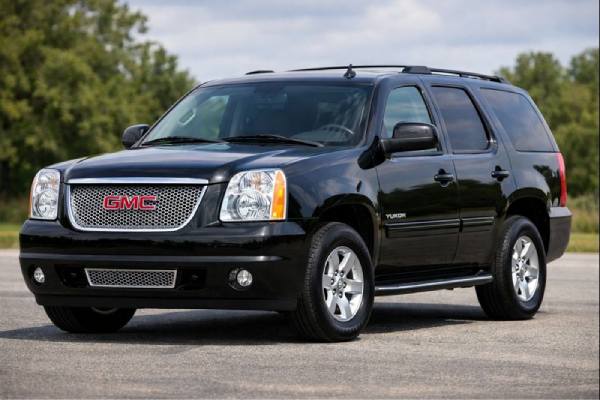
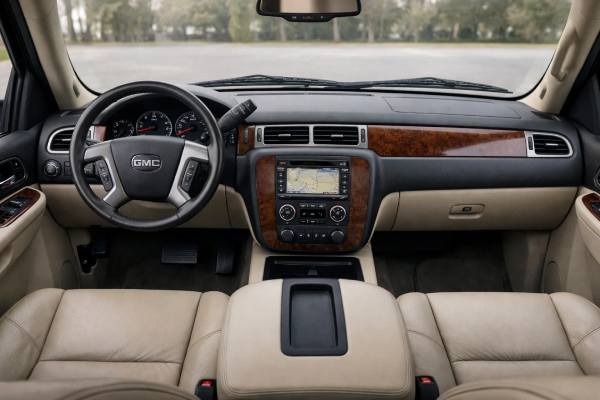
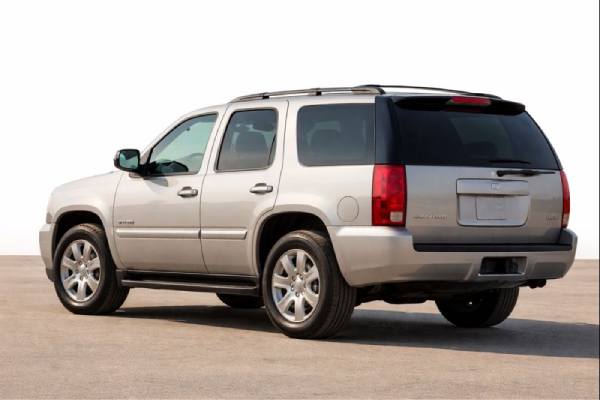
The GMT900 Yukon Hybrid is one of the few full-size, body-on-frame SUVs that tried to “have it both ways”: V8 towing manners with a real fuel-economy gain in city driving. The key is GM’s two-mode hybrid system—a complex transmission that blends two electric motor-generators with a 6.0L V8 (LZ1) and a high-voltage NiMH battery. In steady cruising it behaves like a normal Yukon, but in stop-and-go it can shut the engine down, move on electric power at low loads, and recover energy under braking.
For owners today, the appeal is simple: classic GMT900 comfort, strong brakes and chassis, and noticeably lower fuel use than a non-hybrid 6.0—especially around town. The trade-off is age-driven hybrid complexity: condition, service history, and correct diagnostics matter more than on a standard 5.3L Yukon.
Owner Snapshot
- Smooth, quiet city driving with frequent engine-off operation when the hybrid system is healthy.
- Better urban fuel use than most full-size V8 SUVs of the same era, without shrinking the cabin.
- Strong braking confidence for the class, helped by regenerative braking and big hardware.
- Budget for hybrid-specific faults (battery, power electronics, or two-mode transmission) on higher-mileage examples.
- Plan on engine oil and filter service about every 8,000 km (5,000 mi) or 6 months for mixed use.
Navigate this guide
- Hybrid Yukon RWD deep dive
- LZ1 two-mode specs tables
- Trims, safety, and driver tech
- Reliability and common fault patterns
- Maintenance plan and buyer’s checklist
- Driving feel and real MPG
- How it stacks up against rivals
Hybrid Yukon RWD deep dive
Think of the 2008–2013 Yukon Hybrid (RWD) as a standard GMT900 Yukon that replaced its conventional automatic transmission with a two-mode hybrid unit and added a high-voltage battery, power electronics, and an electric A/C compressor. The 6.0L LZ1 V8 still provides the main shove, but the hybrid system changes how the truck leaves a stop, how it cruises, and how it brakes.
What “two-mode” means in plain terms: at low speeds and light loads, the transmission can drive the vehicle using electric motor-generators, or blend electric torque with the V8. At higher road speeds, it transitions into fixed gear ratios like a traditional automatic. That’s why these trucks can feel surprisingly normal on the highway—no constant high-rpm “CVT drone”—while still delivering meaningful city gains.
Where the hybrid advantage really shows up
- Stop-and-go efficiency: engine-off time at lights, smoother restarts, and regenerative braking do the heavy lifting.
- Low-speed response: electric torque fills in the “launch” moment, which can make a 5,700–6,000 lb SUV feel more eager than you’d expect.
- Accessory efficiency: the electric A/C compressor can keep cooling with the engine off (within system limits), which matters in urban use.
What doesn’t change as much as people expect
- Highway fuel economy: once you’re cruising steadily at 120 km/h (75 mph), you’re still pushing a big, tall SUV through the air. The hybrid helps, but it can’t rewrite physics.
- Ownership mindset: it’s still a body-on-frame truck—tires, brakes, suspension joints, and corrosion checks matter like any GMT900.
The ownership “make-or-break” point: condition of the hybrid components and the quality of past repairs. A well-sorted example can be a calm, efficient family hauler. A neglected one can turn into a parts-swapping project, because hybrid faults often require scan-tool data, isolation testing, and correct service procedures.
If you want the Yukon shape and comfort but do mostly short trips, school runs, and city traffic, the hybrid RWD variant is one of the most logical GMT900 choices—as long as you treat verification and inspection as part of the purchase price.
LZ1 two-mode specs tables
Below are practical, owner-focused specifications for the 2008–2013 GMC Yukon Hybrid RWD with the LZ1 6.0L V8 and two-mode hybrid transmission. Exact numbers can vary by model year, calibration, and option content, so treat these as a configuration checklist and verify against your door-jamb label and service documentation.
Powertrain and efficiency (Hybrid)
| Item | Specification |
|---|---|
| Engine code | LZ1 |
| Engine layout and cylinders | V8, 90°, OHV pushrod, 2 valves/cyl |
| Displacement | 6.0 L (5,967 cc) |
| Bore × stroke | 101.6 × 92.0 mm (4.00 × 3.62 in) |
| Induction | Naturally aspirated |
| Fuel system | Sequential MPFI (port injection) |
| Compression ratio | ~10.8:1 (varies by documentation) |
| Max power | 332 hp (248 kW) @ ~5,100 rpm |
| Max torque | ~498 Nm (367 lb-ft) @ ~4,100 rpm |
| Timing drive | Chain |
| Hybrid battery chemistry | NiMH |
| System voltage | ~300 V class |
| Rated efficiency (typical EPA-era figures) | About 11–12 L/100 km (19–22 mpg US / 23–26 mpg UK) combined, depending on year and conditions |
| Real-world highway @ 120 km/h (75 mph) | Often 12–14 L/100 km (17–20 mpg US / 20–24 mpg UK) depending on tires, wind, and load |
Transmission and driveline
| Item | Specification |
|---|---|
| Transmission | Two-mode hybrid automatic (multi-clutch, fixed ratios at speed) |
| Drive type | RWD (2WD) |
| Differential | Typically open (G80 locker generally not a Yukon Hybrid staple; verify RPO codes) |
Chassis and dimensions (GMT900 Yukon)
| Item | Specification |
|---|---|
| Platform | GMT900, body-on-frame |
| Suspension (front/rear) | Independent front; solid rear axle with coils (trim-dependent tuning) |
| Brakes | 4-wheel discs; ABS; stability control |
| Length | ~5,130 mm (202 in) |
| Width | ~2,007 mm (79 in) (excluding mirrors) |
| Height | ~1,950 mm (77 in) (varies with tires/roof rails) |
| Wheelbase | ~2,946 mm (116 in) |
| Turning circle | roughly 12.5–13.0 m (41–43 ft) |
| Curb weight | commonly 2,550–2,750 kg (5,620–6,060 lb) depending on equipment |
| Fuel tank | commonly ~98 L (26 US gal / 22 UK gal) |
| Cargo volume | Configuration-dependent; verify for 2-row/3-row seating layout |
Performance and capability (typical, stock)
| Item | Specification |
|---|---|
| 0–100 km/h (0–62 mph) | roughly 8–10 s depending on conditions |
| Towing capacity | often ~2,700–3,200 kg (6,000–7,000 lb) depending on hitch, cooling, and axle ratio |
| Payload | commonly ~550–750 kg (1,200–1,650 lb) depending on trim and GVWR |
Fluids and service capacities (verify by VIN)
| System | Spec and typical capacity |
|---|---|
| Engine oil | GM-approved (Dexos where specified), often 5W-30; about 5.7 L (6.0 US qt) with filter |
| Coolant | Dex-Cool type, typically 50/50 mix; capacity varies by configuration |
| Transmission/Hybrid unit fluid | Special ATF per GM spec; capacity and procedure are hybrid-specific—verify before service |
| Brake fluid | DOT 3 / DOT 4 as specified on cap/documentation |
| A/C refrigerant | Hybrid uses electric compressor; refrigerant type and oil must match GM spec |
Electrical (hybrid context)
| Item | Specification |
|---|---|
| 12V system | Conventional 12V battery plus DC–DC conversion from HV system |
| High-voltage system | Orange кабling, service disconnect, HV safety procedures required |
Safety and driver assistance (era-appropriate)
| Item | Specification |
|---|---|
| Airbags | Front airbags; side and curtain coverage common (verify by year) |
| ADAS | Pre-modern by today’s standards; typically no factory AEB/ACC/LKA |
Trims, safety, and driver tech
Trim and equipment reality: the Yukon Hybrid was effectively its own “high-content” configuration, but it is not identical to a Denali. Expect a strong baseline feature set—comfort, convenience, and premium touches—paired with hybrid-specific instrumentation and drive modes. What matters most for buyers today is identifying what’s standard, what’s optional, and what may have been retrofitted or removed over the years.
Trims and options you’ll actually encounter
Common Yukon Hybrid identifiers include hybrid badging, special wheels (varies by year), and a cluster that shows energy flow and hybrid status. Inside, many have leather seating, upgraded audio options, and family-focused convenience features. Watch for:
- Seating configuration: some are 2-row (captain’s chairs + cargo focus) while others are 3-row. This affects payload and daily usefulness.
- Tow package content: not every example is equipped equally (receiver hitch, harness, auxiliary cooling strategy, and brake controller wiring vary). A hybrid Yukon can tow, but you want the correct hardware and cooling management.
- Rear leveling or suspension tuning: some trucks have load-leveling features; confirm function because repairs can be expensive and neglected systems change ride quality.
Quick identifiers to confirm what you’re buying
Use RPO codes (option codes) in the glovebox/label area (location varies) and the VIN for final verification. A practical in-person checklist:
- Hybrid system message check at startup (no warnings).
- Energy flow screen operates and shows charge/assist behavior.
- A/C runs smoothly during engine-off idle events (a clue the electric compressor and controls are behaving).
- No harsh engagement, shudder, or “flare” during transitions (more on this in reliability).
Safety ratings and what they mean here
Full-size SUVs of this era typically scored well in certain federal crash tests for front impacts due to mass and structure, but that does not automatically translate to modern crash compatibility or advanced crash avoidance. The Yukon Hybrid’s safety story is best viewed in three layers:
- Structure and restraint systems: airbags, belts, and the body-on-frame structure.
- Control systems: ABS, traction control, and electronic stability control (ESC) that helps prevent loss-of-control crashes.
- Modern ADAS gap: most examples do not have automatic emergency braking, lane centering, or the camera/radar suites expected today.
Driver assistance and calibration considerations
Because this platform is older, the “driver assistance” focus is mostly on stability and braking systems, not radar-based automation. Still, service work can affect behavior:
- Wheel speed sensors and hub assemblies influence ABS/ESC operation.
- Brake system service quality matters more on hybrids because pedal feel blends regeneration and friction braking.
- After battery disconnects or module replacement, some systems may require correct relearn procedures (steering angle sensor calibration, for example).
If safety is the top priority, a newer SUV with modern ADAS will win. If you’re choosing within GMT900-era full-size SUVs, prioritize a hybrid with intact stability control, fresh tires, and clean brake service history.
Reliability and common fault patterns
Reliability on a Yukon Hybrid is a two-part equation: standard GMT900 truck aging plus hybrid system health. The good news is that many conventional components are familiar and serviceable. The caution is that hybrid faults can be expensive if misdiagnosed or if the vehicle has been driven for months with warning messages.
Below is a practical map by prevalence and cost tier. Mileages are approximate because age, heat, and usage patterns matter as much as odometer readings.
Common (expect to see) — low to medium cost
- Front hub/bearing noise and ABS sensor issues
Symptoms: hum that changes with speed; intermittent ABS/traction lights.
Cause: hub bearing wear, sensor wiring fatigue.
Remedy: quality hub assemblies; verify sensor signals with scan data. - Suspension wear (control arm bushings, sway links, shocks)
Symptoms: clunks over bumps, vague steering, uneven tire wear.
Cause: rubber aging and load cycles.
Remedy: replace worn joints/bushings; align after. - Brake feel complaints after poor service (hybrid-sensitive)
Symptoms: grabby/odd pedal feel, inconsistent stops.
Cause: incorrect pad bedding, sticking calipers, contaminated fluid, or brake blending calibration sensitivity.
Remedy: proper pad/rotor service, flush fluid, confirm no ABS faults.
Occasional — medium to high cost
- Hybrid battery cooling and temperature management faults
Symptoms: reduced electric assist, warning messages, fan noise, or frequent engine running.
Cause: clogged intake paths, weak cooling fan, sensor issues.
Remedy: clean ducts, test fan operation, confirm sensor readings. - Power electronics / inverter-related warnings
Symptoms: “reduced propulsion,” warning lights, intermittent shutdown protection.
Cause: coolant issues in the electronics loop, failing components, wiring problems.
Remedy: proper HV diagnostic workflow; inspect coolant condition and leaks first. - Two-mode transmission drivability issues
Symptoms: shudder on engagement, harsh transitions, or unusual “gear” behavior.
Cause: clutch wear, control issues, fluid condition, or internal faults.
Remedy: verify fluid spec and condition; scan for codes; avoid guesswork.
Rare but serious — high cost
- High-voltage battery module failure / isolation faults
Symptoms: persistent warning messages, refusal to enter EV assist modes, trouble codes indicating isolation or module imbalance.
Cause: age-related battery degradation, moisture intrusion, insulation breakdown.
Remedy: specialized testing; repairs vary from module-level work to pack replacement depending on capability and parts availability. - Electric A/C compressor faults
Symptoms: no A/C at idle/engine-off events, faults, or intermittent cooling.
Cause: compressor failure or HV control issues; incorrect oil or service practices can be damaging.
Remedy: hybrid-capable A/C service only; correct oil and procedures are critical.
Recalls, TSBs, and “verify it’s done” guidance
Instead of trying to memorize every campaign, use a consistent process:
- Run a VIN recall check on an official database.
- Ask for dealer printouts or service records showing completion.
- Treat unresolved safety recalls as a non-negotiable fix before regular use.
For a pre-purchase inspection, request a scan with a tool that can read hybrid modules—not just generic OBD. The goal is not “no codes today,” but evidence the hybrid system charges, assists, and transitions smoothly without pending faults.
Maintenance plan and buyer’s checklist
A Yukon Hybrid rewards “boring discipline.” The most expensive outcomes tend to come from deferred fluids, ignored warning messages, and shops treating it like a non-hybrid Yukon. Use the schedule below as a practical baseline, then tighten it for towing, extreme heat, heavy city use, or short-trip operation.
Practical maintenance schedule (distance/time)
- Engine oil and filter: every 8,000 km (5,000 mi) or 6 months (short trips/towing); up to 12,000 km (7,500 mi) if mostly highway and verified clean operation.
- Engine air filter: inspect every 15,000 km (10,000 mi); replace as needed (dusty climates sooner).
- Cabin air filter: every 15,000–30,000 km (10,000–20,000 mi) depending on environment.
- Coolant (engine loop): typically 5 years / 240,000 km (150,000 mi) on long-life coolant, but many owners choose earlier service on older vehicles.
- Brake fluid: every 2 years, regardless of mileage.
- Spark plugs: commonly around 160,000 km (100,000 mi) (confirm exact plug type and interval).
- Transmission/hybrid unit service: follow the hybrid-specific interval and procedure; consider earlier service for towing or heavy heat exposure.
- Differential fluid: inspect and replace on a sensible interval (often 80,000–160,000 km / 50,000–100,000 mi depending on use).
- Tire rotation and alignment: rotate every 8,000–10,000 km (5,000–6,000 mi); align when wear patterns appear or after suspension work.
- 12V battery test: annually; replace proactively in the 4–6 year window to reduce weird electronic behavior.
Fluids and “don’t wing it” warnings
- Use the correct oil viscosity and verified GM specification for your year.
- Do not improvise on hybrid transmission fluid or procedures—this system is not the same as a 4L60/6L80 service experience.
- Hybrid A/C systems are sensitive: correct refrigerant and oil matter, and contamination risks are higher.
Buyer’s guide: what to inspect before purchase
Hybrid system checks (must-do)
- No hybrid warning messages at startup; no stored hybrid-related codes on a proper scan.
- Smooth transitions: starts, stops, and low-speed creeping should feel controlled, not jerky.
- Battery behavior: state-of-charge should move logically with braking and gentle acceleration, not swing erratically.
Conventional GMT900 checks
- Cooling system condition (radiator, hoses, leaks, fan operation).
- Underbody corrosion, especially brake lines and mounts in harsh climates.
- Steering/suspension play: tie rods, control arms, rear axle bushings.
- Electronics: windows, locks, HVAC blend doors, infotainment, and cluster behavior.
Common reconditioning items to budget
- Tires (full-size SUVs eat cheap tires quickly).
- Brakes and brake fluid service done correctly.
- Front hubs and suspension refresh.
- Fluids baseline: oil, coolant evaluation, differential service, and a documented plan for hybrid unit servicing.
Long-term outlook: a well-maintained Yukon Hybrid can be a durable daily driver, but it is not the cheapest GMT900 to “bring back” from neglect. Buy the best-maintained example you can find, even if the sticker price is higher.
Driving feel and real MPG
From behind the wheel, the Yukon Hybrid’s character is defined by two things: low-speed smoothness and big-SUV stability. When the hybrid system is functioning correctly, it does an excellent job of making a heavy truck feel calm in traffic.
Ride, handling, and NVH
- Ride quality: classic GMT900—comfortable, slightly floaty on worn shocks, and confidence-inspiring when the suspension is fresh.
- Steering feel: light-to-moderate effort, not especially communicative, but stable at speed. If it feels vague, suspect tires, alignment, or front-end wear before blaming the design.
- Cabin noise: generally quiet for its era, with most noise coming from tires and wind at highway speeds.
Powertrain behavior
- Launch and low speeds: the electric torque contribution can make takeoffs feel smoother than a conventional V8 Yukon. It’s not “fast,” but it’s responsive.
- Transitions: the best examples switch between engine-off, blended assist, and engine-on cruise with minimal drama. Harshness, shudder, or odd flares are red flags that warrant deeper diagnostics.
- Passing power: once moving, it feels like a strong V8 SUV—more than adequate for merges and two-lane passing, especially with a light load.
Real-world efficiency expectations (what owners typically see)
Because the Yukon Hybrid is large and heavy, your biggest variables are speed, temperature, tires, and how much you idle.
- City driving: often the strongest case—many drivers see a meaningful improvement over non-hybrid V8 full-size SUVs if traffic is stop-and-go and braking regen is frequent.
- Highway at 100–120 km/h (60–75 mph): the benefit narrows. Expect efficiency to drop noticeably as speed rises.
- Cold weather: hybrid efficiency typically suffers because the engine must run more for cabin heat and system warm-up, and battery performance can be less cooperative when cold.
A realistic mindset is: this is a “better city Yukon,” not a small hybrid crossover. If you mostly do highway miles at high speed, a well-geared non-hybrid 5.3 Yukon can look surprisingly competitive on fuel—while being simpler to own.
Load and towing
Towing is doable, but the hybrid adds heat and complexity considerations:
- Confirm you have the proper hitch hardware and cooling strategy.
- Expect a large fuel-economy penalty under tow (often a double-digit percentage drop, sometimes much more depending on trailer profile).
- Pay attention to braking confidence and transmission behavior on grades—heat management matters more than outright power.
How it stacks up against rivals
The Yukon Hybrid sits in a niche that still feels unusual today: a full-size, body-on-frame SUV with a serious hybrid system. Comparing it fairly means separating size class from powertrain philosophy.
Versus non-hybrid full-size SUVs (most direct comparison)
Against a standard GMT900 Yukon/Tahoe 5.3 (non-hybrid):
- Yukon Hybrid advantages: better stop-and-go economy, smoother urban behavior, and the novelty of engine-off A/C capability (within limits).
- Non-hybrid advantages: simpler drivetrain, usually cheaper repairs, broader shop familiarity, and often easier parts sourcing.
- Best choice depends on use: city-heavy families often prefer the hybrid’s daily calm; long-distance highway users may prefer the conventional setup’s simplicity.
Against Ford Expedition of the era:
- Expedition offers strong space and towing strength, but without a true hybrid option in this timeframe. Your decision becomes: hybrid complexity and better city fuel use vs conventional V8 simplicity.
Versus hybrid crossovers (different class, but real shopper cross-shop)
Against Toyota Highlander Hybrid (and similar):
- The crossover hybrid will usually win on fuel economy and modern packaging, and it can feel more maneuverable in cities.
- The Yukon Hybrid wins on body-on-frame durability cues, towing posture, and “full-size SUV” cabin feel—especially with passengers and cargo.
If you don’t need full-size towing posture or the Yukon’s size, a hybrid crossover is often the smarter cost-per-kilometer choice. The Yukon Hybrid makes sense when you truly want the big-SUV format but still value fuel savings in traffic.
Versus luxury alternatives
In the used market, you may also see older luxury SUVs (Range Rover, Lexus LX, etc.) at similar prices. The Yukon Hybrid’s edge is typically domestic parts familiarity for non-hybrid components and a straightforward truck architecture—while luxury SUVs often bring higher parts costs and more complex suspension systems. The hybrid system is the “wild card” here; condition and documentation decide whether it’s a bargain or a headache.
Bottom line verdict
Choose the 2008–2013 Yukon Hybrid RWD if:
- You do substantial city driving.
- You want a true full-size SUV cabin and stance.
- You’re willing to verify hybrid health properly and maintain it deliberately.
Skip it if:
- You want the simplest possible GMT900 ownership.
- You tow heavy frequently in hot climates without wanting hybrid-specific upkeep.
- You expect modern crash avoidance tech—it’s an older platform with older driver-assist assumptions.
References
- Check for Recalls: Vehicle, Car Seat, Tire, Equipment | NHTSA 2025 (Recall Database)
- 2011 Chevrolet Tahoe and GMC Yukon/Yukon Denali Hybrid Owner Manual Supplement 2011 (Owner’s Manual Supplement)
- Report a Safety Problem | NHTSA 2025 (Official Database)
Disclaimer
This article is for informational purposes only and is not a substitute for professional diagnosis, inspection, or repair. Specifications, torque values, fluid capacities, service intervals, and procedures can vary by VIN, market, model year, and equipment; always verify details using your official owner’s manual and service information before performing work.
If you found this guide helpful, please consider sharing it on Facebook, X (Twitter), or your favorite forum to support our work.