
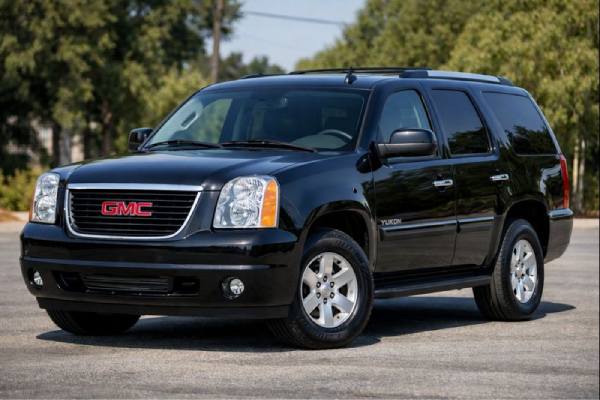
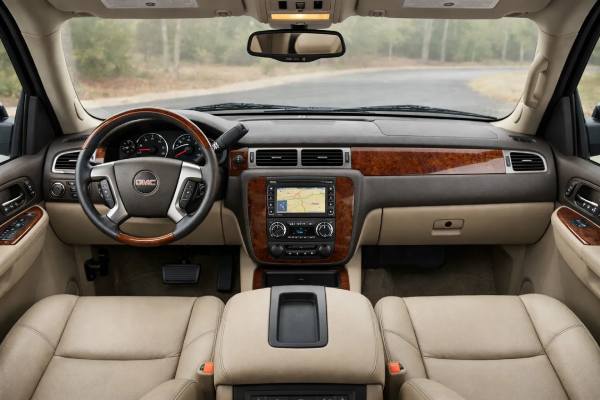
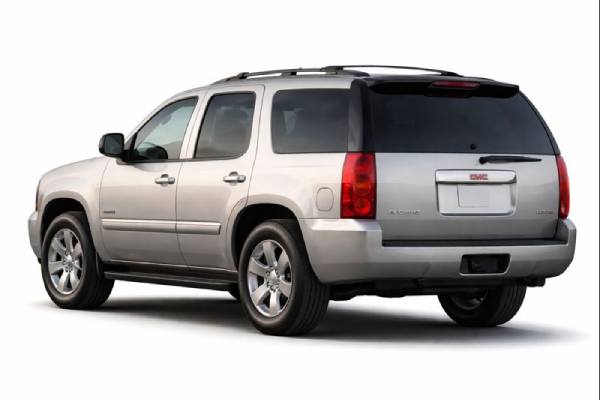
The GMT900 Yukon Hybrid is one of the most technically interesting full-size SUVs of its era. Under the hood is GM’s LZ1 6.0L V8 paired to a Two-Mode hybrid transmission that can move the truck on electric power at low load, blend torque smoothly in traffic, and still deliver the steady, relaxed feel buyers expect from a Yukon. In 4WD form, it adds year-round traction, but also more complexity and slightly higher real-world consumption than the 2WD version.
Ownership comes down to understanding two things: the hybrid drive unit is durable when maintained correctly, but it demands clean cooling paths, correct fluids, and careful diagnostics; and the rest of the truck is classic GMT900—strong chassis and towing fundamentals, plus typical aging electronics and suspension wear. Buy wisely, and it remains a comfortable long-distance family hauler with surprisingly reasonable fuel use for its size.
Quick Specs and Notes
- Strong low-speed pull and smooth city driving thanks to electric assist and regenerative braking.
- Full-size comfort with stable highway manners and confident winter traction in 4WD form.
- Fuel economy is notably better than non-hybrid V8 Yukons of the same era, especially in stop-and-go use.
- The hybrid battery and power electronics are reliable, but repairs can be expensive if cooling or wiring issues are ignored.
- Plan on engine oil service about every 8,000–12,000 km (5,000–7,500 mi) or 12 months, depending on use.
Contents and shortcuts
- Yukon Hybrid 4WD explained
- Specs for LZ1 4WD Hybrid
- Packages, seating, and safety gear
- Common problems and recalls
- Maintenance schedule and buying tips
- Road manners and economy
- Competitor comparison guide
Yukon Hybrid 4WD explained
This Yukon is not a “small hybrid system bolted onto a normal drivetrain.” It uses GM’s Two-Mode hybrid architecture: a large hybrid transmission with electric motor-generators inside, plus a 6.0L V8 tuned for efficiency and a high-voltage battery pack (nickel-metal hydride, in most markets) to store and deliver energy. The result is a truck that feels normal to drive, but quietly “shaves” fuel use in the exact places big SUVs waste it—idling, creeping, and repeated low-speed accelerations.
In everyday use, the most noticeable advantage is how calm it is in traffic. The hybrid system can launch with electric torque, reduce engine load during gentle cruising, and recapture energy when you lift off or brake. The brake pedal can feel slightly different than a conventional Yukon because the system blends regenerative braking (charging the battery) with the hydraulic brakes. A well-sorted truck feels consistent; a neglected one can feel grabby or have a longer pedal if the brake system has air, old fluid, or sensor issues.
The 4WD version is aimed at secure traction rather than rock crawling. It is typically configured with an electronically controlled transfer case for on-road and low-traction use, but it is not the same “heavy-duty low-range” setup you would pick for repeated off-road abuse. Think snow, wet grass, and dirt roads—plus the stability benefit on long highway drives in bad weather.
From a durability standpoint, the Yukon Hybrid’s core strengths are the stout GMT900 platform and a hybrid drive unit engineered for heavy vehicles. The long-term risk is not that it “wears out like a laptop,” but that owners skip hybrid-specific maintenance basics: keeping cooling paths clean, fixing warning lights quickly, and using the correct fluids and procedures. If you treat it like a normal Yukon and hope for the best, small issues can cascade into expensive diagnosis.
Specs for LZ1 4WD Hybrid
Below are practical, owner-focused specifications for the GMT900 Yukon Hybrid 4WD (2008–2013). Values can vary slightly by model year, tires, emissions equipment, and market, so treat the tables as a baseline and verify by VIN when ordering parts or fluids.
Engine and performance (ICE and hybrid system)
| Item | Specification |
|---|---|
| Engine code | LZ1 |
| Layout | V8, OHV, 2 valves/cyl (16-valve) |
| Displacement | 6.0 L (5,967 cc) |
| Bore × stroke | 101.6 × 92.0 mm (4.00 × 3.62 in) |
| Induction | Naturally aspirated |
| Fuel system | Sequential port fuel injection (PFI) |
| Max power | 332 hp (248 kW) @ ~5,100 rpm |
| Max torque | ~367 lb-ft (498 Nm) @ ~4,100 rpm |
| Timing drive | Chain |
| Battery (hybrid) | NiMH, ~300 V class |
| Motor-generators | Two integrated MG units in Two-Mode transmission |
Rated efficiency (typical, US-market reference)
| Cycle | Value |
|---|---|
| City | ~11.8 L/100 km (20 mpg US) |
| Highway | ~10.2 L/100 km (23 mpg US) |
| Combined | ~11.2 L/100 km (21 mpg US) |
Transmission and driveline
| Item | Specification |
|---|---|
| Transmission | Two-Mode hybrid automatic (EVT with fixed gears) |
| Drive type | 4WD (electronic control; configuration varies by year) |
| Differential type | Open (traction control manages wheel slip) |
| Notes | Hybrid drive unit uses both electric modes and stepped ratios; exact effective ratios depend on mode and load |
Chassis and dimensions (typical GMT900 Yukon, non-XL hybrid)
| Item | Value |
|---|---|
| Front suspension | Independent SLA (control arms), coil-over |
| Rear suspension | Solid axle, multi-link with coils |
| Brakes | 4-wheel disc (ABS, stability control) |
| Length | ~5,130 mm (202 in) |
| Width | ~2,007 mm (79.0 in) |
| Height | ~1,950 mm (76.8 in) |
| Wheelbase | ~2,946 mm (116 in) |
| Curb weight | ~2,650–2,850 kg (5,840–6,280 lb) |
| Fuel tank | ~90–100 L (~24–26 US gal), year dependent |
| Turning circle | ~12.3–12.7 m (~40–42 ft), tire dependent |
Performance and capability (realistic expectations)
| Item | Typical range |
|---|---|
| 0–60 mph (0–97 km/h) | ~8.0–9.0 s |
| Top speed | ~170–180 km/h (105–112 mph), limited |
| Towing capacity | Often ~2,700–2,800 kg (6,000–6,200 lb) with tow package |
| Payload | Often ~550–700 kg (1,200–1,550 lb), equipment dependent |
Fluids and service capacities (verify by VIN and service info)
| System | Spec (typical) |
|---|---|
| Engine oil | 5W-30 meeting GM spec; ~5.7 L (6.0 qt) with filter |
| Coolant | Dex-Cool type, 50/50 mix; capacity varies with HVAC |
| Transmission fluid | Dexron VI family fluid (hybrid EVT application-specific procedures) |
| Front and rear differentials | Gear oil spec varies by axle; capacity varies |
| Transfer case | GM AutoTrak-type fluids on many trims; verify exact unit |
Electrical (12V and hybrid interface)
| Item | Typical |
|---|---|
| Alternator | High-output unit (varies by year) |
| 12V battery | Group size varies; prioritize correct CCA rating |
| Spark plugs | Long-life iridium type; gap and part number by year |
Safety and driver assistance (period-correct)
| Item | Typical for 2008–2013 |
|---|---|
| Airbags | Front, seat-mounted side, and side-curtain (seating dependent) |
| Stability control | Standard (traction control integrated) |
| ADAS | No modern AEB or lane-keep; some years offer parking assist and camera features |
Packages, seating, and safety gear
In most markets, the Yukon Hybrid was offered as a single well-equipped model rather than a wide trim walk. That simplicity is a real advantage when shopping: fewer “mystery” combinations, and most examples have the comfort equipment people actually want. Still, there are meaningful differences to look for.
Seating and interior layouts commonly include either second-row captain’s chairs or a bench, with a third row. If you need maximum people capacity, confirm the second-row configuration before you travel to see a truck. Also check power seat operation, heated seat function, and memory settings—GMT900 seat modules can develop intermittent faults, and the hybrid’s quietness can make small interior squeaks more noticeable.
Tow and utility equipment matters because hybrid tow ratings can be more sensitive to cooling condition and equipment. A factory tow package generally includes the receiver, wiring, and cooling upgrades appropriate to that configuration. When inspecting, don’t just look for a hitch; verify the wiring is clean, the connector is not corroded, and the rear ride height looks correct when loaded. A sagging rear can point to tired springs, worn shocks, or load-leveling components (depending on year and equipment).
Infotainment and comfort options vary by year, especially in navigation head units, rear-seat entertainment, and audio upgrades. If the truck has a factory navigation system, confirm screen brightness, button response, and that the unit reads discs or internal storage as intended. Replacements can be pricey, and aftermarket fixes sometimes introduce parasitic battery draw—something you want to avoid on a hybrid with additional control modules.
Safety equipment and what it means today: These trucks rely on solid structure, airbags, and stability control rather than modern active safety systems. You will not get contemporary automatic emergency braking, lane centering, or radar cruise. The practical ownership move is to focus on fundamentals: tires in good condition (with the correct load rating), brakes serviced correctly, ABS and stability-control lights off, and a suspension that keeps the truck stable in quick maneuvers.
Child-seat use: Look for intact LATCH anchors and seatbacks that lock securely. Third-row child-seat use is possible, but access and tether routing depend on seating layout—test it in person if this is a family-hauler purchase.
Finally, for any hybrid, insist that every warning light is addressed with proper diagnostic scans. A seller who says “it just needs a sensor” may be right—or may be masking a hybrid control fault that requires specialized knowledge.
Common problems and recalls
A good way to think about Yukon Hybrid reliability is to split it into three layers: (1) standard GMT900 wear items, (2) hybrid-specific hardware, and (3) “small” electrical issues that become big headaches when ignored.
Common, low-to-medium cost (age and mileage related)
- Suspension wear: Front control arm bushings, ball joints, sway bar links, and rear control arm bushings can loosen with age. Symptoms include clunks over bumps, wandering, or uneven tire wear. Remedy is standard suspension refresh and a proper alignment.
- Wheel bearings: Humming that changes with speed and load is typical. Replace the affected hub assembly and confirm ABS sensor integrity.
- Brake service quality: Because the truck blends regen and friction braking, sloppy brake work (air in lines, wrong procedures, weak calipers) can make the pedal feel inconsistent. Remedy is correct fluid flush, careful bleeding, and inspection of sensors.
Occasional, medium cost (ownership pattern dependent)
- Cooling system leaks: Radiator end tanks, hoses, and water pumps can seep with age. Overheating is especially bad for a hybrid because it can trigger protective modes and stress components. Fix leaks early, use correct coolant, and keep the radiator stack clean.
- Transfer case and differential fluid neglect: 4WD systems depend on clean fluid for clutch packs and bearings (where fitted). Symptoms include chatter, binding, or noise. Remedy is correct fluid service and inspection for metal in the drained oil.
Hybrid-specific issues (severity varies, costs can be high)
- High-voltage battery and cooling path problems: Battery packs often last a long time, but heat is the enemy. Blocked vents, failed cooling fans, or water intrusion can trigger trouble codes and reduced performance. Remedy can be as simple as cleaning ducts—or as complex as pack repair/replacement.
- Power electronics and wiring faults: The hybrid system relies on robust connectors and grounding. Corrosion or damage can cause intermittent “service hybrid system” messages. Diagnosis should include connector inspection, harness checks, and verifying 12V battery health (weak 12V can create misleading hybrid faults).
- Hybrid drive unit behavior: Harsh transitions, unusual noises, or persistent fault codes need a hybrid-capable scan tool and a technician familiar with the Two-Mode system. Avoid guessing and parts-swapping.
Recalls and service actions: Because recall coverage depends on year, build date, and market, the correct process is to run the truck’s VIN through official recall tools and request dealer printouts of completed campaigns. When evaluating a used example, ask for proof that recall work was performed and confirm that software updates (powertrain and hybrid control modules) are current where applicable. If the seller cannot document this, factor it into price and time.
Maintenance schedule and buying tips
A Yukon Hybrid can be a dependable long-term SUV if you maintain it like a hybrid, not just like a truck. The schedule below is intentionally practical; it focuses on what protects expensive components.
Core maintenance schedule (typical use)
- Engine oil and filter: every 8,000–12,000 km (5,000–7,500 mi) or 12 months. Short-trip use, heavy idling, or towing: shorten the interval. Use a quality 5W-30 that meets the correct GM spec for your year.
- Engine air filter: inspect every 15,000 km (10,000 mi); replace around 30,000–50,000 km (20,000–30,000 mi) depending on dust.
- Cabin air filter: every 20,000–30,000 km (12,000–18,000 mi) or annually if you want best HVAC performance.
- Coolant: typically every 5 years or 160,000 km (100,000 mi), but inspect yearly for level and condition and repair leaks immediately.
- Spark plugs: often 160,000 km (100,000 mi) class, but check for misfire codes and coil condition as the truck ages.
- Brake fluid: every 2 years regardless of mileage. This improves pedal feel and protects ABS components.
- Transmission and hybrid drive unit service: follow the correct procedure and fluid spec; avoid quick-lube shops that do not understand hybrid EVT service steps.
- Differentials and transfer case (4WD): every 80,000–100,000 km (50,000–60,000 mi), sooner with towing, snow, or frequent short trips where moisture builds.
- Tires: rotate every 8,000–12,000 km (5,000–7,500 mi). Keep pressures correct; low pressure hurts economy and stability.
Essential torque values (common decision-making numbers)
- Wheel lug nuts: typically ~190 Nm (140 lb-ft) on many GMT900 1500 trucks (confirm for your wheels).
- Engine oil drain plug: tighten to spec; do not over-torque (stripped pans are common when rushed).
Buyer’s inspection checklist (hybrid-specific first)
- Scan for codes with a tool that can read hybrid modules, not just generic OBD. No warnings should be “pending” or ignored.
- Test the battery cooling path: listen for fan operation under appropriate conditions and check that vents are not blocked by debris or interior damage.
- Confirm brake feel: repeated moderate stops should feel consistent and straight. Any ABS or stability-control lights are a stop sign until diagnosed.
- Check 12V battery health: weak 12V batteries cause cascading electrical symptoms on hybrids.
- Road test for transitions: acceleration should be smooth, without banging shifts, harsh clunks, or repeated warning messages.
What to prioritize when choosing one: Look for documented maintenance, clean underbody wiring, and a seller who can explain service history calmly and specifically. A cheaper example with hybrid warnings is rarely a bargain unless you have access to correct diagnostic support.
Road manners and economy
The Yukon Hybrid 4WD drives like a full-size SUV first and a hybrid second—and that’s the point. At city speeds, the system’s electric assist makes the truck feel lighter than its curb weight suggests. Initial takeoff can be quieter and smoother than a conventional V8 Yukon because the electric motors fill in torque before the engine is fully loaded. In stop-and-go traffic, the hybrid setup also reduces the “surge and brake” rhythm that wastes fuel, especially when you drive with a steady right foot and anticipate stops.
Ride, handling, and NVH: On the highway, the GMT900 platform is stable and relaxed, with a long wheelbase that settles into cruising. Steering is typically light-to-moderate and tuned for easy control rather than feedback. Expect some body roll in quick corners—this is still a tall SUV with a high center of gravity. Wind noise and tire noise depend heavily on door seals, mirror condition, and tire choice; aggressive all-terrains can erase much of the hybrid’s quiet advantage.
Powertrain character: The Two-Mode system shines at moderate throttle. It blends engine and motor torque smoothly and keeps the V8 in a more efficient operating window. Under hard acceleration, you still hear and feel the V8, but the response is usually immediate rather than laggy. If you feel shudder, harsh engagement, or repeated “hunting,” it often points to neglected fluids, sensor issues, or control module updates—not “normal hybrid behavior.”
Real-world efficiency: Official ratings for the 4WD hybrid are around 11.2 L/100 km (21 mpg US) combined, with city and highway figures that are unusually close for such a large SUV. In practice, many owners see the best advantage in city and mixed use, while steady high-speed highway driving reduces the hybrid benefit. At 120 km/h (75 mph), a realistic expectation is often 10.5–12.0 L/100 km (20–22 mpg US) depending on tires, roof racks, temperature, and wind.
Towing and load penalty: Towing reduces the hybrid advantage quickly because aerodynamic drag and sustained load dominate. Expect a noticeable consumption increase—often 25–50% depending on trailer size and speed. The truck can tow within its rating, but keep cooling systems clean, use tow/haul behavior appropriately, and watch for any temperature-related warnings.
Competitor comparison guide
The Yukon Hybrid 4WD is a niche vehicle, so “rivals” depend on what you value: size, towing, fuel economy, or long-term simplicity.
Closest mechanical cousins (best apples-to-apples)
- Chevrolet Tahoe Hybrid and Cadillac Escalade Hybrid (Two-Mode): These share the core hybrid architecture. The Tahoe is often the value pick; the Escalade leans luxury and can cost more to maintain (tires, trim, options). If you want the same driving concept, these are the true alternatives.
Mainstream full-size SUVs (simpler, usually thirstier)
- Non-hybrid Yukon/Tahoe/Suburban 5.3L or 6.2L: You gain simpler drivetrains and easier general servicing, and you often gain towing headroom. You lose the hybrid’s city efficiency advantage. If your driving is mostly highway or towing, the non-hybrid can be the smarter ownership bet.
- Ford Expedition (same era): Strong towing capability and broad parts availability, but fuel economy typically trails the hybrid Yukon in mixed use. Choose based on condition and service history rather than brand loyalty.
“Efficiency-first” alternatives (smaller or different mission)
- Toyota Highlander Hybrid (smaller class): If your real need is family space and commuting efficiency rather than maximum towing, a smaller hybrid SUV can be cheaper to run and maintain. You give up the Yukon’s truck-based feel, payload, and full-size comfort under heavy loads.
- Diesel SUVs in some markets: Depending on local rules and availability, some buyers cross-shop diesel for highway economy. Diesel can win on long-distance efficiency, but emissions hardware can become its own high-cost maintenance story.
Who should pick the Yukon Hybrid 4WD today?
Choose it if you want full-size comfort and winter traction, drive a lot in city or mixed conditions, and you are willing to maintain hybrid-specific systems properly. Skip it if you want maximum towing, frequent deep off-road use, or the simplest possible long-term mechanical ownership.
The best strategy is to buy the cleanest, most documented example you can find, then budget for baseline maintenance immediately. Condition matters more than badge on these trucks—and that’s doubly true for a low-volume hybrid drivetrain.
References
- 2013 GMC Yukon 1500 Hybrid 4WD 2013 (Fuel Economy Rating)
- 2013 GMC Yukon 2013 (Fuel Economy Listing)
- Vehicle Detail Search – 2013 GMC YUKON SUV 4WD | NHTSA 2013 (Recalls and Ratings)
- Vehicle Detail Search – 2008 GMC YUKON SUV 4WD | NHTSA 2008 (Recalls and Ratings)
- 2010 Hybrid Limited Warranty 2010 (Warranty)
Disclaimer
This article is for informational purposes only and is not a substitute for professional inspection, diagnosis, or repair. Specifications, torque values, fluid capacities, maintenance intervals, and procedures can vary by VIN, market, and equipment. Always verify details using your vehicle’s official service information and owner documentation before buying parts or performing work.
If you found this guide useful, please consider sharing it on Facebook, X (Twitter), or your favorite forum to support our work.