
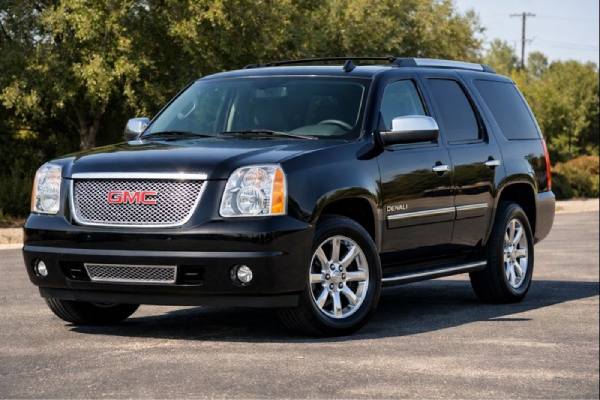
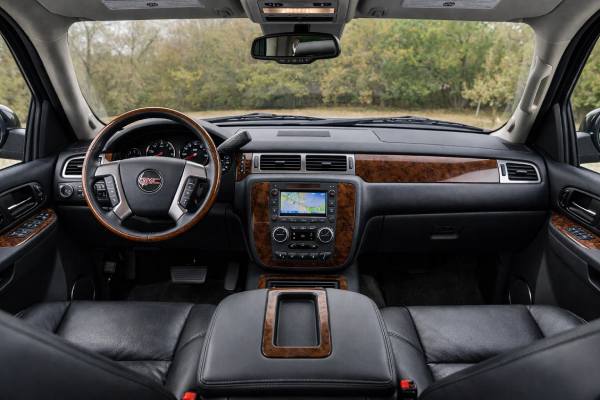
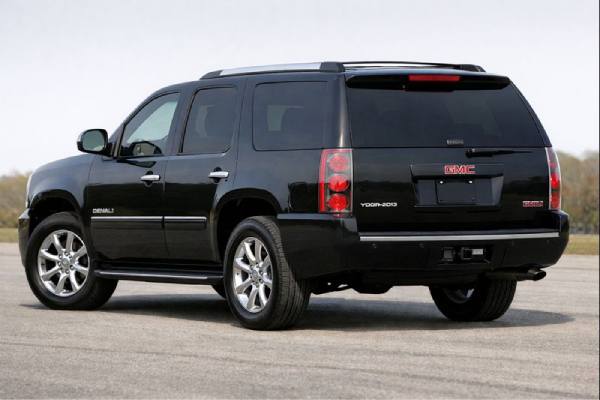
The 2009–2013 GMC Yukon Denali AWD is one of the last “classic” body-on-frame luxury SUVs: a full-size cabin, a truck-grade chassis, and a big naturally aspirated V8 that does its work without turbo heat or battery complexity. In Denali form, the L9H 6.2L V8 (403 hp) gives these trucks a rare mix of smoothness and genuine passing power, while the AWD system adds year-round traction for wet pavement, snow, and steep driveways.
Ownership is mostly about managing mass and heat. These are heavy vehicles with tall tires, big brakes, and drivetrain fluids spread across more components than a 2WD version. When maintained with the right fluids and intervals—and inspected for a few known wear points—an AWD Denali can stay dependable, comfortable, and capable well past 200,000 miles.
At a Glance
- Strong, effortless power at highway speeds; excellent for family hauling and confident merging.
- Full-time AWD improves stability in rain and snow, especially with quality all-season or winter tires.
- Expect higher running costs than 2WD: transfer case, front axle, and extra driveline wear items.
- Change engine oil at least every 12 months (even if mileage is low) and monitor oil level between services.
- Replace drivetrain fluids more often under towing or heavy city use—plan checks every 15,000–30,000 km (10,000–20,000 mi) in severe service.
Quick navigation
- AWD Denali: what it is
- L9H AWD specs and tables
- Equipment, safety, and driver aids
- Issues, recalls, and fixes
- Maintenance and buying advice
- Driving feel and real MPG
- Rivals and smart alternatives
AWD Denali: what it is
Think of the GMT900 Yukon Denali AWD as a luxury SUV built around truck fundamentals. The frame, rear axle, and suspension design are meant to carry real payload and tolerate rough roads. Denali adds comfort and presence—better interior trim, stronger audio and infotainment options, and typically larger wheels—without changing the core mission: move people and gear with minimal drama.
The L9H 6.2L V8 is a major part of the appeal. It’s a naturally aspirated Gen IV small-block that delivers broad torque and a smooth, quiet character when stock. The power output (403 hp) is high for this era of full-size SUVs, and it shows most in highway passing and towing confidence. You don’t need to “wind it out” to make progress; it pulls cleanly from midrange, and it tends to feel less strained than smaller V8 alternatives in the same chassis.
The AWD system is the other big differentiator. Unlike a selectable 4×4 that waits for driver input, Denali AWD is designed to provide continuous traction management. That matters in real life: wet on-ramps, patchy snow, polished ice at intersections, or steep, slick driveways. AWD does not shorten braking distances on slippery roads, but it can reduce wheelspin and stabilize acceleration, which helps the vehicle feel calmer and easier to place.
Where owners get surprised is cost and complexity. AWD adds a transfer case, front axle hardware, CV joints, an extra driveshaft, and additional fluids. That means more wear items, more seals that can seep, and more chances for vibrations if tires are mismatched or driveline angles are disturbed. The payoff is year-round traction and better resale appeal in many climates—if you stay disciplined about tires, fluids, and inspections.
L9H AWD specs and tables
Below are practical, ownership-focused specifications for the 2009–2013 Yukon Denali AWD with the L9H 6.2L V8. Minor variations occur by VIN, market, and option content, so use the tables as a baseline and verify against your vehicle’s labels and service information.
Engine and performance
| Item | Specification |
|---|---|
| Code | L9H |
| Engine layout and cylinders | V8, aluminum block and heads; OHV (pushrod); 2 valves/cyl |
| Displacement | 6.2 L (6,162 cc) |
| Bore × stroke | 103.25 × 92.0 mm (4.07 × 3.62 in) |
| Induction | Naturally aspirated |
| Fuel system | Sequential port fuel injection (PFI) |
| Compression ratio | 10.5:1 |
| Max power | 403 hp (301 kW) @ ~5,700 rpm |
| Max torque | ~565 Nm (417 lb-ft) @ ~4,300 rpm |
| Timing drive | Chain |
| Recommended fuel | Premium recommended for best performance; regular acceptable in many markets with reduced output/knock control intervention |
Transmission and driveline
| Item | Specification |
|---|---|
| Transmission | 6-speed automatic (commonly 6L80 family) |
| Drive type | Full-time AWD |
| Differential | Open differentials with electronic traction control and stability control assisting wheel slip (trim and year can affect calibration) |
Chassis and dimensions
| Item | Specification (typical SWB Yukon) |
|---|---|
| Suspension (front/rear) | Independent front / solid rear axle with coil springs |
| Brakes | 4-wheel disc with ABS |
| Wheels/tires | Common Denali fitment: 20-inch wheels with 275/55R20 tires (varies) |
| Length / width / height | ~5,130 / 2,007 / 1,950 mm (~202 / 79 / 77 in) |
| Wheelbase | ~2,950 mm (~116 in) |
| Turning circle | ~12.6 m (~41 ft) |
Performance and capability
| Item | Typical value (real-world dependent) |
|---|---|
| 0–100 km/h (0–62 mph) | ~7.0–7.8 s (tire, altitude, and load dependent) |
| Towing capacity | Depends on hitch, cooling, axle ratio, and equipment; verify the door-jamb and tow-package labels |
| Payload | Varies widely by trim and options; check the tire and loading label |
Fluids, service capacities, and key torques
| Item | Specification |
|---|---|
| Engine oil | dexos-approved; SAE 5W-30 typical; 0W-30 acceptable in extreme cold if it meets required spec |
| Engine oil capacity | 5.7 L (6.0 qt) with filter |
| Coolant capacity | ~17.1 L (18.1 qt) (system capacity; fill procedure matters) |
| Transmission service fill (pan drop) | ~5.7 L (6.0 qt) |
| Transfer case fluid | DEXRON-VI ATF; capacity ~1.4 L (1.5 qt) |
| Front and rear axle fluid | SAE 75W-90 synthetic axle lubricant (capacity varies by axle) |
| Wheel nut torque | 190 Nm (140 lb-ft) |
Electrical and ignition
| Item | Specification |
|---|---|
| Spark plug gap | 1.02 mm (0.040 in) |
| 12V battery | Size and CCA vary; choose a high-CCA battery if you see cold-start strain or frequent short-trip driving |
Equipment, safety, and driver aids
Denali equipment in this era is best understood as “truck capability plus luxury finishing.” The fundamentals—frame, suspension, and brakes—are shared across the platform, while Denali typically bundles upscale interior materials, larger wheels, and option packages that lean into comfort and appearance.
Trims and options that matter in daily use
Even within “Denali,” you’ll see meaningful variation by year, region, and original build:
- Seating layouts: Most are 7- or 8-passenger depending on second-row captain’s chairs vs bench. Captain’s chairs improve walk-through access to the third row and feel more upscale; the bench is more practical for three across.
- Infotainment and audio: Factory navigation, premium audio, rear-seat entertainment, and later-year Bluetooth/USB features vary. Make sure the head unit, steering-wheel controls, rear audio (if fitted), and parking sensors all work—repairs can be expensive if modules are failing.
- Suspension feel: Some trucks ride more firmly due to 20-inch wheels and tire choice. Tire model and pressure make a bigger difference than most owners expect.
- Tow equipment: A receiver hitch is not the whole story. Look for the full tow package content—cooling upgrades, wiring, and correct receiver rating—especially if you plan to tow near the upper limits.
Quick identifier tip: the service parts label (often in the glove box) lists the vehicle’s option codes. If you are buying used, that label can confirm what the truck actually has, which is more reliable than badges or seller descriptions.
Safety ratings and what they mean here
For 2009–2013 full-size SUVs, safety results can vary by test body and test version. In North America, the most relevant are NHTSA star ratings and IIHS category ratings. When reading results, keep two realities in mind:
- These are heavy vehicles. They often perform well in multi-vehicle crashes due to mass, but that does not guarantee a short stopping distance or good control in slippery conditions.
- Tire condition is a safety system. Uneven wear, mismatched brands, or incorrect load-rated tires can destabilize braking and steering on a tall, heavy SUV.
Safety systems and driver assistance
Typical safety hardware includes:
- ABS, traction control, and stability control (critical for keeping the AWD driveline manageable when traction changes).
- Front airbags and side-impact protection (equipment can vary by year and market).
- LATCH/ISOFIX provisions for child seats—use the correct anchors and follow seat manufacturer limits.
Advanced driver assistance (ADAS) as modern drivers think of it—automatic emergency braking, lane centering, and advanced radar cruise—was not common in this generation. Instead, you get “foundational” assistance: stability control, parking aids, and (depending on year) camera systems. Treat it as a capable, traditional SUV: it rewards attentive driving, good tires, and predictable maintenance.
Issues, recalls, and fixes
A Yukon Denali AWD of this era can be durable, but age and mileage expose predictable patterns. The best way to think about problems is to separate them by prevalence and cost impact, then match them to how the vehicle was used (short trips, towing, heavy city driving, winter salt).
Common (seen often)
- Tire-related AWD stresses: Mismatched tire circumference (even small differences from mixing brands, uneven wear, or incorrect pressures) can force the AWD system to “work” constantly. Symptoms include driveline bind, shuddering on turns, and transfer case wear. Remedy: replace tires as a matched set when possible, keep pressures equal, and rotate on schedule.
- Suspension and steering wear: Expect aging rubber bushings, ball joints, tie rods, and sway-bar links. Symptoms: clunks over bumps, vague steering, uneven tire wear. Remedy: address wear early; alignment after repairs is not optional.
- Brake wear and heat: The Denali’s mass eats brakes faster in city use. Symptoms: pulsation, long pedal travel, burning smell after hills. Remedy: use quality pads/rotors and flush brake fluid on time; inspect caliper slide pins for sticking.
- Oil consumption or lifter noise concerns (varies): Some GM V8s of this era can use oil as mileage climbs. Symptoms: low oil between services, ticking on cold start. Remedy: check oil level routinely; confirm PCV function; use the correct oil spec and viscosity.
Occasional (depends on use and climate)
- Transfer case fluid degradation: Heat from towing or repeated short trips can shorten fluid life. Symptoms: shudder, noise, or harsh engagement feel. Remedy: change transfer case fluid on a sensible interval (shorter for towing), and ensure correct fluid type.
- Cooling system aging: Radiator, water pump, hoses, and fan clutch wear show up with age. Symptoms: temperature creep at idle, coolant smell, low coolant. Remedy: pressure test and replace weak parts before overheating causes secondary damage.
- Electrical module quirks: Power seats, window regulators, sensors, and infotainment modules can fail intermittently. Remedy: diagnose with proper scan tools; avoid “parts cannon” repairs.
Rare but expensive
- Transmission issues from neglect: Hard use with old fluid can lead to shift flare, shudder, or slipping. Remedy: verify service history; if symptoms exist, get a professional evaluation before purchase.
- Differential or driveline vibration: A worn U-joint, carrier bearing, or axle bearing can create a persistent vibration. Remedy: pinpoint with road test and inspection—guessing is costly.
Recalls, TSBs, and how to verify work
Recalls change over time and vary by VIN. The practical approach is:
- Run the VIN through an official recall lookup.
- Ask the seller for dealer repair history or recall completion records.
- Budget for any open safety recalls to be completed immediately after purchase.
For software and calibrations, a dealer or specialist can check whether powertrain modules have updated calibrations that address drivability, shift behavior, or sensor fault patterns. If a truck has odd shifting or intermittent warning lights, confirming current calibrations is often cheaper than replacing parts blindly.
Maintenance and buying advice
A good AWD Denali is usually not the newest or lowest-mile truck—it’s the one that was serviced correctly and kept on matched tires. The schedule below is designed for real ownership: it blends factory-style guidance with what tends to extend life on heavy, AWD SUVs.
Practical maintenance schedule (distance and time)
- Engine oil and filter: follow the oil life monitor, but never exceed 12 months. If the truck does short trips, idles often, or tows, plan 8,000–10,000 km (5,000–6,000 mi) intervals.
- Tire rotation and pressure check: every 8,000–10,000 km (5,000–6,000 mi). Keep all four tires closely matched in wear.
- Engine air filter: inspect every 15,000 km (10,000 mi); replace when dirty or annually in dusty areas.
- Cabin air filter: every 15,000–30,000 km (10,000–20,000 mi) depending on environment.
- Transfer case fluid (AWD): normal service intervals can be longer, but many owners choose 50,000–80,000 km (30,000–50,000 mi); shorten if towing, heavy city use, or frequent wheelspin events.
- Front and rear differential fluids: 80,000–120,000 km (50,000–75,000 mi), sooner for towing or water exposure.
- Automatic transmission fluid: if the history is unknown, don’t ignore it—plan a service strategy with a specialist; interval depends on use and condition.
- Coolant: around 5 years as a time limit, or by mileage if reached sooner; use the correct coolant type and bleeding procedure.
- Brake fluid: every 2–3 years regardless of mileage.
- Spark plugs: plan around 150,000 miles (240,000 km) in many factory schedules, but inspect earlier if misfire codes or roughness appear.
- Serpentine belt and hoses: inspect annually; replace at the first signs of cracking, glazing, swelling, or seepage.
Fluid specs and capacities (quick decision numbers)
- Engine oil: dexos-approved 5W-30; 5.7 L (6.0 qt) with filter
- Transfer case: DEXRON-VI, 1.4 L (1.5 qt)
- Cooling system capacity: ~17.1 L (18.1 qt)
- Wheel nuts: 190 Nm (140 lb-ft)
Buyer’s checklist (what to inspect before you pay)
- Tires: same brand/model and similar tread depth on all four; check for cupping or feathering (alignment or worn components).
- Driveline feel: tight turns in a parking lot should be smooth; any binding, hopping, or shudder deserves investigation.
- Leaks: look at transfer case seams, front axle area, and rear differential for wetness.
- Cooling system: steady temperature at idle with A/C on; no coolant smell; no dried residue around the radiator or pump.
- Brake test: straight, stable braking; no steering wheel shake; no grinding or pulsation.
- Electronics sweep: windows, locks, seat motors, HVAC blend performance, parking sensors, and camera (if equipped).
- Service history: proof of fluid services matters more than cosmetic condition.
Long-term outlook: if you buy a clean example and keep tires and fluids under control, the platform can be a strong long-haul family and tow vehicle. If you buy a neglected one, AWD and “luxury” options can turn into a steady drip of expensive fixes.
Driving feel and real MPG
On the road, the Yukon Denali AWD feels like what it is: a heavy, tall SUV tuned to be stable and comfortable rather than sporty. The steering is typically light to moderate in effort, with more isolation than feedback. At highway speed, the truck tracks well, especially on fresh shocks and good tires. Around town, the size and weight are obvious, but the Denali’s torque makes it easy to drive smoothly without constant throttle changes.
Powertrain character
The L9H 6.2’s advantage is how effortlessly it builds speed once rolling. Passing power from 80–120 km/h (50–75 mph) is strong, and the engine generally feels relaxed at cruise. The 6-speed automatic tends to favor smooth shifts and will downshift decisively when you ask for acceleration. If you feel hunting between gears on gentle hills, it’s often improved by ensuring the engine is healthy (no vacuum leaks, correct plugs) and the transmission fluid is in good condition—plus correct tire size, which affects shift logic.
Ride, handling, and noise
- Ride: 20-inch wheels can make sharp impacts more noticeable. Tire choice (sidewall stiffness) changes ride quality dramatically.
- Handling: predictable, with body roll that’s controlled but not hidden. Stability control is tuned to keep things safe rather than playful.
- NVH: wind and tire noise depend heavily on tires and door seals. Driveline vibrations usually point to tires, worn joints, or driveline angles—not “normal Denali character.”
Real-world fuel economy
Official ratings for the 6.2 AWD/4WD configuration commonly land around 13 mpg city / 18 mpg highway / 15 mpg combined (U.S.). Converted, that’s roughly:
- City: ~18.1 L/100 km (about 15.6 mpg UK)
- Highway: ~13.1 L/100 km (about 21.6 mpg UK)
- Combined: ~15.7 L/100 km (about 18.0 mpg UK)
Real-world highway at 120 km/h (75 mph) often ends up worse than “EPA highway” because speed, aero drag, and tire load rise quickly in a big SUV. Many owners see something like 14–16 L/100 km (15–17 mpg US) at steady 120 km/h in good conditions, with winter fuel and cold starts pushing consumption higher.
Towing behavior
When equipped correctly, the Denali AWD feels confident towing moderate loads because the engine has the torque to hold gears without constant strain. The main limiter is heat: towing in hot weather or long grades demands clean cooling systems, healthy transmission operation, and fresh driveline fluids. Expect a meaningful fuel penalty under tow—often +25% to +60% depending on trailer size, speed, and terrain.
Rivals and smart alternatives
The Yukon Denali AWD sits in a very specific niche: a full-size, body-on-frame luxury SUV with a naturally aspirated V8 and traditional truck running gear. The best “rivals” depend on what you value most—power, interior comfort, reliability cost, or towing confidence.
Cadillac Escalade (same family)
An Escalade of the same era is the closest mechanical cousin. You’ll see similar strengths (V8 power, towing capability, stable highway manners) and similar weaknesses (mass-driven wear, expensive electronics, AWD driveline sensitivity to tires). The Escalade often costs more to buy and can cost more to keep perfect cosmetically. If you want the Denali experience with a bit less flash and potentially lower purchase price, the Yukon Denali is usually the more rational pick.
Ford Expedition (contemporary generation)
An Expedition of the era competes directly on space and towing capability. Depending on exact model year and engine, it may not match the Denali’s 6.2 smoothness and passing character, but it can offer a different ride feel and packaging. The decision often comes down to drivetrain preference and local parts/service familiarity.
Toyota Sequoia (durability-first alternative)
If you care most about long-run durability with fewer “luxury module” surprises, the Sequoia is often the cross-shop. It can be less refined in some interior details, and fuel economy is not a win, but many buyers accept that trade for a simpler ownership story in the long term.
Chevrolet Tahoe/Suburban LTZ (value option)
A Tahoe/Suburban in higher trims can deliver a similar chassis feel with different option packaging. If you find a better-maintained Tahoe/Suburban at the same money, condition can matter more than badge. The Denali’s advantage is usually its standard feature bundling and the 6.2’s character.
Who should choose the Denali AWD?
Choose it if you want:
- Confident all-weather traction without thinking about shifting into 4×4
- Strong highway power and a relaxed towing demeanor
- Full-size comfort with truck-grade durability fundamentals
Skip it—or buy very carefully—if you want low operating cost, mostly do short trips, or don’t want to stay strict about matched tires and driveline fluid service. The Denali AWD rewards disciplined owners; it punishes neglect.
References
- Denali Owner’s Manual 2011 (Owner’s Manual)
- Gas Mileage of 2013 GMC Yukon 2013 (Fuel Economy Database)
- Vehicle Detail Search – 2013 GMC YUKON SUV 4WD | NHTSA 2013 (Recall Database)
- Current ratings for Large SUVs 2025 (Safety Rating)
Disclaimer
This article is for informational purposes only and is not a substitute for professional inspection, diagnosis, or repair. Specifications, torque values, fluid types, capacities, and service intervals can vary by VIN, market, build date, and equipment; always verify details using your official service documentation and vehicle labels before performing work.
If this guide helped, consider sharing it on Facebook, X (Twitter), or your favorite forum to support our work.