
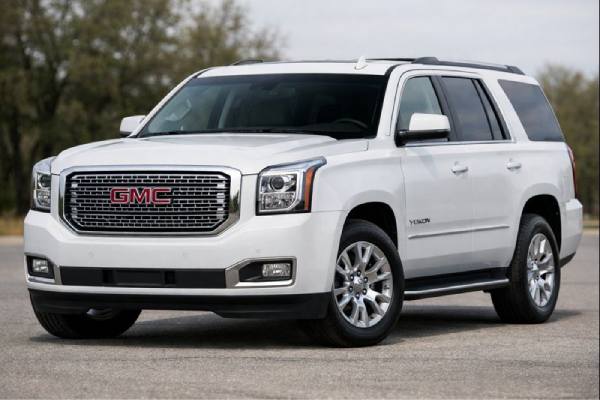
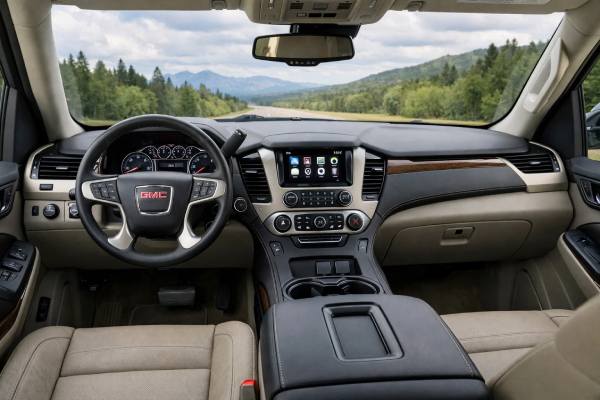
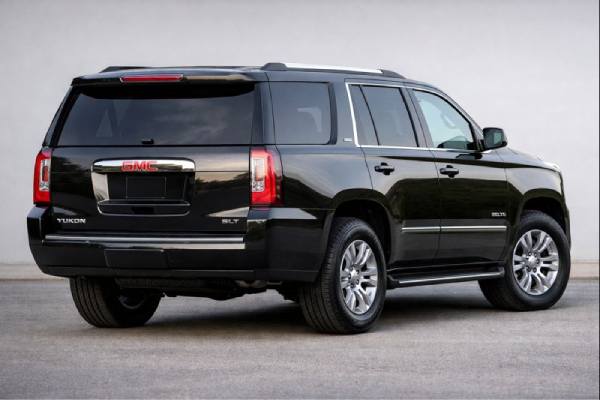
The 2015–2020 GMC Yukon 4WD (K2UG) sits in a sweet spot for full-size SUV buyers who want modern refinement without moving into the newest, more complex generation. Its L83 5.3L “EcoTec3” V8 blends direct injection, variable valve timing, and cylinder deactivation to deliver strong low-end torque for towing while remaining reasonably efficient for its size. The body-on-frame chassis is built for load and durability, and the 4WD system adds real all-weather and light off-road capability when paired with the right tires.
Ownership success with this Yukon is usually about knowing where the platform’s weak points live: a few common engine management and drivability complaints, suspension wear that shows up with heavy use, and transmission behavior that rewards good fluid service habits. With the right maintenance mindset, it can be a long-haul family and tow vehicle.
Essential Insights
- Strong towing and confident highway stability for a large SUV, especially with the factory tow package.
- Proven body-on-frame chassis with good parts availability and straightforward service access.
- 4WD adds real capability in snow and on rough roads when paired with quality all-terrain tires.
- Plan for occasional AFM-related oil-use or valvetrain noise checks as mileage climbs.
- Change engine oil every 8,000–12,000 km (5,000–7,500 mi) or 6 months, depending on duty cycle.
Navigate this guide
- K2UG Yukon 4WD ownership profile
- L83 specs, dimensions, and capacities
- Trims, options, and safety equipment
- Reliability patterns and common failures
- Maintenance plan and buyer’s checklist
- Real-world driving, towing, and economy
- How this Yukon 4WD stacks up
K2UG Yukon 4WD ownership profile
Think of the 2015–2020 Yukon 4WD as a “big-tool” SUV that was engineered to do three jobs at once: carry people in comfort, haul cargo with a flat load floor, and tow a real trailer without feeling stressed. The K2 platform improved cabin isolation and chassis tuning compared with the prior generation, so it feels less truck-like on the highway even though it remains a body-on-frame design.
The L83 5.3L V8 is the core of the experience. It delivers strong midrange pull, and the broad torque curve is more important than the headline horsepower when you are merging with a loaded cabin or climbing grades with a trailer. Cylinder deactivation (often called AFM) helps fuel use on steady highway runs, but it also introduces a few long-term ownership considerations you should understand (covered later). The 6-speed automatic is generally predictable and easy to live with, but it is sensitive to neglected fluid and to repeated heavy towing without proper cooling.
4WD brings flexibility rather than turning the Yukon into a rock crawler. In real terms, it helps you launch cleanly on wet pavement, hold traction on snowy hills, and crawl slowly on muddy access roads to campsites or boat ramps. With the right transfer case mode and tires, it is also more composed when road conditions change mid-drive. If your use case is mostly dry highways, 2WD versions can be slightly cheaper to run; if you deal with winter, steep driveways, or tow in mixed conditions, the 4WD system earns its keep.
Advantages that stand out in daily ownership include stable straight-line tracking, excellent towing manners for the class, and strong aftermarket and dealer parts support. The trade-offs are size (parking and tight streets), brake and tire costs, and the need to stay ahead of maintenance rather than reacting after a warning light appears.
L83 specs, dimensions, and capacities
Below are practical, owner-facing specifications for the 2015–2020 GMC Yukon 4WD (K2UG) with the L83 5.3L V8 and 6-speed automatic. Exact figures can vary by model year, trim, axle ratio, tire size, and tow package, so treat these as a decision-making baseline and verify by VIN for your vehicle.
Engine and performance (L83 5.3L EcoTec3 V8)
| Item | Specification |
|---|---|
| Code | L83 |
| Engine layout and cylinders | V8, OHV (pushrod), 2 valves/cyl |
| Displacement | 5.3 L (5,328 cc) |
| Bore × stroke | 96.0 × 92.0 mm (3.78 × 3.62 in) |
| Induction | Naturally aspirated |
| Fuel system | Direct injection (DI) |
| Compression ratio | 11.0:1 |
| Max power | 355 hp (265 kW) @ 5,600 rpm* |
| Max torque | 519 Nm (383 lb-ft) @ 4,100 rpm* |
| Timing drive | Chain |
| Rated efficiency (typical, EPA) | ~14–16 L/100 km city and ~10–12 L/100 km highway (15–17 mpg US city / 20–23 mpg US highway)** |
*Output can vary slightly by year and calibration.
**Highly dependent on tires, gearing, and drive cycle.
Transmission and driveline
| Item | Specification |
|---|---|
| Transmission | 6-speed automatic (6L80 family) |
| Drive type | 4WD with 2-speed transfer case (trim and year dependent) |
| Differential | Open standard; limited-slip availability varies by package |
Chassis, brakes, and wheels
| Item | Specification |
|---|---|
| Suspension (front/rear) | Independent front / solid rear axle with coil springs |
| Steering | Electric power steering |
| Brakes | 4-wheel discs with ABS and stability control |
| Common wheel and tire fitment | 265/65 R18 (varies up to 20–22 in by trim) |
| Ground clearance | ~203 mm (~8.0 in), tire-dependent |
Dimensions and weights (standard wheelbase Yukon, not XL)
| Item | Specification |
|---|---|
| Length | ~5,179 mm (~203.9 in) |
| Width | ~2,045 mm (~80.5 in), excluding mirrors |
| Height | ~1,890 mm (~74.4 in), equipment-dependent |
| Wheelbase | ~2,946 mm (~116.0 in) |
| Curb weight | ~2,500–2,650 kg (~5,500–5,850 lb) |
| Fuel tank | ~98 L (~26 US gal / ~22 UK gal) |
| Cargo volume | Varies by seat position; roughly ~430 L (~15 cu ft) behind 3rd row to ~2,680 L (~95 cu ft) max* |
*Cargo measurement methods differ across sources.
Capability (typical ranges)
| Item | Specification |
|---|---|
| 0–100 km/h (0–62 mph) | ~7.5–8.5 s (setup-dependent) |
| Towing capacity | Up to ~3,810 kg (~8,400 lb) with tow package* |
| Payload | Often ~600–800 kg (~1,300–1,750 lb), trim-dependent |
*Tow rating depends heavily on configuration.
Fluids and service capacities (common service-relevant values)
| Item | Specification |
|---|---|
| Engine oil | Dexos-approved full synthetic; commonly 0W-20; ~7.6 L (~8.0 US qt) with filter |
| Coolant | Dex-Cool type; 50/50 mix typical |
| Transfer case fluid | AutoTrak-type fluid (as specified on tag/manual) |
| Differentials | Synthetic gear oil (as specified); capacity varies by axle |
Key torque specs (critical fasteners)
- Wheel lug nuts: 190 Nm (140 lb-ft) (common GM full-size spec; verify by wheel type)
- Spark plugs: ~25 Nm (~18 lb-ft) (verify by plug brand and service manual)
Trims, options, and safety equipment
For the 2015–2020 Yukon 4WD, trims and packages matter as much as the engine because they can change towing hardware, braking feel (wheel and tire sizes), ride compliance, and even long-term repair costs.
Trims and options that change how the vehicle behaves
Most buyers will encounter SLE, SLT, and Denali in the market, plus special editions. For K2UG 4WD specifically, focus less on luxury labels and more on functional content:
- Trailering equipment: Factory tow package configurations typically add a heavier-duty hitch setup, wiring provisions, and cooling improvements. If you tow regularly, prioritize a vehicle that has the full trailering package rather than adding pieces later.
- Rear axle ratio and towing calibration: Different axle ratios change how easily the Yukon holds gears on grades and how often it hunts between gears. For frequent towing, a tow-focused axle ratio paired with the correct calibration feels calmer and runs cooler.
- Wheel and tire size: 20–22 inch wheels look great but can increase tire cost, reduce sidewall compliance, and make pothole impacts harsher. If you value ride comfort and long-term wheel durability, 18–20 inch setups are often the best compromise.
- Suspension features: Some models use adaptive damping or load-leveling features depending on trim and package. These can improve control with a trailer, but they also add components that cost more when they age.
Quick identifiers when shopping used
- Look for the factory trailer brake controller, integrated hitch, and wiring at the rear for tow-ready builds.
- Verify the transfer case controls and drive modes match what you expect (some have an Auto mode plus 4HI and 4LO).
- Inside, option clusters often show up as extra steering-wheel buttons, safety alert indicators, and additional camera views.
Safety ratings and what they mean here
Full-size SUVs are tested in ways that may not perfectly mirror smaller crossovers, and results can vary by year due to test updates. When reviewing any star or institute rating, check the exact model year and test version rather than assuming a 2015 score automatically applies to 2020. The Yukon’s strengths are mass, structure, and stability systems; its challenges are physics-related stopping distances and tire grip, which depend on setup and load.
Safety systems and driver assistance (ADAS)
Core safety equipment typically includes multiple airbags, ABS, stability control, traction control, and tire-pressure monitoring. Driver-assistance availability varies widely:
- Common systems include rear camera, parking sensors, blind-spot monitoring, rear cross-traffic alert, and lane departure warnings depending on trim and options.
- Forward-collision alerts and lane features can be sensitive to windshield replacements and camera or sensor alignment. After collision repair or glass replacement, insist on proper calibration checks so the system behaves consistently.
If safety tech is a priority, shop by build content rather than trim name and confirm features during a test drive, including alert behavior and camera clarity.
Reliability patterns and common failures
The K2-generation Yukon is generally durable when serviced correctly, but it has repeatable failure themes that show up across owner reports and shop experience. A helpful way to think about it is: the basic structure is robust, while certain “systems around the structure” (oil control, electronics, wear parts) demand attention.
Common issues (more prevalent)
- AFM-related oil consumption and lifter noise (medium to high cost if it escalates):
Symptoms: oil level drops between changes, cold-start ticking that persists, misfires, or a check-engine light under load.
Likely root cause: cylinder deactivation hardware increases complexity in the lifter and oiling system; neglected oil changes and low oil level accelerate wear.
Remedy: keep oil level strictly maintained, use correct oil spec, diagnose misfires early, and address lifter issues before metal debris spreads. - Transmission shift quality complaints (medium cost):
Symptoms: shudder on light throttle, harsh 1–2 or 2–3 shifts, delayed engagement, or gear hunting when towing.
Likely root cause: heat, aged fluid, or calibration sensitivity, especially in heavy-duty use.
Remedy: verify fluid condition and level, service at sensible intervals for your duty cycle, and confirm any software updates that address drivability concerns. - Suspension and steering wear (low to medium cost, rises with mileage):
Symptoms: clunks over bumps, vague steering on-center, uneven tire wear, or wandering on highways.
Likely root cause: the vehicle’s mass accelerates wear in bushings, ball joints, and dampers, especially with larger wheels.
Remedy: inspect front end components regularly, align after tire changes, and replace worn parts in matched pairs.
Occasional issues (configuration and age dependent)
- A/C performance and blend-door actuator problems: inconsistent cabin temperatures, clicking behind the dash, or weak cooling.
- Infotainment and camera glitches: intermittent screen resets, slow response, or parking camera dropouts (often wiring, module, or software related).
- 4WD system service needs: transfer case fluid sensitivity or actuator/switch issues, often triggered by lack of fluid changes or infrequent use of 4WD ranges.
Rare but high-impact risks
- Cooling system failures under heavy load: overheating when towing in hot weather can cascade into expensive repairs if ignored.
- Electrical module water intrusion (varies by use and repair history): can create hard-to-trace intermittent faults.
Service actions, recalls, and updates
Because recalls and technical service bulletins vary by year, the best practice is to run an official VIN check and request dealer service history. Ask specifically whether powertrain software updates, safety system campaigns, and any known drivability bulletins were completed. For this platform, updates often aim to improve shift logic, stabilize sensor behavior, or reduce false warnings rather than change core hardware.
Maintenance plan and buyer’s checklist
A Yukon 4WD can be a reliable long-term vehicle if you treat maintenance as prevention, not rescue. The schedule below is a practical baseline; shorten intervals if you tow frequently, idle a lot, or drive short trips in cold weather.
Practical maintenance schedule
- Engine oil and filter: every 8,000–12,000 km (5,000–7,500 mi) or 6 months. If you tow often or see heavy idling, use the shorter end. Check oil level between changes; do not wait for the next service if it drops.
- Engine air filter: inspect every 15,000 km (9,000 mi); replace around 30,000–45,000 km (20,000–30,000 mi) or sooner in dust.
- Cabin air filter: every 15,000–30,000 km (10,000–20,000 mi), depending on climate and air quality.
- Coolant: replace on a time basis (often 5 years as a safe planning point) or per the manual; inspect hoses and radiator condition annually.
- Spark plugs: typically 150,000 km (100,000 mi) for iridium plugs, but shorten if misfires appear or towing is heavy.
- Transmission fluid: for mixed use, plan 60,000–80,000 km (40,000–50,000 mi); for frequent towing, consider 40,000–60,000 km (25,000–40,000 mi). Use the correct fluid specification.
- Transfer case fluid: every 50,000–80,000 km (30,000–50,000 mi), and sooner if water exposure or heavy use is common.
- Front and rear differential fluid: every 80,000–120,000 km (50,000–75,000 mi); sooner with towing and high heat.
- Brake fluid: every 2–3 years, regardless of mileage.
- Tire rotation and alignment: rotate every 8,000–12,000 km (5,000–7,500 mi); align annually or whenever you see uneven wear.
Fluids, specs, and “decision” torque values
Use a Dexos-approved full synthetic oil (commonly 0W-20 for the L83) and factory-specified drivetrain fluids for the transmission and transfer case. For torque values that matter during ownership decisions: lug nuts are typically 190 Nm (140 lb-ft), and you should insist on proper torque when wheels are removed to reduce rotor distortion and vibration complaints.
Buyer’s guide checklist
- Cold start: listen for persistent ticking, rough idle, or misfires.
- Oil level and history: check dipstick condition and ask for oil change intervals; frequent short-trip use with long oil intervals is a red flag.
- Transmission behavior: during a test drive, check for shudder, delayed engagement, and harsh shifts when lightly rolling into throttle.
- 4WD operation: confirm 4HI and 4LO engagement (where equipped) and that there are no binding noises on appropriate surfaces.
- Front-end wear: inspect for clunks, looseness, and uneven tire wear patterns.
- Tow evidence: inspect hitch area, rear suspension sag, and cooling system condition; towing is fine, neglected towing maintenance is not.
Long-term durability outlook is best when the vehicle has consistent fluid services, modest wheel sizes, and documented 4WD and tow-package upkeep.
Real-world driving, towing, and economy
On the road, the Yukon 4WD feels built for distance. Its mass and wheelbase create a planted, steady character at highway speeds, and crosswinds tend to move it less than many lighter crossovers. Steering is typically light to moderate in effort, prioritizing stability over feedback. In city driving, the size is the main challenge: tight parking, wide turning needs, and the sensation of managing a large footprint. Parking sensors and cameras help, but tire placement still takes attention.
Powertrain character
The L83 V8 delivers its best “effortless” feel in the low-to-mid rpm range. Throttle response is strong enough for confident merges, and the engine rarely feels strained at normal speeds. Under heavy acceleration, the 6-speed automatic can feel busy because of wider ratio steps than newer 8- and 10-speed units, but it is generally predictable. When towing, you will notice it prefers to hold gears on grades if you use Tow/Haul mode, which also improves engine braking on descents.
Cylinder deactivation is mostly invisible when everything is healthy, but some drivers notice subtle tone changes or light surging on gentle throttle. If you feel inconsistent behavior, it is worth checking for software updates, correct oil spec, and any misfire history.
Real-world efficiency
Real-world fuel use depends more on speed and load than on small spec differences. At steady cruising around 100–120 km/h (60–75 mph), many owners see mid-teens mpg (US) in mixed conditions and higher teens to low 20s mpg (US) on long highway runs with conservative speeds. City driving, short trips, winter warmups, and heavy accessories can push consumption noticeably higher. Tires matter: aggressive all-terrain tread often costs efficiency but improves traction and control on snow and mud.
Towing and load behavior
With the right tow package and a properly set up trailer, the Yukon is composed. It tracks straight, resists sway reasonably well, and its brakes feel confident when properly maintained. Where owners get into trouble is heat management: towing near the limit in hot weather demands good coolant condition, clean radiator fins, fresh transmission fluid, and smart driving (use Tow/Haul, downshift early, and avoid lugging). Expect a meaningful consumption penalty under tow; moderate towing can increase fuel use by 25–50%, and heavy towing can be higher depending on speed and terrain.
How this Yukon 4WD stacks up
The best rivals for a 2015–2020 Yukon 4WD depend on what you value: durability, interior packaging, towing manners, or long-term repair predictability. In this era, the Yukon’s closest mechanical relatives are within GM’s own full-size SUV family, but competitive alternatives can be compelling for specific priorities.
Versus Chevrolet Tahoe 4WD (same generation)
The Tahoe and Yukon share major hardware, so the difference is usually pricing, styling, and feature packaging rather than fundamental capability. If you find a Tahoe with the same tow and safety equipment for less money, it can be the better value. The Yukon often wins on trim availability and perceived interior presentation in comparable builds.
Versus Ford Expedition 4WD (similar years)
The Expedition can feel strong on powertrain performance in many configurations and may offer appealing packaging for larger families. Where the Yukon often counters is with a more traditional V8 driving feel and widely available GM truck-based parts support in many regions. Buyer choice here often comes down to which powertrain and transmission you prefer to maintain long term.
Versus Toyota Sequoia 4WD (similar years)
The Sequoia’s appeal is straightforward: a reputation for durability and a simpler ownership feel in some respects. The trade is usually fuel consumption and sometimes feature age. The Yukon tends to feel more modern in cabin tech and can be easier to tailor via trim and package choices, but it rewards owners who stay on top of fluids and known weak points.
Versus Nissan Armada 4WD (similar years)
The Armada can be a comfort-forward alternative with strong V8 character. The Yukon generally offers broader parts availability, a more “work-ready” tow ecosystem, and a deeper market of used configurations to choose from.
Bottom line
Choose the Yukon 4WD if you want a proven full-size SUV that tows confidently, rides well for a truck-based platform, and has strong service and parts support. Choose a rival if your top priority is a specific third-row packaging layout, a different powertrain philosophy, or minimizing certain known GM-specific issues.
References
- Find a Car 2025 (Fuel Economy Database)
- Recalls 2025 (Recall Database)
- GMC Owner Center Recalls 2025 (Recall Database)
Disclaimer
This article is for informational purposes only and is not a substitute for professional diagnosis, inspection, or repair. Specifications, torque values, service intervals, and procedures can vary by VIN, model year, market, and installed equipment. Always verify details using the official owner’s manual, service information, and labels on your vehicle, and consult a qualified technician when needed.
If you found this guide helpful, please consider sharing it on Facebook, X, or your favorite forum to support our work.