
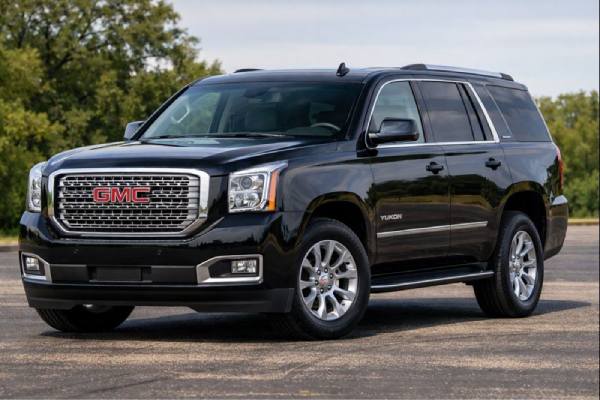
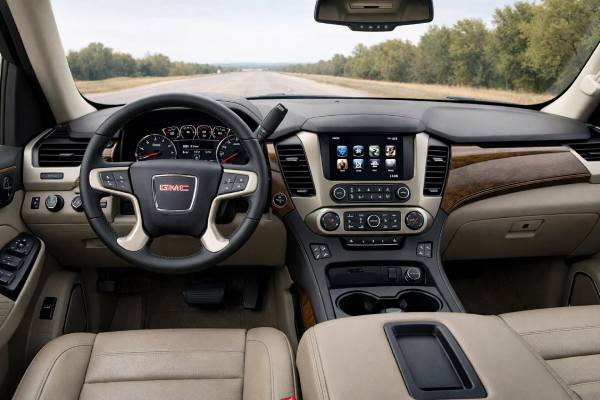
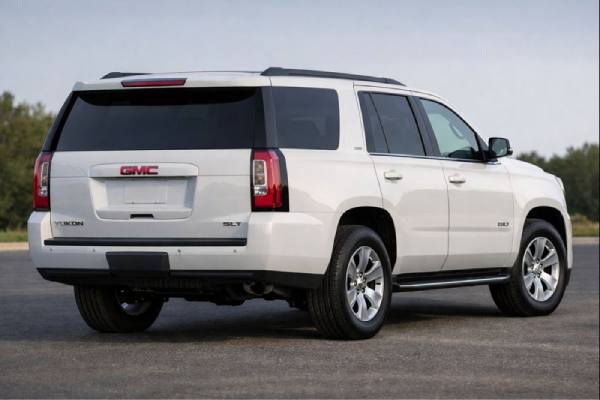
The 2015–2020 GMC Yukon Denali RWD (K2UG) sits in a sweet spot for buyers who want full-size SUV space and towing strength, but prefer simpler running gear than a 4WD system. Under the hood, the 6.2-liter L86 V8 brings strong mid-range torque and easy highway passing, backed by an 8-speed automatic that can feel smooth when healthy and properly serviced. As a body-on-frame SUV, the Denali carries weight confidently, rides with a “big vehicle” calm, and holds up well under family duty and trailer work—provided you keep up with fluids and don’t ignore early driveline symptoms. The Denali trim adds premium materials, more standard tech, and available adaptive suspension hardware that improves ride comfort, but can raise repair costs as the vehicle ages. This guide focuses on real ownership priorities: specs that matter, common failures, and a maintenance plan that prevents expensive surprises.
Fast Facts
- Strong 6.2 V8 torque makes towing and highway merging feel effortless, especially in RWD form.
- Denali trim typically brings quieter cabin tuning and premium comfort features that age well when maintained.
- RWD reduces transfer-case and front-driveline complexity compared with 4WD versions.
- Budget for potential 8-speed transmission shudder fixes and adaptive suspension parts on higher-mileage trucks.
- Change engine oil every 8,000–10,000 km (5,000–6,000 mi) or 6 months if used for short trips or towing.
What’s inside
- Denali RWD engineering snapshot
- L86 spec tables and measurements
- Denali features and safety tech
- Known trouble spots and fixes
- Service schedule and used-buy tips
- On-road feel and fuel use
- Denali RWD vs key rivals
Denali RWD engineering snapshot
The K2UG-generation Yukon Denali is built on GM’s full-size SUV architecture shared with the Tahoe/Suburban family. That matters because it explains the vehicle’s priorities: durability under load, predictable towing behavior, and a quiet, solid feel on rough roads. The body-on-frame layout uses an independent front suspension and a solid rear axle. You get confident straight-line stability and a “set and forget” attitude on highways, but the tradeoff is a tall center of gravity and weight that you always feel in tight corners.
Choosing RWD in this generation is not just a traction decision—it’s an ownership strategy. Without a transfer case, front differential, CV axles, and additional seals, there are fewer components to service and fewer places for leaks, vibrations, and engagement issues to start. RWD models also tend to carry slightly less weight, which helps steering response and can improve fuel economy by a small margin in the real world.
The Denali’s defining engineering feature is the L86 6.2-liter V8. It uses direct injection, variable valve timing, and cylinder deactivation (GM often calls it Active Fuel Management, or AFM) to balance power and cruising efficiency. When everything is working correctly, the engine feels relaxed at speed and delivers strong passing power without needing high rpm. The most important ownership note is that cylinder deactivation brings extra lifters and oil-control demands, so oil quality and change habits matter more than many owners expect.
Most 2015–2020 Denali models pair the 6.2 with an 8-speed automatic. When tuned and serviced properly, it keeps the V8 in its sweet spot and reduces “busy shifting” compared with older 6-speed trucks. However, this transmission family is also known for a specific shudder behavior in certain conditions, which is why a smart maintenance plan for the ATF and driveline is essential.
In day-to-day life, the Denali RWD excels as a long-distance family hauler. It fits adults in all rows better than most crossovers, it carries bulky cargo easily, and it feels “built” in a way many unibody SUVs do not. Owners who do best with it are the ones who treat it like a heavy-duty machine: keep tires matched, keep fluids fresh, and address small drivability issues before they become expensive ones.
L86 spec tables and measurements
Below are the most useful “decision specs” for the 2015–2020 Yukon Denali RWD with the L86 6.2L V8. Exact values can vary by model year, market, axle ratio, wheel package, and emissions calibration, so treat these as typical baselines and verify by VIN where needed.
Engine and performance
| Item | Spec (typical for L86 Yukon Denali) |
|---|---|
| Code | L86 |
| Layout and cylinders | V8, OHV (pushrod), 8 cylinders, 2 valves/cyl |
| Displacement | 6.2 L (6,162 cc) |
| Bore × stroke | 103.25 × 92.0 mm (4.07 × 3.62 in) |
| Induction | Naturally aspirated |
| Fuel system | Direct injection (DI) |
| Compression ratio | ~11.5:1 |
| Max power | 420 hp (313 kW) @ ~5,600 rpm |
| Max torque | 624 Nm (460 lb-ft) @ ~4,100 rpm |
| Timing drive | Chain |
| Emissions standard | U.S. EPA (varies by year) |
| Rated efficiency (typical 2WD) | ~13.8 L/100 km combined (~17 mpg US) |
| Real-world highway @ 120 km/h | ~12–14 L/100 km (20–17 mpg US) depending on tires and load |
Transmission and driveline
| Item | Spec (typical) |
|---|---|
| Transmission | 8-speed automatic (commonly 8L90 family) |
| Drive type | RWD |
| Differential | Typically open rear differential (check RPO codes for any locking/limited-slip content) |
Common 8-speed gear ratios (typical):
| Gear | Ratio |
|---|---|
| 1st | 4.56 |
| 2nd | 2.97 |
| 3rd | 2.08 |
| 4th | 1.69 |
| 5th | 1.27 |
| 6th | 1.00 |
| 7th | 0.85 |
| 8th | 0.65 |
Chassis and dimensions
| Item | Spec (approx.) |
|---|---|
| Suspension (front) | Independent, coil-over (layout varies by option) |
| Suspension (rear) | Solid axle with coil springs (option-dependent damping/air assist) |
| Brakes | 4-wheel discs (sizes vary by year/wheel package) |
| Wheels/tires (common Denali) | 20–22 in wheels (tire size varies) |
| Ground clearance | ~203 mm (~8.0 in), depends on suspension |
| Length / width / height | ~5,182 / 2,045 / 1,889 mm (204.0 / 80.5 / 74.4 in) |
| Wheelbase | ~2,946 mm (116.0 in) |
| Turning circle | ~12.6–13.0 m (41–43 ft) |
| Curb weight | ~2,400–2,600 kg (5,300–5,700 lb) depending on equipment |
| Fuel tank | ~98 L (26 US gal / 22 UK gal) |
Cargo volume varies by measurement standard and seat layout, but the practical reality is consistent: you can carry meaningful luggage behind the third row, and a very large load with rows folded.
Performance and capability
| Item | Typical value (setup-dependent) |
|---|---|
| 0–100 km/h (0–62 mph) | ~6.5–7.5 s |
| Top speed | Typically limited ~175–185 km/h (109–115 mph) |
| Towing capacity | Up to ~3,900 kg (~8,600 lb) with proper towing equipment |
| Payload | Often ~600–800 kg (1,300–1,800 lb), varies widely by build |
Fluids and service capacities (typical)
| System | Spec (typical) |
|---|---|
| Engine oil | GM dexos1 Gen 2; common viscosity 0W-20; ~7.6 L (~8.0 US qt) |
| Coolant | Dex-Cool type, 50/50 mix; capacity varies by year |
| Transmission/ATF | 8-speed fluid spec commonly Dexron HP; service-fill varies |
| Rear differential | Synthetic 75W-90 (verify axle tag/spec); capacity varies |
Key torque specs (typical “decision” values; confirm by service info):
| Fastener | Torque |
|---|---|
| Wheel lug nuts | ~190 Nm (~140 lb-ft) |
| Spark plugs | ~20 Nm (~15 lb-ft) |
| Engine oil drain plug | ~25 Nm (~18 lb-ft) |
Electrical (typical)
| Item | Spec (typical) |
|---|---|
| Alternator output | Commonly ~150 A (varies with options) |
| 12V battery | Often Group 94R/48 class; CCA varies by brand and climate spec |
| Spark plug type and gap | Iridium type; gap varies by plug, typically ~1.0 mm (0.040 in) |
Denali features and safety tech
Denali is not just a badge package on the Yukon—it changes the ownership experience because it bundles the highest-output V8, premium interior features, and (often) more complex suspension and driver-assistance content. If you’re shopping used, it’s worth understanding what is “always Denali” versus what is optional, because those differences affect both reliability risk and repair budgets.
Denali trim identifiers and functional differences
Typical Denali signatures include upgraded leather, a quieter cabin, distinctive exterior trim, and larger wheel packages. The important mechanical differences usually include:
- 6.2L L86 V8 instead of the 5.3L base engine.
- 8-speed automatic paired with the 6.2L in most configurations.
- Larger wheel/tire options (often 20–22 inches), which can sharpen steering response but increase tire cost and make ride harshness more noticeable on rough pavement.
- Adaptive ride hardware on many builds (depending on year and options). When present, it improves comfort and body control, but shocks, sensors, and compressors can be expensive later.
To shop smarter, look for the vehicle’s build codes (RPO codes) in the glovebox area or service records. Those codes help confirm towing equipment, suspension type, and differential content—details that a listing often gets wrong.
Options and packages that change capability
For most owners, three option areas matter most:
- Towing equipment: A factory hitch, integrated trailer brake controller (where equipped), higher-capacity cooling, and a towing-oriented rear axle ratio can significantly change towing confidence and heat management on grades.
- Suspension type: Adaptive damping and/or rear air-leveling can keep the Denali composed with passengers and tongue weight. The downside is higher parts cost when components wear out.
- Brakes and tire packages: Larger wheels can reduce sidewall compliance and increase the risk of wheel damage on potholes. They also change the “feel” of braking and steering, even when braking hardware stays similar.
Safety ratings and what they mean in practice
Safety ratings for this era can be confusing because ratings may differ by model year, test revision, and drivetrain configuration. In the U.S., the most relevant sources are typically:
- NHTSA (star ratings) for overall crash performance and rollover resistance.
- IIHS (Good/Adequate/Marginal/Poor and Top Safety Pick programs) when a specific model is tested.
If you can’t find a clear rating for your exact configuration, don’t guess—verify by VIN and model year. Even when overall crash structure is shared, lighting, tires, and optional safety systems can change results and real-world safety.
Safety equipment and driver assistance (typical for 2015–2020)
Core safety systems generally include multi-airbag coverage, stability control, traction control, and trailer-sway management logic when towing equipment is present. Denali trims commonly add or offer:
- Forward collision alert and lane departure warning (availability varies by year).
- Lane-keeping support on later model years, depending on package.
- Blind-spot monitoring and rear cross-traffic alert on many builds.
- Parking sensors and camera systems that make daily driving easier in tight spaces.
One practical ownership note: after windshield replacement, front-end collision work, or certain suspension repairs, camera and sensor calibration may be required for systems to work correctly. If a shop skips calibration, you may get warning lights, false alerts, or reduced system performance.
Known trouble spots and fixes
A Yukon Denali can be a dependable long-term SUV, but it has a few repeat patterns that are expensive if ignored. The best approach is to sort issues by how often they appear and how costly they tend to be.
Common: driveline and transmission behaviors (medium to high cost)
- 8-speed “shudder” at light throttle
- Symptoms: vibration or rumble-strip feeling during gentle acceleration, often in higher gears; may come and go with temperature.
- Likely root cause: ATF condition and friction behavior; sometimes torque converter wear.
- Recommended remedy: confirm fluid type, consider a complete fluid exchange to the current approved spec, and apply the latest transmission calibration. If shudder persists, torque converter replacement may be needed.
- Harsh shifts or gear hunting
- Symptoms: frequent shifting on rolling hills, delayed engagement, or “busy” behavior in traffic.
- Likely root cause: software logic, adaptation values, or mismatched tire sizes.
- Recommended remedy: ensure tires are the same size and wear level, update calibrations, and address engine misfires or mounts that can mimic shift problems.
Common: AFM-related valvetrain risks (high cost if it escalates)
- AFM lifter failure and cam wear
- Symptoms: ticking, misfires, flashing check-engine light, rough running, and loss of power.
- Likely root cause: lifter collapse or oil-control issues in the cylinder deactivation system.
- Recommended remedy: diagnose quickly; continued driving can damage the camshaft. Repairs can range from lifters to a more extensive top-end and cam job.
Reducing risk here is mostly about oil discipline: use the correct spec oil, keep change intervals conservative if your use is short-trip heavy, and do not ignore oil-level drops.
Occasional: cooling and HVAC (low to medium cost)
- A/C performance loss
- Symptoms: weak cooling, oily residue at condenser area.
- Likely root cause: condenser leaks or line seepage.
- Recommended remedy: leak test, replace affected components, evacuate and recharge to spec.
- Water pump or thermostat issues
- Symptoms: coolant smell, temperature fluctuations, slow warm-up, or overheating under load.
- Likely root cause: seal wear, pump bearing wear, thermostat sticking.
- Recommended remedy: replace parts proactively if seepage starts; overheating events are what cause secondary damage.
Occasional: suspension and steering wear (cost varies widely)
- Front-end clunks and looseness
- Symptoms: clunk over bumps, wandering, uneven tire wear.
- Likely root cause: control arm bushings, ball joints, end links, or steering intermediate shaft play.
- Recommended remedy: inspect systematically, then align after parts replacement.
- Adaptive suspension component wear (if equipped)
- Symptoms: bouncy ride, warning messages, uneven stance, compressor noise.
- Likely root cause: damper wear, air-assist leaks, sensor faults.
- Recommended remedy: confirm the exact system before buying parts; some owners replace in pairs to keep ride balanced.
Electrical and interior items (low to medium cost, annoying)
- Infotainment glitches and camera issues
- Symptoms: freezing, black screen, intermittent camera.
- Likely root cause: software, module communication faults, or wiring at tailgate/hinge areas.
- Recommended remedy: software updates first, then harness inspection if symptoms are position-dependent.
- Power steps, locks, and liftgate quirks
- Symptoms: intermittent operation, slow movement, partial travel.
- Likely root cause: water intrusion, motor wear, sensor misalignment.
- Recommended remedy: cleaning and lubrication may help, but plan for eventual motor or module work.
Recalls, TSBs, and how to verify completion
Because recall and service campaign coverage changes by VIN and market, the safest process is:
- Run a VIN recall check through official databases.
- Confirm completion with dealer service history.
- Keep a record of software updates and calibration work—especially for drivability or transmission concerns.
Service schedule and used-buy tips
A Denali RWD rewards owners who service it like a heavy vehicle, not like a small crossover. The goal is to keep lubricants fresh, prevent heat-related failures, and catch early driveline changes before parts damage snowballs.
Practical maintenance schedule (baseline plus “smart owner” adjustments)
Intervals below assume mixed use. If you do frequent towing, short trips, or heavy city driving, choose the earlier interval.
| Service item | Practical interval |
|---|---|
| Engine oil and filter | 8,000–10,000 km (5,000–6,000 mi) or 6 months (towing/short trips) |
| Tire rotation | 10,000–12,000 km (6,000–7,500 mi) |
| Engine air filter | Inspect every 15,000 km (10,000 mi); replace ~30,000–45,000 km (20,000–30,000 mi) |
| Cabin air filter | 20,000–30,000 km (12,000–18,000 mi) or yearly |
| Brake fluid | Every 2 years |
| Coolant | 5 years / 240,000 km (150,000 mi) typical, earlier if contaminated |
| Spark plugs | ~160,000 km (100,000 mi) typical (verify by year) |
| Automatic transmission fluid | 80,000–100,000 km (50,000–60,000 mi) if towing/heat exposure; longer if easy highway use |
| Rear differential fluid | 80,000–100,000 km (50,000–60,000 mi) severe; otherwise inspect and service as needed |
| Serpentine belt and hoses | Inspect every oil change; replace by condition (often 120,000–160,000 km / 75,000–100,000 mi) |
| 12V battery | Test annually after year 4; plan replacement ~4–6 years depending on climate |
Fluids that matter most (and why)
- Engine oil (0W-20 dexos1 spec where applicable): helps AFM lifters and timing components live a longer life.
- ATF (correct 8-speed spec): mismatched or degraded fluid can worsen shudder behavior and heat stress.
- Differential fluid: towing loads and heat are the enemies; fresh gear oil is cheap insurance.
Used-buyer inspection checklist (high value per minute)
Bring a checklist and insist on a cold start.
- Cold start and idle: listen for persistent ticking, misfire shake, or exhaust leaks. Brief cold noise can be normal; sustained misfire behavior is not.
- Test drive at light throttle: aim for steady 60–90 km/h (35–55 mph) and feel for transmission shudder or repeated “micro-shifts.”
- Brake test: check for pulsation (rotor issues) and uneven pull (caliper slide problems).
- Suspension and steering: drive over small bumps at low speed; clunks often reveal worn links/bushings.
- Tire condition: uneven wear suggests alignment or suspension wear; mismatched tire sizes or wear levels can cause driveline oddities.
- Cooling system checks: inspect for dried coolant residue and confirm fans work properly.
- Adaptive suspension (if equipped): look for warning messages, uneven ride height, or a harsh/bouncy ride.
Model year and configuration notes
Across 2015–2020, the “best” choice is usually the one with:
- documented transmission servicing and calibrations,
- clean, matching tires,
- no unresolved drivability symptoms,
- and a realistic maintenance history.
If you tow often, prioritize trucks with factory towing equipment and cooling upgrades, and treat transmission and differential service as routine—not optional.
On-road feel and fuel use
The Yukon Denali RWD drives like what it is: a full-size, body-on-frame SUV tuned to feel premium rather than sporty. The steering is typically light to moderate in effort, stability is strong at highway speeds, and the cabin is often impressively quiet for the size—especially on the stock tire type and when door seals and suspension bushings are in good shape.
Ride, handling, and NVH
On smooth roads, the Denali’s ride can feel genuinely comfortable, with good control over big body motions. With adaptive damping and/or air-assist features (where equipped), it can stay composed with passengers and cargo. On rough roads, 22-inch wheels can transmit sharp impacts more than many owners expect, so the wheel package is a comfort decision as much as a style decision.
In corners, the Denali is predictable, but it will not hide its mass. You can drive it briskly, but it prefers smooth inputs. Braking performance is generally confidence-inspiring for daily driving, though repeated hard stops (especially downhill with weight) can reveal the limits of pads and heat management—another reason towing setup and maintenance matter.
Powertrain character
The L86 6.2 V8 is the star. It feels relaxed at low rpm and surges forward easily without constant downshifts. Passing power is where the Denali separates itself from 5.3-liter models. The 8-speed automatic keeps the engine in its torque band, but its smoothness depends heavily on fluid condition, calibration, and driveline health. If you feel a vibration at steady throttle, don’t dismiss it as “just how it drives”—it’s often the first clue that service is needed.
Real-world fuel use (typical expectations)
Real-world results vary wildly with tires, speed, traffic, and towing, but typical owner-style numbers look like this:
- City: ~16–19 L/100 km (15–12 mpg US)
- Highway (100–120 km/h): ~12–14 L/100 km (20–17 mpg US)
- Mixed: ~14–17 L/100 km (17–14 mpg US)
Cold weather and short trips can add a meaningful penalty. Expect higher consumption in winter and when idling for heat.
Towing and load behavior
With the right towing equipment, the Denali feels stable and powerful under moderate trailers, and the V8 rarely feels strained. The key is temperature control: towing on grades increases transmission heat, and a healthy cooling system plus timely ATF service is what keeps the driveline happy long-term.
Fuel use while towing depends on trailer size and speed, but a 25–40% increase over unloaded consumption is a realistic planning range, and heavy trailers can push beyond that. If you tow frequently, consider more conservative fluid intervals and a strict approach to tire and brake maintenance.
Denali RWD vs key rivals
The 2015–2020 Yukon Denali RWD sits in a competitive class, and the “best” choice depends on what you value most: towing confidence, interior packaging, ride quality, or long-term simplicity.
Versus Ford Expedition (same era)
The Expedition’s biggest advantage is often its modern chassis feel and family-oriented packaging, especially with independent rear suspension on newer generations. It can feel more maneuverable for its size, and some buyers prefer the torque curve and tuning of turbocharged engines. The Denali counters with a classic V8 feel, strong towing confidence, and a premium interior experience that many owners find easy to live with long-term. If you prefer fewer high-heat turbo components and you like the smoothness of a large-displacement V8, the Denali makes a strong case.
Versus Toyota Sequoia (older generation) and similar “durability-first” SUVs
Toyota’s reputation for long-term durability is real, but older platforms can feel less efficient, less modern in infotainment and safety tech, and sometimes less refined in ride and cabin quiet. The Yukon Denali tends to offer a more upscale cabin and better day-to-day comfort features, while requiring a more deliberate maintenance approach—especially around transmission behavior and AFM-related risks.
Versus Nissan Armada and other V8 full-size options
Some rivals offer strong value and straightforward powertrains, but interior design, cargo flexibility, and towing integration can vary. The Denali’s strength is the overall “system”—engine, cabin, road manners, and towing setup—when maintained properly. The downside is that Denali-level features (adaptive suspension, larger wheels, high-end electronics) can raise the ceiling on repair cost as the truck ages.
RWD vs 4WD decision
If you live in a mild climate, drive mostly paved roads, and want lower complexity, RWD is a sensible choice—especially with good all-season tires and careful driving in rain. If you face regular snow, steep unplowed driveways, or muddy access roads, 4WD can be worth the extra service points. The smartest compromise for many owners is: choose the drivetrain that matches your worst month of use, not your best.
Overall, the Yukon Denali RWD is at its best when you want a premium, powerful long-haul SUV, you value towing strength, and you’re willing to maintain it proactively. It is less ideal if you want low running costs at any age, or if you prefer the lighter feel and efficiency of a modern unibody crossover.
References
- Search Safety Issues | NHTSA 2025 (Recall Database)
- GM Recalls, Field Actions, and Warranty Center 2025 (Recall Database)
- FuelEconomy.gov 2025 (Official Efficiency Database)
Disclaimer
This article is for informational purposes only and is not a substitute for professional diagnosis, inspection, or repair. Specifications, torque values, service intervals, and procedures vary by VIN, market, model year, and equipment; always verify details using the correct official owner’s manual and service documentation for your exact vehicle.
If you found this guide helpful, please consider sharing it on Facebook, X (Twitter), or your favorite forum to support our work.