
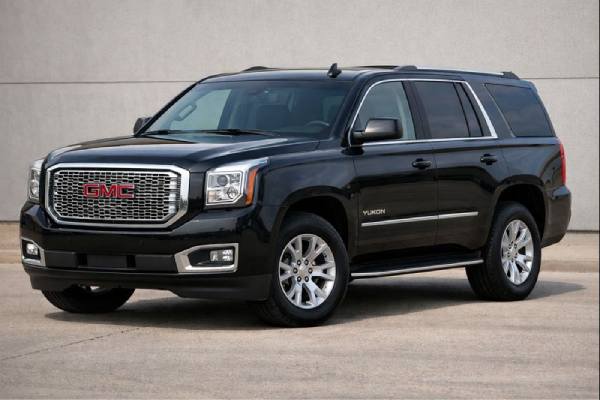
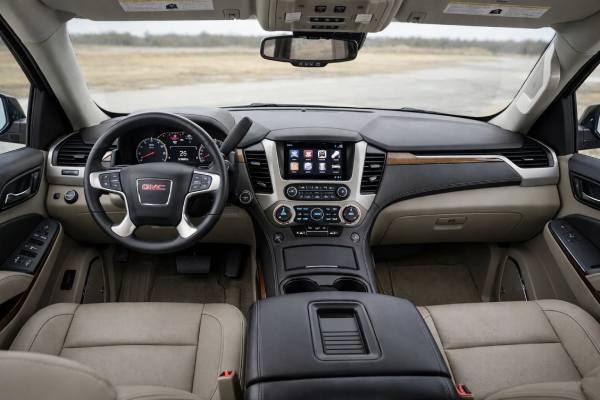
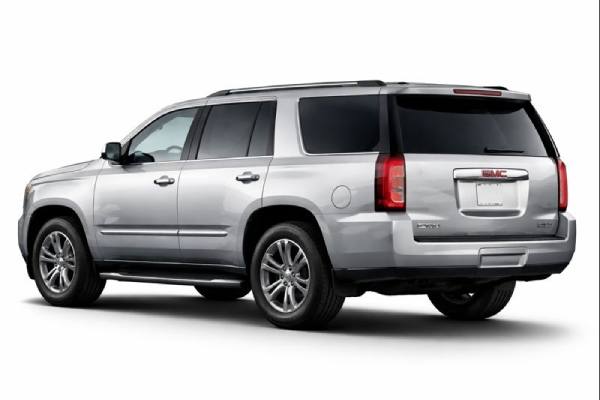
The 2015–2020 GMC Yukon Denali 4WD (K2UG) sits in a sweet spot for buyers who want full-size SUV space without giving up modern powertrain tech. Under the hood, the 6.2L L86 V8 pairs direct injection with variable valve timing and GM’s cylinder deactivation strategy to deliver strong torque with reasonable cruising economy for the class. The Denali trim adds meaningful hardware—more standard towing and braking equipment, upgraded cabin materials, and (often) adaptive dampers—so the vehicle feels more controlled than many body-on-frame SUVs.
Ownership, however, is about understanding the platform’s “known patterns”: oil and lifter health on AFM-equipped V8s, transfer-case and differential fluid care for 4WD, and keeping cooling and HVAC systems leak-free. If you maintain it with a plan, this Yukon can be a durable, comfortable long-distance family and tow vehicle.
Top Highlights
- Strong real-world pull at highway speeds; the L86’s torque makes passing and towing feel effortless.
- Body-on-frame strength with a refined Denali ride, especially on well-matched tyres and healthy dampers.
- Excellent parts availability and broad shop familiarity across GM K2XX trucks and SUVs.
- Plan for AFM-related lifter risk and higher running costs (tyres, brakes, fuel) than crossovers.
- Change engine oil around 8,000–10,000 km (5,000–6,000 mi) or 6 months if you do short trips or tow often.
Quick navigation
- Denali 4WD ownership profile
- L86 K2UG specs and measurements
- Denali trim, options, and safety kit
- Reliability patterns, known faults, and actions
- Maintenance plan and smart buying checks
- Real-world driving and towing performance
- How the Yukon Denali 4WD stacks up
Denali 4WD ownership profile
Think of the K2UG Yukon Denali 4WD as a half-ton truck chassis tuned for people, luggage, and long highway days. The engineering is straightforward: a body-on-frame structure, independent front suspension, a solid rear axle, and a two-speed transfer case. What makes the Denali version different is how the parts are matched—stronger standard equipment, a quieter cabin, and (in many builds) suspension calibration that reduces float and head toss compared with lower trims.
For most owners, the “why this one” list starts with the L86 6.2L V8. It doesn’t need to rev hard to move the Yukon quickly, which matters when you are carrying six people and gear or pulling a trailer. That torque-first character also means fewer downshifts on grades and a calmer driving experience. 4WD adds versatility in winter climates and on wet boat ramps, but it also adds maintenance points: transfer case fluid quality, front differential lubrication, and extra driveline joints that can wear if tyres are mismatched or rotations are ignored.
Practical ownership highlights:
- Cabin and cargo flexibility: Denali models often come with power-folding third-row hardware and higher-end seating trims. Second-row captain’s chairs are common; an available bench can bring capacity to eight.
- Towing confidence: The platform is naturally stable, but towing satisfaction depends heavily on setup—cooling health, brake condition, tyre load rating, and correct hitch geometry matter more than raw tow numbers.
- Running costs: Expect premium-level costs in normal wear items. A set of 20–22 inch tyres is not cheap, and the Denali’s mass consumes brakes. Fuel economy is “good for a 6.2” rather than objectively low.
The best long-term owners treat it like a light-duty truck: frequent fluid checks, attention to noises and driveline vibrations, and keeping software updates and recalls current. Done right, the Denali 4WD is a comfortable, capable family hauler that still behaves like a confident tow rig.
L86 K2UG specs and measurements
Below are practical specifications for the 2015–2020 Yukon Denali 4WD with the L86 6.2L V8. Some figures vary by year and equipment (wheel size, tow package, suspension option). Use the tables as a decision guide and verify by VIN/RPO codes for your exact build.
Engine and performance (L86 6.2L V8)
| Item | Specification |
|---|---|
| Code | L86 (EcoTec3 6.2L, Gen V small-block) |
| Layout | V8, OHV (pushrod), 2 valves/cyl (16-valve total) |
| Bore × stroke | 103.25 × 92.0 mm (4.065 × 3.622 in) |
| Displacement | 6.2 L (6,162 cc) |
| Induction | Naturally aspirated |
| Fuel system | Direct injection (DI) |
| Compression ratio | Typically ~11.5:1 (varies by calibration/year) |
| Max power | 420 hp (313 kW) @ rpm (varies by year/market) |
| Max torque | ~624 Nm (460 lb-ft) @ rpm (varies by year/market) |
| Timing drive | Chain |
| Cylinder deactivation | AFM/DOD (conditions-dependent) |
Transmission and driveline
| Item | Typical fitment |
|---|---|
| Transmission | 6L80 6-speed (early years) or 10L80 10-speed (later years) |
| Drive type | 4WD with 2-speed transfer case; some systems include Auto mode |
| Differential | Typically open; some tow/off-road packages may change behaviour/options |
| Common final drive ratios | Often 3.23; other ratios possible with tow packages |
Typical gear ratios (reference):
- 6L80: 4.03 / 2.36 / 1.53 / 1.15 / 0.85 / 0.67
- 10L80: 4.70 / 2.99 / 2.15 / 1.80 / 1.52 / 1.28 / 1.00 / 0.85 / 0.69 / 0.64
Dimensions and capacities (standard-wheelbase Yukon)
| Item | Value (approx.) |
|---|---|
| Length | ~5,179 mm (203.9 in) |
| Width | ~2,045 mm (80.5 in) |
| Height | ~1,890 mm (74.4 in) |
| Wheelbase | ~2,946 mm (116.0 in) |
| Ground clearance | ~200 mm (about 8 in), tyre/suspension dependent |
| Fuel tank | ~98 L (26 US gal) |
| Cargo volume | ~433 L (15.3 ft³) behind 3rd row; ~1,461 L (51.6 ft³) behind 2nd; ~2,682 L (94.7 ft³) max |
Performance and capability (typical ranges)
| Item | Typical range (varies) |
|---|---|
| 0–100 km/h (0–62 mph) | ~6.0–6.8 s (tyres, year, surface) |
| Towing capacity | Often ~3,675–3,810 kg (8,100–8,400 lb) with correct equipment |
| Payload | Typically ~600–750 kg (1,300–1,650 lb) depending on options |
| Rated economy (US EPA, typical) | Around 14–20 mpg US depending on cycle; real-world varies widely |
For buyers, the key takeaway is less about one exact number and more about the system: big torque + tall mass + truck hardware. Keep tyres matched, fluids fresh, and cooling strong, and the platform behaves predictably.
Denali trim, options, and safety kit
“Denali” on a K2UG Yukon is more than leather and chrome. It typically bundles higher-capacity comfort and towing features and makes the SUV feel genuinely premium—when everything is working as designed. The challenge is that two Denalis can be very different depending on packages and year-to-year updates.
Trims and equipment you will actually notice
Most markets treat Denali as a single high trim, but options change the vehicle’s personality:
- Wheel and tyre packages (20–22 in): Larger wheels sharpen steering response but increase tyre cost and can worsen impact harshness. For comfort and durability, a conservative wheel size with a taller sidewall is often the sweet spot.
- Magnetic Ride Control / adaptive damping (where equipped): Improves body control and ride composure, but replacement dampers are expensive. A bouncy ride or repeated porpoising can mean tired shocks.
- Rear air leveling (where equipped): Great for towing and load stability. Watch for compressor noise, slow leveling, or leaning after parking—those can point to leaks or compressor fatigue.
- Tow and trailering packages: Look for integrated brake controller, hitch hardware, cooling upgrades, and (sometimes) different axle ratios. A Denali that has to tow regularly should have the full trailering setup.
Quick identifiers that help when shopping:
- Window sticker / build sheet: Best for confirming packages.
- RPO codes (glovebox/service label): Confirms axle ratio, transfer case type, and suspension equipment.
- Interior tells: Safety Alert Seat, HUD (if fitted), and higher-tier audio packages vary.
Safety ratings and what they mean here
Crash-test coverage can vary by brand even when vehicles share a platform. The Yukon is closely related to GM’s full-size SUV siblings. In practice, use published ratings as a structural and restraint-system reference, but confirm that the test vehicle matches your year and equipment where possible.
Safety systems and driver assistance
Typical safety and assistance content on 2015–2020 Denali builds may include:
- Multiple airbags (front, side, curtain) plus occupant sensing systems.
- Stability control and traction control tuned for truck tyres and high center of gravity.
- Available forward collision alert, lane departure warning, lane keep assist (later years), blind spot monitoring, rear cross-traffic alert, and adaptive cruise (package-dependent).
- Parking assistance features (rear camera standard in later years; surround view optional on many builds).
One practical service note: ADAS features rely on sensors, steering-angle calibration, and correct tyre sizing. After an alignment, windscreen replacement, or steering/suspension work, confirm that warning lights stay off and features behave normally.
Reliability patterns, known faults, and actions
The K2UG Yukon Denali 4WD is not fragile, but it has a few repeat themes. The smart approach is to rank issues by how often they happen and how expensive they are when they do.
Common (watch closely)
- AFM/DOD lifter wear (medium to high cost):
Symptoms: misfire, ticking, rough idle, flashing check engine light, loss of power.
Likely cause: lifter collapse or related valvetrain wear on cylinder-deactivation hardware, sometimes worsened by long oil intervals and short-trip use.
Remedy: diagnosis with scan data and compression/leakdown; repair can involve lifters, camshaft, and updated parts. Prevention is mostly about oil quality, interval discipline, and avoiding neglected low-oil conditions. - Oil consumption / PCV system sensitivity (low to medium cost):
Symptoms: oil level drops between services, oil smell, occasional smoke on startup.
Likely cause: normal consumption amplified by driving pattern, ring sealing variability, or PCV behaviour.
Remedy: track oil use in liters per 1,000 km; correct oil spec; address leaks early; verify the crankcase ventilation system is functioning as designed. - Transfer case wear from tyre mismatch (medium cost):
Symptoms: binding in turns, shudder, driveline clunk, “service 4WD” messages.
Likely cause: different tyre diameters front-to-rear (even same size but uneven tread depth) causing constant driveline speed differences.
Remedy: keep tyres matched, rotate routinely, use correct transfer-case fluid, and service promptly if symptoms begin.
Occasional (depends on use and climate)
- 6-speed or 10-speed shift quality issues (medium cost):
Symptoms: shudder, harsh shifts, hunting between gears, delayed engagement.
Root causes: aged fluid, torque-converter behaviour, or calibration issues.
Remedy: correct fluid service using the right specification and fill method; check for software updates; avoid “universal” fluids. - A/C condenser or hose leaks (medium cost):
Symptoms: weak cooling, oily residue near condenser, frequent recharges.
Remedy: pressure test, dye test, repair leaks properly (not repeated top-offs).
Rare but expensive (don’t ignore early signs)
- Cooling-system failures under towing load: Overheating events can cascade into bigger repairs. Any temperature fluctuation under steady load deserves investigation.
- Electronic module faults: Water intrusion, low battery voltage, or poor grounds can cause “ghost” warnings. A strong battery and charging system prevent many headaches.
Recalls, TSBs, and service actions
Because these vehicles are common, there can be multiple recall campaigns over a model run. The right process is:
- Run the official VIN recall check and confirm completion in service history.
- Ask for proof of major powertrain updates (TCM/ECM calibration work, transmission service records).
- Treat unexplained warning lights as a pre-purchase negotiation point—not a future “maybe.”
Maintenance plan and smart buying checks
A good maintenance plan for the Yukon Denali 4WD focuses on fluids, heat management, and keeping the 4WD system happy. The goal is not perfection—it’s predictable ownership.
Practical maintenance schedule (distance/time)
Use this as a conservative baseline for mixed city/highway driving:
- Engine oil and filter: every 8,000–10,000 km (5,000–6,000 mi) or 6 months (short trips/towing), otherwise follow the oil-life monitor but don’t stretch intervals if oil level drops.
- Engine air filter: inspect every 15,000 km (10,000 mi); replace by condition (dusty regions may need more).
- Cabin air filter: every 15,000–30,000 km (10,000–20,000 mi) depending on air quality.
- Spark plugs: around 150,000 km (100,000 mi) (check exact spec by year).
- Coolant: around 5 years / 150,000 km as a planning interval (verify for your model year and coolant type).
- Brake fluid: every 2 years, regardless of mileage.
- Transmission fluid: every 70,000–100,000 km (45,000–60,000 mi) if towing, city-heavy, or hot-climate use; longer intervals can work for light highway use but carry risk.
- Transfer case fluid: every 70,000–100,000 km (45,000–60,000 mi); sooner if used in Auto mode often or if shudder develops.
- Front and rear differentials: every 70,000–100,000 km (45,000–60,000 mi); sooner with towing or water exposure.
- Tyre rotation: every 8,000–10,000 km (5,000–6,000 mi) to protect the transfer case and keep handling consistent.
- Battery test: yearly after year 3; replace proactively in year 4–6 depending on climate.
Fluids and service capacities (decision-grade)
Exact fill amounts vary by transmission type and whether you are doing a drain-and-fill or a total fill:
- Engine oil: typically about 7.6 L (8.0 US qt) with filter; use the specified viscosity and dexos standard for your year.
- Transfer case fluid: use the correct GM-specified fluid for your transfer case type (some require Auto-Trak II).
- Differentials: use the correct gear oil grade and additive requirement (if equipped with a locking/limited-slip unit).
Buyer’s checklist (what to inspect before you commit)
- Cold start behaviour: listen for ticking that doesn’t fade, rough idle, or misfire counts.
- Oil level and history: check dipstick level and ask how often the owner topped up.
- Transmission and 4WD feel: smooth engagement, no shudder at steady throttle, no binding in tight turns on dry pavement in 4WD modes.
- Cooling and HVAC: stable temperatures, strong A/C, no coolant smell, fans working correctly.
- Suspension condition: check for uneven tyre wear, clunks over small bumps, and rear sag under load.
- Electronics and ADAS: test every camera, sensor, parking aid, and warning system—repairs can be time-consuming.
Best “value years” often come down to condition and service proof more than the badge year. A well-documented earlier Denali can be a better buy than a newer one with unknown oil habits.
Real-world driving and towing performance
On the road, the Yukon Denali 4WD feels like a big vehicle that has learned manners. The steering is not sports-car sharp, but it is stable and predictable, and the Denali’s chassis tuning usually keeps body motions under control—especially with healthy dampers and tyres that aren’t overly stiff.
Ride, handling, and NVH
- Ride quality: With the right tyre setup, it’s comfortable over long distances and absorbs highway expansion joints well. Large wheels with low-profile tyres can make sharp impacts more noticeable.
- Cornering balance: It stays composed for its height and mass, but it is still a tall SUV. Enter corners smoothly and let the suspension settle—sudden inputs can trigger stability-control intervention.
- Noise: At cruising speeds, wind and tyre noise dominate more than engine noise. A droning sound often points to tyre cupping or a wheel bearing beginning to wear.
Powertrain character
The L86’s best trait is effortless, low-rpm thrust. Around town, it moves the Denali without strain. On the highway, passing is easy even with a full load. Transmission behaviour differs by year:
- 6-speed years: fewer ratios means more noticeable downshifts on grades, but the calibration is generally simple and consistent.
- 10-speed years: more ratios can improve acceleration and keep the engine in its sweet spot, but the shift strategy can feel busier if software or fluid condition is not ideal.
Efficiency expectations
A 6.2L V8 4WD full-size SUV will never be “cheap to fuel,” but owners can still manage consumption:
- City driving: short trips and stop-and-go push consumption up quickly.
- Highway at 120 km/h (75 mph): expect a meaningful penalty versus 100–110 km/h; a realistic range for many drivers is roughly 13–15 L/100 km (16–18 mpg US) depending on wind, tyres, and load.
- Towing: moderate trailers often add 25–50% consumption; heavy or boxy loads can exceed that.
Towing and load behaviour
With the correct tow equipment, the Denali is a confident tow platform:
- Stability: long wheelbase and mass help; proper tongue weight and a good weight-distribution hitch can transform feel.
- Braking confidence: keep brake fluid fresh and pads/rotors in good condition; the vehicle’s weight means brakes work hard.
- Heat management: watch coolant and transmission temperatures on long grades. If the vehicle struggles to hold temperature, treat it as a repair priority, not a “maybe later.”
In everyday use, the Denali 4WD’s strongest advantage is composure: it carries people and weight with less drama than many alternatives, as long as maintenance is handled proactively.
How the Yukon Denali 4WD stacks up
The Yukon Denali 4WD competes in a segment where priorities differ wildly: some buyers want maximum cabin tech, others want tow durability, and many want a balance of comfort and ruggedness. Here’s how it tends to compare in real ownership terms.
Versus Ford Expedition (EcoBoost)
- Yukon strengths: naturally aspirated V8 feel, strong low-end torque without turbo heat management, and wide parts availability.
- Expedition strengths: often more modern packaging, competitive interior space, and strong turbo torque at altitude.
- Decision point: If you prefer simpler V8 character and proven truck hardware, the Denali is appealing. If you want newer-feeling infotainment and efficient power under load, the Expedition can be compelling—provided you are comfortable with turbo maintenance realities.
Versus Toyota Land Cruiser / Lexus LX (used-market cross-shop)
- Yukon strengths: cheaper parts and service in many regions, more common platform knowledge, and often better highway comfort per dollar.
- Land Cruiser/LX strengths: long-term durability reputation and robust off-road engineering (even if many owners never use it).
- Decision point: The Toyota/Lexus path is often “pay more upfront, worry less,” while the Yukon path is “buy smart, maintain smart.”
Versus crossover three-rows (unibody SUVs)
- Yukon strengths: towing stability, payload resilience, and body-on-frame toughness over years of heavy use.
- Crossover strengths: lower fuel and tyre costs, easier city manoeuvring, and often better small-bump ride comfort.
- Decision point: If you tow, haul, or want truck-like durability, the Yukon makes sense. If you mostly commute and do occasional family trips, a crossover can be the rational cost winner.
The Denali-specific advantage
Denali is the “finished” version of this platform: quieter, more comfortable, and better equipped. The trade-off is that you are buying more systems that can age—adaptive suspension parts, higher-spec electronics, and expensive wheel/tyre packages. If you choose a Denali, prioritize condition and records over model year, and budget for premium wear items. Do that, and it remains one of the most satisfying full-size SUV ownership experiences in its era.
References
- Check for Recalls: Vehicle, Car Seat, Tire, Equipment | NHTSA 2025 (Recall Database)
- 2015 Chevrolet Tahoe 4-door SUV 2015 (Safety Rating)
- Fuel Economy 2025 (Fuel Economy Database)
Disclaimer
This article is for informational purposes only and is not a substitute for professional diagnosis, inspection, or repair. Specifications, torque values, fluid types, service intervals, and procedures vary by VIN, market, model year, and equipment. Always verify details using your vehicle’s official service documentation and the correct parts and fluids for your exact configuration.
If you found this guide useful, please consider sharing it on Facebook, X/Twitter, or your preferred platform to support our work.