
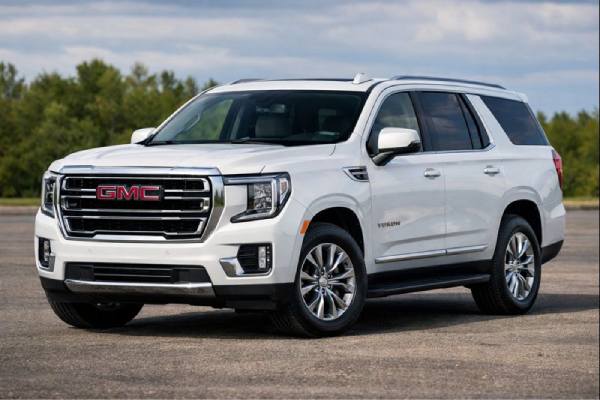
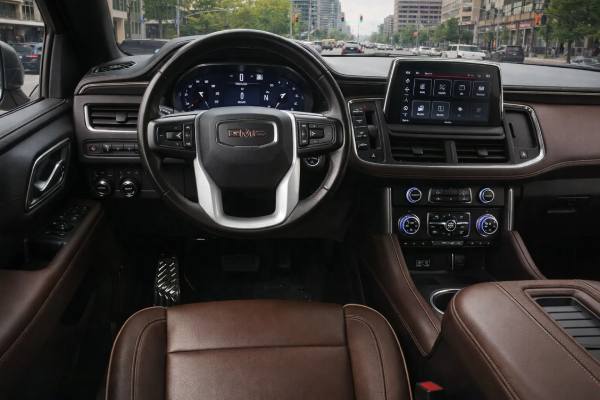
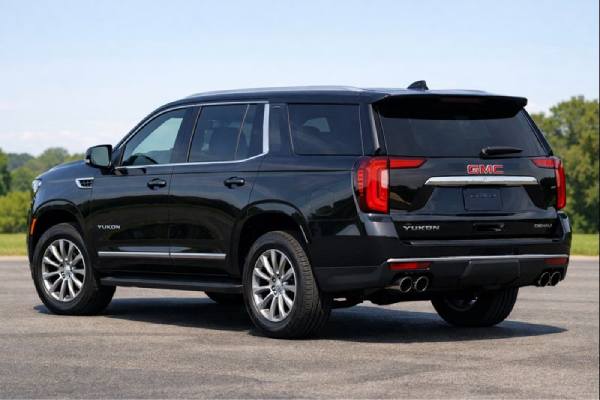
The 2021–2024 GMC Yukon 4WD on the T1 platform brings a very specific mix of strengths: full-size SUV space, true low-range 4×4 capability, and the LM2 3.0-liter Duramax inline-six diesel’s high-torque, low-rpm character. For owners who drive long distances, tow moderately often, or simply prefer relaxed highway running, the diesel pairs well with the 10-speed automatic—keeping revs low and making the Yukon feel calmer than many gas V8 versions.
At the same time, the Yukon’s complexity is real: modern emissions hardware, many control modules, and a heavy chassis that can accelerate wear if maintenance is delayed. If you approach it like a working vehicle—fluids on time, correct diesel consumables, and regular underbody checks—this configuration can be a durable, efficient long-haul family and tow platform.
What to Know
- Strong low-rpm pull makes towing and highway passing feel effortless compared with many gas setups.
- Excellent long-distance efficiency for a full-size 4×4 SUV, especially at steady speeds.
- Spacious three-row packaging with usable cargo room and stable towing manners.
- Emissions components (DEF/DPF sensors and valves) can be a higher-cost ownership area if ignored.
- Change engine oil and filter by the oil-life monitor, or at least every 12 months (whichever comes first).
Jump to sections
- Yukon LM2 4WD profile
- LM2 diesel specs tables
- Trims, options, and ADAS
- Reliability issues and recalls
- Maintenance plan and buying tips
- Real-world driving and economy
- Rivals and value comparison
Yukon LM2 4WD profile
Think of the 2021–2024 Yukon 4WD Duramax as a heavy-duty “daily” SUV that happens to be good at long-distance work. The T1UG generation moved the Yukon to an independent rear suspension, which helps ride comfort, third-row space, and overall stability. In practice, you get a quieter highway platform and a more controlled feel over broken pavement than many older solid-axle full-size SUVs.
The LM2 3.0-liter Duramax inline-six diesel is the heart of this package. Even though peak horsepower (277 hp) is not the headline number, the torque curve is: it delivers strong pulling power low in the rev range, which is exactly what you want in a 4×4 SUV that can tow and carry. Around town, it often feels less “busy” than a gasoline engine because it does not need to rev high to move the Yukon with authority.
The 4WD system matters just as much as the engine. Most Yukons in this configuration use a transfer case with multiple modes (2HI for dry roads, 4HI for low-traction surfaces, and 4LO for slow-speed control). If your truck has Auto 4WD, it can blend front axle engagement when slip is detected—useful in mixed winter conditions.
Who is it for? It suits owners who:
- Drive long highway routes and value range and relaxed cruising.
- Tow a camper, boat, or utility trailer often enough to care about low-rpm torque.
- Want full-size cabin space but prefer a more efficient powertrain than a big gas V8.
Who should be cautious? Short-trip, stop-start usage—especially in cold weather—can stress modern diesel emissions systems. If your Yukon will mostly do 5–10 minute commutes, the diesel’s advantages shrink, and the maintenance/repair risk can rise.
LM2 diesel specs tables
Below are practical, owner-relevant specs for the 2021–2024 GMC Yukon 4WD with the LM2 3.0L Duramax diesel. Some values vary by trim, axle ratio, tire package, and tow equipment, so treat “range” figures as normal and verify on your build sheet and door-jamb labels.
Engine and performance
| Item | Specification |
|---|---|
| Engine code | LM2 |
| Layout | Inline-6 turbo-diesel |
| Displacement | 3.0 L (2,993 cc) |
| Induction | Turbocharged |
| Fuel system | Common-rail direct injection (diesel) |
| Max power | 277 hp (207 kW) @ rpm (varies by calibration) |
| Max torque | ~624 Nm (460 lb-ft) @ low rpm (varies by calibration) |
| Timing drive | Chain (service access is labor-intensive on many modern diesels—plan accordingly) |
| Emissions hardware | DPF + SCR/DEF + EGR (market-dependent) |
Transmission and driveline
| Item | Specification |
|---|---|
| Transmission | 10-speed automatic (commonly referred to as “10L80” family) |
| Drive type | 4×4 (2HI/4HI/4LO; Auto 4WD on some trims) |
| Transfer case | 2-speed (varies by trim/package) |
| Differentials | Open diffs common; some packages add electronic locker or enhanced traction logic |
Typical 10-speed gear ratios (common family set)
These ratios are widely used in GM 10-speed applications; your exact calibration may differ slightly.
| Gear | Ratio |
|---|---|
| 1st | 4.696 |
| 2nd | 2.985 |
| 3rd | 2.146 |
| 4th | 1.769 |
| 5th | 1.520 |
| 6th | 1.275 |
| 7th | 1.000 |
| 8th | 0.854 |
| 9th | 0.689 |
| 10th | 0.636 |
| Reverse | 4.866 |
Dimensions and capacities (regular wheelbase Yukon)
| Item | Typical figure (varies by trim) |
|---|---|
| Length | ~5,334 mm (~210.0 in) |
| Wheelbase | ~3,071 mm (~120.9 in) |
| Width | ~2,057 mm (~81.0 in) (without mirrors) |
| Height | ~1,943–1,948 mm (~76.5–76.7 in) |
| Ground clearance | ~200 mm (~7.9 in) range |
| Fuel tank | ~91 L (~24.0 US gal / ~20.0 UK gal) |
| Cargo volume | ~722 L (~25.5 ft³) behind 3rd; up to ~3,479 L (~122.9 ft³) max (varies by seat config) |
Performance and capability (typical)
| Item | Typical figure (varies) |
|---|---|
| 0–60 mph (0–97 km/h) | ~8–9 s range |
| Towing capacity | Up to ~3,700–3,800 kg (~8,200–8,400 lb) with proper package; lower on some trims |
| Payload | Often ~600–800 kg (~1,300–1,750 lb), highly trim-dependent |
Fluids and service capacities (verify by VIN)
| System | Spec (common) | Approx. capacity |
|---|---|---|
| Engine oil | GM diesel spec (often dexosD) | ~6.6–7.0 L (~7.0–7.4 US qt) |
| Coolant | OAT coolant (Dex-Cool family) | varies (large system; verify) |
| ATF | GM-spec ULV ATF for 10-speed | varies; verify service method |
| Transfer case | GM transfer case fluid | varies by case |
| Front/rear diffs | Gear oil spec varies by diff | varies |
| DEF (AdBlue) | ISO 22241 DEF | tank size varies; keep above 1/4 in winter |
Electrical (typical)
| Item | Typical figure |
|---|---|
| System | 12 V with high-output alternator (varies by package) |
| Battery | AGM common on higher trims; size/CCA vary |
Safety and driver assistance (high-level)
| Item | Notes |
|---|---|
| Structure | Full-size body-on-frame SUV with modern crash structure |
| Airbags | Multi-airbag system; count/layout varies by year and trim |
| ADAS | Forward collision alert/AEB availability varies; adaptive cruise and lane support often package-dependent |
| Ratings | Availability and publication vary by region and test body; verify for your exact year/trim |
Trims, options, and ADAS
For 2021–2024, Yukon trims typically include SLE, SLT, AT4, and Denali (market availability varies). The LM2 diesel is usually an option rather than the default engine, and availability can change year to year—so you want to identify your exact build before comparing features.
Quick trim personality guide
- SLE: The value and fleet-friendly entry point. Look for simpler wheel/tire packages and fewer electronic features. It can be an excellent diesel buy because fewer luxury modules means fewer expensive “nice-to-have” repairs later.
- SLT: Adds comfort and convenience, often including upgraded seating surfaces, better infotainment/audio options, and more available driver-assistance packages.
- AT4: The most off-pavement-focused Yukon trim. It typically brings off-road tires, skid protection, and a more rugged approach to traction management. On a diesel AT4, pay extra attention to tire type and axle gearing because they influence both towing and fuel economy.
- Denali: Luxury-focused with more standard tech and higher-end interior options. It is often quieter and more feature-rich, but complexity increases: power steps, camera systems, advanced audio, and additional controllers.
Option packages that matter mechanically
- Max trailering / enhanced trailering equipment: Often changes hitch hardware, cooling strategy, rear camera provisions, and can raise tow ratings when paired with the correct axle ratio and tires. If towing is the reason you are shopping, prioritize a Yukon that has the right trailering equipment already installed.
- Air suspension / adaptive damping (if equipped): Improves ride and leveling but adds cost and diagnostic complexity as the vehicle ages.
- Wheel and tire packages: Larger wheels can reduce ride compliance and may slightly hurt economy. More aggressive all-terrain tires improve grip but can raise cabin noise and reduce range.
How to identify equipment quickly
- Use the RPO (Regular Production Option) sticker (often in the glove box or spare tire area) or a build sheet if available.
- Verify the presence of transfer-case mode selector and whether Auto 4WD is included.
- For trailering, check for the factory integrated brake controller and the trailer camera connections.
Safety systems and ADAS notes
Expect standard stability control, traction control, and modern brake electronics across the range. Advanced systems—adaptive cruise control, lane centering/lane keep assist, blind-spot monitoring, rear cross-traffic alert, and 360° camera—vary by trim and package. If you rely on ADAS, confirm it works cleanly on a test drive and that the windshield, bumpers, and grille areas show no signs of poor repairs (sensor alignment matters).
Reliability issues and recalls
Reliability on the diesel Yukon is less about the base engine surviving (modern diesels can run a long time) and more about whether the supporting systems are cared for: emissions controls, sensors, cooling, electronics, and driveline fluids. Below is a practical way to think about common risk areas.
Common (watch closely)
- Diesel emissions faults (medium to high cost):
Symptoms: Check engine light, reduced power messages, higher DEF use, frequent regenerations, or poor fuel economy.
Likely causes: NOx sensors, EGR valve behavior, soot loading in the DPF (diesel particulate filter), DEF quality issues, or software calibration needs.
Remedy: Proper scan diagnosis (not parts-dart), verify DEF quality, check for software updates, and address the root cause early—driving “through” faults can cascade into more expensive repairs. - Cooling and charge-air system leaks (medium cost):
Symptoms: Coolant smell, low coolant warnings, inconsistent power, whistle/hiss under boost.
Likely causes: Hose connections, intercooler piping, clamps, or heat exchanger leaks.
Remedy: Pressure test and repair leaks; confirm proper bleeding procedure afterward.
Occasional (depends on use)
- 10-speed drivability concerns (medium cost):
Symptoms: Harsh shifts, shudder, hunting between gears, delayed engagement.
Likely causes: Fluid condition, calibration, adaptive learning issues, or internal valve-body wear in higher-mileage units.
Remedy: Start with correct fluid and software checks; avoid “universal” fluids and quick fixes. - 4WD transfer case service neglect (medium cost):
Symptoms: Binding, noise, delayed engagement, “Service 4WD” warnings.
Likely causes: Old fluid, actuator issues, or misuse (running 4HI on dry pavement).
Remedy: Correct fluid service intervals and proper mode use. Engage 4WD modes periodically (as recommended) to keep actuators healthy.
Rare but expensive (budget risk)
- Timing drive and major engine labor events (high cost):
Some modern diesel layouts can make timing service labor-intensive. If you hear persistent unusual mechanical noise or see correlation/timing faults, treat it as a serious diagnostic item.
Recalls, service campaigns, and software
Rather than guessing which recall applies to which truck, treat recall verification as a required step:
- Run an official VIN recall check and confirm completion records.
- Ask for proof of any dealership-performed software updates (engine, transmission, and safety modules).
- Confirm that warning lights are not “recently cleared” before the test drive.
If the seller cannot show recall completion or service history, price the vehicle as though you will need baseline fluids, filters, and diagnostic time immediately.
Maintenance plan and buying tips
A diesel Yukon rewards routine. The goal is simple: keep fluids fresh, keep the diesel aftertreatment system healthy, and prevent small faults from turning into expensive parts swaps.
Practical maintenance schedule (baseline)
Use the oil-life monitor (OLM) as primary guidance, but anchor it with time and distance limits:
- Engine oil and filter: per OLM, at least every 12 months. Use the correct GM diesel oil specification (often dexosD) and the proper viscosity for your climate.
- Fuel system care: keep water/contamination out. If your market includes a serviceable fuel filter/water separator, follow the official interval; if not, be strict about fuel quality and replace filters on schedule.
- Air filter: inspect at every oil service; replace sooner in dusty conditions.
- Cabin filter: every 12 months or 15,000–20,000 km (9,000–12,000 mi) depending on environment.
- Transmission fluid: follow the severe-service interval if you tow, idle often, or drive in heat. A conservative approach is to service earlier rather than later, using only the correct ULV fluid.
- Transfer case and differentials: service more frequently if you tow or drive off-road. Old fluid is one of the easiest ways to shorten transfer case life.
- Brake fluid: every 2 years is a sensible baseline.
- Coolant: follow the long-life coolant schedule, but inspect level and condition at every oil service.
- DEF: keep it fresh and uncontaminated; avoid old containers that have been open for months.
Essential torque values (decision-useful, commonly cited)
- Wheel lug nuts: typically 190 Nm (140 lb-ft) on many GM full-size SUVs (verify your wheel type).
- For other fasteners (brakes, driveline), follow the exact service manual for your VIN—variations are common.
Buyer’s checklist (diesel-focused)
- Cold start test: listen for abnormal mechanical noise and confirm smooth idle.
- Regeneration clues: ask how often the vehicle does long highway drives. Short-trip use is harder on DPF systems.
- Scan tool check: request a pre-purchase scan for stored codes, soot load data (if available), and transmission history.
- 4WD function check: verify 2HI/4HI/4LO engagement on a loose surface; ensure no warning messages.
- Cooling system: check for seepage at hose joints and heat exchangers; inspect coolant level stability.
- Tow equipment verification: confirm hitch rating, brake controller presence, and that trailer lighting functions correctly.
Best used-buy pattern: one-owner or well-documented fleet maintenance, consistent highway miles, and proof of correct fluids. Avoid “mystery diesel” trucks with mixed short-trip usage and no service records.
Real-world driving and economy
On the road, the LM2 diesel Yukon is about composure. The engine’s torque arrives early and stays useful, so normal driving rarely feels strained. In city traffic, the 10-speed can “stack” ratios closely, which helps keep the diesel in its sweet spot. When everything is calibrated well, shifts are smooth and the Yukon moves with steady, confident momentum rather than quick bursts.
Ride, handling, and NVH
The independent rear suspension helps this generation feel more controlled than older full-size SUVs, especially with passengers in the third row. Steering is typically light-to-moderate in effort, tuned for stability rather than feedback. Cabin noise at highway speed is often lower than you would expect from a body-on-frame 4×4, though tire choice can change the result dramatically—aggressive all-terrain tires add hum and can reduce fuel economy.
Powertrain character
The diesel’s best trait is how little drama it needs. Passing at 80–120 km/h (50–75 mph) typically requires less downshifting than a smaller gas engine. It will still downshift when needed, but the engine’s midrange torque means it often holds a taller gear and stays quieter.
Real-world efficiency
Fuel economy varies strongly with speed, tire type, temperature, and load. Typical patterns owners report:
- Highway cruising: often lands around 9.5–11.0 L/100 km (21–25 mpg US / 25–30 mpg UK) at steady speeds.
- Mixed driving: commonly 11–13 L/100 km (18–21 mpg US / 22–25 mpg UK).
- Winter/short trips: expect a noticeable penalty due to warm-up time and aftertreatment behavior.
Towing behavior and penalties
With a properly equipped trailering package, the diesel Yukon feels stable and unhurried with moderate trailers. The key is temperature management and setup:
- Use tow/haul mode for better shift logic and engine braking.
- Expect 30–50% higher consumption under moderate towing, and more under heavy loads or high speeds.
- Keep DEF topped up and do not ignore emissions warnings—towing while faults are active can push systems into limp strategies.
If your towing is frequent and heavy, the diesel’s calm pulling character is a real advantage. If towing is rare and your driving is mostly short trips, a gas powertrain may be a simpler ownership fit.
Rivals and value comparison
The Yukon 4WD diesel sits in a unique corner of the full-size SUV market. Few direct rivals combine three rows, true 4×4 with low range (on many trims), and a torquey diesel option. Still, cross-shopping usually includes these alternatives:
Ford Expedition 4×4 (EcoBoost V6)
Why choose it: Strong power, brisk acceleration, widespread service network, and good packaging.
Where the Yukon diesel wins: Low-rpm towing feel and long-distance fuel economy potential.
Decision tip: If you value quick performance and don’t mind higher fuel use under load, the Expedition is compelling. If you want relaxed highway torque and efficiency, the diesel Yukon holds appeal.
Toyota Sequoia (hybrid i-FORCE MAX)
Why choose it: Strong reliability reputation and powerful hybrid torque.
Where the Yukon diesel wins: Often better real-world highway range behavior in some use cases, and more traditional cargo packaging depending on seat layout.
Decision tip: If you prioritize long-term simplicity and are comfortable with the hybrid layout, Toyota is strong. If you want diesel towing character and familiar GM truck serviceability, Yukon diesel can fit better.
Jeep Wagoneer 4×4
Why choose it: Big interior, strong power, premium feel.
Where the Yukon diesel wins: Efficiency and often a calmer, lower-rpm towing rhythm.
Decision tip: Compare total cost of ownership expectations—both are complex, but the diesel’s fuel savings can matter for high-mile drivers.
Chevrolet Tahoe diesel (same platform family)
Why choose it: Similar fundamentals with different trim pricing and styling.
Where the Yukon diesel wins: Denali/AT4 positioning, GMC-specific equipment mixes, and resale patterns in some markets.
Decision tip: Shop the best-maintained example across both brands; condition and service history matter more than badge.
The real value question
A used diesel Yukon becomes a strong value when:
- It has documented maintenance with correct diesel fluids and filters.
- It has a driving profile that suits diesel aftertreatment (regular longer drives).
- It already has the towing equipment you need.
If those boxes are not checked, you can still buy one—but you should price in baseline servicing, diagnostics, and the possibility of emissions-related repairs. In this segment, buying the “right” truck usually costs less than fixing the wrong one.
References
- 2021 GMC Trailering Guide 2021 (Trailering Guide) ([rparts-sites.s3.amazonaws.com][1])
- 2024 GMC Yukon 4WD 2024 (Fuel Economy Data) ([Dealer e Process][2])
- SaferCar App: Vehicle Safety Recalls App 2024 (Recall Database Access) ([NHTSA][3])
Disclaimer
This article is for informational purposes only and is not a substitute for professional diagnosis or repair. Specifications, torque values, service intervals, and procedures vary by VIN, market, model year, and installed equipment. Always verify details using official owner information, service documentation, and dealership records for your exact vehicle.
If this guide helped, consider sharing it on Facebook, X (Twitter), or your favorite forum to support our work.