
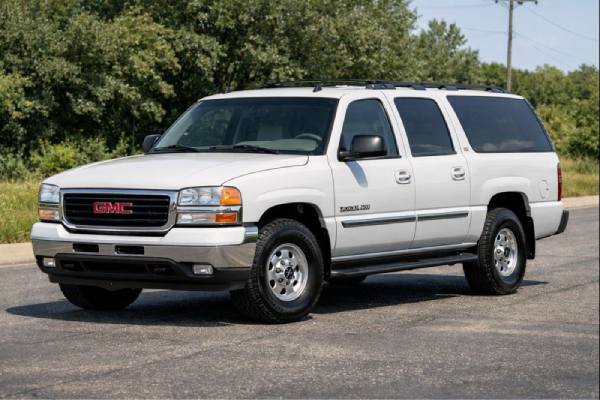
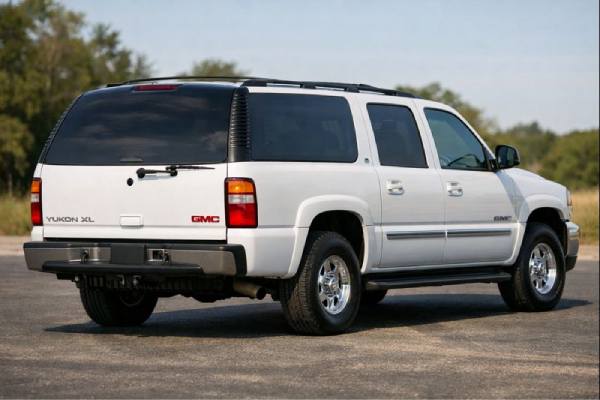
The GMT800 Yukon XL 2500 RWD with the 8.1-liter L18 is a niche full-size SUV built for one job: moving a lot of weight with less drama than a half-ton can manage. You get a heavy-duty frame, stout running gear, and a “big-block” V8 that makes towing and loaded highway climbs feel easy. The trade-off is obvious—fuel use is high, and parts like brakes, tires, and cooling components live a harder life if the truck was used as intended.
For owners and buyers, this model is less about 0–60 times and more about predictable torque, thermal margin, and durability under load. If you want a three-row body with serious trailer capability and simpler electronics than newer SUVs, this is one of the last of its kind.
Owner Snapshot
- Strong low-rpm torque makes heavy towing calmer and reduces downshifts on grades.
- 2500-series chassis and 4L80E driveline are built for sustained load, not occasional weekend use.
- Parts and service knowledge are widespread, which helps long-term ownership.
- Expect higher fuel consumption and plan cooling and brake upkeep if it spent time towing.
- Change engine oil about every 8,000 km (5,000 mi) or 6 months (sooner for severe use).
Contents and shortcuts
- Big-block Yukon XL 2500 basics
- L18 and chassis spec tables
- Trims, towing packages, and safety
- Common faults and service fixes
- Maintenance plan and buyer checklist
- Road manners and tow feel
- Rival SUVs worth considering
Big-block Yukon XL 2500 basics
This Yukon XL 2500 variant sits in a sweet spot between “family SUV” and “work truck.” It keeps the long-wheelbase, three-row body and a comfortable driving position, but it uses heavier-duty underpinnings than the 1500 models. The headline is the L18 8.1-liter V8 (often referred to as the Vortec 8100 family). In stock form for these years, it’s tuned for torque and heat control, not peak horsepower. That matters because towing and hauling are about maintaining speed without constantly hunting gears or overheating on long grades.
The other key piece is the drivetrain pairing. Most of these trucks use the 4L80E 4-speed automatic, a transmission known for handling torque and load better than lighter-duty units when maintained correctly. In RWD form you avoid transfer-case complexity, reduce driveline rotating mass, and typically simplify service. The downside is traction: if you live in snow country, a 2WD 2500 benefits hugely from the right tires and sensible ballast when unloaded.
Where this model really earns its keep is stability. The XL wheelbase helps with trailer manners, and the 2500 chassis typically brings higher axle and tire capacities and stronger cooling and braking hardware. Still, the “HD” label doesn’t make it maintenance-free. Many examples have lived hard lives: sustained towing, lots of idling, and heavy city driving with weight onboard. That history shows up in cooling systems, brakes, steering wear, and transmission temperature control.
As an ownership proposition today, think of it like a tow-capable platform that also happens to have three rows. If you need to pull a substantial trailer several times a month, it can be cheaper and simpler than stepping into a newer half-ton with complex turbocharging or cylinder deactivation systems. If you mostly commute solo, the fuel and wear costs are the wrong kind of “premium.”
L18 and chassis spec tables
Below are specs you can use for planning, comparison, and service decisions. Exact figures vary by model year, axle ratio, and option content, so treat this as a configuration guide and verify by VIN/build codes when you’re ordering parts.
Engine and performance
| Item | Spec |
|---|---|
| Code | L18 (Vortec 8100 family) |
| Engine layout and cylinders | V8, OHV (pushrod), 2 valves/cyl |
| Displacement | 8.1 L (8,128 cc) |
| Induction | Naturally aspirated |
| Fuel system | Sequential port injection (PFI) |
| Compression ratio | ~9.1:1 (typical for this family; confirm by year) |
| Max power | 320 hp (239 kW) @ ~4,200 rpm |
| Max torque | ~597 Nm (440 lb-ft) @ ~3,200 rpm (typical rating) |
| Timing drive | Chain |
| Emissions/efficiency standard | U.S. EPA era-appropriate OBD-II |
| Rated efficiency (ICE) | Often not EPA-labeled if configured above 8,500 lb GVWR; plan by real-world use |
| Real-world highway @ 120 km/h (75 mph) | Commonly ~18–22 L/100 km (13–11 mpg US / 16–13 mpg UK), load and gearing dependent |
Transmission and driveline
| Item | Spec |
|---|---|
| Transmission | 4-speed automatic, typically 4L80E |
| Gear ratios | 1st 2.48 / 2nd 1.48 / 3rd 1.00 / 4th 0.75 / Rev 2.07 |
| Final drive ratio | Commonly 3.73 or 4.10 depending on tow package (verify RPO code) |
| Drive type | RWD |
| Differential | Typically open; limited-slip optional on some builds |
Chassis and dimensions
| Item | Spec |
|---|---|
| Suspension (front/rear) | Independent front (torsion bar) / solid rear axle with multi-link and coils (typical for GMT800 SUVs) |
| Steering | Recirculating ball, power assist |
| Brakes | 4-wheel disc with ABS (rotor sizes vary by year/package) |
| Wheels/tires | Often 8-lug HD fitment; sizes vary by trim and year |
| Length / width / height | ~5,560 mm (219 in) / ~2,000 mm (79 in) / ~1,940 mm (76 in) |
| Wheelbase | ~3,302 mm (130 in) |
| Turning circle (kerb-to-kerb) | ~13.0 m (43 ft) class-typical |
| Kerb (curb) weight | Often ~2,800–3,000 kg (6,200–6,600 lb) depending on equipment |
| GVWR | Commonly around ~3,900 kg (8,600 lb) (varies; verify door sticker) |
| Fuel tank | Typically ~148 L (39 US gal / 32.5 UK gal) |
| Cargo volume | Approximately ~1,250 L (44 ft³) seats up; up to ~3,700 L (130 ft³) max (method varies) |
Performance and capability
| Item | Typical range |
|---|---|
| 0–100 km/h (0–62 mph) | ~8.5–10.0 s (traction and gearing matter) |
| Braking 100–0 km/h | Highly tire/brake dependent; measure after inspection/service |
| Towing capacity | Often ~4,500–5,400 kg (10,000–12,000 lb) with correct equipment |
| Payload | Commonly ~900–1,300 kg (2,000–2,900 lb), door sticker is the truth |
Fluids and service capacities
| Item | Spec (typical) |
|---|---|
| Engine oil | 5W-30 meeting GM gasoline spec of the era; capacity commonly ~6.6 L (7.0 US qt) with filter (confirm by year) |
| Coolant | Dex-Cool type, 50/50 mix; capacity varies with rear heat options |
| Transmission/ATF | DEXRON-III era fluid; capacity varies by service method (pan vs total) |
| Differential | 75W-90 gear oil; capacity depends on axle type |
| A/C refrigerant | R-134a; charge varies by front/rear A/C configuration |
Electrical
| Item | Typical spec |
|---|---|
| Alternator output | Often 145 A class (varies by options) |
| 12V battery | Group size and CCA vary; many HD builds use Group 78 class |
| Spark plug gap | Commonly ~1.52 mm (0.060 in) for this era (confirm by underhood label/manual) |
Safety and driver assistance
| Item | Notes |
|---|---|
| Crash ratings | Ratings may not exist for every 2500/GVWR configuration; check the closest configuration in official databases |
| ABS | Standard |
| Stability control | Availability varies by year/trim (often introduced or expanded mid-run) |
| Airbags | Dual front airbags standard; side airbags availability varies by year/trim |
| Child-seat provisions | LATCH availability varies by seating position/year; verify in the owner manual |
Trims, towing packages, and safety
For the Yukon XL 2500 RWD, trims are usually simpler than Denali-focused 1500 models. Expect common retail trims like SLE and SLT, with seating and convenience packages doing most of the differentiation. The mechanical “personality” comes less from the badge and more from axle ratio, cooling, hitch equipment, and rear-axle configuration.
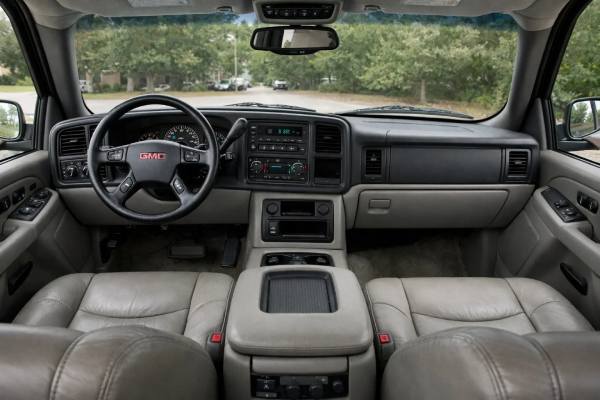
Start with seating and interior identifiers. Bench vs captain’s chairs changes how the truck feels day-to-day and can hint at how it was used. A clean, lightly worn third row often suggests family duty; a removed or rarely used third row, plus a worn hitch receiver, points to towing work. Infotainment on this generation ranges from basic radio units to factory navigation on higher trims, and audio upgrades are common. Don’t treat electronics condition as cosmetic—HVAC actuators, steering wheel controls, and instrument cluster behavior can reveal deeper electrical health.
Option packages matter most in three areas:
- Cooling and towing hardware. A proper tow package typically adds transmission cooling and wiring/hitch provisions. On an 8.1L truck, that transmission temperature control is a big deal. If you plan to tow, prioritize a build that already has the right cooling stack and hitch hardware rather than retrofitting piece-by-piece.
- Axle ratio. A 4.10-equipped truck tends to feel more eager at low speed and can hold gears better on grades, while a 3.73 can be calmer at cruise. Neither is “always better”—it depends on trailer weight, typical terrain, and how often you’re driving unloaded.
- Brakes and wheels. The 2500’s HD wheel and brake setup costs more to refresh than a 1500, but it also tolerates load better when maintained.
On safety, keep expectations anchored to the era. You typically have ABS and front airbags, with side airbags and stability control varying across the production run and trim level. Driver assistance technology as we think of it today—automatic emergency braking, lane keeping, adaptive cruise—was not part of this platform’s original design. That means you should put more emphasis on fundamentals: tire quality, brake condition, alignment, and lighting.
For official safety ratings, some heavy-duty or high-GVWR configurations aren’t tested or published the same way as lighter models. If you can’t find an exact match for “Yukon XL 2500 RWD 8.1,” look up the closest year/body style and then treat the result as context, not a guarantee. The most practical safety “upgrade” you can make is ensuring the braking system, tires, and suspension are in top condition—because those are what keep a 3-ton SUV stable when something unexpected happens.
Common faults and service fixes
A well-maintained 8.1 Yukon XL 2500 can run a long time, but age and towing use create predictable patterns. Below is a prevalence-and-cost way to think about problems so you can prioritize inspections.
Common, lower-cost issues (often age-related)
- Instrument cluster glitches (intermittent gauges, dead backlighting): usually cluster electronics; repair or rebuild is the typical remedy.
- HVAC blend/mode actuator failures (clicking behind dash, wrong vent mode, inconsistent temperature): replace the failed actuator and recalibrate if required.
- Fuel pump module wear (hard starts, loss of power under load, whining): replace the pump module; inspect electrical connector and ground quality.
- Front-end steering wear (wander, clunks over bumps, uneven tire wear): idler and pitman arms, tie rods, and alignment are common fixes on GMT800 trucks.
Common, medium-cost issues (use and load amplify them)
- Cooling system fatigue (weeping water pump, radiator seepage, hose degradation): fix early—an 8.1 under load makes heat fast. Replace worn components as a system, not one at a time.
- Exhaust manifold leaks (ticking on cold start, sooty marks): hardware and gasket service; sometimes broken bolts increase labor.
- Brake wear and vibration (pulsation, pulling, overheated pads after towing): inspect calipers, slide pins, and rotor condition; refresh with load-appropriate pads and properly bed them.
Occasional but potentially expensive
- 4L80E shift quality problems (flare, harsh shifts, converter shudder): start with fluid condition, cooler flow, and scan for codes. Heat kills automatics—many “transmission problems” begin as cooling problems.
- Rear axle seal or bearing wear (gear oil smell, wet backing plates, growl): address promptly to prevent ring-and-pinion damage.
- Brake line corrosion (soft pedal, visible rust scaling): replace compromised lines before they fail—this is a high-consequence issue.
Rare but high-impact
- Severe overheating events (loss of coolant unnoticed, towing with marginal cooling): can lead to head gasket issues and warped components. Your best defense is preventive cooling service and watching temperature behavior under load.
Recalls, service actions, and verification
Because these trucks sit in a wide GM family, recalls can affect them in batches—sometimes tied to specific years, assemblies, or suppliers. Don’t rely on memory or the seller’s assurances. Run an official VIN check and ask for dealer documentation showing completed recall work. If the truck has a towing history, also ask specifically about transmission cooling-related service and any history of overheating or “limp mode.”
Pre-purchase, a short test drive isn’t enough. If possible, scan live data (coolant temp, transmission temp if available), check for stored codes, and inspect underneath for leaks and corrosion. The fastest way to turn a “great deal” into a money pit is buying a tow rig that was maintained like a commuter.
Maintenance plan and buyer checklist
A simple rule for the 8.1 Yukon XL 2500: service it like a truck, not like a modern appliance. The goal is to control heat, protect lubricants, and keep steering and brakes tight—especially if you tow.
Practical maintenance schedule
- Engine oil and filter: every 8,000 km (5,000 mi) or 6 months; for frequent towing, short trips, or high idle time, shorten to 5,000 km (3,000 mi). Use the correct viscosity and quality filter.
- Engine air filter: inspect every 15,000 km (10,000 mi); replace sooner in dusty use.
- Cabin air filter (if equipped): yearly or every 20,000 km (12,000 mi).
- Coolant: follow the coolant type guidance in the owner manual; refresh by condition and age (commonly 5 years as a planning number), and always fix seepage early.
- Spark plugs and wires: inspect around 160,000 km (100,000 mi) planning interval; replace sooner if misfires appear under load.
- Transmission fluid: for towing/severe use, plan a service around 50,000 km (30,000 mi) to 80,000 km (50,000 mi) intervals. Ensure the cooler system is healthy.
- Rear differential oil: service around 80,000 km (50,000 mi) in severe use; inspect for leaks at every oil change.
- Brake fluid: every 2 years is a sensible safety interval.
- Brake pads/rotors: inspect every tire rotation; towing demands more frequent checks.
- Tires and alignment: rotate every 10,000–12,000 km (6,000–7,500 mi); align if you see edge wear or steering wander.
- 12V battery and charging: test yearly; replace on condition, typically within 4–6 years depending on climate and usage.
Key fluids and decision-use torque values
| Item | Typical value (verify by year) |
|---|---|
| Wheel lug nuts | ~190 Nm (140 lb-ft) for many 8-lug GM HD setups |
| Engine oil drain plug | ~25 Nm (18 lb-ft) class-typical |
| Spark plugs | ~20 Nm (15 lb-ft) class-typical |
Buyer’s guide checklist
- Cooling health: look for crusted residue at hose joints, radiator seams, and water pump; confirm stable temps on a long drive.
- Transmission behavior: smooth engagement in reverse/drive, no flare on 2–3 shift, no shudder at steady throttle; check fluid smell and color.
- Steering and front end: excessive play, clunks, or uneven tire wear suggest worn linkage and poor alignment.
- Brake system: pedal feel, straight stops, and visual line condition underneath; corrosion here is a walk-away item unless priced and planned.
- Rear axle leaks: wetness at pinion seal or axle ends; listen for growl that changes with speed.
- Rust hotspots: frame sections, brake lines, fuel lines, rocker areas, and body mounts—especially on salted-road trucks.
- Tow evidence: worn receiver, wiring splices, aftermarket brake controller wiring; ask about trailer weight and frequency.
Long-term, the best examples are the ones that were serviced proactively, not just “when something broke.” If you find one with documented cooling and transmission service and a clean underbody, it can be a very durable heavy-duty family hauler.
Road manners and tow feel
Unloaded, the Yukon XL 2500 RWD drives like what it is: a long, heavy SUV on a truck frame. It tracks straight and feels stable at highway speed, but it won’t hide its mass in quick transitions. Steering is typically light-to-moderate with less precision than modern rack-and-pinion systems, and worn front-end parts show up as wander or a need for constant small corrections. If the truck feels “busy” on the highway, don’t assume it’s normal—alignment, tire choice, and idler/pitman wear often change the character dramatically.
The 8.1’s power delivery is the highlight. Around-town throttle response tends to be smooth rather than sharp, but it pulls with authority once you lean into it. The torque curve is what makes this package special: it reduces the need for high rpm and helps the truck maintain speed on grades without feeling frantic. Paired with the 4L80E, you’ll notice wide ratio steps compared with modern 6–10 speed automatics. That means more obvious downshifts, especially into 2nd on steep climbs, but it also means fewer moving parts and a well-understood service path.
Noise and vibration (NVH) are generally good for the era when the truck is healthy. Common NVH complaints usually trace back to tires (cupping), driveline angles, or exhaust leaks. At 120 km/h (75 mph), the cabin can be surprisingly calm, but wind noise around seals and mirrors increases with age and door alignment.
Under load, this is where the 2500 shines. Trailer stability benefits from the XL wheelbase, and the big-block’s torque makes merging and hill climbs less stressful. Expect fuel consumption to rise sharply when towing; the more aerodynamic drag your trailer creates, the more dramatic the penalty. Also expect braking distances to stretch unless the trailer brakes are correctly set up and the SUV’s brakes are in excellent condition.
For traction, RWD is workable, but tires decide everything. A high-quality all-terrain or all-season with strong wet grip, plus sensible weight distribution, makes the truck far more predictable. If you routinely deal with steep, slick ramps or winter roads, the RWD limitation is real—plan accordingly.
Rival SUVs worth considering
If you’re shopping a Yukon XL 2500 RWD 8.1, you’re usually chasing one of three goals: heavy towing, maximum interior volume, or old-school serviceability. Here’s how the main alternatives stack up.
Chevrolet Suburban 2500 (same era)
This is the closest cousin and often the most rational cross-shop. You’ll see similar powertrains and running gear, and parts overlap is excellent. Buy based on condition, rust, and maintenance history rather than brand preference. If you find a cleaner Suburban 2500 with better records, take it.
GMT800 2500 with 6.0 (LQ4/LQ9 family)
If you tow “moderately heavy” rather than “always heavy,” the 6.0-liter trucks can be a better ownership balance. They typically use less fuel than the 8.1 and still tow confidently with the right gearing. If you’re under the top end of this platform’s towing envelope most of the time, the 6.0 may be the smarter long-term choice.
Ford Excursion (V10 or diesel, depending on year)
This is the other big-body tow-focused SUV people compare. It can offer excellent towing stability and huge interior volume. The downside is that costs and complexity can climb depending on engine choice, and clean examples can be harder to find. Choose it if you prioritize maximum body size and you’re comfortable with Ford-specific service needs.
Half-ton SUVs (Yukon XL 1500, Tahoe/Suburban 1500)
These are usually quieter, slightly easier to live with, and cheaper to refresh in some areas. But if you’re towing heavy frequently, a 1500 often runs out of thermal margin and payload earlier than you want. Choose a half-ton if you tow occasionally and mostly drive unloaded.
Modern full-size SUVs and half-ton trucks
Newer platforms bring more gears, more driver assistance, and better fuel economy in some cases. They also bring more complexity and higher buy-in cost. If you want a “known quantity” tow rig you can keep on the road with straightforward service, the GMT800 HD formula still makes sense—assuming you can find a well-maintained example.
Bottom line: the 8.1 Yukon XL 2500 RWD is a specialized tool. It’s not the most efficient or modern, but it remains one of the most load-composed three-row SUVs of its era when properly maintained.
References
- 2001 Chevrolet Tahoe/Suburban Owner’s Manual – GM Answers 2001 (Owner’s Manual)
- Vehicle Detail Search – 2006 GMC YUKON 4 DR RWD 2006 (Safety Rating and Recall Database)
- Vehicle Safety Recalls Week 2025 (Recall Database)
- Product Recalls 2005 (Recall Notice PDF)
- Owner’s Manuals & Guides 2025 (Owner’s Manual Portal)
Disclaimer
This article is for informational purposes only and is not a substitute for professional inspection, diagnosis, or repair. Specifications, torque values, service intervals, and procedures vary by VIN, market, and equipment; always verify details using your official owner’s manual and service documentation for the exact vehicle you are working on.
If this guide helped, please consider sharing it on Facebook, X (Twitter), or your favorite forum to support our work.