
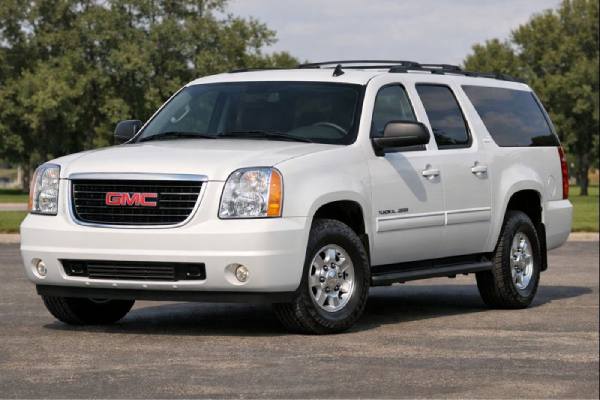
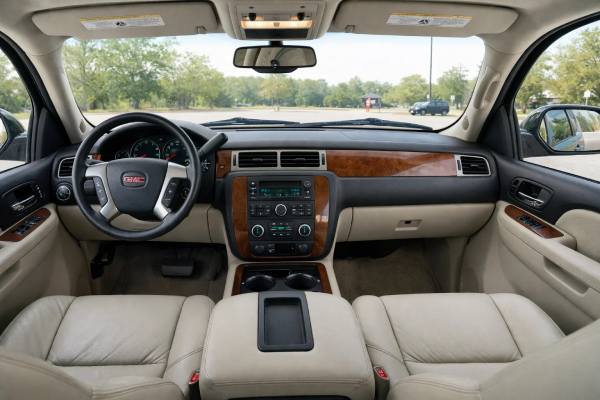
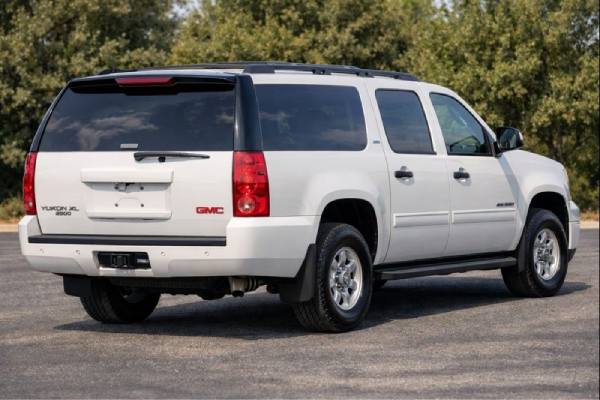
If you want a full-size SUV that feels “heavy-duty” without stepping up to a 2500-series platform, the 2007–2009 GMC Yukon XL RWD with the 6.0L L76 lands in a practical sweet spot. You get the long-wheelbase packaging (usable third-row space and a deep cargo bay) plus a stronger small-block V8 tune than the more common 5.3. The L76’s blend of variable valve timing and cylinder deactivation (AFM) gives it broad torque for towing and steady highway travel, while RWD keeps the driveline simpler and usually a bit cheaper to maintain than 4WD.
The tradeoff is that this remains a large, heavy SUV with truck running gear. Ownership goes best when you stay ahead of fluids, brakes, cooling health, and front-end wear—especially if the truck has towed regularly. Buy based on condition and maintenance history, and it can be a durable long-haul family and utility rig.
Quick Specs and Notes
- Strong V8 output and towing headroom for a family hauler, especially with the factory trailering setup.
- RWD layout is simpler than 4WD and typically a little cheaper to service long-term.
- Expect higher running costs than a 5.3: tires, brakes, and fuel add up quickly on short trips.
- Change engine oil about every 8,000–12,000 km (5,000–7,500 mi) (or sooner under towing/idle-heavy use).
- If it’s an AFM-equipped L76, listen for valvetrain ticking and verify consistent oil service history.
Contents and shortcuts
- L76 Yukon XL RWD focus
- Engine and chassis specifications
- Trims, packages, and safety
- Failure patterns and recalls
- Maintenance schedule and buyer tips
- Road manners and real mpg
- Rival SUVs worth considering
L76 Yukon XL RWD focus
This Yukon XL sits on GM’s GMT900 full-size SUV platform with a body-on-frame layout, independent front suspension, and a solid rear axle. That recipe is why the truck feels stable with a full cabin and luggage, and why it tolerates hitch loads better than most crossovers. The “XL” wheelbase is the real story: you’re not just adding a few inches for looks—you’re gaining third-row legroom that’s usable for adults for shorter trips and a cargo bay that can swallow bulky gear without playing Tetris.
The L76 6.0L is the differentiator. In this era it’s typically paired with a 6-speed automatic and tuned for strong midrange pull—useful for merging, passing, or towing without constant downshifts. Power ratings are commonly quoted around 366 hp with torque in the high 300 lb-ft range depending on calibration and model year. The key ownership point: it’s not a “sports SUV,” but it does feel meaningfully stronger and less strained than the 5.3 when the vehicle is loaded.
Choosing RWD changes the ownership equation. You lose low-range traction tricks and the snowbelt confidence of 4WD, but you gain:
- fewer rotating parts (no transfer case, no front differential/axle hardware),
- fewer fluids to service,
- less front-end complexity when diagnosing vibrations or noises,
- typically a small improvement in real-world fuel use.
Where this configuration shines:
- Long-distance family travel: stable, quiet enough at speed, and easy to pack.
- Light-to-moderate towing: boats, utility trailers, small campers—especially with the right axle ratio and a brake controller.
- Daily duty in milder climates: if you run good all-season tires and don’t need deep-snow capability.
Where it’s less ideal:
- frequent short trips (fuel economy and condensation-related maintenance suffer),
- heavy towing in hot climates without careful cooling-system upkeep,
- buyers who want modern ADAS—this generation is mostly “pre-AEB” and “pre-lane-keep.”
Engine and chassis specifications
Below are the most useful specs for the Yukon XL RWD with the L76 6.0L, focusing on what owners actually reference: outputs, capacities, dimensions, towing, and service-relevant details. Some figures vary by VIN, package, and model year; when in doubt, confirm with the under-hood labels, RPO codes, and your service information.
Engine and performance (L76)
| Item | Specification |
|---|---|
| Code | L76 |
| Layout | V8, OHV (pushrod), aluminum heads (typical Gen IV small-block architecture) |
| Displacement | 6.0 L (≈ 5,967 cc) |
| Induction | Naturally aspirated |
| Fuel system | Sequential port fuel injection (gasoline) |
| Compression ratio | ~10.4:1 (varies by calibration) |
| Bore × stroke | ~101.6 × 92.0 mm (4.00 × 3.62 in) |
| Max power | 366 hp (273 kW) @ 5,800 rpm |
| Max torque | ≈ 376 lb-ft (≈ 510 Nm) @ 4,400 rpm |
| Timing drive | Chain |
| Efficiency standard | EPA (U.S.) |
Transmission and driveline
| Item | Specification |
|---|---|
| Transmission | 6-speed automatic (commonly fitted with the 6.0 in this era) |
| Drive type | RWD |
| Typical axle ratios | Often 3.08–3.42 depending on trailering/HD cooling and market |
| Differential | Open rear diff common; limited-slip availability varies by package/market |
Dimensions and capacities (Yukon XL)
| Item | Specification |
|---|---|
| Wheelbase | 3,302 mm (130.0 in) |
| Length | 5,649 mm (222.4 in) |
| Width | ~2,009 mm (79.1 in) (without mirrors, commonly listed) |
| Height | ~1,951 mm (76.8 in) (varies by suspension/tires) |
| Turning circle (curb-to-curb) | ≈ 13.1 m (43.0 ft) (typical XL) |
| Fuel tank | ≈ 117 L (31.0 US gal / 25.8 UK gal) |
| Max cargo volume | ≈ 3,891 L (137.4 ft³) (configuration-dependent) |
Performance and capability (typical)
| Item | What to expect |
|---|---|
| 0–60 mph (0–97 km/h) | ~7–8 seconds (varies by axle ratio, tires, load) |
| Top speed | Typically speed-limited (often ~105 mph / 169 km/h) |
| Towing capacity | Up to ≈ 3,674 kg (8,100 lb) when properly equipped |
| Payload | Depends heavily on trim and options; check door-jamb sticker |
Fuel economy (EPA reference)
For Yukon XL 1500 2WD with a 6.0L and automatic 6-speed, EPA listings commonly land around 14 mpg city / 19 mpg highway (≈ 16.8 / 12.4 L/100 km) with a 16 mpg combined estimate.
Real-world highway at 120 km/h (75 mph) is often in the 14–17 L/100 km (14–17 mpg US / 17–20 mpg UK) range depending on wind, tires, and load.
Trims, packages, and safety
Trims and how to identify the “right” one
In most markets, Yukon XL trims in this era revolve around SLE and SLT (with Denali as a separate, more luxury/performance-oriented model typically using a different engine). For the L76 Yukon XL RWD specifically, what matters most is not the badge—it’s the equipment mix that changes towing, ride control, and operating cost.
Quick identifiers that affect ownership:
- RPO codes (glovebox/service parts label): This is your truth source. It confirms axle ratio, differential type, trailering package content, and sometimes suspension type. If you’re shopping remotely, ask for a clear photo of the RPO sticker.
- Trailering package cues: factory hitch receiver, integrated 7-pin wiring, transmission cooler, and in some configurations a higher-capacity cooling stack. These are the differences that keep transmission temps in check on grades.
- Suspension type: some trucks have self-leveling or adaptive damping. They ride well when healthy, but repairs cost more than standard shocks. If the rear sits low, bounces excessively, or the compressor runs often, budget accordingly.
- Seating configuration: many Yukon XLs can seat up to nine with a front bench, but most higher trims use front buckets and 7–8 passenger layouts. Choose based on how you actually carry people.
Year-to-year changes (2007–2009) tend to be incremental—infotainment revisions, minor package reshuffles, and option availability changes. The larger practical difference is what the prior owner selected (and maintained), not the calendar year.
Safety structure and restraint systems
These GMT900 SUVs generally include:
- front airbags,
- full-length side curtain airbags (noting that configurations can vary),
- ABS and electronic stability control (ESC) with traction control.
For families, also check:
- LATCH/ISOFIX positions: confirm which second-row seating positions have full lower anchors plus top-tether anchors, and verify tether anchor condition (missing covers are common but usually not a deal-breaker).
- Head restraints: make sure all rows have the correct head restraints installed; many used examples are missing third-row pieces after cargo use.
Driver assistance (ADAS) reality check
This generation predates today’s mainstream automatic emergency braking (AEB) and lane-keeping systems. You may see features like rear parking sensors, reverse camera (later years or optioned), and stability control—but not the modern camera/radar suite.
The ownership implication is simple: tires, brakes, and visibility matter more. If you daily-drive in dense traffic, upgrading headlight bulbs/housings (legally), maintaining brake bite, and running quality tires will do more for your risk profile than chasing rare factory tech.
Failure patterns and recalls
A Yukon XL can be dependable, but it rewards owners who treat small symptoms as early warnings. Below are the most useful “pattern-based” issues to watch, organized by how often they show up and how painful they are when ignored.
Common (plan for it)
- AFM-related valvetrain issues (medium to high cost):
Symptoms: ticking that doesn’t fade warm, misfire codes, rough idle.
Likely cause: lifter wear or collapse in AFM-equipped engines; sometimes cam lobe wear follows.
Remedy: diagnosis with misfire counters and oil-pressure checks; repair can range from lifters to cam/lifters and updated parts. The best prevention is consistent oil changes and avoiding extended oil intervals. - Exhaust manifold bolt leaks (low to medium):
Symptoms: cold-start ticking that quiets as it warms.
Cause: broken manifold bolts or warped flange.
Remedy: bolt extraction/replacement; sometimes manifolds need machining or replacement. - Front-end wear (low to medium, frequent on XLs):
Symptoms: clunks over bumps, wandering, uneven tire wear.
Cause: tie rods, control arm bushings, ball joints, and hub bearings take a beating on heavy SUVs.
Remedy: refresh worn parts as a system and align afterward—piecemeal repairs can chase the problem.
Occasional (depends on use and climate)
- 6-speed automatic shift quality or shudder (medium to high):
Symptoms: shudder under light throttle, harsh 2–3 or 3–4 shifts, delayed engagement.
Cause: fluid condition, torque converter wear, or calibration sensitivity.
Remedy: verify correct fluid type, confirm service history, and consider a fluid exchange plus updated calibration where applicable. Avoid “universal” fluids. - Cooling system aging (medium):
Symptoms: coolant smell, seepage, running hotter when towing, slow warm-up (thermostat).
Cause: water pump seep, radiator tank cracks, aging hoses.
Remedy: proactive cooling refresh before towing seasons.
Rare but expensive (inspect carefully)
- Oil pressure and lubrication faults (high):
Symptoms: low oil pressure warnings, lifter noise that escalates quickly.
Cause: pickup tube O-ring leaks or oil pump wear (diagnosis required).
Remedy: don’t drive it “to see if it goes away.”
Recalls, TSBs, and how to verify
These trucks have had multiple recalls and service actions across years and systems. Instead of memorizing a list, take a process approach:
- Run the VIN through the official recall lookup tools.
- Ask the seller for dealer repair history printouts when possible.
- Confirm completed campaigns with documentation—especially for safety-related fixes.
If you don’t have proof, treat it as incomplete until confirmed.
Maintenance schedule and buyer tips
The best way to own an L76 Yukon XL is to maintain it like the heavy vehicle it is. The platform responds well to routine service, but deferred items stack quickly because parts are larger (and labor can be higher) than a midsize SUV.
Practical maintenance schedule (street use vs towing use)
Every 8,000–12,000 km (5,000–7,500 mi) or 6–12 months
- Engine oil and filter (short-trip, towing, or hot-climate use: shorten the interval).
- Tire rotation; inspect inner shoulders for scrub (alignment cues).
- Check brake pad thickness and rotor condition (these SUVs can eat front brakes in city use).
Every 24,000–32,000 km (15,000–20,000 mi)
- Engine air filter (more often in dusty areas).
- Cabin air filter (if equipped).
- Full chassis inspection: steering linkage, ball joints, sway bar links, shocks.
Every 48,000–80,000 km (30,000–50,000 mi)
- Automatic transmission service (interval depends on duty cycle; towing pushes you to the shorter end).
- Rear differential fluid service (especially if it tows or sees high heat).
- Brake fluid refresh (every ~2 years is a good rule of thumb if you want firm pedal feel and corrosion protection).
Every 160,000 km (100,000 mi) neighborhood
- Spark plugs (confirm exact interval for your calibration and plug type).
- Coolant service (verify the correct coolant type; don’t mix chemistries).
Fluids, capacities, and “decision-grade” torque values
Use the owner’s manual and under-hood labels as the primary reference for exact specs and capacities. Common decision points:
- Engine oil: correct viscosity for climate, plus a quality filter.
- Transmission fluid: correct GM-spec fluid only.
- Rear diff: correct gear oil grade and any limited-slip additive requirement (if equipped).
Useful torque values to know when budgeting DIY vs shop work (verify for your exact axle/brake package):
- Wheel lug nuts: commonly around 190 Nm (140 lb-ft) on many GMT900 applications.
- Spark plug torque: depends on plug design and head material—follow service info.
Buyer’s guide checklist (what to inspect)
Before the test drive
- Cold-start listen: lifter tick, manifold leak tick, belt squeal.
- Look under it: oil pan seep, rear main area, transmission pan, and rear diff cover seepage.
- Tire wear pattern: feathering or inner wear points to worn front-end parts or alignment issues.
During the drive
- Light-throttle shudder test at 60–90 km/h (35–55 mph) in top gears.
- Brake feel: pulsation (warped rotors) or long pedal (fluid/air/aging hoses).
- Steering: wander or clunks over small bumps.
After the drive
- Check for coolant smell or pressure issues.
- Scan for codes if possible; pending misfires matter even if the dash is “clean.”
Best advice: prioritize the cleanest service history over the newest-looking truck. A well-kept 2007 often beats a neglected 2009.
Road manners and real mpg
Ride, handling, and NVH
For something this large, the Yukon XL tracks straight and feels reassuring on the highway. The long wheelbase smooths expansion joints and reduces pitch over dips, which is why families often prefer the XL over the standard-length body. Steering is light and truck-like rather than precise, but it’s predictable. If the front end feels “busy” or the steering needs constant correction, assume worn steering/suspension parts or tired shocks until proven otherwise.
Cabin noise depends heavily on tires. Aggressive all-terrains can make the truck sound louder than it is. With a road-biased tire, wind noise is usually more noticeable than engine noise at cruising speeds.
Powertrain character
The L76 gives the Yukon XL a confident, effortless feel. It doesn’t need to rev hard to move the mass, and passing at highway speed typically requires a downshift but not a long run-up. If the truck has AFM active, you may feel subtle transitions during light cruising. A healthy system is smooth; harsh transitions or surging can point to tune/driveline condition issues.
Transmission behavior should be decisive and repeatable. If it “hunts” between gears on gentle grades, check:
- tire size consistency,
- transmission fluid condition,
- whether the truck has the correct axle ratio for the load you’re asking of it.
Real-world fuel economy
EPA listings for a Yukon XL 2WD with 6.0L and 6-speed automatic commonly land around 14 mpg city / 19 mpg highway. In real ownership terms:
- City/short-trip: often 18–22 L/100 km (11–13 mpg US) depending on idle time and traffic.
- Highway 100–120 km/h (60–75 mph): commonly 14–17 L/100 km (14–17 mpg US).
- Towing: expect a noticeable penalty; a moderate trailer can push consumption up by 25–50% depending on speed, grade, and aero.
Cold weather and short trips hurt more than people expect because the engine spends more time warming up, and the vehicle’s mass demands fuel to get moving repeatedly.
Towing and load behavior
Properly equipped, towing capability can reach about 8,100 lb (3,674 kg). The “feel” while towing is stable when:
- tongue weight is set correctly,
- a weight-distribution hitch is used when appropriate,
- the trailer brakes are properly adjusted,
- transmission temperatures are managed (avoid lugging in high gear on grades).
If you tow often, service intervals should be based on heat and load, not on the calendar alone.
Rival SUVs worth considering
The Yukon XL’s closest “true rivals” are other body-on-frame, long-wheelbase, V8-powered full-size SUVs. Crossovers may match interior space, but they typically don’t match towing stability or long-term tolerance for heavy hitch use.
Chevrolet Suburban (GMT900)
This is the most direct alternative because it shares much of the structure and running gear. Shopping advice:
- Treat it as a condition and history comparison. A cleaner Suburban with full records can be the smarter buy than a rougher Yukon XL.
- Parts availability is excellent for both, and ownership costs are broadly similar.
Ford Expedition EL (same era)
The Expedition EL is the Yukon XL’s main “different engineering philosophy” competitor. Strengths often include a slightly different ride feel and interior packaging choices; tradeoffs can include powertrain and parts-cost differences depending on engine and transmission. If you’re comparing:
- focus on towing equipment completeness,
- compare corrosion carefully (region matters),
- judge steering/front-end tightness—the better-maintained one wins.
Toyota Sequoia (second generation)
The Sequoia offers strong V8 reliability reputation and a different interior feel, but real-world purchase price and parts costs can be higher. It’s a good pick for buyers who prioritize long-term durability and can accept higher entry cost.
Nissan Armada (same era)
Often a value buy on the used market, with strong V8 performance. The decision usually comes down to:
- condition and maintenance history,
- interior packaging preferences,
- and whether you want the GM ecosystem of widely available truck parts and knowledge.
The “internal rival”: Yukon XL 5.3 vs 6.0
If you don’t tow often, a 5.3-equipped Yukon XL can be cheaper to fuel and sometimes cheaper to buy, while still being very capable. The 6.0 L76 earns its keep when you:
- tow regularly,
- carry heavy passenger/cargo loads,
- drive in mountainous areas,
- or simply want less drivetrain strain.
Bottom line: if your use case involves real load, the L76 Yukon XL RWD is a purpose-built solution. If your use is mostly commuting plus occasional trips, a 5.3 version may be the more rational ownership cost choice.
References
- 2009 GMC YUKON SPECIFICATIONS 2009 (Technical Specifications)
- Gas Mileage of 2009 GMC Yukon 2009 (Fuel Economy Database)
- 2009 GMC Yukon, Yukon XL Owner Manual M 2009 (Owner’s Manual)
- Car Safety Ratings | Vehicles, Car Seats, Tires 2025 (Safety Rating Program)
Disclaimer
This article is for informational purposes only and is not a substitute for professional inspection, diagnosis, or repair. Specifications, torque values, fluid types, capacities, and service intervals can vary by VIN, market, model year, and installed equipment; always verify details using your official owner’s manual and service documentation for your exact vehicle.
If you found this guide useful, please consider sharing it on Facebook, X (Twitter), or your favorite forum/community to support our work.