
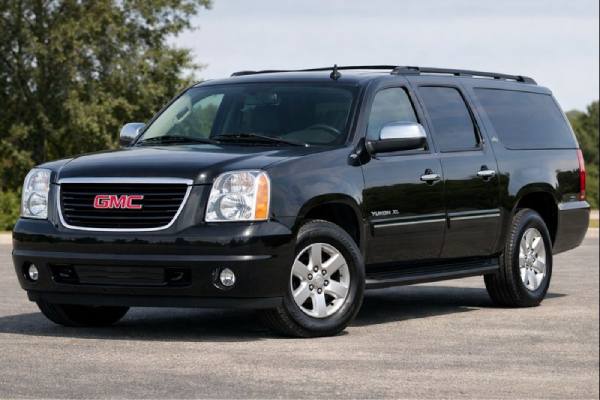
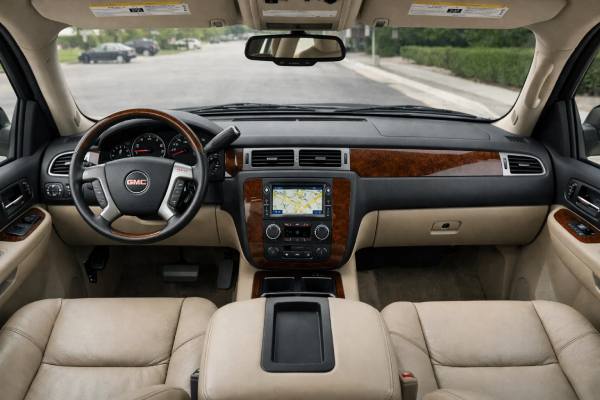
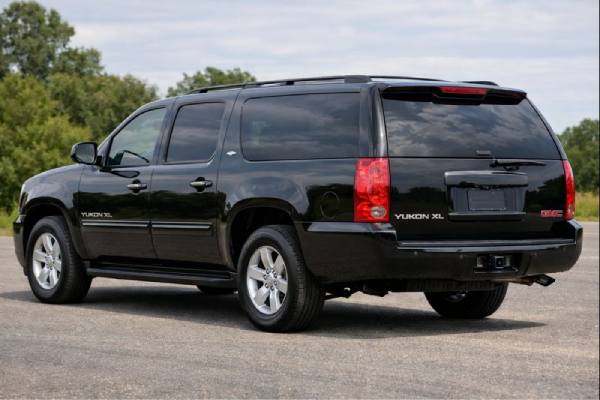
The GMT900 Yukon XL Denali AWD is a rare mix of size, comfort, and old-school capability. You get the long-wheelbase XL body for real third-row usability, the Denali interior and feature set for daily comfort, and the L9H 6.2-liter V8 for effortless acceleration with passengers, cargo, or a trailer. The AWD system is the key differentiator versus RWD models: it adds year-round traction and stability in wet or cold conditions, but it also adds front-driveline complexity that owners need to maintain. The best examples feel “tight” and calm on the highway, with a strong, smooth powertrain and a surprisingly relaxed cruising character for something this large. Ownership success mostly comes down to staying ahead of fluids, watching front-end wear, and confirming that the truck has been cared for like the heavy-duty family vehicle it is.
Quick Specs and Notes
- The 6.2 V8 delivers confident passing and towing without feeling strained, even at highway speeds.
- Full-time AWD improves traction in rain and winter conditions without driver input.
- XL length makes three-row travel practical while still leaving space for luggage behind row three.
- Budget for AWD-related wear items (front CVs, transfer case fluid service, and wheel bearings) as the truck ages.
- Plan drivetrain fluid service about every 80,000 km (50,000 mi), or sooner with frequent towing.
Jump to sections
- AWD Denali XL in detail
- L9H AWD specs tables
- Denali equipment and safety
- Reliability patterns and fixes
- Service schedule and buying tips
- Real driving and efficiency
- AWD Denali XL vs competitors
AWD Denali XL in detail
The Yukon XL Denali AWD (2007–2014) is built around a simple idea: combine full-size SUV space with premium comfort and a strong V8, then add an all-weather driveline that feels predictable in the real world. The “XL” body matters as much as the Denali badge. In shorter SUVs, the third row can be a “sometimes” seat; in the XL, it can be part of everyday life, because you still have meaningful cargo room behind it. If you do road trips, airport runs, kid sports, or tow something on weekends, that extra length is the difference between comfortable and compromised.
The Denali trim changes the ownership experience too. You’re typically looking at higher-grade seats, more standard convenience equipment, and a quieter cabin than lower trims. That quietness isn’t just luxury fluff—it reduces fatigue on long drives, and it helps the truck feel more modern than its age suggests when the suspension and tires are in good shape. The platform is body-on-frame, so you get towing stability and durability, but you also get truck-like service needs: bushings, ball joints, brakes, and steering parts wear because there’s a lot of mass to control.
AWD is the feature that most affects both confidence and cost. In wet weather and winter conditions, full-time AWD helps the Denali feel composed when a RWD truck would be busy with traction control. It can also make towing in marginal conditions less stressful because the truck doesn’t feel “light” at the front axle on slick surfaces. The tradeoff is that you now own a front driveline: a transfer case, front differential, front axles (CV joints), and additional seals and bearings. None of that is fragile by design, but it does mean fluid services and inspections matter. A Denali that has been maintained will feel smooth and quiet; one with neglected driveline fluids can develop noises, vibrations, or binding sensations that turn into expensive repairs.
If you’re shopping today, the best mindset is to view this vehicle as a premium heavy-duty tool. It can be a great long-term SUV, but it rewards owners who maintain it on time and who evaluate condition over mileage. A higher-mileage truck with strong records and fresh chassis work is often a better buy than a lower-mileage example with unknown fluid history and worn suspension parts.
L9H AWD specs tables
Specs vary by model year, axle ratio, wheel package, emissions certification, and market equipment. The tables below focus on the Yukon XL Denali AWD with the L9H 6.2-liter V8 and the common 6-speed automatic setup used across most of this run. Use your build label (RPO codes) and VIN-specific service info for final confirmation.
Engine and performance (L9H 6.2 V8)
| Item | Spec |
|---|---|
| Code | L9H |
| Engine layout and cylinders | V8, aluminum block, OHV, 2 valves/cyl |
| Bore × stroke | 103.25 × 92.0 mm (4.07 × 3.62 in) |
| Displacement | 6.2 L (6,162 cc) |
| Induction | Naturally aspirated |
| Fuel system | Sequential port injection (PFI) |
| Compression ratio | ~10.5:1 |
| Max power | 403 hp (301 kW) @ ~5,700 rpm |
| Max torque | 565 Nm (417 lb-ft) @ ~4,300 rpm |
| Timing drive | Chain |
| Rated efficiency (typical EPA) | ~13–14 mpg US city / 19–20 mpg US highway (≈18.1–16.8 / 12.4–11.8 L/100 km) |
| Real-world highway @ 120 km/h (75 mph) | Often ~15–18 L/100 km (≈13–16 mpg US), depending on tires, load, and wind |
Transmission and AWD driveline
| Item | Spec |
|---|---|
| Transmission | 6-speed automatic (6L80 family) |
| Drive type | Full-time AWD |
| Transfer case | Single-speed AWD case (design varies by year) |
| Gear ratios | 1st 4.03 / 2nd 2.36 / 3rd 1.53 / 4th 1.15 / 5th 0.85 / 6th 0.67 / Rev 3.06 |
| Final drive ratio | Commonly ~3.42 (varies) |
| Differentials | Typically open front and rear; limited-slip varies by build |
Chassis and dimensions (XL)
| Item | Spec |
|---|---|
| Front suspension | Independent, SLA-type layout (truck-based) |
| Rear suspension | Solid axle with multi-link and coils; load-leveling common on Denali |
| Brakes | 4-wheel discs, ABS and stability control |
| Wheels/tires (typical Denali) | 20-inch wheels; common tire size 275/55R20 |
| Wheelbase | ~3,302 mm (130.0 in) |
| Length | ~5,650 mm (222.4 in) |
| Width (ex mirrors) | ~2,009 mm (79.1 in) |
| Height | ~1,950 mm (76.8 in) |
| Turning circle (typical) | ~12.6 m (41–42 ft) |
| Fuel tank | ~117 L (31 US gal / 26 UK gal) |
Performance and capability (typical ranges)
| Item | Spec |
|---|---|
| 0–100 km/h (0–62 mph) | ~7.2–7.8 s (varies by tires/load) |
| Braking (62–0 mph) | Often ~43–49 m (140–160 ft), setup dependent |
| Towing capacity | Commonly ~3,400 kg (7,500 lb), equipment dependent |
| Payload | Often ~600–750 kg (1,300–1,650 lb), configuration dependent |
Fluids, service capacities, and key torques (typical)
| Item | Spec |
|---|---|
| Engine oil | 5W-30 typical; ~5.7 L (6.0 US qt) with filter (verify by year) |
| Coolant | Dex-Cool type; 50/50 mix typical |
| ATF | Dexron-spec fluid (verify exact spec by year) |
| Front and rear differentials | Gear oil spec varies by axle; verify by RPO |
| Transfer case | Use the specified transfer case fluid; do not “guess” ATF |
| A/C refrigerant | R-134a; charge varies with rear A/C |
| Wheel lug nuts | ~190 Nm (140 lb-ft) typical |
Electrical and ignition (typical)
| Item | Spec |
|---|---|
| Alternator output | Often 145–160 A, equipment dependent |
| 12V battery | Group size varies; common 700–800 CCA range |
| Spark plugs | Long-life plugs; verify interval and exact part by year |
Safety and driver assistance (era-correct)
| Item | Notes |
|---|---|
| Structure | Body-on-frame with stability and traction control systems |
| Airbags | Front and side-curtain coverage typical; count varies by year/market |
| ADAS | Parking sensors and rear camera common; modern AEB and lane-keeping generally not present |
Denali equipment and safety
The Yukon XL Denali AWD is typically optioned like a luxury vehicle, but it is still a truck platform underneath. That combination shapes how you should evaluate trims, packages, and safety features. In most markets, Denali models came well equipped from the factory, so the bigger differences between trucks are often in towing gear, rear-seat configuration, infotainment generation, and suspension equipment.
Trims and options (what changes the driving and ownership):
- Wheel and tire packages: Denali 20-inch wheels look right on the truck, but tire choice can make or break ride comfort and road noise. A highway touring tire can make the cabin feel far more refined than an aggressive all-terrain tire.
- Suspension type: Some trucks use electronically controlled dampers or load-leveling systems. These improve ride and stability when working correctly, but replacement parts can be costly. When shopping, listen for rear compressor noise (if equipped) and check for sagging after the vehicle sits overnight.
- Tow package content: Factory towing equipment can include a receiver, wiring provisions, upgraded cooling, and tow/haul logic. On a heavy SUV, this isn’t just about towing; it also helps heat management in summer driving.
- Seating layout: Second-row captain’s chairs vs bench changes cargo and family usability. Inspect the third-row folding mechanism for smooth operation, and check for broken trim around the seat bases.
Safety ratings (how to interpret them):
Safety ratings for full-size SUVs in this era depend heavily on the test body, model year, and the specific test method used at the time. The best practice is to pull the exact year’s ratings from official sources and compare them within the same test framework. Instead of chasing a single “star number,” focus on real-world safety basics you can control now: high-quality tires, strong brake performance, clear headlights, and a properly functioning stability-control system.
Safety systems you should verify on a test drive:
- ABS and stability control operation: No warning lights, no intermittent “Service Stabilitrak” messages, and predictable brake feel.
- Airbag system health: Airbag warning lights should never be ignored, even if they come and go.
- Child-seat provisions: Confirm LATCH/ISOFIX anchor access for your intended seating positions; the XL cabin makes installation easier, but buckles and anchors should be intact.
- Parking assistance: Rear camera clarity and sensor function matter more on an XL than on a shorter SUV, especially in tight urban areas.
Calibration implications after service:
After suspension work or wheel/tire changes, the truck often needs a correct alignment to keep stability behavior predictable and to prevent fast tire wear. If the vehicle has steering-angle or stability faults, a proper scan tool diagnosis matters; guessing can waste money quickly.
Reliability patterns and fixes
Reliability on the Yukon XL Denali AWD is best understood in layers. The L9H V8 and 6-speed automatic can be long-lived, but the truck’s size means chassis and driveline wear can dominate the ownership experience. Below is a practical map of issues by prevalence and cost tier, with symptoms and common remedies.
Common issues (plan for them)
- Front suspension and steering wear (medium cost): Clunks over bumps, vague steering on-center, or uneven tire wear often trace to ball joints, tie rods, control arm bushings, or wheel bearings. Remedy is straightforward: replace worn components in pairs where appropriate and align the truck with the correct ride height.
- Brake wear and pulsation (medium cost): Heavy SUVs consume pads and rotors. If you feel steering wheel shake under braking, inspect rotors, calipers, and hub condition rather than repeatedly “turning rotors.” Remedy is quality pads/rotors, caliper service if sticking, and fresh brake fluid.
- AWD driveline fluid neglect (medium cost): Transfer case and differential fluids degrade with heat and time. Symptoms can include humming, binding sensations, or vibration. Remedy is correct fluid service and inspection for leaks at seals and case joints.
Occasional issues (depends on use and maintenance)
- Transmission shift feel changes (medium–high if ignored): Harsh shifts, delayed engagement, or shudder under light throttle can be fluid-condition related or a sign of wear. Remedy starts with correct fluid spec and level, then diagnosis if symptoms persist.
- Cooling system aging (low–medium): Hoses, radiators, thermostats, and reservoir caps become time-based items. Symptoms include slow coolant loss, temperature creep under load, or weak cabin heat. Remedy is pressure testing and proactive replacement of weak links before overheating occurs.
- Electronic annoyances (low–medium): Window regulators, door lock actuators, infotainment glitches, and sensor faults show up with age. Remedy is targeted repair and avoiding low-quality aftermarket electrical parts.
Rare but expensive (watch for early signs)
- Transfer case internal wear (high): Persistent grinding, repeated binding, or metal in the fluid suggests more than “just a service.” Remedy may involve repair or replacement, and you should inspect the front driveshaft and CV joints at the same time.
- Severe corrosion in brake lines or chassis areas (high): In salt climates, corrosion can become a safety issue. Remedy is inspection underneath and replacement of compromised lines or components before failure.
Recalls and service actions (how to handle responsibly)
Because these trucks span multiple years, “recall talk” should be VIN-specific. Your process should be:
- Run an official VIN recall lookup before purchase.
- Confirm completion with dealer records or invoices.
- Treat open safety recalls as a non-negotiable condition before daily use.
Pre-purchase checks to request (high value):
- Proof of drivetrain fluid services (transmission, differentials, transfer case).
- Evidence of recent front-end work (or budget for it immediately).
- A scan for stored codes, even if no lights are on.
- A road test that includes low-speed tight turns, highway cruise, and firm braking.
Service schedule and buying tips
A Yukon XL Denali AWD stays “nice” when maintenance is handled like a schedule. The most expensive ownership stories usually start with skipped fluids, ignored vibrations, and worn suspension parts that chew through tires. This plan is a practical baseline; always cross-check your VIN-specific service documentation.
Maintenance schedule you can actually follow
- Engine oil and filter: every 8,000 km (5,000 mi) or 6 months. Short trips, towing, and extended idling justify shorter intervals.
- Tire rotation and inspection: every 8,000–10,000 km (5,000–6,000 mi). Include a quick check for inner-edge wear, which can signal alignment or worn front-end parts.
- Brake inspection: at every rotation. Heavy SUVs hide pad wear until braking performance changes.
- Brake fluid: every 2 years to maintain consistent pedal feel and protect ABS components.
- Transmission service: often every 60,000–80,000 km (40,000–50,000 mi) for mixed use; sooner if towing or operating in high heat.
- Transfer case and differential fluids: every 80,000 km (50,000 mi), sooner with towing or frequent winter driving.
- Coolant: follow the official interval, but many long-term owners refresh around 5 years as a conservative practice.
- Engine and cabin air filters: inspect frequently; replace roughly every 24,000–40,000 km (15,000–25,000 mi) depending on environment.
- Spark plugs: often a long interval on these engines, but verify by model year and service documentation.
Fluid spec discipline (the quiet money saver)
With AWD trucks, the biggest avoidable mistake is using “close enough” fluids. Transfer cases are especially sensitive to correct fluid type. If a seller cannot show records, assume you’ll service all drivetrain fluids immediately after purchase.
Buyer’s guide: what to check on the vehicle
- AWD behavior: In a tight parking lot, do slow full-lock turns. You should not feel severe binding, grabbing, or loud driveline clunks.
- Vibration diagnosis: A highway-speed vibration can be tires, but it can also be driveline angles, worn CVs, or a failing hub bearing. Don’t accept “it just needs balancing” without evidence.
- Front-end looseness: Any wandering, steering play, or knocking points to upcoming parts replacement. This is normal wear, but it should be priced into the deal.
- Suspension condition: Look for leaking shocks and listen for rear compressor cycling (if equipped). A Denali can feel great when fresh and sloppy when worn.
- Cooling system confidence: Check for stable temperature under load and no coolant smell after the test drive.
- Service history quality: Receipts for fluids and chassis work are more valuable than low odometer numbers.
Best years to seek vs avoid:
Rather than picking a “best year,” prioritize the best maintenance history. The ideal truck has documented fluid changes, recent tires and brakes, and either fresh front-end parts or a clean inspection showing they are still tight.
Real driving and efficiency
The Yukon XL Denali AWD drives like a refined full-size truck—stable, comfortable, and powerful—when it’s in good mechanical shape. The L9H 6.2 V8 is the dominant character trait: it gives the Denali a relaxed, confident feel that smaller engines can’t replicate in a vehicle this heavy.
Ride, handling, and NVH
On the highway, the XL wheelbase is your friend. It smooths out pitch and makes the truck feel composed over long expansion joints and sweeping curves. Steering feedback is more “truck” than “sports,” but a healthy front end should track straight with minimal correction. If you’re constantly adjusting the wheel, that’s usually alignment or worn suspension/steering components, not “just how they are.”
Noise levels depend heavily on tires and suspension condition. A quality highway tire, correct inflation, and tight wheel bearings make these trucks surprisingly quiet for their age. Conversely, aggressive tread, cupped tires, or worn hub bearings can make the cabin sound harsh and tired.
Powertrain character and AWD behavior
Throttle response is strong, and passing power is plentiful. The 6-speed automatic typically keeps revs low at cruise and downshifts cleanly when you ask for power. With AWD, traction is less “eventful” in rain and snow; you’ll often notice the benefit most when starting on slick surfaces or merging through standing water. It’s not a substitute for proper tires, but it does add stability and reduces the need for driver correction.
Real-world fuel use (what owners actually see)
Fuel economy is the tradeoff for power and size. Expect:
- City driving: commonly in the high teens to low 20s L/100 km (roughly 10–13 mpg US), depending on traffic and trip length.
- Highway at 100–120 km/h: often 15–18 L/100 km (roughly 13–16 mpg US) depending on tires, wind, and load.
- Towing penalty: moderate towing can add a noticeable consumption increase; heavy towing can push economy into “plan your fuel stops” territory.
Cold weather reduces efficiency further because the engine runs richer during warm-up and because winter tires and denser air increase rolling and aerodynamic drag.
Key performance metrics that matter
What changes the verdict isn’t top speed; it’s how the truck behaves under load:
- Merging and passing: strong and predictable, even with passengers and luggage.
- Braking confidence: should be stable and straight; any pulsing or pulling deserves inspection.
- Turning circle: manageable for the size, but you’ll still feel the XL length in tight urban environments.
If your use includes frequent towing, prioritize cooling-system condition, transmission servicing, and brake health. Those are the systems that “pay the price” first.
AWD Denali XL vs competitors
The Yukon XL Denali AWD sits in a shrinking category: long-wheelbase, body-on-frame, three-row SUVs with real towing capability and a premium feel. Most rivals either match its size but not its luxury, or match its comfort but not its heavy-duty capability.
Versus Ford Expedition EL (long wheelbase)
- Denali advantages: V8 character, strong midrange power, and a “big truck” stability feel that many owners love for towing.
- Expedition advantages: Depending on model year, you may find newer tech and different powertrain efficiency tradeoffs.
- Who wins: Buy on condition. A well-kept Denali feels premium; a neglected one can become expensive fast.
Versus Toyota Sequoia (similar era)
- Denali advantages: XL-length cargo usability is a major practical edge, and Denali comfort features often feel more upscale for the money.
- Sequoia advantages: Strong reputation for long-term durability, though purchase prices can reflect that.
- Who wins: Sequoia for “keep it forever” simplicity; Denali XL for maximum space plus luxury feel.
Versus GM siblings (Suburban and Escalade ESV)
- Against Suburban: Very similar bones. Suburban trims may be easier to source or cheaper to maintain depending on equipment.
- Against Escalade ESV: More premium interior and brand positioning, but repairs to trim and luxury components can cost more.
- Who wins: Denali is often the sweet spot when you want premium without the full “luxury tax.”
Versus newer crossovers
Modern unibody crossovers can offer quieter cabins and better fuel economy, but most cannot match the Denali XL’s towing stability, payload tolerance, and third-row cargo space when fully loaded. If you truly need truck-based capability, the Denali XL remains a purposeful choice.
Final buying logic:
Choose the Yukon XL Denali AWD if you need three-row space with real cargo behind it, want confident V8 power, and value AWD traction. Choose a smaller or newer vehicle if you prioritize fuel economy, tighter parking behavior, or modern ADAS features.
References
- Denali Owner’s Manual 2011 (Owner’s Manual)
- Check for Recalls: Vehicle, Car Seat, Tire, Equipment | NHTSA 2025 (Recall Database)
- Vehicle ratings 2025 (Safety Rating)
- FuelEconomy.gov 2025 (Efficiency Database)
Disclaimer
This article is for informational purposes only and is not a substitute for professional diagnosis, inspection, or repair. Specifications, torque values, service intervals, and procedures vary by VIN, market, and equipment, so always verify details using official owner and service documentation for your exact vehicle.
If this guide helped, please consider sharing it on Facebook, X (Twitter), or your preferred community to support our work.