
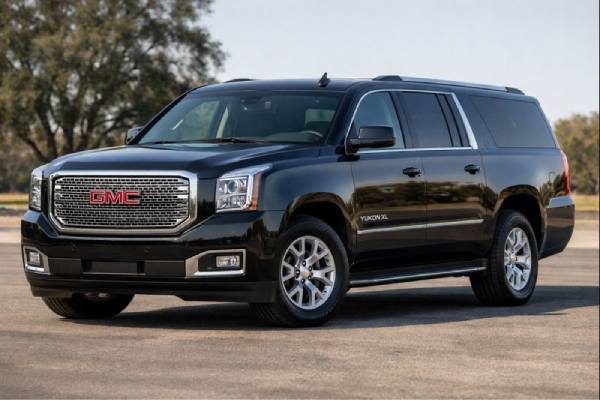
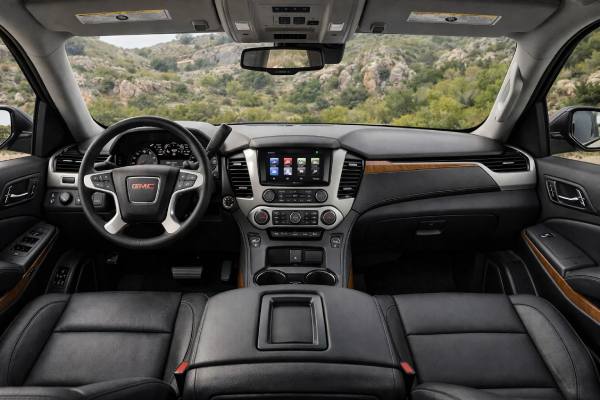
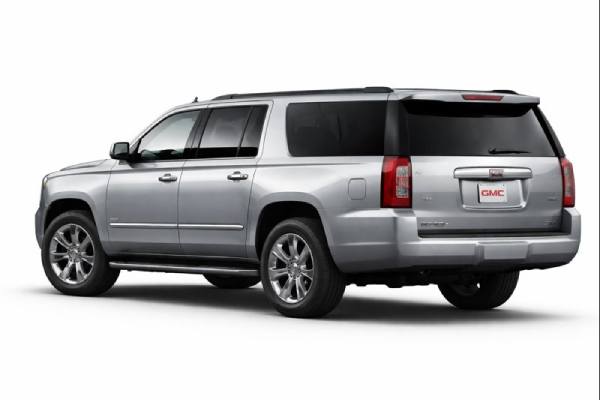
The 2015–2020 GMC Yukon XL RWD (K2UG) with the L83 5.3L V8 is the “big family hauler” formula done the modern GM way: strong low-end torque, body-on-frame durability, and a cabin that’s built for long trips and real cargo. In RWD form, it’s also the simplest version mechanically—fewer drivetrain parts than 4WD/AWD—and that simplicity often helps long-term running costs.
The trade-off is that this generation adds modern complexity elsewhere: direct injection, cylinder deactivation (AFM), and an 8-speed is not used here (this RWD L83 typically pairs with the 6-speed). If you maintain it like a working truck—fluids on time, cooling system kept healthy, and drivability issues handled early—it can be a dependable, high-mileage SUV with serious towing and highway comfort.
Quick Specs and Notes
- Strong towing and passing power for a full-size SUV, especially with the right axle ratio and tow package.
- RWD layout keeps the drivetrain simpler than 4WD, which can reduce some long-term service costs.
- Watch for early signs of AFM/lifter-related misfires and address oil-quality and interval discipline.
- Plan oil and filter service around the oil-life monitor or about every 8,000–12,000 km (5,000–7,500 mi) depending on use.
- If you tow regularly, shorten transmission and differential fluid intervals and prioritize cooler health.
Guide contents
- K2UG Yukon XL RWD explained
- L83 5.3 technical specs
- Trims, packages, and safety tech
- Common problems and recalls
- Maintenance plan and buyer checklist
- Road manners and real mpg
- RWD Yukon XL vs rivals
K2UG Yukon XL RWD explained
Think of the 2015–2020 Yukon XL RWD L83 as a light-duty truck chassis wrapped around a three-row, long-body SUV cabin. That’s not marketing fluff—it’s the core reason these vehicles feel stable when loaded, tow with confidence when properly equipped, and survive years of family duty. The “XL” body matters: you get meaningful cargo space behind the third row, and the longer wheelbase smooths out highway motion compared with the shorter Yukon.
The L83 5.3L V8 is a direct-injected small-block from GM’s EcoTec3 family. It’s tuned for everyday torque rather than peak horsepower drama, so it feels strongest in the midrange—exactly where you want it for merging, climbing grades, or pulling a trailer. It also uses cylinder deactivation (often called AFM) to reduce pumping losses at cruise. When it’s working properly, you’ll see a noticeable drop in fuel use on steady highway runs, but it does add parts and operating modes that you need to respect with oil quality and timely service.
RWD is the simplest drivetrain layout offered on this platform. That can be a real ownership advantage: fewer driveline fluids, fewer couplers, fewer sensors and actuators to diagnose when age and miles stack up. RWD also tends to feel slightly “lighter” in steering and front-end driveline drag compared with 4WD, though tire choice and alignment matter more than most owners expect.
Where this Yukon XL shines is mission flexibility. It can be a commuter, a road-trip rig, a tow vehicle, or a winter family shuttle (with proper tires). The reality is that a 2.5–3.0 ton SUV will always be hard on consumables—tires, brakes, shocks, and bushings—so the best long-term examples are the ones maintained like a work truck, not like a “just change the oil sometimes” crossover.
If you’re shopping used, your goal is to buy condition and history, not just mileage. A clean, well-documented 180,000 km Yukon XL can be a better bet than a 110,000 km example that towed hard with neglected fluids or ran cheap oil through long intervals.
L83 5.3 technical specs
Below are practical specs for the 2015–2020 Yukon XL RWD with the L83 5.3L V8 and 6-speed automatic. Exact figures can vary by year, market, axle ratio, and equipment—use these as a solid planning baseline, then verify for your VIN.
Engine and performance
| Item | Spec (typical for L83 Yukon XL) |
|---|---|
| Code | L83 (EcoTec3) |
| Layout | V8, OHV (pushrod), 2 valves/cyl |
| Displacement | 5.3 L (5,328 cc) |
| Induction | Naturally aspirated |
| Fuel system | Direct injection |
| Max power | 355 hp (265 kW) @ ~5,600 rpm |
| Max torque | ~519 Nm (383 lb-ft) @ ~4,100 rpm |
| Timing drive | Chain |
| Emissions standard | Market-dependent (EPA in US) |
Transmission and driveline
| Item | Spec |
|---|---|
| Transmission | 6-speed automatic (6L80 family) |
| Drive type | RWD |
| Typical gear ratios | 1st 4.03 / 2nd 2.36 / 3rd 1.53 / 4th 1.15 / 5th 0.85 / 6th 0.67 / Rev 3.06 |
| Common axle ratios | ~3.08 or ~3.42 depending on package |
Dimensions and capacities (common North American configuration)
| Item | Spec (approx.) |
|---|---|
| Length | ~5,700 mm (224.4 in) |
| Wheelbase | ~3,300 mm (130.0 in) |
| Width | ~2,040 mm (80.5 in) |
| Height | ~1,890 mm (74.4 in) |
| Fuel tank | ~117 L (31.0 US gal) |
| Cargo volume | ~1,110 L (39 cu-ft) behind 3rd row; up to ~3,450 L (122 cu-ft) max (approx.) |
Performance and capability (realistic planning ranges)
| Item | Typical range |
|---|---|
| 0–100 km/h (0–62 mph) | ~7.5–8.5 s (setup-dependent) |
| Towing capacity | ~3,600–3,760 kg (8,000–8,300 lb) with correct equipment |
| Payload | Often ~600–800 kg (1,300–1,800 lb), varies heavily by trim/options |
Fluids and service capacities (planning values)
| System | Spec (typical) |
|---|---|
| Engine oil | dexos1-spec oil, commonly 0W-20; ~7.6 L (8.0 US qt) with filter (verify) |
| Coolant | Dex-Cool type, 50/50 mix; capacity varies (verify) |
| Transmission fluid | Dexron VI; total capacity varies by configuration (verify) |
| Rear differential | 75W-90 synthetic; capacity varies by axle (verify) |
| A/C refrigerant | R-134a; charge varies by rear A/C and market (verify) |
Electrical and ignition (typical)
| Item | Spec (typical) |
|---|---|
| 12V battery | Group size varies; commonly 700+ CCA |
| Spark plugs | Iridium-type; gap commonly ~1.0 mm (0.040 in) |
Safety and driver assistance (baseline notes)
This generation commonly includes stability control and a full airbag suite, with additional driver-assistance features dependent on trim and packages. IIHS data for this model line also notes the availability of optional blind-spot detection and lane-departure warning on relevant trims/years.
Trims, packages, and safety tech
For the 2015–2020 Yukon XL with the 5.3L and RWD, most buyers will encounter mainstream trims that balance comfort with towing practicality. Exact trim names and package contents shift slightly year to year, but the shopping logic stays consistent: decide whether you want a simple, service-friendly family hauler or a fully optioned long-distance SUV with more electronics to maintain.
Trims and how to spot them
- SLE (value-focused): Typically cloth or simpler leather, fewer driver-assist features, and more “truck-like” wheel/tire packages. It can be the best long-term buy when you want fewer powered features and you’re okay upgrading audio or tires yourself.
- SLT (comfort-focused): Usually leather seating, more convenience equipment, and more package options. Many SLTs were ordered with safety packages, power liftgate, upgraded infotainment, and sometimes magnetic ride control on certain builds (equipment varies—confirm by VIN).
- Seating configurations: Some have a second-row bench (8-passenger), others have captain’s chairs (7-passenger). If you regularly use the third row, captain’s chairs often make access easier; if you’re hauling kids, the bench can be more flexible.
Options that change ownership behavior
- Tow-focused equipment: The “right” Yukon XL for towing is more than an advertised number. Look for a factory tow package, integrated trailer brake controller (where equipped), proper hitch hardware, and—most importantly—cooling and axle ratio that match your load goals. If you plan to tow near the upper range, prioritize the truck that was built for it.
- Wheel and tire packages: Larger wheels can look great but often increase tire cost and can reduce ride comfort. For real-world ownership, an 18–20 inch wheel with a quality all-season or all-weather tire is the sweet spot.
- Infotainment tiers: More premium audio and larger screens improve daily comfort but add potential failure points (amplifiers, camera modules, touchscreens). Not a deal-breaker—just price your risk.
Safety systems and ADAS availability
This Yukon XL generation generally includes core safety basics—stability control, traction control, ABS, and multiple airbags. Optional systems commonly found depending on trim/package include:
- Blind-spot monitoring and rear cross-traffic alert
- Lane-departure warning (and, on later years/packages, more lane support features)
- Forward collision alert and parking assist features
- Rear camera systems (often standard by this era, but quality and features vary)
Safety ratings reality check
Safety ratings depend on the testing organization, the test version, and the exact vehicle configuration. For used shopping, treat published ratings as context, then focus on what you can confirm:
- Verify that recall work is complete.
- Confirm airbags and seatbelt pretensioners have never been deployed.
- Test every driver-assistance feature you plan to rely on (cameras, sensors, warnings).
- Inspect tires: a “safe SUV” on worn or mismatched tires is not actually safe.
Common problems and recalls
The Yukon XL platform is fundamentally robust, but the 2015–2020 L83 era blends truck durability with modern engine management and electronics. The best way to think about reliability is to separate problems into “annoying but manageable” versus “expensive if ignored,” then connect them to mileage and usage.
Common (seen often)
- Oil consumption and oil-quality sensitivity (medium cost if addressed early): Direct-injection V8s and cylinder deactivation systems can be picky about oil quality. Symptoms include needing to add oil between changes, lifter noise on cold start, or roughness after long highway cruising. Remedy is not one-size-fits-all: confirm PCV function, rule out leaks, and tighten oil-change discipline. If the engine has persistent misfire codes or tapping that doesn’t go away, stop driving it hard until it’s diagnosed.
- Infotainment glitches (low to medium cost): Touchscreen freezing, Bluetooth issues, camera dropouts, or audio amplifier quirks show up with age. Sometimes a software update or module reset fixes it; sometimes a component replacement is the real answer. Budget time for diagnosis.
- Suspension wear from weight (medium cost): These SUVs are heavy, and they’re often loaded. Expect eventual wear in shocks/struts, control-arm bushings, sway-bar links, and alignment-sensitive tires. Uneven tire wear is a warning sign that the front end needs attention, not just new tires.
Occasional (depends on use)
- Transmission heat and shift quality under towing (medium to high cost): The 6-speed can be very durable, but it doesn’t like overheating. Symptoms include delayed shifts, shudder, or harsh engagement after heavy towing. The best remedy is prevention: correct fluid, proper cooling, and more frequent service when towing is part of your life.
- Cooling system aging (medium cost): Hoses, thermostats, water pumps, and radiators age like any other truck. Overheating events are what turn a “fine engine” into an expensive engine. Address small leaks and temperature irregularities early.
Rare but expensive
- AFM-related lifter failures (high cost): Not every L83 will experience this, but it’s the ownership fear that’s worth understanding. A collapsed lifter can cause misfires, ticking, and drivability issues that escalate quickly. Early diagnosis matters because prolonged driving with a severe misfire can damage catalytic converters and increase the repair scope.
Recalls, service campaigns, and how to verify them
This is where smart ownership is simple: treat recall completion as mandatory. Use the official recall database and your VIN to confirm open recalls, and ask a dealer for completion history if the paperwork is unclear. If a seller can’t show recall completion on a late-model, electronics-heavy SUV, assume you’ll be the one scheduling it.
A practical rule: if you’re buying one of these to tow or road-trip, do a full “baseline service” after purchase (fluids, filters, and a careful inspection). It’s cheaper than inheriting someone else’s deferred maintenance.
Maintenance plan and buyer checklist
A Yukon XL lasts when you treat it like the truck it is. That means service intervals based on usage, not optimism. Short trips, heavy idling, towing, dusty roads, and extreme heat/cold all shorten intervals—sometimes dramatically.
Maintenance schedule you can actually follow
Use the oil-life monitor as your primary guide, then apply common-sense limits:
- Engine oil and filter: About every 8,000–12,000 km (5,000–7,500 mi) for mixed use; shorter if you idle, tow, or do repeated short trips. Use the correct spec oil and a quality filter.
- Engine air filter: Inspect every 15,000 km (10,000 mi); replace around 30,000–45,000 km (20,000–30,000 mi) depending on dust.
- Cabin air filter: Every 15,000–30,000 km (10,000–20,000 mi), especially if HVAC airflow drops.
- Spark plugs: Commonly around 150,000 km (100,000 mi) on modern iridium setups, but verify for your exact model year and tune.
- Coolant: Follow the official interval, but don’t ignore age. If hoses are aging or temps drift, service proactively.
- Transmission fluid: If you tow, service earlier than “lifetime.” A conservative towing interval is often 50,000–80,000 km (30,000–50,000 mi). If you don’t tow, you can extend it, but don’t pretend it never needs attention.
- Rear differential fluid: Around 80,000–120,000 km (50,000–75,000 mi) depending on heat/load; sooner for regular towing.
- Brake fluid: Every 2–3 years is a safe planning interval.
- Tires: Rotate every 8,000–12,000 km (5,000–7,500 mi) and align when you see uneven wear or after suspension work.
- 12V battery: Test yearly after year 3; replacement is often needed around 4–6 years depending on climate.
Helpful “decision torque specs” (verify for your VIN)
- Wheel lug nuts: commonly ~190 Nm (140 lb-ft)
- Spark plugs: commonly ~20 Nm (15 lb-ft)
Buyer’s checklist (what matters most)
- Cold start behavior: Listen for ticking that persists, rough idle, or a flashing check-engine light. Any strong misfire behavior should be treated as a “pause the deal” moment until diagnosed.
- Oil and service history: Look for consistent oil changes with correct oil spec. Gaps and vague “I think it was done” stories are red flags.
- Transmission behavior: It should shift cleanly when warm and under light throttle. If you feel consistent shuddering or harsh engagements, budget for diagnosis.
- Front-end wear and tire condition: Uneven wear suggests alignment or suspension issues. On a heavy SUV, that’s common—but it’s still money.
- Cooling system health: Check for coolant smell, residue around the radiator and water pump area, and temperature stability on a test drive.
- Electronics and cameras: Test everything—parking sensors, camera, Bluetooth, seat motors, HVAC modes, and rear HVAC if equipped.
- Tow history (if applicable): Ask what was towed, how often, and whether fluids were serviced early.
A good Yukon XL is rarely “perfect,” but it should feel consistent, predictable, and well-kept. Buy that one.
Road manners and real mpg
On the road, the Yukon XL’s personality is defined by two things: its length and its weight. The long wheelbase makes it calmer than many large SUVs at highway speed, and it’s less nervous over expansion joints than shorter vehicles with the same suspension design. It won’t drive like a unibody crossover—because it isn’t one—but it rewards a smooth, steady driving style with comfort and confidence.
Ride, handling, and NVH
- Ride quality: In good condition, the XL rides with a “big, settled” motion that works well for families. Worn shocks or tired bushings are obvious because the body will float or bob over undulations, especially when the rear is loaded.
- Steering feel: Expect light-to-moderate effort and a truck-like on-center feel. Precise alignment and matched tire pressures make a bigger difference than many owners expect.
- Braking feel: The brakes are sized for the job, but the mass is always there. Under repeated downhill braking or when towing, you can feel heat build. Good pads, fresh fluid, and proper trailer brake setup matter more than chasing “sporty” pedal feel.
- Cabin noise: Wind and tire noise dominate on the highway. Aggressive tread patterns can make the cabin louder quickly; choose tires for comfort if you road-trip often.
Powertrain character
The L83’s strength is usable torque. It pulls smoothly from low rpm and doesn’t need to be revved hard to make progress. The 6-speed automatic is generally well matched: it downshifts readily for grades and passing, and it tends to feel more predictable than some later multi-gear units. If you notice constant hunting between gears at steady speed, it can be normal under certain loads, but it can also hint at tire size mismatches, tuning/calibration issues, or a need for transmission service.
Cylinder deactivation can be nearly invisible when everything is healthy. If you feel a persistent droning sensation, roughness, or odd vibrations at cruise, don’t ignore it—sometimes it’s as simple as an engine mount or tire issue, and sometimes it’s pointing toward a drivability problem that should be diagnosed.
Real-world efficiency (what owners can expect)
For a 2WD Yukon XL of this era, official fuel economy figures are often in the neighborhood of 16 mpg city, 23 mpg highway, 19 mpg combined (about 14.7 / 10.2 / 12.4 L/100 km). Real-world results depend heavily on speed and load:
- City/short trips: Expect noticeably worse than the rating, especially in cold weather and heavy traffic.
- Highway at 120 km/h (75 mph): Many owners see a meaningful drop versus slower cruising—big frontal area and mass are always working against you.
- Towing: A moderate trailer can increase consumption substantially; plan your fuel stops like you would in a half-ton pickup.
If you’re buying this Yukon XL expecting crossover fuel economy, you’ll be disappointed. If you’re buying it because you actually need its space and capability, the fuel use becomes a predictable cost of doing the job.
RWD Yukon XL vs rivals
The Yukon XL RWD sits in a specific niche: full-size, body-on-frame, three-row SUVs with real towing capacity and real cargo volume behind the third row. Rivals can match individual strengths, but few match the same blend of parts availability, familiar truck-serviceability, and long-haul comfort—especially in markets where GM full-size trucks are common.
Versus Ford Expedition MAX (same mission, different feel)
The Expedition MAX is often the closest direct alternative in “big family + towing” use. In many configurations, it can feel lighter on its feet and may deliver stronger performance depending on engine choice. The Yukon XL’s advantage is its classic GM small-block simplicity in the engine bay (even with DI and cylinder deactivation) and a driving character that many describe as steady and predictable. On the used market, buy based on condition and maintenance history—either can be excellent, either can be expensive if neglected.
Versus Toyota Sequoia (durability reputation, packaging differences)
Toyota’s large SUV reputation is strong, but the Sequoia’s interior packaging and cargo usability vary by generation. If your priority is maximum usable space behind the third row and an easy “family road-trip” layout, the Yukon XL is often more accommodating. Where Toyota tends to win is in perceived long-term powertrain durability—though it still needs maintenance and can carry high parts costs depending on region.
Versus Nissan Armada (value play, different ownership profile)
An Armada can be a compelling value, often with strong standard equipment. The Yukon XL’s edge is usually payload/towing configuration flexibility and the sheer volume of GM service knowledge and parts supply in many markets. If you keep vehicles for a long time, that ecosystem matters.
Versus luxury alternatives (used Q7/X7/GLS, etc.)
Luxury unibody SUVs can be quieter and more “car-like,” but they typically can’t match the Yukon XL’s combination of cargo volume, towing stability, and straightforward truck-style serviceability. If you need the XL’s space and tow rating, luxury rivals become less comparable.
The simplest verdict
Choose the Yukon XL RWD L83 if you want:
- A long-body SUV with truly usable third-row cargo space
- Truck-based towing confidence (when properly equipped)
- A drivetrain layout that stays relatively simple compared with 4WD/AWD
Skip it if you need frequent deep-snow traction without relying on tires and driving technique, or if you primarily drive short urban trips and want low running costs. This SUV is at its best when it’s used as intended: long distances, real loads, and well-planned maintenance.
References
- Gas Mileage of 2015 GMC Yukon 2015 (EPA Fuel Economy)
- 2015 GMC Yukon XL 2015 (Safety Feature Availability and LATCH Rating)
- Check for Recalls: Vehicle, Car Seat, Tire, Equipment | NHTSA 2025 (Recall Database)
- 2019 GMC Yukon Brochure 2019 (Manufacturer Specifications)
Disclaimer
This article is for informational purposes only and is not a substitute for professional diagnosis, repair, or safety inspection. Specifications, torque values, service intervals, and procedures vary by VIN, market, and equipment. Always verify details using official service documentation for your exact vehicle.
If this guide helped, please consider sharing it on Facebook, X (Twitter), or your favorite forum to support our work.