
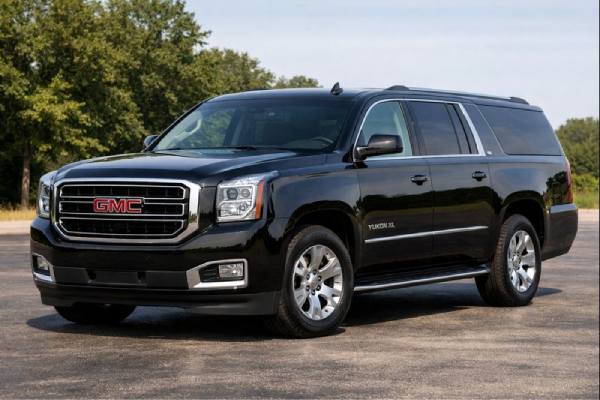
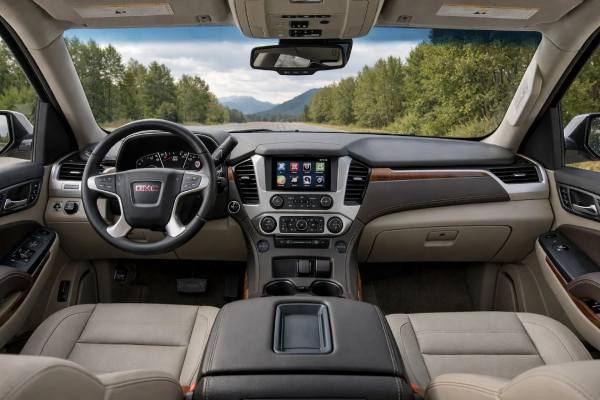
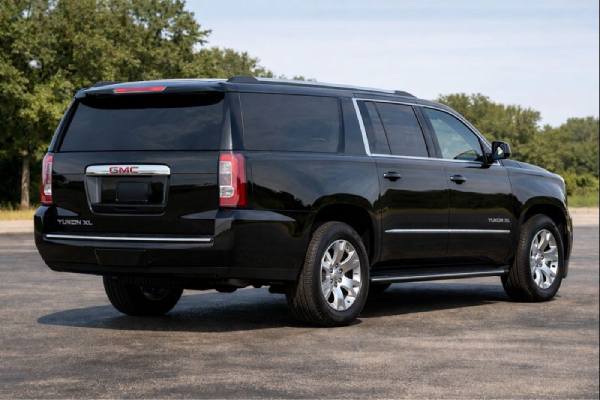
The 2015–2020 GMC Yukon XL 4WD (K2UG) with the L83 5.3L V8 is built around a simple idea: truck-strength hardware plus true three-row space, with the extra-long XL body adding real cargo room behind the third row. In 4WD form, it becomes a year-round family and towing tool—more traction options, more capability in poor weather, and better confidence on slippery launches or steep ramps.
This generation’s strengths also define how you should own it. The L83 uses direct injection and cylinder deactivation (AFM), which reward consistent oil quality and timely service. The 4WD system adds a transfer case, front differential, and extra driveline joints—durable parts, but only if fluids stay fresh and tires stay matched. If you maintain it like the half-ton truck it’s related to, the Yukon XL 4WD can be a comfortable long-distance cruiser, a stable tow rig, and a high-mileage family hauler that still feels “right-sized” for big tasks.
Owner Snapshot
- Excellent all-weather traction when paired with proper tires, plus strong towing confidence with the right tow package.
- The XL body delivers genuinely usable cargo space behind the third row for travel, work, and family life.
- Keep all four tires closely matched in size and wear to protect the 4WD system and transfer case.
- Service engine oil about every 8,000–12,000 km (5,000–7,500 mi) depending on driving and towing load.
- If you tow often, shorten transfer case and differential fluid intervals to around 50,000–80,000 km (30,000–50,000 mi).
Jump to sections
- Yukon XL 4WD big picture
- L83 4WD specs and dimensions
- Trims, options, and safety setup
- Reliability issues and service actions
- Maintenance schedule and buying guide
- Driving feel, towing, and efficiency
- How it compares to rivals
Yukon XL 4WD big picture
The Yukon XL 4WD is a body-on-frame SUV that behaves like a half-ton truck in the ways that matter: it can carry, tow, and absorb years of heavy use without feeling fragile. The “XL” part is more than a badge. The longer wheelbase adds stability at speed and when towing, and the extra rear length makes the third-row-and-cargo combination genuinely practical. If you’ve ever packed a short-wheelbase three-row SUV for a road trip, you already know why the XL layout changes the ownership experience.
In K2UG (2015–2020) form, the Yukon XL sits in the sweet spot between old-school simplicity and modern comfort. The cabin is quieter than earlier generations, the seats and infotainment are more road-trip friendly, and the truck chassis is tuned for steady highway tracking rather than sporty corner carving. Where it differs from a crossover is how it handles mass: it’s happiest when driven smoothly, with measured braking and gentle steering inputs. Treat it like a big vehicle and it feels composed; drive it like a small one and it feels heavy.
The L83 5.3L V8 is a strong match for this mission because it’s built around usable torque. It pulls confidently in the middle of the rev range where you actually drive, and it doesn’t need constant high rpm to move the vehicle or a trailer. Cylinder deactivation (AFM) is part of the efficiency strategy, shutting down cylinders during light-load cruising. When everything is healthy, it’s nearly invisible and can help on long highway runs. When maintenance slips, AFM can become part of the “why does this feel rough?” conversation—so your ownership habits matter.
The 4WD system adds capability, but it also adds responsibilities. You now have a transfer case, a front differential, and extra driveshaft and CV joints. None of these parts are “weak,” but they are sensitive to neglected fluids, overheating, and mismatched tires. A simple rule protects you: keep all four tires the same brand, size, and similar tread depth, and service 4WD fluids on a schedule that matches your use.
If you live where winter traction is a real issue, 4WD is worth it—but don’t confuse 4WD with “good in snow.” Tires are the limiting factor. A Yukon XL 4WD on average all-seasons can be worse than a 2WD Yukon XL on true winter tires. The best setup is 4WD plus the right tires, plus a driver who understands stopping distances still dominate winter safety.
L83 4WD specs and dimensions
Specs for these trucks vary by model year, axle ratio, trim weight, and tow package. The tables below are practical, planning-grade specs for the Yukon XL 4WD with the L83 5.3L V8 and the common 6-speed automatic. Verify exact values for your VIN when ordering parts, fluids, or towing equipment.
Engine and performance
| Item | Spec (typical) |
|---|---|
| Code | L83 (EcoTec3) |
| Layout | V8, OHV (pushrod), 2 valves/cyl |
| Displacement | 5.3 L (5,328 cc) |
| Induction | Naturally aspirated |
| Fuel system | Direct injection |
| Compression ratio | ~11.0:1 (typical) |
| Max power | 355 hp (265 kW) @ ~5,600 rpm |
| Max torque | ~519 Nm (383 lb-ft) @ ~4,100 rpm |
| Timing drive | Chain |
| Emissions / efficiency standard | Market dependent (EPA in US) |
Transmission, 4WD, and driveline
| Item | Spec (typical) |
|---|---|
| Transmission | 6-speed automatic (6L80 family) |
| Drive type | 4×4 (part-time or Auto 4WD depending on transfer case) |
| Transfer case | 2-speed, with 2HI / 4HI / 4LO (and Auto 4WD on some builds) |
| Differential type | Typically open; locking differential availability varies by package |
| Common axle ratios | Often ~3.08 or ~3.42 depending on towing configuration |
Typical 6-speed ratios (planning values):
| Gear | Ratio |
|---|---|
| 1st | 4.03 |
| 2nd | 2.36 |
| 3rd | 1.53 |
| 4th | 1.15 |
| 5th | 0.85 |
| 6th | 0.67 |
| Reverse | 3.06 |
Chassis and dimensions (approximate for Yukon XL)
| Item | Spec (approx.) |
|---|---|
| Suspension (front/rear) | Independent front / solid rear axle |
| Brakes | 4-wheel discs (sizes vary by year/trim) |
| Length | ~5,700 mm (224–225 in) |
| Wheelbase | ~3,300 mm (130 in) |
| Width | ~2,040 mm (80–81 in) |
| Height | ~1,890 mm (74–75 in) |
| Turning circle | ~12.5–13.0 m (41–43 ft), configuration dependent |
| Fuel tank | ~117 L (31 US gal), common configuration |
Capability and real-world planning ranges
| Item | Typical range |
|---|---|
| 0–100 km/h (0–62 mph) | ~7.7–8.8 s (trim and gearing dependent) |
| Towing capacity | Commonly ~3,600–3,900 kg (8,000–8,600 lb) with correct equipment |
| Payload | Often ~550–750 kg (1,200–1,650 lb), varies strongly by trim/options |
Fluids and service capacities (verify for your VIN)
| System | Typical spec (planning values) |
|---|---|
| Engine oil | dexos1-spec oil, commonly 0W-20; ~7.6 L (8.0 US qt) with filter (verify) |
| Coolant | Dex-Cool type, 50/50 mix; capacity varies (verify) |
| Transmission fluid | Dexron VI; capacity varies (verify) |
| Transfer case | GM transfer case fluid; capacity varies by case (verify) |
| Front and rear differentials | 75W-90 synthetic; capacity varies (verify) |
Safety and driver assistance (equipment-dependent)
These model years commonly include stability control, traction control, ABS, and multi-airbag coverage. Advanced driver assistance availability (blind-spot monitoring, lane warning, forward collision alert, parking sensors) varies by trim and package and is worth confirming by VIN and physical inspection.
Trims, options, and safety setup
The right Yukon XL 4WD is the one whose equipment matches your use, not the one with the longest option list. This platform can be configured from “workhorse family hauler” to “luxury tow cruiser,” and those choices change both daily comfort and long-term complexity.
Trims and practical differences
- SLE (simpler, often best value): Typically fewer powered features and fewer advanced systems to diagnose later. For buyers prioritizing long-term serviceability and cost control, a clean SLE with the right tow and seating configuration can be a smart pick.
- SLT (comfort and convenience): More standard comfort features and more optional safety tech. Many SLTs are the sweet spot for families: comfortable seats, upgraded infotainment, and enough convenience equipment to feel modern without reaching maximum complexity.
- Denali (more powertrain and chassis features on some builds): Denali models in this generation often carry more luxury equipment, larger wheels, and sometimes suspension upgrades depending on year. They can be wonderful long-distance vehicles, but you should budget for higher tire and brake costs and more electronic modules.
Options that materially change ownership
- Tow package and cooling equipment: If towing is part of your plan, look beyond the hitch. You want the integrated electrical setup, proper trailer brake controller (where equipped), and the axle ratio and cooling configuration designed for towing. A Yukon XL can be rated for strong numbers, but it needs the correct equipment to feel relaxed and reliable while doing it.
- 4WD control type (Auto 4WD vs traditional part-time): Some trucks have an Auto 4WD mode designed for mixed-traction roads. It’s convenient in changing conditions, but it also makes tire matching even more important. If you’re frequently on dry pavement, avoid driving in locked 4HI unless conditions call for it.
- Wheel and tire size: Bigger wheels often look premium but can reduce ride comfort and increase tire cost. For mixed weather and towing, moderate wheel sizes and higher-profile tires tend to work better.
- Seating layout: A second-row bench often supports 8-passenger seating; captain’s chairs usually improve third-row access for families. Choose based on how you actually load people, not on what looks nicer in photos.
Safety systems and real-world usability
This generation typically includes a solid baseline of passive and active safety: stability control, traction control, anti-lock brakes, and airbags. The “safety experience” depends on whether the vehicle has the optional driver-assistance suite. Common features you may see include:
- Blind-spot monitoring and rear cross-traffic alert
- Lane-departure warning (and later-year lane support in some packages)
- Forward collision alert and parking assistance
- Rear camera systems (often standard in this era, with feature levels varying)
When shopping used, confirm that sensors and cameras function correctly. A bumper that’s been repainted or repaired can sometimes hide misaligned sensors. Also check that all warning lights illuminate briefly at key-on and then go out—no exceptions.
Safety ratings, read the fine print
Safety ratings are useful context, but they vary by test type and year. Focus on what protects your family in practice:
- Verified recall completion and no warning lights.
- Correct tires for the season and balanced braking performance.
- Child-seat anchors and seatbelt condition (especially in third row).
- Driver-assistance features that you test in person and understand.
A well-maintained Yukon XL with good tires and properly functioning stability control will do more for day-to-day safety than any single rating headline.
Reliability issues and service actions
The Yukon XL 4WD is fundamentally tough, but reliability depends on how well modern systems are cared for. The best way to plan is to group issues by prevalence and by how expensive they become if you ignore early symptoms.
Common: frequent, usually manageable
- Tire mismatch and driveline stress (medium cost if ignored): 4WD systems do not tolerate big differences in tire circumference. Symptoms can include binding during turns, shuddering, unusual transfer case noise, or a “skipping” sensation on tight, dry turns if a mode is used incorrectly. The remedy is preventative: keep all four tires the same brand, size, and similar tread depth, and don’t run aggressive 4WD modes on dry pavement.
- Suspension wear under load (medium cost): These SUVs carry a lot of weight, and many live loaded lives. Expect eventual wear in control-arm bushings, sway links, shocks, and alignment components. Uneven tire wear is often the first clue.
- Infotainment and camera quirks (low to medium cost): Touchscreens, backup cameras, Bluetooth, and audio amplifiers can glitch with age. Sometimes a software update or module reset helps; sometimes a component replacement is needed.
Occasional: depends on usage, towing, and maintenance
- Transmission heat and shift quality (medium to high cost): The 6-speed can be durable, but towing and high heat are the enemy. Symptoms include delayed engagement, harsh shifts, and shudder. Prevention is the best strategy: correct fluid, cooler health, and shorter service intervals if you tow.
- Cooling system aging (medium cost): Water pumps, thermostats, radiators, and hoses age normally. A single overheating episode can turn a reliable truck into a costly project, so treat any temperature irregularity as urgent.
Rare but expensive: know the signs early
- AFM-related lifter issues (high cost): Not every L83 has problems, but when lifters fail, symptoms can escalate quickly. Watch for a persistent tick, a rough idle that doesn’t clear, repeated misfire codes, and loss of power. Continued driving with a hard misfire risks catalytic converter damage, which can multiply repair costs.
- Transfer case wear from neglected fluid or misuse (high cost): If the truck has spent years in the wrong mode on dry pavement or has had mismatched tires, the transfer case can suffer. Any grinding, persistent whining, or binding behavior should be diagnosed before purchase.
Service actions, updates, and verification
Even without a visible recall sticker, you can and should verify service actions:
- Run an official VIN recall check and confirm completion records.
- Ask for documented fluid services: transmission, transfer case, and differentials matter more on 4WD models.
- If the vehicle has driver-assistance options, confirm any calibrations needed after windshield replacement or front-end repairs.
Pre-purchase checks to request
- Full maintenance history with evidence of oil quality and interval discipline.
- Proof of 4WD fluid service and matched tire replacement habits.
- Scan tool report for stored misfires and driveline codes.
- Road test that includes low-speed tight turns, highway cruising, and a moderate acceleration pull to check for vibration.
A Yukon XL 4WD can be a great long-term vehicle, but it punishes neglect more than it punishes mileage. Buy the one that was cared for like equipment.
Maintenance schedule and buying guide
Treat the Yukon XL 4WD like a working truck and it will usually respond like one. Treat it like a “maintenance-free” luxury SUV and it will become expensive. The biggest difference-maker is not one magic repair—it’s consistent fluids, matched tires, and catching small driveline problems before they become big ones.
Practical maintenance schedule
Use the oil-life monitor as your baseline, then apply real-world adjustments:
- Engine oil and filter: About every 8,000–12,000 km (5,000–7,500 mi) for mixed driving; shorten for towing, heavy idling, short trips, or dusty use. Use the correct dexos1-spec oil and a quality filter.
- Engine air filter: Inspect every 15,000 km (10,000 mi); replace around 30,000–45,000 km (20,000–30,000 mi) depending on conditions.
- Cabin air filter: Every 15,000–30,000 km (10,000–20,000 mi), especially if airflow drops or odors persist.
- Spark plugs: Often around 150,000 km (100,000 mi) on modern iridium setups; verify by model year and service guide.
- Coolant: Follow official guidance, but also respect age and heat history. Any leak, smell, or temperature swing deserves immediate attention.
- Transmission fluid: If you tow, a conservative interval is 50,000–80,000 km (30,000–50,000 mi). If you do not tow, you can extend it, but avoid “lifetime” thinking.
- Transfer case fluid: Around 50,000–80,000 km (30,000–50,000 mi) when used regularly; sooner if you tow, use Auto 4WD often, or see heavy winter duty.
- Front and rear differential fluid: Roughly 80,000–120,000 km (50,000–75,000 mi), sooner with towing or frequent low-speed 4WD use.
- Brake fluid: Every 2–3 years is a safe planning interval.
- Tire rotation and alignment: Rotate every 8,000–12,000 km (5,000–7,500 mi). Align at the first sign of uneven wear. Keep tire sizes matched to protect the 4WD system.
- 12V battery testing: Test yearly after year 3; replacement is commonly needed around 4–6 years depending on climate.
Fluid specs and torque values (planning-grade)
Always verify for your VIN, but these are common decision points:
- Engine oil: dexos1-spec, commonly 0W-20; capacity around ~7.6 L (8.0 US qt) with filter (verify).
- Wheel lug torque: commonly ~190 Nm (140 lb-ft).
- Spark plug torque: commonly ~20 Nm (15 lb-ft).
Buyer’s guide: what to seek and what to avoid
Seek:
- One-owner or well-documented service history.
- Matching tires with even wear across all four corners.
- Evidence of transfer case and differential services, especially if it lived in snow country.
- Tow package if you plan to tow, plus signs it was used responsibly (clean hitch area, no burned fluid smells, no persistent shudder).
Avoid or budget heavily for:
- Mismatched tires, mixed brands, or big tread-depth differences.
- Warning lights, intermittent 4WD messages, or binding in tight turns.
- Persistent tick plus misfire history.
- Heavy corrosion on brake lines or underbody seams in harsh-salt regions, especially if maintenance was casual.
Long-term durability outlook
A well-kept Yukon XL 4WD can run deep into high mileage because the core structure is robust. The long-term costs are usually not “engine and frame failure” problems—they’re cumulative wear items and modern-system maintenance: suspension components, tires, brakes, driveline fluids, and occasional electronics. Buy clean history, keep tires matched, and the vehicle tends to reward you with steady, predictable service.
Driving feel, towing, and efficiency
The Yukon XL 4WD drives like a large, confident truck-based SUV—stable, calm, and happiest when you let it do its work without rushing it. The longer wheelbase is your friend here. It smooths highway motion, reduces “pitch” over bumps, and improves trailer stability compared with shorter SUVs. In daily driving, it feels substantial rather than nimble, and that’s exactly the point.
Ride, handling, and NVH
- Ride quality: In good condition, the XL rides with a controlled, heavy-vehicle composure. Worn shocks or tired rear suspension parts show up as extra bounce when loaded, or a floating feel over long undulations.
- Steering and stability: Expect moderate steering effort and secure straight-line tracking. Tire choice, tire pressure, and alignment have outsized influence on how “tight” the vehicle feels.
- Braking: The brakes are sized for the job, but mass still dictates stopping distance. Fresh brake fluid and quality pads matter more than chasing aggressive pad compounds for “better bite.”
- Cabin noise: Tire noise is the biggest variable. All-terrain tires can add a constant hum that wears on long trips; highway-focused all-seasons often make the SUV feel more refined.
Powertrain behavior
The L83’s strength is midrange torque. It doesn’t need drama to move this SUV, and it responds well to smooth throttle inputs. The 6-speed automatic generally feels predictable. Under load, it will downshift decisively—especially on grades. If you notice persistent hunting, shudder, or harsh engagement, treat it as a diagnostic item, not a “they all do that” assumption.
Cylinder deactivation can be nearly invisible when the vehicle is healthy. If you feel a steady vibration at cruise, a droning sensation, or repeated misfire behavior, diagnose early. Sometimes it’s as simple as a tire imbalance or mount; sometimes it points to a deeper drivability issue.
Real-world efficiency
Official ratings vary by year and configuration, but realistic expectations for a Yukon XL 4WD are typically lower than 2WD and sensitive to speed:
- Mixed driving: often around 13–15 L/100 km (16–18 mpg US) depending on route and traffic.
- Highway at 120 km/h (75 mph): a common real-world band is 11–13 L/100 km (18–21 mpg US).
- City and short trips: can climb significantly, especially in cold weather.
Towing impressions and what changes the experience
With the correct tow package, the Yukon XL 4WD can feel like it was built for moderate towing. Key factors that change the towing experience:
- Axle ratio and tow equipment: The right gearing and cooling make towing calmer and reduce heat stress.
- Trailer brake controller setup: Proper trailer brake tuning improves stability and reduces brake heat.
- Tire choice and load rating: A stable tire with appropriate load rating can transform towing confidence.
- 4WD use: 4WD is most helpful for slippery boat ramps, snow launches, and low-traction situations—not as a default highway mode.
Plan fuel stops and heat management when towing. A big SUV towing a meaningful load will consume fuel quickly, and controlling heat is the difference between “easy trip” and “expensive lesson.”
How it compares to rivals
The Yukon XL 4WD lives in a narrow segment: full-size, three-row, body-on-frame SUVs that can tow like a truck and still carry people comfortably for hours. Most rivals can match one strength, but fewer match the same blend of space behind the third row, towing stability, and service ecosystem.
Versus Ford Expedition MAX 4WD
The Expedition MAX is often the closest alternative in mission and packaging. Depending on engine configuration, it may feel quicker and lighter in everyday driving. The Yukon XL counters with a familiar V8 torque feel and a truck-based character many owners find steady and predictable, especially under load. On the used market, the deciding factor is usually maintenance history and how each vehicle was used for towing—not a small difference in brochure specs.
Versus Toyota Sequoia 4WD
Toyota’s reputation for durability is real, but practical packaging and cargo solutions differ by generation. If your priority is maximum usable cargo volume behind the third row, the Yukon XL’s long body often makes life easier. Where Toyota can win is in perceived long-term powertrain resilience, though ownership costs can still be high depending on region, parts pricing, and prior maintenance.
Versus Nissan Armada 4WD
Armada models can be strong value plays, often with generous equipment. The Yukon XL’s key advantage is the broader availability of truck service knowledge and parts supply in many markets, plus the unique combination of XL cargo volume and towing confidence. If you keep vehicles a long time, the service ecosystem and parts availability matter more than most buyers expect.
Versus luxury unibody SUVs
Luxury three-row SUVs can be quieter and more “car-like,” but many cannot match the Yukon XL’s towing posture and “load it up without worry” attitude. If you need the XL’s combination of passenger space, cargo space, and towing capability, luxury unibody rivals become different solutions for different priorities.
The simplest buying logic
Choose the Yukon XL 4WD L83 if you want:
- A true three-row SUV with real cargo behind the third row
- Strong traction flexibility for winter, ramps, and mixed conditions
- Truck-based towing confidence with the right equipment
Skip it if:
- You mostly drive short city trips and want low running costs
- You dislike planning around tire rotations, fluid services, and big-vehicle consumables
- You expect it to drive and cost like a crossover
For the right owner, this Yukon XL is not just transportation—it’s a durable tool that happens to be comfortable.
References
- Check for Recalls: Vehicle, Car Seat, Tire, Equipment | NHTSA 2025 (Recall Database)
- 2015 GMC Yukon XL 2015 (Safety Rating)
- Gas Mileage of 2015 GMC Yukon 2015 (EPA Fuel Economy)
- 2019 GMC Yukon Brochure 2019 (Manufacturer Specifications)
Disclaimer
This article is for informational purposes only and is not a substitute for professional diagnosis, repair, or safety inspection. Specifications, torque values, service intervals, and procedures vary by VIN, market, and equipment, so you must verify details using official documentation for your exact vehicle.
If you found this guide useful, please consider sharing it on Facebook, X (Twitter), or your preferred community to support our work.