
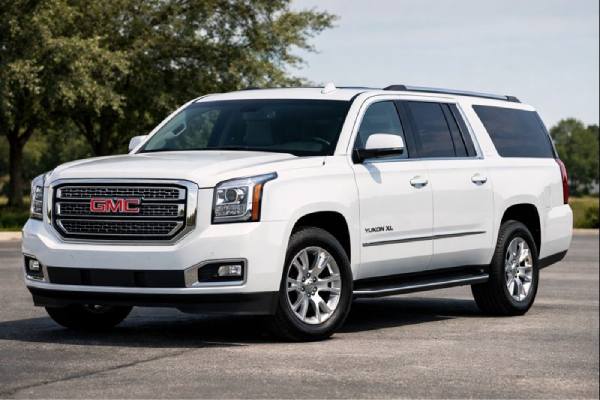
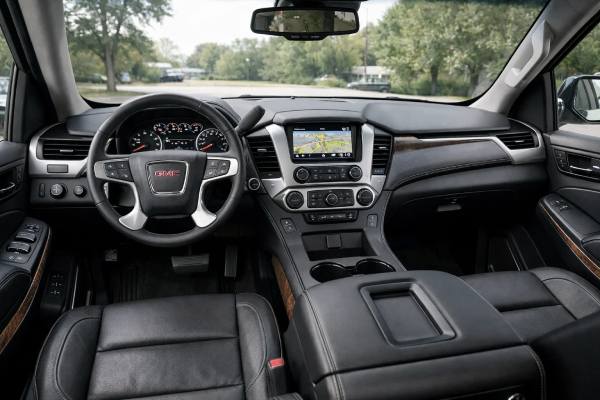
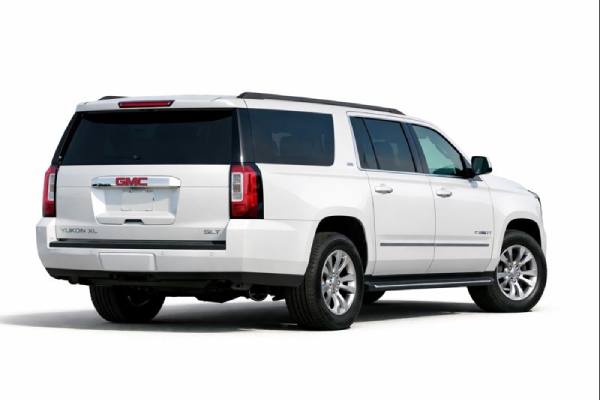
The 2015–2020 GMC Yukon XL Denali 4WD pairs GM’s 6.2L L86 V8 with a long-wheelbase, body-on-frame chassis built for real load work: people, cargo, and trailers. In Denali form, you get the highest-output small-block in this generation, a premium interior, and (on many trucks) a more controlled ride via Magnetic Ride Control that helps the XL feel less “bus-like” than its size suggests. The 4WD hardware adds winter traction and low-range capability, but it also adds complexity: a transfer case, front differential, extra seals, and more fluids to service. If you shop these well, the payoff is a smooth, quiet highway SUV that can tow confidently and still handle rough weather with less drama than a 2WD truck.
Top Highlights
- Strong 6.2L pull for merging and towing, with a relaxed highway demeanor for long-distance trips.
- 4WD with low range is genuinely useful for snow, steep grades, and slippery ramps (boats, trailers, campsites).
- XL body delivers meaningful third-row space and cargo room that shorter SUVs cannot match.
- Budget for driveline upkeep (transfer case and differential fluids) and watch for lifter-related V8 symptoms on higher-mileage trucks.
- Plan on engine oil service around 8,000 km (5,000 mi) or per the Oil Life Monitor, especially with towing or short-trip use.
Contents and shortcuts
- Yukon XL Denali 4WD profile
- L86 6.2 4WD specifications
- Denali 4WD trims and ADAS
- Issues, recalls and proven repairs
- Service planning and purchase checklist
- How it drives when loaded
- Denali XL 4WD rivals
Yukon XL Denali 4WD profile
Think of the Yukon XL Denali 4WD (K2UG) as a luxury pickup chassis wearing a three-row SUV body. Underneath, it shares core architecture with the Tahoe/Suburban/Escalade family from this era: a body-on-frame layout, independent front suspension, and a solid rear axle tuned more for stability under load than sports-car cornering. The “XL” matters—its extra wheelbase is not just for legroom; it also calms trailer sway and smooths highway pitch compared with shorter SUVs, especially when properly loaded.
The L86 6.2L V8 is the centerpiece. In Denali spec, it’s rated at 420 hp and 460 lb-ft, which is enough to move the XL with surprisingly little effort at part throttle and to hold speed on grades without frantic downshifts. That torque peak is higher than many modern turbo sixes, but the small-block’s broad midrange still feels strong because of its displacement and gearing.
Where the 4WD version differs from a RWD Denali is in the hardware and operating behavior. The 4WD system adds a transfer case and front differential, plus CV axles and additional seals and bearings. In practice, you gain:
- Better launch and control on slippery surfaces (wet grass, packed snow, gravel ramps).
- More confident towing on uneven or loose terrain (campgrounds, boat launches).
- A low-range mode that reduces strain on the transmission and brakes when creeping downhill or pulling slowly.
The tradeoff is maintenance and potential wear points: transfer case fluid needs periodic service, front CV boots can age and tear, and some owners encounter transfer-case actuator or encoder-motor issues over time. The 4WD Denali XL also carries slightly less towing capacity than the 2WD version, depending on axle ratio and equipment.
Model-year changes that matter most for buyers: GMC introduced a mid-cycle refresh around 2018 (lighting and infotainment updates), and later-year trucks commonly use a 10-speed automatic in this family. Earlier trucks commonly use a 6-speed automatic; both can be durable, but each has its own shift-feel quirks and service priorities.
L86 6.2 4WD specifications
Below are practical, buyer-relevant specs for the GMC Yukon XL Denali 4WD (K2UG), 2015–2020, focusing on the L86 6.2 and the 4WD driveline. Some figures vary slightly by model year, options, and market, so treat this as a decision guide and verify by VIN where it matters (tires, weights, and service capacities).
Engine and performance
| Item | Specification |
|---|---|
| Code | L86 |
| Engine layout and cylinders | V8, cam-in-block OHV (pushrod), 2 valves/cyl |
| Bore × stroke | 103.25 × 92.0 mm (4.065 × 3.622 in) |
| Displacement | 6.2 L (6,162 cc) |
| Induction | Naturally aspirated |
| Fuel system | Direct injection (DI) |
| Compression ratio | ~11.5:1 |
| Max power | 420 hp (313 kW) @ 5,600 rpm |
| Max torque | 624 Nm (460 lb-ft) @ 4,100 rpm |
| Timing drive | Chain |
Rated efficiency (EPA, example year)
FuelEconomy.gov lists the 2018 GMC Yukon XL K1500 4WD 6.2L at 14 mpg city / 21 mpg highway / 16 mpg combined (premium gasoline). That translates to about 16.8 / 11.2 / 14.7 L/100 km.
| Use case | L/100 km | mpg US |
|---|---|---|
| City (EPA) | ~16.8 | 14 |
| Highway (EPA) | ~11.2 | 21 |
| Combined (EPA) | ~14.7 | 16 |
Real-world highway at 120 km/h (75 mph): Many owners see a noticeable penalty at 75 mph versus 60–65 mph due to aero drag and the XL’s mass. A realistic planning range is 13–16 L/100 km (15–18 mpg US) at 120 km/h depending on wind, tires, load, and roof accessories.
Transmission and driveline
| Item | Specification |
|---|---|
| Transmission (typical) | 6-speed automatic (earlier years) or 10-speed automatic (later years) |
| Final drive ratio (Denali, common) | 3.23 |
| Drive type | 4WD with 2-speed transfer case (includes low range) |
| Differential | Typically open diffs with brake-based traction control |
Chassis and dimensions (typical Yukon XL)
| Item | Specification |
|---|---|
| Suspension (front/rear) | Independent front; solid rear axle with coil/link setup (truck-duty tuning) |
| Steering | Electric power steering |
| Brakes (front/rear) | 4-wheel discs (diameters vary by year/package) |
| Wheels/tires (common Denali) | 22-inch wheels common; tire sizes vary by package |
| Fuel tank | ~121 L (32.0 US gal / 26.6 UK gal) |
| Cargo volume (SAE, typical) | ~1,113 L (39.3 ft³) seats up / ~3,446 L (121.7 ft³) max |
Performance and capability (planning numbers)
| Item | Specification |
|---|---|
| 0–100 km/h (0–62 mph) | ~6.5–7.2 s (varies by year, tires, altitude, load) |
| Towing capacity (Denali XL 4WD) | Up to ~3,580 kg (7,900 lb) depending on configuration |
Safety and driver assistance (ratings and availability)
| Item | Specification |
|---|---|
| Crash ratings | Vary by year and test body; verify by VIN/year in official databases |
| Key available features | Blind spot detection, rear cross-traffic alert, forward collision warning, some AEB and lane support depending on year/package |
Denali 4WD trims and ADAS
For this generation, “Denali” is effectively the fully loaded Yukon XL: premium interior materials, higher-spec audio and infotainment, and a standard 6.2L that is not available on every lower trim. On a used listing, the badge alone is not enough—equipment varies by year and by which safety package the original buyer chose. The practical approach is to identify (1) drivetrain and tow configuration, then (2) ride and safety tech.
Trims and functional options that matter
Even within Denali, you will see differences in these areas:
- Suspension and ride control: Some Denali XLs include Magnetic Ride Control. It does not turn the truck into a sports SUV, but it noticeably improves body control over highway dips, reduces float with a trailer, and can make 22-inch wheels more tolerable. If you test-drive two Denalis back-to-back, this is one of the easiest differences to feel.
- Tow equipment and cooling: The most valuable towing-related content is not the hitch itself (that’s common) but the integrated trailering support: wiring, tow/haul calibration, and cooling capacity. If you intend to tow near the limit, prioritize a truck with the proper trailering package and confirm it still has the factory hitch and wiring intact.
- Wheel and tire packages: Denali commonly comes on 20- or 22-inch wheels. Larger wheels can sharpen steering response but increase tire cost and can reduce compliance on broken pavement. For snow and poor roads, many owners prefer a smaller wheel with a taller tire sidewall.
- Seating and interior layout: XL models often have a second-row bench or captain’s chairs. Captain’s chairs improve third-row access; the bench maximizes seating. Decide early because it affects the truck’s usefulness more than small tech features.
Safety ratings: what to do (and what not to assume)
Large SUVs in this period can be tricky to compare because not every test is run every year. Some years focus more heavily on crash avoidance availability (like forward collision warning or low-speed AEB), while other results may be limited or not directly comparable across model years. For shoppers, the takeaway is simple: confirm the safety systems on the specific vehicle you’re buying and verify ratings in the official databases for that year and configuration.
ADAS and calibration realities on used vehicles
Denali XL 4WD trucks may include (depending on year/package):
- Forward collision warning and (on some) automatic emergency braking (AEB)
- Adaptive cruise control
- Blind spot detection and rear cross-traffic alert
- Lane departure warning and lane keeping support
Two ownership realities matter:
- Windshield and bumper repairs can affect calibration. If the truck has had a windshield replacement or front-end bodywork, ask for documentation that the camera/radar was calibrated afterward.
- Sensor cleanliness matters. Road salt, mud, and bumper damage can disable features and produce intermittent warnings—something you can often detect during a long test drive, not just a short parking-lot loop.
Issues, recalls and proven repairs
A Yukon XL Denali 4WD is a big, complex machine. Reliability is often “good for the size,” but costs can rise quickly if you inherit deferred maintenance or a driveline problem. The most useful way to think about issues is by how common they are and how expensive they become if ignored.
Common (high prevalence)
- V8 valvetrain wear tied to cylinder-deactivation hardware (medium to high cost): Symptoms can include a ticking that persists warm, misfires under light load, and a rough idle that comes and goes. On higher-mileage trucks, a collapsed lifter can damage the camshaft. Remedy ranges from lifter replacement to a cam-and-lifter job. If you hear a consistent tick, treat it as a negotiation item and plan a professional diagnosis.
- Infotainment glitches (low to medium cost): Freezing screens, Bluetooth dropouts, and camera issues often improve with updates or module resets. On some trucks, module replacement is required. The key is to confirm every feature works (camera, parking sensors, steering-wheel controls) before purchase.
- Suspension wear (medium cost): Heavy curb weight accelerates wear of bushings, ball joints, and end links. If equipped, Magnetic Ride Control dampers can leak and are expensive. During the test drive, listen for clunks over sharp bumps and check for uneven tire wear.
Occasional (moderate prevalence)
- Transfer case and 4WD control issues (medium cost): A 4WD Yukon XL adds failure points—encoder motors/actuators, seals, and the transfer case itself. Symptoms include “Service 4WD” messages, binding in turns (in the wrong mode), or delayed engagement. Often, fluid condition and correct fluid type matter more than people expect.
- Front differential and CV axle concerns (medium cost): Look for seepage at the front diff, clicking CV joints on full lock, or torn CV boots. These are common wear items on heavy 4WD SUVs, especially in salted climates.
- Brake feel changes (medium cost): If you notice unexpectedly high pedal effort, warnings, or inconsistent assist, treat it as a high-priority inspection item—there have been official actions on brake assist behavior for some vehicles in this family depending on year and build.
Rare (lower prevalence, but high impact)
- Power steering assist failures (high safety priority): Some vehicles of this generation have had official safety actions related to electric power steering assist. A sudden heavy steering feel or warnings in the cluster should be treated as urgent.
Recalls and service actions: the correct way to handle them
Because recall applicability depends on build date and VIN, always confirm status with an official VIN lookup and dealer history. The rule is:
- Run your VIN through the official recall database.
- Ask a dealer for a service history summary showing recall completion and any open “field actions.”
- If you see odd shift behavior, ABS warnings, or ADAS faults, ask about software updates—sometimes a reflash is the official remedy.
Pre-purchase checks worth paying for
- Scan tool check for history codes (engine misfires, transmission slip, transfer case codes).
- Cold start listen test (lifter noise shows up best cold).
- 4WD function test (engagement, no binding, no warning messages).
- Undercarriage inspection (diff/transfer case seepage, CV boots, rust on brake lines in salted areas).
- Evidence of maintenance (oil changes, transfer case and differential services, brake fluid).
Service planning and purchase checklist
A Denali XL 4WD lasts longest when you treat it like a working truck: consistent fluids, heat management, and proactive inspections. The exact schedule depends on the Oil Life Monitor, climate, towing, and idle time, but the guide below is a strong baseline for real ownership (not just minimum compliance).
Practical maintenance schedule (distance and time)
| Item | Normal use | Severe use (towing, short trips, extreme temps) |
|---|---|---|
| Engine oil and filter (dexos, typically 0W-20) | Oil Life Monitor, often ~8,000–12,000 km (5,000–7,500 mi) | ~8,000 km (5,000 mi) |
| Tire rotation and brake inspection | ~12,000 km (7,500 mi) | ~8,000–10,000 km (5,000–6,000 mi) |
| Cabin air filter | 1 year / 20,000–25,000 km | 1 year (more often in dusty areas) |
| Engine air filter | 30,000–50,000 km | Inspect frequently; replace as needed |
| Brake fluid | Every 2 years | Every 2 years |
| Transfer case fluid | 70,000–100,000 km | 50,000–70,000 km (or sooner if heavy towing) |
| Front and rear differential fluids | 70,000–100,000 km | 50,000–70,000 km |
| Automatic transmission fluid | 80,000–120,000 km | 60,000–80,000 km |
| Coolant (Dex-Cool type) | ~5 years | ~4–5 years |
| Spark plugs | ~160,000 km (100,000 mi) | Inspect earlier if misfires occur |
| 12 V battery test | At 4 years, then annually | At 3–4 years, then annually |
Why this matters on the 4WD Denali XL: transfer case and differential services are the difference between “quiet, normal driveline” and expensive noise, chatter, or actuator problems later. If the service history does not show those fluids being changed at least once by 100,000 km, plan to do them early.
Fluids and specs (decision-level guidance)
- Engine oil: use the GM-required specification for the model year; most are dexos-rated oils. Keep receipts and stick to one quality brand and viscosity.
- Transmission fluid: verify by VIN and transmission type (6-speed vs 10-speed). Use the exact GM-approved ATF; wrong fluid can change shift feel and accelerate wear.
- Transfer case fluid: use the correct GM transfer case fluid (don’t assume “any ATF”).
- Differentials: typically synthetic gear oil; confirm additives (limited-slip friction modifier usually not needed if you do not have a clutch LSD).
Essential buyer checklist (quick but thorough)
Body and chassis
- Check for rust at rear frame sections, rocker seams, and brake lines (salt states).
- Look for uneven panel gaps or overspray (prior collision repairs).
Engine
- Cold start: listen for persistent ticking.
- Test drive: watch for misfire feel at light throttle cruise and under mild load.
Transmission
- Smooth shifts at light throttle; no flare (rpm jump) on 2–3 or 3–4.
- No shudder during gentle acceleration around 40–80 km/h (25–50 mph).
4WD system
- Engage 4WD modes; confirm no warning messages and no binding.
- Check transfer case and front diff for seepage.
Suspension and steering
- Clunks over sharp bumps, wandering, or steering vibration suggests worn components.
- If equipped with Magnetic Ride Control, check for damper leaks and budget accordingly.
Long-term durability outlook (honest version)
A well-maintained Denali XL 4WD can be a long-lived family and tow vehicle. The expensive pitfalls tend to be (1) neglected 4WD fluids, (2) high-mileage valvetrain repairs, and (3) costly suspension components on trucks with premium dampers. If you buy one with strong service records and do a baseline fluid refresh early, ownership becomes far more predictable.
How it drives when loaded
Unloaded, the Yukon XL Denali 4WD feels like what it is: a big luxury truck that happens to have three rows. The steering is light and designed to reduce fatigue, not deliver road texture. The reward is stability—on the highway it tracks straight, handles crosswinds well for its size, and feels calmer than many shorter SUVs when the road surface gets choppy. With the XL wheelbase, the body motions are slower and more controlled, which passengers often interpret as “comfort,” even if the chassis is fundamentally heavy.
Powertrain character
The L86 6.2 is smooth and confident, with a strong midrange that masks the vehicle’s mass. Around town, it relies on torque more than revs—typical small-block behavior. Under load, you feel the engine “lean in” rather than hunt.
On trucks with the later 10-speed, the transmission can keep the engine in a more efficient zone on gentle grades, but it may shift more often than the older 6-speed. Some drivers prefer the simpler feel of the 6-speed; others like the tighter ratio spacing of the 10-speed when towing.
Ride, handling, and NVH
- Ride: With 22-inch wheels, pothole sharpness is the main downside. Magnetic Ride Control (when equipped) helps reduce float and improves control over repeated bumps.
- Handling: It is predictable rather than agile. The Yukon XL’s length means you feel its size in parking lots, but at speed it feels planted.
- Noise: Wind and tire noise dominate at highway speeds; worn door seals or aggressive tires can amplify both.
Real-world efficiency and what changes it
Using the EPA example year as a baseline (16 mpg combined), real-world results swing mainly with speed and load:
- City-heavy driving: often ends up near the EPA city number (or worse in winter).
- Highway at 100–110 km/h (62–68 mph): can approach the highway rating if tires and alignment are right.
- Highway at 120–130 km/h (75–80 mph): typically drops noticeably due to aero drag.
4WD behavior in snow and low-traction use
4WD is most valuable in two situations: starting traction and control under load. With a trailer on a wet ramp or an incline covered in packed snow, 4WD can be the difference between a calm pull-away and wheelspin plus stability-control intervention. Low range also helps when maneuvering slowly on steep surfaces because it reduces heat load on the transmission and brakes.
A key practical note: tires often matter more than 4WD. A Denali XL on worn all-seasons will still struggle in snow; a Denali XL on quality winter tires can feel dramatically more secure.
Towing impressions and planning
In the real world:
- The truck is stable when properly hitched, but tongue weight, tire pressure, and brake controller setup matter.
- Expect a large fuel-economy penalty towing—often 25–40% worse under moderate tow loads and more in headwinds or hills.
- Keep an eye on temps and use tow/haul; it changes shift logic and helps manage heat.
Denali XL 4WD rivals
The Yukon XL Denali 4WD sits in a narrow niche: long-body, truck-based, luxury-leaning, and tow-capable. Rivals tend to trade one of those qualities for another. Here is how the Denali XL 4WD stacks up in the ways that actually affect ownership.
Ford Expedition Max (4×4)
Why cross-shop it: The Expedition Max often feels lighter on its feet, with strong turbocharged torque and a modern transmission strategy. Interior packaging can be excellent, and many buyers prefer the newer-tech vibe.
Where the Yukon XL wins: Many owners still prefer the small-block V8’s smoothness and predictability under sustained load. The Denali’s road feel can be calmer, and the GM truck platform is extremely familiar to independent shops. If you prioritize “no drama” towing feel, the Yukon’s character is easy to like.
Lincoln Navigator L
Why cross-shop it: Maximum luxury execution, strong power, and a quieter cabin in many trims.
Where the Yukon XL wins: The Denali can be cheaper to keep on the road once out of warranty, and parts availability is often better in truck-heavy regions. If you want premium without “ultra-luxury” running costs, Denali is usually the pragmatic pick.
Cadillac Escalade ESV (same family)
Why cross-shop it: Similar fundamentals with more luxury branding and some different option packaging.
Where the Yukon XL wins: Often better value on the used market for nearly identical mechanicals. If you intend to tow and haul rather than purely cruise, Denali can be the smarter buy for the same platform.
Toyota Sequoia and Nissan Armada
Why cross-shop them: Reputation for durability (Toyota) and strong value per dollar (Armada).
Where the Yukon XL wins: The Yukon XL is meaningfully larger inside than these alternatives, especially behind the third row. If your life involves big cargo plus people, the XL body is the whole point—and many midsize “full-size” rivals simply cannot match the space.
Who should pick the Yukon XL Denali 4WD?
Choose it if you want:
- Long-body cargo space plus real towing stability
- A V8 that feels strong without effort
- 4WD capability for winter, ramps, and unpaved access roads
Skip it (or shop very carefully) if:
- Fuel cost is a primary concern (this is not an efficient vehicle)
- You want consistent, modern driver assistance across all years and builds (availability varies by year and options)
- You do not want truck-based maintenance realities (tires, brakes, suspension parts, and driveline fluids)
References
- Denali Owner’s Manual 2015 (Owner’s Manual)
- 2019 GMC Towing and Trailering Guide 2019 (Trailering Guide)
- Gas Mileage of 2018 GMC Yukon 2018 (Official Efficiency Data)
- 2018 GMC Yukon XL 2018 (Safety Rating)
- Vehicle Detail Search – 2018 GMC YUKON DENALI XL | NHTSA 2018 (Recall Database)
Disclaimer
This article is for informational purposes only and is not a substitute for professional diagnosis, inspection, or repair. Specifications, torque values, fluid types, capacities, service intervals, and procedures can vary by VIN, market, build date, and equipment. Always verify details using the official owner’s manual, factory service information, and your vehicle’s labels before servicing or buying.
If you found this guide useful, consider sharing it on Facebook or X to help others researching the Yukon XL Denali 4WD.