
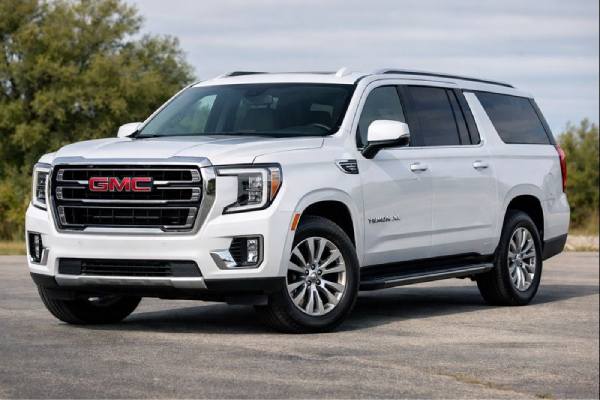
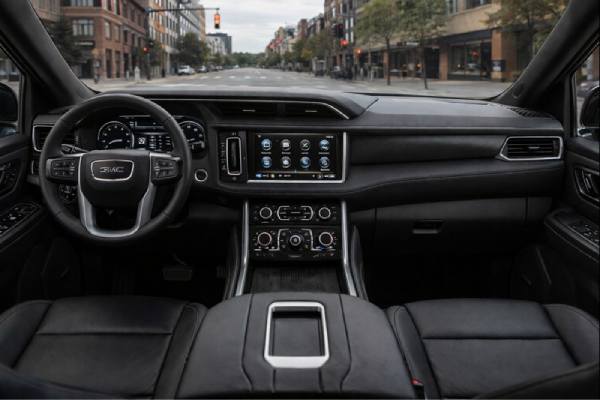
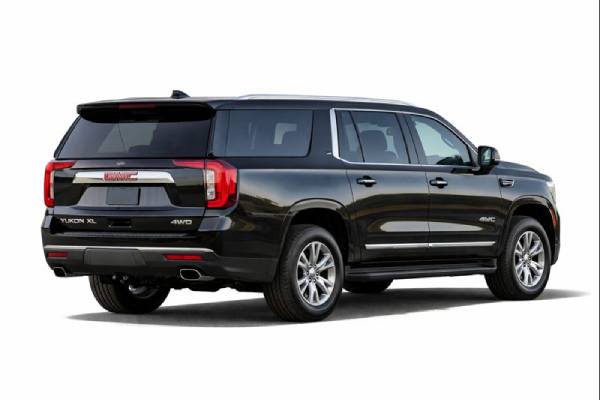
The 2021–2024 GMC Yukon XL 4WD with the 3.0L Duramax (LM2) is a rare mix in today’s full-size SUV market: true long-wheelbase space, traditional truck-based 4WD hardware, and a modern turbodiesel that prioritizes torque and range over headline horsepower. In daily use, the LM2’s low-rpm pull makes the XL feel lighter than its size suggests, especially when merging or towing, while the 10-speed automatic keeps the engine in its quiet, efficient band. The ownership trade-off is complexity. This is a high-output diesel with an emissions aftertreatment system, a high-pressure fuel system, and multiple cooling loops—so the best experience comes from correct fluids, clean fuel, and consistent service. Get those basics right, and the diesel XL can be one of the most relaxed long-distance family haulers in the segment.
What to Know
- Strong low-rpm torque makes towing and highway passing feel easy, even with a full cabin.
- Excellent cruising range potential compared with the gasoline V8 options, especially on long motorway trips.
- 4WD hardware and drive modes improve traction on wet, snow, and light off-road surfaces without drama.
- Emissions components (DEF, DPF, sensors) add cost risk if the truck is used mostly for short trips.
- Plan on checking oil level regularly and servicing on roughly 12,000 km / 7,500 mi cadence (or the oil-life monitor), whichever comes first.
Navigate this guide
- Yukon XL 4WD diesel focus
- LM2 3.0L technical tables
- Packages, trims, and safety
- Known diesel and 4WD issues
- Maintenance plan and buying tips
- Real driving, mpg, and towing
- Alternatives to the diesel XL
Yukon XL 4WD diesel focus
Think of the Yukon XL LM2 4WD as a “load-and-distance” SUV first. The XL body gives you a real adult third row and usable cargo behind it, and the diesel is there to make that mass feel manageable without living at high rpm. Unlike many turbo gasoline engines that build performance with boost and revs, the LM2’s value is the steady shove you get from low engine speed. In practice, that means fewer downshifts on grades, calmer towing behavior, and less “busy” drivetrain feel in rolling terrain.
The 4WD side matters just as much. In this generation, Yukon XL 4WD setups are typically built around an electronically controlled transfer case with drive modes that tailor throttle, traction control, and shift strategy. If your use case includes winter commuting, steep wet driveways, boat ramps, or unpaved access roads, the diesel’s torque plus 4WD traction is a confidence multiplier. It also means more components to service: front differential, transfer case, and additional CV joints and seals.
Where owners get surprised is that the diesel Yukon XL is not a “set it and forget it” powertrain. The engine is engineered to meet strict emissions rules using a diesel particulate filter (DPF), selective catalytic reduction (SCR) with diesel exhaust fluid (DEF), and multiple sensors. None of those parts are exotic, but they are sensitive to usage patterns. Frequent short trips can increase DPF regeneration frequency and accelerate sensor or DEF-system complaints, while long steady drives are where the system tends to be happiest.
If you’re shopping used, match the truck to its prior life. A diesel XL that did highway miles, towed moderately, and received the correct oil and fuel filter service is typically a better bet than one that lived in stop-and-go and idled for long periods. The best “engineering” advantage of this setup is that it rewards the very thing the XL body is best at: long, steady, loaded travel.
LM2 3.0L technical tables
Below are practical, ownership-oriented specs for the Yukon XL 4WD with the LM2 3.0L Duramax (277 hp). Exact figures can vary by model year, axle ratio, wheel size, and option packages, so treat performance and towing as configuration-dependent.
Engine and performance (diesel)
| Item | Spec |
|---|---|
| Code | LM2 |
| Engine layout and cylinders | Inline-6 turbodiesel, DOHC (architecture), 6 cylinders |
| Displacement | 3.0 L (2,993 cc) |
| Induction | Turbocharged |
| Fuel system | Common-rail direct injection (diesel) |
| Max power | 277 hp (207 kW) (peak varies slightly by calibration/year) |
| Max torque | ~624 Nm (~460 lb-ft) |
| Timing drive | Chain-driven valvetrain (oil-pump drive design is engine-specific) |
| Emissions and efficiency standard | EPA-certified diesel with DPF and SCR (DEF) aftertreatment |
| Rated efficiency (example year) | ~10.7 L/100 km combined (22 mpg US) for Yukon XL 4WD diesel (varies by year) |
| Real-world highway @ 120 km/h | Often ~9–11 L/100 km (21–26 mpg US) depending on tires, wind, load, and temperature |
Transmission and 4WD hardware
| Item | Spec |
|---|---|
| Transmission | 10-speed automatic (application-specific GM unit) |
| Drive type | 4WD (electronically controlled; mode-dependent) |
| Transfer case | Typically electronic; some trims offer low range while others prioritize automatic torque distribution |
| Differential | Open differentials are common; eLSD availability varies by trim/package |
Chassis and dimensions (typical Yukon XL)
| Item | Spec |
|---|---|
| Suspension (front/rear) | Independent front; rear multi-link with coil springs (air ride available on some trims) |
| Steering | Electric power steering |
| Brakes | 4-wheel disc (sizes vary by wheel/brake package) |
| Length | ~5,720 mm (~225 in) |
| Wheelbase | ~3,407 mm (~134 in) |
| Width | ~2,060 mm (~81 in) (mirrors excluded) |
| Height | ~1,930–1,950 mm (~76–77 in) (varies by suspension/tires) |
| Fuel tank | ~91 L (24 US gal) (typical for this platform) |
Performance and capability (realistic ranges)
| Item | Typical range |
|---|---|
| 0–100 km/h (0–62 mph) | ~8.5–9.5 s (trim and test conditions matter) |
| Passing (80–120 km/h) | Strong midrange; depends heavily on load and grade |
| Braking (100–0 km/h) | Often ~40–44 m on stock all-season tires (varies widely by tire) |
| Towing capacity | Configuration-dependent; commonly high-3,000 kg range with the right package |
| Payload | Often ~600–800 kg, depending on trim and options |
Fluids and service capacities (diesel-focused)
| Item | Spec |
|---|---|
| Engine oil spec | dexosD approved diesel oil |
| Viscosity grade | SAE 0W-20 |
| Engine oil capacity (with filter) | 6.6 L (7.0 US qt) |
| Engine cooling system | DEX-COOL 50/50 mix; capacity varies (SUV application is higher than pickup) |
| DEF tank | 20.5 L (5.4 US gal) |
| ATF | Use the exact GM-specified fluid for the 10-speed application (dealer fill is common) |
Electrical and safety (high-level)
| Item | Notes |
|---|---|
| Alternator | Output varies by option load and year |
| 12V battery | Often AGM; capacity and CCA vary by build |
| Crash ratings | NHTSA/IIHS availability varies by year and test coverage; always verify by exact model year and configuration |
| ADAS | Forward collision alert, AEB, lane support, and ACC availability depend on trim and packages |
Packages, trims, and safety
For 2021–2024 Yukon XL 4WD, the diesel is usually an “availability layer” more than a standalone trim: you pick your trim first, then confirm the LM2 is allowed with that build. In many markets, the 3.0 Duramax has been offered across multiple trims, but inventory and packaging can be inconsistent year to year. Practically, that means you should shop by VIN and build sheet, not just the badge on the liftgate.
Trims and option packages that matter mechanically
- SLT and AT4 often represent the best “value per hardware” sweet spot. They can be optioned with meaningful towing and stability upgrades without forcing the highest luxury content (which can reduce payload).
- Denali adds luxury, sound insulation, and often larger wheels. Those wheels can slightly reduce ride compliance and may nudge real-world economy down at motorway speeds.
- Tow and trailering packages are where capability changes. Look for integrated brake controller, upgraded cooling where applicable, hitch hardware, trailering camera views, and a higher-rated receiver. These features don’t just raise tow ratings; they reduce stress and heat—two big longevity factors.
Quick identifiers when inspecting:
- Check for factory trailer brake controller in the dash area.
- Confirm trailer camera views and connector presence at the rear.
- Review the tire size: aggressive all-terrains can be great for traction but typically reduce economy and can increase braking distances.
Safety systems and driver assistance
Most Yukon XL models in this era are built around a strong baseline of stability control, multiple airbags, and a modern suite of camera and radar-based assists. The key question is what is standard vs optional:
- AEB (automatic emergency braking) and forward collision alerts may be standard on some trims/years but packaged on others.
- Adaptive cruise control (ACC) often sits higher in the trim stack or within a premium package.
- Lane keeping/lane departure features can range from warnings to active lane centering, depending on configuration.
A practical ownership note: ADAS calibration matters after windshield replacement, bumper repairs, alignments, and some suspension work. If you buy used, ask for documentation showing that camera/radar systems were recalibrated after any front-end repair.
Crash ratings: how to use them
Because crash-test coverage can vary by body style, drivetrain, and test year, treat ratings as a starting point—not the whole story. Verify results by:
- Exact model year
- Yukon vs Yukon XL
- 2WD vs 4WD, where the rating database differentiates
If you want maximum real-world safety value, prioritize:
- Correct tire quality and tread depth (big SUVs are tire-sensitive).
- Working AEB and intact sensor covers.
- Proper child-seat anchoring condition and third-row belt operation.
Known diesel and 4WD issues
The LM2 Yukon XL can be very durable, but “durable” here means staying ahead of diesel-specific maintenance and catching small drivability warnings early. Below is a prevalence-and-cost way to think about common trouble spots.
Common (most likely over ownership)
- DPF regeneration sensitivity (medium cost if ignored):
Symptoms: rising idle, hot exhaust smell, “regen” messages, reduced economy, occasional warnings.
Likely cause: lots of short trips, frequent cold starts, prolonged idling.
Remedy: ensure regular longer drives; address glow plug/thermostat/sensor issues that prevent complete regens. - DEF system warnings (medium to high depending on root cause):
Symptoms: DEF level warnings that don’t match reality, countdown messages, limp-mode threats if ignored.
Likely cause: contaminated DEF, crystallization at the filler, heater or sensor faults.
Remedy: use fresh DEF from sealed containers, keep filler clean, diagnose heaters/sensors promptly. - Fuel filter life and water management (low to medium):
Symptoms: hard starts, reduced power, fuel system warnings, “change fuel filter” message.
Likely cause: clogged filter, water in fuel, poor fuel quality.
Remedy: replace fuel filter on schedule and after any suspected bad fuel event.
Occasional (depends on climate, mileage, and towing)
- Turbo and charge-air leaks (medium):
Symptoms: whistle changes, reduced boost feel, smoke under load, underboost codes.
Cause: loose clamps, cracked hoses, intercooler/charge-air plumbing issues.
Remedy: pressure test intake plumbing, repair leaks, confirm no oil contamination from a failed component. - Cooling system seepage (medium):
Symptoms: slow coolant loss, sweet smell, temp fluctuations under tow.
Cause: hose connections, radiator, thermostat housing, or auxiliary cooling loops.
Remedy: pressure test, repair early before overheating events.
4WD and chassis-related items
- Transfer case fluid neglect (medium to high if it leads to wear):
Symptoms: binding, clunks on engagement, warning lights, abnormal noise.
Cause: old fluid, incorrect fluid, heavy use without service.
Remedy: service transfer case at appropriate intervals, especially if used in snow, sand, or towing. - Front axle/CV wear (medium):
Symptoms: clicking on turns, vibration under load, grease sling near boots.
Cause: age, torn boots, lifted or heavily loaded use.
Remedy: replace boots early if torn; replace axle assemblies if noise persists.
Software and calibration reality
Modern diesels rely heavily on ECU calibration for emissions and drivability. If you experience repeat warnings with no obvious mechanical cause, a dealer-level scan and update can be the correct “repair,” especially for sensor plausibility faults or aftertreatment logic problems. When buying used, ask for documentation of campaign updates and service actions.
Maintenance plan and buying tips
A good maintenance plan for the LM2 Yukon XL 4WD aims at three things: protecting the turbo-diesel’s lubrication needs, keeping fuel and emissions systems healthy, and preventing 4WD hardware wear.
Practical maintenance schedule (distance or time)
- Engine oil and filter: follow the oil-life monitor, but plan around 12,000 km / 7,500 mi or 12 months for many driving patterns. Use dexosD oil in SAE 0W-20, and stick to a quality filter.
- Oil level checks: every 650 km / 400 mi is conservative, but it’s a smart habit before long trips or towing days.
- Fuel filter: change when the truck indicates low fuel-filter life, or sooner if you suspect poor fuel. Always reset the fuel filter life after replacement.
- Engine air filter: follow the air-filter life system if equipped; inspect more often in dusty areas.
- Cabin air filter: typically every 24,000–30,000 km or annually if you drive in dusty urban environments.
- DEF: keep it topped up with fresh DEF; don’t store partially used containers for long periods.
- Brake fluid: every 2 years is a solid baseline regardless of mileage.
- Transmission fluid: many owners treat this as “severe service” if towing—consider a proactive service window around 70,000–100,000 km, depending on use and official guidance for your VIN.
- Transfer case and differentials: service more frequently if you use Auto 4WD heavily in winter, do beach launches, or tow often. Fresh fluid is cheap compared to driveline wear.
Fluid specs and capacities (decision-making essentials)
- Engine oil: dexosD, SAE 0W-20; 6.6 L (7.0 qt) with filter
- DEF tank: 20.5 L (5.4 US gal)
- Coolant: DEX-COOL 50/50; total capacity depends on exact cooling loop configuration
Buyer’s guide: what to inspect on a used diesel XL
- Service history depth: oil changes, fuel filter replacements, and documented diesel-specific work matter more than generic “regularly serviced” claims.
- Regeneration clues: excessive idle time, lots of short-trip use, or repeated emissions warnings are red flags.
- Cold start behavior: listen for smooth start and stable idle; roughness can hint at glow plug, fuel pressure, or sensor issues.
- Underbody and driveline leaks: check transfer case, front differential, and CV boots.
- Towing signs: look for hitch wear, trailer wiring repairs, and evidence of overheated fluids (dark ATF smell is a warning).
- Electronics and camera functions: confirm all cameras, parking sensors, and driver-assist features work—repairs can be expensive.
Best ownership advice: if your weekly pattern is almost all short trips, the gasoline 5.3 or 6.2 may be the lower-stress choice. If you routinely do longer drives and want range plus torque, the LM2 is exactly in its element.
Real driving, mpg, and towing
The driving experience of the diesel Yukon XL 4WD is defined by calm torque delivery. The engine rarely feels like it’s working hard, and the 10-speed can keep rpm low without lugging. Around town, you’ll notice strong step-off and easy low-speed control—helpful in traffic and when maneuvering a trailer. On the motorway, it settles into a quiet cruise and tends to hold speed on rolling grades with fewer downshifts than the gasoline V8s.
Ride, handling, and NVH
This is a large body-on-frame SUV, so the priorities are stability and comfort, not sporty reflexes. Steering is usually light to moderate, tuned for predictable lane control. On standard road tires, straight-line stability is a strength. Larger wheels can add sharpness but may also transmit more impact harshness. If equipped, air suspension and adaptive damping can noticeably improve both ride smoothness and body control when loaded.
Cabin noise is generally well managed, but diesel character can show up as a muted low-frequency hum under heavy throttle. In normal driving, it’s typically subdued.
Real-world efficiency
EPA-style ratings give a solid baseline. A representative figure for a Yukon XL 4WD diesel is about 22 mpg US combined (around 10.7 L/100 km), with ~26 mpg highway possible in ideal conditions. In real life:
- Steady 120 km/h cruising: often lands in the 9–11 L/100 km range.
- Cold weather: expect higher consumption, especially with short trips and frequent warm-up cycles.
- All-terrain tires and lift-style setups: can noticeably reduce economy and increase braking distances.
Towing and load behavior
This is where the LM2 shines. The torque curve helps maintain speed on grades and reduces the “rev-and-hunt” feel you can get when towing with some gasoline engines. With a properly equipped trailering package, the XL can be a stable tow platform—long wheelbase, heavy curb weight, and strong cooling are advantages.
Expect:
- Better low-rpm control on ramps and in crosswinds compared with smaller SUVs.
- A meaningful fuel economy penalty under tow; a 20–35% increase in consumption is a realistic planning range depending on trailer weight, speed, and terrain.
- Heat management matters: use Tow/Haul modes as intended, and don’t ignore transmission temperature behavior on long grades.
Performance metrics that actually matter
Raw 0–100 km/h times are less relevant than passing strength and grade-holding. Still, most tests and owner experience put the diesel XL in the “quick enough” band—roughly high-8 to low-9 seconds to 100 km/h depending on load and conditions—while feeling stronger than that number suggests once rolling.
Alternatives to the diesel XL
The Yukon XL LM2 4WD sits in a very specific niche: maximum cabin and cargo, real 4WD capability, and long-range torque-first driving. To compare it fairly, you have to decide what you value most: towing feel, operating cost, reliability simplicity, or interior packaging.
Closest platform rivals
- Chevrolet Suburban 3.0 diesel (related platform): Similar fundamentals and often similar driving character. Cross-shop based on pricing, trim packaging, and availability of the options that matter (trailering cameras, suspension, wheel size).
- Ford Expedition MAX (gasoline turbo): Typically feels quicker and lighter in some scenarios, but it’s a different ownership equation: turbo gasoline power and different towing/efficiency behavior at high speed.
Diesel vs gasoline within the Yukon XL lineup
- Choose the diesel (LM2) if:
You do frequent long trips, value range, tow moderately often, and prefer relaxed low-rpm power delivery. - Choose the 5.3 V8 if:
You want simpler emissions hardware, predictable maintenance, and you mostly do short trips. It can be the “lower stress” long-term ownership path for city-heavy use. - Choose the 6.2 V8 if:
You want stronger high-speed acceleration and don’t mind higher fuel costs. It can also pair well with heavy towing packages depending on build.
Practical “best fit” summary
The diesel XL is often the best choice for:
- High-mileage families
- Long-distance road trips with full cargo
- Regular towing where torque and stability matter more than speed
It may be a less ideal match for:
- Mostly short-trip urban use
- Owners who prefer the simplest possible powertrain
- Buyers who cannot reliably access quality diesel fuel and DEF
If you’re unsure, an easy rule is this: if your typical drive is long enough to fully warm the drivetrain and you do that several times a week, the diesel is in its happy place. If your driving is mostly 10-minute hops, the gasoline versions usually make ownership easier.
References
- Gas Mileage of 2022 GMC Yukon 2022 (Official Efficiency Data)
- Vehicle Detail Search – 2024 GMC YUKON XL SUV 4WD | NHTSA 2024 (Recall Database)
- 2022 Chevrolet and GMC Duramax Diesel 3.0L Owner Manual Supplement 2022 (Owner’s Manual Supplement)
- TRAILERING TECHNOLOGIES THAT MAKE TOWING EASY | GMC Life 2024 (Trailering Tech)
- THE DURAMAX 3.0L TURBO-DIESEL ENGINE: PERFORMANCE AND EFFICIENCY | GMC Life 2024 (Powertrain Overview)
Disclaimer
This article is for informational purposes only and is not a substitute for professional inspection, diagnosis, or repair. Specifications, torque values, service intervals, and procedures vary by VIN, market, model year, and equipment. Always verify details using your official owner’s manual and service documentation for your exact vehicle.
If you found this guide useful, consider sharing it on Facebook, X (Twitter), or your favorite forum to support our work.