
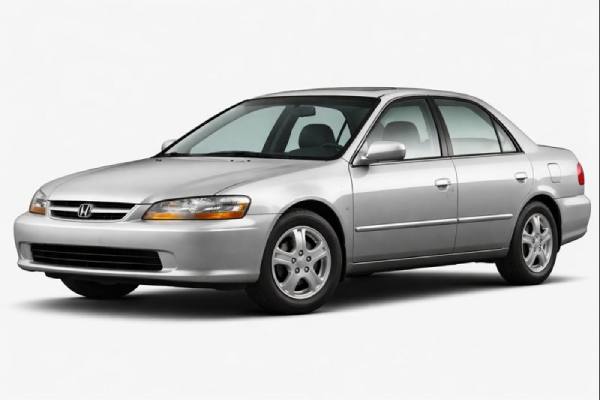
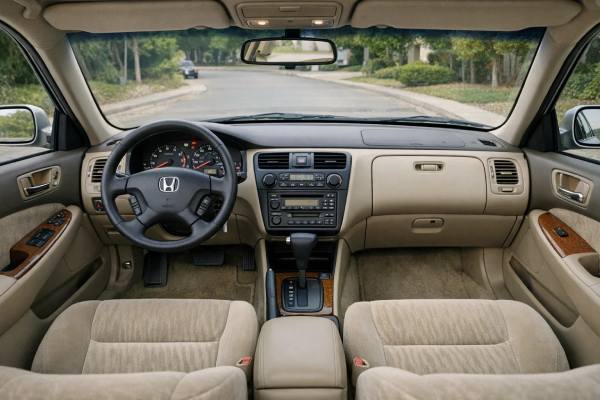

The Honda Accord CG6 with the F23A4 2.3-liter four-cylinder is one of those “quietly right” cars: simple enough to keep affordable, refined enough to live with daily, and engineered with the kind of durability that rewards consistent maintenance. This specific 148 hp variant matters because it pairs Accord practicality with an emissions-focused calibration (often sold as ULEV in the U.S.), so it tends to feel slightly softer at the top end than the 150 hp tune, but still delivers the same smooth, torque-forward character that suits commuting and highway use.
If you’re shopping today, condition and service history matter more than mileage alone. The CG6 is now old enough that rubber, seals, and neglected fluids become the deciding factors. Get those basics right, and the platform’s comfort, predictable handling, and long-run parts support remain real advantages.
Owner Snapshot
- Smooth, low-stress power delivery that fits daily driving and long highway trips.
- Double-wishbone suspension gives stable, confident handling for a midsize sedan.
- Parts availability is strong, and most repairs stay straightforward for independent shops.
- Automatic transmission health is a key risk point—test drive warm and check service records.
- Plan timing belt service based on schedule and use; inspect and replace before it becomes overdue (miles and years both matter).
Contents and shortcuts
- CG6 F23A4 ownership profile
- F23A4 specs and measurements
- Trim equipment and safety gear
- Common faults and recall notes
- Service plan and buyer checklist
- Real-world driving and economy
- CG6 Accord vs midsize rivals
CG6 F23A4 ownership profile
The 1998–2002 Accord generation sits in a sweet spot for many buyers: modern enough to feel like a real midsize car (quiet cabin, stable highway manners, strong HVAC, useful trunk), but still “analog” in the sense that most systems are understandable and repairable without specialized tools. The CG6 designation is commonly associated with the four-door sedan body style in this generation, and the F23A4 2.3-liter is the emissions-focused 148 hp version. In practical ownership terms, that usually means the same everyday usability as the 150 hp tune, with slightly different calibration and emissions hardware depending on market and build.
What owners tend to like most is the car’s balance. The chassis is predictable and forgiving, and it communicates clearly when tires or dampers are worn. The double-wishbone suspension front and rear helps the Accord track cleanly through corners and resist the “float” some competitors developed on the highway. When everything is fresh—especially tires, struts, and alignment—it still feels composed at modern traffic speeds.
The F23A-family engine also suits long-term use. It’s a conventional, naturally aspirated inline-four with a timing belt, and it generally responds well to routine oil service. It won’t feel quick by current standards, but it’s not fragile or temperamental either. Where ownership gets tricky is not the engine’s core design; it’s age-related neglect: overdue timing belt service, coolant that’s been topped off with tap water, transmission fluid that hasn’t been changed, and vacuum or intake leaks that create intermittent drivability issues.
A practical way to think about this CG6 is as a “maintenance honesty test.” A well-kept one drives cleanly, shifts consistently, and runs cool in traffic. A neglected one will show it: flare shifts, shudder on lockup, unstable idle, cooling fans cycling strangely, or warning lights that disappear and return. The advantage is that most problems are diagnosable and fixable—if you start with a solid base car and avoid the worst examples.
F23A4 specs and measurements
This section focuses on the real-world specs buyers and owners actually use: powertrain details, key dimensions, typical gearing, and service capacities. Note that exact figures can vary by market, emissions certification, and trim level, so treat this as a “most common configuration” reference and verify against your VIN when ordering parts or planning major service.
Engine and performance (F23A4 ULEV-focused 2.3)
| Item | Spec |
|---|---|
| Code | F23A4 |
| Engine layout and cylinders | Inline-4, SOHC, 16-valve (VTEC-equipped variants common) |
| Bore × stroke | 86.0 × 97.0 mm (3.39 × 3.82 in) |
| Displacement | 2.3 L (2,254 cc) |
| Induction | Naturally aspirated |
| Fuel system | PGM-FI (multi-point fuel injection) |
| Compression ratio | Typically ~9.3:1 (varies by exact 4-cyl trim) |
| Max power | 148 hp (110 kW) @ 5,700 rpm |
| Max torque | 201 Nm (148 lb-ft) @ 4,900 rpm |
| Timing drive | Timing belt (plus balancer belt on 4-cyl) |
| Drive type | FWD |
Transmission and gearing (typical 4AT and 5MT listings)
| Spec | 4-speed automatic (typical ULEV listing) | 5-speed manual (typical ULEV listing) |
|---|---|---|
| 1st | 2.53 | 3.29 |
| 2nd | 1.43 | 1.81 |
| 3rd | 0.93 | 1.19 |
| 4th | 0.62 | 0.90 |
| 5th | — | 0.69 |
| Reverse | 1.86 | 3.00 |
| Final drive | 4.46 | 4.06 |
Chassis, dimensions, and capacities (common sedan figures)
| Item | Spec |
|---|---|
| Suspension (front / rear) | Double wishbone / double wishbone |
| Steering | Rack-and-pinion (assist varies by trim/market) |
| Brakes (typical) | Front discs; rear drums on many trims; ABS varies by trim |
| Wheels and tires (common) | P195/65R15 |
| Fuel tank | 64.7 L (17.1 US gal) |
| Turning circle | ~11.1 m (36.4 ft) |
| Curb weight (typical) | ~1,405 kg (3,097 lb) |
| Cargo volume (sedan, typical) | ~399 L (14.1 ft³) |
Fluids and service capacities (decision-useful planning numbers)
Because these cars are now old, the most useful capacity numbers are the ones tied to routine service (drain-and-fill, not necessarily “dry fill”). Always confirm the correct fluid by label and service manual.
| System | Fluid spec (typical guidance) | Capacity (typical) |
|---|---|---|
| Engine oil | Use the viscosity shown on the oil cap; common grades include 5W-20 or 5W-30 depending on climate | ~4.1 L (4.3 US qt) with filter |
| Coolant | Honda-type long-life coolant, 50/50 mix unless specified otherwise | ~5.7 L (6.0 US qt) |
| Automatic transmission | Honda ATF (model-year correct type) | ~2.6–2.8 L (2.7–3.0 US qt) per drain-and-fill |
| Manual transmission | Honda MTF (or approved equivalent) | ~1.9 L (2.0 US qt) |
| Brake fluid | DOT 3/4 (confirm cap) | Fill to MAX; flush by procedure |
Key torque spec (useful for DIY decision-making)
- Spark plugs (4-cyl): 18 N·m (13 lb-ft)
Trim equipment and safety gear
For the 1998–2002 Accord, trims and options vary by region, but the ownership logic is consistent: pick the best-maintained example, then prioritize safety and functional equipment that matters to you (ABS, side airbags, and lighting condition), rather than chasing badges.
Trims and options that actually change ownership
Typical U.S. sedan trims for this generation include DX, LX, and EX (plus special editions in some years). The differences are not just cosmetic:
- DX often sits at the value end: fewer power features, sometimes rear drum brakes without ABS, and fewer comfort upgrades. It can be a durable commuter, but may feel sparse.
- LX is the practical middle ground: usually the best mix of equipment and running costs.
- EX tends to add higher-feature interior equipment and, in many markets, more standard convenience items. It’s often the “easy to live with” choice if you find a clean one.
Options that matter most today:
- ABS: On older cars, this can be the difference between a stable panic stop and an uncontrolled lockup on slick surfaces. Confirm the ABS light proves out (on at key-on, then off).
- Side airbags: Available on certain trims/years. If equipped, check that the SRS light behaves normally and that seats haven’t been swapped incorrectly.
- Transmission choice: The 5-speed manual tends to be simpler long-term if maintained, while the 4-speed automatic deserves closer scrutiny because failures are expensive relative to the car’s value.
Quick identifiers to look for:
- ABS is usually indicated by an ABS warning light at key-on and an ABS hydraulic unit in the engine bay.
- Side airbags may be marked on seat tags or interior labeling, and the car may have additional SRS indicators depending on year/market.
- ULEV labeling is typically shown on under-hood emissions labels; this is where build-specific details (engine family, certification) live.
Safety ratings and what they mean here
These cars were designed before modern crash-test regimes added today’s small-overlap front tests and advanced compatibility measures, so interpret ratings within their era.
- IIHS moderate overlap front (original test) for this generation’s 4-door sedan family is Acceptable overall, with generally good head/neck and chest measures, but with a noted weak point in right leg/foot protection in the test configuration. In plain terms: structure is decent for the time, but there are injury-mode compromises that newer designs address more comprehensively.
Safety systems and “ADAS” reality for 1998–2002
Driver assistance systems as we know them today (AEB, adaptive cruise, lane centering) are not part of this Accord’s world. Instead, safety comes from fundamentals:
- Airbags: Dual front airbags are typical; side airbags depend on year/trim.
- Seat belts: Ensure all belts retract smoothly and lock correctly.
- Child-seat provisions: Later years increasingly standardized tether anchors and improved child-seat accommodation; verify the exact anchor setup in your car.
- Braking and stability: ABS may be present; electronic stability control is generally not. That makes tire quality and brake maintenance even more important.
If you want to materially improve safety beyond stock, your highest-impact moves are high-quality tires, fully serviced brakes, and restoring suspension control (struts, bushings, alignment). Those upgrades improve avoidance, which is the safety tool you use most often.
Common faults and recall notes
At this age, reliability is less about a single weak component and more about how the whole car has been maintained. The CG6 Accord can be very dependable, but it has known patterns that show up repeatedly in owner reports and shop history.
High-prevalence items (expect on higher-mile examples)
- Automatic transmission wear (high severity / high cost)
- Symptoms: delayed engagement, flare between gears, harsh shifts when warm, shudder at steady cruise.
- Likely cause: wear in internal clutches/valves, fluid breakdown, overheating history.
- Remedy: verify fluid condition and service history; avoid cars that already slip. A rebuild or replacement often exceeds the value of a rough car.
- Engine oil leaks (low to medium severity / low to medium cost)
- Symptoms: oil smell, spots under the car, damp valve cover area.
- Likely cause: aging gaskets and seals (valve cover gasket, cam seals, distributor O-ring on some setups).
- Remedy: gasket replacement and careful cleaning to verify the real leak source.
- Cooling system aging (medium severity / medium cost)
- Symptoms: creeping temperature in traffic, coolant smell, brittle hoses, weak radiator cap.
- Likely cause: old coolant, tired radiator, stuck thermostat, or fans/sensors aging.
- Remedy: pressure test, refresh coolant with the correct type, inspect radiator and hoses.
Occasional issues (more dependent on climate and maintenance)
- Idle quality problems (low to medium severity / low to medium cost)
- Symptoms: hunting idle, stalling on cold start, poor idle with A/C load.
- Likely cause: vacuum leaks, dirty throttle body, idle air control issues, or aging sensors.
- Remedy: smoke test for leaks, clean throttle body correctly, diagnose by codes and data—not guesses.
- Suspension wear (medium severity / medium cost)
- Symptoms: clunks over bumps, wandering steering, uneven tire wear.
- Likely cause: worn ball joints, control-arm bushings, struts, sway links.
- Remedy: inspection on a lift, then prioritize safety-related wear first.
Rare but important (because consequences are big)
- Overdue timing belt service (high severity / high cost if it fails)
- Symptoms: often none until it’s too late.
- Root cause: skipped interval due to cost or lost service records.
- Remedy: replace timing belt (and commonly the water pump and tensioners) proactively when history is unknown.
Recalls, TSBs, and service actions
Because these model years overlap major industry recall activity—especially airbag inflators—every buyer should treat recall verification as mandatory. The right approach:
- Run a VIN recall check using official databases.
- Ask for paperwork showing recall completion, not just verbal assurance.
- Confirm the SRS light behaves correctly (proves out, then turns off).
Also remember: software updates on cars of this era are limited compared with modern vehicles, but ECU calibrations and certain service updates can still exist. If a car has persistent driveability problems and no mechanical cause is found, a dealer-level scan and service history lookup can save money compared with repeated parts swapping.
Service plan and buyer checklist
A CG6 Accord that feels “tight” today is almost always one that received consistent fluid service and rubber renewal. Use the schedule below as a practical baseline, then adjust for your driving pattern (short trips, high heat, freezing winters, heavy traffic).
Practical maintenance schedule (distance or time, whichever comes first)
- Engine oil and filter: every 5,000–7,500 miles (8,000–12,000 km) or 6–12 months
- Short trips and extreme temps push you toward the shorter interval.
- Engine air filter: inspect every oil service; replace about every 15,000–30,000 miles (24,000–48,000 km) depending on dust.
- Cabin filter (if equipped): yearly, or more often in dusty/pollen-heavy areas.
- Coolant: refresh on a conservative interval if history is unknown; old coolant is a corrosion risk.
- Spark plugs: follow the maintenance schedule; replace sooner if misfires appear, and torque correctly.
- Timing belt and balancer belt (4-cyl): replace based on maintenance schedule and time. If you regularly drive in extreme heat or extreme cold, replace earlier (the owner guidance notes a 60,000-mile interval under those conditions).
- Automatic transmission fluid (4AT): drain-and-fill on a conservative cycle, especially if there’s no record. Smooth shifting depends heavily on fluid condition.
- Manual transmission fluid (5MT): refresh periodically to protect synchros and maintain shift feel.
- Brake fluid: every 2–3 years, regardless of mileage.
- Brake inspection: at every tire rotation; confirm caliper slides and hardware condition.
- Tire rotation and alignment: rotate every ~5,000–7,500 miles (8,000–12,000 km); align when tires show uneven wear or after suspension work.
- Belts and hoses: inspect each oil service; replace at first signs of cracking, glazing, or seepage.
- 12 V battery: test yearly; expect replacement about every 4–6 years depending on climate.
Buyer’s inspection checklist (what actually saves you money)
Bring a flashlight and spend time on the basics:
- Transmission behavior (automatic):
- Start cold and drive until fully warm. Watch for flare, harsh downshifts, or shudder at steady speed.
- Cooling system health:
- Check for mixed coolant types, crust at hose joints, and signs of overheating (stained overflow, brittle plastic).
- Timing belt proof:
- Ask for a dated invoice. If the seller can’t prove it, budget for it immediately.
- Suspension wear:
- Look for uneven tire wear and listen for front-end clunks on slow bumps.
- Rust and corrosion:
- Inspect rear quarter areas, subframe mounting points, brake lines, and seams—especially in salted-road regions.
- Electrical and warning lights:
- Confirm check-engine, ABS, and SRS lights illuminate at key-on and turn off after start.
- HVAC:
- Make sure A/C is cold and stable; repairs can be expensive relative to purchase price.
Smart “maintenance upgrades” that keep it dependable
- Use high-quality tires and keep pressures correct (this improves safety and ride immediately).
- Replace worn engine mounts if you feel harsh vibration at idle.
- Refresh suspension in a system approach: struts + mounts + alignment, not piecemeal.
Long-term outlook: if you buy a clean, rust-minimal example and stay ahead of belts and fluids, a CG6 Accord can remain an economical daily driver. If you buy a neglected one, it can turn into a steady stream of “small” fixes that never quite ends.
Real-world driving and economy
In daily use, the F23A4 Accord is defined more by smoothness and predictability than speed. The engine’s power peak is high enough that it will respond when you rev it out, but most owners drive it on midrange torque and relaxed throttle. Around town, it feels cooperative rather than urgent; on the highway, it settles into a stable cruise that still holds up well against modern traffic.
Ride, handling, and NVH
- Ride quality: The car’s wheel travel and suspension geometry absorb imperfect pavement better than many newer “sport-tuned” midsize sedans, provided the struts and bushings aren’t worn out. Worn dampers make the Accord feel floaty and louder because the tires lose consistent contact.
- Handling balance: Neutral and confidence-inspiring at sane speeds. The double-wishbone layout helps it track cleanly through long curves and gives predictable front-end response.
- Steering feel: Light to moderate effort, with more natural feedback than many later electric systems, though not “sports car” sharp.
- Cabin noise: Expect more wind and tire noise than a modern midsize car, but a well-sealed example still feels comfortable at 65–75 mph (105–120 km/h).
Powertrain character (148 hp tune)
- Throttle response: Smooth and linear, especially with a clean intake path and no vacuum leaks.
- Automatic behavior: The 4-speed automatic is tuned for calm shifts. When healthy, it’s unobtrusive; when worn, it becomes the car’s biggest liability. Pay attention to warm behavior.
- Manual behavior: Usually more direct and durable-feeling, with gear ratios that keep the engine in its useful band.
Real-world performance and selective metrics
With the ULEV-rated 2.3 and automatic transmission, 0–60 mph is typically in the mid-9-second range, which matches the car’s relaxed character. The manual version trims that down, but neither turns the Accord into a “quick” car by modern standards. The key advantage is that power delivery stays consistent and easy to modulate in traffic.
Fuel economy expectations
EPA-era ratings for these cars commonly land around the low-to-mid 20s city and around 30 mpg highway (U.S.) depending on transmission and trim. In real use:
- City: short trips and cold starts can drop economy significantly.
- Highway: steady cruising at 70–75 mph is where it does its best work.
- Mixed: expect results to track maintenance (tire pressure, alignment, oxygen sensors, thermostat health) more than small spec differences between the 148 hp and 150 hp tunes.
If your priority is efficiency, your best “mods” are maintenance: correct thermostat operation, clean air filter, healthy tire pressures, and a transmission that’s shifting correctly without slip or shudder.
CG6 Accord vs midsize rivals
When this Accord was new, its main rivals were the Toyota Camry, Nissan Altima, and Mazda 626 (with later years overlapping early Ford Fusion-era thinking but not directly competing yet). Today, the comparison is less about brochure features and more about which aging platform remains easiest to keep safe, comfortable, and affordable.
Against the Toyota Camry (same era)
- Accord advantage: more engaging chassis feel and a suspension design that can feel more controlled when refreshed.
- Camry advantage: reputation for drivetrain longevity, especially automatics, and often a more isolation-focused ride.
- Buyer takeaway: if you want “set and forget,” many buyers still lean Camry; if you want better road feel and don’t mind being strict about maintenance history, the Accord is compelling.
Against the Nissan Altima (same era)
- Accord advantage: generally stronger long-term interior durability and a calmer, more mature driving demeanor.
- Altima advantage: can feel lighter and sometimes quicker depending on engine choice.
- Buyer takeaway: for long-term ownership on a budget, the Accord’s parts ecosystem and service familiarity often wins.
Against the Mazda 626 and other value midsize options
- Accord advantage: wider support network, plentiful parts, and a platform that most independent shops know well.
- Mazda/value rivals advantage: sometimes cheaper purchase prices today.
- Buyer takeaway: the Accord usually costs a bit more upfront in clean condition, but it can pay you back in predictability.
The real modern competitor: newer used cars
A well-kept CG6 can still be a smart buy, but it competes with newer compacts and midsize sedans that have stability control, more airbags, and better crash compatibility. If you carry family daily or drive in harsh winter conditions, that safety gap matters. If you mainly need affordable, comfortable transportation and you’re willing to be disciplined about maintenance, the CG6 remains a rational choice—especially when you prioritize condition, tires, and brakes over cosmetic perfection.
The best way to “win” this comparison is to buy the best example, not the cheapest one. A clean, rust-minimal, well-documented Accord will feel like a different car than a neglected one, even if both have the same mileage on paper.
References
- 2001 Accord Sedan Online Reference Owner’s Manual 2001 (Owner’s Manual)
- Executive Order: 2000 HONDA PC A-023-0264-1 2000 (Emissions Certification)
- Gas Mileage of 2002 Honda Accord 2002 (Fuel Economy Database)
- 2002 Honda Accord 4-door sedan 2002 (Safety Rating)
- 2002 Honda Accord Sedan LX Automatic ULEV w/ABS-Side Airbags 2002 (Specs Reference)
Disclaimer
This article is for informational purposes only and is not a substitute for professional inspection, diagnosis, or repair. Specifications, torque values, maintenance intervals, and procedures can vary by VIN, market, model year, and installed equipment—always verify details using your official service information and labels on the vehicle.
If you found this guide useful, please consider sharing it on Facebook, X (Twitter), or your favorite forum to help support our work.